






A Guide to Hospital Beds for Peripheral Neuropathy: Empowering Comfort, Safety & Independence
We understand how overwhelming it can feel when a loved one is living with peripheral neuropathy. The concern goes beyond discomfort; it’s about the silent risks that come with spending more time in bed. The very symptom that defines the condition—sensory loss—quietly disables the body’s most crucial warning system: the natural urge to move. This can turn rest into a path toward preventable complications like pressure ulcers, which research suggests cost the U.S. healthcare system $9.1 to $11.6 billion annually1. This guide provides a data-driven look at hospital beds for peripheral neuropathy, showing how they can be a therapeutic tool for pressure ulcer prevention, pain management, and fostering independence at home.
Why a Standard Bed Fails Patients with Peripheral Neuropathy
The Silent Path to Pressure Ulcers and Injuries
The danger lies in a specific, measurable threshold: 32 mmHg. This is known as capillary closing pressure. According to studies, when pressure on the skin exceeds this—from the weight of the body against a mattress—it cuts off vital blood flow2. Most of us feel discomfort and shift position long before reaching this point.
With peripheral neuropathy, that protective sensation is absent3. Your loved one could rest on a heel pressure of 60 mmHg for hours without feeling a thing, while tissue is silently at risk4. This is precisely why peripheral sensory loss is associated with a quadrupling of the odds of developing a pressure injury5.
Compounding Risks: Falls and Autonomic Instability
Neuropathy often affects balance and the sense of where one’s limbs are in space. This can lead to a 2x higher fall rate compared to peers without neuropathy6. A standard bed height can make simple transfers feel dangerous and unstable.
Furthermore, autonomic neuropathy—common in conditions like diabetic neuropathy—may cause blood pressure to drop suddenly upon standing (orthostatic hypotension) or be unstable while lying down7. This makes safe, gradual changes in body position a matter of both comfort and cardiovascular stability.
How Specialized Hospital Beds Deliver Clinical Benefits
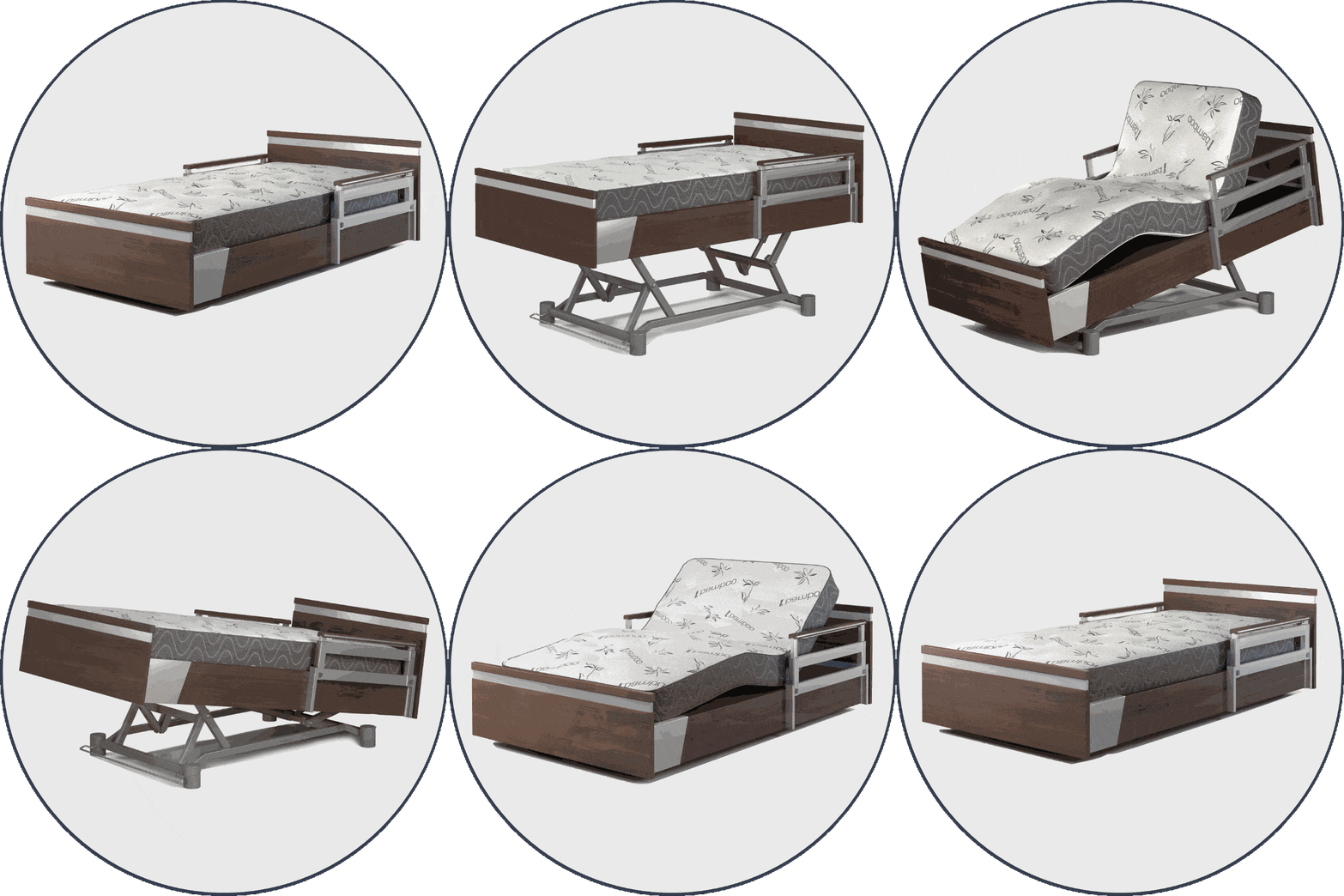
A therapeutic home hospital bed system can help address these risks through precise, adjustable support, putting control back in your loved one’s hands.
- Pressure Offloading & Ulcer Prevention: Advanced mattresses work by immersion and envelopment, distributing pressure over a larger area to keep it <32 mmHg8. An adjustable frame then allows for frequent, easy repositioning to offload bony prominences like heels and the tailbone, all without strenuous effort9.
- Neuropathic Pain Modulation: Even pressure distribution may help reduce the mechanical activation of sensitized nerve endings10. Finding a position that minimizes pressure on painful feet or legs can provide measurable relief, as tracked by clinical tools like the DN4 pain scale11.
- Hemodynamic Improvement & Edema Reduction: Elevating the legs above the heart uses gravity to assist the body’s natural venous and lymphatic return12. This simple positioning can reduce ankle circumference by up to 2 cm overnight, alleviating the heavy, swollen feeling common in neuropathy13.
- Enhanced Independence & Caregiver Ergonomics: Height adjustability allows your loved one to find a secure, feet-flat-on-the-floor position for safe, independent transfers6. For you, the caregiver, raising the bed to an ergonomic height may lower physical assistance episodes by 40%, reducing strain and helping you provide care with greater ease14.
Home Hospital Bed Feature Deep Dive: A Specification Checklist
The frame and mattress work best as an integrated system. The right combination directly targets specific symptoms to support daily life.
| Bed Feature | Mechanism | Primary Metric / Benefit | Caveat | Relevant HCPCS |
|---|---|---|---|---|
| Height Adjustability | Lowers bed for safe patient transfers; raises for ergonomic caregiver access. | May improve transfer safety, reduce fall risk, and reduce caregiver physical strain6,15. | The height adjustment feature on a total electric bed is often considered a “convenience” and not covered by Medicare16. | E0260, E0261 (Semi-electric) |
| Head-of-Bed (HOB) Elevation | Allows patient to be raised to a semi-Fowler or full sitting position6,15. | Can help alleviate pain, improve comfort, aid respiration, and help manage orthostatic hypotension15. | Elevation less than 30 degrees does not typically justify a hospital bed17. | E0260, E0261 |
| Knee Gatch (Knee Break) | Elevates the section under the knees to create a bend in the legs6. | May reduce shear forces on the sacrum and heels by preventing sliding; assists in reducing lower extremity edema6. | Often an integrated feature of profiling beds. | Built-in to E0260, E0261 |
| Alternating Pressure Air Mattress (APAM) | Air cells cyclically inflate and deflate via a pump to constantly alter pressure points. | Can help prevent tissue ischemia by ensuring no single area is under prolonged pressure. Considered highly effective for immobile patients6. | Pump can be noisy; some evidence is conflicting compared to static air1. | E0277 (Group 2) |
| Low-Air-Loss (LAL) Mattress | Circulates air to control skin microclimate (heat and moisture)8. | May help maintain skin integrity by preventing maceration and reducing friction, indirectly supporting ulcer prevention6. | Often combined with APAM features. | E0277 (Group 2) |
| Assist Handles / Side Rails | Bars or handles attached to the bed frame to provide a firm handhold15,6. | May enhance patient independence and safety for repositioning, turning, and transfers6,15. | Major risk of entrapment and asphyxiation; should not be used as a restraint18. | E0305, E0310 |
| Trendelenburg / Reverse Trendelenburg | Tilts the entire bed frame, elevating either the feet or the head. | Can promote venous return to reduce edema (Trendelenburg)15. | Can increase shear forces and must be used with caution. | Not typically covered for home use. |
Safety Device Comparison for Your Neuropathy Bed
Bed rails require extreme caution. The FDA has identified 7 distinct zones of entrapment18. Consider these alternatives for peace of mind:
| Device | Primary Use | Key Benefit | Major Risk |
|---|---|---|---|
| Bed Rails | Assistive handle for repositioning and transfers18. | Provides a stable handhold for patient-initiated movement6. | High risk of entrapment, asphyxiation, and falls if patient climbs over18. |
| Roll Guards / Foam Bumpers | Passive barrier to prevent rolling out of bed. | May reduce risk of falling from bed without creating entrapment gaps19. | May not be sufficient for agitated or determined individuals. |
| Lowered Bed Height | Fall risk reduction. | Minimizes the distance and impact of a potential fall19. | May make transfers more difficult for some patients without height adjustability. |
| Concave Mattresses | Passive positioning aid. | May help keep the patient centered in the bed, reducing the likelihood of rolling off19. | May limit in-bed mobility for some users. |
Navigating Reimbursement: Medicare, HCPCS Codes, and Documentation
The Payer Coverage Landscape for Neuropathy Beds
Medicare Part B and most major insurers follow specific guidelines. Understanding these codes is your key to securing coverage.
- HCPCS Codes E0260/E0261 (Semi-Electric Bed): This is the standard covered semi-electric hospital bed. Approval requires documentation proving a medical need for frequent changes in body position or the need for head elevation greater than 30 degrees16,17. The Treating Physician must document this need in a face-to-face encounter.
- HCPCS Codes E0265/E0266 (Total Electric Bed): These are consistently denied as a “convenience item” for home use16.
- HCPCS Code E0277 (Group 2 Support Surface): Covers advanced mattresses like APAMs or LAL systems. For coverage, documentation must show: 1) Altered sensory perception (directly matching neuropathy), 2) Impaired mobility, and 3) Either a history of multiple Stage II ulcers on a Group 1 surface OR a large, irreversible Stage III/IV ulcer20.
- Group 1 Support Surfaces (E0181-E0189, E0196-E0199): These are covered for individuals with limited mobility and altered sensory perception—making them a viable, covered option for many with neuropathy21.
Your Step-by-Step Prior Authorization Workflow
- Physician Assessment: A face-to-face encounter where the doctor documents medical necessity: mobility deficit, altered sensation due to neuropathy, pain, and high ulcer risk. Responsible Party: Treating Physician.
- Prescription & Documentation: The physician writes a detailed prescription specifying the bed (E0260), any required mattress, and the medical justification. Responsible Party: Treating Physician.
- DME Supplier Submission: The supplier compiles the prescription, clinical notes, and prior authorization forms for the insurer. Responsible Party: DME Supplier.
- Appeal if Denied: If denied, the physician and supplier can appeal with additional clinical justification. Responsible Party: Physician/DME Supplier/Patient Advocate.
Alternative Route: Private Pay & Financing Workflow
Many patients with neuropathy choose private pay to access features often denied by insurance (such as Hi-Lo functionality or non-clinical aesthetics). This route offers speed and freedom of choice.
- Selection Freedom: Choose a bed based on therapeutic relief rather than insurance codes. Look for features like “Trendelenburg” (for swelling/circulation) or “Chair Position,” which are rarely covered but highly beneficial for neuropathy.
- Leverage HSA/FSA Funds (USA): Most Health Savings Accounts (HSA) and Flexible Spending Accounts (FSA) allow funds to be used for durable medical equipment. Action: Obtain a “Letter of Medical Necessity” (LMN) from your doctor to validate the purchase for HSA/FSA auditing.
- Financing Options: Many manufacturers offer 0% financing (e.g., Affirm, CareCredit) over 12-24 months, making premium beds comparable to monthly rental costs.
- Tax Deductions: USA: If you itemize deductions, the cost of the bed may be deductible as a medical expense if your total medical costs exceed 7.5% of your adjusted gross income. Canada: The bed may qualify as a Medical Expense Tax Credit (METC) if prescribed by a medical practitioner.
The Economic Case with Peripheral Neuropathy: Cost vs. Averted Tragedy
The Staggering Cost of Pressure Ulcers
Prevention is not only kinder but exponentially more cost-effective. Treatment costs escalate dramatically with severity, particularly within the US and Canadian healthcare systems.
| Ulcer Stage (Severity) | Est. Treatment Cost (North America)22 |
|---|---|
| Stage I | $2,000 – $4,000 |
| Stage II | $5,000 – $15,000 |
| Stage III | $20,000 – $45,000 |
| Stage IV (Severe) | $70,000 – $129,000+ |
Budget Impact Case Studies: Prevention Saves Money
Real-world studies demonstrate that supportive hospital beds for peripheral neuropathy can save significant resources:
- Austrian Study: For 1,253 at-risk patients, using a powered hybrid mattress saved €247,221 annually by preventing 44 ulcers and saving €242 in nursing time per patient23.
- UK Scenario: Providing high-spec support surfaces to just 15% of at-risk patients saved £60,885 by preventing 48 ulcers22.
Purchase vs. Rental Analysis (USA & Canada)
- Purchase Range: A premium residential-style adjustable bed for neuropathy pain is an investment in long-term wellness.🇺🇸 USA: Quality frames range from $2,000 to $6,500+ USD depending on features (Hi-Lo, Trendelenburg). 🇨🇦 Canada: Premium models typically range from $3,500 to $9,000+ CAD.
- Rental Cost:🇺🇸 USA: Private rentals often cost $250 – $500 USD per month. Medicare capped rentals generally convert to ownership after 13 months, but limit selection to basic clinical models. 🇨🇦 Canada: Private rentals range from $300 – $600 CAD per month.
- Break-Even Point: For a chronic condition like neuropathy, purchasing often becomes cost-effective within 8 to 14 months compared to ongoing private rental fees, making it a financially sound choice for lasting independence24.
Critical Safety & Risk Mitigation Protocols
Bed-Rail Entrapment – The #1 Hazard
Managing Autonomic Dysfunction with Positioning
Implementation Checklist for Patients & Caregivers
Follow this step-by-step guide to ensure a safe, effective, and supportive outcome.
- Obtain Professional Assessment. An Occupational Therapist (OT) can best identify the specific features needed for your home and your loved one’s abilities. Responsible: Patient/Caregiver to schedule with PT/OT.
- Prioritize Features. Based on symptoms: Height adjustability for safe transfers6, HOB elevation >30° for comfort25, and a pressure-redistributing mattress (often starting with a covered Group 1 surface)26.
- Conduct Safety Audit. If considering rails, measure all gaps with your specific mattress. Prefer alternatives like roll guards or ultra-low bed heights19. Ensure all components are compatible. Responsible: Caregiver/DME Supplier.
- Run Cost-Benefit. For chronic neuropathy, a purchase often beats long-term rental24. Calculate your break-even point. Responsible: Patient/Caregiver.
- Secure Documentation. Ensure your physician’s note explicitly states the need for “frequent position changes” or “significant head elevation” due to neuropathy symptoms. This is the key to Medicare hospital bed coverage for code E026016. Responsible: Treating Physician.
- Train Thoroughly. Everyone in the home should know how to operate the bed, perform daily skin checks (looking for persistent redness)26, and use positioning for comfort and circulation. Responsible: Caregiver/Patient/DME Supplier.
Living well with neuropathy is about smart, compassionate adaptations that empower your loved one to thrive at home. A therapeutic home hospital bed can be a cornerstone of that strategy, offering not just safety and support, but true restorative rest and regained control over daily life. These statistics show why this investment matters—it’s an investment in dignity, independence, and your shared peace of mind.
By focusing on the specific features that meet your loved one’s needs, you can make an informed decision that protects their health and preserves their quality of life.
References & Sources
- Effectiveness of pressure-relieving mattresses on pressure ulcers https://wounds-uk.com/journal-articles/effectiveness-of-pressure-relieving-mattresses-on-pressure-ulcers/
- Beds, overlays and mattresses for preventing and treating pressure ulcers https://pmc.ncbi.nlm.nih.gov/articles/PMC8407250/
- The experience of using a hospital bed alternative at home https://pmc.ncbi.nlm.nih.gov/articles/PMC9987729/
- Comparative effectiveness of heel-specific medical devices for prevention https://www.sciencedirect.com/science/article/pii/S0965206X22001085
- Pressure‐relieving devices for preventing heel pressure ulcers https://pmc.ncbi.nlm.nih.gov/articles/PMC6481521/
- The experience of using a hospital bed alternative at home https://pmc.ncbi.nlm.nih.gov/articles/PMC9987729/
- Beds, overlays and mattresses for preventing and treating pressure ulcers https://pmc.ncbi.nlm.nih.gov/articles/PMC8407250/
- Beds, overlays and mattresses for preventing and treating pressure ulcers https://pmc.ncbi.nlm.nih.gov/articles/PMC8407250/
- The experience of using a hospital bed alternative at home https://pmc.ncbi.nlm.nih.gov/articles/PMC9987729/
- Beds, overlays and mattresses for preventing and treating pressure ulcers https://pmc.ncbi.nlm.nih.gov/articles/PMC8407250/
- Effectiveness of pressure-relieving mattresses on pressure ulcers https://wounds-uk.com/journal-articles/effectiveness-of-pressure-relieving-mattresses-on-pressure-ulcers/
- Beds, overlays and mattresses for preventing and treating pressure ulcers https://pmc.ncbi.nlm.nih.gov/articles/PMC8407250/
- Assistive Technology for Positioning https://www.physio-pedia.com/Assistive_Technology_for_Positioning
- The experience of using a hospital bed alternative at home https://pmc.ncbi.nlm.nih.gov/articles/PMC9987729/
- Assistive Technology for Positioning https://www.physio-pedia.com/Assistive_Technology_for_Positioning
- LCD – Hospital Beds And Accessories (L33820) – CMS https://www.cms.gov/medicare-coverage-database/view/lcd.aspx?LCDId=33820
- Dear Physician: Hospital Beds and Accessories – CGS Medicare https://www.cgsmedicare.com/jc/dpl/dpl_hospital_beds.pdf
- Adult Portable Bed Rail Safety | FDA https://www.fda.gov/medical-devices/consumer-products/adult-portable-bed-rail-safety
- CMS State Operations Manual https://www.cms.gov/files/document/r229soma.pdf
- CG-DME-16 Pressure-Reducing Support Surfaces https://medpol.providers.amerigroup.com/medpolicies/amerigroup/active/gl_pw_a053642.html
- Pressure-reducing support surfaces – Medicare https://www.medicare.gov/coverage/pressure-reducing-support-surfaces
- The economics of pressure relieving surfaces: an illustrative case study https://pmc.ncbi.nlm.nih.gov/articles/PMC7951755/
- A budget impact analysis of a powered hybrid mattress to prevent pressure ulcers https://pmc.ncbi.nlm.nih.gov/articles/PMC10885175/
- Durable Medical Equipment (DME) – Humana https://assets.humana.com/is/content/humana/Durable_Medical_Equipmentpdf
- Assistive Technology for Positioning https://www.physio-pedia.com/Assistive_Technology_for_Positioning
- Hospital Beds, Accessories and Pressure Reducing Support Surfaces – Cap BlueCross https://www.capbluecross.com/wps/wcm/connect/prod_nws.capblue.com29556/373c21ca-0b10-4431-abfe-c10ffae3f28e/hospital-beds-accessories-and-pressure-reducing-support-surfaces.pdf