






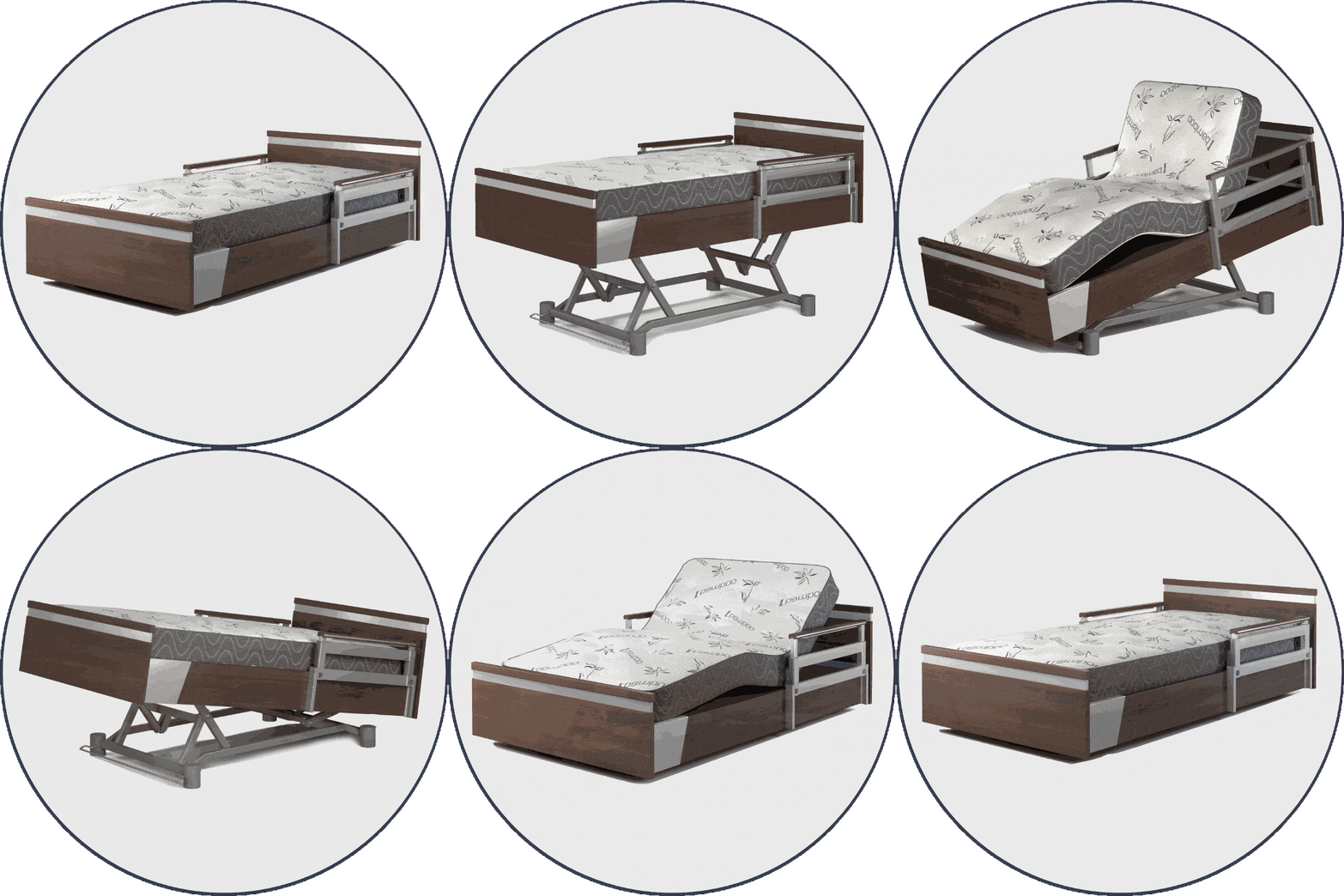
A Complete Resource on Hospital Beds for Myotonic Dystrophy: Features, Codes & Safety
Navigating the Myotonic Dystrophy Bed Paradox: Safety, Breathing, and Home Care
We understand how overwhelming it can feel when a loved one’s needs change. If you’re caring for someone with myotonic dystrophy (DM), you’ve likely faced a confusing paradox: while clinicians often agree that a specialized home hospital bed for myotonic dystrophy is essential for safety and breathing support, there are 0 DM-specific clinical trials or formal guidelines to light the way1.
This gap in evidence can leave families navigating a maze of uncertainty alone. This guide is here to change that. We’ve synthesized the best available data, safety standards, and expert rationale into a single, compassionate resource. Our goal is to empower you with the specific knowledge needed to make confident decisions about a muscular dystrophy bed. For your loved one, the right bed is more than furniture—it’s a vital tool for managing weakness, supporting breathing, and preserving the dignity and comfort of home care.
Why a Standard Bed Fails Myotonic Dystrophy Patients
The progressive muscle weakness in DM can create a challenging cycle. As mobility decreases, it becomes harder to reposition, which can increase discomfort and, most critically, make breathing more difficult—especially at night. Nocturnal hypoventilation is highly prevalent in DM1 patients, a direct result of weakened respiratory muscles during sleep2.
A standard bed cannot help break this cycle, but a therapeutic DM1 bed, chosen with care, may help. The key is matching your loved one’s specific symptoms to features designed to address them. This connection turns a piece of equipment into a potential source of relief and empowerment.
Symptom–Feature Matching Map
| Myotonic Dystrophy Symptom | Required Capability | Enabling Bed Feature(s) | Rationale |
|---|---|---|---|
| Progressive Muscle Weakness & Immobility | Safer transfers, fall prevention | High-Low Elevation | Allows bed height to match a wheelchair, enabling safer transfers and may help reduce fall risk for patients with weakness3. |
| Difficulty Repositioning, Discomfort | Independent position changes | Electric Profiling (Head/Foot) | May enable patients to shift weight, relieve pressure, and find comfortable positions without caregiver aid, potentially enhancing autonomy4. |
| Respiratory Muscle Weakness, Nocturnal Hypoventilation | Eased breathing, NIV tolerance | Electric Profiling (Head Elevation) | Elevating the head may ease the work of breathing and can improve comfort and mask seal for NIV users, supporting respiratory function56. |
| High Risk of Pressure Injuries | Pressure redistribution | Pressure-Redistribution Mattress | Specialized foam or air surfaces distribute body weight to help prevent skin breakdown from prolonged immobility7. |
| Reduced Functional Independence | Self-assisted movement in bed | Overhead Trapeze Helper Bar | May allow patients with upper body strength to pull themselves up, assisting in repositioning and reducing caregiver reliance8. |
| Caregiver Physical Strain | Ergonomic care delivery | High-Low Elevation | Lets caregivers work at hip level, potentially eliminating bending and stooping that can lead to musculoskeletal injury9. |
The Evidence Audit: What the Guideline Gap Means for You
It’s frustrating when you can’t find a clear rulebook. The lack of direct evidence for myotonic dystrophy hospital bed use isn’t a sign it’s unnecessary—it’s a sign that detailed, personal documentation becomes your most powerful tool. Since major organizations haven’t created specific guidelines, your case must be built on clear, individual need.
Guideline Gap Analysis
| Organization | Guideline Status for Home Hospital Beds in DM |
|---|---|
| Muscular Dystrophy Association (MDA) | No specific guidelines found. |
| Myotonic.org | Publishes general care recommendations and tools but no specific guidelines on bed prescription10. |
| American Thoracic Society (ATS) / European Respiratory Society (ERS) | Provide guidelines on chronic respiratory care for NMDs, supporting NIV, but do not specify bed positioning protocols11. |
| American Academy of Sleep Medicine (AASM) | No specific guidelines found. |
| Centers for Medicare & Medicaid Services (CMS) | Provides coverage criteria (LCD L33820) based on general medical necessity, not DM-specific needs12. |
Critical Myotonic Bed Features Deep Dive: From Breathing Support to Skin Protection
Respiratory Support is Non-Negotiable for Myotonic Dystrophy
For a loved one with DM, electric head elevation is often considered essential. Raising the head of the bed 30-45 degrees may significantly ease the work of breathing5. If they use a non-invasive ventilator (NIV), this position is often key for a comfortable mask seal and better tolerance throughout the night13.
Pressure Injury Prevention Mattress Technology
Choosing a pressure relief mattress is a critical health decision. The right support surface can help protect your loved one’s skin from painful pressure injuries. Here’s a clear breakdown to help you understand the options:
Mattress Technology Comparison
| Mattress Technology | Mechanism of Action | Best For |
|---|---|---|
| Pressure-Redistributing Foam | Contours to the body to maximize surface area and distribute weight. | Baseline prevention for at-risk individuals. |
| Low-Air-Loss (LAL) | Continuously leaks air to manage skin microclimate (heat, moisture) and reduce pressure. | Patients with moisture issues or existing skin breakdown. |
| Alternating Pressure (APM) | Air cells cyclically inflate and deflate to actively offload pressure from different body areas. | Highly immobile patients who cannot self-reposition. |
| Lateral Rotation / Automatic Turning | The entire surface automatically tilts the patient side-to-side at set intervals. | Completely immobile patients; reduces caregiver burden for manual turning. |
Caregiver Safety & Sustainability: Why Height Adjustment is Essential
The high-low adjustment feature is often wrongly labeled a mere “convenience.” For you, the caregiver, it can be an ergonomic necessity for injury prevention. Constantly bending and lifting to assist someone in a low bed puts you at high risk for a debilitating back injury, which could jeopardize your ability to provide care at home.
- The Medicare Hurdle: It’s important to know that Medicare’s policy (LCD L33820) states the height-adjustment on a fully electric bed is a “convenience” and is not covered12. Be prepared to appeal this.
- Your Appeal Strategy: Frame your request around safety and sustainability, not convenience. In your documentation, emphasize that the high-low feature is critical for:
- Your Loved One’s Safety: To create a “fall-safe” transfer height that matches their wheelchair, which may help reduce fall risk3.
- Your Safety: To allow you to provide care at a proper height, helping to prevent injuries that could make home care impossible9.
- Preserving Home Care: Research suggests that adjustable-height equipment may significantly reduce caregiver musculoskeletal injury risk16. Preventing one injury helps protect your family’s ability to stay together at home.
Crucial Safety & Compliance Protocols for Myotonic Bed Safety
Your loved one’s safety is paramount, and bed safety entrapment is governed by strict engineering standards. Entrapment—becoming caught between bed parts—is a real risk. The U.S. Food and Drug Administration (FDA) has defined seven specific danger zones to help prevent tragedy17.
FDA 7-Zone Entrapment Matrix
| Entrapment Zone | Location |
|---|---|
| Zone 1 | Within the rail |
| Zone 2 | Under the rail, between the rail supports or next to a single rail support |
| Zone 3 | Between the rail and the mattress |
| Zone 4 | Under the rail, at the ends of the rail |
| Zone 5 | Between split bed rails |
| Zone 6 | Between the end of the rail and the side edge of the head or foot board |
| Zone 7 | Between the head or foot board and the mattress end |
Your Safety Action Plan:
- Demand Certified Safety: When ordering, insist the bed complies with IEC 60601-2-52 (the international medical bed safety standard) and ASTM F3186-17 (for bed rail safety)1920.
- Request a Gap Audit: When the bed is delivered, the supplier must perform a “gap audit” using an FDA tool to measure all seven zones, ensuring every space is within safe limits. Ask for the report17.
- Ensure Perfect Compatibility: The mattress must be designed for the specific bed frame. A mismatch is a leading cause of dangerous Zone 3 entrapment21.
Navigating Reimbursement & Costs: A Guide to Medicare Codes
Understanding the hospital bed Medicare coverage codes is your first step in navigating payment. Remember, Medicare requires a face-to-face doctor’s visit and a Written Order Prior to Delivery (WOPD).
HCPCS Code Map vs. Coverage Status (Medicare)
| Bed/Accessory Type | Relevant HCPCS Codes | Medicare Coverage Status | Rationale/Criteria |
|---|---|---|---|
| Semi-Electric Bed | E0260, E0261, E0294, E0295, E0329 | Covered | Patient requires positioning not possible in a standard bed and frequent position changes. |
| Total Electric Bed | E0265, E0266, E0296, E0297 | Not Covered | The height adjustment feature is considered a “convenience” rather than a medical necessity12. |
| Heavy-Duty Bed | E0301, E0303 | Covered | Patient meets criteria for a hospital bed and weighs >350 lbs but <600 lbs12. |
| Trapeze Equipment | E0910, E0940 | Covered | Patient needs it to change position for medical reasons or to get in/out of bed12. |
Key Documentation Points:
- Code E0260 (Semi-Electric Bed): This is the most commonly covered option. The doctor’s note must clearly state your loved one has a medical need (like respiratory weakness) requiring frequent position changes that a regular bed cannot provide.
- Code E0277 (Power Pressure-Redistribution Mattress): Covered if your loved one is completely immobile or has a severe pressure ulcer. Documentation must detail their mobility and skin status.
The Private Pay Workflow: Speed, Customization & Independence
For families managing Myotonic Dystrophy (DM), the strict “medically necessary” criteria of insurance can sometimes block access to features that preserve independence. The Private Pay option allows you to bypass restrictions and secure a bed based on functional ability rather than just basic coverage.
- Bypassing the “Semi-Electric” Limitation: Medicare typically only covers Semi-Electric beds (where height is adjusted by a manual hand crank). However, DM patients often experience distal weakness in the hands, making the manual crank impossible to operate. Private pay grants access to Fully Electric (Hi-Lo) beds, allowing the user to adjust height independently via remote.
- Immediate Fall Prevention & Myotonia Management: Waiting 3–6 months for insurance approval exposes the patient to fall risks now. Private pay allows for immediate delivery of a bed with features like underbed lighting and ultra-low height settings—vital for accommodating morning stiffness (myotonia) during transfers.
- Using Pre-Tax Dollars (HSA/FSA): Even without insurance reimbursement, you can often use Health Savings Accounts (HSA) or Flexible Spending Accounts (FSA) for the purchase. A Letter of Medical Necessity (LMN) from your doctor is usually required to validate the expense for tax purposes.
- Financing Options: Many manufacturers offer 0% financing (e.g., Affirm, CareCredit), allowing families to spread the cost of a higher-quality bed over 12–24 months, making the private pay workflow more accessible.
Your Procurement & Implementation Playbook for a Home Hospital Bed
Turning knowledge into action can feel daunting. This clear, step-by-step plan assigns responsibility, so everyone knows their role in bringing safety and comfort home.
Step-by-Step Workflow with Responsible Parties
| Step | Action | Responsible Party | Success Metric / Documentation |
|---|---|---|---|
| 1. Clinical Assessment | Assess mobility, breathing, skin integrity, transfer safety, and caregiver needs. | Clinician (MD, PT, OT) | A detailed note documenting the need for positioning and fall risk. |
| 2. Medical Necessity Documentation | Write a compelling letter. For high-low, argue patient safety during transfers and prevention of caregiver injury to sustain home care. | Prescribing Physician | A letter that tells your loved one’s story, focusing on safety and sustainability. |
| 3. Order & Procurement | Prescribe the bed. Must specify compliance with IEC 60601-2-52. | Clinician / Provider | A clear, feature-specific order sent to a reputable supplier. |
| 4. Safety Installation & Audit | Install the bed and perform/document a gap audit per FDA guidance. | Bed Provider | A signed gap audit report and demonstration of safe operation. |
| 5. Training | Train your loved one and ALL caregivers on operation, safety, and emergency procedures. | Bed Provider | A signed training acknowledgment form. |
| 6. Outcome Tracking | Monitor key points: falls/near misses, skin condition, caregiver strain, NIV comfort. | Patient / Caregiver / Provider | A simple home log to show the bed’s positive impact. |
Recommended Feature Specification Matrix
Use this as a conversation guide with clinicians and suppliers to balance benefits with practical needs.
| Feature | Benefit | Risk / Consideration |
|---|---|---|
| High-Low Elevation | May facilitate safe transfers; may reduce caregiver injury risk3. | Often not covered by Medicare as a “convenience”12. |
| Electric Profiling (Head/Foot) | May enable patient autonomy in repositioning; may support respiratory function6. | Requires patient cognitive ability to operate controls safely. |
| Pressure-Redistribution Mattress | Helps prevent high-risk pressure injuries from immobility7. | Must be compatible with the bed frame to avoid creating entrapment gaps21. |
| Overhead Trapeze Helper Bar | May promote patient independence in repositioning and transfers8. | Requires sufficient patient upper body strength to be effective. |
| Side Rails | May help prevent falls from bed; can be used as a mobility aid for turning23. | High risk of entrapment if not compliant with FDA/IEC standards or if used with an incompatible mattress21. |
| Tilt-in-Space Function | Provides pressure relief without friction/shear forces from sliding. | Limited availability and higher cost; evidence for this specific feature is low24. |
From Essential Equipment to a Foundation for Home Care
Choosing a home hospital bed for myotonic dystrophy is an act of love and foresight. It’s an investment in their safety, your well-being, and the precious possibility of continued care at home. Armed with the specific data, Medicare codes like E0260 and E0265, and steps in this guide, you can move forward with confidence, advocate effectively, and make choices that truly matter.
Remember, you are not just selecting equipment. You are creating a foundation for greater comfort, preserving dignity, and fostering independence. By taking this systematic, informed approach—prioritizing respiratory support, caregiver injury prevention, and strict bed safety—you are building a safer, more sustainable environment where your loved one can thrive with the help of SonderCare.
References & Sources
- How Can Hospital Beds Help Muscular Dystrophy? – SonderCare https://www.sondercare.com/learn/hospital-beds/how-hospital-beds-help-muscular-dystrophy/
- Noninvasive Home Mechanical Ventilation in Adult Myotonic Dystrophy – PMC https://pmc.ncbi.nlm.nih.gov/articles/PMC8491482/
- Top Conditions That Benefit From a Home Hospital Bed – SonderCare https://www.sondercare.com/learn/hospital-beds/conditions-benefit-home-hospital-bed/
- Chronic respiratory care for neuromuscular diseases in adults – European Respiratory Journal https://publications.ersnet.org/content/erj/34/2/444
- Rehabilitation | Richard Weston’s Myotonic Dystrophy Blog http://myotonicdystrophy.com/category/education-and-training-in-myotonic-dystrophy/rehabilitation-myotonic-dystrophy/
- Integrated Care Pathway Tool for Myotonic Dystrophy – Myotonic.org https://www.myotonic.org/sites/default/files/ICP_English%20version_final.pdf
- Chronic respiratory care for neuromuscular diseases in adults – European Respiratory Journal https://publications.ersnet.org/content/erj/34/2/444
- LCD Hospital Beds and Accessories L33820 – CMS https://www.cms.gov/medicare-coverage-database/view/lcd.aspx?LCDId=33820
- Alternating pressure (active) air surfaces for preventing pressure ulcers – PMC https://pmc.ncbi.nlm.nih.gov/articles/PMC8108044/
- A Guide for Modifying Bed Systems and Using Accessories to Reduce Risk of Entrapment – FDA https://www.fda.gov/medical-devices/hospital-beds/guide-modifying-bed-systems-and-using-accessories-reduce-risk-entrapment
- Practice Hospital Bed Safety – UVRC https://uvrc.com/wp-content/uploads/Practice-Hospital-Bed-Safety.pdf
- Information for Manufacturers of Bed Rail Products – FDA https://www.fda.gov/medical-devices/adult-portable-bed-rail-safety/information-manufacturers-bed-rail-products
- IEC 60601-2-52:2009(en), Medical electrical equipment – ISO https://www.iso.org/obp/ui/en/#!iso:std:36067:en
- A Guide for Modifying Bed Systems and Using Accessories to Reduce Risk of Entrapment – FDA https://www.fda.gov/medical-devices/hospital-beds/guide-modifying-bed-systems-and-using-accessories-reduce-risk-entrapment
- Challenges of Economic Evaluations of Unreimbursed Care Models – JAMA Network https://jamanetwork.com/journals/jamanetworkopen/fullarticle/2835474