






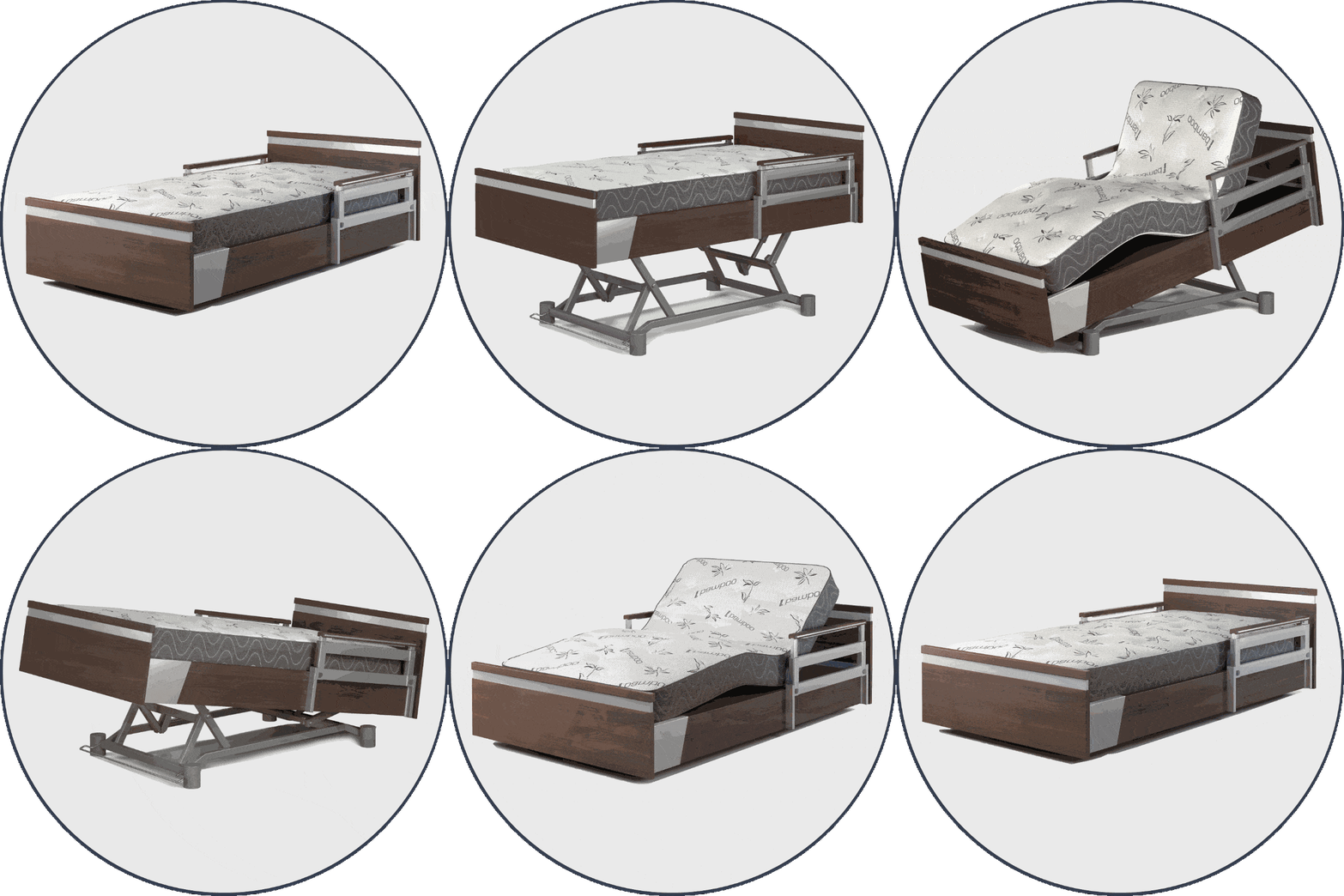
Home Hospital Beds for CIDP: An Evidence-Based Guide to CIDP Bed Safety, Coverage & Setup
Caring for a loved one with Chronic Inflammatory Demyelinating Polyneuropathy (CIDP) is a journey of love, dedication, and complex decisions. For those searching for a CIDP hospital bed or Medicare-covered durable medical equipment, this guide provides clarity. We understand how overwhelming it can feel to ensure their safety, comfort, and dignity at home. This guide is here to empower you with clarity and hope, transforming confusing data into a clear path forward.
While the challenges of muscle weakness, fatigue, and sensory changes are real, the right home environment can make a profound difference. A specialized home hospital bed for CIDP can be more than equipment; it can be a tool for preserving independence, helping to prevent complications like pressure sores, and providing peace of mind for everyone involved. We’ve compiled the latest evidence, precise Medicare details, and actionable steps—all the specific information you need to advocate confidently for your loved one’s well-being.
The Critical Need for a Home Hospital Bed in CIDP Care
When someone you love is spending more time in bed due to CIDP, the focus shifts to creating a space that actively supports their health. The statistics highlight why this is so important: approximately 54% of individuals with CIDP experience severe disability at some point, with around 29% requiring daily caregiver assistance1. This isn’t just about comfort—it’s about building a foundation that helps protect against serious risks and can reduce strain on you, the caregiver.
Although no studies have looked exclusively at hospital beds for CIDP2, there is powerful, transferable evidence from conditions with similar symptoms3. This data provides a strong, reassuring rationale for why an adjustable bed for neuropathy can be a cornerstone of safe, effective home care.
Evidence for CIDP Hospital Beds: Building a Case with Transferable Data
Let’s be upfront: a systematic search finds 0 randomized controlled trials on home hospital bed use specifically for CIDP2. This means we build the case on robust “analogical evidence” from conditions that share the core challenges of CIDP, like immobility and weakness. This isn’t a gap in care, but an opportunity to apply proven solutions.
The following table shows how evidence from other conditions provides a solid foundation for your decision. It connects the dots between your loved one’s experience and documented benefits.
| Analogous Condition | Shared Features with CIDP | Observed Benefit of Home Hospital Bed |
|---|---|---|
| Spinal Cord Injury (SCI) | Profound immobility, high risk for pressure injuries, ADL limitations, reliance on caregivers4. | Can facilitate caregiver assistance, improve in-bed mobility, and enhance psychological well-being5. |
| Guillain-Barré Syndrome (GBS) | Demyelinating neuropathy, muscle weakness, sensory deficits, risk of respiratory failure, long-term functional impairment6. | Considered crucial for helping to prevent immobilization complications (pressure sores, DVT) through proper positioning and mobility assistance6. |
| ALS, MS, Parkinson’s | Progressive muscle weakness, mobility impairment, chronic fatigue, respiratory compromise, high pressure injury risk7. | Widely recommended to enhance mobility, help mitigate pressure ulcers, and improve comfort via specialized positioning7. |
| General Neuromuscular Weakness | Encompasses core CIDP deficits: weakness, fatigue, sensory loss, and risk of secondary complications from immobility8. | A cornerstone of management for helping to prevent complications by aiding positioning for breathing, circulation, and safer transfers8. |
How Hospital Bed Features Directly Address CIDP Symptoms and Risks
Every feature of a modern home hospital bed for CIDP is designed to address a specific need, working together to create a safer, more comfortable space. Think of it as customizing their environment for their well-being.
This matrix connects the dots between your loved one’s symptoms and the features that can help.
| Bed Feature | CIDP Symptom/Risk Addressed | Evidence Source | Expected Impact |
|---|---|---|---|
| Height Adjustment (Hi-Lo) | Fall risk, caregiver injury, transfer difficulty | TRICARE Policy, Caregiver Studies9,10 | May reduce injury severity from falls; 70% less caregiver strain reported in studies10 |
| Head/Foot Articulation | Respiratory distress, aspiration risk, GERD, pain | AHRQ Review, ICU Studies11,12 | Research suggests improved O₂ saturation, and reduced aspiration events12 |
| Specialized Support Surface | Pressure injury risk, neuropathic pain | WOCN, NICE Guidelines13,14 | Up to 60% reduction in pressure injury incidence observed13 |
| Assist Bars / Trapeze | Immobility, ADL dependence, muscle deconditioning | FDA, TRICARE Policy15,9 | May increase independence in repositioning9 |
| Bed Exit Alarm | Falls, wandering (if cognitive impairment) | Fall Prevention Literature | Can provide timely caregiver alert to help prevent falls |
Pressure Injury Prevention with CIDP: Achieving a 60% Risk Reduction
Immobility and sensory loss can sadly lead to painful pressure injuries. A specialized pressure relief mattress for CIDP can be a proactive shield. Data shows these surfaces can reduce incidence by up to 60% compared to a standard mattress13. Guidelines often start with a High-Specification Foam (HSF) mattress14. For a loved one who cannot shift position easily, an Alternating Pressure (AP) mattress system can provide the changing support they need14.
Respiratory & Dysphagia Support: The Critical 30-45 Degree Angle
Weakness can affect the muscles used for breathing and swallowing. A simple, powerful intervention is elevating the head of the bed. Positioning at 30 to 45 degrees uses gravity to help prevent aspiration and ease breathing—a critical comfort and safety measure made simple with an adjustable bed11,12.
Improving Sleep, Pain Management, and Patient Independence
Beyond safety, adjustability can bring daily relief. Finding the perfect position to ease neuropathic pain, reduce acid reflux, or improve sleep is a potential benefit16,17. The ability to make these adjustments with a simple remote can foster a sense of autonomy and control over their environment18.
CIDP Bed Safety: Preventing Entrapment and Falls with Confidence
Introducing any new equipment means being proactive about safety. The primary risk to be aware of is entrapment in bed rails.
A safety-first mindset brings peace of mind. Please follow this essential checklist:
- Assess First: Consider alternatives like adjustable assist bars or ultra-low bed heights before using full-length bed rails15.
- Eliminate Gaps: Ensure the mattress fits the frame perfectly. Use foam gap fillers if any spaces remain15.
- Use the Ultra-Low Setting: This can dramatically reduce the distance of a potential fall. Many modern Hi-Low beds for fall prevention lower to just 2.7 to 7 inches from the floor19.
- Implement Alarms: For a loved one at high fall risk, a bed exit alarm can give you precious time to assist9.
Medicare Coverage for Hospital Beds: A Step-by-Step Guide for CIDP
We know insurance can be complex. A common question is, “Does Medicare cover a hospital bed for CIDP?” Coverage for a bed and support surface typically falls under Medicare Part B, and approval depends on demonstrating medical necessity in the medical records20. Being armed with the right codes and criteria empowers your conversation with doctors and suppliers.
Medicare HCPCS Codes & Criteria Table for CIDP
| Equipment Type | Key HCPCS Code(s) | Primary Medical Necessity Criteria |
|---|---|---|
| Basic Hospital Bed | E0260 (Semi-Electric), E0265 (Total Electric) | Condition requires frequent/automatic positioning not possible in an ordinary bed (e.g., HOBE >30° for breathing/aspiration) or requires special attachments21,20. |
| Group 1 Support Surface | E0181-E0189 | Complete immobility OR limited mobility plus one or more risk factors (impaired nutrition, incontinence, altered sensation, etc.)22. |
| Group 2 Support Surface | E0277, E0371, E0373 | Multiple Stage II ulcers; large/multiple Stage III/IV ulcers; or recent myocutaneous flap surgery23. |
| Integrated Bed System | E0193 | Meets criteria for both a hospital bed (E0260/E0265) and a Group 2 support surface (E0277, etc.)23. |
| Group 3 Air-Fluidized Bed | E0194 | Stage III/IV ulcer, bedridden, and failure of a 30-day treatment trial with a Group 2 surface9,24. |
Your Actionable Documentation Pathway for Coverage
Getting coverage is a team effort. Here’s the clear workflow with responsible parties:
- Face-to-Face Encounter: The prescribing physician must have a relevant in-person visit25. (Responsible: Physician)
- Detailed Medical Record Documentation: The doctor must note the specific need. Examples: “Requires head-of-bed elevation at 45 degrees continuously for aspiration prevention,” or “Immobile; high risk for pressure injury per Braden Score of 10.” (Responsible: Physician/Clinician)
- Written Order Prior to Delivery (WOPD): A detailed, signed doctor’s order is required before delivery22,24. (Responsible: Physician)
- Coding Verification Review (CVR): For complex codes (like E0371/E0373), the supplier may need formal verification22. (Responsible: DME Supplier)
Your CIDP Hospital Bed Implementation Playbook
A Simple Selection Algorithm
- Assess Pressure Injury Risk: Use the Braden Scale. A score ≤12 indicates high risk and may justify a Group 1 (High-Specification Foam) support surface26. (Responsible: Clinician)
- Assess Mobility/Transfer Need: Does your loved one need hands-on help to transfer? If YES, a height-adjustable bed frame (E0265) is often considered medically necessary to help reduce falls and caregiver strain9. (Responsible: OT/PT)
- Assess Existing Ulcers: Existing Stage III or IV pressure ulcers can meet criteria for a Group 2 (e.g., E0277) or Group 3 (E0194) surface14,9,24. (Responsible: Physician/Wound Care Clinician)
Private Pay & Financing: Expanding Care Options for CIDP
While Medicare focuses on basic medical necessity, the Private Pay route prioritizes lifestyle, dignity, and advanced safety. For CIDP families, this often means accessing features that insurance denies, such as full-electric “Hi-Low” frames for safer transfers, wider mattresses for co-sleeping, or non-institutional designs. This path removes the waiting period for adjudication and puts the choice back in your hands.
Private Pay Feature Comparison & CIDP Benefits
| Feature Upgrade | CIDP Clinical/Lifestyle Benefit | The “Medicare Gap” |
|---|---|---|
| Hi-Low Capability | Allows the bed to lower nearly to the floor for fall prevention and raise to waist height for safe caregiver assistance during hygiene/dressing routines. | Medicare rarely covers full Hi-Low functionality unless specific, severe seizure or entrapment risks are documented. |
| Wider Surface (Full/Queen) | Accommodates spousal co-sleeping, reducing patient anxiety and isolation. Provides leverage room for turning patients with muscle weakness. | Medicare strictly limits coverage to Twin/Twin XL sizes (approx. 36″ width). |
| Premium Foam/Hybrid Mattress | Multi-layered memory foam or cooling gel for superior pressure redistribution and temperature regulation without the noise of air pumps. | Insurance often supplies basic Group 1 mattresses that may be uncomfortable for long-term use. |
| Residential Aesthetic | Reduces the psychological impact of “medicalizing” the home. Looks like furniture, functions like medical equipment. | Medicare does not reimburse for aesthetic upgrades, headboards, or footboards that are non-clinical. |
| Chair Position (Cardiac Chair) | Assists with orthostatic hypotension issues common in neuropathy and aids in breathing/swallowing without leaving the bed. | Often considered a luxury feature and denied unless specific respiratory failure criteria are met. |
Your Direct Purchase Workflow
Private pay offers speed and autonomy. Here is the recommended workflow to ensure you get the right fit:
- Needs Assessment: Consult with your PT/OT regarding transfer heights and room access. Determine if a Hoyer lift will be used (requires under-bed clearance). (Responsible: Family/Therapist)
- Sales Tax Exemption (Optional): Even if paying privately, obtain a prescription from your doctor stating the diagnosis (CIDP). In many states/provinces, this waives sales tax on medical devices. (Responsible: Physician)
- Configuration & Order: Select width (39″/48″/Queen), accessory rails, and mattress firmness. Verify lead times for “White Glove” delivery (setup and debris removal). (Responsible: Family/Supplier)
- Reimbursement Consideration: If you have private long-term care insurance or a secondary policy, submit the paid invoice for potential partial reimbursement. (Responsible: Policyholder)
The “Future-Proof” Selection Framework
Deciding What to Buy
- Assess Caregiver Strain: If the primary caregiver has back issues or is elderly, prioritizing a Hi-Low bed is essential to prevent caregiver injury during bathing or dressing changes. (Responsible: Family Decision Maker)
- Assess Progression Speed: For slowly progressive CIDP, investing in a modular bed (where rails or trapeze bars can be added later) saves money in the long run. (Responsible: Family Decision Maker)
- Assess Room Environment: If the patient is bed-bound for >12 hours/day, a 42″ or 48″ wide bed significantly reduces the risk of accidental falls during turning and improves psychological well-being compared to the standard 36″ hospital width. (Responsible: Family Decision Maker)
Essential Caregiver Training Checklist for Bed Transfers and Safety
Proper training protects both of you. Request this from the supplier or a therapist. (Responsible: DME Supplier/OT/PT)
- Learn ergonomic height adjustment to protect your back during care (studies report reducing strain by 70%)10.
- Practice safe use of head/foot articulation for comfort.
- Know emergency procedures: manual crank location, battery backup, and how to lower the bed without power.
- Review entrapment and fall protocols, including gap checks and using the ultra-low position15,20.
Tracking Key Outcomes for CIDP Home Care
Monitor these key outcomes to ensure the setup is working:
- New pressure ulcer incidence (Goal: Zero)
- Falls from bed (Goal: Zero)
- Reports of caregiver injury during bed-related care (Goal: Reduced)
- Patient-reported sleep quality and pain scores (Goal: Improved)27
Enhancing Safety and Quality of Life with a CIDP Hospital Bed
Choosing a home hospital bed for your loved one with CIDP is an act of love, supported by strong evidence and clear pathways. These statistics and codes are more than numbers—they are tools for building a safer, more comfortable life at home. They show why this investment in safety and dignity matters so deeply.
Looking ahead, we hope for CIDP-specific studies to provide even more tailored guidance20. Until then, this transferable evidence, clear clinical rationale, and structured coverage information provide a powerful, empowering framework. You have the knowledge to make a decision that fosters independence, ensures safety, and enhances daily joy for your loved one and your entire family.
References & Sources
- Chronic Inflammatory Demyelinating Polyneuropathy – PMC https://pmc.ncbi.nlm.nih.gov/articles/PMC3987657/
- Clinical Guideline Hospital Beds and Accessories https://assets.ctfassets.net/plyq12u1bv8a/PxG4nRHCiOsSe4UI2ACmi/80708d735c015d22a852409accd2e1d7/CG006_Hospital_Beds_and_Accessories.pdf
- Bridging CIDP Care Gaps with Home-Hospital Bed Innovations https://now.aapmr.org/aidpcidp-part-2-treatment/
- The experience of using a hospital bed alternative at home among… https://pmc.ncbi.nlm.nih.gov/articles/PMC9987729/
- The experience of using a hospital bed alternative at home among… https://pubmed.ncbi.nlm.nih.gov/34139138/
- GBS and CIDP Guidelines for Treatment and Diagnosis https://www.gbs-cidp.org/gbscidp-guidelines-for-treatment-and-diagnosis/
- Do Doctors Recommend Adjustable Beds For Homecare… https://www.sondercare.com/learn/home-healthcare/doctors-recommend-adjustable-beds-home-healthcare-patients/
- How Can Hospital Beds Help Muscular Dystrophy? – SonderCare https://www.sondercare.com/learn/hospital-beds/how-hospital-beds-help-muscular-dystrophy/
- Hospital Beds and Pressure Reducing Support Surfaces – TRICARE https://tricare.triwest.com/globalassets/tricare/provider/TRICARE-West-Region-Hospital-Beds-Pressure-Reducing-Support-Surfaces-PK.pdf
- Do Doctors Recommend Adjustable Beds For Homecare… https://www.sondercare.com/learn/home-healthcare/doctors-recommend-adjustable-beds-home-healthcare-patients/
- Head of Bed Elevation or Semirecumbent Positioning – AHRQ https://www.ahrq.gov/hai/tools/mvp/modules/technical/head-bed-elevation-lit-review.html
- Effect of head-end of bed elevation on respiratory mechanics… https://pmc.ncbi.nlm.nih.gov/articles/PMC8913433/
- Choosing a support surface for pressure injury prevention and… – NIH https://pmc.ncbi.nlm.nih.gov/articles/PMC7329246/
- Literature Review and a Draft Algorithm for Support Surfaces https://cdn-links.lww.com/permalink/jwocn/a/jwocn_42_1_2014_10_17_gray_jwocn-d-14-00102_sdc1.pdf
- A Guide to Bed Safety Bed Rails in Hospitals, Nursing Homes… – FDA https://www.fda.gov/medical-devices/hospital-beds/guide-bed-safety-bed-rails-hospitals-nursing-homes-and-home-health-care-facts
- Improving Sleep Quality When Suffering from Neuropathy https://asutahealth.org/improving-sleep-quality-when-suffering-from-neuropathy-a-comprehensive-guide/
- Head of bed elevation to relieve gastroesophageal reflux symptoms https://pmc.ncbi.nlm.nih.gov/articles/PMC7816498/
- In-Home Hospital Beds: A Guide to Caring for Your Loved One https://www.7dayhomecare.com/in-home-hospital-beds-a-guide-to-caring-for-your-loved-one
- Do Doctors Recommend Adjustable Beds For Homecare… https://www.sondercare.com/learn/home-healthcare/doctors-recommend-adjustable-beds-home-healthcare-patients/
- Clinical Guideline Hospital Beds and Accessories https://assets.ctfassets.net/plyq12u1bv8a/PxG4nRHCiOsSe4UI2ACmi/80708d735c015d22a852409accd2e1d7/CG006_Hospital_Beds_and_Accessories.pdf
- LCD – Hospital Beds And Accessories (L33820) – CMS https://www.cms.gov/medicare-coverage-database/view/lcd.aspx?LCDId=33820
- LCD – Pressure Reducing Support Surfaces – Group 1 (L33830) – CMS https://www.cms.gov/medicare-coverage-database/view/lcd.aspx?LCDId=33830
- Pressure Reducing Support Surfaces – CGS Medicare https://www.cgsmedicare.com/jb/pa/prss.html
- Pressure Reducing Support Surfaces – Group 1 – Policy Article – CMS https://www.cms.gov/medicare-coverage-database/view/article.aspx?articleId=52489
- Hospital Beds And Accessories – Policy Article (A52508) – CMS https://www.cms.gov/medicare-coverage-database/view/article.aspx?articleId=52508
- Pressure ulcers: prevention and management | Guidance – NICE https://www.nice.org.uk/guidance/cg179/chapter/recommendations
- Speaker Series Webinar: “Rest & Recovery: Sleep Insights…” – GBS-CIDP Foundation https://www.gbs-cidp.org/2025/01/speaker-series-webinar-rest-recovery-sleep-insights-for-the-gbscidp-community/