





If your loved one has been sleeping on a pressure-relief surface and their skin still breaks down, especially around the tailbone, heels, or hips, heat and moisture may be the culprits you haven’t addressed yet. Most family caregivers know that pressure causes bed sores. Fewer know that the environment right where skin meets mattress, warmth, dampness, and airflow, plays an equally significant role. In warm months or for people who sweat heavily due to medication, this hidden factor can overwhelm even a well-chosen surface. This guide explains what the “microclimate” at the skin surface is, why it matters for pressure injury prevention, and how to choose a pressure-care surface that manages it effectively. Pressure injuries affect roughly 11% of U.S. nursing home residents5 and nearly 9% of acute-care hospital patients6, and the burden continues to grow as the population ages.8 Understanding the skin’s microenvironment is one of the most underutilized tools available to home caregivers.
What “Microclimate” Actually Means, and Why It Matters
The word “microclimate” can sound technical, but the concept is simple: it refers to the small climate right where a person’s skin touches the mattress or cushion surface. Specifically, microclimate means the temperature and humidity at that skin-surface interface.2 The 2025 International Pressure Injury Guideline expanded the definition to cover “the control of humidity and moisture at the interface between the individual and the support surface.”1 Three factors shape this microclimate:- Temperature: How warm the skin surface gets under compression
- Humidity: How much moisture accumulates at the interface, from perspiration, incontinence, or wound drainage
- Airflow: Whether air moves across or through the surface to dissipate both heat and moisture
How Temperature and Humidity Break Skin Down
Healthy skin handles temperature and moisture variations because it can respond, shifting blood flow, adjusting perspiration, and moving position. When a person cannot reposition and a surface traps heat and moisture against the skin, two harmful processes unfold. Maceration. Sustained moisture softens the skin’s outer layer, making it fragile and prone to tearing. Caregivers describe this as skin that looks “waterlogged” or feels soft and almost papery around bony prominences. Even without visible sores, macerated skin is substantially weaker than intact skin. Elevated temperature. Increased skin temperature raises the metabolic demand of cells in compressed tissue, precisely when blood supply to that tissue is already reduced by pressure. A skin temperature increase of just 1–2°C can significantly raise cellular oxygen demand at a time when oxygen delivery is compromised.11 Research by Kottner and colleagues confirms that skin microclimate acts as an indirect but important risk factor for pressure injury: temperature and humidity alter skin structure and function in ways that lower the damage threshold for underlying soft tissue.11 Importantly, science has not yet identified a single precise temperature or humidity level that crosses the “safe” line. What is established is that keeping skin cooler and drier, and allowing recovery periods between episodes of heat or moisture exposure, reduces injury risk.11 The UK’s National Institute for Health and Care Excellence (NICE) requires that skin assessment for at-risk adults explicitly account for “variations in heat, firmness and moisture.”3 For caregivers managing incontinence alongside immobility, the risks compound. A Brazilian point-prevalence study found that incontinence (indicated by diaper use) was independently associated with higher pressure injury rates, a direct reflection of the double moisture load that occurs when a person is both perspiring and experiencing urine contact with skin.10How Different Surfaces Affect the Microclimate at Your Loved One’s Skin
Not all pressure-relief surfaces manage heat and moisture the same way. Understanding the differences helps you match the surface to your loved one’s specific risk profile. Standard foam mattresses and toppers. Foam redistributes pressure by allowing the body to sink into the surface (immersion and envelopment). The trade-off is that foam is a thermal insulator, it traps body heat and has no mechanism to move moisture away from the skin. Caregivers consistently report that foam surfaces, including “egg crate” toppers, feel warm to the touch within an hour of use. Over a 21-year audit at a major teaching hospital, facilities that shifted from standard foam to higher-density pressure-redistributing foam saw some improvement in superficial pressure injury rates, but severe-stage injuries proved harder to reduce, in part because moisture management remained unaddressed.9 Gel-filled surfaces. Gel initially feels cool because it absorbs heat from the skin. However, once the gel reaches body temperature, typically within one to two hours, it no longer provides a cooling effect and can retain moisture at the interface. Caregivers who switched from foam to gel often find the experience better at first but notice little difference by morning. Alternating pressure surfaces. These systems cycle inflation and deflation across a series of air cells to redistribute pressure over time, preventing sustained loading at any one point. They are effective at managing pressure distribution. However, alternating pressure systems do not move air across the skin surface. The air circulates inside the cells, not against the skin. This means they address pressure but not necessarily heat or moisture, a distinction many caregivers do not initially understand. Clinicians note that alternating pressure surfaces are appropriate for individuals at risk who need pressure redistribution but do not have high microclimate loads.4 Low air loss surfaces. These are specifically engineered to manage microclimate. Air flows continuously through a vapor-permeable cover, a fabric that allows moisture vapor to escape while preventing fluid penetration. The result is that warm, humid air near the skin is constantly replaced with cooler, drier air. Low air loss surfaces use airflow to assist in pressure redistribution and help manage skin heat and humidity, according to the 2025 International Pressure Injury Guideline.1 They are the only surface category whose primary mechanism directly addresses temperature and humidity at the skin interface.The Layering Trap: When Waterproof Covers Defeat Your Surface
One of the most common and easily corrected errors in home pressure care is layering the wrong materials on top of the surface. Vinyl and standard waterproof mattress protectors are nearly impermeable to heat and moisture vapor. Placing one directly over a pressure-relief surface, even an alternating pressure or low air loss mattress, effectively eliminates that surface’s microclimate management. Caregivers managing incontinence often do this instinctively to protect the mattress, without realizing they are trapping exactly what the surface was designed to remove. Researchers confirm that skin moisture and incontinence are directly linked to pressure injury incidence,10 which is why the choice of protective layer matters as much as the surface itself. Extra cushions, sheepskin pads, or thick mattress pads placed on top of an air-flow surface block the airflow channels. A home health nurse’s observation captures this precisely: many caregivers who use alternating pressure overlays then place waterproof mattress pads on top, “blocking the whole point of the system.” If waterproof protection is needed for incontinence, and it often is, choose a vapor-permeable mattress cover specifically rated for use with pressure-care surfaces. These covers allow moisture vapor from perspiration to escape while blocking fluid penetration from above. Some low air loss surfaces include specialized covers designed for exactly this purpose.Alternating Pressure vs. Low Air Loss: Understanding the Difference
This distinction matters enormously and is genuinely misunderstood by most family caregivers. Both systems use air. Both have pumps. But they solve different problems. An alternating pressure surface cycles inflation and deflation across multiple cells, typically on a 5-to-10-minute cycle, so that any given skin area is under reduced pressure for part of each cycle. This simulates the relief that repositioning provides. It is the right tool when the primary concern is sustained loading at bony prominences. For a full explanation of how these systems work in the home setting, see our guide to alternating pressure mattresses for home use.1,2 A low air loss surface pumps air continuously through a permeable top cover, so that the air flowing against skin is constantly refreshed. The moisture and heat that build up at the skin interface dissipate through the cover into the surrounding room air. This is the right tool when heat, perspiration, wound drainage, or incontinence creates a sustained moisture load. Low air loss is commonly prescribed for individuals with existing Stage 3 or 4 pressure injuries, high-output wounds, or significant night sweats. The critical takeaway: an alternating pressure system does not cool the skin or remove moisture from the interface. A low air loss system does both, while also providing some pressure redistribution. For individuals with both high pressure risk and high moisture load, a surface that combines both functions (available in some hospital-grade systems) provides the most complete microclimate management.1Seasonal Microclimate: Why Pressure Injuries Worsen in Summer
Caregivers frequently notice that a loved one who had no skin problems through winter develops a sacral sore or redness in June or July. This is not coincidence. Ambient room temperature and humidity raise the baseline microclimate load. A surface that manages heat adequately at 68°F / 20°C may fall short at 78°F / 26°C, because the starting temperature of the air touching the skin is already higher. The surface’s cooling buffer, whatever cooling capacity it has, is consumed faster. Medication-induced thermoregulation impairment amplifies this effect. Many older adults on opioid pain medications, certain dementia drugs, or hormonal treatments experience altered sweating responses. Night sweats are common, and the body may be unable to dissipate heat effectively even in cooler room temperatures. Skin temperature monitoring has been studied as a potential biomarker for tissue viability, with research suggesting that elevated or asymmetric skin temperature at bony prominences may indicate early tissue stress before visible skin changes appear.12 Practical seasonal adjustments include: maintaining room temperature below 72°F / 22°C where possible, using an air-flow surface during summer months for individuals who were previously managed on foam, ensuring adequate air conditioning, and increasing the frequency of brief repositioning checks during hot weather.Choosing the Right Surface: A Practical Framework
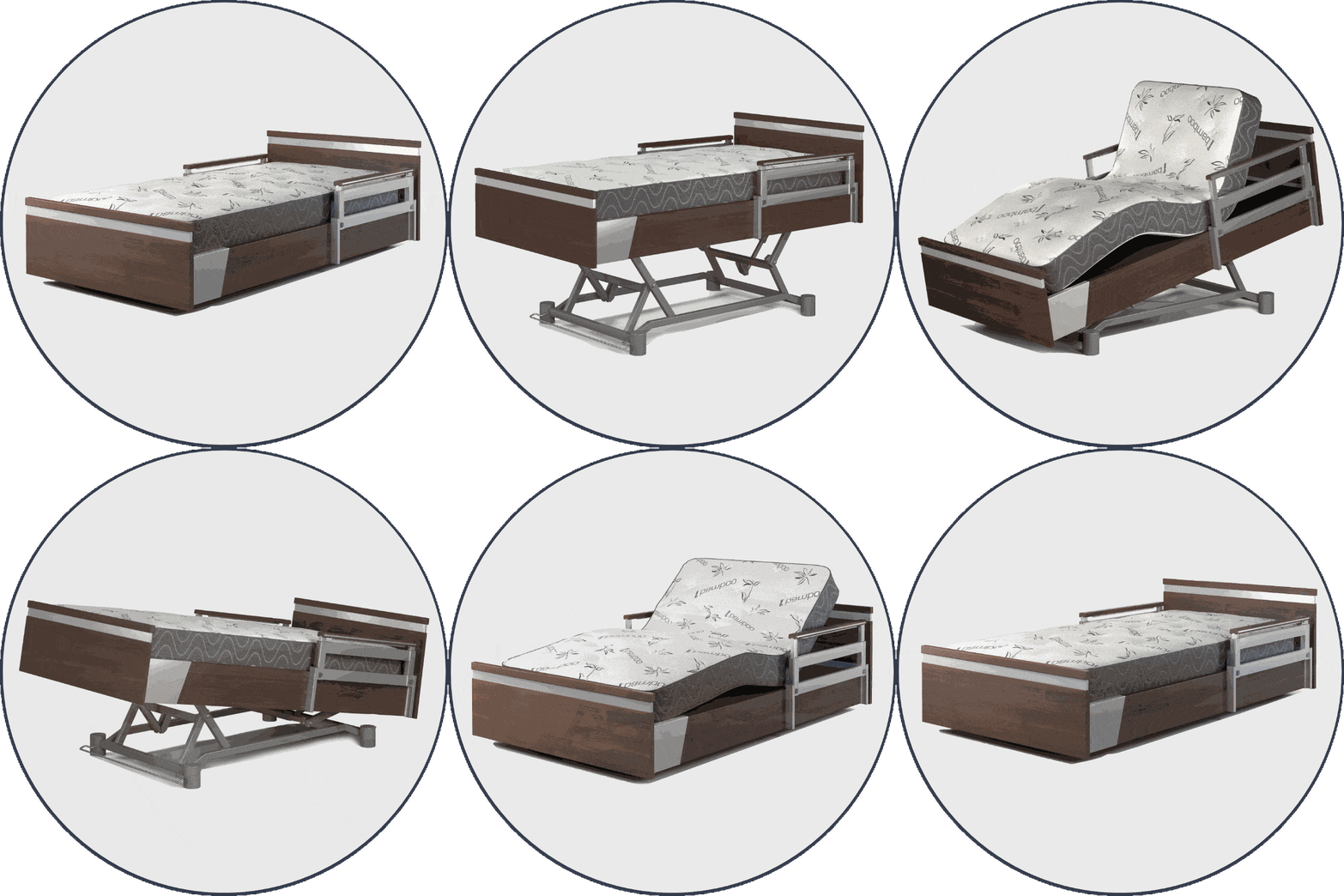
Matching a surface to a person’s microclimate needs requires considering three variables: pressure risk level, moisture load, and existing injury status. The 2023 Wound Healing Society guidelines recommend that surface selection explicitly consider each individual’s need for pressure redistribution, shear reduction, and microclimate control together, not as separate checklists.4 At risk, low moisture load, no current injury: A high-quality pressure-redistributing foam surface (reactive surface) is appropriate as a first-line choice. Look for a foam density and formulation that does not trap heat, some open-cell or viscoelastic foam constructions manage temperature better than others. SonderCare’s Comfort Mattress is a clinically appropriate option here, with Visco memory foam and a fluid-proof cover. For a broader comparison of mattress options, see our guide to choosing the best mattress for bedridden patients. At risk, moderate to high moisture load (incontinence, night sweats), no current injury: An alternating pressure surface adds active cycling to reduce sustained loading. Pair it with a vapor-permeable protective cover, not a standard vinyl pad. Active pressure injury (Stage 2 or higher) or high moisture load: A low air loss surface or combination alternating pressure/low air loss system is the clinical standard. SonderCare’s Alternating Pressure Air Mattress, available in 39″ Twin XL and 48″ Extra Wide, is designed specifically for wound care and pressure sore treatment, with 18 independently controlled air bladders and a pump system that provides targeted pressure relief. It is not a comfort mattress; it is purpose-engineered for individuals with active wounds or very high skin-integrity risk. For families managing a loved one in a hospital-grade home bed, the Aura Premium home hospital bed supports this work through its hi-lo height adjustment: caregivers can raise the sleeping surface to a comfortable working height for repositioning, skin checks, and surface changes, reducing physical strain and improving the consistency of care. Consistent repositioning remains one of the most effective interventions for both pressure and microclimate management. To see the full range of pressure-care mattress options, visit the SonderCare mattresses page.Supporting Strategies That Work With Your Surface
A pressure-care surface is one part of a moisture and temperature management system. Several additional strategies reinforce its effect. Repositioning. Regular position changes remain the most evidence-based pressure injury prevention intervention. Our complete guide to how often you should turn a bedridden patient covers schedules based on risk level and surface type. Even with a low air loss mattress, repositioning reduces cumulative loading at individual sites. Barrier creams. Zinc-based moisture barrier creams applied to high-risk areas, sacrum, inner thighs, and heels, protect skin from the chemical irritants in urine and reduce the rate at which moisture penetrates and softens the outer skin layer. Caregivers who manage incontinence alongside immobility should treat barrier protection as non-optional. Sheet and bedding choice. Synthetic or vinyl-coated sheets trap heat and moisture. Natural fiber or microfiber sheets with moisture-wicking properties maintain better airflow against the skin. A fluid-proof mattress cover specifically designed for pressure-care use is preferable to a standard waterproof pad placed on top of the surface. Room temperature. Keeping the bedroom between 68°F and 72°F / 20–22°C reduces the ambient microclimate load the surface must manage. A portable fan directed away from the occupant (not directly at the skin, which dries mucous membranes) can help with room air circulation. For a complete overview of daily skin care for individuals who are bedridden, see our guide to skin care for bedridden seniors.Putting It Together
The small climate between your loved one’s skin and their mattress is real, measurable, and manageable, and it shapes pressure injury risk as significantly as pressure itself. Heat builds up under foam. Moisture accumulates when covers are impermeable. Alternating pressure systems cycle air inside cells, not against skin. Low air loss surfaces move conditioned air through the cover and directly manage the temperature and humidity that break skin down. Choosing the right surface starts with an honest assessment: What is the pressure risk level? What is the moisture load? Is there an active wound? From there, surface selection becomes a clinical match rather than a guess. Our full pressure sore prevention and treatment guide brings together surface selection, repositioning, skin care, and early wound management into a single resource. If you’re ready to talk through options for your specific situation, SonderCare’s bed experts are available by phone or chat; and they can help you match the right mattress to your loved one’s risk profile and care environment.References
- National Pressure Injury Advisory Panel (NPIAP), European Pressure Ulcer Advisory Panel (EPUAP), Pan Pacific Pressure Injury Alliance (PPPIA). Full Body Support Surfaces for Prevention and Treatment of Pressure Injuries (Part 1). International Guideline online, published 25 February 2025, references updated 21 May 2026. Available at: https://www.internationalguideline.com/surfaces
- National Pressure Ulcer Advisory Panel, European Pressure Ulcer Advisory Panel and Pan Pacific Pressure Injury Alliance. Prevention and Treatment of Pressure Ulcers: Clinical Practice Guideline. Cambridge Media, 2014. ISBN-13: 978-0-9807396-5-7. Available at: NPUAP/EPUAP/PPPIA 2014 CPG (PDF)
- National Institute for Health and Care Excellence (NICE). Pressure ulcers: prevention and management. Clinical Guideline CG179. Published 23 April 2014. Available at: https://www.nice.org.uk/guidance/cg179
- Gould LJ, et al. WHS Guidelines for the Treatment of Pressure Ulcers, 2023 update. Wound Repair and Regeneration. 2023. DOI: 10.1111/wrr.13130. Available at: https://pmc.ncbi.nlm.nih.gov/articles/PMC11403384/
- Park-Lee E, Caffrey C. Pressure Ulcers Among Nursing Home Residents: United States, 2004. CDC/NCHS Data Brief No. 14. February 2009. Available at: https://www.cdc.gov/nchs/products/databriefs/db14.htm
- VanGilder CA, et al. Pressure Injury Prevalence in Acute Care Hospitals With Unit-Specific Analysis: Results From the International Pressure Ulcer Prevalence (IPUP) Survey Database. J Wound Ostomy Continence Nurs. 2021;48(6):492–503. Available at: VanGilder et al. 2021 (PDF)
- Labeau SO, Blot SI, et al. Prevalence, associated factors and outcomes of pressure injuries in adult intensive care unit patients: the DecubICUs study. Intensive Care Medicine. 2021. DOI: 10.1007/s00134-020-06234-9. Available at: https://pmc.ncbi.nlm.nih.gov/articles/PMC7880913/
- Pang Y, Du Y, Zhou W, Liu S, Yuan Y. Trend analysis of pressure ulcers in adults 60 years and older from 1990 to 2021 using jointpoint regression and Bayesian age-period-cohort models. Scientific Reports. 2025. DOI: 10.1038/s41598-025-11027-5. Available at: https://www.nature.com/articles/s41598-025-11027-5
- Coventry LL, Kabdebo I, Walsh N, Winderbaum J, Jenkins M, Beeckman D, et al. Twenty-one year trends in pressure injury in a Western Australian hospital. Journal of Tissue Viability. 2025. PMID: 40023924. Available at: ECU Research Online
- de Oliveira BA, et al. Point prevalence and risk factors for pressure ulcers in hospitalized adult patients: a cross-sectional study. Einstein (Sao Paulo). 2024. DOI: 10.31744/einstein_journal/2024AO0811. Available at: https://pmc.ncbi.nlm.nih.gov/articles/PMC11460998/
- Kottner J, Black J, Call E, Gefen A, Santamaria N. Microclimate: A critical review in the context of pressure ulcer prevention. Clinical Biomechanics. 2018;59:62–70. DOI: 10.1016/j. clinbiomech.2018.09.010. Available at: https://www.sciencedirect.com/science/article/abs/pii/S0268003318302572
- Jimenez Cerquera C, et al. Relationship Between Skin Temperature and Pressure Injuries: A Systematic Review. Applied Sciences (MDPI). 2025;15(17):9537. Available at: https://www.mdpi.com/2076-3417/15/17/9537