







The good news? These are preventable events. Research consistently shows that targeted home modifications reduce fall risk significantly, with some programs cutting falls by as much as 38% in high-risk groups.3 This guide walks you through every room, every priority, and every cost consideration, so you can make informed decisions on your own terms and your own timeline.
Why Aging in Place Home Modifications Matter More Than You Think
Falls are not minor inconveniences for older adults. They are the leading cause of injury-related death in Americans over 65, claiming approximately 41,400 lives in 2023 alone.4 The age-adjusted fall death rate climbed 41% between 2012 and 2021.5 And the financial toll is staggering: fall-related medical costs in the U. S. reached $50 billion in 2015, a figure that has only grown since.6
Yet despite these numbers, very few American homes are what researchers call “aging-ready.” Most lack even basic accessibility features like a step-free entry, a bedroom on the main floor, and a bathroom with grab bars. The gap between where we want to age and where we actually can age safely is enormous.
Here is the comparison that puts aging in place home modifications in perspective: a comprehensive home remodel averages roughly $10,000 to $25,000 as a one-time investment. Assisted living costs $50,000 or more per year. Nursing home care runs $90,000 to $100,000 annually. Modifications are not just about comfort; they are one of the smartest financial decisions you can make for your future.
And the evidence backs this up. A large-scale study tracking over 657,000 older adults in the UK found that home adaptations, grab rails, stair rails, ramps, and heating improvements, led to a statistically significant decline in fall-related emergency admissions over time.7 Another longitudinal study using U. S. data found that home accessibility features were associated with a 21.8% reduction in serious falls overall, and a 38.6% reduction for those aged 75 and older.8
Start with a Professional Home Safety Assessment
Before you pick up a hammer or order grab bars online, the single most valuable step you can take is getting a professional home safety assessment. This is not just good advice; it is backed by strong research evidence.
A systematic review and meta-analysis published in PeerJ found that multi-component home hazard modification programs reduced the risk of falls by 7% across all participants.9 But when those programs were guided by a professional, with personalized assessment, facilitated modifications, proper installation, and user training, the results were dramatically better. One randomized clinical trial showed a 38% reduction in falling rates when a structured, OT-guided intervention was used.3
Two types of professionals can help:
- Occupational Therapists (OTs): They evaluate your specific mobility, health conditions, and daily routines to create a tailored plan. Medicare typically covers an OT home assessment when your doctor writes a referral, making this essentially free for most seniors.
- Certified Aging-in-Place Specialists (CAPS): These are contractors trained through the National Association of Home Builders specifically in aging-in-place remodeling. They understand both the construction side and the accessibility side.
Think of the assessment as your roadmap. Without it, you are guessing at what matters most. With it, you are investing in the modifications that will actually make a difference for your specific situation.
Bathroom Modifications: Where Aging in Place Safety Starts
Ask any caregiver, any occupational therapist, or any emergency room physician where most in-home falls happen, and you will hear the same answer: the bathroom. Wet surfaces, tight spaces, hard fixtures, and the physical demands of bathing create a perfect storm of fall risk. A 2025 systematic review confirmed that grab bars, non-slip mats, and stair railings significantly reduced fall incidence, with particular effectiveness in high-risk areas like bathrooms.10
Here are the bathroom modifications that matter most, in order of priority:
Essential Bathroom Changes
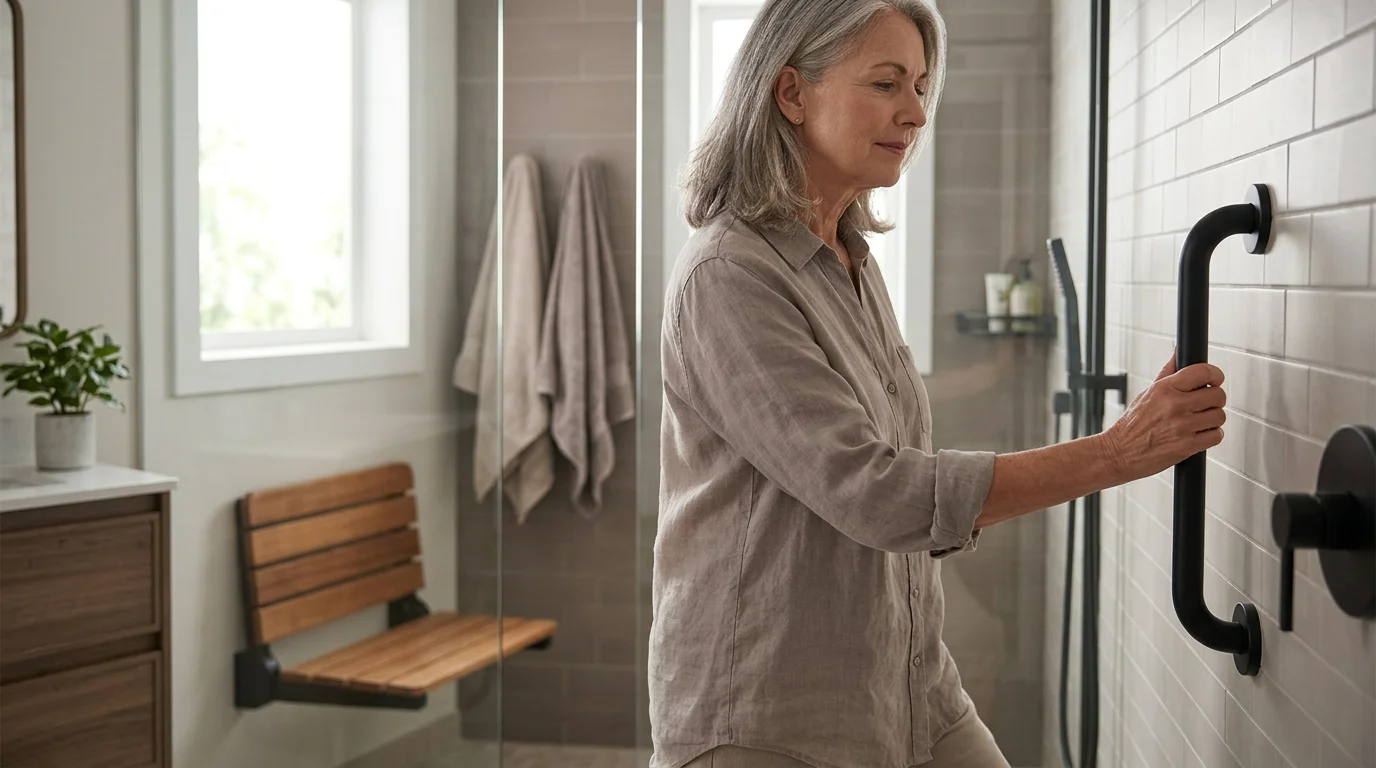
- Grab bars near the toilet and in the shower/tub: This is modification number one. Install them into wall studs, never use adhesive-mounted bars for weight-bearing support. A grab bar that pulls out of the wall is worse than no bar at all.
- Non-slip surfaces: Apply non-slip decals or mats inside the tub or shower floor. Consider replacing smooth tile flooring with textured, slip-resistant material.
- Walk-in or roll-in shower: If your budget allows, replacing a step-over tub with a curbless shower is one of the most impactful bathroom changes you can make. It eliminates the single most dangerous movement in the bathroom.
- Raised toilet seat or comfort-height toilet: Reduces the strain on knees and hips during the sit-to-stand transition.
- Handheld showerhead: Allows seated bathing and gives you control over water direction without twisting or reaching.
- Single-lever faucets with anti-scald valve: Easier to operate with arthritic hands and prevents burns from temperature spikes.
Budget reality: grab bars cost $20 to $50 each and roughly $100 to $200 installed professionally. A full accessible bathroom remodel can range from $5,000 for basic modifications to $25,000 or more for a complete universal-design renovation. Many families start with grab bars and non-slip surfaces, modifications that cost under $500 total and dramatically improve safety.
Bedroom Modifications for Safe, Independent Aging in Place
The bedroom is where you spend a third of your life, and as mobility changes, it becomes the room where safety modifications matter most, especially at night. Nighttime bathroom trips are responsible for a disproportionate share of falls in older adults, and the bedroom-to-bathroom path is ground zero.
Relocate to the Main Floor
If your bedroom is currently on the second floor, the most impactful single modification you can make is moving it to the ground level. Eliminating stairs from your daily routine removes one of the highest-risk activities in the home entirely. If you have a first-floor room that can be converted, a den, home office, or formal dining room, this is worth serious consideration.
Invest in the Right Bed
A standard bed frame can become a real hazard as mobility declines. Beds that are too high make getting in difficult; beds too low make getting out a struggle. The solution is an adjustable bed that adapts to your needs, not the other way around.
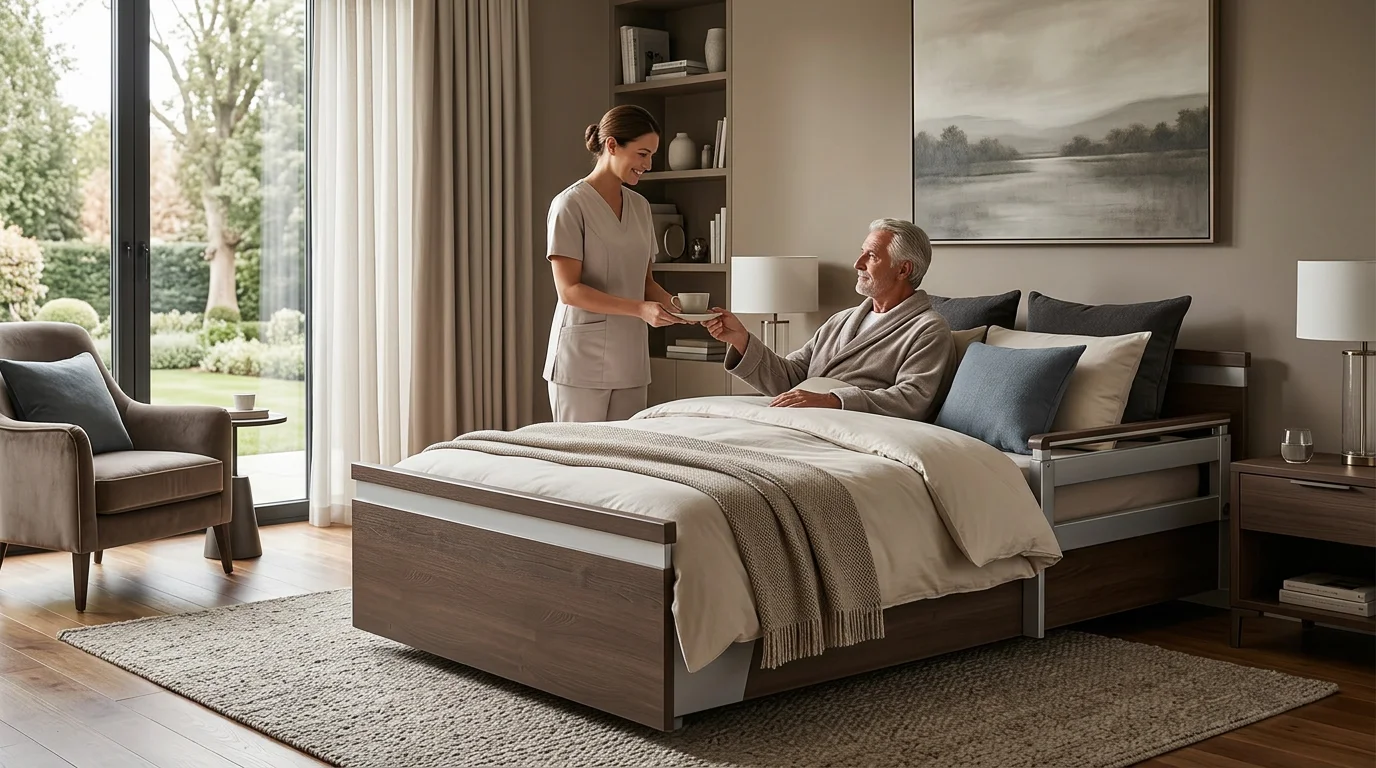
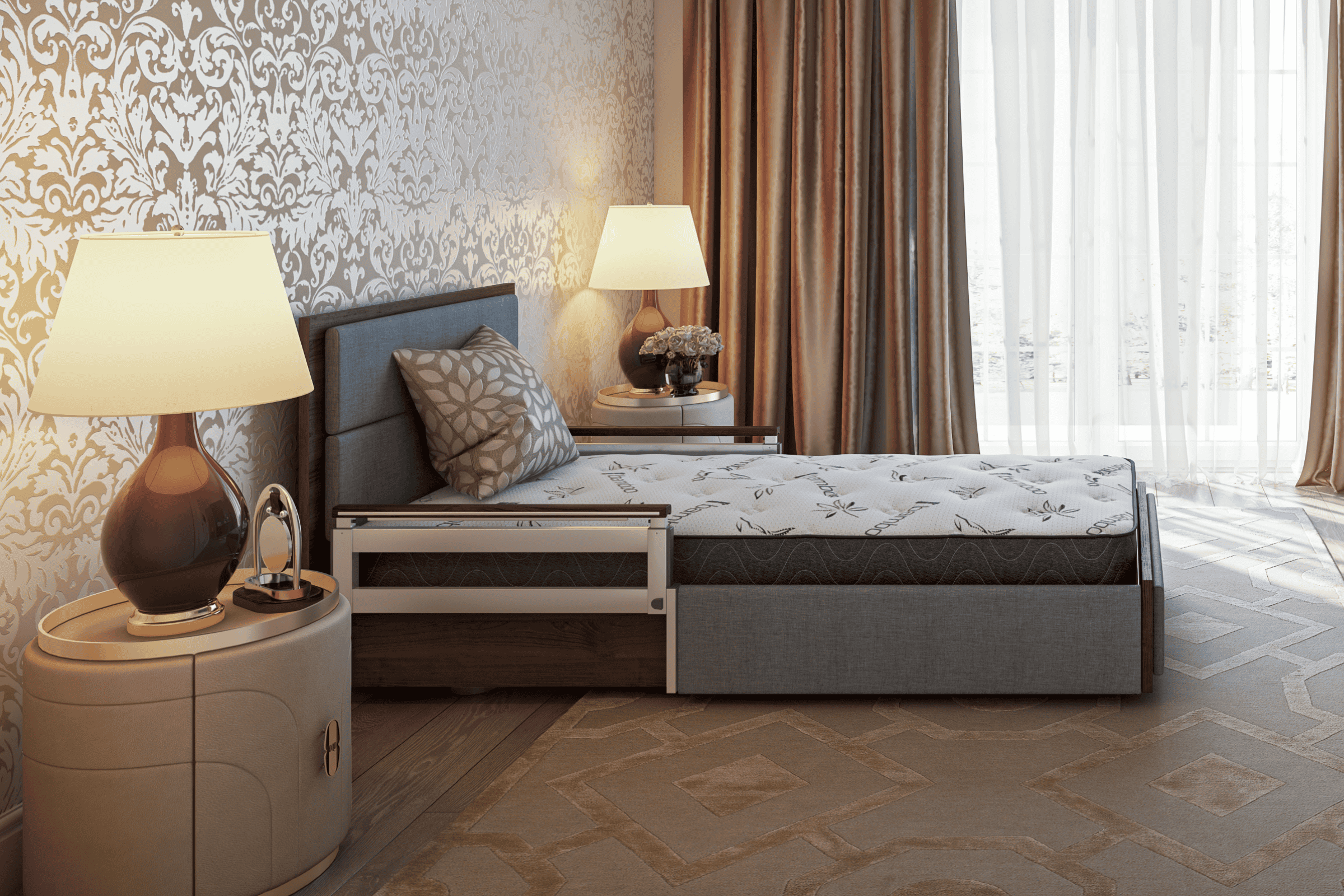
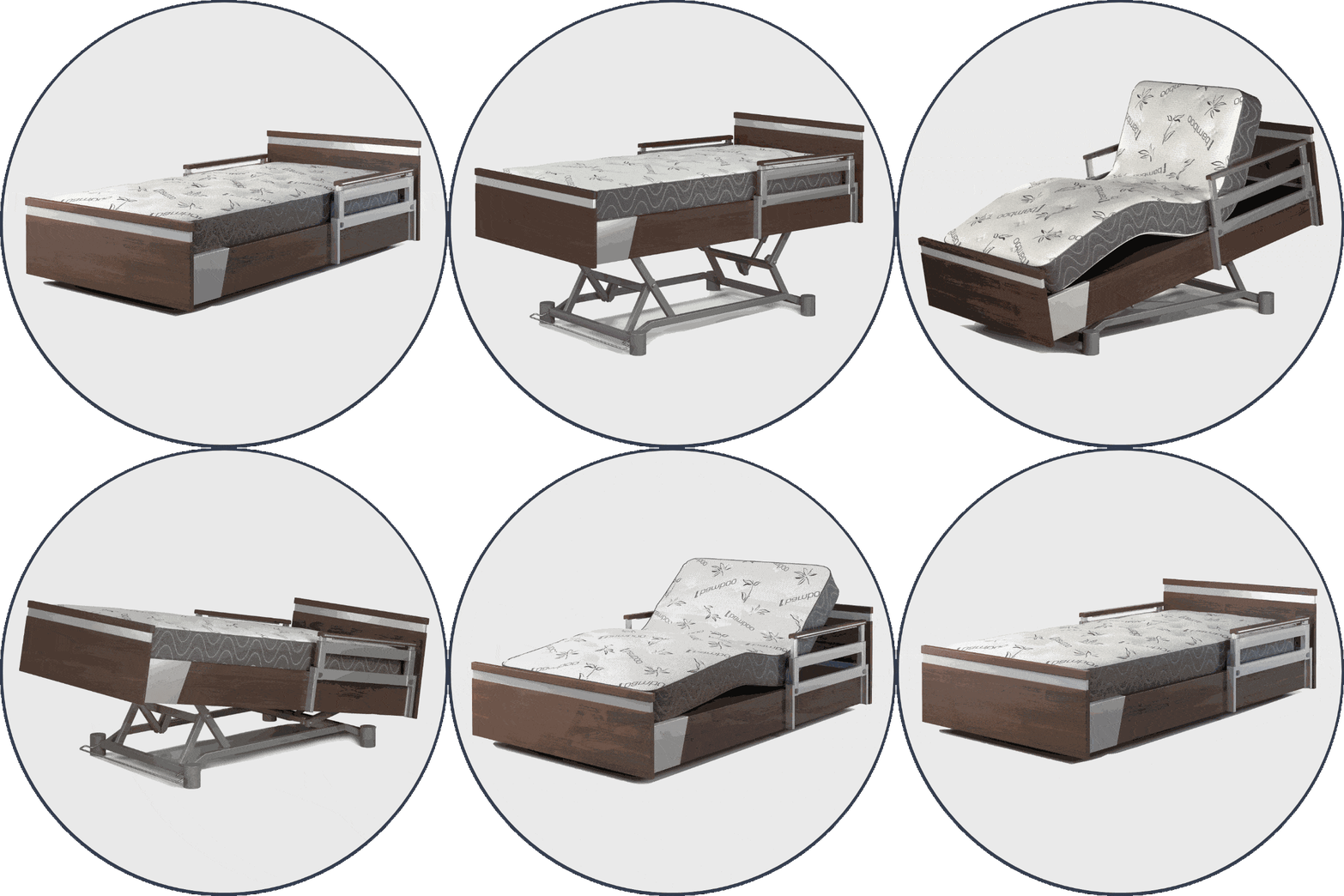
The Aura Premium Home Hospital Bed from SonderCare is designed exactly for this purpose. Its FallSafe Ultra-Low Height drops the platform to just 10 inches from the floor, minimizing injury risk if you do roll out of bed. The hi-lo adjustment raises the bed to a pre-programmed 21-inch transfer position for getting in and out safely, and elevates to 39 inches for caregiver access. It does all of this while looking like a piece of premium bedroom furniture, not medical equipment.
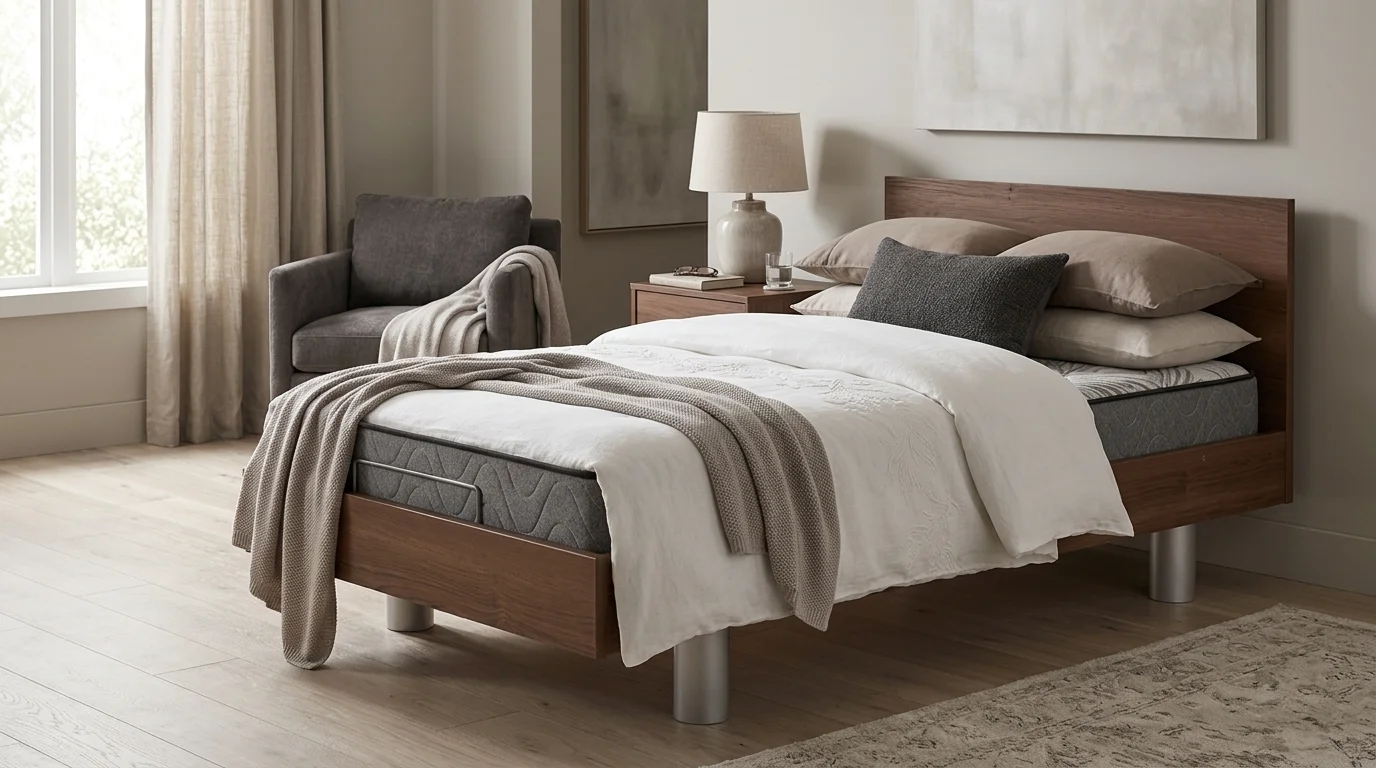
For proactive seniors who want adjustability and safety without the full clinical feature set, the Impulse Residential Bed ($3,999) offers head, knee, and height adjustment in a residential design, a smart investment before needs escalate.
Nighttime Safety
Motion-activated lighting along the bedroom-to-bathroom path is one of the simplest and most effective aging in place home modifications you can install. SonderCare’s Underbed Auto-Nightlight ($219) activates automatically when you swing your legs over the side, illuminating the floor before your feet touch it. Combined with nightlights in the hallway and bathroom, this creates a continuous lit path that dramatically reduces nighttime fall risk. For a complete guide to setting up a hospital-grade bedroom at home, our Learning Center covers everything from furniture placement to equipment selection.
Kitchen, Hallway, and Living Area Home Modifications for Seniors
The bathroom and bedroom get most of the attention, but falls and injuries happen throughout the home. These modifications address the rooms where you spend your waking hours.
Kitchen
- Replace round doorknobs with lever handles: Easier to operate with reduced grip strength or arthritis. This applies to every door in the house, but the kitchen is where you notice it most.
- Swap cabinet knobs for D-shaped pulls: Same principle, easier to grip, less hand strain.
- Organize frequently used items between waist and shoulder height: Eliminates the need for step stools or reaching overhead, both common causes of falls.
- Install task lighting under cabinets: Improves visibility for food preparation and reduces eye strain.
- Anti-fatigue mats: At the sink and stove, where you stand longest.
Hallways and Living Areas
- Remove throw rugs: This is the single easiest and most impactful change you can make. Throw rugs are a tripping hazard, period. If you cannot part with them, use industrial-grade non-slip backing, not the flimsy foam kind.
- Secure electrical cords: Route them behind furniture or use cord covers. Cords crossing walkways are falls waiting to happen.
- Upgrade lighting: Replace dim bulbs with higher-wattage LED options. Add motion-sensor lights in hallways. Install glow-in-the-dark or illuminated light switch covers.
- Clear furniture from pathways: Create wide, unobstructed walking paths through every room. If you use a walker or wheelchair now, or might in the future, plan for 36-inch-wide clearances.
- Smart home controls: Voice-activated lights and thermostats are not just convenient, they reduce the need to walk across a room to flip a switch in the dark.
These changes cost almost nothing, and research consistently identifies clutter removal, improved lighting, and hazard elimination as critical components of effective aging in place home modifications.10 For additional strategies specific to the bedroom, our guide on making a bedroom safe for an aging parent provides a detailed checklist.
Stairway, Entryway, and Outdoor Aging in Place Modifications
Stairs and entryways are transition zones; places where balance is challenged by changes in elevation, surface, and lighting. They deserve focused attention in any aging in place modification plan.
Stairway Safety
- Handrails on both sides: This is not optional if you have stairs. Sturdy, continuous handrails that extend the full length of the staircase, and ideally slightly beyond the top and bottom steps, provide crucial support.
- Non-slip stair treads: Apply textured strips or full treads to each step. Carpeted stairs should be checked for loose edges that can catch feet.
- Stair lighting: Illuminate the top, bottom, and length of every staircase. Motion-activated options work best for nighttime.
- Contrasting edge strips: High-contrast tape or paint on stair nosings helps distinguish one step from the next, especially for those with reduced depth perception.
Entryways and Outdoor Access
- Ramps: If you have steps at your entry, a ramp is essential for wheelchair or walker access. ADA guidelines recommend a 1:12 slope ratio (one inch of rise per 12 inches of ramp length). Many families build ramps as a proactive measure even before they are strictly necessary.
- Doorway widening: Standard doorways are 28 to 32 inches wide. Wheelchair access requires a minimum of 32 inches clear, with 36 inches being ideal. Offset hinges can add 2 inches without full reconstruction.
- Step-free entry: At least one entrance to the home should be completely step-free, a zero-threshold entry that eliminates tripping risk entirely.
- Outdoor lighting and handrails: Walkways, porches, and garage entries need adequate lighting and grab points.
The evidence for these modifications is compelling. A national longitudinal study found that funded home adaptations, including grab rails, stair rails, and ramps, were associated with a statistically significant, ongoing decline in fall-related emergency admissions, with fall odds reducing by approximately 3% per quarter over the study period.7
How Much Do Aging in Place Home Modifications Cost?
Cost is one of the biggest concerns families have, and it is worth addressing head-on. The range is enormous because “aging in place modifications” covers everything from a $30 grab bar to a $50,000 whole-home renovation.
Typical Cost Ranges
- Grab bars, non-slip mats, lighting upgrades: $200 to $500
- Lever handles, cabinet pulls, cord management: $100 to $300
- Bathroom modifications (grab bars, shower seat, raised toilet): $500 to $3,000
- Walk-in shower conversion: $3,000 to $12,000
- Ramp installation: $1,000 to $8,000 (depending on length and materials)
- Doorway widening: $500 to $2,500 per doorway
- Stairlift: $3,000 to $10,000
- Full universal-design renovation: $25,000 to $50,000+
- National average for aging-in-place remodel: approximately $10,000
Funding Sources to Explore
You do not have to fund every modification out of pocket. Several programs exist to help:
- Medicare Advantage supplemental benefits: In 2025, 33% of Medicare Advantage plans offered home-focused benefits covering modifications like grab bars and ramps.
- HUD Older Adults Home Modification Program: Provides up to approximately $5,000 for low-income seniors for essential modifications.
- VA grants (HISA/SAH): Veterans may qualify for substantial home modification funding through the Home Improvements and Structural Alterations grant or Special Adaptive Housing programs.
- Medicaid HCBS waivers: Many states include home modifications as a covered service under Home and Community-Based Services waivers.
- Local Area Agency on Aging: County and municipal programs sometimes offer safety modification grants, often with liens that release after specified periods.
The cost-effectiveness data is remarkable. The CAPABLE program, which combines occupational therapy, nursing, and home modifications at roughly $2,825 per participant, generated approximately $22,000 in net Medicare savings over just two years.11 That is a nearly 8:1 return on investment. When you are planning your modifications, it helps to know how to choose the right home hospital bed as part of the overall investment, since a quality adjustable bed can serve you for years.
When Standard Modifications Are Not Enough: Planning for Progressive Needs
Grab bars, lighting, and flooring changes are the foundation of aging in place home modifications. But for many people, needs evolve over time, and the modifications that worked at 70 may not be sufficient at 80.
When mobility declines significantly, an adjustable care bed becomes one of the most important pieces of equipment in the home. The positioning capabilities go far beyond what a standard bed frame or consumer adjustable bed can offer:
- FallSafe Ultra-Low height drops to 10 inches, minimizing injury if you roll out of bed
- Trendelenburg positioning elevates the feet above the head for circulation support
- Zero Gravity position distributes body weight evenly for pain relief and pressure reduction
- Cardiac Chair position elevates the head and bends the knees, helpful for breathing, eating, and reading in bed
- Hi-lo adjustment from 10 to 39 inches protects caregiver backs during repositioning and care tasks
The Aura Premium ($6,999) includes all of these capabilities in a furniture-grade design with upholstered panels, a 500 lb weight capacity, and a 5-year comprehensive warranty. It is certified to International Hospital Standard while looking nothing like a hospital bed, which matters when your bedroom is still your personal space, not a care facility. For a broader look at fall prevention strategies for seniors at home, including bed selection, lighting, and environmental modifications, our complete safety guide covers the full picture.
Research supports combining home modifications with regular strength and balance exercise for the greatest benefit. Studies show that pairing physical modifications with exercise programs leads to statistically significant improvements in mobility, balance, quality of life, and a meaningful reduction in the fear of falling.12
Your Aging in Place Modification Action Plan
The best time to start making aging in place home modifications is before you need them urgently. A fall, a health crisis, or a hospital discharge are all common triggers; but every family who has been through a reactive modification will tell you the same thing: they wish they had started sooner.
Here is a practical approach:
- Get a professional assessment: Ask your doctor for an OT referral (typically covered by Medicare) or find a CAPS-certified contractor through the National Association of Home Builders.
- Address the bathroom first: Install grab bars, non-slip surfaces, and a handheld showerhead. These cost under $500 and address the highest-risk room in your home.
- Improve lighting and remove hazards: Replace dim bulbs, add motion-sensor nightlights, remove throw rugs, and secure electrical cords. These changes are free or nearly free.
- Plan for progressive needs: Consider main-floor bedroom relocation, adjustable bed investment, and doorway widening as part of a phased approach over the next 1 to 3 years.
- Research funding: Contact your local Area Agency on Aging, check your Medicare Advantage plan benefits, and explore HUD programs for potential financial assistance.
Your home has been your foundation for years. With thoughtful, evidence-based aging in place home modifications, it can continue to be, safely, comfortably, and on your terms. You do not have to do everything at once. You just have to start.
Have questions about how an adjustable care bed fits into your aging-in-place plan? Speak with a SonderCare bed expert for a no-pressure conversation about your specific needs.
References
- Kakara R, Bergen G, Burns E, Stevens M. Nonfatal and Fatal Falls Among Adults Aged 65 Years and Older, United States, 2020-2021. MMWR Morb Mortal Wkly Rep. 2023;72:938-943. https://www.cdc.gov/mmwr/volumes/72/wr/mm7235a1.htm
- Centers for Disease Control and Prevention. Older Adult Falls Data. https://www.cdc.gov/falls/data-research/index.html
- Stark S. et al. Randomized Clinical Trial (2021), as cited in Lektip C. et al. Home hazard modification programs for reducing falls in older adults: a systematic review and meta-analysis. PeerJ. 2023. https://peerj.com/articles/15699/
- Garnett MF, Weeks JD, Zehner AM. Unintentional Fall Deaths in Adults Age 65 and Older: United States, 2023. NCHS Data Brief No. 532, June 2025. https://www.cdc.gov/nchs/products/databriefs/db532.htm
- Centers for Disease Control and Prevention. Older Adult Falls Data, Mortality Trends. https://www.cdc.gov/falls/data-research/index.html
- Florence CS, Bergen G, Atherly A, Burns E, Stevens J, Drake C. Medical Costs of Fatal and Nonfatal Falls in Older Adults. J Am Geriatr Soc. 2018;66(4):693-698. https://doi.org/10.1111/jgs.15304
- Hollinghurst J, Daniels H, Fry R, Akbari A, Rodgers S. Do home adaptation interventions help to reduce emergency fall admissions? A national longitudinal data-linkage study of 657,536 older adults living in Wales (UK) between 2010 and 2017. Age and Ageing. 2022;51: afab201. https://doi.org/10.1093/ageing/afab201
- Eriksen MD, Greenhalgh-Stanley N, Engelhardt GV. Home safety, accessibility, and elderly health: Evidence from falls. Journal of Urban Economics. 2015;87:14-24. https://doi.org/10.1016/j.jue.2015.02.003
- Lektip C. et al. Home hazard modification programs for reducing falls in older adults: a systematic review and meta-analysis. PeerJ. 2023. https://peerj.com/articles/15699/
- Cha SM, et al. A Systematic Review of Home Modifications for Aging in Place in Older Adults. Healthcare (MDPI). 2025;13(7):752. https://www.mdpi.com/2227-9032/13/7/752
- CAPABLE program evaluations (Szanton et al.), as cited in Abraham JM. The Cost Efficiency of Home Modifications to Reduce Healthcare Costs. HomesRenewed. 2021. https://www.homesrenewed.org/wp-content/uploads/2021/11/HomesRenewed-Gov-save-money-on-remods-for-aging-in-place.pdf
- Stasi et al. (2021) and Tsekoura et al. (2021), as cited in Cha SM, et al. A Systematic Review of Home Modifications for Aging in Place in Older Adults. Healthcare (MDPI). 2025;13(7):752. https://www.mdpi.com/2227-9032/13/7/752