







Why the Bedroom Is the Most Dangerous Room for Older Adults
More than one in four adults aged 65 and older falls each year, generating approximately three million emergency department visits annually in the United States alone.4 While kitchens, bathrooms, and staircases get most of the safety attention, the data tells a different story. The bedroom is where the most injurious falls actually occur.1 Why is the bedroom so dangerous? The answer comes down to timing and transitions. Nighttime trips to the bathroom involve standing up from a lying position, when blood pressure is lowest, balance is weakest, and visibility is poorest. Add in loose rugs, an awkward bed height, and furniture positioned too close to walkways, and you have a room full of hazards that most families never think to address. The financial burden is staggering. The average inpatient cost for a fall-related hospital visit exceeds $18,600.3 Hip fractures alone account for more than 319,000 hospitalizations per year among older adults.4 But here is the encouraging part: systematic reviews, including Cochrane analyses, show that targeted home modifications can reduce the rate of falls by approximately 26%.5 When those modifications are guided by an occupational therapist, fall reductions of 31% to 39% have been documented.6 Making a bedroom safe for an elderly person is not about turning their personal space into a clinical environment. It is about making thoughtful changes, many of them invisible, that let them sleep, move, and live in their own room with confidence. If you are looking at a broader plan for aging in place home modifications, the bedroom is the right place to begin.Start Tonight: Five No-Cost Bedroom Safety Changes
If a parent has recently fallen; or you have noticed them moving more cautiously, these five changes take less than 30 minutes and cost nothing. Caregivers in online communities consistently describe these as the highest-impact first steps, and occupational therapists confirm they address the most common hazards.1. Remove Every Throw Rug and Loose Mat
Loose rugs are the single most overlooked tripping hazard in bedrooms. Carpet edges catch walker legs and cane tips, and area rugs slide underfoot on hard floors. Remove them entirely. If a rug absolutely must stay, secure every edge with double-sided carpet tape and choose a thin, low-pile option with non-slip backing.2. Clear the Path from Bed to Bathroom
Walk the exact route your parent takes from bed to the bathroom door. Move any furniture, storage bins, or power cords that narrow the path. The goal is a straight, unobstructed walkway at least 36 inches wide, enough for a walker or for someone moving unsteadily in the dark.3. Move Essentials Within Arm’s Reach
A sturdy bedside table should hold everything they might need without getting up: phone, water, medications, glasses, and a flashlight with fresh batteries. Reaching or leaning out of bed is a leading cause of bedside falls, especially at night.4. Check the Bed Height
Have your parent sit on the edge of the bed. Their feet should rest flat on the floor with knees bent at roughly 90 degrees. If the bed is too high, they risk sliding off. Too low, and standing up becomes a struggle that can cause a fall. Most adults need a mattress-top height between 20 and 26 inches from the floor, but this varies by leg length.75. Tuck Away All Electrical Cords
Run phone chargers, lamp cords, and extension cables along the baseboards rather than across the floor. Secure them with cord clips. A single cord crossing a walkway is enough to cause a fall.Bedroom Lighting That Prevents Falls Without Disrupting Sleep
Lighting is the most evidence-backed bedroom safety intervention, and the most commonly done wrong. Flipping on a bright overhead light at 2 a. m. creates glare, suppresses melatonin, and makes it harder to fall back asleep. The goal is guiding light: just enough to see the floor clearly without waking up the brain. A pragmatic study by Thölking and colleagues found that installing a guiding nightlight for older adults significantly reduced their fear of falling at night, dropping from a mean score of 5.5 to 3.8 on a 10-point scale (p = 0.001), while also improving self-rated sleep quality.8 A separate pilot trial by Zimmerman et al. reported a 34% lower incidence density for falls during the intervention period when guiding light systems were installed in an assisted living setting.9 For a safe bedroom setup, follow these lighting principles:- Use motion-activated path lights placed at baseboard level between the bed and the bathroom door. They turn on when feet hit the floor and illuminate the walking surface without overhead glare.
- Choose warm-spectrum bulbs with a color temperature of 2,700 Kelvin or lower. Research confirms that amber and warm-toned light minimizes melatonin suppression and circadian disruption compared to blue-white light.10
- Keep illumination low, aim for 0.5 to 1.0 lux at eye level, which is enough to see the path without fully waking up.10
- Place a lamp with an easy-reach switch on the bedside table. Smart bulbs controlled by voice or a bedside remote are another good option.
Getting the Bed Right: Height, Transfers, and Safe Support
The bed itself is the centerpiece of bedroom safety for seniors, and the piece of furniture most families never think to evaluate. Bed height, transfer support, and rail safety all play critical roles in whether someone can get in and out of bed without falling.Why Bed Height Matters More Than You Think
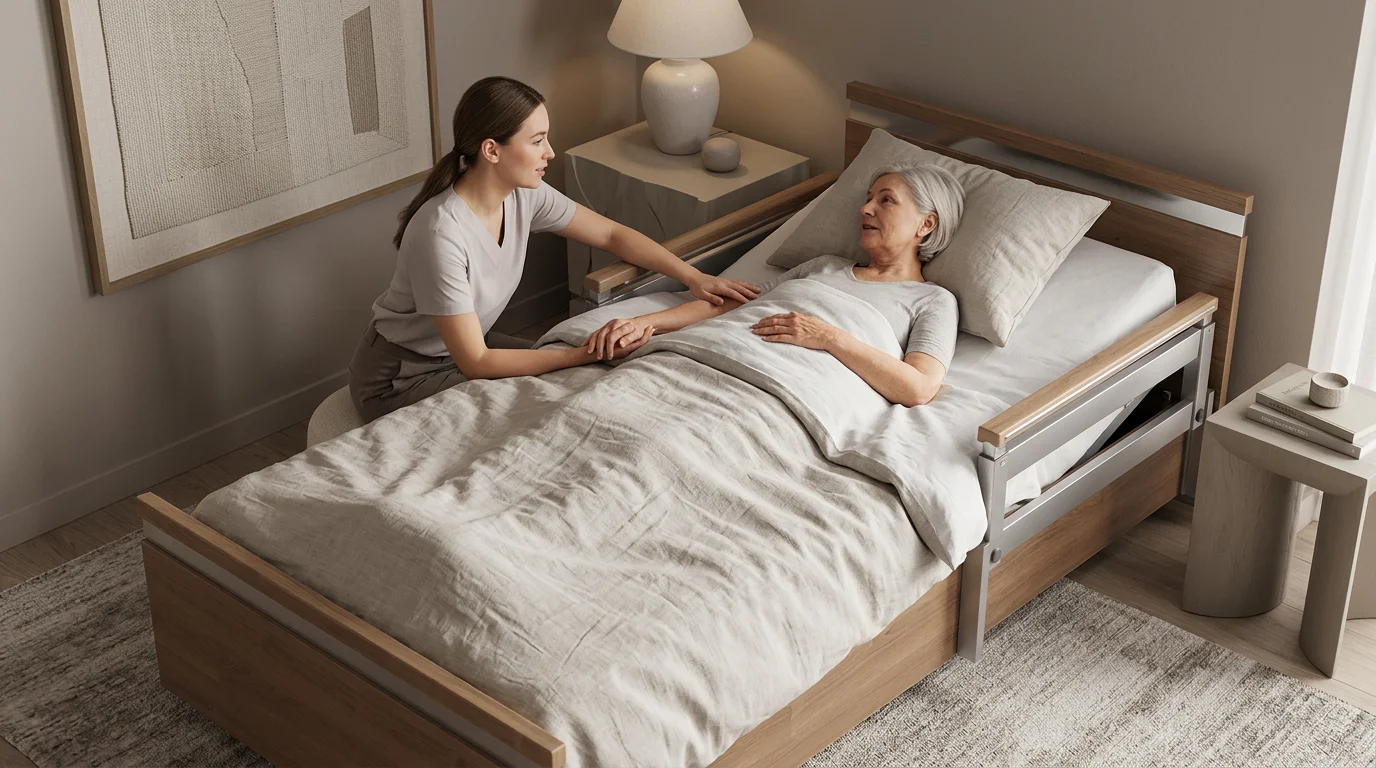
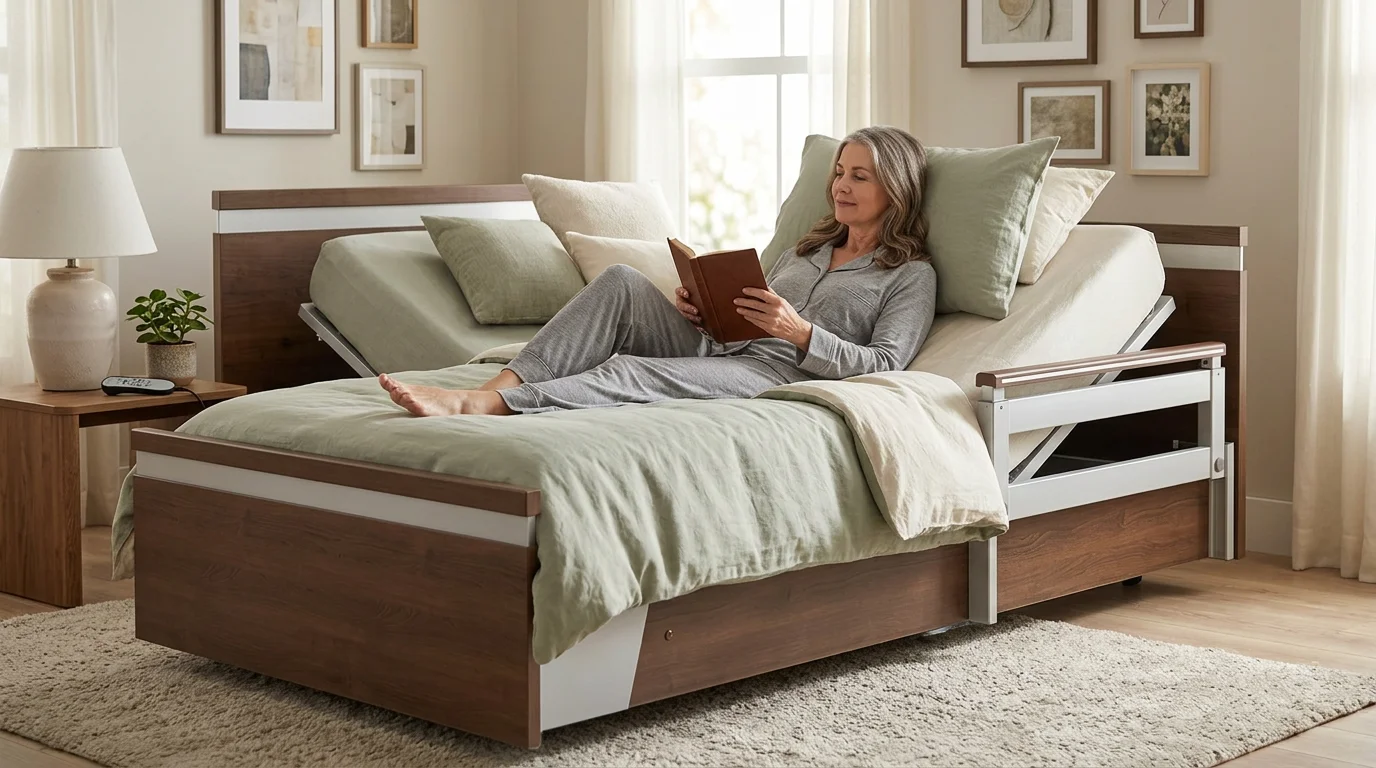
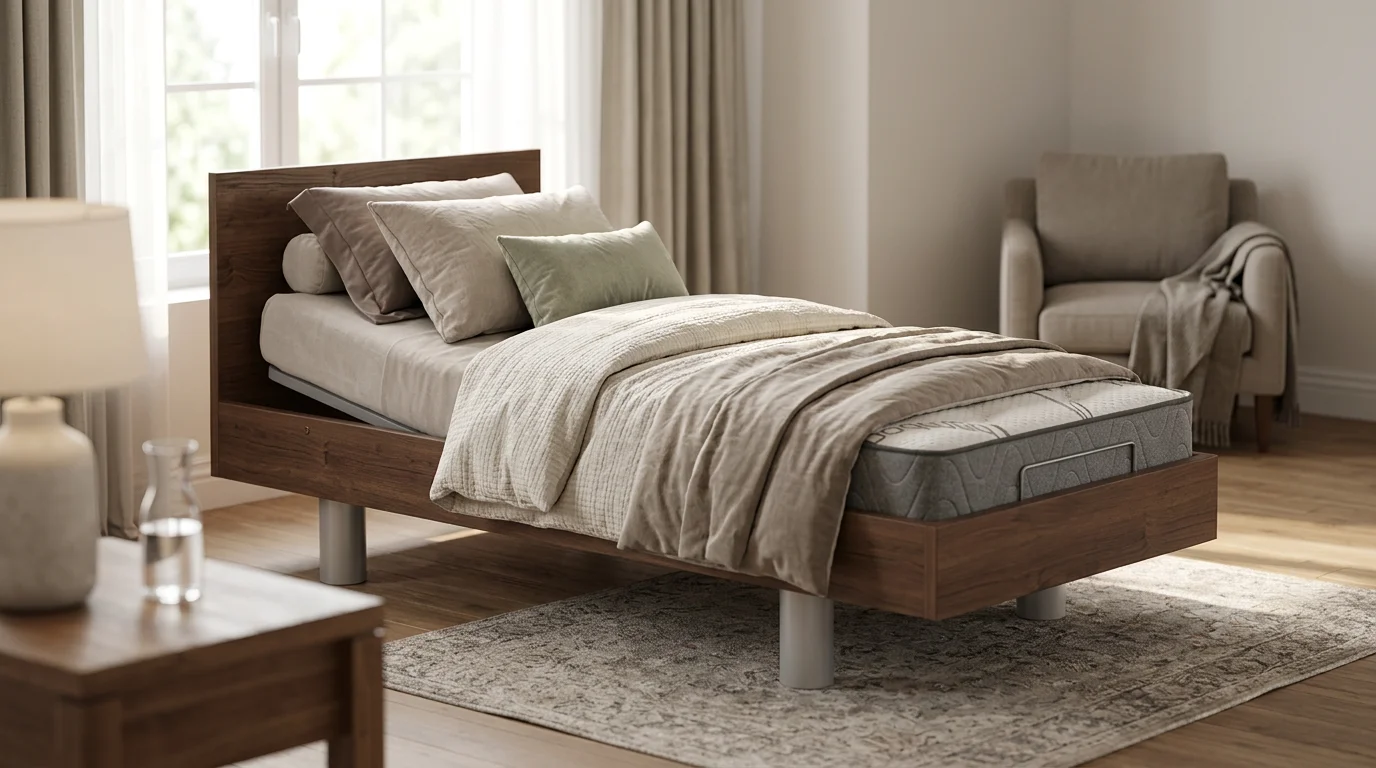
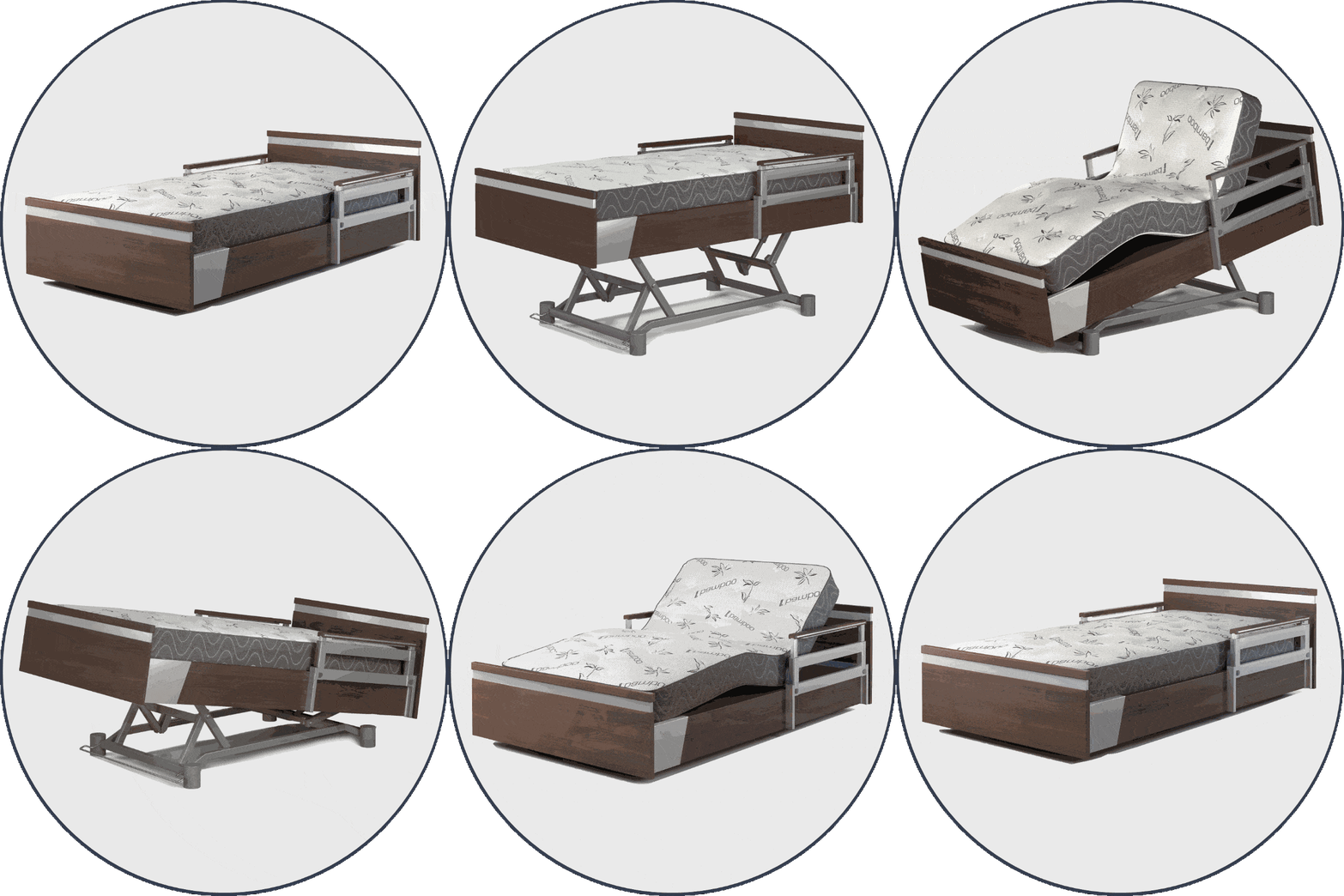
Biomechanical research suggests that the optimal bed height allows someone to sit on the edge with their feet flat on the floor and knees bent at approximately 90 degrees. For most older adults, this means a floor-to-mattress-top height of roughly 20 to 26 inches, but it must be individualized.7 A bed that is too high forces the person to slide forward off the edge, risking a fall. A bed that is too low makes standing up difficult, especially for someone with weakened hip or knee muscles. This is one reason adjustable-height care beds offer a meaningful safety advantage. The SonderCare Aura Premium Home Hospital Bed features a hi-lo adjustment range from 10 inches (FallSafe Ultra-Low position) to 39 inches, with a pre-programmed 21-inch transfer position designed specifically for safe bed-to-standing and bed-to-wheelchair transitions. During sleep, the bed can lower to its ultra-low 10-inch platform height (17 inches to the mattress top), so even if someone does roll out of bed, the distance to the floor is minimal. During the day, the bed raises to whatever height makes transfers easiest for that individual, eliminating the one-size-fits-all problem of standard beds.A Critical Warning About Portable Bedrails
Many families buy portable bedrails as a first response to fall concerns. This is understandable but potentially dangerous. The U. S. Consumer Product Safety Commission has documented 284 deaths from entrapment associated with adult portable bed rails between 2003 and 2021, with 90% of injuries involving entrapment of the head, chest, or neck.11 Since 2021, more than three million units have been recalled.12 The CPSC has now issued a mandatory safety standard for these products due to the severity of the risk. Professional guidance from the CPSC, FDA, and the American Occupational Therapy Association advises against routine use of full-length portable bedrails in home settings, particularly for individuals with cognitive impairment, limited mobility, or those taking sedating medications.13 Safer alternatives include:- Bedside assist handles (bed canes) that clamp to the bed frame and provide a grab point for transfers
- Floor-to-ceiling transfer poles installed beside the bed
- Wall-mounted grab bars adjacent to the bed
- Adjustable bed height so the bed itself can lower to a safe level during sleep
- Low-profile floor mats beside the bed to cushion any fall
Flooring and Pathways: Eliminating Hidden Hazards
After lighting and the bed, flooring is the third pillar of a safe bedroom for an elderly person. The challenge is that both extremes, slippery hard surfaces and thick soft carpet, create problems. Hard flooring like tile or polished wood becomes dangerously slick when wet or when someone is wearing socks. If installing new hard-surface flooring, choose a material with a wet Dynamic Coefficient of Friction (DCOF) of at least 0.42, per ANSI A326.3 standards, to reduce slip risk.14 Low-pile, wall-to-wall carpeting is generally safer than loose rugs or bare hard surfaces, though very thick carpet can catch walker legs and make wheelchair movement difficult. Non-slip vinyl, cork, and low-pile commercial carpet tile are the best options when flooring replacement is on the table. For existing floors, non-slip adhesive strips at the bed’s edge and beside any furniture used for support provide immediate traction. Pay special attention to thresholds between rooms. Raised door thresholds should be no higher than one-quarter inch, or they should be removed or ramped with a beveled transition strip. Even a half-inch threshold can catch a shuffling foot, especially at night. If the bedroom connects to a hallway or bathroom through different flooring, a smooth flush transition is essential.When to Call a Professional: Occupational Therapy Home Assessments
You can accomplish a great deal on your own. But if your parent has already fallen, has significant mobility challenges, or lives with a condition like dementia or Parkinson’s disease, a professional home safety assessment makes a measurable difference. Cochrane systematic reviews show that home hazard reduction programs reduce the rate of falls by approximately 26%.5 When those programs are led by an occupational therapist, the reductions are even greater, between 31% and 39% in controlled trials.6 OTs assess hazards that family members typically miss: mattress firmness relative to body weight, subtle balance deficits that affect transfer technique, furniture placement that blocks emergency access, and lighting angles that create disorienting shadows. To arrange an OT home assessment, ask your parent’s physician for a referral. Many assessments are covered under Medicare Part B as medically necessary therapy, and Medicaid home and community-based services (HCBS) waivers often cover resulting modifications as well. The assessment itself typically takes 60 to 90 minutes and produces a prioritized list of recommended changes. If your family member is managing care needs that go beyond basic safety, our guide to setting up a hospital-grade bedroom at home covers the complete equipment and layout considerations.Paying for Bedroom Safety Modifications
Cost is a real concern for families, and the funding landscape for home modifications in the United States is unfortunately fragmented. Here is what is actually available: Medicare Part B generally does not cover permanent home modifications like grab bars or structural changes. It does cover prescribed Durable Medical Equipment (DME), including certain bedside assist handles and transfer devices, when ordered by a physician as medically necessary. Medicare Advantage plans may offer supplemental benefits for home safety items, but this varies by plan.15 Medicaid HCBS Waivers are often the most comprehensive public funding source. Many state programs cover grab bars, handrails, bedside supports, ramps, and even larger modifications. Coverage and caps vary significantly by state, so check with your local Area Agency on Aging. VA Benefits provide significant support for eligible veterans through the Home Improvements and Structural Alterations (HISA) grant and Special Home Adaptation (SHA) grant, which can cover medically necessary modifications and adaptive equipment. Non-profit and local programs, including Rebuilding Together and many Area Agencies on Aging, offer free or low-cost installation of high-impact items like grab bars, nightlights, and non-slip strips for income-qualifying older adults. The economic case is straightforward. Most Level 1 bedroom safety modifications (nightlights, rug removal, cord management) cost under $50 total. Even Level 2 changes (grab bars, motion-sensor lighting, bedside assist handles) typically run $50 to $300. Compare that to the $18,658 average cost of a single fall-related hospitalization,3 and the return on investment is overwhelming.A Progressive Bedroom Safety Plan: Matching Modifications to Changing Needs
One of the most practical approaches to making a bedroom safe for an elderly person is to think in stages. Not everything needs to happen at once. Families who plan progressively, starting with free fixes and scaling up as needs change, avoid the panic buying that follows a first fall and make smarter decisions at each step.Level 1: Immediate Changes (Under $50)
- Remove all throw rugs and loose mats
- Clear and widen pathways to 36 inches
- Tuck electrical cords along baseboards
- Move phone, water, medications to bedside
- Add plug-in nightlights (warm-tone) along the path to the bathroom
- Check bed height and add or remove a mattress topper if needed
- Place non-slip gripper socks or slippers beside the bed
Level 2: Targeted Investments ($50–$300)
- Motion-sensor path lighting (baseboard-level LEDs)
- Bedside assist handle or bed cane for transfer support
- Wall-mounted grab bar beside the bed or along the path to the bathroom
- Non-slip adhesive strips on hard flooring
- Corner guards on sharp furniture edges
- Personal emergency response system (PERS) wearable button
Level 3: Long-Term Safety Investment ($300+)
- Adjustable-height home hospital bed with ultra-low fall prevention
- Pressure-redistribution mattress for skin integrity
- Flooring replacement (non-slip vinyl, low-pile carpet tile)
- Professional OT home assessment and recommended modifications
- Smart home integration (voice-controlled lights, fall detection sensors)
Bedroom Safety Checklist for Seniors: Quick Reference
Print or bookmark this checklist and walk through each item. One pass through the bedroom with this list can prevent the kind of fall that changes everything.Lighting
- [ ] Motion-activated path light from bed to bathroom
- [ ] Warm-tone bulbs (2,700K or lower) in all bedroom lights
- [ ] Lamp within easy reach of the bed with simple switch
- [ ] Flashlight with fresh batteries on bedside table
- [ ] No glare from overhead lights when getting up at night
Bed Area
- [ ] Bed height allows feet flat on floor, knees at 90 degrees when sitting
- [ ] No portable bedrails (use bedside assist handles instead)
- [ ] Sturdy bedside table within arm’s reach
- [ ] Phone, water, medications, glasses all accessible without leaning
- [ ] Firm mattress edge for stable sitting
Pathways and Flooring
- [ ] All throw rugs removed (or fully secured with non-slip backing)
- [ ] Pathways at least 36 inches wide and clutter-free
- [ ] Electrical cords secured along baseboards
- [ ] Door thresholds flush or under 1/4 inch
- [ ] Non-slip flooring or adhesive strips at bed’s edge
Emergency Preparedness
- [ ] Phone or PERS device within reach from bed
- [ ] Emergency contacts posted or saved in phone
- [ ] Flashlight accessible for power outages
- [ ] Clear path to bedroom door (no furniture blocking exit)
Making the Bedroom Safe, and Keeping It Theirs
Making a bedroom safe for an elderly person does not mean stripping away everything familiar. The most effective approach is the one that feels invisible: warm light that guides without waking, a bed height that matches their body, floors that grip instead of slip, and pathways that are simply clear. These changes protect independence rather than taking it away. Start with the five free changes tonight. Schedule an OT assessment if there is a history of falls. And when the time comes for a more significant investment, choose equipment that solves the safety problem without creating a dignity problem, because the best bedroom safety plan is one your parent will actually accept. If you have questions about setting up a safe bedroom for a family member, SonderCare’s bed experts have helped thousands of families find the right fit. Speak with a SonderCare expert for personalized guidance on fall prevention, bed selection, and home care setup.References
- Yang, Y., et al. “A Descriptive Analysis of Location of Older Adult Falls That Resulted in Emergency Department Visits in the United States, 2015.” Based on NEISS-All Injury Program data. Bedroom accounts for 25% of injurious home falls.
- Yang, Y., et al. Same study. For adults aged 85+, bedroom falls rise to 31.6% of all injurious home falls.
- Reider, L., et al. National analysis of fall-related inpatient costs using 2016-2018 data. Average inpatient cost per fall-related visit: $18,658 (2018 USD).
- Centers for Disease Control and Prevention (CDC). “Facts About Falls, Older Adult Fall Prevention.” More than 1 in 4 adults 65+ fall each year; ~3 million ED visits annually; ~319,000 hip fracture hospitalizations per year.
- Cochrane Reviews (e. g., CD013258). Home hazard reduction programs reduce fall rates by approximately 26% (95% CI: 9%-39%).
- Stark, S., et al.; Cha, Y., et al. (2025). Occupational therapy-led home modification programs have demonstrated fall reductions of 31-39% in controlled trials.
- Professional biomechanical guidance. Optimal bed height: sit on edge with feet flat on floor, knees at ~90 degrees. Typical range 20-26 inches floor to mattress top, individualized to leg length.
- Thölking, T., et al. (2020). Pragmatic study on guiding nightlights for community-dwelling older adults. Fear of falling decreased from mean 5.5 to 3.8 (p=0.001); sleep quality improved from 6.7 to 7.4 (p=0.012).
- Zimmerman, S., et al. (2024). Pilot randomized crossover trial of guiding light system in assisted living. 34% lower fall incidence density (IDR=0.66, 95% CI 0.35-1.22, p=0.18).
- Illuminating Engineering Society (IES) Recommended Practice for Older Adults; PMC11486553 feasibility trial (2022). Recommend warm-spectrum light ≤2,700K CCT and ≤0.5-1.0 lux corneal illuminance for nocturnal path lighting.
- U. S. Consumer Product Safety Commission (CPSC). Federal Register final rule for Safety Standard for Adult Portable Bed Rails (November 9, 2022). 310 reported fatalities, 284 from entrapment, between January 2003 and December 2021.
- U. S. CPSC. Since 2021, over 3 million adult portable bed rail units recalled, associated with an additional 18 reported deaths.
- CPSC, FDA, and American Occupational Therapy Association (AOTA). Professional guidance advises against routine use of full-length portable bedrails in home settings for individuals with cognitive impairment, limited mobility, or under sedation. Huynh, D., et al. (2021) systematic review found mixed evidence for bedrails’ effect on falls.
- ANSI A326.3, American National Standard Test Method for Measuring Dynamic Coefficient of Friction of Hard Surface Flooring Materials. Recommended minimum wet DCOF ≥ 0.42 for slip resistance.
- U. S. CMS (Medicare), state Medicaid HCBS waiver programs, VA HISA and SHA grants. Coverage for home modifications varies by program and state. Original Medicare Part B generally limited to prescribed DME; Medicaid HCBS waivers offer broadest home modification coverage.