








Most families describe the moment they realized something had changed the same way: “It was gradual, and then it was sudden.” A parent who was walking the neighborhood six months ago now holds the wall to cross the kitchen. A fall that “came out of nowhere.” Legs that, without warning, just gave out.
Mobility decline is the most common disability among older Americans.1 It affects everything, independence, safety, social connection, and the daily care demands placed on family caregivers. Understanding the specific problems behind “trouble walking” or “bad balance” matters because each issue has a different cause, a different risk level, and a different path to improvement.
This guide covers the six most common mobility problems in older adults: muscle weakness (sarcopenia), balance disorders, arthritis, shuffling gait, chair and bed transfer difficulty, and fear of falling. For each, you’ll learn what it looks like in daily life, what’s normal versus what needs a doctor’s attention, and what research says actually helps.
This is the overview hub for SonderCare’s Mobility and Regaining Independence resource center. The sections below give you a map of the full landscape. Each links to a deeper guide on the specific topic.
Why Mobility Changes With Age, The Biological Reality
Reduced mobility in older adults is rarely one thing. It’s a convergence: muscles shrink, joints stiffen, the body’s balance sensors become less precise, neurological signals slow, and side effects from medications compound everything.
Sarcopenia, the clinical term for age-related muscle loss, affects approximately 18.8% of community-dwelling adults aged 65 and older, according to a 2022 systematic review and meta-analysis of 52 studies.2 That’s nearly one in five seniors living at home. Arthritis, which attacks the joints rather than the muscles, is even more common: CDC data from 2024 shows it affects 53.9% of U. S. adults aged 75 and older.3
These are not independent problems. A person whose knees hurt reduces their activity. Reduced activity accelerates muscle loss. Weaker muscles impair balance. Poor balance creates a fear of falling. Fear of falling leads to further inactivity. The whole system declines faster than any single cause would explain.
Understanding this chain is the first step toward interrupting it.
Muscle Weakness (Sarcopenia), “Her Legs Just Gave Out”
Sarcopenia is the fancy term for losing muscle with age. After 80, the body becomes progressively less efficient at converting dietary protein into new muscle tissue. The result, over years, is a loss of strength, endurance, and functional power, especially in the legs.
What families see: a parent who can no longer rise from a chair without arm support. Legs that tire on stairs. A sudden inability to push off the bed edge. The phrase caregivers use, “dead weight”, describes the moment someone can no longer assist their own movement. The European Working Group on Sarcopenia in Older People defines the condition as a muscle disease directly associated with falls, fractures, physical disability, and “loss of independence or need for long-term care placement.”4
Low grip strength is a simple early indicator. Research on 1,598 older adults found that over 51% had “possible sarcopenia” based on grip strength alone, far more than the 18.8% figure captured by the stricter clinical definition.5 A handshake that feels unexpectedly weak can be an early signal worth noting.
Normal vs. red flag: Some gradual leg weakness over years is expected. Sudden leg failure, an inability to bear weight that wasn’t there the day before, is not normal aging and warrants immediate evaluation.
What helps: The evidence strongly supports resistance and strength training. See our dedicated guide on can strength training slow or reverse muscle loss for specific exercise protocols backed by clinical trials.
Balance Problems, “He Hugs the Walls”
Balance in humans relies on three systems working in concert: the inner ear (vestibular system), the proprioceptive sensors in muscles and joints that tell the brain where the body is in space, and vision. All three degrade with age. Add common medications, diuretics, blood pressure drugs, sleep aids, and antihistamines among them, and balance disruption compounds significantly.
What families notice: a parent who runs a hand along the wall when walking, grabs countertops and doorframes instinctively, or looks uncertain when stopping or turning. “No sense of balance” is one of the most common phrases caregivers use on AgingCare forums when describing the early stages of decline.
The consequences are severe. More than one in four older people in the U. S. falls each year, with over 14 million older adults reporting a fall annually.6 Falls are the leading cause of injury-related death in adults 65 and older, and a single fall dramatically increases the likelihood of a second.
Normal vs. red flag: Some softening of balance over decades is expected. New dizziness, sudden unsteadiness with no clear cause, falls without tripping over anything, or one-sided weakness (one arm or leg more affected than the other) are all red flags requiring prompt medical attention.
What helps: Balance training, particularly Tai Chi and PT-directed balance programs, has strong evidence behind it. A medication review with the prescribing physician is often overlooked but can eliminate drug-induced balance disruption quickly. For in-depth fall prevention strategies, see our fall prevention guide for caregivers.
Arthritis and Joint Pain, “Her Hips Are Shot”
Arthritis is an umbrella term covering over 100 conditions. For most older adults, osteoarthritis, the wear-and-tear form, is the culprit. Cartilage that once cushioned the hip, knee, and ankle joints wears down over decades. The bones begin to rub. The result is chronic pain, stiffness, and a walking pattern that compensates for both.
What families see: a parent who shuffles more on cold mornings, who takes the long way around to avoid the three steps into the living room, or who sits longer at dinner than they used to because standing back up hurts. Stride length shortens to reduce joint stress. Walking speed slows. Stairs become a project.
Arthritis affects the majority of the oldest adults, 53.9% of Americans aged 75 and over have a diagnosed form.3 It’s rarely reversible, but it’s highly manageable.
Normal vs. red flag: Morning stiffness that loosens after 20–30 minutes of movement is characteristic of osteoarthritis. Stiffness that persists longer, joint swelling, warmth, or sudden worsening of previously stable pain suggests rheumatoid arthritis or a joint complication and warrants evaluation.
What helps: Low-impact exercise (swimming, walking, cycling) maintains function without accelerating joint damage. Weight management reduces load on the knees and hips. Physical therapy for joint-specific strength and range-of-motion work is well-supported by evidence. NSAIDs provide short-term pain relief under medical guidance, but are not benign long-term.
Shuffling Gait, “Feet Barely Leave the Floor”
Among all the mobility changes families search about online, shuffling is the most specific. It’s usually the family who notices first, a soft scuffing sound when a parent walks, feet that drag rather than lift, a gait that looks like someone walking on ice. The senior often has no idea it’s happening.
The clinical concern with shuffling is acute: when the foot doesn’t clear the floor, the toes catch carpet edges, door thresholds, uneven pavement, and bathroom tile grout lines. It converts ordinary obstacles into fall triggers. The 2020 Freiberger review found that approximately 73% of adults aged 80 and older can no longer walk at 1.2 m/s, the speed considered necessary for safe street crossing.7 Many are also shuffling.
Shuffling has multiple possible causes. The most common include:
- Parkinson’s disease, shuffling is one of the earliest motor signs, often appearing before tremor
- Stroke, damage to the motor cortex disrupts foot clearance and step rhythm
- Normal Pressure Hydrocephalus (NPH), a potentially reversible condition causing “magnetic gait” (feet that seem glued to the floor), urinary urgency, and cognitive changes
- Fear-of-falling compensation, the brain narrows the gait to feel “safer,” paradoxically increasing risk
- General muscle weakness, hip flexors lose the power to lift the foot fully
- Dementia, gait disturbances, including shuffling, are increasingly recognized as early signs of cognitive decline
Normal vs. red flag: Some reduction in walking speed and step height is normal aging. A sudden onset of shuffling, shuffling paired with tremor or cognitive changes, or shuffling that comes with urinary incontinence and memory complaints (the NPH triad) requires medical evaluation.
What helps: The underlying cause determines treatment. Parkinson’s responds to medication and PT; NPH may be treatable with a shunt; fear-based shuffling responds to graded balance training. For a detailed breakdown, see our guide to gait and posture problems in seniors.
Chair and Bed Transfers, The Daily Pivot Point
There is a specific moment that caregivers describe as the turning point in care burden: the day their loved one could no longer help themselves get up. From “can push off the arms of the chair” to “can’t do it at all” can happen within months of a hospitalization or significant health event.
The 5-times sit-to-stand test is one of the most reliable clinical indicators of this decline. When a person takes more than 15 seconds to stand and sit five times from a standard chair, it meets the EWGSOP2 criterion for low muscle performance, a formal sign of sarcopenia risk. Research on older adults found that weak grip strength, closely correlated with lower body strength, was associated with a 52% higher likelihood of activity of daily living (ADL) limitations.8
Slow walking speed tells the same story at a longer time horizon. Women with gait speed below 1.0 m/s had a 52% higher hazard of long-term nursing home residence over an 11-year follow-up in the Study of Osteoporotic Fractures cohort.9 The ability to get up and walk, even slowly, is a powerful predictor of staying home.
Hospitalization makes transfer difficulty worse. Any hospitalization was associated with nearly double the odds of developing a new ADL limitation, and this risk was mediated through the decline in walking speed that follows bed rest.10
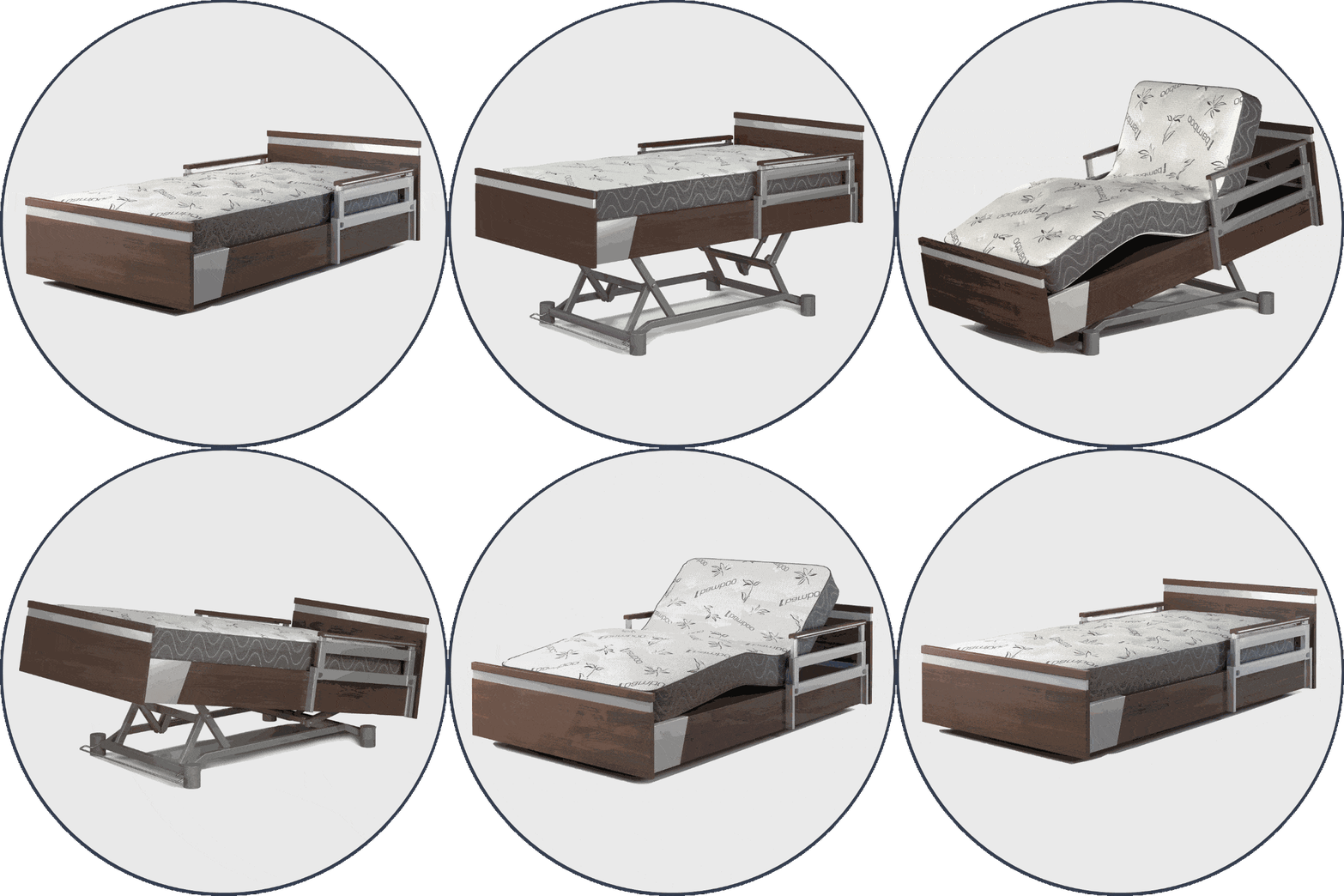
What the right equipment adds: Bed height is underappreciated in transfer safety. The Aura Premium home hospital bed adjusts from a FallSafe ultra-low position (10″ platform height, 17″ to mattress top) to a full standing-assist height of 39″, with a pre-programmed 21″ transfer position that makes caregiver-assisted transfers safer and far less physically demanding. When the bed meets the person at the right height, the brute-force lift that strains caregivers becomes an assisted pivot instead.
For practical guidance when the situation has reached a crisis point, see what to do when your parent can’t walk.
Fear of Falling, The Spiral That Worsens Everything
Fear of falling is not just a psychological reaction to being unsteady. It is itself a mobility impairment, one with a measurable, documented worsening cycle.
A 2024 systematic review and meta-analysis reported a global pooled prevalence of fear of falling of approximately 49.6% among community-dwelling older adults.11 That’s nearly half of all older adults who live at home. Among those who have already fallen, the rate is higher still.
The spiral works like this: fear of falling leads to self-imposed movement restriction. Restricted movement accelerates muscle loss. Weaker muscles create more actual instability. More instability generates more fear. The person who adopts a cautious shuffle to feel safer is, paradoxically, increasing their fall risk, because that shuffle is precisely what catches on carpet edges and thresholds.
Caregivers recognize this in a specific form: a parent who becomes frozen in the middle of the room, concentrating so hard they can’t move. One caregiver described watching her mother “concentrat[e] so hard she gets frozen in place with her muscles quivering and she can’t move from there.” Another described the pattern this way: “It’s a spiral. The longer she doesn’t walk the weaker and stiffer she’ll become.”
The emotional dimension matters too. Seniors frequently frame fear of falling as personal failure, one forum member described herself as “afraid to death to walk in an open space without the rollator or walking sticks” and added “I hate myself for being a coward.” Dismissing this fear, or arguing against it, tends to entrench it. Acknowledging it, and offering a graded path back to movement, tends to resolve it.
What helps: Structured balance training, Tai Chi, physical therapy, and graded exposure programs, has the best evidence. Rollators and walking frames provide enough security to break the inactivity cycle without requiring complete balance recovery first. For exercise approaches suited to this situation, see how to exercise with limited mobility.
Normal Aging vs. Red Flag, When to Call the Doctor
The most common question caregivers ask is simply: “Is this normal?” Here’s a practical framework.
Changes that are part of normal aging
- Gradually slower walking speed over years
- Needing to use armrests to rise from chairs (a normal adaptation that precedes a problem by years)
- Mild morning stiffness that loosens within 30 minutes
- Some reduction in step height and stride length
- Preferring familiar routes and avoiding new terrain
- Tiring more quickly on stairs than five years ago
Red flags that require medical evaluation
- Sudden inability to walk or bear weight, this is not gradual aging; call the doctor the same day
- Shuffling that appears with tremor, confusion, or urinary incontinence, NPH, Parkinson’s, or stroke evaluation needed
- One-sided weakness, arm, leg, or facial, stroke warning
- Recurrent falls without a clear cause, two or more falls in six months warrants a formal fall risk assessment
- A sudden mobility crash after infection, UTIs, pneumonia, and urinary tract infections can cause reversible but dramatic mobility loss in older adults; treat the infection, then reassess
- Post-hospitalization crash, hospitalization nearly doubles the odds of developing a new ADL limitation;10 aggressive early mobilization and PT referral should be arranged before discharge
- Dizziness with position changes, orthostatic hypotension or benign paroxysmal positional vertigo (BPPV), both treatable
One important insight from caregivers who’ve navigated this: a sudden mobility change that happens “overnight” often has a medical cause that is partly or fully reversible. The infection, the medication change, the dehydration, these are not the same as progressive neurological decline, and they respond to treatment differently. Always investigate before concluding that a sharp change is “just getting old.”
The Home Environment, Aids, Adaptation, and Equipment
The physical environment either supports or undermines whatever functional capacity remains. Small changes have outsized effects.
Floor hazards, loose rugs, clutter, cords, are responsible for a significant proportion of home falls. Securing carpets, removing throw rugs, and installing anti-slip mats in the bathroom eliminate the most common trip triggers.
Grab bars and handrails should be at every transition point: toilet, shower/tub, stair entry points, and the path from bedroom to bathroom. These are the routes used during the highest-risk times, nighttime bathroom trips in the dark, moments of morning stiffness.
Mobility aids, cane, rollator, walker, extend the base of support and dramatically reduce fall risk when used consistently. The primary obstacle is acceptance. Seniors refuse aids because “those things are for old people,” or because accepting the aid feels like surrendering independence. Practical strategies that work: choosing a rollator with a seat (a functional feature, not just a marker of age), framing the device as “temporary while you build strength back up,” and having a physical therapist demonstrate proper use in a single session.
Bed height matters more than most people realize. Getting out of bed is a full-body transfer, done multiple times each day, often at night when balance is at its worst and lighting is poor. A bed that is too low forces excessive hip flexion on exit and makes rising a full-effort task. The Aura Premium’s FallSafe Ultra-Low Height setting (10″ platform, 17″ to mattress top) helps if someone falls, but the hi-lo adjustment to a standing-assist height matters just as much for the daily transfers that don’t end in a fall. The SonderCare bed accessories, including an underbed auto-nightlight and overhead assist rails, extend that safety to the transitions themselves.
For a comprehensive look at assistive devices suited to the bedroom, see best mobility aids for the bedroom. If the focus is on rehabilitation and getting a parent moving again, getting your parent walking again covers PT-directed approaches step by step.
Can Mobility Decline Be Reversed? What the Research Shows
The most important thing the research tells caregivers is that much of this is not inevitable.
The LIFE Study, a landmark randomized clinical trial, compared a structured physical activity program (walking, strength training, balance, and flexibility exercises) against a health education control group in at-risk older adults. The physical activity group reduced their incidence of major mobility disability by 18% over an average of 2.6 years (Hazard Ratio = 0.82).12 Not eliminated, reduced, meaningfully, with consistent moderate exercise.
The SPRINTT randomized controlled trial took a harder population, frail older adults with sarcopenia, and tested a multicomponent intervention combining physical activity and nutritional counseling. At 24 months, the intervention group showed significantly greater improvement in physical performance scores compared to controls.13
A 2023 network meta-analysis of 42 randomized controlled trials found that resistance training combined with balance exercise was the most effective intervention for improving usual gait speed, the single best predictor of long-term independence, showing a clinically meaningful improvement of 0.16 m/s.14
The “use it or lose it” principle is not a platitude. It’s backed by trials conducted in populations who were already losing it. The implication for caregivers is direct: early referral to physical therapy, encouragement of consistent movement, and a home environment that makes movement safe rather than feared are among the highest-leverage things you can do.
For older adults recovering after surgery or hospitalization, see our recovery guide after hospitalization for a structured approach to regaining function.
Frequently Asked Questions
What causes sudden loss of mobility in an elderly person?
Sudden mobility loss, a person who was walking yesterday but cannot stand today, is almost never “just aging.” Common reversible causes include urinary tract infections (which cause dramatic but often temporary decline in older adults), dehydration, medication changes, pneumonia, and other acute infections. Neurological causes, stroke, a serious fall, or a new Parkinson’s event, are also possible. A sudden mobility crash always warrants same-day medical evaluation to identify the cause. Many are partially or fully reversible once treated.
Is shuffling feet always a sign of Parkinson’s disease?
No. Shuffling gait has multiple causes. Parkinson’s disease is among the most recognized, but others include stroke, Normal Pressure Hydrocephalus (NPH, a treatable condition), general muscle weakness with reduced hip flexor strength, fear-of-falling compensation, and dementia-associated gait changes. The presence of shuffling alone is not diagnostic of Parkinson’s. A physician evaluation, including a neurological examination and potentially brain imaging, is needed to identify the cause and guide treatment.
At what age does mobility typically start to decline?
Measurable changes in gait speed, balance, and muscle strength begin in the 50s and 60s but are typically subtle. The rate of decline accelerates after 70, and particularly after 80. Research shows approximately 30% of adults aged 70–79 cannot walk at the speed needed to safely cross a street; that figure rises to 73% after age 80.7 Genetics, activity levels, chronic conditions, and medications all influence individual timing. The presence of multiple chronic conditions, arthritis, heart disease, diabetes, tends to accelerate the timeline.
How do I get my elderly parent to use a walker?
Resistance is almost universal. The most effective approaches: have a physical therapist demonstrate the device in a single session (recommendations carry more weight from clinicians than from adult children); choose equipment that has a functional feature beyond the clinical one, a rollator with a seat gives the person a place to rest, not just a fall-prevention tool; frame it as temporary; and address the dignity concern directly rather than ignoring it. One practical technique: place the walker in the path between the bedroom and bathroom so picking it up becomes habitual, not a conscious decision.
When does someone with mobility problems need a home hospital bed?
The most common triggers: when a person needs help getting in and out of bed, when bed height contributes to fall risk, when a health condition requires specific positioning (head elevation for COPD or acid reflux, leg elevation for circulation), or when caregivers are sustaining injuries from transfers. A home hospital bed is not a last resort; it is a safety and dignity tool that, when introduced early, extends the period of safe home care. The Aura Premium’s hi-lo function and pre-programmed transfer position are specifically designed for this transition.
References
- U. S. Census Bureau. “Mobility is Most Common Disability Among Older Americans.” (2014). census.gov
- Zhang, X., et al. “Prevalence and factors associated with sarcopenia in community-dwelling older adults: a systematic review and meta-analysis.” (2022). PMC12782612
- CDC, National Center for Health Statistics. “Diagnosed Arthritis in Adults: United States, 2022.” Data Brief No. 497 (2024). cdc.gov
- Cruz-Jentoft, A. J., et al. “Sarcopenia: revised European consensus on definition and diagnosis.” Age and Ageing (2019). academic.oup. com
- Analysis of Indonesian Longitudinal Aging Survey (2024). PubMed ID: 42057999. pubmed.ncbi.nlm.nih. gov
- Centers for Disease Control and Prevention. “Older Adult Falls Data.” cdc.gov
- Freiberger, E., et al. “Mobility in Older Community-Dwelling Persons: A Narrative Review.” (2020). PMC7522521
- Analysis of Korean Longitudinal Study of Aging (KLoSA) data. Nutrients (2024). PMC11673221
- Lyons, R. A., et al. “Slow Gait Speed and Risk of Long-Term Nursing Home Residence in Older Women.” Journal of the American Geriatrics Society (2016). PMC5173437
- Gill, T. M., et al. “Hospitalization-Associated Change in Gait Speed and Risk of Functional Limitations for Older Adults.” JAMA Internal Medicine (2019). PMC6748735
- Xiong, Y., et al. “Global prevalence of fear of falling among community-dwelling older adults: a systematic review and meta-analysis.” BMC Geriatrics (2024). PMC10998426
- Pahor, M., et al. “Effect of structured physical activity on prevention of major mobility disability in older adults: the LIFE Study randomized clinical trial.” JAMA (2014). PMC4266388
- Bernabei, R., et al. “A multicomponent intervention to prevent mobility disability in frail older adults: the SPRINTT randomised controlled trial.” The Lancet (2022). PMC9092831
- Shen, Y., et al. “Effects of exercise and nutrition on physical function and health outcomes in older adults with sarcopenia: a systematic review and network meta-analysis.” Journal of Cachexia, Sarcopenia and Muscle (2023). onlinelibrary.wiley. com