





Memory Care Environment Design: How the Right Space Protects a Loved One With Dementia
For someone living with dementia, the room itself is part of the care. A space that is confusing, dim, or full of hidden hazards adds to agitation and danger; a space designed with the dementia brain in mind quietly does some of the caregiving for you. This is the promise of memory care environment design, and the encouraging news is that most of its principles work as well in a bedroom at home as in a purpose-built memory care unit. You do not need a renovation to apply them, only an understanding of what the evidence shows.
Why the Environment Matters More in Dementia
Design is not decoration when cognition is failing. A dementia diagnosis roughly doubles the risk of falling: a nationally representative study found that 45.5% of older adults with dementia fell in a year, compared with 30.9% of those without, and adults with Alzheimer’s are 60 to 80% more likely to fall than their cognitively healthy peers.1 The disease changes gait, balance, depth perception, and the ability to interpret a room, so generic aging-in-place tips are not enough. The environment has to compensate for what the brain can no longer do.
The stakes are concrete. Falls are the leading pathway from independence to a hospital bed, and people with dementia are admitted for fall-related injuries at more than twice the rate of other seniors.2 Good design interrupts that pathway. Each principle below targets a specific way the dementia brain misreads its surroundings.
This is also not a niche concern. An estimated 57 million people live with dementia worldwide, and the number is climbing as populations age. Environmental design stands out because it is one of the few interventions that is non-pharmacological, has no side effects, and benefits the person every hour of every day rather than only at a dose. In a field where medications offer modest, temporary help, the room is a tool that works around the clock.
Lighting: The Single Highest-Impact Change
If you change one thing, change the light. Older eyes need far more illumination, and dementia compounds the deficit, but the benefit goes beyond simply seeing better. A 2025 study found that circadian lighting, brighter, blue-enriched light during the day that dims toward evening, was associated with a 44% reduction in the odds of a fall among largely elderly, cognitively impaired patients.3 That is one of the largest effect sizes of any single environmental change.
The mechanism matters for caregivers. Circadian lighting stabilizes the sleep-wake cycle, which reduces the nighttime wandering and daytime confusion that trigger falls. An earlier, widely cited study showed that a tailored lighting intervention improved sleep and reduced agitation and depression in people with Alzheimer’s.4 Practically, that means bright, natural daytime light, warm and dim light in the evening, and glare-free, motion-activated lighting on the path to the bathroom. Avoid harsh or blinking lights, which can provoke agitation.
Flooring and the “Black Hole” Problem
Flooring does two jobs: it prevents injuries when falls happen, and it must not itself trigger a fall. On the injury side, the evidence favors softer surfaces. A retrospective cohort study found 29% fewer injuries on carpet than on hard flooring, making good-quality carpet with proper underlay a sensible choice for bedrooms and corridors.5
The subtler issue is perception. People with dementia often misread dark or strongly patterned flooring as a hole in the ground, and will freeze or refuse to cross it out of fear of falling in. Shiny floors read as wet and slippery; busy patterns read as objects to step over. The design rule is therefore counterintuitive: use contrast deliberately to aid navigation, a dark toilet seat against a light wall, contrasting grab bars, but keep the floor itself matte, even-toned, and free of dark mats or bold patterns that the brain will misinterpret.
Color and Contrast for Wayfinding
Within a single space, strategic color becomes a navigation tool. Research in cognitive psychology shows that older adults and people with dementia recognize and remember brightly colored, high-contrast objects far more easily than pastels.6 Strong contrast is what makes an object work as a landmark, the cue that says “this is the bathroom” or “this is your room.”
You can apply this without a contractor. Paint or mark the bathroom door a bold, distinct color so it stands out as a destination. Use a brightly colored plate on a contrasting placemat so food is visible, a real factor in whether someone with dementia eats. Add a personalized memory box or familiar photo beside a bedroom door so the person identifies their own room. Because dementia also impairs color processing, the cues must be unambiguous and high-contrast rather than subtle. Our guide to bedroom modifications for dementia puts these touches into a room-by-room plan.
Managing Wandering Without a Locked-Ward Feel
Wandering and exit-seeking are among the most frightening behaviors for families, but design can redirect them more humanely than locks alone. Reviews of dementia care environments describe simple, vivid interventions: doors disguised with camouflage murals so they no longer read as exits, and continuous looped walking paths that let a restless person move freely and safely rather than heading for the front door.7
The principle is to channel the urge to move, not to suppress it, because suppression itself breeds agitation. Secure but non-oppressive exits, a clear circular route, and removal of trip hazards along it allow safe wandering. Combined with the circadian lighting above, which reduces the nighttime restlessness that drives much wandering, these measures address the behavior at its source. Our guide to preventing falls in elderly with dementia covers how to make those movement paths safe.
Familiarity and a Home-Like Scale
Bigger and newer is not better in dementia design. Systematic reviews of specialty dementia care units find that smaller, home-like settings are associated with less agitation, depression, and negative mood than large institutional ones.8 Familiarity orients; novelty frightens. A consistent furniture layout, recognizable personal objects, and a calm, uncluttered room reduce the cognitive load of simply existing in the space.
This is why rearranging a room can spike confusion, and why the goal at home is to adapt the familiar rather than replace it. Keep the bed, chair, and pathways in stable positions. Let the person’s own belongings, photographs, a favorite blanket, anchor the room. The aim is a space that feels like theirs, because a person who recognizes their surroundings is calmer, sleeps better, and falls less.
Sound, Clutter, and Sensory Calm
Dementia narrows the brain’s ability to filter, so an environment that overwhelms the senses overwhelms the person. A television blaring in one room, conversation in another, and a cluttered visual field all compete for attention the dementia brain cannot easily sort, and the result is anxiety, agitation, or withdrawal. Designing for calm means reducing the noise floor: lower background sound, one activity at a time, and soft, predictable acoustics rather than echoing hard surfaces.
Visual clutter deserves the same discipline. Too many objects on a surface read as confusion, not abundance, and can prompt rummaging or distress. Mirrors are a specific trap worth knowing about: a person with advanced dementia may not recognize their own reflection and can become frightened or convinced a stranger is in the room, so many families cover or remove bedroom mirrors. The goal throughout is a serene, legible space where the few things present are the things that matter, the bed, a familiar chair, a clear path, and a single point of orientation.
The Bedroom as the Core Safe Zone
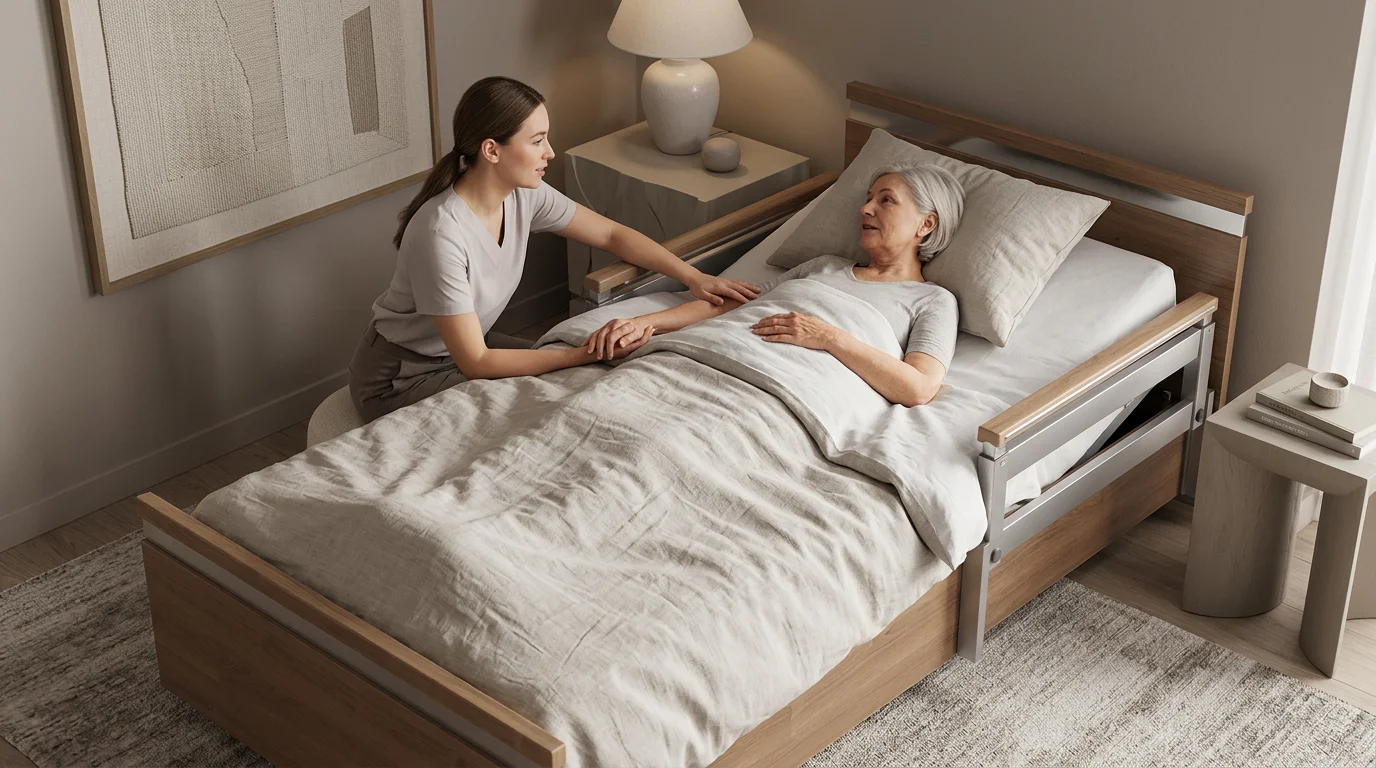
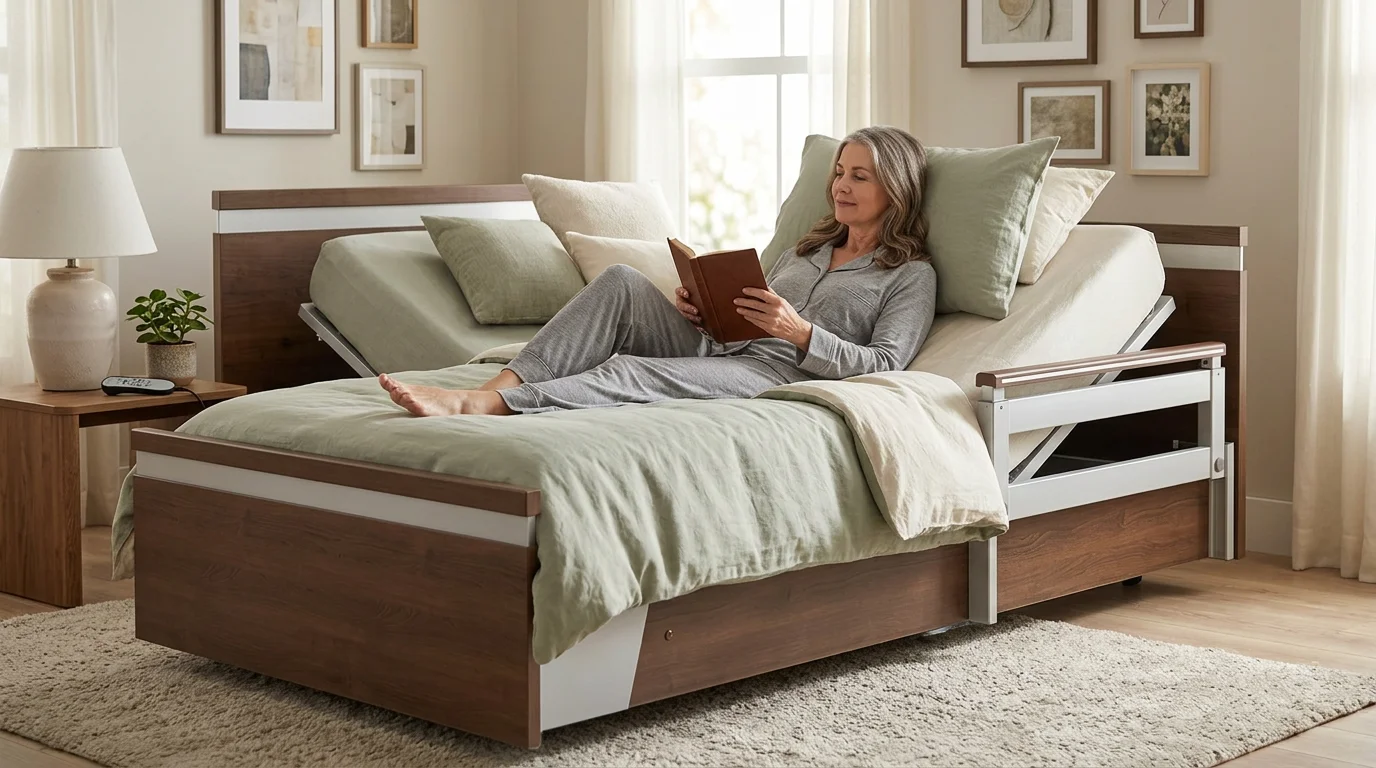
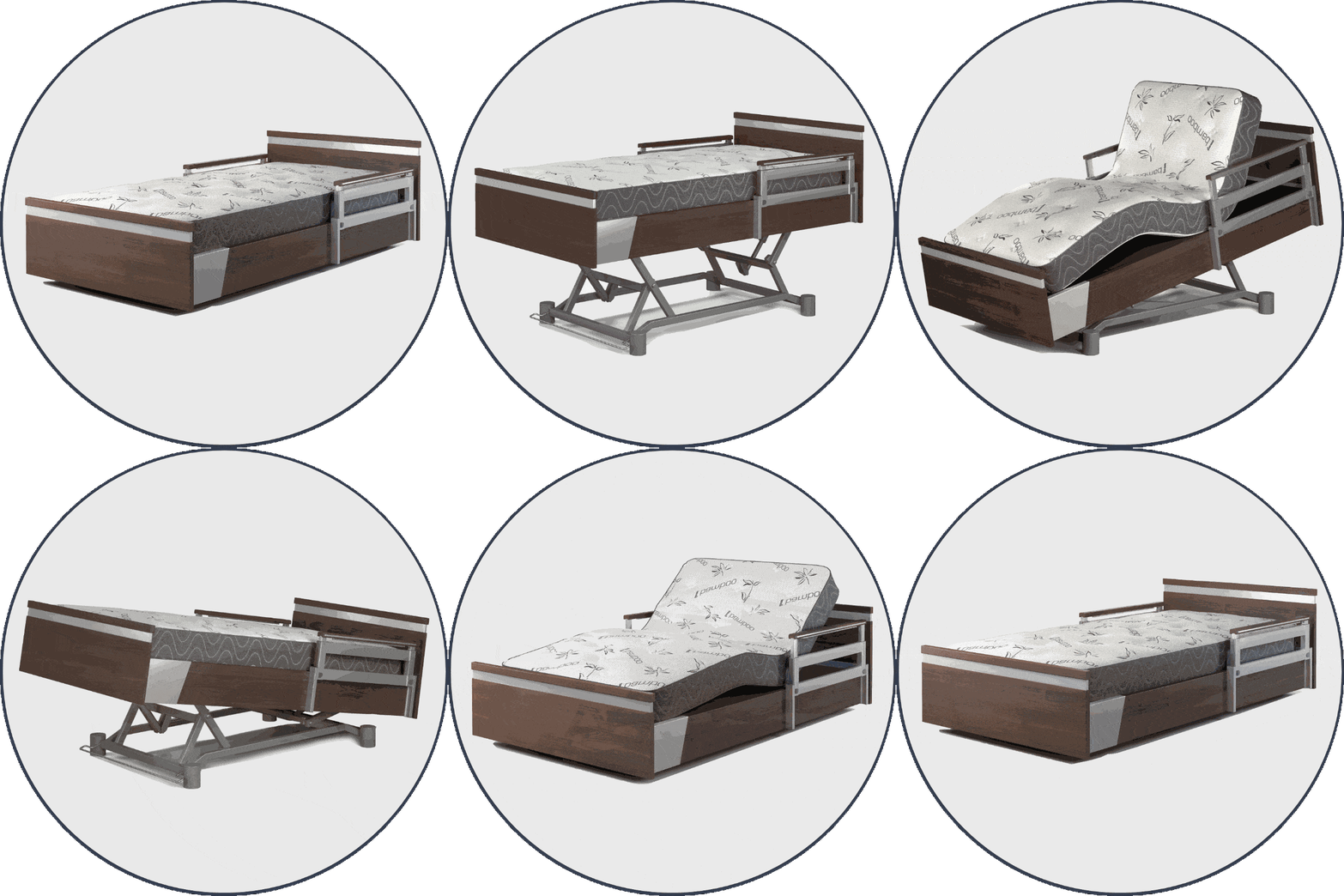
Of every space in a memory care environment, the bedroom carries the most risk and the most opportunity, because so much confusion, sundowning, and unsteady movement happens there at night. The bed is the centerpiece. A bed that lowers close to the floor shortens any fall, while assist rails give a disoriented person something deliberate to grip when rising.
The SonderCare Aura Premium is designed to deliver this safety without the institutional look that undermines familiarity. Its furniture-grade appearance helps the room still feel like a bedroom, supporting the home-like principle, while its ultra-low height setting and integrated assist rails address the elevated fall risk that dementia brings. Pairing it with a pressure-redistributing mattress also protects the skin of a loved one who may sit or lie for long stretches, closing one more common gap in dementia home care.
Bringing It Home on a Budget
The reassuring theme across the research is that the highest-impact changes are not the most expensive. A review of home modification studies found that the majority confirmed real benefits for fall prevention and independence, and the specific interventions with the strongest evidence, lighting, flooring, contrast cues, and a stable layout, are achievable for most families.9 Start with light, then flooring, then contrast and wayfinding cues, then the bedroom setup.
A few well-chosen SonderCare accessories, an under-bed nightlight for safe nighttime navigation and an overbed table to keep familiar items within reach, extend these principles without clutter. Our bedroom safety guide offers a checklist you can work through one affordable change at a time.
It also helps to remember that design and routine reinforce each other. A well-lit, calm, familiar room makes a consistent daily rhythm easier to maintain, and a steady rhythm, waking, meals, and bedtime at the same times, in turn makes the room feel safe and predictable. One small change can start a virtuous cycle: better evening light improves sleep, better sleep reduces nighttime wandering, and less wandering means fewer falls. You do not have to do everything at once. Pick the highest-impact change you can afford, observe how your loved one responds over a week or two, and build from there. Progress in dementia care is almost always incremental, and the environment is one of the few places where small, affordable adjustments produce outsized, daily returns.
The Bottom Line
Memory care environment design is not about creating a clinical space; it is about shaping a room that compensates for the way dementia changes perception, so that your loved one is calmer, more oriented, and far less likely to fall. Light it well, choose forgiving floors, use bold contrast as a guide, channel wandering safely, and keep the space familiar and home-like. Whether you are evaluating a memory care unit or adapting a bedroom at home, these evidence-based principles are the same, and most of them you can begin applying this week.
References
- Kucharska-Newton A, et al.; Drexel University. Fall rate nearly 50% among older Americans with dementia (NHATS analysis). 2023. https://drexel.edu/news/archive/2023/January/Fall-Rate-Nearly-50-Percent-Among-Older-Americans-with-Dementia
- Canadian Institute for Health Information. Dementia and Falls. 2018. https://www.cihi.ca/en/dementia-in-canada/spotlight-on-dementia-issues/dementia-and-falls
- Okinami T, et al. Circadian Lighting Was Associated with a Reduction in the Number of Hospitalized Patients Experiencing Falls. Healthcare. 2025;13(14):1692. DOI: 10.3390/healthcare13141692
- Figueiro MG, et al. Tailored lighting intervention improves measures of sleep, depression and agitation in people with Alzheimer’s disease and related dementia living in long-term care facilities. Clinical Interventions in Aging. 2014;9:1527-1537. PMC4168854
- Lachance CC, et al. Compliant flooring to prevent fall-related injuries in older adults: a scoping review. BMC Geriatrics. 2017;17:12. DOI: 10.1186/s12877-017-0465-y
- Wiener JM, et al. Ageing- and dementia-friendly design: theory and evidence from cognitive psychology, neuropsychology and environmental psychology. Cognitive Processing. 2021;22:439-455. DOI: 10.1007/s10339-021-01031-8
- de Azevedo NP, et al. Environmental interventions to support orientation and social engagement of people with Alzheimer’s disease. Dementia & Neuropsychologia. 2021;15(4): e012. DOI: 10.1590/1980-57642021dn15-040012
- Marquardt G, et al. Specialty dementia care units and environmental design: a systematic review. International Journal of Geriatric Psychiatry. 2023. DOI: 10.1002/gps.5907
- Cha YJ, et al. Effectiveness of home modification interventions for older adults: a systematic review. 2025. DOI: 10.3390/ijerph22010045