






Yes, and they are not filler. The question most families are really asking is quieter and more painful: will my mother be engaged and connected, or just parked in front of a television? Activities and programs are the heart of good memory care, because for a person with dementia, the right engagement does what medication cannot: it lifts mood, eases agitation, restores a sense of purpose, and creates moments of genuine connection. This guide explains what those activities are, what the evidence actually supports, and how much of it you can recreate at home. For the space that makes engagement possible, see our guide to memory care environment design.
Why Activities Matter So Much
Boredom and isolation are not benign in dementia; they fuel the very symptoms families dread. Unoccupied hours tend to fill with anxiety, restlessness, and agitation, while meaningful engagement reduces them. The World Health Organization explicitly recommends that people with dementia stay physically active and engage in activities and social interaction that stimulate the brain and help maintain daily function. Activities are care, not entertainment.
The deeper purpose is dignity. A well-designed program meets a person where they are, offering things they can still do and enjoy, rather than reminding them of what they have lost. That shift, from deficit to ability, is what separates an engaging memory care setting from a custodial one, and it is a mindset families can adopt at home just as readily as any facility.
The need is widespread, which is why this programming exists. Dementia becomes far more common with age, rising to more than a third of adults over 85, and family members provide the overwhelming majority of care hours, often five hours a day or more. For many of those families, the daily question of “what do we actually do today” is exhausting, and a structured menu of proven activities is a genuine relief rather than a luxury.
Music: The Standout Activity
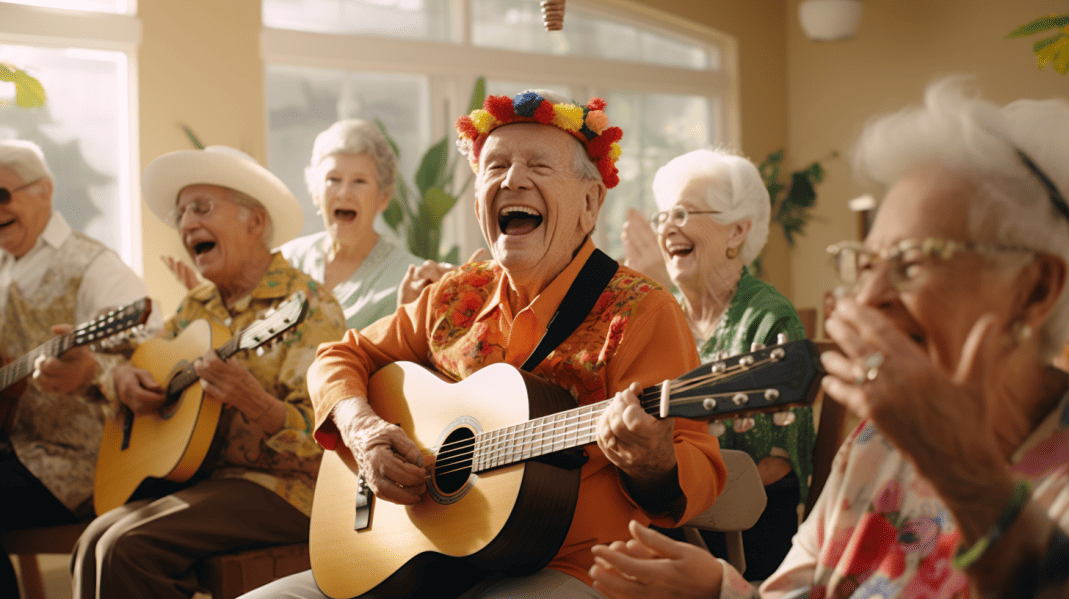
If one activity has earned its reputation, it is music. A meta-analysis pooling a dozen studies found that music produces a moderate-to-large reduction in agitation, the single most distressing symptom for families, with structured music therapy outperforming passive listening.1 Music reaches parts of the brain that dementia spares longest, which is why a person who can no longer hold a conversation may still sing every word of a song from their youth.
The practical magic is in personalization. A playlist built from the music that mattered during someone’s teens and twenties can calm sundowning, spark joy, and reconnect them to their identity. Quality memory care programs schedule group sing-alongs, instrument play with simple percussion, and individualized listening. At home, a phone and a pair of speakers are enough to deliver much of the same benefit.
Multisensory and Sensory Stimulation
Among the most powerful and least known interventions is multisensory stimulation, often delivered in a calm “Snoezelen” room of soft light, gentle sound, and tactile objects. A 2025 systematic review found large effects from multisensory approaches, with notable reductions in agitation and the largest effect of any reviewed intervention on apathy, the flat, withdrawn disengagement that worries families.2
Sensory engagement works because it bypasses the need for words and memory, offering pleasure and calm through touch, sight, sound, and smell directly. You do not need a dedicated room to apply the principle. A basket of varied textures, a warm hand massage, familiar scents from baking or a garden, or a weighted lap blanket can soothe anxiety and draw a withdrawn person gently back into the moment.
Reminiscence: Connecting Through the Past
Because dementia erodes short-term memory while often sparing older memories, the past becomes a place of comfort and connection. Reminiscence activities, looking through old photographs, handling familiar objects, talking about earlier life, music and films from decades ago, work with the brain’s strengths rather than against them. Research using EEG has shown that reminiscence produces patterns of calm, focused engagement, even when measurable cognitive scores do not change.3
That distinction matters. The value of reminiscence is emotional, not academic: it reduces low mood and gives a person a way to feel competent and known. A simple memory box of meaningful items, a photo album, or a regular “tell me about when you were young” conversation can become one of the most rewarding parts of a caregiver’s day, for both people.
Meaningful, Purposeful Activities
The activities that engage most deeply are often the simplest, because they tap into identity and the human need to be useful. Folding towels, sorting objects, setting a table, gardening, or simple food preparation give a person a role and a sense of accomplishment. A retired teacher may light up sorting papers; a former gardener may find peace tending plants. The point is not the task’s output but the dignity of doing.
Memory care programs design these “errorless” activities so there is no wrong way to do them and no failure to feel. Families can do the same by reframing household tasks as shared activities and by following the person’s former interests and routines. Matching the activity to who someone was is what turns a chore into meaning. When an activity stops working, and it will, as the disease progresses or simply on a hard day, the answer is to simplify or switch rather than to push; the goal is always the person’s comfort and engagement in the moment, never the completion of the task.
Structured Cognitive Programs
Beyond informal activities, memory care often offers structured cognitive programs. Cognitive stimulation therapy (CST) is the best-evidenced of these: a meta-analysis found it improved cognition, quality of life, and the ability to manage daily activities.4 Delivered as themed group sessions, discussion, word games, gentle mental challenges, it is engaging rather than clinical, and it is something families can request by name or learn to run in simplified form at home.
It is worth being honest about what these programs can and cannot do. They engage, connect, and modestly support function; they do not halt the disease. Set against that realistic bar, a program that gives someone a stimulating, social hour several times a week is a genuine good, and the social contact alone counters the isolation that worsens dementia.
Movement and Physical Activity
Physical activity belongs in every program, woven into the day rather than treated as a separate chore. Walking, chair exercises, gentle dancing, and stretching support balance and strength, which reduces the elevated fall risk dementia brings, and they lift mood and improve sleep. The honest caveat from the research is that exercise is not a cognitive cure; pooled trial data show its cognitive benefits are modest and inconsistent, so the case for movement rests on mood, mobility, and safety more than on memory.5 Consistency matters more than intensity. Our guide to preventing falls in elderly with dementia covers how to keep activity safe.
Art and Creativity: Promising but Unproven
Art, painting, drawing, crafts, is a staple of memory care and clearly brings many people pleasure, but families deserve an honest picture. A Cochrane review found only a small number of trials and rated the evidence for art therapy’s effect on cognition and mood as very low quality.6 That does not mean art is worthless; enjoyment and self-expression have their own value. It means you should offer creative activities for the joy they bring in the moment, not as a proven treatment, and follow the person’s pleasure rather than any promised outcome.
Structure, Routine, and a Calm Place to Rest
The thread connecting all of this is rhythm. A predictable daily structure, activity in the brighter morning hours, calm in the evening, reduces the anxiety that unstructured days create, and it makes each individual activity more effective. Good programs publish a daily schedule for exactly this reason, and families benefit from a gentle home routine just as much.
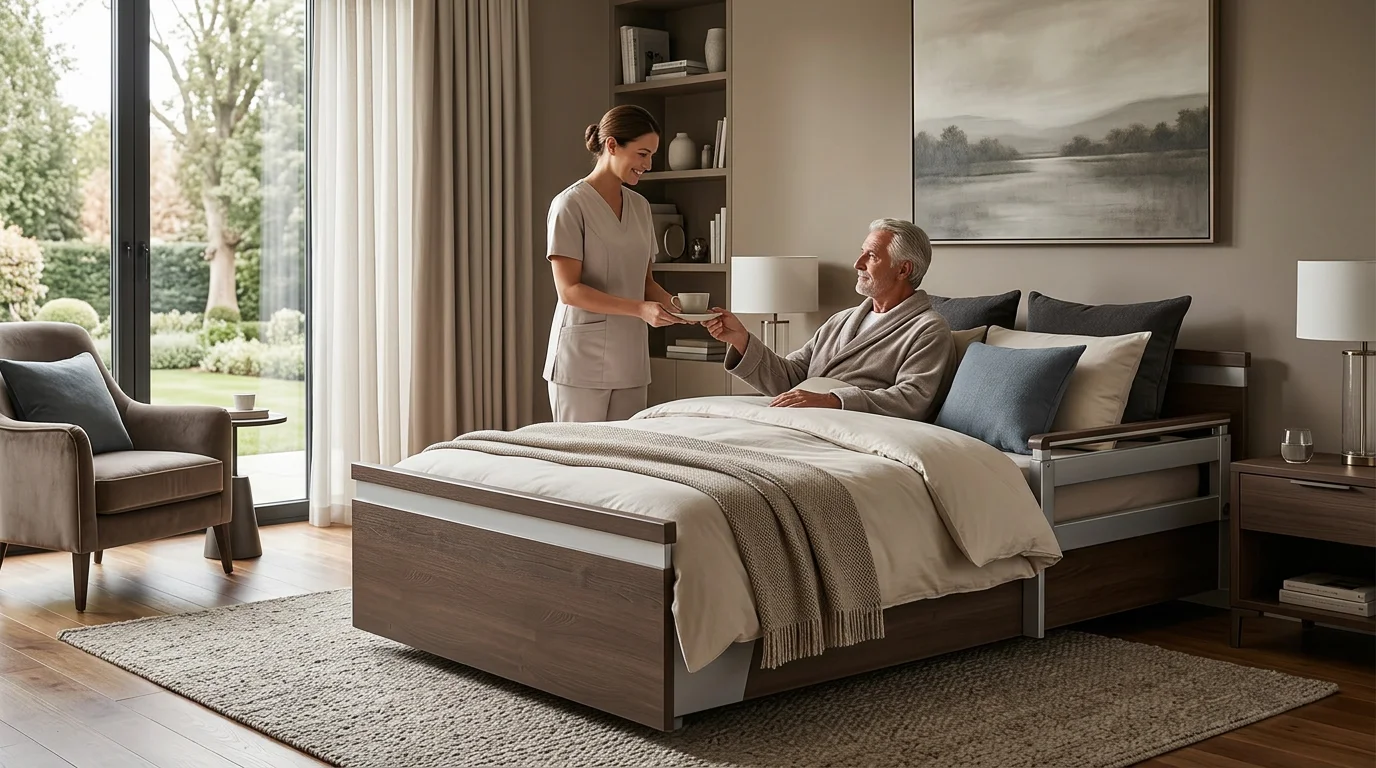
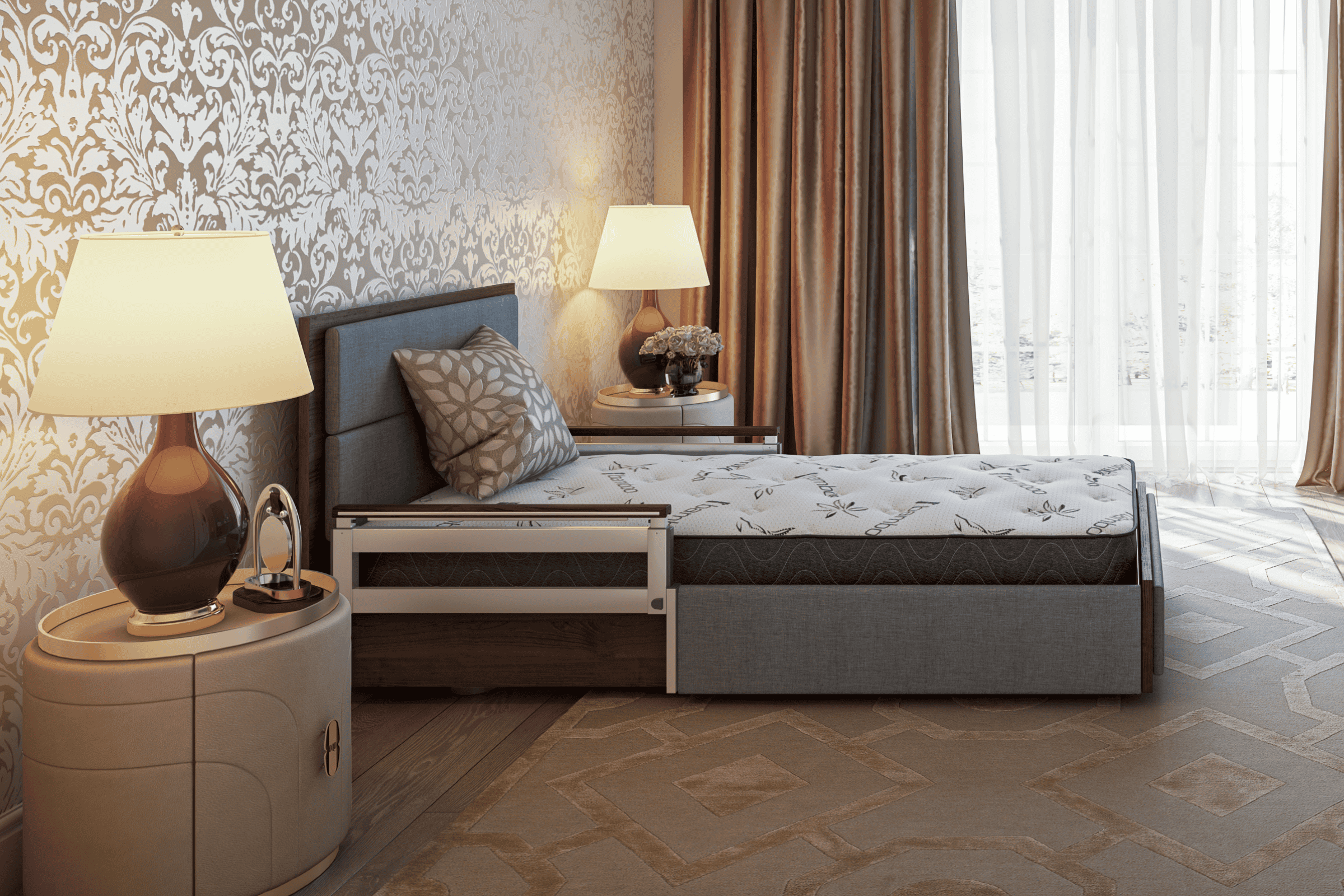
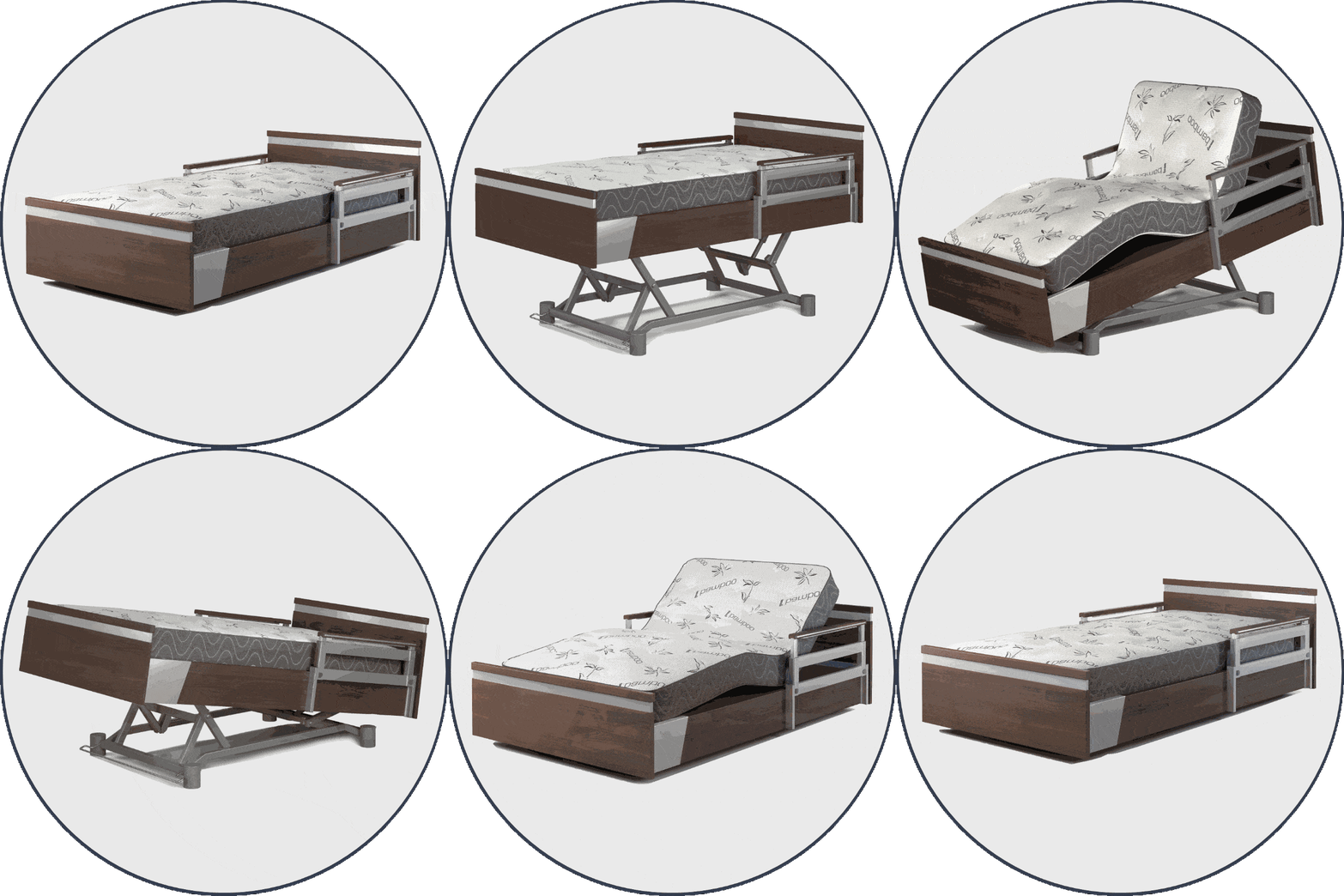
Rest is part of that rhythm. Quality engagement during the day depends on good sleep at night, and a calm, safe bedroom supports both. A SonderCare Aura Premium helps here, offering comfortable, safe rest and easy repositioning with an ultra-low setting and assist rails that address the night-time fall risk dementia brings, all in a furniture-like form that keeps the room feeling familiar. A few practical accessories and a supportive mattress round out a space where a person can recharge for the next day’s activities.
What a Program Day Actually Looks Like
For families weighing a memory care setting, it helps to picture the rhythm a good program creates. Mornings, when most people with dementia are at their sharpest, tend to hold the more stimulating activities: a cognitive session, an exercise group, a music or reminiscence circle. Midday brings a shared meal, itself a social and sensory event when done well. Afternoons soften toward gentler, sensory, and one-to-one engagement as energy fades, and evenings are deliberately calm to ease the sundowning that often arrives with dusk.
The defining feature is not any single activity but the coordination of them: trained staff who know each resident’s history and preferences, a schedule that respects the arc of the day, and the flexibility to follow a person’s mood rather than force a plan. That orchestration is what families work hardest to recreate at home, and understanding it helps you both evaluate a facility and borrow its structure. When you tour a memory care community, watching an ordinary afternoon, are residents engaged, calm, and treated as individuals, tells you more than any brochure.
Bringing the Program Home
The reassuring conclusion is that the core of a good memory care activity program is replicable at home on almost any budget. You do not need a Snoezelen room or a professional therapist to deliver the essentials: a personalized music playlist, a memory box, meaningful shared tasks, gentle daily movement, sensory comfort, and a steady routine. Start with music and reminiscence, the highest-reward and easiest to begin, and build from there as you learn what your loved one responds to. Pair the activities with a well-designed environment and they will work better still.
The Bottom Line
So there are genuinely rich activities and programs in memory care, and they are central to a good life with dementia, not an afterthought. Music and multisensory engagement calm agitation, reminiscence and meaningful tasks restore dignity, structured cognitive programs support function, and a steady routine ties it together. Be guided by the evidence where it is strong and by your loved one’s joy everywhere else. Most of what helps you can begin offering today, at home or alongside a facility, one engaging moment at a time.
References
- Cheung DST, Ho L, Fung HH, Mui AC. Effects of music on agitation in dementia: a meta-analysis. Frontiers in Psychology. 2017;8:742. DOI: 10.3389/fpsyg.2017.00742
- Octary T, et al. Effectiveness of multisensory stimulation on agitation and apathy in people with dementia: a systematic review and meta-analysis. 2025. DOI: 10.1016/j. gerinurse.2025.02.018
- Yanagida N, et al. Electroencephalographic evaluation of reminiscence therapy engagement in people with dementia. 2024. DOI: 10.3390/brainsci14070680
- Chen X, et al. The effects of cognitive stimulation therapy on cognition, quality of life, and daily function in people with dementia: a meta-analysis. 2022. DOI: 10.1016/j. gerinurse.2022.06.012
- Lu Y, et al. Effects of exercise interventions on cognitive function in people with dementia: a systematic review and meta-analysis. 2026. DOI: 10.1016/j. archger.2025.105421
- Ebrahim S, Glascott A, Mayer H, Gair E. Art therapy for dementia. Cochrane Database of Systematic Reviews. 2019. DOI: 10.1002/14651858. CD011073. pub2
- World Health Organization. Dementia Fact Sheet. Updated March 2025. https://www.who.int/news-room/fact-sheets/detail/dementia