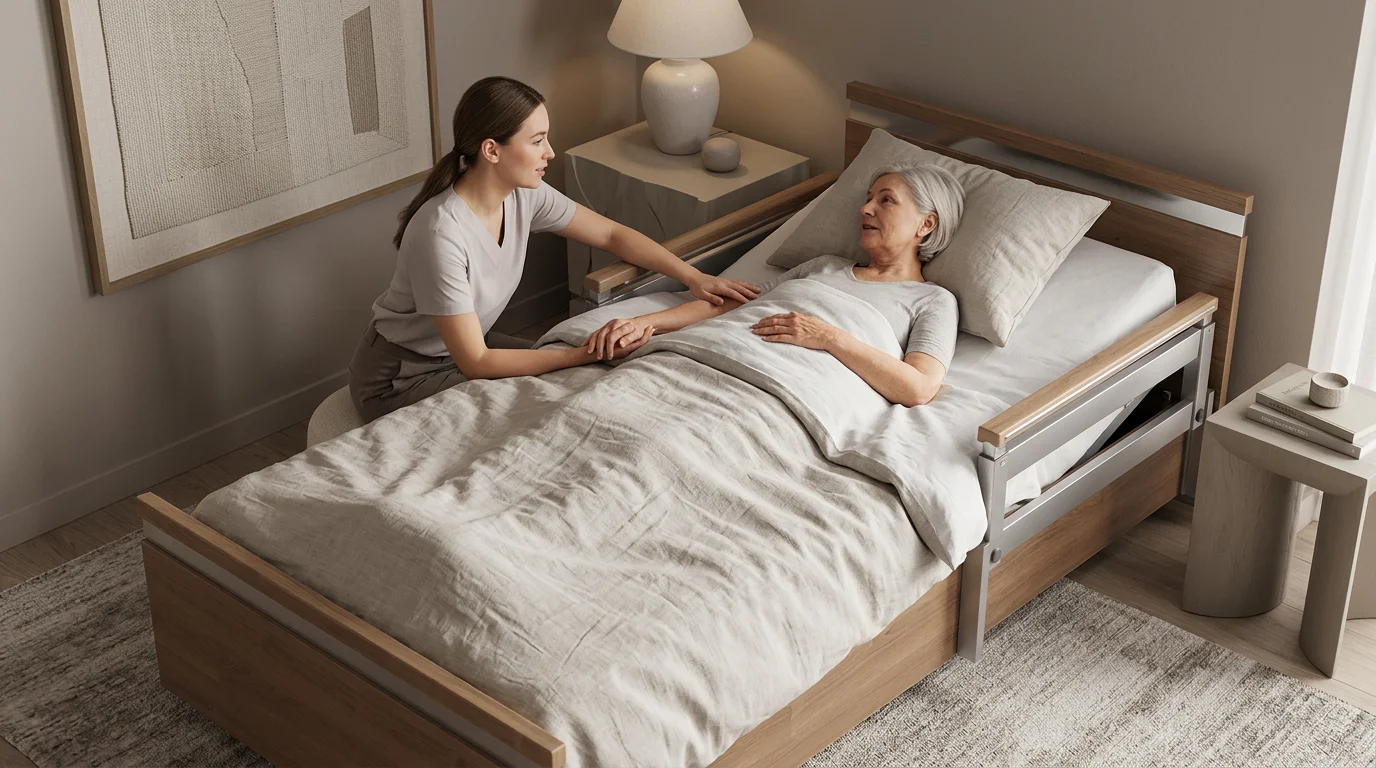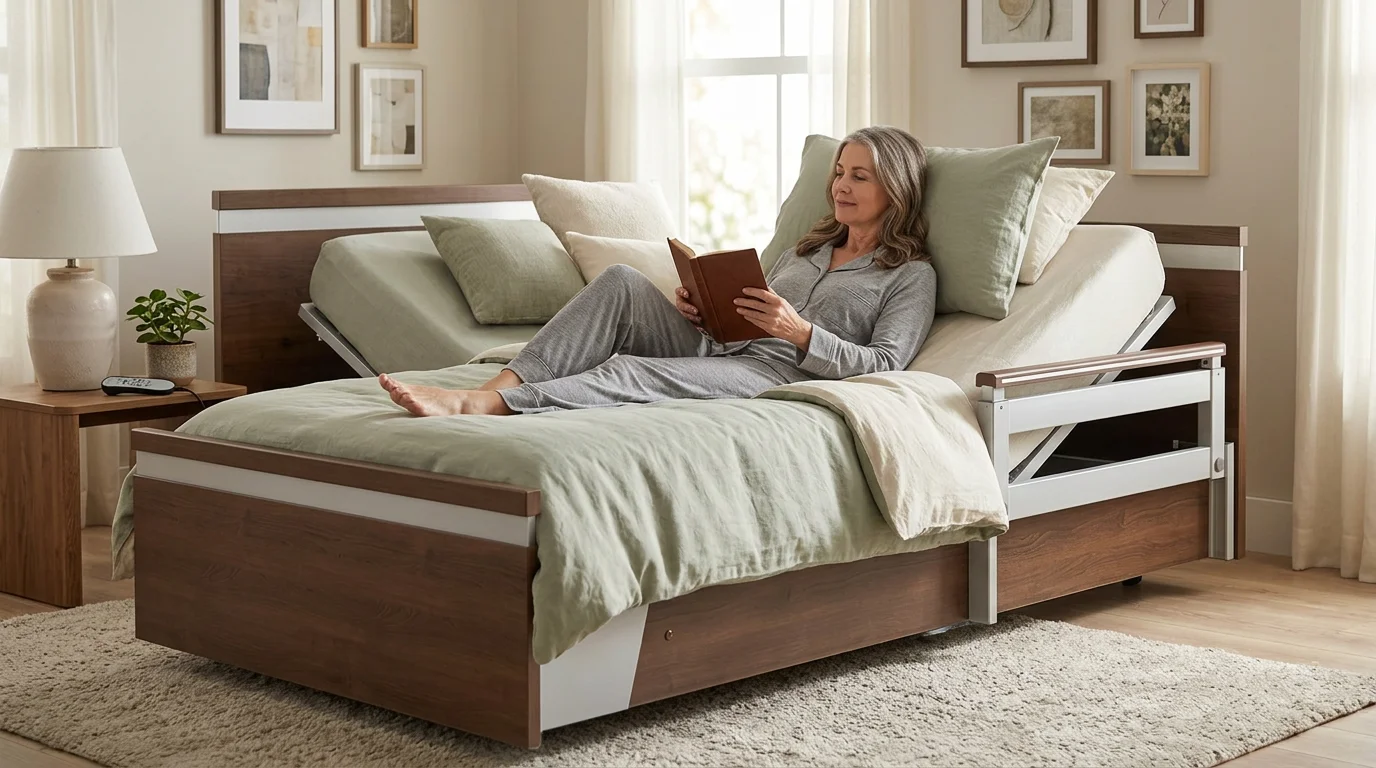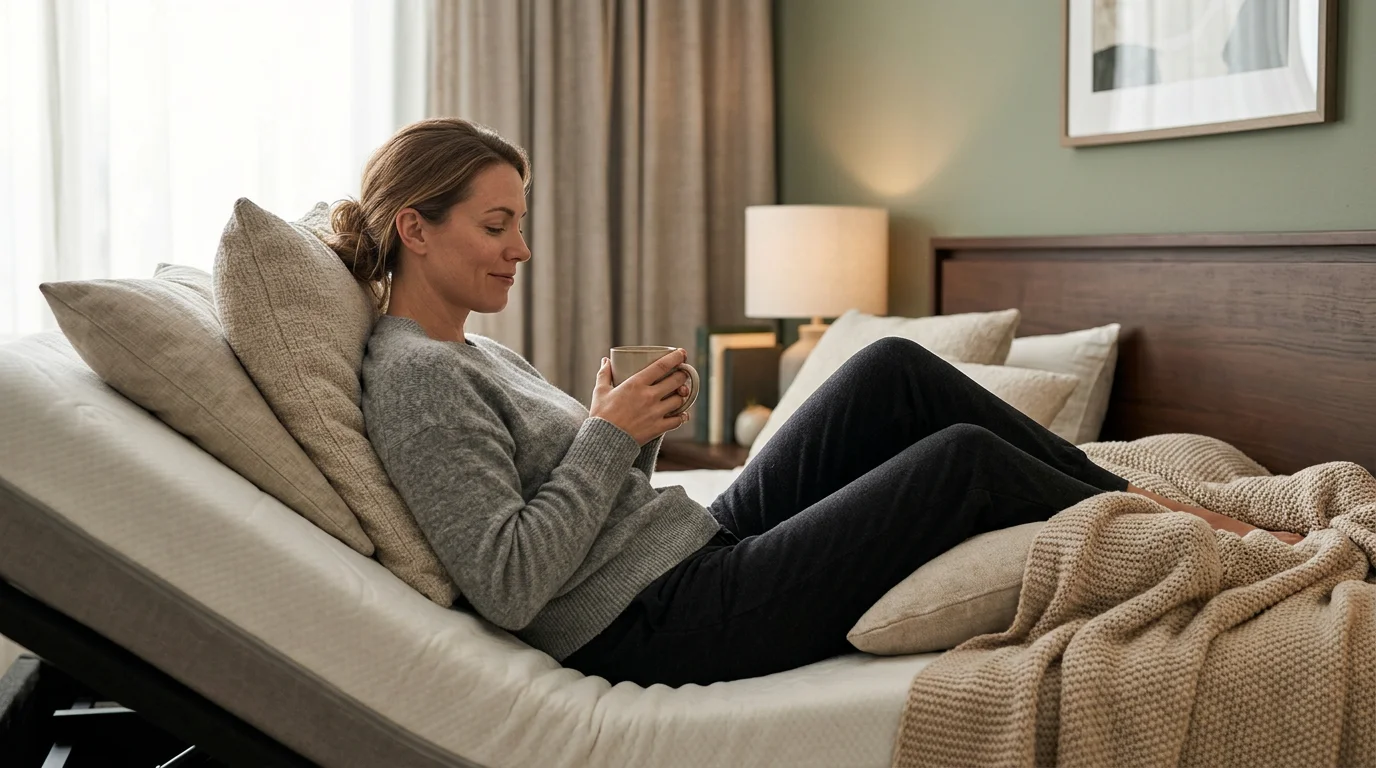



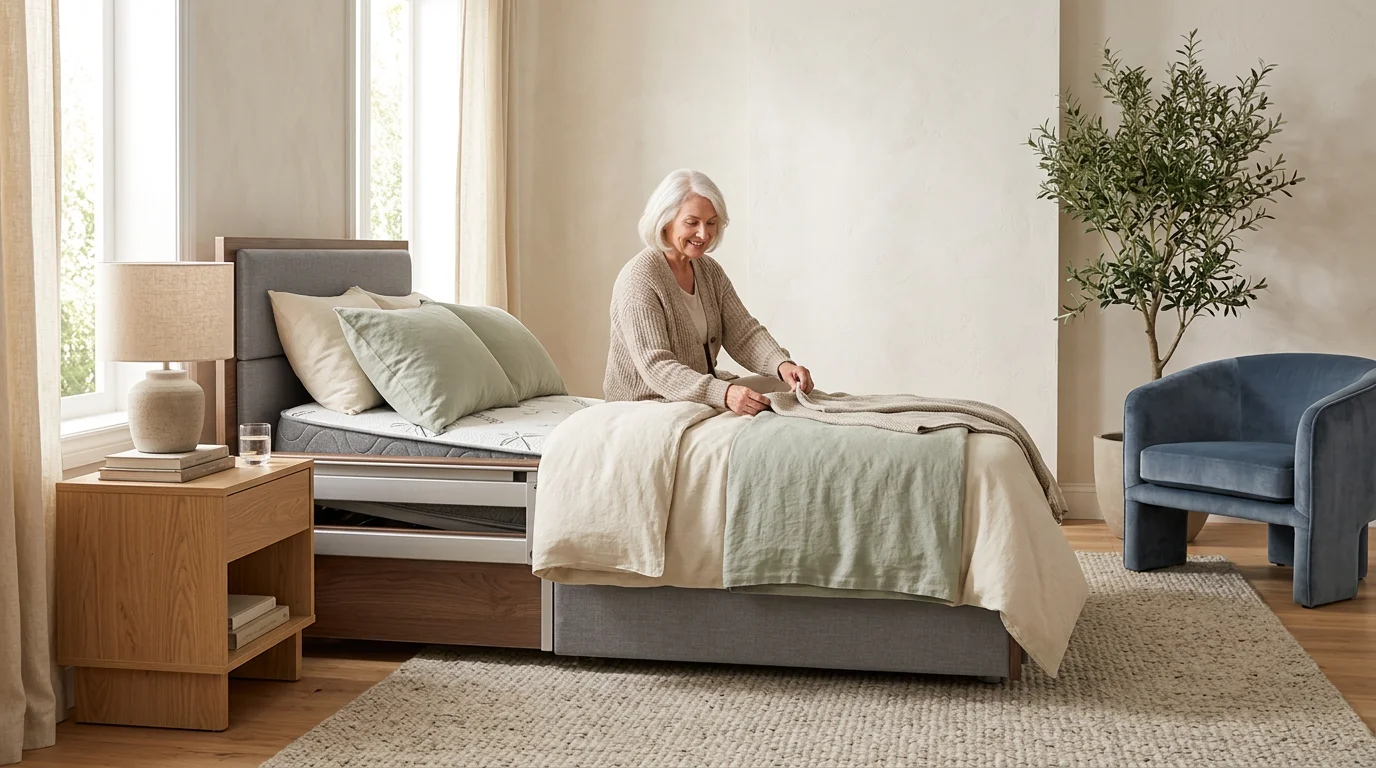



Most caregivers discover the hard way, sometimes literally, that the mattress included with a standard hospital bed feels like sleeping on a firm foam slab wrapped in vinyl. The closed-cell foam construction is chosen entirely for hygiene: easy to wipe down, resistant to fluids, impossible to compress deeply enough to provide real comfort. For someone spending most of their day in bed, that’s a serious concern.
This SonderCare mattress guide answers the question caregivers type into search engines most often: Do I need an alternating pressure mattress, or will a good foam mattress be enough? The answer depends on four factors, and once you identify where your loved one stands on each, the right choice becomes clear.
SonderCare offers four distinct mattress options for its home hospital beds, ranging from the entry-level Comfort Mattress at $899 to the clinical-grade Alternating Pressure Air Mattress at $2,999.1 Each serves a different need. This guide walks through each option, explains who it’s designed for, and provides a straightforward decision framework you can use today.
Before you dig in: if you’re still in the process of choosing a home hospital bed, that guide covers sizing, certification standards, and the full feature comparison across the bed lineup.
Four Factors That Should Drive Your Mattress Decision
Mattress guides that lead with products put the cart before the horse. Before recommending any surface, it helps to assess the person who’ll be using it across four dimensions.
1. Mobility level. Can your loved one reposition themselves in bed, even partially? Or do they require full caregiver assistance to turn from side to side? Someone who can shift their weight independently relieves their own pressure throughout the night. Someone who cannot depends entirely on the mattress, or a repositioning schedule, to manage contact pressure against bony prominences.
2. Wound status. Are there any existing pressure injuries, or areas of skin breakdown? The clinical staging system classifies pressure injuries from Stage 1 (non-blanchable redness on intact skin) through Stage 4 (full-thickness tissue loss reaching muscle or bone).6 If a wound care nurse is already involved in your loved one’s care, their recommendation takes precedence over anything in this guide. For intact skin, prevention is the goal, and the right mattress plays a meaningful role.
3. Caregiver repositioning capacity. How often can you realistically turn your loved one throughout the day and night? International clinical practice guidelines recommend repositioning at least every two to four hours to prevent pressure injuries in individuals with limited mobility.11 A caregiver managing this alone overnight, especially while also managing their own health, will have different equipment needs than someone with additional support.
4. Noise sensitivity and household dynamics. This factor matters more than most mattress guides acknowledge. Alternating pressure mattresses include a pump that cycles air continuously. For households with light sleepers, family members sharing a room with the care recipient, or loved ones living with dementia who may be disturbed by unfamiliar mechanical sensations, this becomes a decisive consideration.
Our guide on how to choose the right mattress for a home hospital bed covers these factors in additional depth, including how to evaluate mattress compatibility with specific care conditions.
The Comfort Mattress ($899), Essential Pressure Redistribution
The SonderCare Comfort Mattress is the entry point in the lineup. It combines a 2-inch visco-elastic memory foam top layer over a firm base, with cooling gel technology and a fluid-proof stretch cover.1
Who it’s designed for:
– Individuals who can reposition with minimal assistance
– Short-to-medium recovery situations (weeks to several months)
– Circumstances where the priority is a meaningful upgrade from a standard clinical surface without the complexity of a multi-layer or air-based system
What it does well:
The memory foam top layer provides genuine pressure redistribution compared to a standard vinyl hospital mattress. Rather than creating concentrated pressure against bony prominences, the foam conforms to the body’s contours and distributes load across a wider surface area. The cooling gel layer addresses a frequently overlooked concern in home care: heat and moisture accumulation. Someone requiring extended bed rest cannot reposition to air out their skin, and a mattress that traps body heat and humidity can accelerate skin breakdown even when repositioning schedules are otherwise adequate.
The fluid-proof stretch cover is a practical necessity, not a luxury. For caregivers managing incontinence as part of daily care, a surface that can be wiped clean without absorbing contamination is a meaningful quality-of-life feature.
What it doesn’t replace:
The Comfort Mattress is a residential comfort upgrade over a standard clinical surface. It is not a clinical-grade wound care system. For someone with an existing Stage 2 or higher pressure injury, or someone who cannot reposition independently and is not being turned on a reliable schedule, this mattress tier alone is not sufficient.
The Dream Bamboo Quilt-Top ($1,299), Everyday Comfort for Long-Term Care
The Dream Bamboo Quilt-Top Mattress adds a bamboo hypoallergenic surround and a quilted pillow-top surface over a reversible core, softer/medium on one side, firmer/extra firm on the other, at 7 inches deep.1 It’s available in 39″ Twin XL ($1,299) and 48″ Extra Wide ($1,499) configurations.
Who it’s designed for:
– Individuals spending significant time in bed who retain some mobility
– Long-term care situations where the care environment will be seen and lived in daily
– Anyone with skin sensitivity, heat management concerns, or a preference for the feel of a proper mattress
– Families who want a meaningful comfort upgrade without moving to an air pump system
What it does well:
Bamboo fabric provides natural temperature regulation and moisture wicking, properties that become clinically relevant when someone cannot reposition to cool their skin independently. The quilted pillow-top creates a sleeping surface that looks and feels like a quality residential mattress, which matters more than many families initially expect. The aesthetic of the sleep surface contributes to whether a bedroom feels like a care environment or a home. For a loved one who values independence and normalcy, that distinction isn’t superficial.
The reversible design is a practical advantage as care needs evolve. The firmer side can improve transfer stability as mobility decreases, without requiring a new mattress purchase.
Choosing between Comfort and Dream:
If the Comfort Mattress represents “clinically adequate,” the Dream Bamboo represents “genuinely comfortable.” For anyone anticipating care extending beyond a few weeks, and particularly for long-term conditions, the additional investment typically justifies itself through better sleep quality, reduced skin irritation, and the dignity of a proper sleeping surface.
The Signature Hybrid ($1,799), Therapeutic Support That Works While You Sleep
The SonderCare Signature Hybrid Mattress is the most sophisticated non-air option in the lineup. It combines individually wrapped pocket coils with multiple layers of high-density orthopedic foam, a copper-infused quilted cover, and a reversible soft/firm configuration at 9 inches deep.1 It’s available in 39″ Twin XL ($1,799) and 48″ Extra Wide ($1,999).
Who it’s designed for:
– Individuals requiring extended bed rest who need ongoing therapeutic pressure support
– Anyone with musculoskeletal pain, joint discomfort, or back issues that affect sleep quality
– Situations where a caregiver needs a surface that’s stable enough for repositioning and transfers while still providing superior pressure performance
– Families seeking clinical-level pressure redistribution without the operational complexity of an air pump system
What makes pocket coils different:
Individually wrapped coils respond independently to different parts of the body. This matters most when someone rests primarily in one position for extended periods: the coils under a bony prominence (hip, shoulder, heel) compress differently than those under a more padded area, distributing pressure more evenly across the sleeping surface than foam alone. This is the mechanical foundation of the hybrid category’s therapeutic advantage.
The clinical evidence supports this class of surface. A 2020 prospective cohort study of 755 ICU patients found that a pressure-redistribution foam mattress was associated with a 73% reduction in pressure injury incidence compared to a standard mattress (1.6% vs. 7.7%, adjusted hazard ratio 0.27).5 That finding reflects the category of surface the Signature Hybrid occupies, high-specification therapeutic foam and coil, not standard clinical mattress.
Evidence on hybrid mattress sleep outcomes also points in a consistent direction. A 2023 crossover study found participants on a hybrid mattress reported 58% improved ease of falling asleep and 44% reduced aches and pains compared to their usual mattresses.10 Separately, a randomized controlled trial of 313 adults with chronic low back pain found that medium-firm mattresses reduced pain on waking significantly more than firm mattresses, with a medium-firm mattress yielding roughly double the odds of improvement.7 A 2021 systematic review corroborated this, finding medium-firm configurations outperformed firm mattresses on sleep quality by an average of 12.8%.8 The Signature Hybrid’s reversible design allows exactly this calibration.
Caregiver ergonomics:
One consideration rarely addressed in mattress guides is the physical toll that repositioning takes on a caregiver’s body. A mattress surface that’s too soft causes the person in the bed to sink in, increasing the resistance involved in rolling or turning them. The Signature Hybrid’s ultra-firm foam perimeter stabilizes the sleeping surface during transfers while the interior pocket coils manage pressure during rest, a practical distinction that protects caregivers as much as it serves the person in the bed.
The copper-infused cover provides natural antimicrobial properties and temperature regulation, particularly relevant for skin health management over extended care periods.
The Alternating Pressure Air Mattress ($2,999), Clinical-Grade Wound Care
The SonderCare Alternating Pressure Air Mattress is in a different category from the three mattresses above. It is not primarily a comfort mattress, it is a clinical wound care surface, designed for the prevention and treatment of pressure injuries in high-risk individuals.1
It operates via 18 alternating air bladders connected to a pump system. The bladders inflate and deflate in a continuous cycle, shifting the contact pressure against the skin at regular intervals. This mechanical redistribution is designed to substitute for manual repositioning and is clinically indicated when repositioning schedules cannot realistically be maintained or when active wound care is required.
Who needs this mattress:
– Individuals with existing Stage 2 or higher pressure injuries
– Anyone who cannot be repositioned every two to four hours due to caregiver limitations, medical contraindications, or round-the-clock care requirements
– Individuals assessed as high-risk by a wound care nurse or physician
– Palliative and hospice situations where minimizing physical disturbance is a comfort priority
– Cases where a wound care clinician has specifically recommended an active air surface
What the research shows:
The evidence on alternating pressure surfaces is nuanced and worth understanding directly. A Cochrane review of 32 randomized trials (9,058 participants) found that alternating pressure surfaces may reduce pressure injury incidence compared to standard foam (RR 0.63, 95% CI 0.39–1.01), though the overall certainty of evidence was rated low due to study heterogeneity and risk of bias.2 A landmark pragmatic RCT found no statistically significant difference between alternating pressure overlays and full replacement mattresses for pressure ulcer prevention (10.7% vs. 10.3%, P=0.75).3 A larger follow-up trial in ICU patients found a modest but non-significant advantage for alternating pressure mattresses over high-specification foam mattresses (6.9% vs. 8.9% incidence).4
The honest clinical picture is this: alternating pressure surfaces perform comparably to high-specification foam in many situations. The choice often comes down not to which surface is universally superior, but to the individual’s repositioning situation, wound status, and care context. For someone who cannot be turned reliably, an active air surface addresses this mechanically. For someone who can be repositioned on schedule, a Signature Hybrid may deliver equivalent pressure outcomes with fewer operational demands.
For clinical context on pressure injury staging and when each tier of surface is indicated, the National Pressure Injury Advisory Panel publishes the authoritative staging definitions.
The noise issue, addressed honestly:
The pump that powers an alternating pressure mattress creates a continuous rhythmic sound. The cycle time, typically 10–20 minutes per full inflation-deflation cycle, means the sound isn’t constant but is repetitive and predictable. Many caregivers describe a genuine adaptation period during which the sound is disruptive; some report eventually habituating to it as background noise. Others, particularly those sharing a room with the care recipient, find it persistently difficult to manage.
If noise sensitivity is a serious concern, or if someone in the household is a light sleeper, this is a factor worth weighing honestly against the clinical need. It does not mean avoiding the mattress when it’s clinically indicated. It means setting realistic expectations about the adaptation period and household dynamics.
For comprehensive information on alternating pressure systems, including pump settings, maintenance, and how to evaluate cycle time for your loved one’s risk level, see our alternating pressure mattress guide.
Quick Decision Guide: Which Mattress Fits Your Situation?
| Your Situation | Recommended Starting Point |
|---|---|
| Short-term recovery, able to reposition independently or with minimal help | Comfort Mattress ($899) |
| Long-term care, some mobility retained, comfort and dignity are priorities | Dream Bamboo Quilt-Top ($1,299) |
| Extended bed rest, back or joint pain, daily caregiver repositioning | Signature Hybrid ($1,799) |
| Existing Stage 2+ pressure wound, or unable to reposition every 2–4 hours | Alternating Pressure Air ($2,999) |
| Wound care nurse or physician has specified an active air surface | Alternating Pressure Air ($2,999) |
This table is a starting point. If your loved one’s situation doesn’t fit neatly into one row, the right move is to speak with someone who can ask the clinical and logistical questions this guide cannot. Many families overestimate the need for an alternating pressure system out of fear of pressure injuries and end up with a noisier, more complex surface than their situation requires. Others wait too long. The distinction genuinely matters for daily life.
For broader guidance on keeping skin healthy during extended bed rest, our guide on preventing bed sores at home for aging adults covers repositioning schedules, skin inspection protocols, and early warning signs of pressure injury development.
A Note for Dementia Caregivers
This consideration rarely appears in mattress guides, but it surfaces regularly in caregiver communities: some people living with dementia find the inflation cycle of an alternating pressure mattress distressing.
The sensation of air shifting beneath the body at regular intervals can feel alarming to someone whose cognitive state makes unfamiliar sensory input difficult to interpret. In some cases, this leads to nighttime agitation, attempting to get out of bed, increased confusion, or disrupted sleep, which introduces its own fall and safety risks that can outweigh the pressure relief benefit.
This is not a reason to categorically avoid alternating pressure mattresses for anyone living with dementia. It is a reason to trial the surface during daytime hours with close observation before committing to overnight use, and to monitor closely during the first several nights. If agitation increases or sleep quality worsens meaningfully, discuss the clinical tradeoff with the care team. In some situations, a Signature Hybrid combined with a consistent repositioning schedule represents a better overall balance than a clinically indicated surface that the person cannot tolerate.
The Cochrane evidence showing comparable outcomes between high-specification foam and alternating pressure surfaces in many populations supports the clinical legitimacy of this tradeoff.
The Insurance Reality
It would be misleading to discuss mattress upgrades without acknowledging this: Medicare and most private insurers cover only a basic foam mattress through Durable Medical Equipment (DME) benefits. A meaningful upgrade, Dream Bamboo, Signature Hybrid, or Alternating Pressure Air, is, for most families, an out-of-pocket expense.
The case for investing still holds in many situations. Treating a Stage 3 or Stage 4 pressure injury carries substantial per-patient costs in wound care, hospitalization, and skilled nursing services. Approximately 2.5 million hospital-acquired pressure injuries occur in U.S. care settings annually, representing an estimated collective cost of $26.8 billion.12 Prevention through a better surface is not just a comfort consideration, it’s a financial one when measured against even partial hospitalization costs.
That said, not every situation requires the highest tier of surface. The Comfort Mattress at $899 is a genuine clinical upgrade over a standard DME foam mattress and may be sufficient for many care situations. The goal is to match the mattress to the clinical need, not to maximize mattress spend.
Choosing the Right Surface for Your Loved One
Most families don’t need an alternating pressure system. Most do benefit from a meaningful upgrade over the standard clinical mattress that comes with a home hospital bed. The Signature Hybrid occupies a particularly useful position: it delivers therapeutic pressure redistribution supported by clinical evidence, while avoiding the noise, mechanical complexity, and adaptation demands of an air pump system. For many long-term care situations, it’s where the value proposition is clearest.
If you’re unsure where your loved one’s situation falls on this spectrum, SonderCare care advisors can help you work through the clinical and logistical factors, not to upsell to a higher tier, but to match the right surface to the actual need.
Explore the full SonderCare mattress collection for complete specifications, cover options, and available sizes for each model, including the wider 48″ configurations for the Aura Extra Wide home hospital bed.
For a broader comparison of hospital bed mattress options across brands and categories, our guide to the best mattress for people requiring extended bed rest covers the category in greater depth.
References
-
SonderCare. “Home Hospital Bed Mattresses | Premium Comfort & Pressure Relief.” https://www.sondercare.com/mattresses/
-
Shi C, Dumville JC, Cullum N, et al. “Alternating pressure (active) air surfaces for preventing pressure ulcers.” Cochrane Database of Systematic Reviews 2021, Issue 5. Art. No. CD013620. DOI: 10.1002/14651858. CD013620. pub2. https://www.cochranelibrary.com/cdsr/doi/10.1002/14651858.CD013620.pub2/full
-
Nixon J, Nelson EA, Cranny G, et al. “Pressure relieving support surfaces (PRESSURE) trial: randomised controlled trial of alternating pressure and constant low pressure supports.” BMJ. 2006;332(7555):1413. DOI: 10.1136/bmj.38849.478299.7C. https://pmc.ncbi.nlm.nih.gov/articles/PMC1474510/
-
Brown S, Smith I, Brown J, et al. “Comparing alternating pressure mattresses and high-specification foam mattresses to prevent pressure ulcers in high-risk patients: the PRESSURE 2 RCT.” Health Technology Assessment. 2024. https://www.journalslibrary.nihr.ac.uk/hta/HTA-published-project
-
Bai DL, Liu TW, Chou HL, Hsu YL. “Relationship between a pressure redistributing foam mattress and pressure injuries: An observational prospective cohort study.” PLOS One. 2020;15(11): e0241276. DOI: 10.1371/journal.pone.0241276. https://pmc.ncbi.nlm.nih.gov/articles/PMC7652312/
-
National Pressure Injury Advisory Panel (NPIAP). “Pressure Injury Stages.” https://npiap.com/page/PressureInjuryStages
-
Kovacs FM, Abraira V, Pena A, et al. “Effect of firmness of mattress on chronic non-specific low-back pain: randomised, multicentre, double-blind, controlled trial.” Lancet. 2003;362(9396):1599–1604. DOI: 10.1016/S0140-6736(03)14792-5. https://pubmed.ncbi.nlm.nih.gov/14630439/
-
Caggiari G, Talesa GR, Tronnier F, et al. “What type of mattress should be chosen to avoid back pain and improve sleep quality? Review of the literature.” BMC Musculoskeletal Disorders. 2021;22(Suppl 1):970. DOI: 10.1186/s12891-021-04585-6. https://pmc.ncbi.nlm.nih.gov/articles/PMC8655046/
-
Hu X, Cheng ASK, Cheung YK, et al. “The Effect of Mattress Firmness on Sleep Architecture and Polysomnography Characteristics.” Nature and Science of Sleep. 2025;17:267–282. DOI: 10.2147/NSS. S503222. https://www.tandfonline.com/doi/abs/10.2147/NSS.S503222
-
Danoff-Burg S, Rus H, Burke C, Weaver T, et al. “Use of a Hybrid Mattress Improves Objective and Perceived Sleep Outcomes.” SLEEP 2023 Abstract Supplement, Vol. 46, Suppl. 1, p. A422. DOI: 10.1093/sleep/zsad077.0958. https://academic.oup.com/sleep/article/46/Supplement_1/A422/7182441
-
European Pressure Ulcer Advisory Panel, National Pressure Injury Advisory Panel, and Pan Pacific Pressure Injury Alliance. “Prevention and Treatment of Pressure Ulcers/Injuries: Clinical Practice Guideline.” Emily Haesler (Ed.). EPUAP/NPIAP/PPPIA; 2019. https://www.internationalguideline.com/2019
-
Padula WV, Delarmente BA. “The national cost of hospital-acquired pressure injuries in the United States.” Int Wound J. 2019;16(3):634–640. DOI: 10.1111/iwj.13071. https://pmc.ncbi.nlm.nih.gov/articles/PMC7948545/