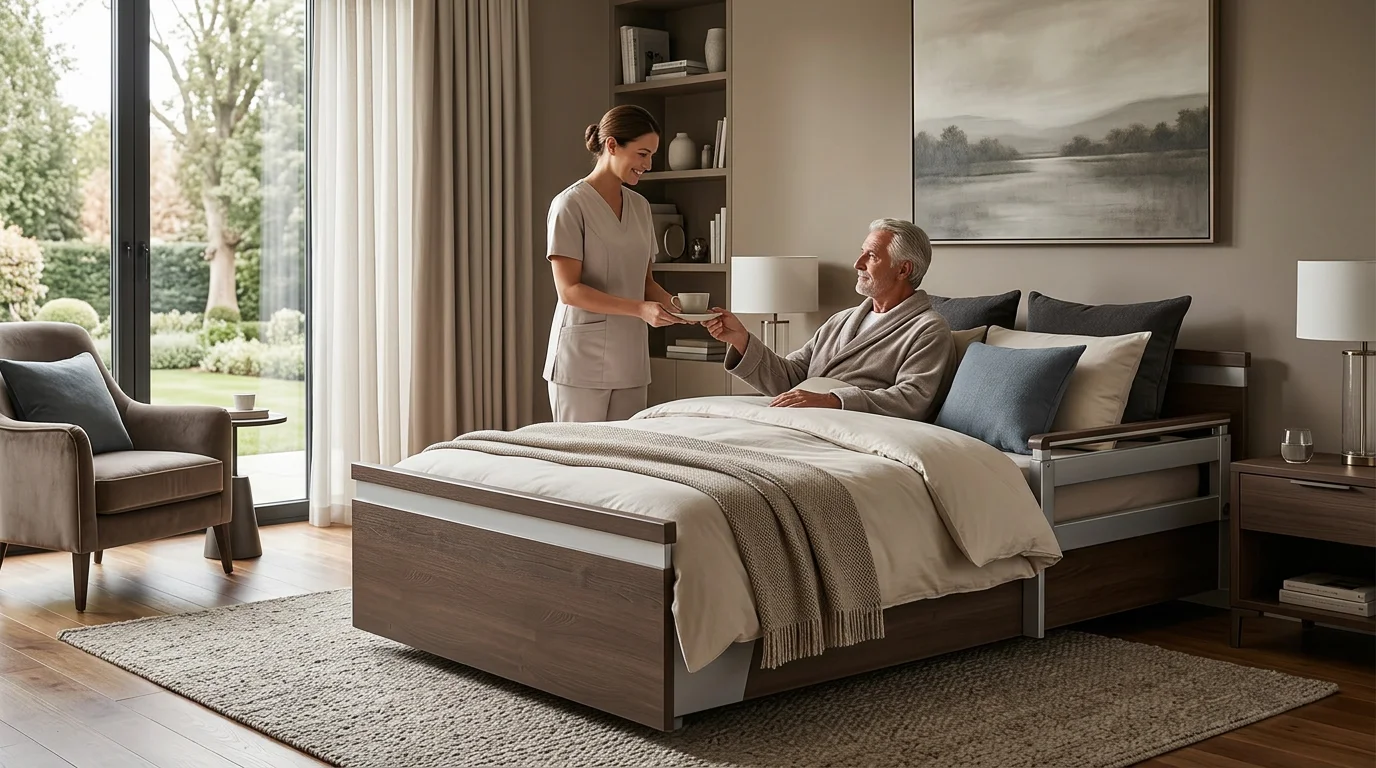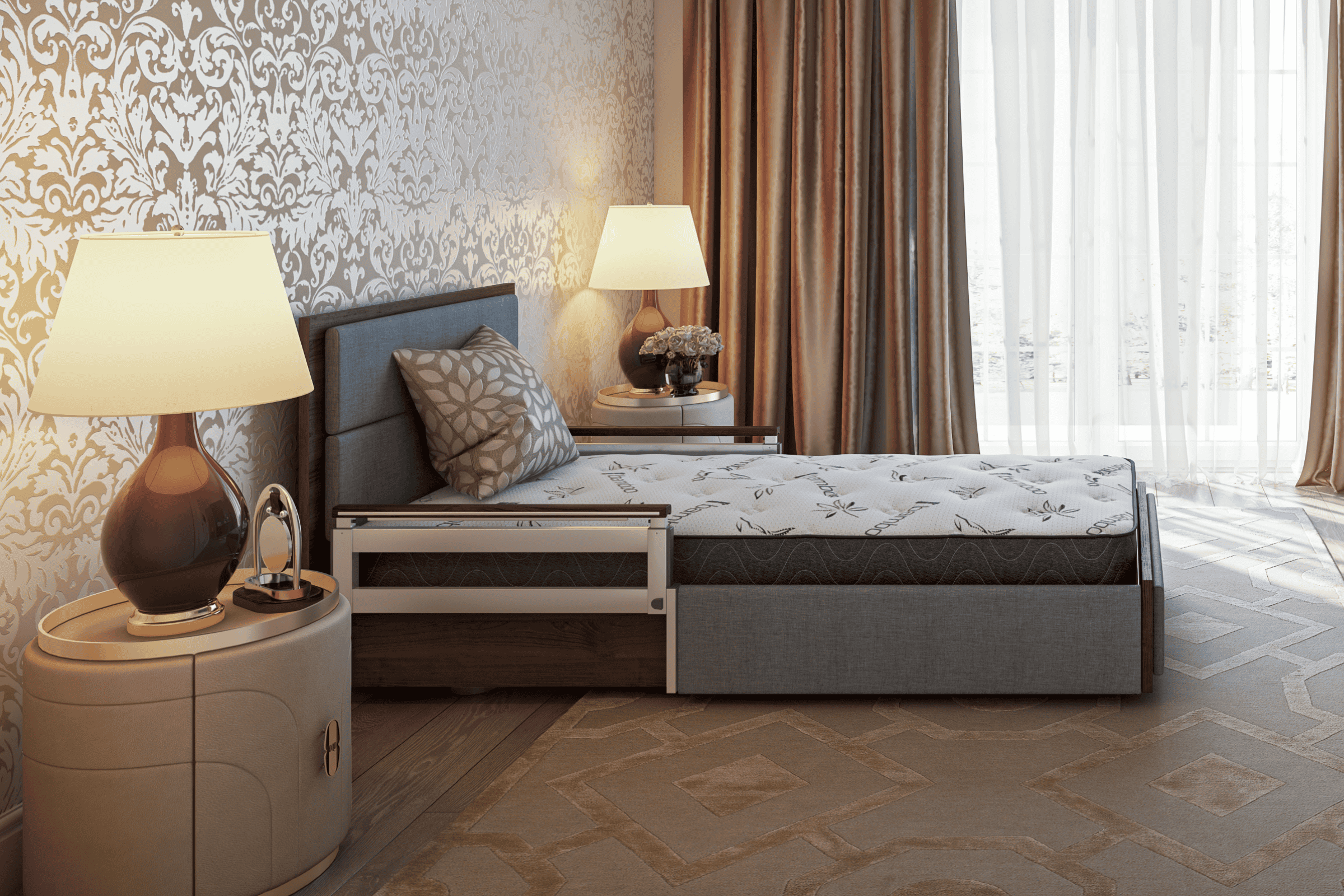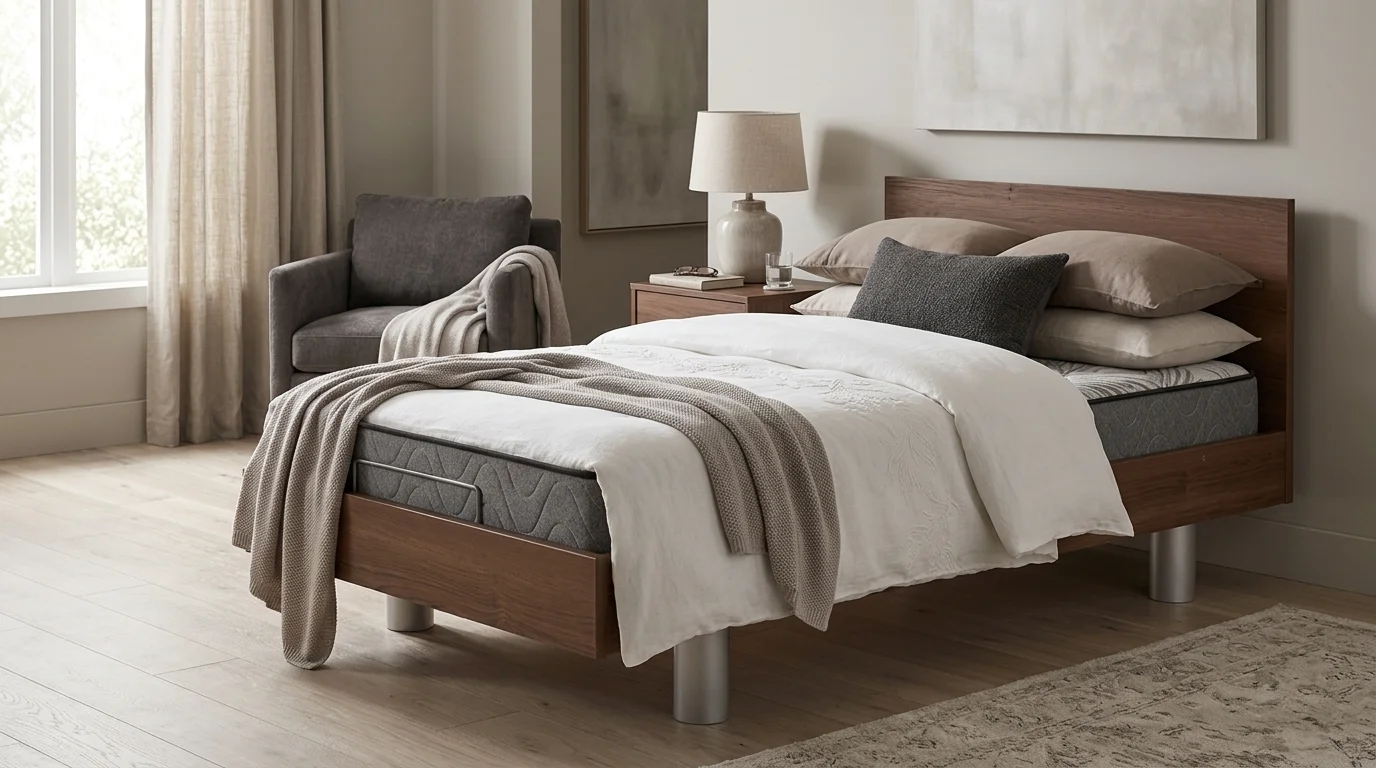



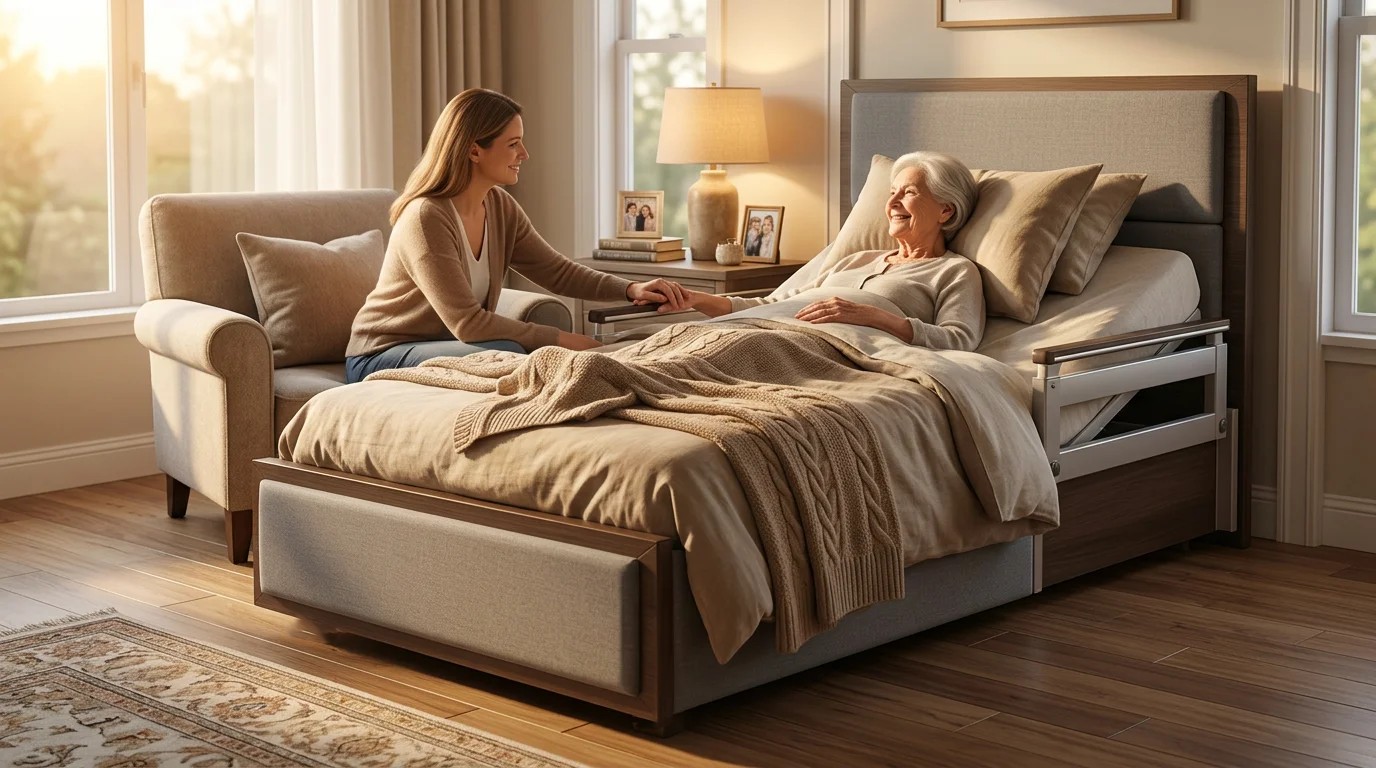



After reviewing clinical research, caregiver injury data, warranty structures, and total cost-of-ownership analyses, the answer for long-term care is clear. A premium home hospital bed is not just a nicer version of a budget bed. It is a fundamentally different category of equipment that delivers measurable safety, clinical, and financial advantages over years of use.1
This guide breaks down exactly what separates a premium home hospital bed from a standard DME bed, where the extra investment pays for itself, and how to determine which level of bed matches your family’s specific care needs. Whether you are a devoted adult child researching options for a parent, a senior planning proactively for aging in place, or a caregiver managing daily physical demands, the evidence will help you make a confident decision.
What Makes a Home Hospital Bed “Premium”?
The word “premium” gets overused in marketing. In the home hospital bed category, it refers to specific, measurable differences in construction, certification, features, and service that directly affect patient outcomes and caregiver well-being. Understanding these differences is the foundation for evaluating whether a high-end hospital bed for home use justifies its price.
Hospital-Grade Certification vs. Basic Compliance
Every home hospital bed sold in the United States must meet basic FDA requirements. Budget beds typically qualify as FDA 510(K) Exempt devices, meaning they meet minimum safety thresholds.2 Premium beds go significantly further, earning certification to IEC 60601-2-52, the international safety standard specifically designed for medical beds. This standard addresses critical risks including entrapment hazards, structural integrity under load, and electrical safety under the demanding conditions of continuous clinical use.3
The Aura Premium Home Hospital Bed ($6,999) and Aura Platinum Home Hospital Bed ($8,499) are both certified to International Hospital Standard, meaning they meet the same safety requirements as beds used in acute care facilities. The Impulse Essential ($3,999) provides full-electric residential comfort at a lower price point but without hospital-grade certification or advanced positioning features.
Construction Quality: What You Cannot See
The most consequential differences between premium and budget beds are hidden inside the frame. Premium beds use heavy-gauge steel construction throughout, with no plastic load-bearing components. Motors are hospital-grade actuators rated for tens of thousands of cycles over a decade of daily use.4 Budget beds often incorporate thinner steel, plastic joints, and consumer-grade motors designed for lighter, less frequent use.
Forum discussions on ConsumerAffairs reveal the consequences of this gap. Users report budget bed motors failing within days of delivery, plastic replacement parts held together with glue, and manufacturers that discontinued parts after just a few years, forcing complete bed replacement.5 One reviewer described finding “the replacement arm for their bed head was made of plastic and glue.” These are not isolated complaints. They reflect fundamental differences in engineering philosophy between equipment designed to last and equipment designed to meet a price point.
Advanced Positioning Capabilities
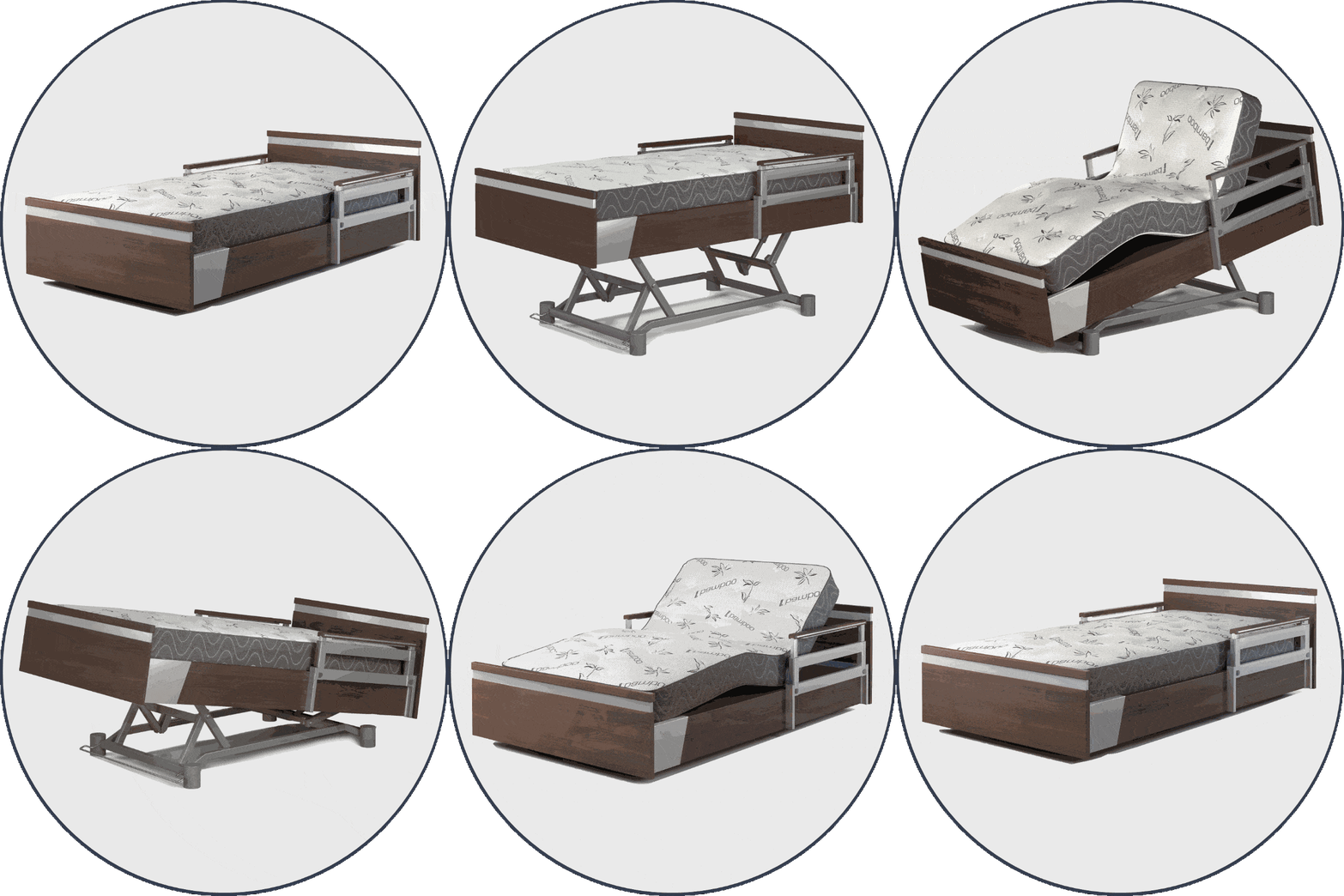
Budget beds offer three basic movements: head elevation, knee elevation, and (sometimes) height adjustment. A premium home hospital bed adds an entirely different tier of clinical positioning that directly impacts patient health outcomes:
- FallSafe Ultra-Low Height — lowers the bed platform to 10 inches from the floor (17 inches to mattress top), reducing fall impact energy for patients at risk of rolling out of bed6
- Trendelenburg and Reverse Trendelenburg — whole-bed tilt positions used for respiratory support and circulation management under clinician direction7
- Zero Gravity positioning — a synchronized head and leg position that distributes body weight evenly across the mattress surface, reducing peak interface pressures by over 30% compared to standard positioning8
- Cardiac Chair and Comfort Chair — positions that simulate sitting upright in a chair, essential for COPD management, eating in bed, and daily comfort
- Pre-programmed 21-inch transfer position — a dedicated height for safe bed-to-wheelchair transfers
These are not convenience features. They are clinical tools. Reverse Trendelenburg is a standard component of aspiration prevention protocols in clinical settings, supported by a network meta-analysis of 10 studies involving 878 participants.9 Zero Gravity positioning has demonstrated statistically significant pressure reductions at the head and heels (p < 0.005) in interface pressure mapping studies.10 For a deeper comparison of these capabilities, see our guide to high-end vs. standard DME bed features.
The True Cost of a Budget Home Hospital Bed
The price tag on a budget bed tells only part of the story. The true cost includes repairs, replacements, clinical complications, and caregiver injuries that accumulate over the life of the equipment. Understanding these hidden costs is essential before concluding that a $1,200 bed is a better deal than a $7,000 one.
Warranty Gaps That Erode Savings
Budget beds typically offer a one-year warranty on electronics and a limited lifetime warranty on the frame.11 The frame is the component least likely to fail. The motors, actuators, and control systems that actually break down are covered for just 12 months. After that, a single actuator replacement can cost $300 to $800, and if the manufacturer has discontinued the part, you are looking at a full bed replacement.
Premium beds take the opposite approach. The SonderCare Aura line carries a 5-year comprehensive parts warranty covering everything from headboard to footboard, including all motors and electronics.12 Competitors like the Accora Empresa offer 10-year frame warranties with 2-year electrical component coverage. This difference directly impacts your total cost of ownership. A single out-of-warranty motor repair on a budget bed can eliminate any initial savings compared to buying premium from the start.
Replacement Cycles and Service Life
Premium beds are engineered for a 10-year service life with modular, replaceable components and guaranteed parts availability throughout that period.13 Budget beds have a practical service life of 3 to 5 years, after which component failures become frequent and replacement parts become scarce.
Consider the math. A budget bed purchased for $1,200 that needs replacement every 4 years costs $3,600 over 12 years. A premium bed purchased for $6,999 that lasts a full decade costs less per year of service and delivers dramatically better clinical capabilities every single day. For a complete breakdown of hospital bed pricing at every level, our guide explains why home hospital beds cost what they do.
The Rental Trap
Renting a hospital bed costs approximately $250 to $399 per month for a full-electric model.14 At $300 per month, rental costs exceed the purchase price of a basic full-electric bed in just 4 months. They surpass the cost of a premium bed in about 13 months. For any care scenario lasting longer than a year, renting is the most expensive option available.
Medicare and hospice coverage further complicate the picture. Under LCD L33820, Medicare explicitly denies coverage for total-electric hospital beds, classifying powered height adjustment as a “convenience feature.”15 Hospice agencies provide a basic semi-electric bed at no cost, but it comes with a manual crank for height changes and none of the advanced positioning capabilities that directly impact patient outcomes and caregiver safety. For families choosing to invest in quality care equipment on their own terms, our guide to private pay home hospital beds covers funding strategies including HSA/FSA eligibility and financing options.
Five Ways a Premium Home Hospital Bed Pays for Itself
Calling a premium home hospital bed an “investment” is not marketing language. It is a statement supported by clinical data, injury statistics, and long-term cost analysis. Here are the five primary ways the investment generates measurable returns.
1. Preventing Pressure Injuries Worth $20,000 to $150,000 Each
Pressure injuries (bedsores) are among the most costly and preventable complications in home care. A single Stage 3 or Stage 4 pressure ulcer costs between $20,000 and $150,000 to treat, frequently requiring hospitalization and surgical intervention.16 For patients spending extended periods in bed, prevention is not optional. It is the single most important clinical outcome their bed must support.
Premium beds contribute to pressure injury prevention through multiple mechanisms. Zero Gravity positioning reduces peak interface pressures at the sacrum and heels by over 30%.17 Powered repositioning features reduce the physical barrier to frequent position changes, which remain the cornerstone of prevention protocols. The Aura Premium pairs these positioning capabilities with compatibility for therapeutic mattresses, including alternating pressure air systems ($2,999) that actively cycle pressure zones throughout the night. Research from SonderCare indicates an 86% reduction in pressure injuries when proper positioning capabilities are combined with appropriate mattress selection.18 Even preventing a single pressure injury justifies the entire cost difference between a premium and budget bed several times over.
2. Reducing Caregiver Injuries That Cost $14,200 Per Incident
Caregiving is physically demanding work that takes a measurable toll on the human body. The average workers’ compensation claim for a home health care injury is approximately $14,200.19 For family caregivers, the costs manifest differently but just as painfully: chronic back pain, missed work, and accelerated burnout that can end the ability to provide home care entirely.
Full-electric height adjustment is the single most impactful ergonomic feature for caregivers. It allows the bed to be raised to waist height for transfers, bathing, and dressing, then lowered for patient safety when unattended. Biomechanical studies show that powered repositioning features, common in premium beds, reduce peak hand forces by approximately 24 to 26% during patient turning tasks. One study recorded a drop in peak hand force from 340 N during manual repositioning to 253 N with integrated turn-assist.20
The economic value is substantial. Conservative estimates suggest premium beds generate approximately $645 per patient per year in combined savings from avoided injuries ($28), time savings ($517), and reduced turnover ($100).21 The Aura Platinum ($8,499) delivers the full range of caregiver-friendly features: powered hi-lo adjustment from 10 inches to 39 inches, one-touch positioning presets, and a pre-programmed 21-inch transfer height that eliminates guesswork during the most physically risky daily tasks. SonderCare’s own data shows a 60% reduction in caregiver back injuries and a 92% satisfaction rate among caregivers who use full-electric beds, compared to just 54% for manual bed users.22
3. Reducing Fall Severity Through Ultra-Low Height
Falls from hospital beds remain one of the most common and dangerous events in home care. The physics are straightforward: lowering the bed reduces the potential energy of a fall, which reduces the kinetic energy at impact. A biomechanical bench study calculated a 25% chance of serious head injury from a fall at standard bed height onto a tiled surface, which dropped to less than 1% when the bed was positioned at ultra-low height with a floor mat.23
Budget beds have a limited height range, typically from about 9.5 inches at the lowest to 22 inches. Some lack height adjustment entirely. Premium beds like the Aura line lower to a 10-inch platform height (17 inches to mattress top) and raise all the way to 39 inches for caregiver tasks. This full range serves dual purposes: ultra-low for fall safety when the patient is resting, and full nursing height for ergonomic caregiving.
For patients living with dementia, confusion, or medications that cause nighttime disorientation, ultra-low height is not a luxury. It is a safety requirement. Our fall prevention guide for seniors covers comprehensive strategies, with the bed’s low-height capability as the foundational element.
4. Extending the Ability to Age at Home
The financial stakes of aging in place versus facility placement are enormous. Assisted living averages $4,500 to $5,000 per month. Nursing home care ranges from $7,000 to over $10,000 monthly.24 Every month that quality equipment enables safe home care represents thousands of dollars in avoided facility costs.
Premium beds support longer aging in place through features that adapt to changing needs. As a condition progresses, the bed’s Trendelenburg position can manage respiratory symptoms. Its ultra-low height accommodates increasing fall risk. Its Comfort Chair position supports patients who can no longer transfer to a separate chair for meals or socializing. The Aura platform scales from independent living support to full nursing-level care without requiring a bed replacement.
Budget beds, by contrast, often cannot accommodate accessories like trapeze bars, specialty mattresses, or advanced safety rails as needs evolve. When the bed can no longer meet the patient’s requirements, families face an unplanned replacement purchase at precisely the moment they can least afford the disruption. Our hospital-grade bedroom setup guide walks through how to build a care environment that adapts over time.
5. Preserving Resale Value
Premium hospital beds from recognized brands retain meaningful resale value on the secondary market. Refurbished premium beds sell for 40 to 70% of their original price, creating a recovery pathway that budget beds simply do not offer.25 A well-maintained Aura Premium purchased for $6,999 and sold after 5 years for $3,000 to $4,000 has a net cost of $3,000 to $4,000. That is less per year than many budget beds that are worth nothing at end of life.
Premium vs. Budget: The Complete Feature Comparison
The differences between a premium home hospital bed and a budget model touch every aspect of daily use. This comparison draws on specifications from leading manufacturers in both categories.
| Feature | Budget Bed ($800-$1,800) | Premium Bed ($4,000-$9,000+) |
|---|---|---|
| Frame construction | Thin steel, plastic components | Heavy-gauge steel, no plastic load-bearing parts |
| Motor lifespan | 1-3 years, parts often discontinued | 5-10+ years, manufacturer-supported parts |
| Height range | Fixed or limited (9.5″-22″) | Full hi-lo (10″ platform to 39″) |
| Weight capacity | 300-450 lbs | 500-600+ lbs |
| Positioning | Head and knee only | Head, knee, Trendelenburg, Zero Gravity, Cardiac Chair, Comfort Chair |
| Safety certification | FDA 510(K) Exempt | IEC 60601-2-52 (International Hospital Standard) |
| Warranty | 1-year electronics, limited frame | 5-year comprehensive (all parts) |
| Noise level | Creaking, grinding, rattling | Near-silent operation |
| Aesthetics | Institutional chrome/gray | Furniture-grade panels, upholstered finishes |
| Accessory compatibility | Limited | Full: rails, trapeze, specialty mattresses, overbed tables |
| Transfer position | Manual guesswork | Pre-programmed 21″ transfer height |
| Expected service life | 3-5 years | 10+ years |
For a detailed side-by-side analysis with real-world testing data, see our high-end vs. standard DME bed comparison.
The Dignity Factor: Why Aesthetics Matter More Than You Think
One of the most underestimated reasons a premium home hospital bed is worth the investment has nothing to do with specs or warranties. It has to do with how the bed makes the person in it feel.
Research from palliative care and environmental psychology confirms that homelike environments promote psychological comfort, reduce anxiety, and support better social engagement.26 A bed that looks like medical equipment is a constant visual reminder of illness. It changes the character of a bedroom. It can make visitors uncomfortable. It can make the person in the bed feel like a patient rather than a parent, spouse, or friend.
On the Macmillan Cancer Community forum, a carer described their loved one being “reluctant to have a hospital bed at home” because of what it symbolized. On AgingCare, families debated whether to place beds in living rooms or bedrooms, with one commenter emphasizing that “no one wants to be on display when they are sleeping or need medical or hygiene assistance.”27 On Quora, users complained that most home hospital beds use “multiple spring coils or lower-quality foam” and look so institutional that patients resist using them.28
The Aura Platinum addresses this directly with fully upholstered side panels in Slate Gray Crypton fabric, concealed motors, and a headboard design that reads as bedroom furniture rather than medical equipment. As one Trustpilot reviewer noted, “You can barely tell it is a medical bed.” Another wrote, “I believe the SonderCare bed is worth every penny and truly a life saver for the user, their family, and staff.”29 For families who need a hospital bed that blends into a home, our article on home hospital beds that look like real beds explores the design features that make this possible.
This is not vanity. It is clinical. Patients who accept and use their bed properly are safer than those who resist it, attempt to use inadequate alternatives, or refuse the equipment entirely. Premium aesthetics remove a significant barrier to adoption, which translates directly into safety and outcomes.
The SonderCare Product Line: Premium at Every Level
SonderCare builds premium home hospital beds that combine hospital-grade clinical capabilities with furniture-grade residential design. Here is how each model fits different care needs and budgets.
Impulse Essential — $3,999
The Impulse Essential is SonderCare’s entry-level residential comfort bed. It provides full-electric head, knee, and hi-lo adjustment with a 400 lb weight capacity. At 36 inches wide, it fits standard bedroom spaces. The Impulse is designed for families who need reliable powered adjustment and residential aesthetics but do not require hospital-grade certification or advanced positioning features like Trendelenburg and Zero Gravity. It is the right choice for moderate care needs and a practical starting point for aging in place.
Aura Premium — $6,999
The Aura Premium is where clinical capability meets residential design. Certified to International Hospital Standard with a 500 lb weight capacity, it delivers the complete positioning suite: FallSafe Ultra-Low (10″ platform), Trendelenburg, Reverse Trendelenburg, Zero Gravity, Cardiac Chair, and Comfort Chair. The patented Comfort Deck system uses 50 individually flexing composite springs for optimal pressure redistribution. A 5-year comprehensive parts warranty covers every component. This is the model that most families caring for a parent with progressive care needs should evaluate first.
Aura Platinum — $8,499
The Aura Platinum adds fully upholstered side panels in Slate Gray Crypton performance fabric to the Aura Premium’s clinical feature set. Crypton fabric resists stains, moisture, and bacteria while maintaining a premium textile appearance. The result is a bed that delivers every clinical capability of the Aura Premium while looking like a piece of high-end bedroom furniture. For families where aesthetics are a top priority alongside safety, or for rooms where visitors are regularly present, the Platinum removes the visual stigma of medical equipment entirely.
Aura Extra Wide — $8,999 | Aura Platinum Wide — $10,999
The Aura Extra Wide ($8,999) and Aura Platinum Wide ($10,999) extend the Aura platform to 48 inches of sleeping surface width. Both maintain the full 500 lb weight capacity and complete positioning suite. The Extra Wide accommodates larger patients who need more room to sleep comfortably and reposition safely. It also serves patients who share the bed with assistive devices or simply prefer more space. Both wide models are available with all the same mattress, accessory, and bedding options as their 39-inch counterparts.
Who Should (and Should Not) Buy a Premium Home Hospital Bed
A premium home hospital bed is the right investment in specific care scenarios. It is not the right choice for everyone.
A Premium Bed Is Worth It When:
- Long-term care is expected (6+ months). The cost-per-year advantage of premium beds grows with duration. After 13 months, owning premium costs less than renting.
- The patient is at high fall risk. Ultra-low height and FallSafe capabilities are exclusive to premium models and directly reduce injury severity.
- Pressure injury prevention is critical. Advanced positioning combined with therapeutic mattress compatibility provides measurably better protection than budget alternatives.
- A caregiver provides daily hands-on care. Powered height adjustment, repositioning aids, and transfer presets reduce caregiver injury risk by up to 60%.
- Dignity and home aesthetics matter. Furniture-grade design eliminates patient resistance and preserves the character of the living space.
- Needs will change over time. The Aura platform’s full positioning suite and accessory compatibility adapt to progressive conditions without requiring bed replacement.
A Budget Bed May Be Sufficient When:
- Short-term recovery (under 3 months). For brief post-surgical recovery, a hospice-provided or rented semi-electric bed may be adequate. See our surgery recovery guide for short-term scenarios.
- Minimal medical complexity. If the primary need is simple head and knee elevation without fall risk, positioning requirements, or caregiver strain concerns, basic functionality may suffice.
- Rental is the plan. For stays under 4 months, renting is more cost-effective than purchasing at any level.
For families navigating this decision, our expert buyer’s guide to choosing a home hospital bed provides a complete framework based on care needs, not just budget.
How to Fund a Premium Home Hospital Bed
The upfront cost of a premium bed is a real consideration. Several strategies can make the investment more manageable without compromising quality.
HSA and FSA eligibility. Hospital beds are qualified medical expenses eligible for reimbursement from Health Savings Accounts and Flexible Spending Accounts. You will need a physician’s prescription and the supplier’s itemized invoice.30
Financing options. Many suppliers offer monthly payment plans over 6 to 60 months. SonderCare provides financing that allows families to spread the cost while receiving the bed immediately.
Rent-to-own programs. A portion of monthly rental payments can be applied toward eventual purchase, bridging the gap for families unsure about long-term need.
Long-term cost comparison. Frame the investment against alternatives. A premium bed at $6,999 costs $58 per month over 10 years of service. Monthly facility care costs $5,000 to $10,000. Even private bed rental at $300 per month exceeds the premium purchase price after 24 months. The premium bed is the lowest-cost option for long-term care by a significant margin.
What Real Families Say About Investing in Premium
SonderCare maintains a 4.9 out of 5 rating on Trustpilot with 96% five-star reviews.31 The consistent theme across verified reviews is that families initially hesitated at the price, then described the investment as justified after living with the bed:
- “I believe the SonderCare bed is worth every penny and truly a life saver for the user, their family, and staff at the retirement community.”
- “He is getting better sleeps than he has had in years and it gives my siblings and I peace of mind knowing that we can adjust the bed exactly as needed.”
- “This is the most sturdy bed, and I would recommend it to anybody.”
- “From the moment we inquired about purchasing the bed to the moment they delivered and installed it, our experience couldn’t have been better.”
On Bogleheads.org, a community known for rigorous cost-benefit analysis, members discussing hospital beds for elderly parents concluded that rental costs of $235 per month make purchasing the clear long-term choice. One poster noted: “If you think you’ll need it more than 9 months, it’s probably better to buy it.”32 Community members consistently identified height adjustability as the top benefit, followed by waterproof surfaces, adaptability for future accessories, and long-term cost savings.
The National Scoliosis Foundation forum captures the sentiment from the patient’s perspective. One post-operative user stated: “I can’t imagine not sleeping in a hospital bed” and recommended that “if the hospital bed is an option, do it!”33
Making the Decision: A Framework for Your Family
Deciding whether a premium home hospital bed is worth the investment comes down to three questions:
How long will the bed be needed? For any scenario lasting longer than 12 months, purchasing premium is more cost-effective than renting and more reliable than buying budget. The break-even point against rental is approximately 13 months for a premium bed.
What clinical features are required? If fall prevention, pressure injury management, respiratory positioning, or caregiver ergonomics are part of the care plan, premium beds provide capabilities that budget models physically cannot match. These are not upgradeable features. They require a different bed.
Does the bed need to feel like home? For patients who will resist institutional-looking equipment, for bedrooms visible to visitors, or for any scenario where the bed occupies a shared living space, furniture-grade design is not a luxury. It is a practical requirement for acceptance and compliance.
A premium home hospital bed is healthcare infrastructure, not a furniture purchase. Families who invest in quality equipment consistently report that it paid for itself through avoided injuries, prevented complications, extended home care, and preserved dignity. The cost of treating a single pressure ulcer, managing a single caregiver back injury, or transitioning to facility care even one month earlier dwarfs the price difference between a premium and budget bed.
If you are weighing this decision, SonderCare’s bed experts have helped thousands of families find the right fit. Contact SonderCare for a free consultation to match your family’s specific care needs with the right model, or explore the complete lineup of SonderCare home hospital beds.
References
- “Premium Home Hospital Beds: Investment Value and Clinical Outcomes.” March 2026. Aggregated findings from 132 sources on total cost of ownership, clinical outcomes, and caregiver ergonomics.
- U. S. Food and Drug Administration. “Medical Device Classification: Hospital Beds.” FDA 510(K) Exempt classification for basic home hospital beds.
- International Electrotechnical Commission. “IEC 60601-2-52: Medical electrical equipment — Particular requirements for the basic safety and essential performance of medical beds.” International standard for hospital bed safety certification.
- “Construction Quality and Durability Analysis of Premium vs. Budget Hospital Beds.” March 2026. Review of frame materials, motor specifications, and component longevity across price tiers.
- ConsumerAffairs. “Hospital Beds Reviews and Ratings.” Verified consumer reviews documenting motor failures, plastic components, and parts discontinuation in budget hospital beds.
- Biomechanical bench study on fall injury reduction through ultra-low bed positioning. Calculated 25% serious head injury probability at standard height, reduced to less than 1% at ultra-low height with floor mat.
- Network meta-analysis of head-of-bed elevation for aspiration and ventilator-associated pneumonia prevention. 10 studies, 878 participants.
- Interface pressure mapping study. Synchronized positioning demonstrated reduction in peak pressures at head and heels by over 30% (p < 0.005) compared to standard hospital and air mattresses.
- Network meta-analysis of 10 studies (878 participants) supporting head-of-bed elevation to prevent lung infections in critically ill patients.
- Biomechanical interface pressure study. Peak pressure reductions at head and heels exceeding 30% in synchronized positioning versus standard flat positioning.
- Medline Basic Homecare Bed warranty specifications: 5-year motor warranty, 1-year warranty on other electrical components and parts.
- SonderCare Aura Product Line. 5-year comprehensive parts warranty covering all components from headboard to footboard.
- Premium bed manufacturers specify expected service life of 10 years with proper maintenance. Premium beds carry 5-10 year frame/weld warranties with 2-5 year electronic component warranties.
- Private full-electric bed rental costs range from $250 to $399 per month, with premium models at the higher end.
- Centers for Medicare & Medicaid Services. Local Coverage Determination (LCD) L33820: Hospital Beds and Accessories. Explicit denial of coverage for total-electric beds (HCPCS codes E0265, E0266), classified as “convenience” items.
- Agency for Healthcare Research and Quality (AHRQ). Pressure injury treatment costs ranging from $20,000 to $150,000 for Stage 3-4 ulcers, frequently requiring hospitalization and surgical intervention.
- Interface pressure mapping study demonstrating over 30% reduction in peak pressures at sacrum and heels during Zero Gravity positioning.
- SonderCare. “How Caregivers Benefit from Home Hospital Beds.” 86% reduction in pressure injuries with proper positioning capabilities combined with appropriate mattress selection.
- U. S. home health sector workers’ compensation data. Average injury claim cost of approximately $14,200.
- Biomechanical study on powered repositioning. Peak hand force reduction from 340 N (manual) to 253 N (turn-assist), approximately 24-26% reduction. Additional study: 23.5% reduction in peak hand force (446 N to 341 N) and decrease in L5/S1 spinal compressive load from 1913 N to 1698 N.
- Economic model estimating combined annual savings of approximately $645 per patient per year from premium full-electric beds: $28 injury avoidance, $517 time savings, $100 turnover reduction.
- SonderCare. “How Caregivers Benefit from Home Hospital Beds.” 60% reduction in caregiver back injuries with height-adjustable beds. 92% satisfaction rate among full-electric bed users vs. 54% for manual beds.
- Biomechanical bench/drop test study calculating head injury probability at varying bed heights. 25% serious injury probability at 97.5 cm reduced to less than 1% with ultra-low height plus floor mat.
- Genworth Financial. “Cost of Care Survey.” Assisted living median costs of $4,500-$5,000/month; nursing home costs of $7,000-$10,000+/month.
- Refurbished premium hospital bed market analysis: 30-60% discount off new prices, with well-maintained units retaining 40-70% of original value.
- Environmental psychology and palliative care literature on homelike care environments promoting psychological comfort, reducing anxiety, and supporting social engagement.
- AgingCare Forum. “Hospital bed placement for spouse.” User 97yroldmom: “No one wants to be on display when they are sleeping or need medical or hygiene assistance.”
- Quora. “Why are hospital beds for home use such poor quality?” Community responses describing spring coil mattresses causing pressure ulcers and institutional appearance of budget models.
- Trustpilot. SonderCare Reviews. 4.9/5 stars, 96% five-star reviews. Verified customer testimonials on value, build quality, and white-glove service experience.
- IRS Publication 502. Medical and Dental Expenses. Hospital beds classified as qualified medical expenses for HSA/FSA reimbursement with physician documentation.
- Trustpilot. SonderCare (sondercare.com). 4.9 out of 5 overall rating with 96% five-star reviews as of March 2026.
- Bogleheads Forum. “Hospital bed needed for Mom — any advice?” Community analysis of rental vs. purchase economics for elderly care scenarios.
- National Scoliosis Foundation Forum. Post-operative patient testimonial recommending hospital bed use during recovery.