





It is 2 a.m. Your loved one is awake again, burning throat, that familiar grimace, and you are wondering whether the wedge pillow that cost $80 and slides to the floor every night is actually doing anything. Or whether sleeping elevated even matters when they are already on medication.
The short answer: yes, sleeping elevated significantly reduces nighttime GERD symptoms, and clinical guidelines from the American College of Gastroenterology, the American Gastroenterological Association, and the National Health Service all recommend it. But the longer answer matters just as much, because how you elevate, and what you elevate with, determines whether it works. Stomach acid does not care how much you spent on a pillow wedge if the person is lying flat again by midnight.
About 20 percent of adults in the United States live with gastroesophageal reflux disease (GERD).1 Among them, an estimated 74 percent experience nocturnal reflux symptoms, and more than half are awakened from sleep by acid reflux at least sometimes.2 This is not a minor nuisance. Poorly managed nighttime reflux is linked to more severe disease, including esophagitis, Barrett’s esophagus, and esophageal cancer.13 Positioning matters, and it matters for reasons that medication alone cannot fully address.
Why Lying Flat Makes Nighttime GERD Worse
When a person stands or sits upright, gravity does quiet work: it keeps stomach contents where they belong. Lying flat removes that advantage entirely. The lower esophageal sphincter (LES), the muscular valve between the stomach and esophagus, periodically relaxes even in healthy people. These transient relaxations are the primary mechanism through which acid escapes into the esophagus.3 During waking hours, swallowing and saliva production help clear any escaped acid quickly. During sleep, both of those defenses are largely offline. The result: acid that enters the esophagus at night sits there longer and causes more damage.
For people already taking proton pump inhibitors (PPIs) such as omeprazole or pantoprazole, this is a significant problem. Research shows that more than 70 percent of people on PPI therapy still experience nocturnal acid breakthrough, defined as intragastric acidity falling to harmful levels for at least one continuous hour overnight.12 Medication suppresses acid volume, but it cannot alter the physics of a flat sleeping surface. Positional therapy and medication address different mechanisms. Both are usually needed.
What “Sleeping Elevated” Really Means
This is where many caregivers, and many patients, go wrong. When doctors say “sleep elevated,” they mean elevating the entire upper body from the waist up, not just the head.
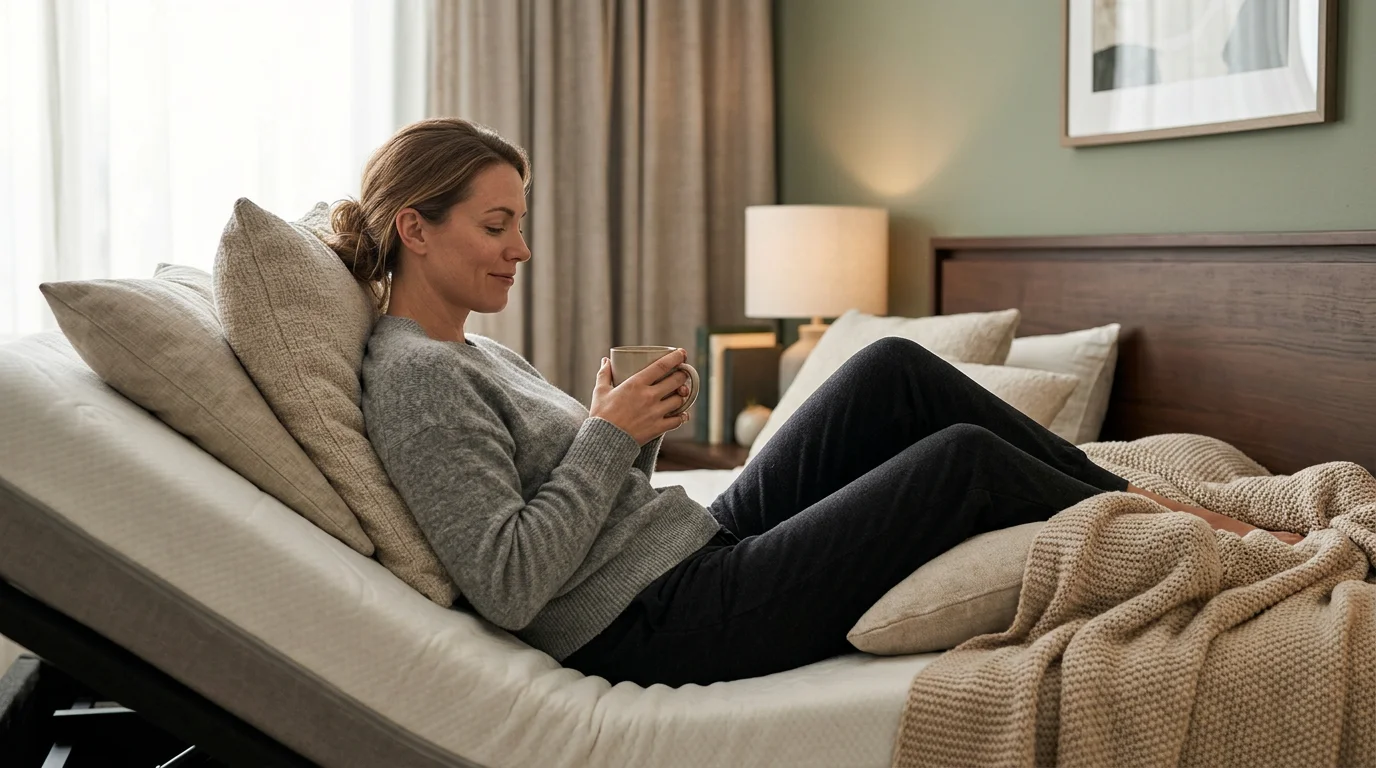
Stacking two or three pillows under someone’s head bends the neck forward and increases pressure on the abdomen. The NHS explicitly cautions against this approach, noting it can make symptoms worse rather than better.5 What matters is raising the entire torso on a gradient, so that the stomach sits lower than the esophagus and gravity actively keeps acid from flowing upward.
This distinction is why so many people try “sleeping elevated” and report no improvement. They elevated the head. The stomach stayed flat. The acid still went where it wanted.
What the Evidence Actually Shows
The research on head-of-bed (HOB) elevation is real and consistent, though not as airtight as proponents sometimes suggest. A 2021 systematic review published in BMC Primary Care compiled the results of six randomized controlled trials and found that HOB elevation reliably improves GERD symptoms.6
In the landmark Hamilton et al. crossover trial, patients sleeping on a flat surface had esophageal acid exposure of 21.2 percent of the night. Elevating the head of the bed with a foam wedge brought that down to 14.8 percent, a statistically significant reduction.7 A more recent 2020 randomized crossover trial found that 71.9 percent of participants in the elevated group achieved meaningful symptom improvement over six weeks, compared to 54.8 percent in the control group, with an adjusted odds ratio of 3.1.8
Not every study finds dramatic objective results. A 2020 Brazilian trial found that wedge-based elevation improved how patients felt but did not produce statistically significant changes in pH measurements over 24 hours, and a 28 cm wedge caused physical discomfort in most users.9 This matters: symptom relief and measurable acid suppression do not always move together.
The American College of Gastroenterology 2022 clinical guideline summarizes the state of evidence honestly: it rates HOB elevation as a “Conditional recommendation, Low quality of evidence.”3 The AGA also recommends it for selected patients with recumbent symptoms.4 Conditional does not mean ineffective; it means the evidence is real but imperfect, and individual response varies. For most people with symptomatic nighttime GERD, the benefit outweighs the inconvenience.
Left-Side Sleeping: The More Powerful Position
If you are making only one positioning change, choose sleep position before you choose elevation height. The ACG guideline lists sleeping on the left side as having “unequivocal scientific evidence”, the only lifestyle factor on its list to receive that designation, and a stronger rating than head-of-bed elevation itself.3
The physiology is straightforward. The stomach curves to the left. When a person lies on their left side, the gastroesophageal junction sits above the pool of stomach contents. On the right side, that junction is submerged, and acid escapes more easily.
The numbers are striking. In a 2022 study monitoring sleep position and esophageal pH simultaneously, median esophageal acid exposure time in the left lateral position was 0.0 percent, compared to 0.6 percent supine and 1.2 percent on the right side. Acid clearance time in the left lateral position was 35 seconds, versus 76 seconds supine and 90 seconds on the right.10 A 2023 meta-analysis confirmed these findings across multiple studies, finding that left lateral positioning reduced acid exposure time by 2.71 percentage points compared to supine and 2.03 points compared to right lateral.11
Left-side sleeping is particularly relevant for people who share a bed or who have conditions, like some respiratory conditions, that also respond to sleep position adjustments. It is worth noting that people managing both GERD and respiratory concerns may benefit from similar positioning strategies; our guide to best sleeping position for COPD covers the overlap in more detail.
The ideal approach combines both strategies: elevation and left-side positioning. The two work through different mechanisms and stack their benefits.
How High Is High Enough?
The evidence-based target is 6 to 8 inches (15 to 20 centimeters) of head-of-bed elevation.6 The NHS guidance uses 10 to 20 cm as its stated range, specifying that the chest and head should sit above the waist.5
Practically, that translates to:
– 6 inches: roughly the height of two thick hardcover novels stacked under bed legs
– 8 inches: about the height of a standard brick plus a paperback book
– The mattress surface should visibly slope, not a subtle difference, but something you can see from across the room
What this does not mean:
– Raising the pillow higher does not count (head-only elevation, not torso)
– A slight slope accomplished by stacking blankets does not count
– The elevation needs to come from raising the bed frame or the entire mattress surface
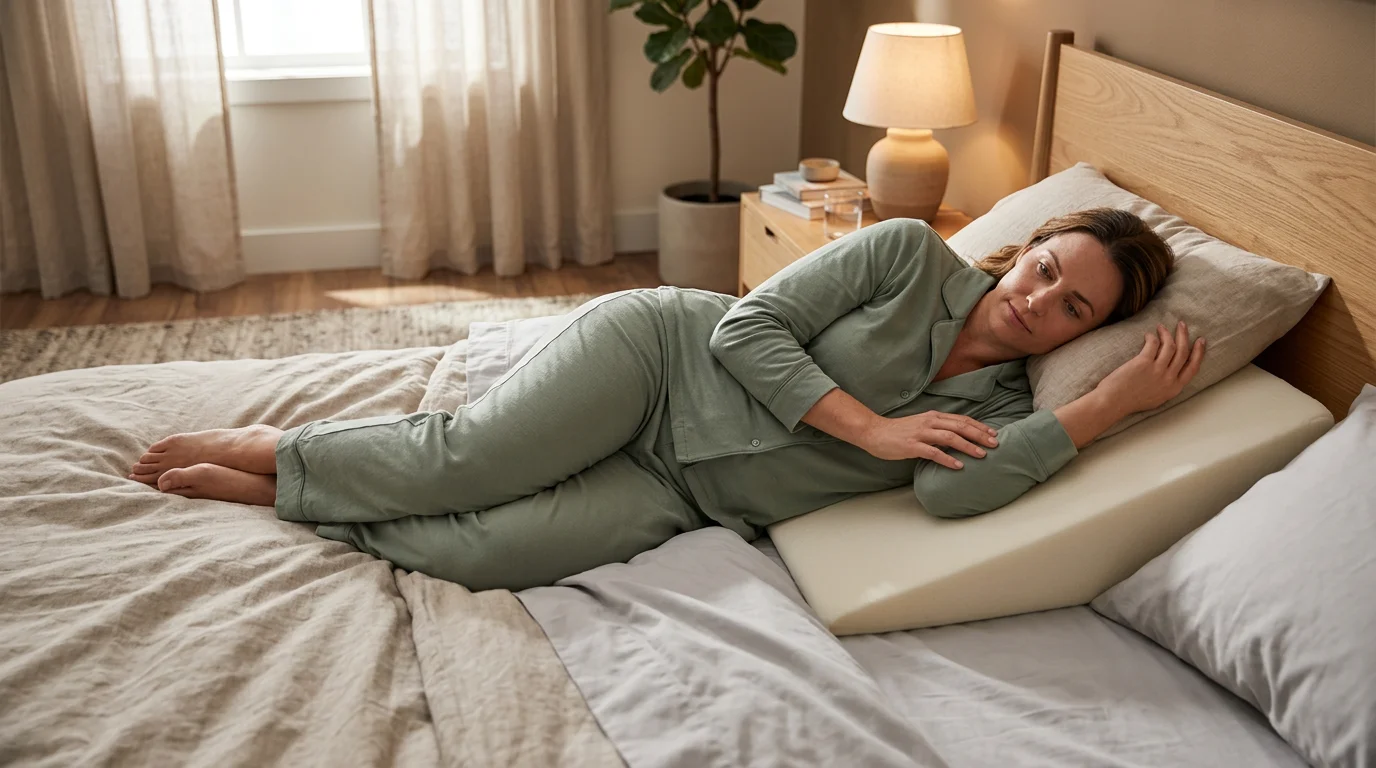
For people using a dedicated wedge pillow designed for this purpose, the wedge needs to extend from the hips upward, not just support the shoulders and head.
Why Wedge Pillows Often Fail
Wedge pillows are the most common first attempt at GERD elevation, and the most common source of frustration. The problems are predictable:
They slide. A foam wedge on a mattress surface, under a person who shifts position during sleep, reliably migrates toward the foot of the bed. By 2 a.m., many people are lying substantially flatter than when they started, with no awareness that the elevation has disappeared.
They cause back and neck pain. A fixed-angle foam wedge does not conform to a person’s body or allow micro-adjustments. People with existing back or joint issues often abandon them within weeks because the discomfort outweighs the reflux relief.
They elevate only the head. Standard wedge pillows support the back and shoulders but do not consistently raise the torso from the waist. This creates the “neck bend” problem, the neck flexes forward, which can increase abdominal pressure and actually worsen symptoms.
One angle does not fit all. The Batista 2020 trial found that a 28 cm (about 11 inch) wedge caused positional discomfort in most study participants.9 The “right” angle varies significantly from person to person.
For people with mobility limitations, the problems compound. Someone who cannot comfortably reposition themselves during the night cannot recover from a sliding wedge or adjust to a painful angle.
Hospital Beds and Adjustable Bases: A More Reliable Solution
This is the point many caregivers reach after months of wedge pillow frustration: a bed that can adjust its own angle is a fundamentally different, and fundamentally more effective, solution.
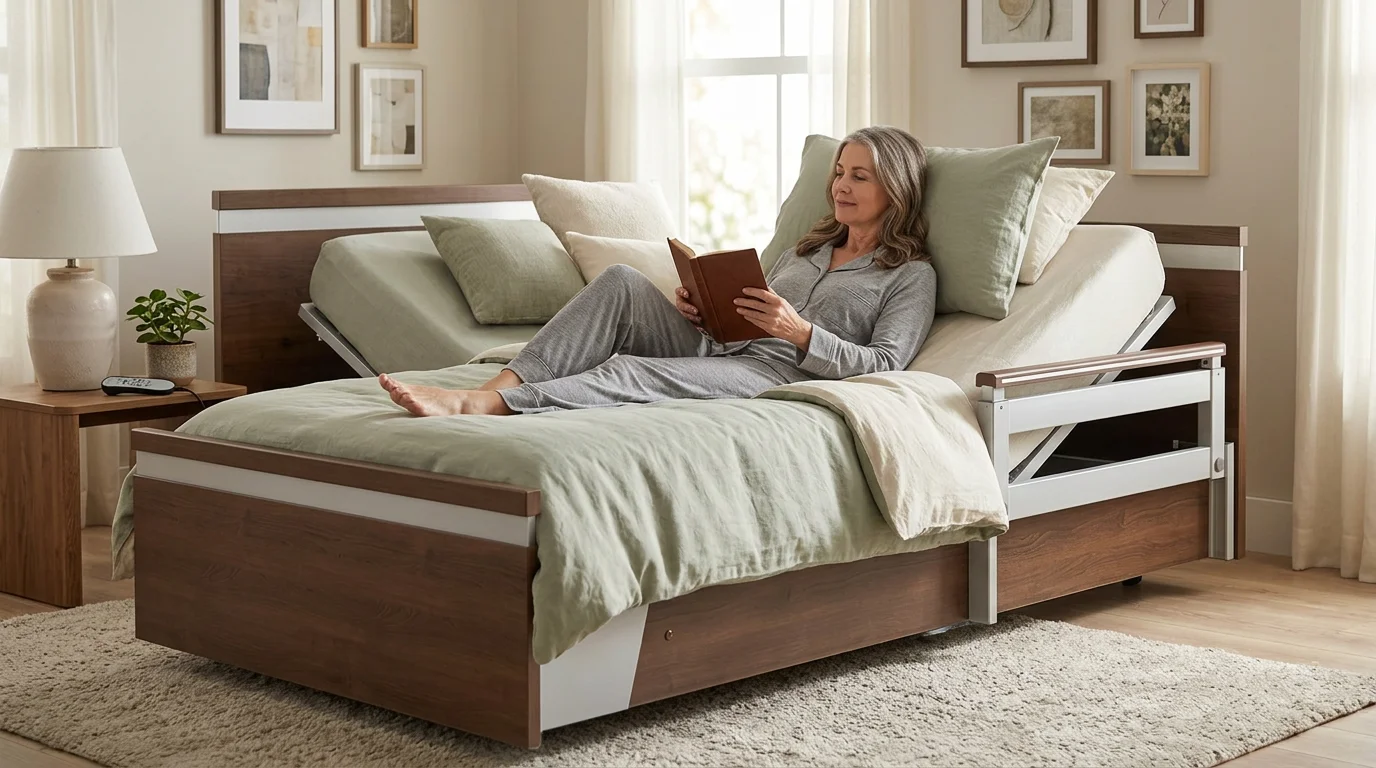
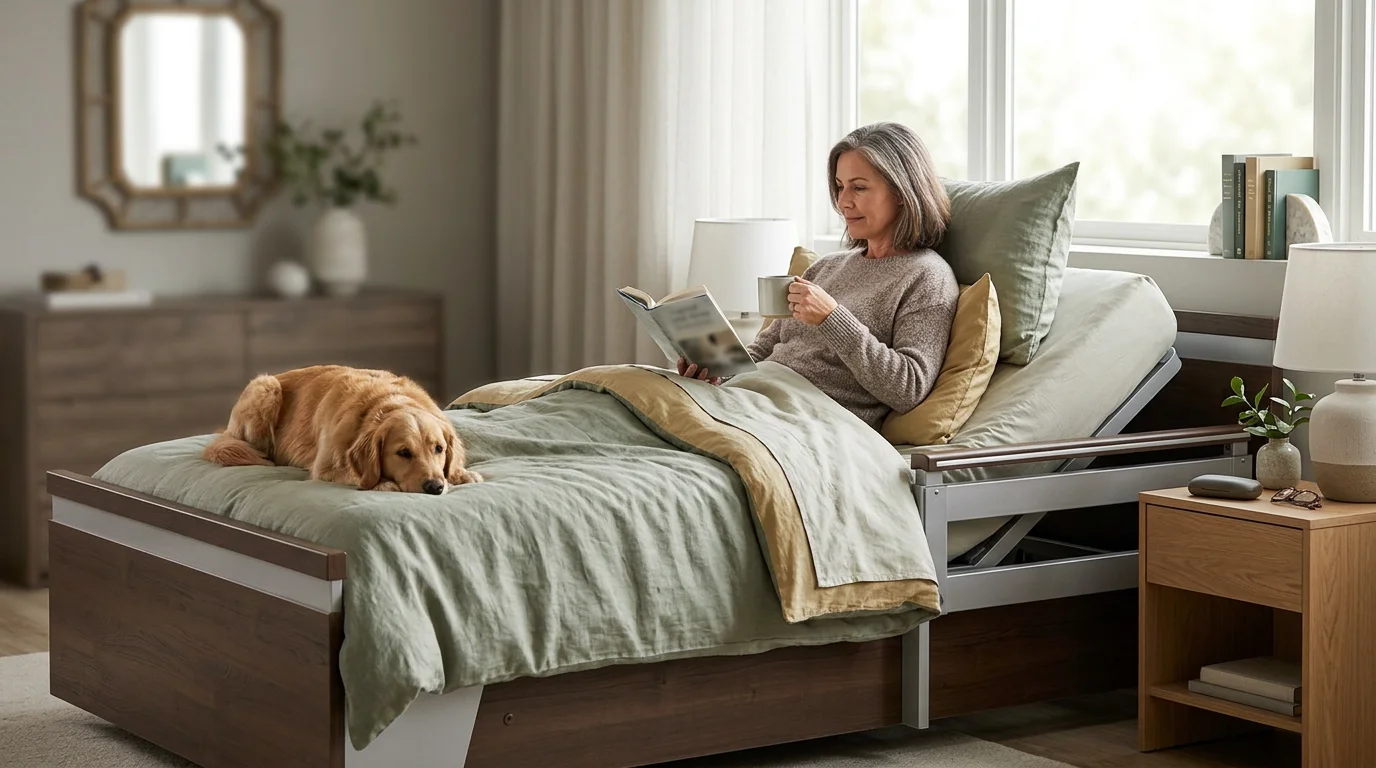
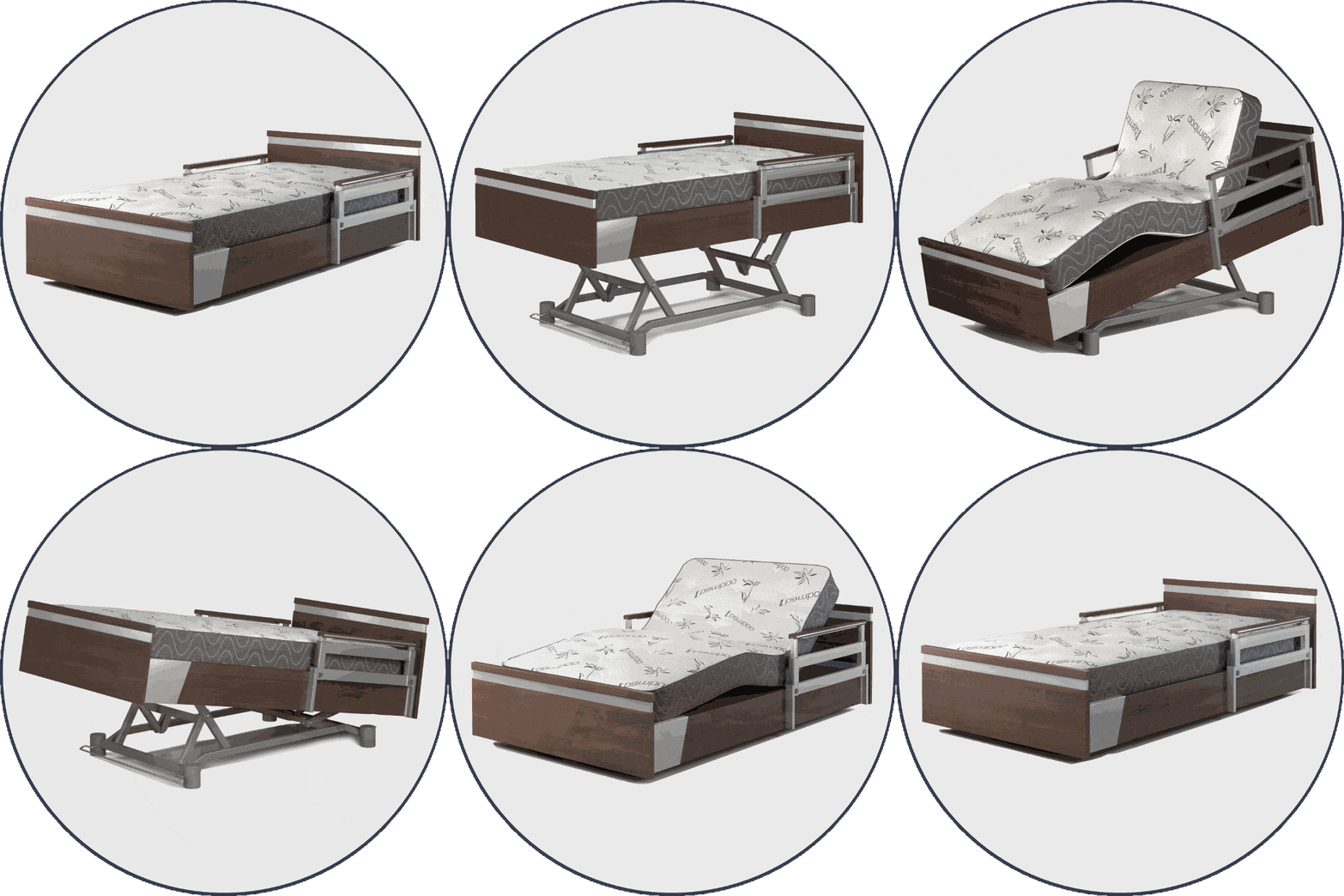
Full-electric home hospital beds like the SonderCare Aura Premium offer what wedge pillows cannot: precise, reproducible head elevation via the Reverse Trendelenburg position, which tilts the entire bed frame so the head end rises and the feet end lowers. The entire sleeping surface becomes an inclined plane. There is no wedge to slide, no foam to compress, no fixed angle that cannot be changed. The person in the bed (or their caregiver) adjusts the angle with a hand controller.
This matters clinically because the elevation is consistent throughout the night. A caregiver who sets a six-inch head elevation at bedtime can reasonably expect that elevation to be present at 3 a.m. That reliability is exactly what wedge pillows rarely deliver.
For people who prefer a more refined aesthetic, and for situations where the bedroom should not look clinical, the Aura Platinum offers the same full positioning capability with fully upholstered side panels in Slate Gray Crypton fabric, designed to blend into a residential bedroom rather than announce itself as medical equipment.
The independence factor is significant for both patients and caregivers. When someone can adjust their own head position with a button, raising slightly when reflux wakes them, lowering when they feel comfortable, they recover a degree of control over their own comfort that wedge pillows and stacked books cannot provide.
You can learn more about how hospital beds help with GERD and about the specific mechanics of the Reverse Trendelenburg position for GERD and nighttime reflux in our dedicated guides.
When Elevation Is Not Enough: Signs to Escalate
Positioning is an important tool, but it is not the complete answer for everyone. There are several situations where nighttime GERD symptoms warrant closer medical attention:
Symptoms persist despite elevation and left-side positioning. If these measures are consistently applied and nighttime symptoms continue, the underlying GERD may require medication adjustment, a different diagnostic workup, or evaluation for complications.
Silent GERD or aspiration symptoms. Some people never feel classic heartburn but develop a chronic cough, hoarse voice in the morning, or recurrent respiratory infections. This may indicate acid is reaching the airway during sleep, a condition called laryngopharyngeal reflux or, in severe cases, aspiration. Positional therapy is still part of the management, but the clinical picture requires evaluation.
Awakening from choking or gasping. A loved one who wakes choking or whose breathing sounds wet or gurgling at night needs immediate medical assessment. These are not symptoms to manage with positioning alone.
Long-standing severe symptoms. Nightly GERD symptoms carry a nearly 11-fold higher risk of esophageal adenocarcinoma compared to being asymptomatic.13 Regular endoscopic surveillance is appropriate for anyone with longstanding or severe nighttime reflux, a conversation with a gastroenterologist, not a decision to make at home.
For context on the range of conditions that benefit from a home hospital bed, including respiratory and digestive conditions, our learning center covers the full picture.
Putting It Together: A Practical Framework
For yourself or someone in your care, the evidence-based approach to nighttime GERD and sleep positioning follows a clear order of priority:
-
Left-side sleeping first, the single most effective positional change, with strong objective evidence. If position changes need to happen one at a time, start here.
-
Whole-body elevation next, 6 to 8 inches from the waist up, not just head elevation. Use a method that holds the elevation through the night.
-
Timing discipline, avoid eating within 2 to 3 hours of lying down (ACG recommendation). Elevation helps gravity; an empty stomach helps more.
-
Revisit the equipment, if wedge pillows are sliding, causing pain, or not maintaining elevation, they are not working. A full-electric hospital bed or adjustable base provides what a foam wedge usually cannot.
-
Do not rely on positioning alone, medication and positional therapy work through different mechanisms. Both matter. Neither fully replaces the other.
If you are caring for an elderly parent or spouse with nighttime GERD that has not responded to the usual approaches, it may be worth speaking with a SonderCare expert about whether a full-electric hospital bed is appropriate for your situation. We can walk through positioning options, bed configurations, and delivery timelines, at no pressure, whenever you are ready.
For a broader look at choosing the right bed for a medical condition, our guide to how to choose a home hospital bed covers what to evaluate before you buy.
References
-
National Institute of Diabetes and Digestive and Kidney Diseases (NIDDK). “Definition & Facts for GER & GERD.” U.S. Department of Health and Human Services, last reviewed July 2020. https://www.niddk.nih.gov/health-information/digestive-diseases/acid-reflux-ger-gerd-adults/definition-facts
-
Fujiwara Y, Arakawa T. “Nocturnal Gastroesophageal Reflux: Assessment and Clinical Implications.” Journal of Neurogastroenterology and Motility 17, no. 2 (2011): 105–113. https://pmc.ncbi.nlm.nih.gov/articles/PMC3093000/ DOI: 10.5056/jnm.2011.17.2.105
-
Katz PO, Dunbar KB, Schnoll-Sussman FH, et al. “ACG Clinical Guideline for the Diagnosis and Management of Gastroesophageal Reflux Disease.” American Journal of Gastroenterology 117, no. 1 (2022): 27–56. https://pmc.ncbi.nlm.nih.gov/articles/PMC8754510/ DOI: 10.14309/ajg.0000000000001538
-
American Gastroenterological Association. “Management of Gastroesophageal Reflux Disease (GERD).” Clinical Guidance, AGA. https://gastro.org/clinical-guidance/management-of-gastroesophageal-reflux-disease-gerd/
-
National Health Service (NHS). “Heartburn and Acid Reflux.” NHS, UK. https://www.nhs.uk/conditions/heartburn-and-acid-reflux/
-
Albarqouni L, Moynihan R, Clark J, et al. “Head of bed elevation to relieve gastroesophageal reflux symptoms: a systematic review.” BMC Primary Care 22 (2021): 24. https://pmc.ncbi.nlm.nih.gov/articles/PMC7816499/ DOI: 10.1186/s12875-021-01369-0
-
Hamilton JW, Boisen RJ, Yamamoto DT, Wagner JL, Reichelderfer M. “Sleeping on a wedge diminishes exposure of the esophagus to refluxed acid.” Digestive Diseases and Sciences 33, no. 5 (1988): 518–522. https://pubmed.ncbi.nlm.nih.gov/3359906/
-
Morales TG, Brown P, Vane N. Randomized crossover trial on head-of-bed elevation and GERD symptom improvement, 2020. Protocol: NCT02706938. https://cdn.clinicaltrials.gov/large-docs/38/NCT02706938/Prot_SAP_ICF_000.pdf
-
Batista C, Penagini R, Mauro A. “Effect of an Antireflux Bed Wedge on Gastro-Esophageal Reflux Symptoms and Acid Reflux.” SciVision 2020. https://www.scivisionpub.com/pdfs/effect-of-an-antireflux-bed-wedge-on-gastro-esophageal-reflux-symptoms-and-acid-reflux-1467.pdf
-
Schuitenmaker RBE, van Hoeij FB, Smout AJPM, Bredenoord AJ. “Relationship Between Sleep Position and Nocturnal Upright Episodes in Patients with Gastroesophageal Reflux Disease.” American Journal of Gastroenterology 117, no. 2 (2022): 346–351. https://pubmed.ncbi.nlm.nih.gov/34928874/
-
Simadibrata DM, Lesmana E, Radista R, Pratama HK. “Left lateral decubitus sleeping position is associated with improved gastroesophageal reflux disease symptoms.” World Journal of Clinical Cases 11, no. 33 (2023). https://pmc.ncbi.nlm.nih.gov/articles/PMC10643078/
-
Tutuian R, Castell DO. “Nocturnal Acid Breakthrough, Approach to Management.” MedGenMed 6, no. 4 (2004). https://pmc.ncbi.nlm.nih.gov/articles/PMC1480544/
-
Lagergren J, Bergström R, Lindgren A, Nyrén O. “Symptomatic Gastroesophageal Reflux as a Risk Factor for Esophageal Adenocarcinoma.” New England Journal of Medicine 340 (1999): 825–831. https://www.nejm.org/doi/full/10.1056/NEJM199903183401101 DOI: 10.1056/NEJM199903183401101