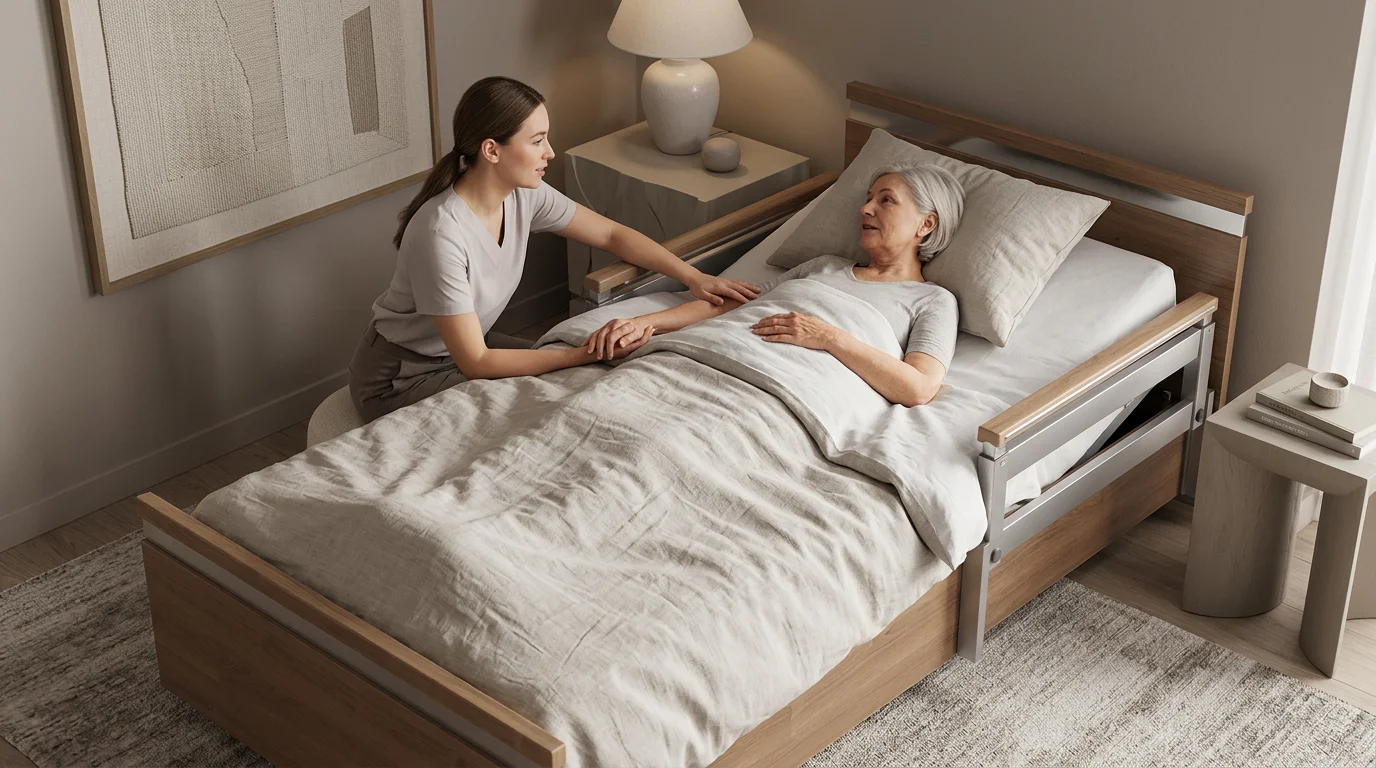






It’s 2 a.m., and you’re awake again. Not because you chose to be, but because the person you care for is coughing, clearing their throat, or struggling to get comfortable after acid worked its way back up while they were sleeping. If this is a familiar scene, you’re not alone. Gastroesophageal reflux disease (GERD) affects roughly 20% of the U.S. population,1 and for many people, the worst episodes happen at night, when they’re lying flat and gravity is no longer helping.2
A home hospital bed can make a meaningful difference, and the clinical evidence supports it. By raising the entire upper body at a consistent, maintained angle, a hospital bed uses gravity itself to keep stomach acid where it belongs. This article explains how that works, what the research shows, why standard pillows fail at this task, and what to look for when choosing a bed for someone managing GERD at home.
Why GERD Gets Worse at Night
During the day, when most people are upright, gravity does quiet, continuous work: it keeps stomach contents in the stomach. When someone with GERD lies flat, that advantage disappears. The lower esophageal sphincter (LES), the valve between the esophagus and the stomach, doesn’t close as tightly during sleep, and stomach acid can travel backward into the esophagus with little resistance.
The numbers are striking. A survey of patients with heartburn found that 79% experienced nighttime symptoms, and among them, 75% said those symptoms disrupted their sleep while 63% reported that nighttime heartburn affected their ability to function the next day.3 A separate study found that among people who experience heartburn at least twice a month, 89% reported nighttime GERD symptoms.4
Beyond discomfort, nighttime reflux carries real clinical risk. Stomach acid that reaches the larynx and pharynx during sleep, sometimes called silent reflux or laryngopharyngeal reflux, can cause choking episodes, chronic throat irritation, and in higher-acuity patients, aspiration pneumonia. For caregivers managing someone with dementia or swallowing difficulties, those overnight aspiration risks are among the most frightening parts of the condition.
The takeaway: GERD is not just a daytime inconvenience for many people. It is, at its core, a nighttime positioning problem.
The Clinical Case for Head-of-Bed Elevation
The most studied, most recommended non-pharmacological intervention for nighttime GERD is head-of-bed elevation (HOBE): raising the head end of the sleeping surface so that the entire upper body rests at an incline rather than flat.
A systematic review published in BMC Family Practice evaluated five controlled trials with a combined 228 participants and found that head-of-bed elevation consistently reduced acid exposure in the esophagus and improved symptom scores. The reviewers concluded that elevation is “a cheap, relatively safe, and promising alternative to drug interventions” for GERD management.5
A randomized trial of 39 pharmacologically treated GERD patients added important context. Participants who slept with the head of the bed elevated by 20 cm (approximately 8 inches) for six weeks were twice as likely to achieve meaningful symptom improvement compared to those sleeping flat, with a response rate of 69.2% versus 33.3% (relative risk 2.08). Notably, 77.1% of patients preferred sleeping with elevation. The same study found that 54% experienced at least one episode of slipping out of position during the night, a finding that matters considerably when evaluating what kind of bed can deliver this therapy reliably.6
The most recent evidence goes further. A 2026 randomized noninferiority trial compared a 20-cm wedge pillow against adding a second dose of proton pump inhibitor (PPI) for patients whose nocturnal reflux symptoms persisted despite morning PPI use. The wedge was noninferior to twice-daily PPI for controlling nighttime symptoms, and sleep quality scores were significantly better in the wedge group.7 Positioning therapy does not replace medication prescribed by a physician, but this finding underscores how consequential the physical angle can be.
Why Pillows and Wedge Cushions Fall Short
If the solution is elevation, why not just stack some pillows?
It’s the most natural first response, and caregivers across patient support communities have tried it, often multiple times, with diminishing patience. The problem is mechanical. Pillows placed under the head raise the head and neck, but they do not tilt the torso. The angle of the lower esophageal sphincter relative to the stomach is determined by the position of the entire upper body, not just the head. Lifting only the neck while the chest and abdomen stay flat can actually worsen the geometry by creating a fold at the junction.
Even purpose-built wedge pillows, which do elevate the torso, face the same challenge identified in the clinical trial above: patients slide. By early morning, the incline that was carefully arranged at bedtime has been lost, and the person is lying nearly flat again. The wedge works in principle but fails in practice because it depends on the patient not moving.
The Cleveland Clinic recommends positioning at a 30- to 45-degree incline, elevating the head between 6 and 12 inches above the sleeping surface, achieved either through a wedge pillow or by elevating the head end of the bed itself.8 A bed risers approach (blocks under the headboard legs) achieves this, but creates an unstable frame and makes caregiving tasks more difficult. Wedge pillows achieve it temporarily. A motorized hospital bed achieves it consistently, all night, without relying on the person to stay perfectly still.
How a Hospital Bed Delivers Reliable GERD Relief
A hospital bed designed for home use addresses the GERD positioning problem in ways that pillows and wedge inserts cannot match.
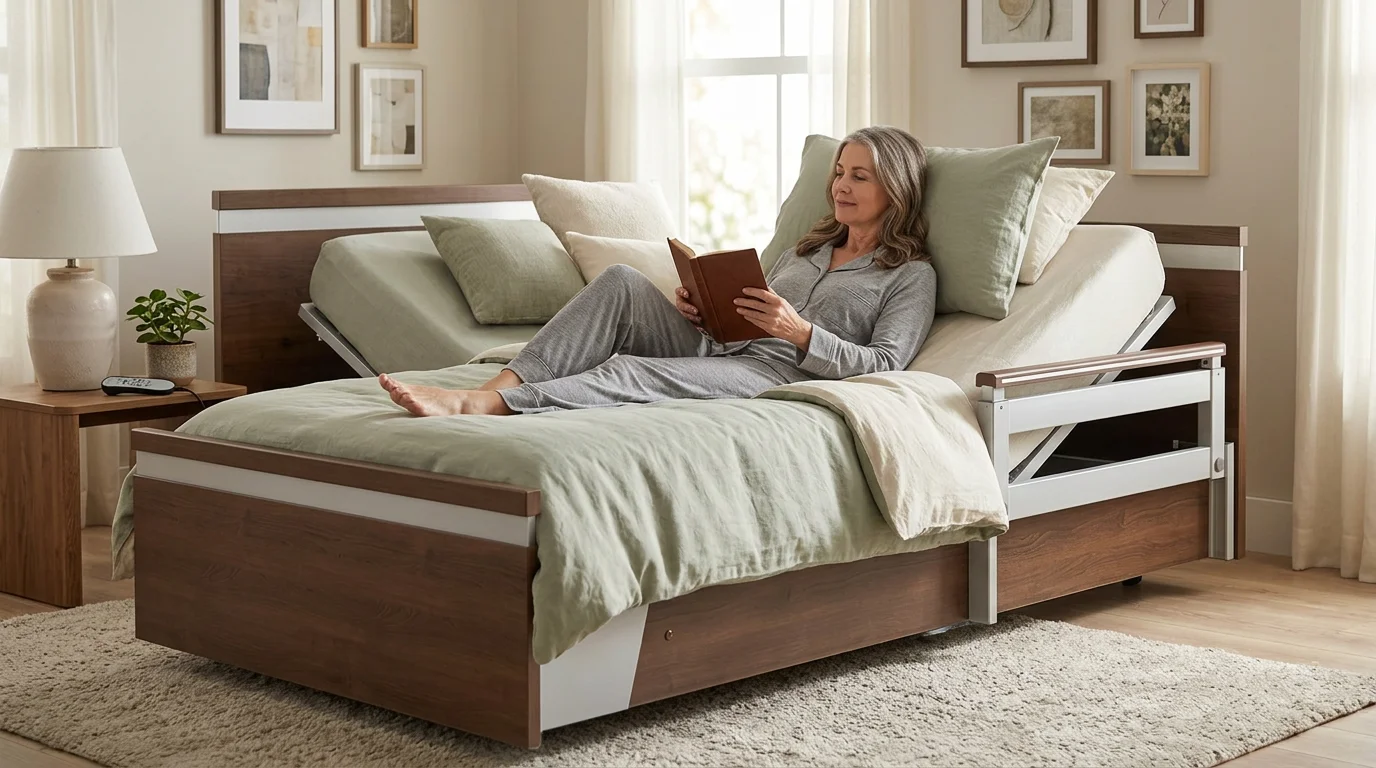
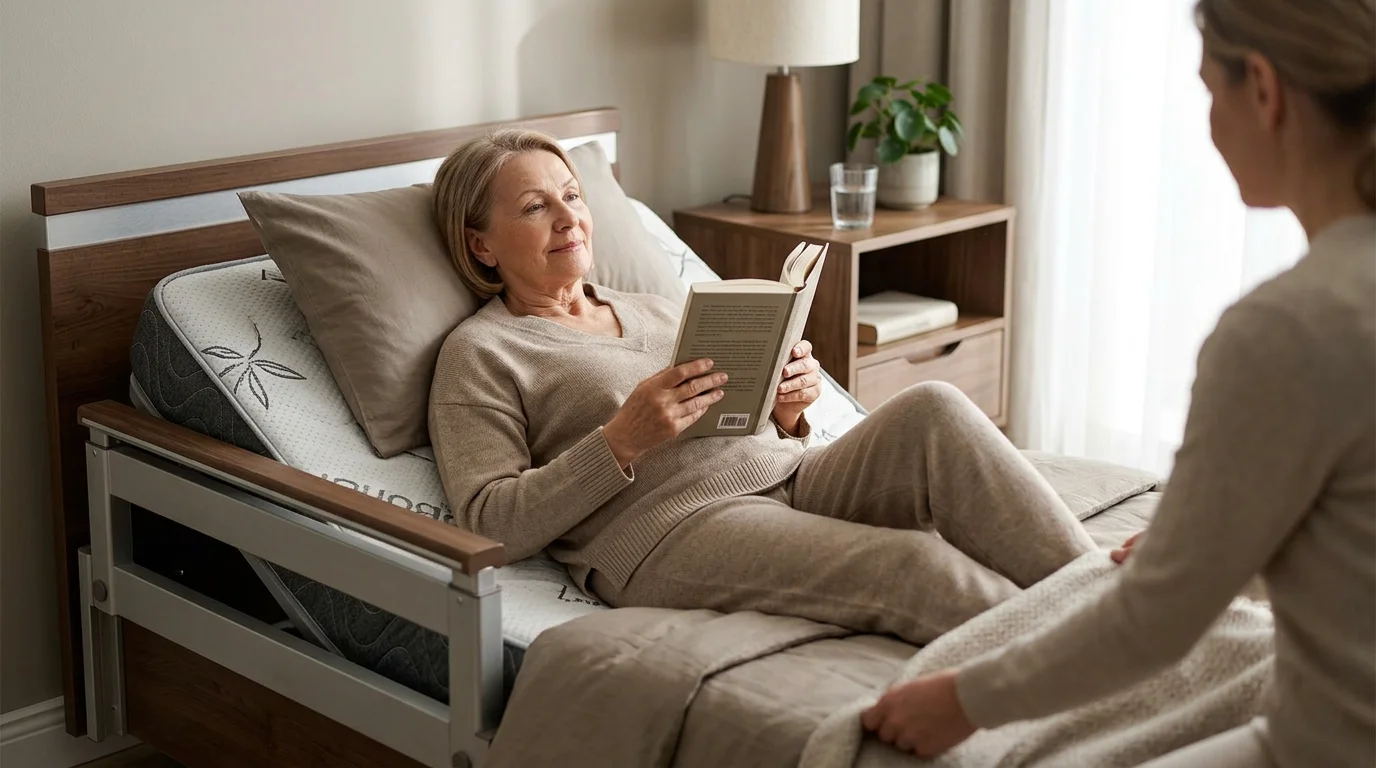
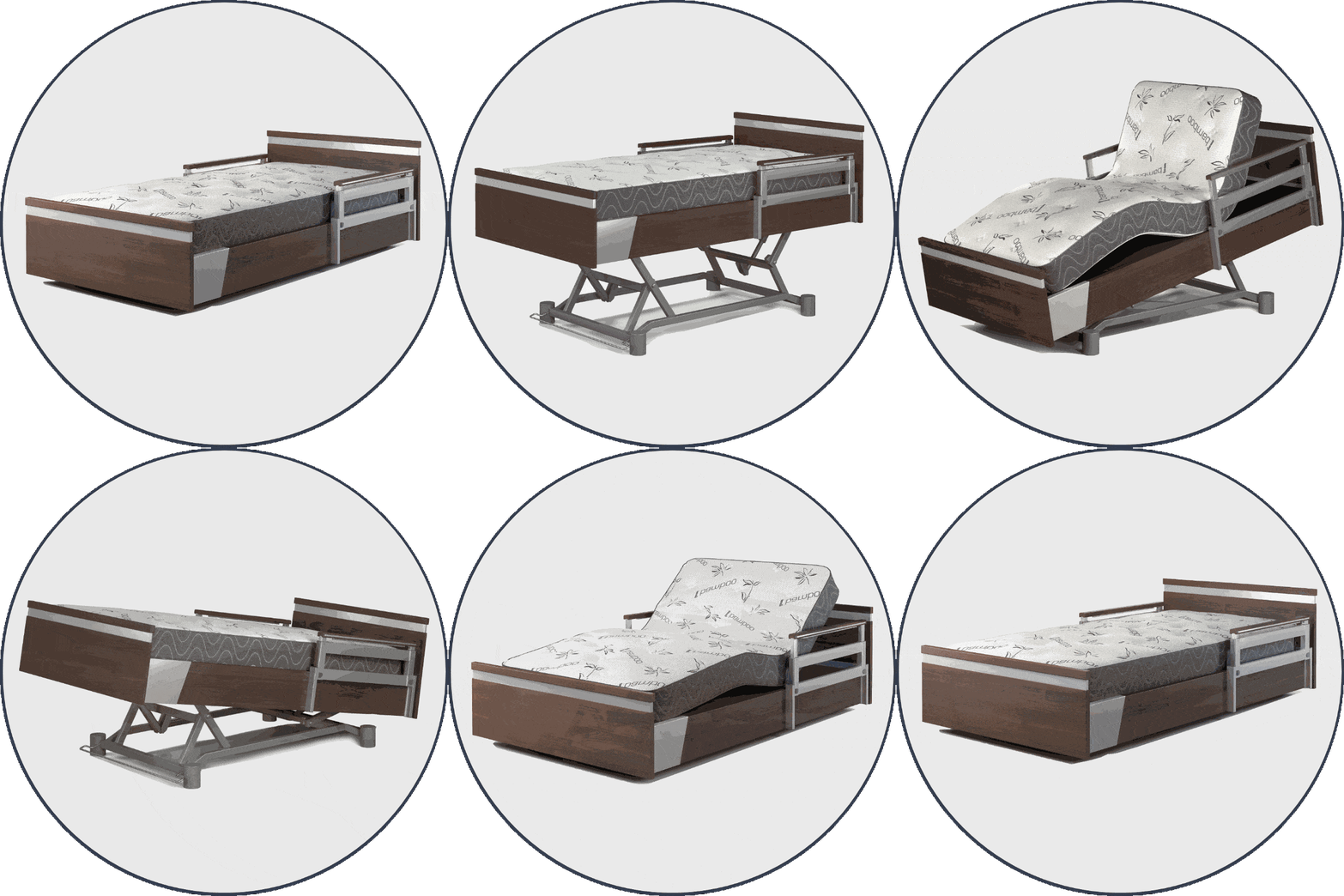
Motorized backrest adjustment. The head section of the bed, typically a 71-degree range of motion on hospital-certified models, raises the entire upper body in a controlled, stable incline. Once set, that angle is maintained by the frame itself. It does not compress. It does not migrate. It holds the same position at 2 a.m. that it was set to at 10 p.m.
Reverse Trendelenburg positioning. Some hospital beds, including the Aura Premium home hospital bed, offer a full-body tilt that raises the head end of the bed while the frame remains level. This achieves a gentle whole-body incline without bending the body at the hip joint, a subtly more comfortable and clinically appropriate elevation for nighttime GERD management.
Consistent elevation without caregiver effort. The 54% slippage rate seen in the clinical trial of wedge pillows is not a problem with a motorized bed. The angle is structural, not gravity-dependent on the patient’s sleeping position. Caregivers who previously spent nights listening for coughing, or getting up to reposition a sliding wedge, report that this consistency is one of the most tangible changes they notice.
Independence for the person in the bed. Hospital beds with a hand controller allow the person sleeping in them to raise or lower the backrest themselves. For cognitively intact seniors managing their own GERD, this means adjusting the angle for their individual comfort without waking anyone. That self-sufficiency matters for dignity, and it matters for the caregiver’s sleep.
For more on how hospital beds support people with respiratory and related conditions, see our guide to home hospital beds that help with chronic conditions.
Hospital Bed vs. Consumer Adjustable Base: What’s the Difference?
Many caregivers arrive at this question with a follow-up: “Can’t we just buy an adjustable bed from a mattress store?” It’s a fair question, and the distinction is worth understanding clearly.
Consumer adjustable bases, sold by brands like Tempur-Pedic, Sleep Number, and Purple, raise the head and sometimes the foot of the mattress. They deliver comfortable sleeping positions and can help with mild nighttime reflux. For relatively healthy adults managing occasional symptoms, they may be entirely appropriate.
Home hospital beds do something consumer adjustable bases do not: they adjust the height of the entire frame from the floor. That hi-lo function, which raises the bed to caregiver working height and lowers it toward the floor for fall prevention, is irrelevant for GERD, but it becomes essential the moment the caregiving situation involves more than repositioning a pillow. Changing incontinence briefs, performing wound care, transferring a person to a wheelchair, and getting someone safely in and out of bed all become dramatically easier when the bed can be raised or lowered electrically.
Hospital beds also typically include assist rails, are certified to medical device standards, and are built for long-term daily use by someone who spends much of their time in bed. Consumer adjustable bases are engineered for nightly sleep. The two are different products serving overlapping but distinct needs.
If GERD is the presenting concern but the person also has mobility limitations, fall risk, skin integrity needs, or other caregiving requirements, a hospital bed almost always becomes the right choice, not just for the reflux, but for the full picture. Our expert buyer’s guide to choosing a home hospital bed walks through that decision in detail.
One More Tip: Sleep on Your Left Side
Head elevation is the primary positional intervention for GERD, but sleep position within that incline adds further benefit. A meta-analysis of three studies found that sleeping on the left side reduced acid exposure time, total reflux episodes, and acid clearance time compared to right-side or supine sleeping.9 The anatomy is the reason: the stomach’s position relative to the esophagus is more favorable on the left, making it harder for acid to reach the esophageal junction.
A 2022 double-blind, sham-controlled randomized trial that used a wearable device to encourage left-lateral positioning found that 44% of active-group patients achieved a clinically meaningful reduction in nocturnal reflux scores, compared to 24% in the sham group, a statistically significant difference.10 The combination of upper-body elevation and left-lateral positioning appears to be more effective than either approach alone.
Hospital beds with adjustable head positioning make left-side sleeping at an incline straightforward. If the person in the bed tends to roll during the night, adding a body pillow on the right side can help reinforce the preferred position. For patients who also have COPD or other respiratory conditions, consult the guidance on positioning a patient for easier breathing, as some positioning recommendations differ by condition.
What to Look for in a Hospital Bed for GERD
When evaluating a hospital bed with GERD management in mind, these are the features that matter most.
Fully electric backrest with a wide range of motion. Manual or semi-electric beds require physical effort to adjust, which is inconvenient for late-night corrections. The ability to fine-tune the head angle with a remote, easily, quietly, in the dark, matters enormously for overnight use. The Aura Premium raises the backrest through 71 degrees with 12 cm of mattress compensation for length, giving the person in the bed precise control over their incline.
Whole-body tilt (Reverse Trendelenburg or anti-Trendelenburg). This positions the upper body at a gentle incline without creating a hip-fold, which can be more comfortable for overnight sleeping than backrest-only elevation. Not all beds offer this; it is standard on all Aura-line beds from SonderCare.
Hi-lo height adjustment. Not directly related to GERD relief, but critical for caregiving. A bed that raises to working height eliminates the back strain of leaning over for repositioning, medication delivery, or skin checks.
FallSafe ultra-low height. For anyone with fall risk, and nighttime reflux sufferers are often older adults who have other health concerns, a bed that lowers its platform to 10 inches makes getting in and out dramatically safer.
Quiet operation. The Aura line operates at 54 dB(A), quieter than a normal conversation. Adjusting the incline at 2 a.m. to relieve a reflux episode should not wake a sleeping household.
Residential aesthetics. Home is not a hospital room. The Aura Platinum home hospital bed adds fully upholstered Crypton fabric side panels and a premium headboard, hospital-grade clinical function in a frame that looks like fine bedroom furniture.
For a broader comparison of hospital bed features by caregiving situation, see our guide to the best hospital bed for COPD patients at home, which covers many of the same positioning and safety considerations that apply to GERD and other respiratory conditions.
Does Medicare Cover a Hospital Bed for GERD?
This question comes up frequently in caregiver communities, and the answer requires precision.
Medicare Part B covers hospital beds as durable medical equipment (DME) when a physician documents that the bed is medically necessary for the person’s condition. The documentation typically needs to establish that the person requires positioning that a standard flat bed cannot provide, due to respiratory conditions, chronic disease, severe GERD complications, or functional limitations in getting in and out of bed.
GERD alone is unlikely to meet the medical necessity threshold for Medicare coverage in most cases. However, GERD frequently co-occurs with other conditions, COPD, congestive heart failure, Barrett’s esophagus, aspiration risk, or significant mobility limitations, that do support medical necessity documentation. If the primary care physician or gastroenterologist has indicated that positional therapy is part of the treatment plan, that documentation is worth requesting explicitly.
If Medicare coverage is not available, SonderCare offers consultation to help families evaluate their options. The long-term cost comparison between purchasing and renting, and the quality difference between the two, often surprises caregivers who assumed a rental was the only accessible path.
Putting It Together To Fight GERD Symptoms
GERD is a structural problem at its root: when the body is horizontal, acid moves where gravity takes it. Head-of-bed elevation is not a workaround, it is a clinically supported, evidence-backed intervention that directly counteracts that mechanism. A home hospital bed is the most reliable way to deliver that elevation, maintain it through the night, and combine it with the other caregiving features that real home care situations require.
The person in the bed wakes up less. Choking episodes that jolted caregivers awake at 2 a.m. become less frequent. And the person who lives with GERD can adjust their own sleeping position, quietly, independently, without asking for help, which matters more than most clinical checklists acknowledge.
If you’re evaluating a hospital bed for someone managing GERD at home, our team is available to walk through your specific situation and recommend the right configuration. Speak with a SonderCare expert, it’s a conversation, not a sales pitch.
References
-
National Institute of Diabetes and Digestive and Kidney Diseases (NIDDK), NIH. Digestive Diseases Statistics for the United States. https://www.niddk.nih.gov/health-information/health-statistics/digestive-diseases
-
Young A, Anil Kumar M, Thota PN. GERD: A practical approach. Cleveland Clinic Journal of Medicine. 2020;87(4):223-230. https://doi.org/10.3949/ccjm.87a.19114
-
Shaker R, et al. Nighttime heartburn is an under-appreciated clinical problem that impacts sleep and daytime function: Gallup survey conducted. American Journal of Gastroenterology. 2003. PMID: 12873567. https://pubmed.ncbi.nlm.nih.gov/12873567/
-
Jung HK, et al. Gastroesophageal reflux disease and sleep disorders: evidence for a causal link and therapeutic implications. Journal of Neurogastroenterology and Motility. 2010;16(1):22-29. https://doi.org/10.5056/jnm.2010.16.1.22
-
Albarqouni L, et al. Head of bed elevation to relieve gastroesophageal reflux symptoms: a systematic review. BMC Family Practice. 2021. https://pmc.ncbi.nlm.nih.gov/articles/PMC7816499/
-
Villamil Morales IM, Gallego Ospina DM, Otero Regino WA. Impact of head of bed elevation in symptoms of patients with gastroesophageal reflux disease: A randomized single-blind study (IBELGA). Gastroenterología y Hepatología. 2020. https://doi.org/10.1016/j.gastre.2020.01.007
-
Hirunrattanaporn K, et al. Wedge Pillow Versus Evening Proton Pump Inhibitor for Nocturnal Reflux Symptoms: A Noninferiority Randomized Trial. Neurogastroenterology and Motility. 2026. https://doi.org/10.1111/nmo.70256
-
Cleveland Clinic Health Essentials. Will a Wedge Pillow Help My Acid Reflux? August 16, 2023. https://health.clevelandclinic.org/acid-reflux-pillow
-
Simadibrata DM, et al. Left lateral decubitus sleeping position is associated with improved gastroesophageal reflux disease symptoms: A systematic review and meta-analysis. World Journal of Clinical Cases. 2023;11(30):7329. https://pmc.ncbi.nlm.nih.gov/articles/PMC10643078/
-
Schuitenmaker JM, et al. Sleep Positional Therapy for Nocturnal Gastroesophageal Reflux: A Double-Blind, Randomized, Sham-Controlled Trial. Clinical Gastroenterology and Hepatology. 2022;20(12):2753-2762. https://doi.org/10.1016/j.cgh.2022.02.058
-
Nirwan JS, et al. Global Prevalence and Risk Factors of Gastro-oesophageal Reflux Disease (GERD). Scientific Reports. 2020;10:20049. https://www.nature.com/articles/s41598-020-62795-1