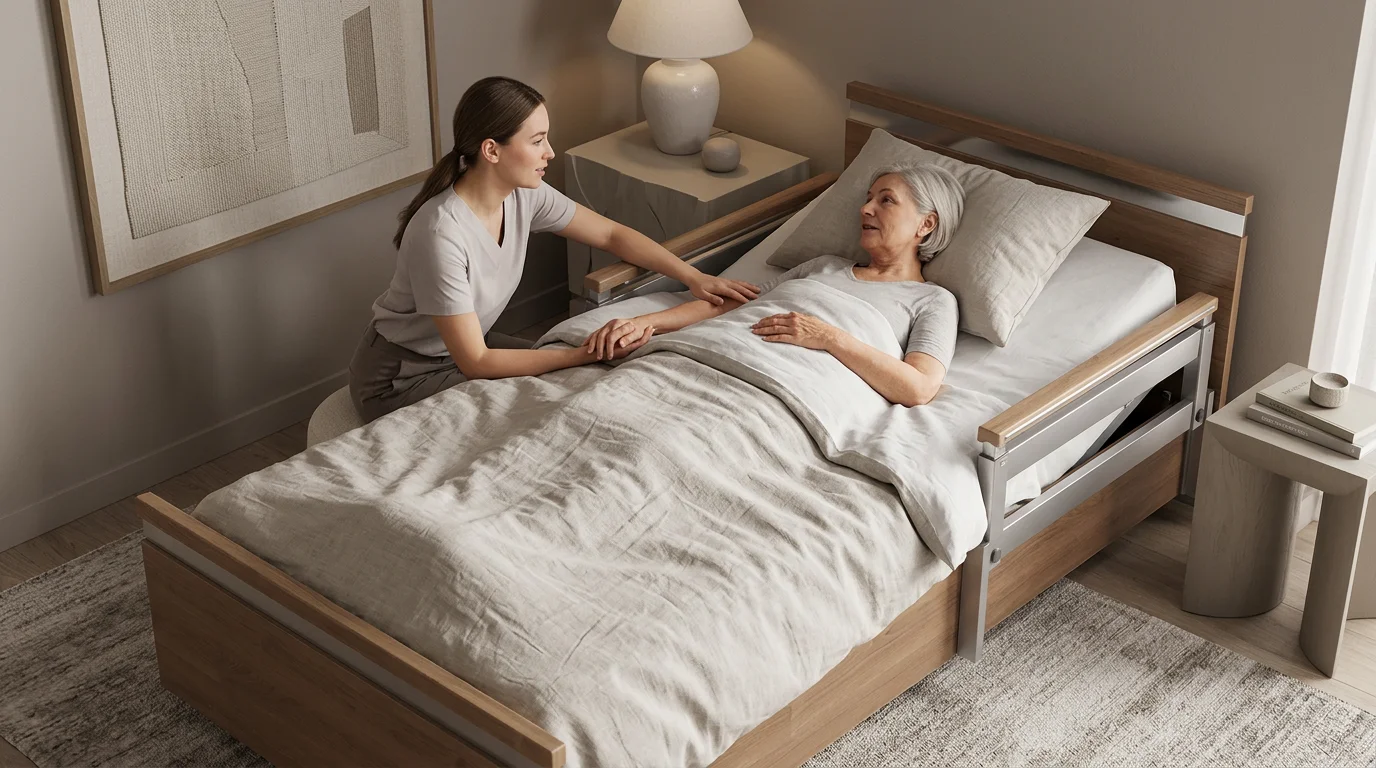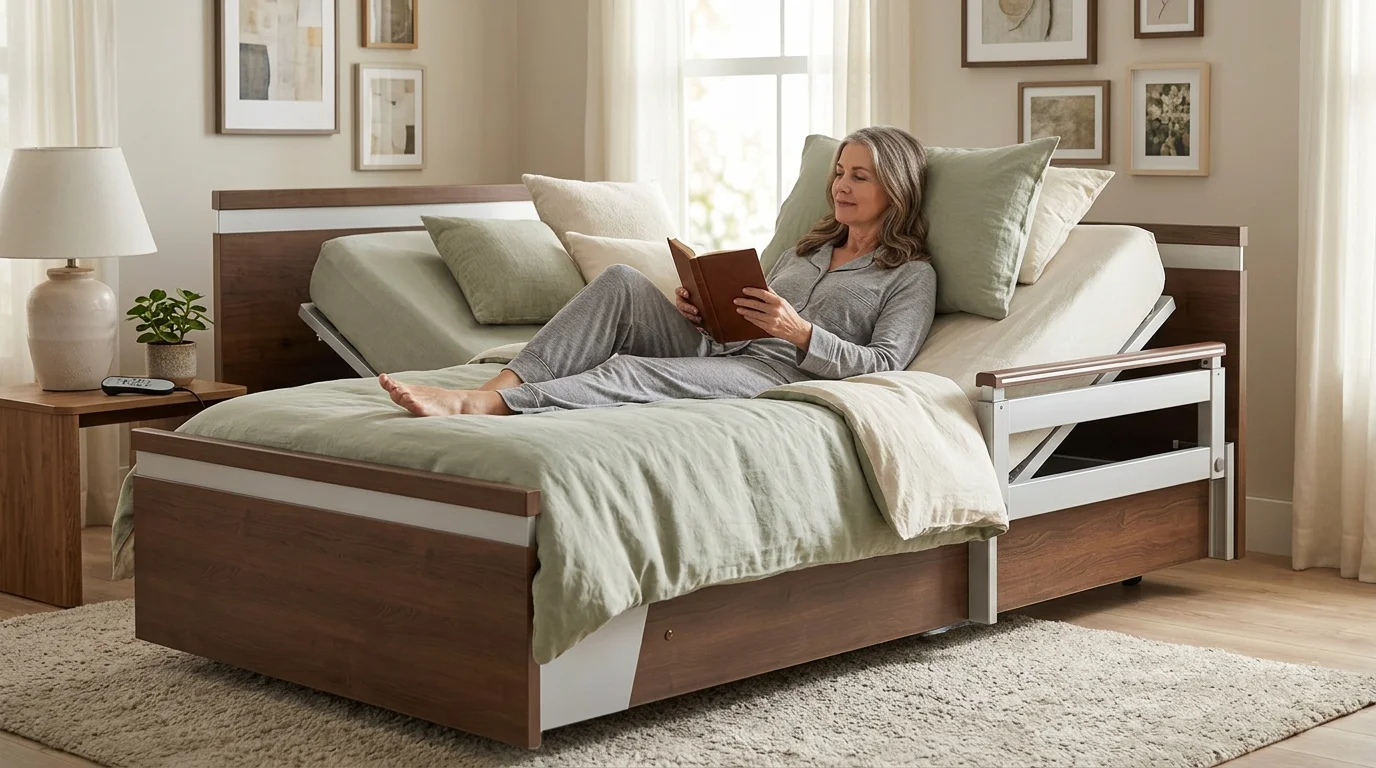







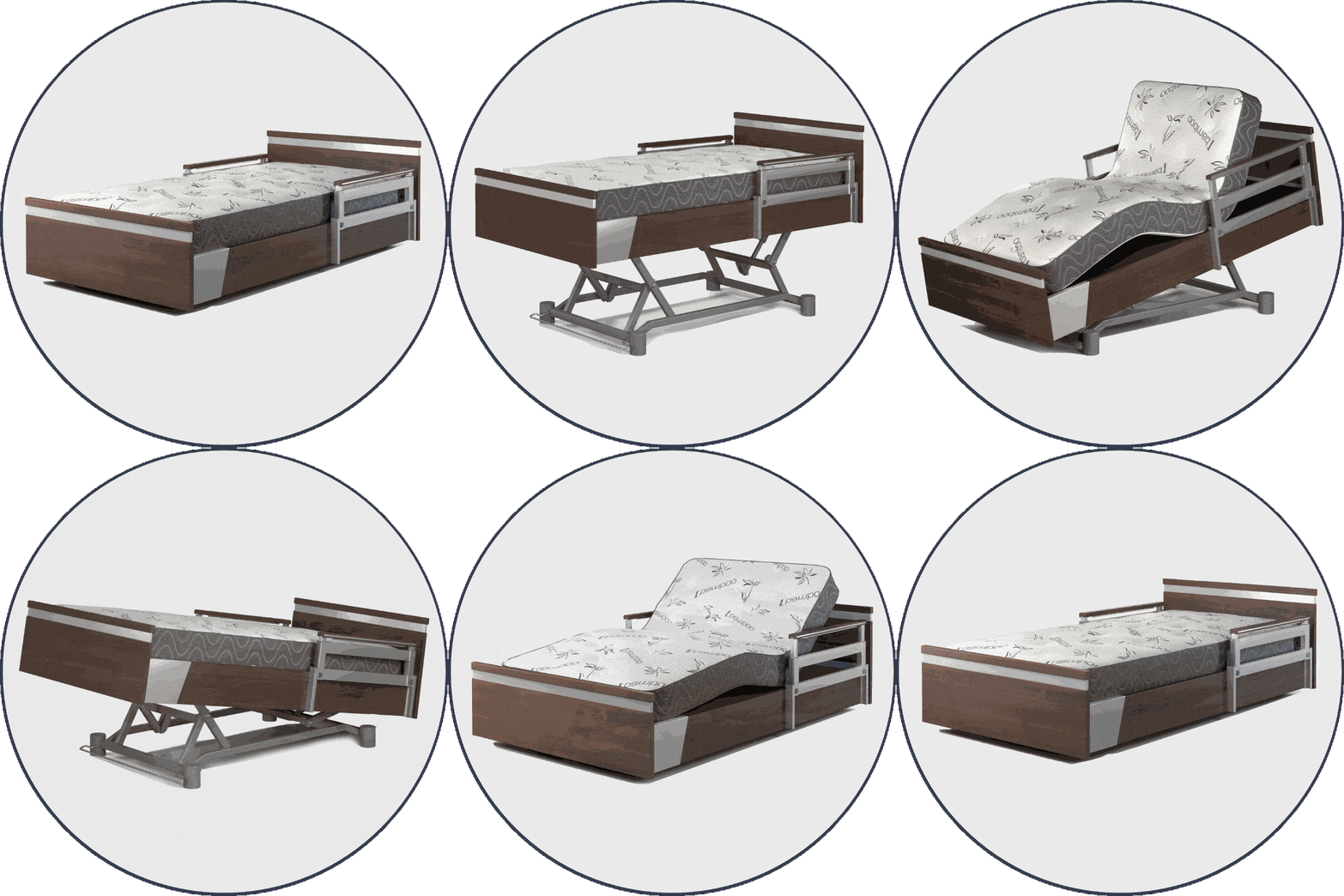
Sandra called SonderCare three weeks after her mother moved home from a rehabilitation center. The bed was working perfectly. But Sandra had a different question: “My mom had an accident overnight. I wiped everything down, but now I’m convinced the whole mattress is ruined. Is it?”
It wasn’t. Five minutes with a damp cloth was all it needed.
That question, and that fear, comes up constantly. Caregivers setting up a home hospital bed for the first time are often less worried about height settings or weight capacity than they are about something more fundamental: can this thing actually be kept clean? What happens after an accident? Are these beds basically germ traps?
The short answer is that home hospital beds are designed with hygiene as a core requirement, not an afterthought. They have hard, wipeable surfaces, removable fluid-proof covers, and frames that allow access to every corner. In several ways, they are genuinely easier to keep clean than a standard mattress-and-boxspring setup. This guide explains exactly why, and gives you a practical routine you can start using today.
Why Hygiene Concerns Are Worth Taking Seriously
The worry isn’t unfounded. In clinical settings, the hospital bed itself is a documented infection risk. Research published in Infection Control & Hospital Epidemiology found that patients assigned to a bed previously occupied by someone with Clostridioides difficile (C. diff) had an adjusted odds ratio of 1.5 for acquiring the same infection, meaning the bed surface itself, independent of the room, measurably elevated transmission risk.1 A systematic review found that 46.3% of sampled hospital beds tested positive for C. diff contamination.2
The CDC’s most recent national HAI report found that approximately 1 in 31 U.S. hospital patients and 1 in 43 nursing home residents contracts at least one healthcare-associated infection (HAI) on any given day.3
Those numbers are real. But they describe institutional settings where a single bed may serve dozens of different people each year, where time pressure limits thorough cleaning between occupants, and where bacteria from one patient’s microbiome can linger long after discharge.
A home hospital bed is a fundamentally different situation. It typically serves one person, with the same family caregiver cleaning it daily. There is no rush turnover, no rotating patient population, and no institutional constraint on cleaning time. The risk profile is not comparable, and the design of the bed reflects that.
How Home Hospital Beds Are Built to Stay Clean
The most important thing to understand about a home hospital bed is that its surfaces are not like the surfaces of a regular bed.
A standard residential mattress has a quilted fabric top that absorbs moisture and cannot be effectively disinfected once saturated. The headboard and footboard are often upholstered or wood-finished. The box spring collects dust and allergens in a cavity you cannot reach. None of this is designed for the rigors of home care.
A home hospital bed, by contrast, is built for cleanability:
- The frame is steel or reinforced aluminum with a powder-coat or epoxy finish. Every surface is smooth and nonporous. It wipes clean with a damp cloth or disinfectant wipe and dries quickly.
- The mattress included with most home hospital beds has a removable, fluid-proof zippered cover. This cover can be wiped with a damp disinfectant cloth after an accident, or unzipped and laundered. The foam core inside stays dry and protected as long as the cover is intact.
- The bed rails are hard plastic and metal, high-contact surfaces that wipe clean in seconds.
- The electrical system on quality home hospital beds carries an IPX4 splash-resistance rating. On the SonderCare Aura Premium, this means the drive system is protected against splashing water from any direction, so normal cleaning with a damp cloth near the frame’s mechanical components carries no electrical risk.
This design philosophy, hard, nonporous surfaces throughout, is what allows a caregiver to wipe down an entire hospital bed in five minutes. A traditional bedroom setup offers no equivalent.
Thinking about which home hospital bed to choose? Our expert guide to choosing a home hospital bed covers the full decision from features to delivery.
Your Daily 5-Minute Cleaning Routine
The goal of a daily routine is not deep disinfection. It’s preventing small amounts of contamination, skin cells, respiratory droplets, incidental moisture, from accumulating into something harder to manage. Here is what a realistic daily protocol looks like.
Every morning:
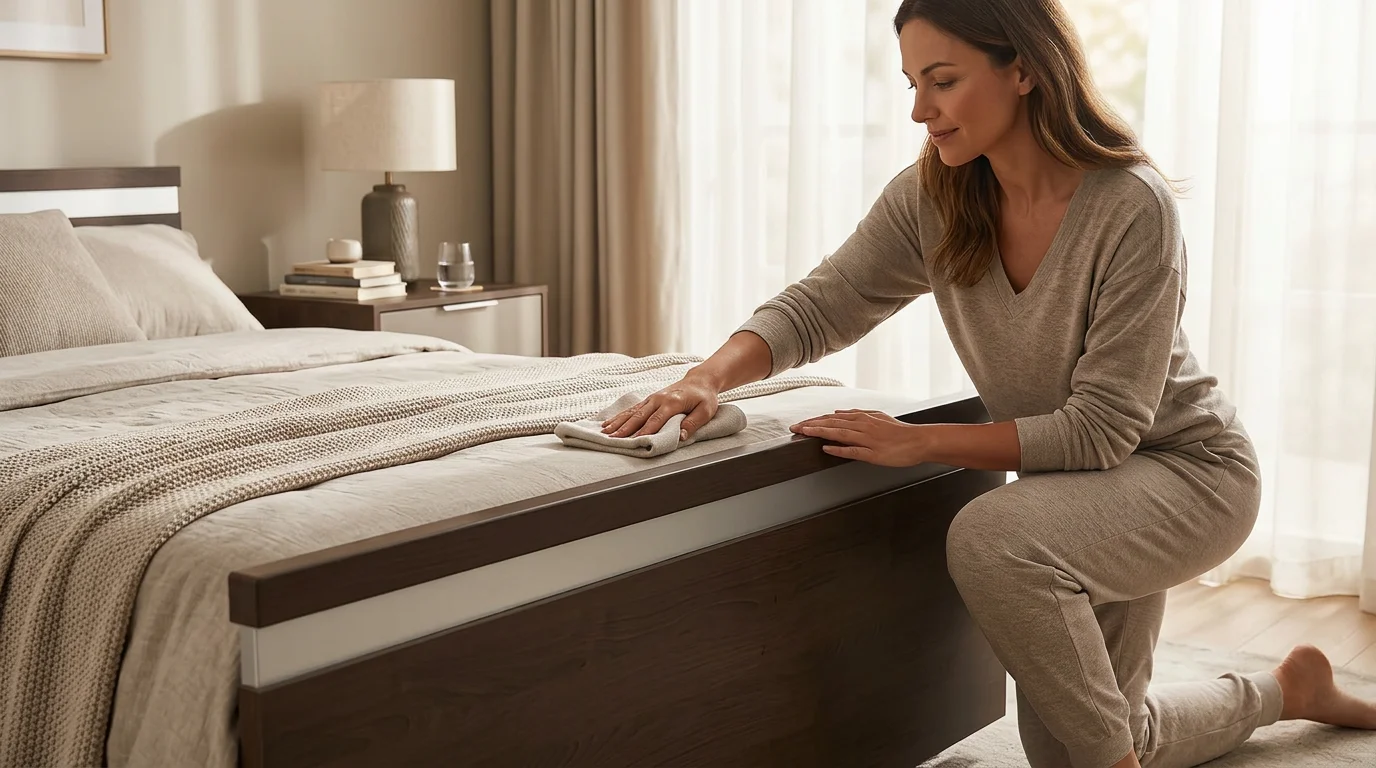
- Use a single disinfectant wipe to wipe both bed rails from top to bottom, including the inside grip surface. Pay attention to the areas most frequently touched, the top of the rail where someone grabs for repositioning, and the button or latch mechanism.
- Wipe the hand controller and any control buttons on the frame.
- If there was any nighttime moisture on the sheet or protective pad, remove and replace the top protective layers before anything else.
Every evening:
- Repeat the rail wipe-down. Clinical research confirms that bed rail surfaces harbor bacteria at contamination rates comparable to the most-touched objects in a patient’s environment.2 Twice-daily wiping interrupts that accumulation cycle.
- Check the top protective pad for any moisture. Replace if damp.
Weekly:
- Wipe the entire frame from headboard to footboard with a damp cloth and a mild detergent or hospital-grade disinfectant.
- Check the mattress cover for any soiling at the zipper seam, wipe clean or remove and launder if needed.
This entire sequence takes under 10 minutes per day. Most caregivers on caregiver forums describe a similar routine: “The bed itself is the easy part. Two minutes with a wipe on the rails and frame, and it’s done. It’s everything around the bed, the pads, the sheets, the laundry, that takes time.”
The Layered Protection System That Keeps Accidents From Reaching the Mattress
This is the single most important thing experienced caregivers know that first-timers don’t.
You don’t clean up after accidents. You layer so accidents never reach the mattress in the first place.
The layered system works like this, from the mattress outward:
Layer 1, Fluid-proof mattress cover: A full, zippered, waterproof cover goes directly over the mattress. This is the first and most important barrier. SonderCare’s Fluid-Proof Mattress Cover ($169 for the 39″ size) is a breathable stretch cover that fully encases the mattress with a full-zip closure. Even if every other layer is overwhelmed, this one protects the mattress itself from ever becoming saturated. Clinical evidence supports how much difference a launderable mattress barrier makes: studies at long-term acute care hospitals found that introducing launderable mattress covers reduced healthcare-associated C. diff infections by 47-50%.5,6
Layer 2, Reusable underpad: A thick, washable cotton/terry underpad goes over the mattress cover, centered under the hips. These hold significant volume and can be laundered in hot water between uses.
Layer 3, Disposable chux pad: A disposable absorbent pad goes on top of the washable underpad. After a nighttime accident, this is the first thing you pull off, it goes directly in the trash, and the layers beneath it are often still dry.
Layer 4, Brief or protective garment: For active incontinence, a fitted protective brief contains the majority of an accident before it reaches the pad layers at all.
When this system is in place, the realistic outcome after a nighttime accident is that you remove the chux pad, check the washable underpad (which is often still dry or only lightly damp), and the mattress cover and mattress are completely untouched.
What to Do When the Mattress Cover Gets Soiled
Even with layering, the mattress cover will eventually need attention. This is not a crisis; it’s exactly what it was designed for.
For surface soiling: wipe the cover with a damp cloth and a disinfectant solution. The fluid-proof vinyl surface resists absorption, so most soiling wipes away in one pass.
For more significant incidents: remove the cover entirely, launder in hot water (at least 140°F / 60°C) with a detergent that includes an enzymatic component for breaking down organic material. Products like OdoBan, used at the dilution recommended on the label, are effective and widely used in both home care and nursing facilities.
If the mattress itself, not the cover, has absorbed moisture, this is a sign the cover was either missing or compromised at the zipper. Replace the cover immediately after drying. A saturated foam mattress that has been left wet for hours may require replacement, which is exactly why the cover is so important.
What Cleaning Products Are Safe, and Which to Avoid
Most first-time caregivers reach for bleach immediately. The instinct is understandable, but full-strength bleach is not appropriate for hospital bed mattress covers or frames without dilution and rinsing.
Safe for the frame and rails:
– Hospital-grade quaternary ammonium disinfectant wipes (Clorox Healthcare, PDI Sani-Cloth), effective, fast-drying, safe on hard surfaces
– Diluted household bleach at 1:10 concentration wiped and rinsed off, compatible with vinyl and metal surfaces when used correctly4
– Mild dish soap and warm water for routine surface cleaning
Safe for the mattress cover (vinyl/polyurethane):
– Damp cloth with mild soap for surface cleaning
– Quaternary ammonium wipes
– Diluted bleach (1:10), rinsed with a clean damp cloth after application4
– Enzymatic spray cleaners for odor elimination
Avoid:
– Full-strength bleach on mattress fabric, it degrades vinyl and urethane materials and leaves residue that can irritate skin
– Soaking the mattress with any liquid, moisture that reaches the foam core takes days to fully dry and creates a breeding environment for mold
– Spraying disinfectant directly onto electrical components, always unplug the bed before cleaning near the motor or actuators, and use a damp cloth rather than a spray
For laundry (pads, sheets, covers):
Hot water, at or above 140°F / 60°C, kills the bacteria and viruses that cold or warm water leaves behind. Adding an enzymatic laundry product (OdoBan eucalyptus concentrate is commonly recommended in caregiver communities for both effectiveness and scent control) handles organic material and lingering odors.
Deep Cleaning: When It’s Needed and How to Do It
The daily wipe-down handles routine hygiene. Deep cleaning is appropriate in three specific situations:
- After a significant illness, respiratory illness, gastrointestinal virus, or any period of elevated infection risk
- Monthly maintenance, a full frame wipe with disinfectant, mattress cover launder, and under-bed cleaning
- When the bed changes users, this is the highest-stakes cleaning, and the standard should approach what a clinical setting would require
For a full deep clean:
- Unplug the bed completely before doing anything near the motor or electrical connections.
- Remove all bedding, pads, and the mattress cover. Launder everything in hot water.
- Remove the mattress from the frame and set it aside.
- With the mattress removed, wipe every surface of the frame, rails, deck, head section, foot section, and undercarriage, with a disinfectant solution. Pay particular attention to hinges, corners, and the undersurface of the rail mechanism where splatter can accumulate unseen.
- Wipe the mattress cover (or launder it). If replacing, put the new cover on before returning the mattress to the frame.
- Replace the mattress, rebuild protection layers, and replace the bed in its position.
This process takes 30-40 minutes and should leave the entire bed genuinely clean, not just surface-wiped.
Good hygiene and skin health go together. If your loved one spends extended time in bed, our complete guide to preventing pressure sores at home covers repositioning, mattress selection, and daily skin care in detail.
Is a Home Hospital Bed Actually Easier to Keep Clean Than a Regular Bed?
Yes. Here’s the comparison directly.
| Feature | Standard Residential Bed | Home Hospital Bed |
|---|---|---|
| Mattress surface | Quilted fabric, absorbs moisture | Wipeable fluid-proof cover, fully removable |
| Headboard/footboard | Upholstered or wood grain, collects dust | Hard surfaces, nonporous, wipeable |
| Box spring | Enclosed cavity, inaccessible | No box spring, open, accessible frame |
| Under-bed access | Difficult to clean without moving bed | Hi-lo height adjustment allows access from any angle |
| Mattress protection | Fitted protector, varies by product | Full fluid-proof cover standard in most home hospital beds |
| Frame material | Wood, fabric, or lacquered particle board | Steel or aluminum, powder-coat or epoxy finish |
Karen had been dreading this exact comparison when her father moved home from a skilled nursing facility. She’d assumed keeping a hospital bed clean would be harder than his old pillow-top mattress, more complicated, more clinical, more work. Six months later, her assessment had reversed entirely. The pillow-top had been a nightmare: every spring-cleaning required a specialist. The hospital bed frame wiped down in minutes, and the mattress cover came off and went in the wash. “The regular bed was actually the problem,” she told us. “I just never noticed because I wasn’t cleaning it properly.”
The SonderCare Aura Premium includes a mattress from our lineup, every mattress in the SonderCare range (from the Comfort Mattress at $899 to the Signature Hybrid at $1,799) comes with a removable, fluid-proof cover as standard. This is not an add-on or an upgrade. It’s a baseline specification, because we designed these beds assuming they will be used in real home care conditions by real caregivers managing real care challenges.
Choosing the right mattress matters for hygiene as well as comfort. See our detailed breakdown of choosing the right mattress for a home hospital bed to understand which surface type best fits your situation.
Keeping the Room Itself Clean
Caregivers who successfully address the bed hygiene question often find a second question right behind it: the room still smells. This is almost always about the surrounding area, the floor near the bed, the laundry cycle, and the air, rather than the bed itself.
Practical room hygiene around a home hospital bed:
- Floor around the bed: Wipe daily during the bed cleaning routine. Spills and splatter that land on the floor are a secondary odor source.
- Laundry: Use hot water, enzymatic detergent, and adequate drying time. Damp laundry left sitting before going into the dryer develops odor that survives the wash cycle.
- Air: Regular ventilation (open a window for 10-15 minutes daily when possible) reduces ambient moisture and replaces stale air. Small activated charcoal bags positioned near the bed absorb residual odors without masking them with fragrance.
- Under the bed: The hi-lo range on a home hospital bed, the Aura Premium adjusts from 10″ to 39″, means you can raise the bed to a comfortable cleaning height, sweep or mop underneath, and lower it again. This alone makes floor hygiene around a home hospital bed far easier than working around a fixed-height frame.
A Quick Note on Accessories
Several accessories make the cleaning routine easier while also improving safety and comfort. Our full list of hospital bed accessories every caregiver needs covers the complete range, but from a hygiene standpoint, the most relevant items are:
- Fluid-proof mattress cover, the single most important accessory if one isn’t already included with your mattress
- Protective rail pads, padded covers for the rails that prevent bruising and are themselves removable and washable
- Underbed motion-activated nightlight, keeping the path to the bathroom visible at night reduces nighttime accidents before they happen
The Bottom Line
Home hospital beds are clean, and with the right routine, they stay clean without excessive effort. The key points:
- The design works in your favor. Hard surfaces, wipeable covers, and accessible frames make cleaning faster than a standard residential bed.
- A daily 5-minute wipe-down covers the basics. Rails, control buttons, and top protection layers, that’s the daily commitment.
- Layering is the real skill. A fluid-proof mattress cover plus washable underpad plus disposable chux means accidents don’t reach the mattress.
- Use the right products. Quaternary ammonium wipes on the frame, enzymatic products in the laundry, diluted bleach if needed, and always unplug before cleaning near electrical components.
- Deep clean monthly and when the bed changes users. A 30-minute full clean handles what daily maintenance can’t.
If you’re evaluating home hospital beds and have questions about how a specific model handles hygiene, durability, or daily use, our team is available to walk you through exactly what to expect. Contact SonderCare for a no-pressure consultation with a bed expert who understands both the clinical and the practical side of home care.
References
-
Witt LS, Greendyke WG, Hafer R, et al. “The Role of the Hospital Bed in Hospital-Onset Clostridioides difficile: A Retrospective Study with Mediation Analysis.” Infection Control & Hospital Epidemiology. 2023. DOI: 10.1017/ice.2023.254.
-
Otter JA, Burgess P, Davies F, et al. “Prevalence of Clostridioides difficile contamination in the healthcare environment and instruments: A systematic review and meta-analysis.” Germs. 2023. https://www.researchgate.net/publication/367023919_Prevalence_of_Clostridioides_difficile_contamination_in_the_healthcare_environment_and_instruments_A_systematic_review_and_meta-analysis
-
Centers for Disease Control and Prevention. “2024 National and State HAI Progress Report.” Published January 29, 2026. https://www.cdc.gov/hai/data/portal/progress-report.html
-
Herculite. “Care and Cleaning Hospital Mattress Fabrics.” herculite.com.
-
Hooker EA, Coppola R, Rubin M, McKinnell JA. “Decreasing Clostridium difficile Healthcare Associated Infections through Use of a Launderable Mattress Cover.” American Journal of Infection Control. 2015.
-
Hooker EA, Allen S, Gray L, Vaux C. “Use of a Launderable Bed Barrier and Antibiotic Stewardship to Decrease Hospital-Onset Clostridioides difficile Infections in an Acute Care Hospital: A Retrospective Pre/Post Case Study.” Journal of Health Economics and Outcomes Research. 2019;6(3). https://pmc.ncbi.nlm.nih.gov/articles/PMC7299494/