






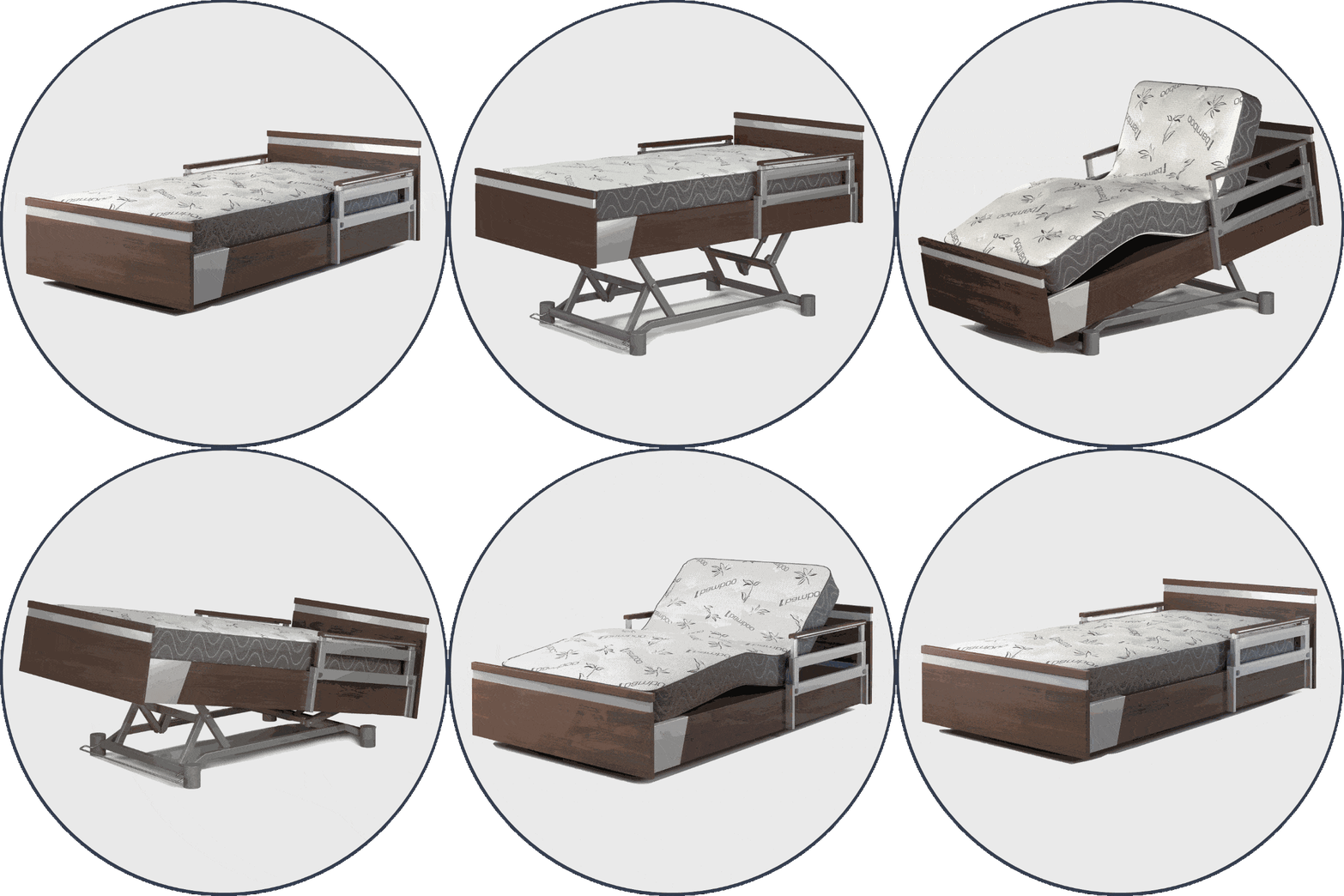
How Many Types of Hospital Beds Are There?
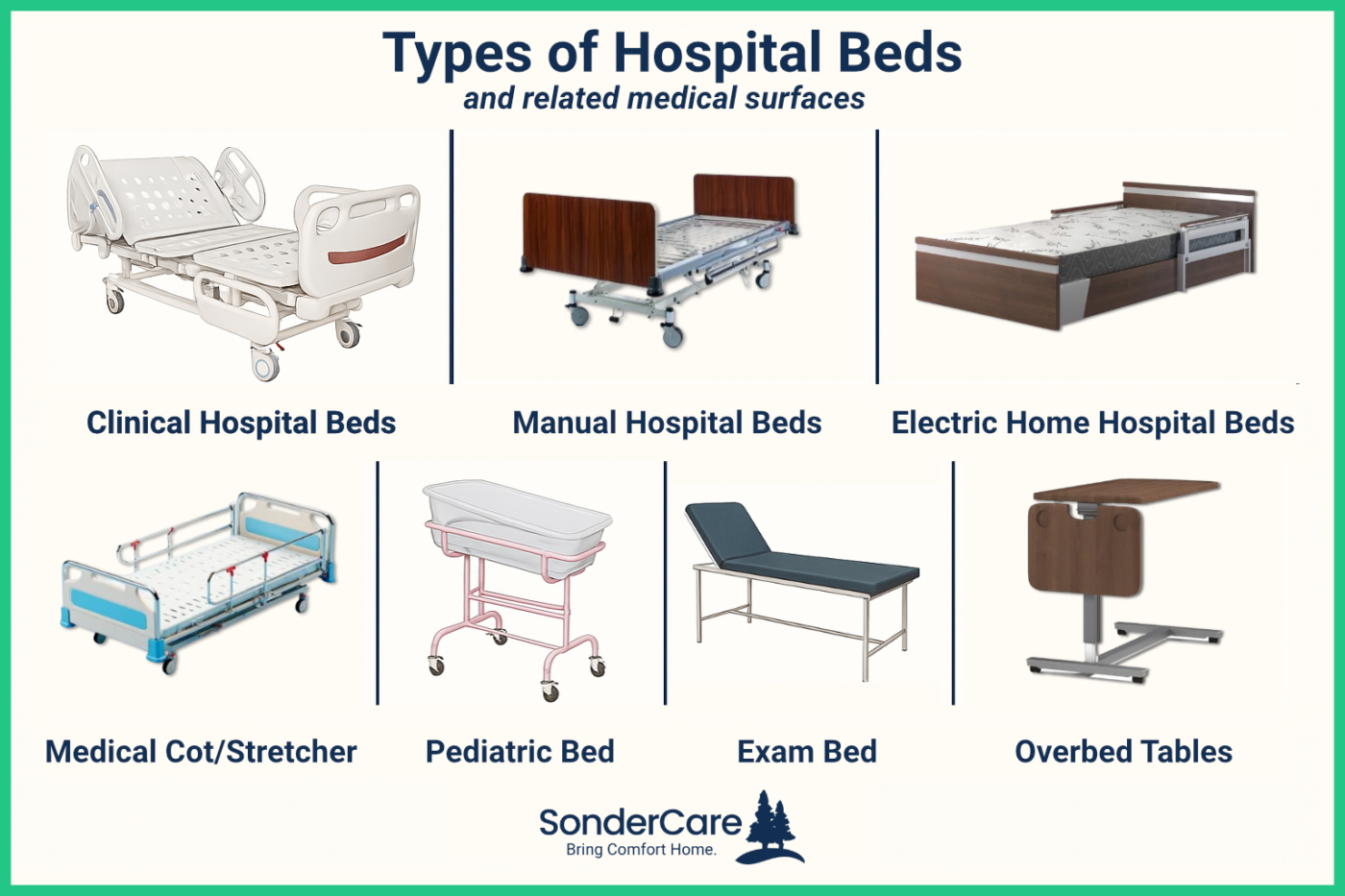
There is no single definitive count because modern hospital beds exist along multiple classification spectrums, but the answer depends on whether you are counting by power system, medical purpose, or patient population. The three fundamental categories by power system are manual, semi-electric, and fully electric. When you factor in clinical specialty and patient need, there are at least 14 distinct types in active use across healthcare settings and home care environments.
The National Disaster Medical System (NDMS) classifies hospital beds into five broad clinical categories: Medical-Surgical beds for stable patients, Critical Care beds with continuous monitoring, Burn beds with specialized wound care equipment, Pediatric beds scaled for children, and Psychiatry beds staffed by mental health professionals.
For families setting up care at home, the types that matter most are the ones covered in detail below, but the full classification helps you understand what your physician or DME supplier is referencing when they discuss bed options.
| Type of Hospital Bed | Description | Typical Setting |
|---|---|---|
| Manual bed | All adjustments via hand cranks. Most affordable but requires physical effort for every change. | Home (short-term), facilities |
| Semi-electric bed | Electric head/foot control with manual height crank. Medicare’s most commonly covered type. | Home care, skilled nursing |
| Full-electric bed | All adjustments via remote control including height. Gold standard for long-term home care. | Home care, hospitals |
| Low-profile bed | Lowers to 7-10 inches from floor to minimize fall injury risk. Critical for dementia and fall-prone patients. | Home care, memory care |
| Bariatric bed | Wider frame (42-60 inches) and reinforced construction for patients over 350 lbs. | Home care, hospitals |
| Trendelenburg bed | Tilts entire bed so feet are higher than head. Supports circulation, respiratory function, and specific procedures. | Hospitals, advanced home care |
| Birthing bed | Equipped with stirrups, adjustable sections, and positioning features for labor and delivery. | Hospitals, birthing centers |
| Pediatric bed | Smaller dimensions designed for children and adolescents, with age-appropriate safety features. | Children’s hospitals, pediatric units |
| Intensive care (ICU) bed | Advanced monitoring integration, built-in scales, lateral rotation, and life-support equipment compatibility. | Intensive care units |
| Hospice bed | Designed for end-of-life comfort with enhanced safety rails, quiet operation, and pressure relief features. | Home hospice, palliative units |
| Isolation bed | Features for infection control including privacy curtains and antimicrobial surfaces. | Hospitals (infectious disease) |
| Air mattress bed | Alternating-pressure or low-air-loss mattress system that redistributes pressure to prevent ulcers. | Home care, long-term care |
| Hospital cot/stretcher | Portable, wheeled bed for patient transport between locations. Not designed for extended use. | Emergency rooms, transport |
| Psychiatry bed | Designed for behavioral health settings with tamper-resistant hardware and ligature-resistant features. | Psychiatric facilities |
For home use, the types you will most likely choose between are manual, semi-electric, full-electric, low-profile, and bariatric, each covered in detail below with pricing, Medicare coverage, and practical recommendations.
Why the Type of Home Hospital Bed You Choose Matters
Selecting the right type of hospital bed is not just about comfort, it directly affects caregiver safety, patient independence, and long-term costs.
Caregiver injury is a real and measurable risk. The National Institute for Occupational Safety and Health (NIOSH) promotes Safe Patient Handling and Mobility programs specifically because manual lifting and repositioning tasks put caregivers at serious risk of musculoskeletal injury.1 Biomechanical research has established a compressive “failure” threshold of approximately 3,400 N at the L5/S1 spinal level, a limit that routine bed-to-chair transfers can approach or exceed without proper equipment.2 For spousal caregivers who are aging themselves, this risk compounds with every transfer.
The type of bed you choose determines how much physical effort daily caregiving demands. A bed with electric height adjustment lets you raise the mattress to a safe working height for repositioning and transfers, reducing dangerous trunk flexion. A bed without that feature forces you to bend, lift, and strain, day after day.
Beyond ergonomics, the bed type shapes your spouse’s independence. A full-electric bed with a handheld remote allows them to adjust their own position, sit up to eat, or find a comfortable sleeping angle without calling for help. That autonomy matters for dignity and for the health of your relationship.
Manual Hospital Beds, The Budget Option
Manual hospital beds use hand cranks for all adjustments, raising the head, elevating the knees, and changing the bed’s overall height. They represent the most basic and least expensive category.
Price range: $500-$600
How they work: Typically two or three hand cranks located at the foot of the bed control different sections. Each adjustment requires physical effort and multiple rotations of the crank.
The case for manual beds is limited to one scenario: very short-term, temporary use where budget is the only consideration and a caregiver has the physical strength to operate the cranks multiple times per day.
The case against manual beds is strong. Caregivers on forums consistently report that hand cranks are exhausting, particularly for older spousal caregivers.5 Manufacturers are increasingly discontinuing manual models for good reason. If your spouse needs frequent repositioning, which most long-term care situations require, a manual bed transforms every adjustment into a physical task that adds to caregiver burden.
Our recommendation: For spousal caregivers, manual beds are almost never the right choice. The physical toll on your own body will outweigh the cost savings within weeks.
Semi-Electric Hospital Beds, The Medicare-Covered Middle Ground
Semi-electric hospital beds combine electric motors for the head and foot sections with a manual hand crank for height adjustment. This hybrid approach makes them the most common type covered by Medicare.
Price range: $1,000-$3,000
How they work: A handheld remote controls the electric head and foot positioning, allowing your spouse to independently adjust their upper and lower body angle. However, raising or lowering the entire bed frame, which affects transfer safety and caregiver ergonomics, requires manual cranking.
Medicare coverage: Semi-electric beds are classified under HCPCS code E0260 and are covered when a physician documents medical necessity. According to CMS Local Coverage Determination L33820, the patient must require frequent changes in body position and be capable of operating the electric controls themselves.3 The 2024 Medicare fee schedule lists the monthly rental allowable at approximately $150 and the purchase allowable at approximately $1,500.4
Understanding capped rental: Most hospital beds fall under Medicare’s “capped rental” payment structure. Medicare pays a monthly rental fee for 13 months of continuous use, 10% of the purchase price for months one through three, then 7.5% for months four through thirteen. After the 13th payment, you own the bed.12 You are responsible for 20% coinsurance on each monthly payment after your annual deductible is met.
The limitation for daily caregiving: While electric head and foot adjustment is valuable, the manual height crank means you cannot quickly raise the bed to a safe transfer height. If your spouse needs help getting in and out of bed multiple times per day, that manual crank adds significant strain to an already demanding routine.
Full-Electric Hospital Beds, The Gold Standard for Home Care
Full-electric hospital beds motorize every adjustment, head, foot, and height, with a single handheld remote or bedside controls. Among caregivers, they are the most consistently recommended type of home hospital bed for long-term use.
Price range: $3,000-$6,000+
Why caregivers universally prefer full-electric beds: Across forums and caregiver communities, the consensus is clear. One caregiver on AgingCare noted that after choosing a manual bed initially, they found it too difficult to operate and wished they had invested in a full-electric model from the start.5 The electric height adjustment is the critical differentiator, it allows you to raise the bed to a comfortable working height for caregiving tasks, then lower it for safe transfers or fall prevention.
Medicare coverage reality: Here is something most families do not learn until it is too late. Medicare typically classifies the electric height adjustment feature as a “convenience” rather than a medical necessity, which means total-electric beds (HCPCS E0265) are frequently denied coverage.3 The physician must prove that the electric height adjustment itself is medically necessary for the patient, not just convenient for the caregiver, which is a much higher documentation burden.
This means many families face a choice: accept a semi-electric bed through Medicare, or pay out of pocket for a full-electric model that genuinely serves their daily needs.
SonderCare’s full-electric options: The Aura Premium Home Hospital Bed ($6,999, 500 lbs capacity) is a full-electric bed certified to International Hospital Standard. It includes FallSafe ultra-low height positioning (10″ platform height), Trendelenburg, Zero Gravity, Cardiac Chair, and Comfort Chair positions, all controlled by remote. For families seeking an entry point into full-electric care, the Impulse Residential Bed ($3,999, 400 lbs capacity) provides head, knee, and hi-lo adjustment with residential comfort design.
Key features to evaluate in full-electric beds:
– Height range: How low can it go (fall prevention) and how high (caregiver ergonomics)?
– Positioning capabilities: Beyond basic head/foot, does it offer Trendelenburg, zero gravity, or cardiac chair positions?
– Weight capacity: Standard beds handle 350-450 lbs; premium models reach 500 lbs
– Lock-out controls: Can you disable patient controls when needed for safety?
– Motor noise: Older models can be loud; newer motors like those in SonderCare beds operate at whisper-quiet levels
Specialty Home Hospital Beds for Specific Needs
Beyond the three main categories, several specialized bed types address specific medical and safety requirements.
Low-Profile Beds for Fall Prevention
Low-profile beds, sometimes called “low beds”, can lower to near-floor height, typically 7-10 inches from the ground. They are critical for patients who are at risk of rolling out of bed or who have a history of falls.
The Aura Premium bed’s FallSafe feature lowers the platform to just 10 inches (17 inches to the top of the mattress), significantly reducing the distance and impact of any fall. This matters because the FDA has documented 413 deaths from bed rail entrapment between 1985 and 2006, with dimensional guidance recommending that all gaps within bed rails remain smaller than 120 mm (4 3/4 inches) to prevent head entrapment.6
Bed rail safety is an active concern. As recently as November 2025, the Consumer Product Safety Commission recalled Neaude Adult Portable Bed Rails for violating mandatory safety standards due to entrapment and asphyxiation risk.7 If you are considering any bed with rails, verify that the rail design meets current fall prevention safety standards.
Bariatric Beds for Larger Patients
Bariatric hospital beds are wider and built to support higher weight capacities than standard models. They typically range from 42 to 60 inches wide with weight capacities of 750 to 1,000 lbs.
Medicare recognizes two bariatric categories: “heavy-duty” beds (HCPCS E0301) for weights between 350-600 lbs, and “extra heavy-duty” beds (HCPCS E0302) for weights exceeding 600 lbs. In 2022, approximately 45,000 Medicare beneficiaries received heavy-duty beds, with total Medicare payments reaching $75 million.8
The Aura Extra Wide Premium bed offers a 48-inch sleeping surface with a 500 lb weight capacity at $8,999. It includes the same full positioning suite and FallSafe ultra-low height as the standard-width Aura, providing bariatric support without sacrificing functionality.
Beds with Advanced Positioning (Trendelenburg, Zero Gravity)
Some full-electric beds go beyond basic head, foot, and height adjustment to offer therapeutic positioning capabilities:
- Trendelenburg: Tilts the entire bed so feet are higher than the head, used for circulation support, respiratory distress, and certain medical procedures
- Reverse Trendelenburg: Head higher than feet, helps with GERD, digestion, and respiratory conditions
- Zero Gravity: NASA-inspired neutral body position that distributes weight evenly, reduces pain and pressure
- Cardiac Chair: Elevates the head and bends the knees to simulate sitting in a chair, essential for COPD, breathing during sleep, and eating in bed
These positions are not available on manual or semi-electric beds. They require a full-electric platform with dedicated motors, which is why the comparison between full-electric and semi-electric beds is so important for families weighing long-term care needs.
How to Choose the Right Type of Home Hospital Bed
Use this decision framework, drawn from expert research and caregiver experience, to narrow your options:
Your spouse spends 15 or more hours per day in bed, A full-electric bed is the only practical choice. The volume of daily adjustments makes manual or semi-electric operation unsustainable for both caregiver and care recipient.
Your spouse is unsteady on their feet or at fall risk, A full-electric bed with ultra-low height capability is essential. The ability to lower the bed close to the floor dramatically reduces fall injury risk, and electric height adjustment allows you to raise it for safe transfers during the day.
The need is short-term (a few weeks of recovery), A semi-electric bed or rental may be sufficient. Be honest with yourself about the timeline, if recovery extends beyond three months, ownership of a quality bed becomes more cost-effective.
Budget is the primary constraint, A semi-electric bed with Medicare coverage provides functional positioning while keeping costs manageable through capped rental payments.
You (the caregiver) have back problems or are aging yourself, A full-electric bed with adjustable height is not a luxury; it is a safety necessity. Raising the bed to an ergonomic working height protects your spine during every transfer and repositioning task.
Do Not Overlook the Mattress
The bed frame is only half of the equation. A standard mattress is not designed to prevent pressure injuries for someone spending extended time in bed. Clinical evidence from a 2021 Cochrane review found that reactive air surfaces may reduce the proportion of patients developing new pressure ulcers compared to foam surfaces (Risk Ratio 0.42; 95% CI 0.18 to 0.96).9 The Wound Healing Society recommends active support surfaces, such as alternating-pressure mattresses, for patients who cannot reposition themselves or who are not healing on reactive surfaces.10
If your spouse has limited mobility, ask their physician about a clinical support surface rather than settling for a basic mattress. SonderCare offers specialized mattress options, including alternating pressure air mattresses designed for pressure sore prevention.
Understanding Medicare Coverage for Home Hospital Beds
Navigating Medicare coverage is one of the most confusing aspects of getting a hospital bed for home use. Here is what you need to know.
What Medicare covers: Semi-electric hospital beds (HCPCS E0260) when a physician documents that the patient requires frequent changes in body position and can operate the electric controls.3 Medicare also covers fixed-height beds (HCPCS E0250) for basic positioning needs and bariatric beds (HCPCS E0301/E0302) when weight documentation supports the need.
What Medicare typically does not cover: The electric height adjustment feature found in total-electric beds (HCPCS E0265). CMS considers this a convenience feature for the caregiver rather than a medical necessity for the patient.3 Suppliers must use specific billing modifiers (GA, GK, GL, GZ) when providing a total-electric bed as an upgrade, and the beneficiary is financially responsible for the non-covered feature.
The capped rental timeline: Medicare pays monthly rental fees for 13 continuous months. During month 10, the DME supplier must offer you the option to purchase. If you accept, payments continue through month 13 and you take ownership. If you decline, rental may continue up to 15 months but you will not own the bed.12
Documentation that matters: The physician’s prescription and medical records must explicitly state the clinical reason for each feature. Use specific language, “requires frequent changes in body position” for a semi-electric bed, or “requires variable bed height to safely transfer to a wheelchair” for a height-adjustable model.
Questions to ask your DME supplier:
– Is this a capped rental item?
– What is my exact 20% monthly coinsurance payment?
– After how many months will we own the bed?
– What is your policy for maintenance and repairs after the rental period ends?
What Spousal Caregivers Should Know Before Buying
As a spousal caregiver, your needs are different from those of an adult child managing care from a distance. You live with this bed every day. It sits in your shared bedroom. It affects your relationship, your sleep, and your own physical health.
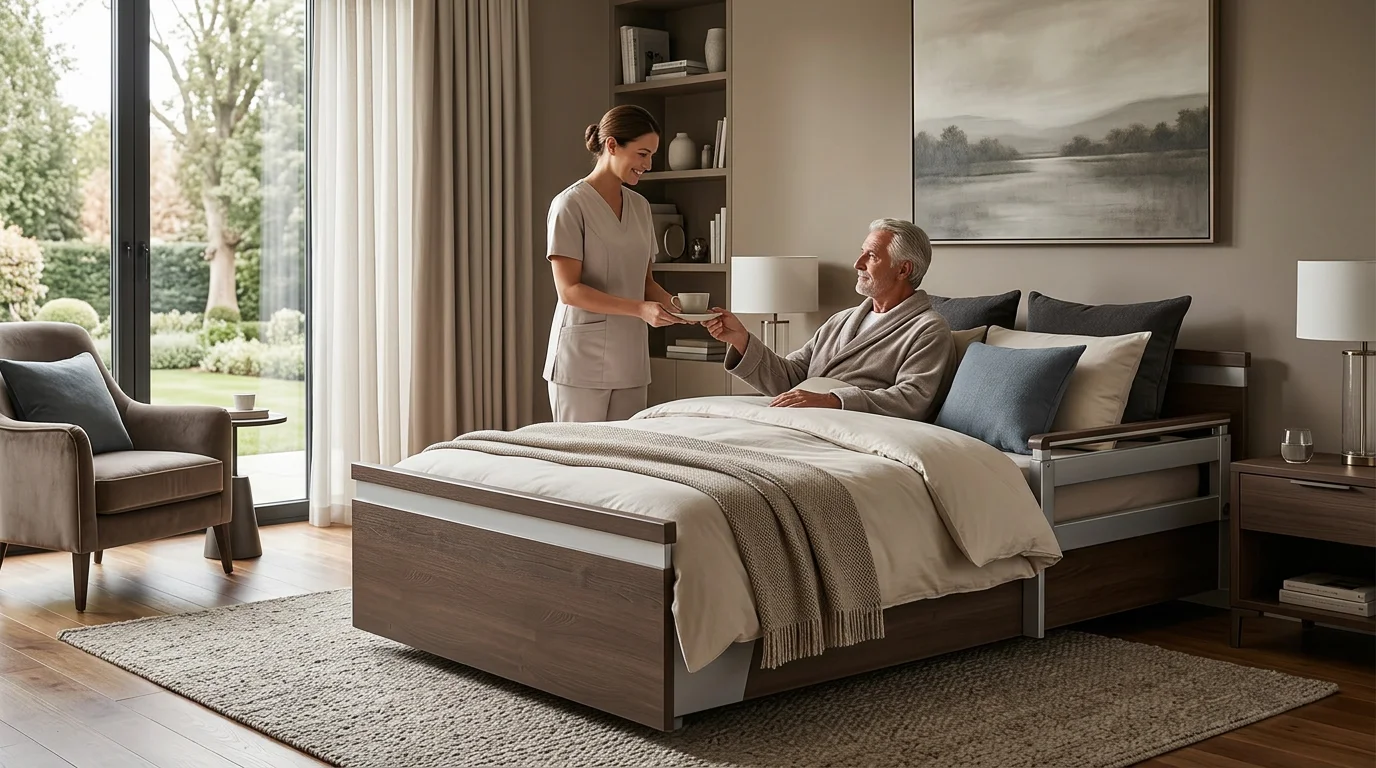
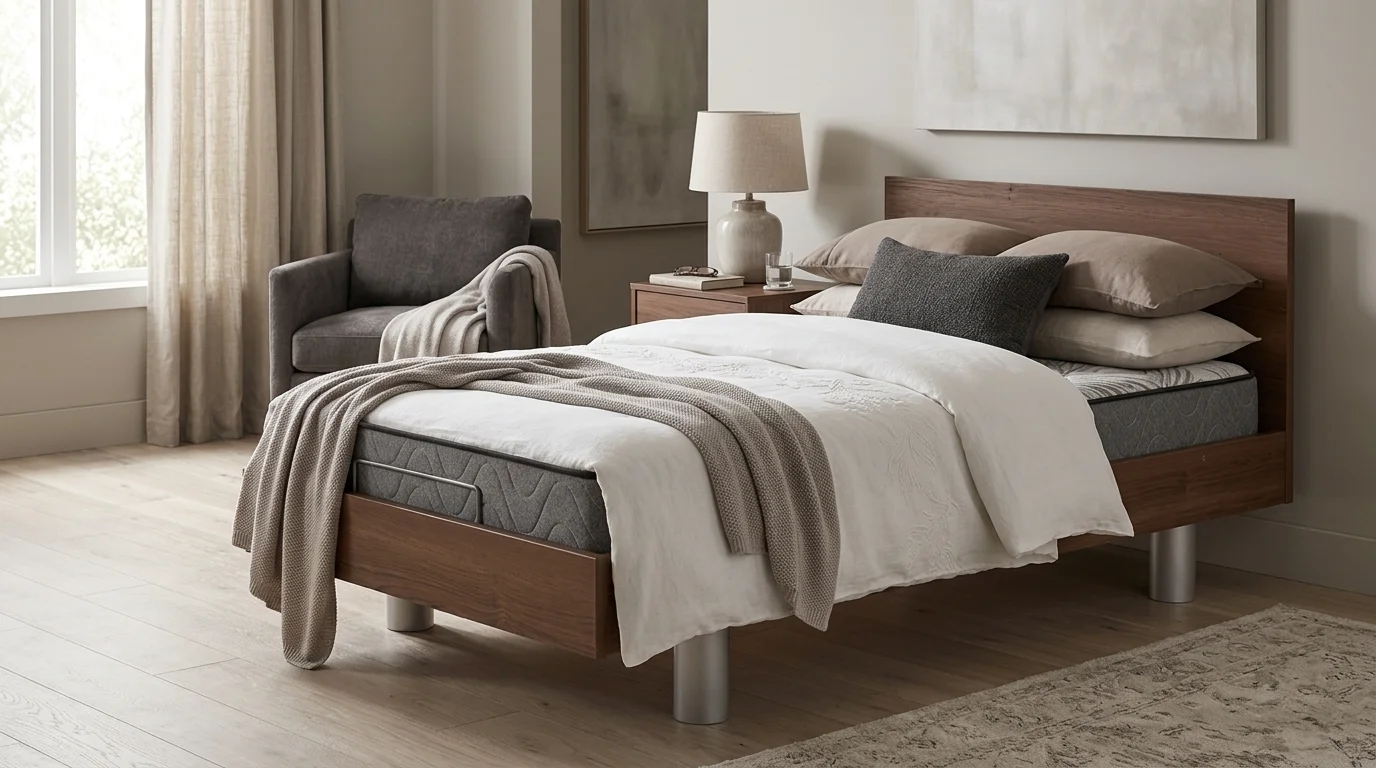
Preserving your shared bedroom: The biggest concern spousal caregivers express is the fear of their bedroom becoming a clinical space. Standard DME hospital beds look institutional, chrome frames, exposed mechanisms, plastic panels. Families on forums consistently note that home aesthetics matter and that they resist the “hospital look.”5 Beds with furniture-grade finishes, upholstered panels, and residential headboards help your bedroom remain a personal space rather than a patient room.
Noise matters more than you think: If you are sleeping in the same room, and most spousal caregivers are, motor noise during nighttime adjustments can disrupt your sleep. Older electric motors can be noticeably loud. Modern beds with whisper-quiet motors allow your spouse to reposition during the night without waking you.
Consider your own body: The adjustable height feature is not just for your spouse. It is your primary defense against caregiver back injury. Being able to raise the bed to hip height for repositioning tasks and lower it for safe transfers makes the difference between sustainable caregiving and accumulating injuries.
For couples with different needs: The SonderCare Aura Companion Bed ($12,999, 700 lbs capacity) is a split king that allows each partner to adjust their side independently while sharing the same bed. It can function as a split king, a single king, or two fully separate beds, preserving the intimacy of sleeping together while accommodating different care requirements.
Choosing the Right Home Hospital Bed for Your Situation
The types of hospital beds for home use range from basic manual models under $600 to premium full-electric beds with advanced positioning capabilities. For most spousal caregivers managing long-term care at home, a full-electric bed offers the safest, most sustainable option, even when it means paying out of pocket rather than relying on Medicare’s semi-electric coverage.
The global smart bed market reached $2.91 billion in 2025 and is projected to grow at 6.3% annually through 2033, reflecting a broader shift toward technology-enhanced home care.11 More families are recognizing that investing in the right bed protects both the person receiving care and the person providing it.
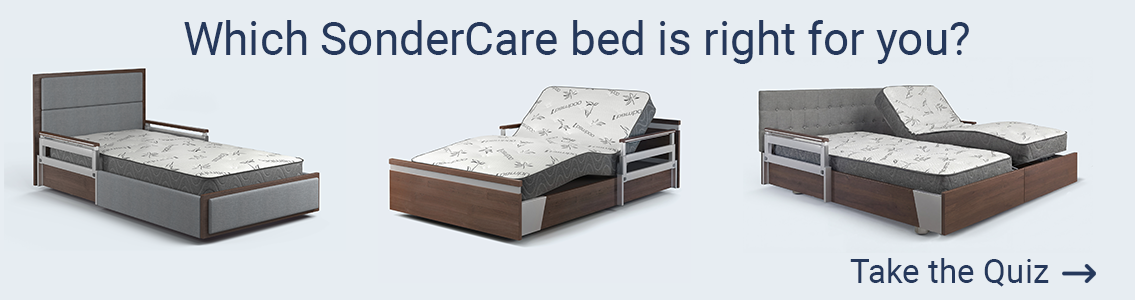
Before you decide, speak with a SonderCare bed expert who can walk you through which type fits your specific situation, your spouse’s medical needs, your physical capabilities as a caregiver, your bedroom layout, and your budget. The right choice made now will serve both of you for years.
Frequently Asked Questions About Hospital Bed Types
What is a birthing bed used for?
A birthing bed is designed specifically for labor and delivery, equipped with adjustable sections, stirrups, and a headrest to support various delivery positions. These beds are found in hospitals and birthing centers and allow medical staff to adjust the patient’s position throughout the stages of labor.
What is a pediatric bed used for?
Pediatric beds are sized for children and adolescents, with higher side rails and age-appropriate safety features to prevent falls. They are staffed by healthcare professionals trained in pediatrics and equipped with specialized monitoring equipment.
What is an intensive care (ICU) bed used for?
ICU beds support patients with life-threatening conditions who require continuous monitoring. They integrate with ventilators, IV systems, and bedside monitors, and many include built-in scales, lateral rotation therapy, and advanced positioning to prevent complications during extended immobility.
What is an isolation bed used for?
Isolation beds are used for patients with infectious diseases where infection control is paramount. They may include privacy curtains, antimicrobial surfaces, and integrated hand-washing stations to prevent the spread of infection to other patients and staff.
What is a hospice bed used for?
A hospice bed is designed for patients receiving end-of-life care, prioritizing comfort and dignity. These beds feature enhanced safety rails, quiet motor operation, and compatibility with pressure-relief mattresses. For families setting up home hospice care, a full-electric bed with positioning capabilities significantly improves both patient comfort and caregiver efficiency.
What is the difference between a Trendelenburg and reverse Trendelenburg bed?
A Trendelenburg position tilts the entire bed so the patient’s feet are elevated above their head, used to improve blood return to the heart and assist with certain medical procedures. Reverse Trendelenburg raises the head above the feet, helpful for patients with GERD, respiratory conditions, or post-surgical recovery. Both positions require a full-electric bed with dedicated tilt motors, such as the SonderCare Aura Premium.
How does an air mattress bed work?
An air mattress bed uses an alternating-pressure or low-air-loss system where individual air cells inflate and deflate in sequence, continuously redistributing pressure across the patient’s body. This prevents the sustained pressure that leads to pressure ulcers. They are essential for patients who spend extended time in bed and cannot reposition themselves frequently. Learn more in our pressure sore prevention guide.
What sizes do hospital beds come in?
Standard hospital beds measure approximately 36 inches wide by 80 inches long (roughly equivalent to a Twin XL mattress). Bariatric models range from 42 to 54 inches wide. SonderCare’s standard Aura models are 39 inches wide, while the Aura Extra Wide provides a 48-inch sleeping surface. Regular twin sheets (39″ x 75″) will not fit properly; hospital beds require Twin XL (39″ x 80″) or hospital-specific bedding.
References
- NIOSH. “Safe Patient Handling and Mobility (SPHM).” Centers for Disease Control and Prevention. https://www.cdc.gov/niosh/healthcare/prevention/sphm.html
- Banks et al. (2024). Biomechanical modeling of bed-to-chair transfers: L5/S1 spinal compression analysis. As cited in biomechanical modeling research. Mean peak L5/S1 compression approximately 2,612-2,878 N depending on transfer technique.
- Centers for Medicare & Medicaid Services. “Local Coverage Determination (LCD) for Hospital Beds.” LCD L33820. https://www.cms.gov/medicare-coverage-database/view/lcd.aspx?lcdid=33820
- CMS Medicare Fee Schedule, 2024. HCPCS E0260: Semi-electric hospital bed. Monthly rental allowable approximately $150; purchase allowable approximately $1,500.
- AgingCare.com caregiver discussions. https://www.agingcare.com/questions/looking-for-an-electric-hospital-bed-483949.htm; https://www.agingcare.com/questions/how-you-go-about-getting-hospital-bed-in-home-204532.htm
- U. S. Food and Drug Administration. “Hospital Bed System Dimensional and Assessment Guidance to Reduce Entrapment.” 413 reported fatalities, 1985-2006. Dimensional limit: openings less than 120 mm (4 3/4 inches).
- U. S. Consumer Product Safety Commission. “Adult Portable Bed Rails Recalled Due to Risk of Serious Injury or Death from Entrapment and Asphyxiation.” November 6, 2025. https://www.cpsc.gov/Recalls/2026/Adult-Portable-Bed-Rails-Recalled
- CMS Medicare Utilization Data, 2022. HCPCS E0301 (Heavy-duty extra-wide hospital bed): approximately 45,000 beneficiaries served; total Medicare payment approximately $75 million.
- Shi C, Dumville JC, Cullum N, et al. “Beds, overlays and mattresses for preventing and treating pressure ulcers.” Cochrane Database of Systematic Reviews, 2021. RR 0.42; 95% CI 0.18 to 0.96. https://doi.org/10.1002/14651858.CD013622.pub2
- Wound Healing Society. Clinical Guidelines on Support Surfaces, 2023. Level II evidence recommending active support surfaces for patients with multiple pressure ulcers or those unable to reposition.
- Grand View Research. “Global Smart Bed Market.” Market value USD 2.91 billion in 2025; projected CAGR 6.3% from 2026 to 2033.
- Centers for Medicare & Medicaid Services. Capped Rental Policy for Durable Medical Equipment. 13-month rental-to-ownership structure with purchase option at month 10.