








Your parent has been admitted to the hospital. The medical team now mentions that they may qualify for a “hospital-at-home” program, where clinical staff would continue acute care at their residence. Your immediate thought is a completely reasonable one: What happens if something goes wrong at 2 in the morning?
That question, and the fear behind it, is what most families ask first. It’s worth taking seriously. At the same time, a substantial body of peer-reviewed research now answers it with something unexpected: for patients who qualify, receiving acute hospital-level care at home is associated with equal or better clinical outcomes compared to traditional inpatient stays. Not marginally better in one small study. Consistently better across randomized controlled trials, large national datasets, international matched cohorts, and condition-specific meta-analyses.
This article reviews what the evidence actually shows: what home hospital programs are, what happens to mortality and readmission rates, why the hospital environment itself can work against recovery for older adults, what caregivers are and are not responsible for, and how to prepare a home environment that supports clinical recovery without sacrificing dignity.
What Hospital-at-Home Programs Actually Are
Hospital-at-home (HaH) programs are not the same as regular home health care. They’re not hospice. They’re not a caregiver checking in once a day.
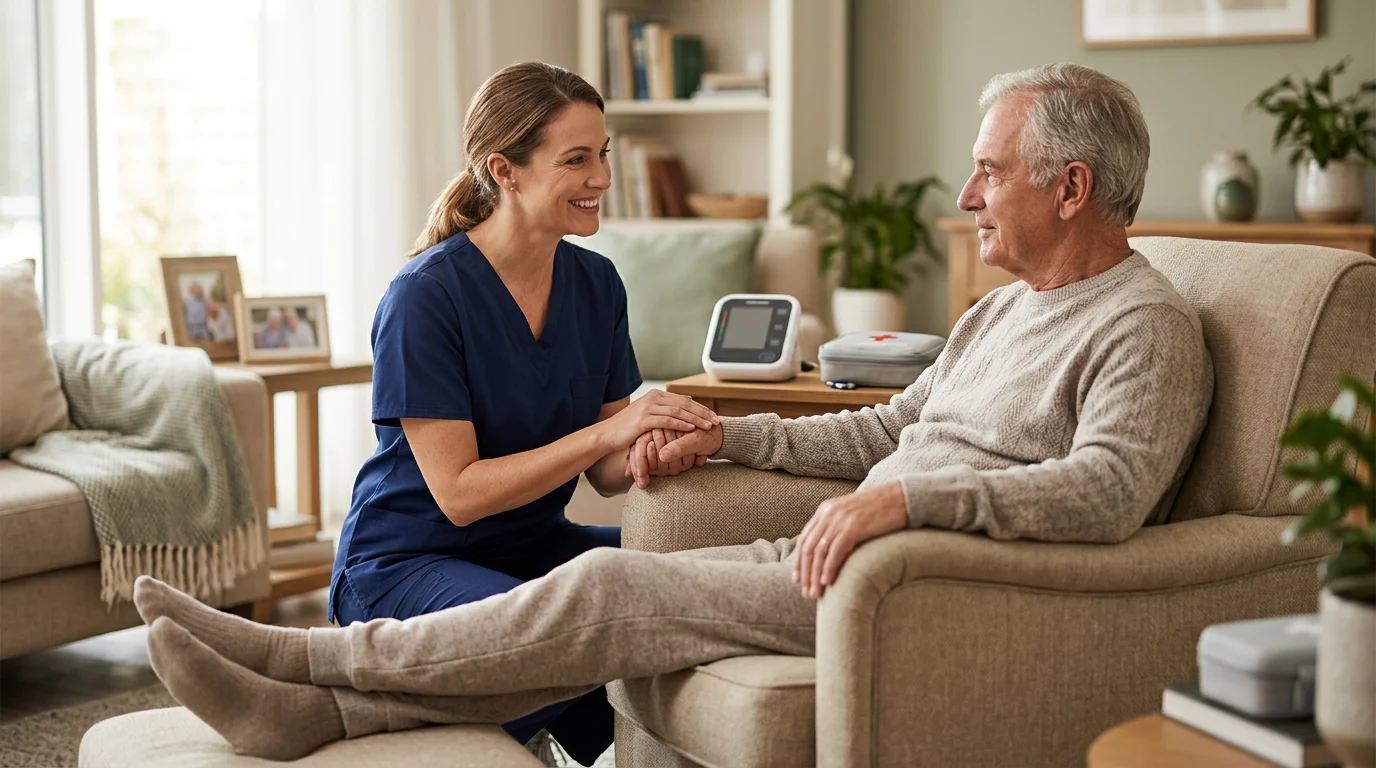
A hospital-at-home program provides acute inpatient-level care, typically the kind of treatment that would otherwise require a hospital bed, delivered to a person’s home. That means daily in-person clinical visits from nurses and physicians, IV medications, lab draws, monitoring equipment, and a 24/7 call line for emergencies. The patient is formally admitted to a hospital and receives their acute care episode at home instead of in a hospital room.
Programs like this now operate at scale. The federal government’s Acute Hospital Care at Home (AHCAH) waiver, established during the pandemic and extended through congressional action, has enrolled more than 300 hospitals across the United States.3 Major health systems including Mayo Clinic, Mass General Brigham, the Veterans Affairs system, and Mount Sinai operate established programs. Internationally, “hospital in the home” has been part of mainstream healthcare in Australia, the United Kingdom, Spain, Israel, and Norway for decades. The Commonwealth Fund’s analysis of hospital-at-home programs provides a useful overview of how these programs operate and the policy landscape surrounding them.
Common qualifying conditions include community-acquired pneumonia, acute exacerbations of COPD, cellulitis, heart failure decompensation, urinary tract infections, and certain post-surgical monitoring needs. A physician or emergency department team determines eligibility based on clinical criteria and the home environment.12
Lower Mortality and Fewer Readmissions, What the Data Shows
The question families most need answered is the survival question. Here is what the clinical literature consistently finds.
Mortality
A 2012 meta-analysis published in the Medical Journal of Australia, now cited more than 500 times, analyzed randomized controlled trials of hospital-in-the-home programs and found reduced mortality with an odds ratio of 0.81 (95% confidence interval 0.69–0.95).2 In plain terms, this means patients treated at home were less likely to die than comparable patients treated in the hospital. The researchers calculated that 50 patients would need to be treated at home to prevent one death, a number-needed-to-treat that holds up favorably against many standard medical interventions.
That foundational finding has been confirmed at national scale in the United States. A 2024 study published in the Annals of Internal Medicine analyzed Medicare claims data for more than 5,800 patients treated across approximately 300 hospitals under the federal AHCAH waiver. In-care mortality, deaths that occurred during the active home hospital episode, was 0.5%, and 30-day post-discharge mortality was 3.2%.4 These figures represent a real-world implementation at considerable scale, not a tightly controlled research setting.
The federal government’s own report to Congress, submitted September 2024 by the Centers for Medicare and Medicaid Services, compared 13,217 AHCAH patients to more than 643,000 brick-and-mortar inpatient counterparts. CMS found lower mortality rates among home hospital patients across the top ten most common diagnosis-related groups, with the difference reaching statistical significance in 11 of the 25 groups evaluated.3
These findings converge: home hospital care does not put patients at greater risk of dying. The evidence points consistently in the opposite direction. A 2024 JAMA Network Open study of hospital-at-home outcomes confirmed that per-episode costs for home hospital patients were 19 percent lower, with equal or better clinical outcomes compared to matched inpatients, validating earlier findings at contemporary scale.
Readmission Rates
Readmission reduction is the most reproducible finding in the entire hospital-at-home literature, replicated across study types, countries, and patient populations.
The landmark 2020 randomized controlled trial published in JAMA Internal Medicine by Levine and colleagues enrolled 91 adults presenting to the emergency department with acute illness. Thirty-day readmission in the home hospital arm was 7%, compared to 23% in the group admitted to traditional inpatient care, a relative reduction of approximately 70%.1 A 2025 rural randomized trial published in JAMA Network Open confirmed a similar pattern: 10.1% readmission among home hospital patients versus 17.1% among inpatients, in a population where access to outpatient follow-up is often limited.5
For patients living with COPD, a Cochrane systematic review synthesizing eight randomized trials found a statistically significant readmission risk ratio of 0.76 for home hospital versus inpatient care, meaning roughly a 24% relative reduction in the likelihood of being readmitted within 30 days.8
The readmission benefit also appears to be stronger for patients from lower-income backgrounds. A study published in the Journal of General Internal Medicine examined outcomes for 477 patients, including a significant Medicaid-enrolled subgroup. Among Medicaid patients, 30-day readmission was 9.92% in the home hospital group versus 20.27% for inpatient controls, a relative reduction exceeding 50%.11 This finding challenges the concern that hospital-at-home is a model that serves only well-resourced families in well-resourced homes.
The Hidden Factor: Why the Hospital Environment Can Make You Sicker
Most conversations about home hospital outcomes focus on what the program provides. The equally important question is what the hospital itself takes away, particularly from older adults and those living with dementia.
Hospital-induced delirium is a sudden change in mental status triggered by the inpatient environment: constant light and noise, unfamiliar faces arriving every few hours, disrupted sleep, immobility from IV lines, the disorientation of not knowing where you are or what day it is. It is not a rare complication. It affects an estimated 14 to 56 percent of older hospitalized adults, and for those living with Alzheimer’s disease or another dementia, the rate is higher still.
The cognitive damage from a delirium episode can be lasting. Caregivers who have witnessed this recognize it immediately, even without the clinical name: “He came back different.” “She was so confused in there.” “I didn’t recognize him for weeks.” These descriptions, common in caregiver communities, reflect a real and well-documented clinical phenomenon.
Home eliminates most of what causes it. A familiar bedroom, stable routine, natural light, recognizable faces, an uninterrupted sleep environment, the family dog on the bed, these are not trivial comforts. They are the conditions under which the brain of an older adult stays oriented. Research on functional outcomes supports exactly this mechanism. A meta-review published in JAMA Network Open found that hospital-at-home patients improved on Activities of Daily Living (ADL) scores while comparable inpatients declined, and that Instrumental ADL improvement was 46% among home hospital patients versus 17% in inpatient controls.9
Physical activity during the acute episode tells the same story. In the Levine 2020 randomized trial, home hospital patients spent 12% of their day sedentary, compared to 23% for inpatients, meaning home patients moved nearly twice as much during their acute illness episode, simply by being in an environment that permitted it.1
The hospital is a place designed to diagnose and stabilize. For many older adults, especially those with cognitive vulnerabilities, the inpatient environment itself creates a second set of problems that must then be recovered from. Avoiding that environment is part of what drives better outcomes at home.
For families caring for someone with dementia who develops a qualifying acute illness, the question of whether home hospital is appropriate is worth raising directly with the treating physician. Our fall prevention for seniors at home guide covers the home safety considerations relevant to this population.
Patient Experience and Quality of Life
Clinical outcomes matter. Patient experience matters too, not as a luxury consideration, but as a meaningful health variable.
Published research on patient satisfaction in hospital-at-home programs consistently shows dramatic differences in favor of home care. Patients in home hospital programs report substantially higher satisfaction with physician communication, with the admission process, with convenience, and with overall care compared to matched inpatients. Home hospital patients in a large study were more than four times as likely to express satisfaction with their physician and admissions experience, and more than six times as likely to report satisfaction with convenience.1
The qualitative experience caregivers and patients describe goes further than survey scores. Patients report eating real food, sleeping through the night without being woken for vital signs checks, having family nearby, maintaining some sense of routine and control. One frequently reported observation: being permitted to have a pet present during recovery. What sounds minor turns out to matter considerably to the subjective experience of illness.
For caregivers, the experience in home hospital programs is often the reverse of what they feared. Rather than being thrust into a clinical role they were unprepared for, many report feeling more informed, more involved, and more connected to their loved one’s recovery than they ever were during traditional inpatient stays. In the hospital, families wait in hallways while clinical teams make rounds. At home, the clinical team explains what they are doing and why, because the caregiver is present, not excluded.
What Caregivers Are (and Aren’t) Responsible For
This is the question that deserves a direct, specific answer: No, you are not being asked to become a nurse.
A hospital-at-home program assigns medical responsibility to the clinical team, the nurses and physicians who visit daily, manage IV lines, draw labs, review imaging results, and make treatment decisions. Their role does not transfer to you when they leave for the day. What you are responsible for is environmental: maintaining a safe and appropriate home setting, being present or ensuring someone is present, and knowing when to call the 24/7 clinical line provided by the program.
Programs vary in how much they communicate this clearly upfront. Published qualitative research on caregiver experiences in hospital-at-home programs identifies that families sometimes feel undertrained or uncertain about their specific role and the tasks expected of them, particularly around monitoring, recognizing deterioration, and managing equipment between visits.9 If you or a family member enters a home hospital program, the following questions are worth asking explicitly before the acute episode begins:
- How often will the clinical team visit in person, and at what times?
- What is the 24/7 line number, and what should I call about versus what can wait?
- What constitutes an emergency requiring 911?
- Who handles IV line issues if they arise overnight?
- What is the escalation pathway if the clinical team decides the condition has changed enough to require transfer?
Getting clear, specific answers to these questions before the program starts removes most of the ambient anxiety that caregivers carry through a home hospital episode. Our post-surgical care at home checklist covers practical home preparation steps that apply equally to home hospital and post-surgical recovery settings.
Cost Savings, What the Research Consistently Shows
The cost evidence is nearly as consistent as the readmission evidence, and it runs in the same direction across every study design that has examined it.
The 2020 Levine randomized trial found that adjusted mean costs for the acute episode were 38% lower for home hospital patients (95% confidence interval 24–49%) compared to inpatients.1 When 30-day post-acute costs were included, the savings persisted, approximately 25% lower across the combined acute and post-discharge period.
A retrospective cost analysis from New York City, published in the Journal of the American Geriatrics Society, used matched samples of home hospital and inpatient patients from 2014 to 2017. Adjusted mean costs for the acute episode plus 30-day post-acute care were $5,054 lower for the home hospital group, a difference that held even after accounting for downstream home health and rehabilitation expenses.6
A 2012 Health Affairs study, widely cited in subsequent health policy discussions, found overall cost savings of 19% for home hospital patients, driven by lower average length of stay and reduced use of laboratory and diagnostic tests.7
These savings accrue to payers, primarily Medicare and commercial insurers. From a family perspective, what matters more is what the savings represent: shorter acute episodes, fewer resources consumed during the illness, and lower downstream costs from fewer readmissions and complications. Coverage for home hospital programs under Medicare has expanded significantly under the AHCAH waiver, though authorization requirements and covered services vary by program and location. The treating hospital or health system’s home hospital program staff is the right resource for specific coverage questions. The AMA’s summary of the CMS report offers a plain-language review of the federal evidence supporting extension of the program.
Setting Up a Home That Supports Hospital-Level Recovery
Whether a loved one is enrolled in a formal home hospital program or returning home after a hospital stay with ongoing recovery needs, the physical environment plays a direct role in clinical outcomes. The research on functional preservation and delirium prevention reflects this: familiar, appropriately equipped surroundings support recovery in ways the inpatient environment typically cannot.
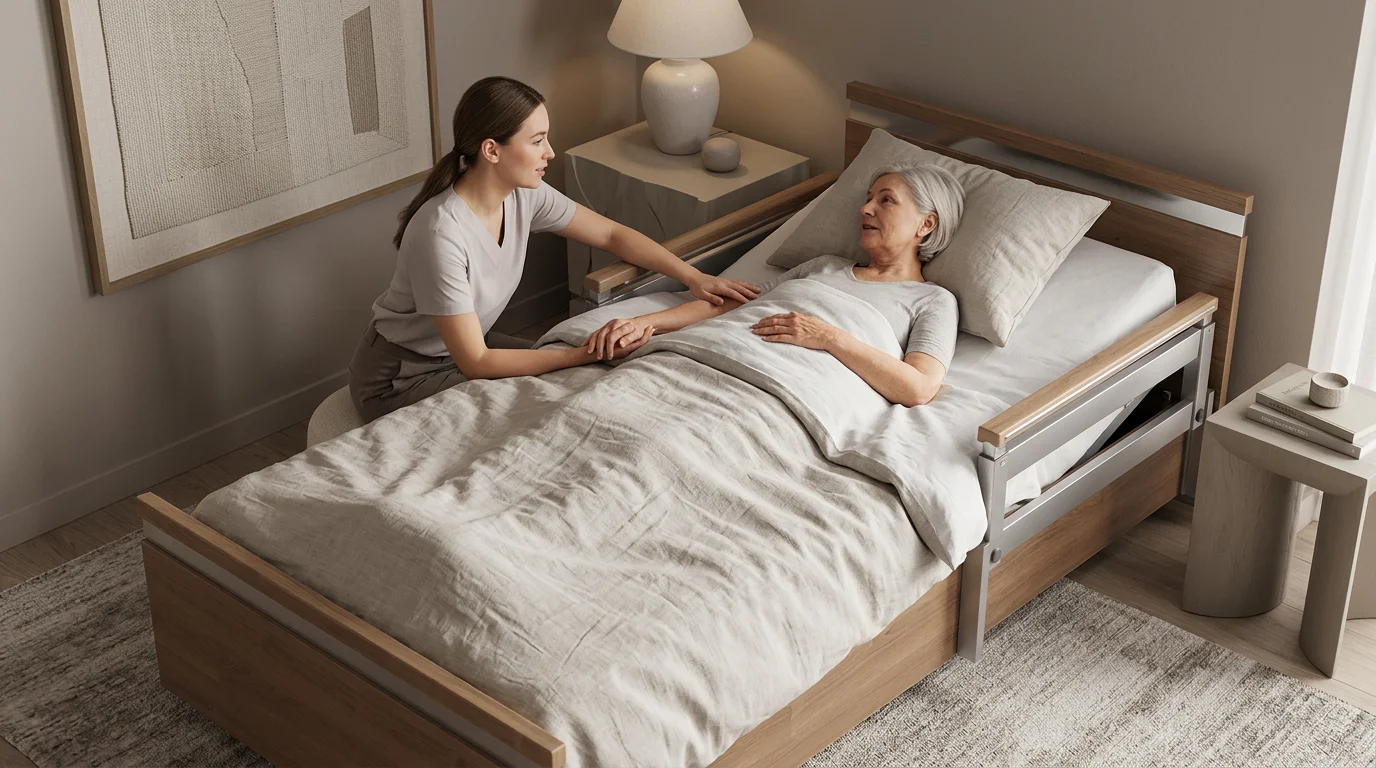
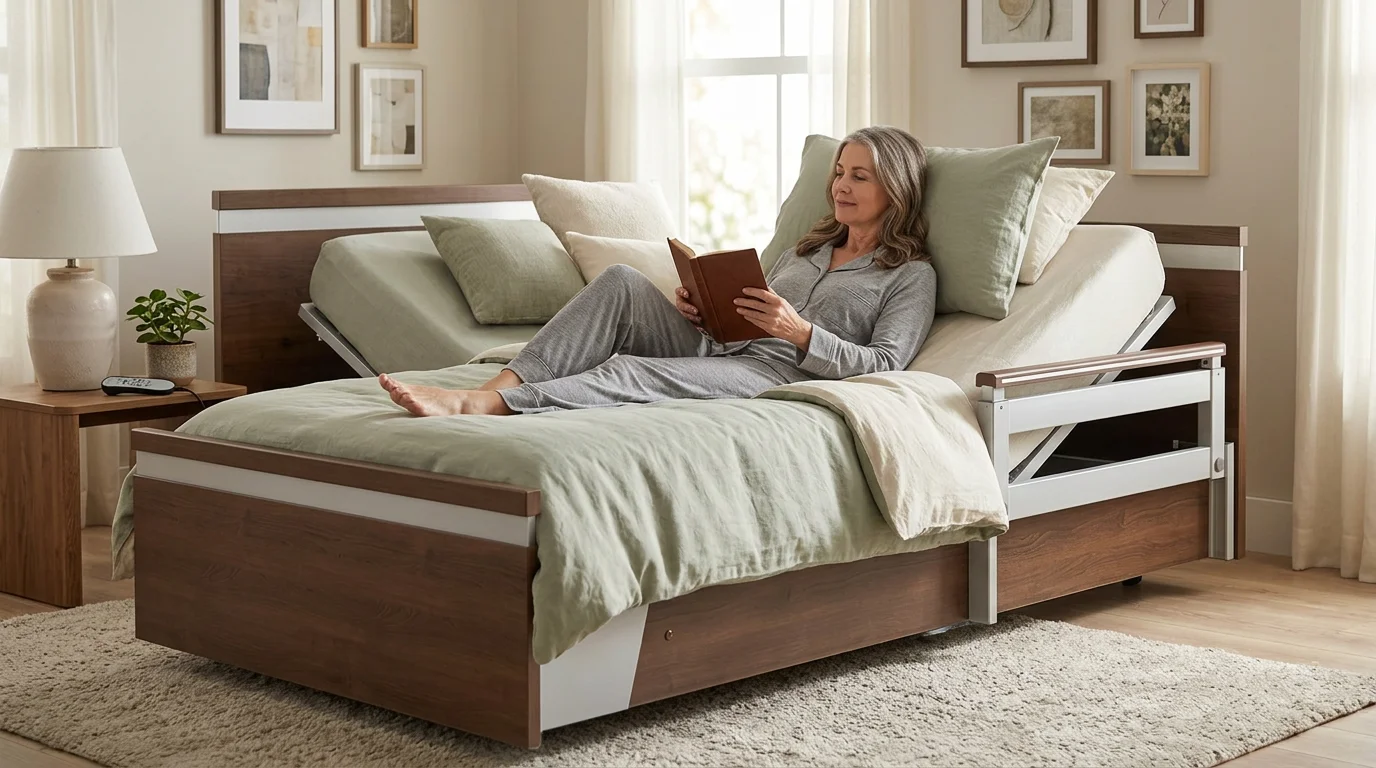
The bed sits at the center of that environment. A standard consumer mattress, even a comfortable one, lacks the positioning range and adjustability that acute care at home requires. Proper elevation for respiratory conditions, safe positioning for IV access, pressure redistribution for extended rest, caregiver-ergonomic height for daily care tasks, these are features that the right adjustable bed delivers and that an ordinary bed cannot.
The Aura Premium home hospital bed ($6,999) is certified to the International Hospital Standard and engineered specifically for home use. Its FallSafe Ultra-Low Height brings the platform to 10 inches, 17 inches to the top of the mattress, which directly addresses the fall risk that peaks during the transition between lying and standing during an acute illness episode. The full electric hi-lo system adjusts the entire bed frame from 10 to 39 inches, giving caregivers an ergonomically correct working height that protects their own back during repositioning and daily care. Zero Gravity, Cardiac Chair, and Comfort Chair positions support the range of positioning needs that acute medical conditions commonly require. The bed’s residential design, upholstered headboard, premium finishes, keeps the bedroom looking like a bedroom rather than a hospital room, which matters for both the person in the bed and for families who want to maintain normalcy in a difficult time.
For families who want to maximize the residential aesthetic without compromising clinical capability, the Aura Platinum ($8,499) adds fully upholstered Slate Gray Crypton side panels. Every clinical feature of the Aura Premium is present; the visual result fits a bedroom that no visitor would identify as a care space.
White-glove delivery includes full setup, installation, and a walkthrough of every feature, ensuring the bed is correctly configured before the first clinical team visit arrives. Delivery can be scheduled in as little as one to three business days for families managing a discharge or transition.
Our comprehensive surgery recovery at home guide and hospital-grade bedroom setup guide cover the full range of environmental preparation considerations for families setting up a home recovery space.
What the Research Tells Us, and What It Doesn’t
The evidence base for hospital-at-home programs is strong, consistent, and growing. Mortality is lower across randomized trials, national datasets, and large international cohorts. Readmission rates are lower across virtually every study that has examined them. Functional status is better preserved. Patient satisfaction is substantially higher. Costs are meaningfully lower.
The research also carries honest caveats. The CMS 2024 national report found that for certain complex diagnoses, particularly heart failure with shock, readmission rates were modestly higher in the home hospital group than among inpatients.3 Not every condition and not every patient is an appropriate candidate. Program eligibility criteria exist for clinical reasons. The treating physician and home hospital program team are the right sources for guidance on whether a specific patient and situation qualify.
For families who are asking whether a loved one’s outcomes will be better at home: the answer the research most consistently gives is yes, provided the patient qualifies for the program, the home environment is appropriately equipped, and the clinical team maintains the level of oversight that a formal home hospital program provides.
The 2 a.m. fear is real. The evidence says you can trust the answer.
Have questions about setting up a home that supports clinical recovery? Speak with a SonderCare expert, our team helps families evaluate their specific situation and find the right equipment, often with same-week delivery.
References
-
Levine DM, Landon BE, Linder JA. Hospital-Level Care at Home for Acutely Ill Adults: A Randomized Controlled Trial. JAMA Internal Medicine. 2020;180(11):1530–1537. doi:10.1001/jamainternmed.2020.4603
-
Caplan GA, Sulaiman NS, Mangin DA, Aimonino Ricauda N, Wilson AD, Barclay L. A meta-analysis of “hospital in the home.” Medical Journal of Australia. 2012;197(9):512–519. doi:10.5694/mja12.10480
-
Centers for Medicare & Medicaid Services. Acute Hospital Care at Home Initiative: Report to Congress. September 30, 2024. CMS.gov.
-
Levine DM, Gross A, Pian J, et al. National Experience With Acute Hospital Care at Home. Annals of Internal Medicine. 2024;177(5):622–630. doi:10.7326/M23-2600
-
Vakkalanka JP, Harland KK, Selzler K, et al. Outcomes Associated With Hospital at Home vs Traditional Hospital Admission in a Randomized Clinical Trial. JAMA Network Open. 2025;9(12): e2549034. doi:10.1001/jamanetworkopen.2025.49034
-
Saenger P, Amaon ES, Ornstein KA, et al. Cost of Care for Acutely Ill Adults Treated in a Hospital-at-Home Program vs Traditional Hospitalization. Journal of the American Geriatrics Society. 2022;70(4):1141–1150.
-
Cryer L, Shannon SB, Van Amsterdam M, Leff B. Costs for “Hospital at Home” Patients Were 19 Percent Lower, With Equal or Better Outcomes Compared to Similar Inpatients. Health Affairs. 2012;31(6):1237–1243.
-
Jeppesen E, Brurberg KG, Vist GE, et al. Hospital at Home for Acute Exacerbations of Chronic Obstructive Pulmonary Disease. Cochrane Database of Systematic Reviews. 2012;(5): CD003573. doi:10.1002/14651858. CD003573. pub2
-
Arsenault-Lapierre G, Henein M, Gaid D, Le Berre M, Gore G, Vedel I. Hospital-at-Home Interventions vs In-Hospital Stay for Patients With Chronic Disease Who Present to the Emergency Department: A Systematic Review and Meta-Analysis. JAMA Network Open. 2021;4(6): e2111568. PMC8188269.
-
Yehoshua A, Pinter P, Sheinerman D, et al. Hospital-at-Home vs Hospitalization for Acute Medical Conditions: A Comparative Study in Israel. BMJ Open. 2024;14: e076741.
-
Siu AL, Hebert PL, Hana K, et al. Equity of Hospital-at-Home Programs: Outcomes Among Patients With Social Risk Factors. Journal of General Internal Medicine. 2022;37(12):3078–3085.
-
Pandit JA, Raza MM, Martin A, et al. The Hospital at Home in the USA: Current Status and Future Prospects. npj Digital Medicine. 2024;7:88. doi:10.1038/s41746-024-01040-9