





Your parents are coming to stay for the holidays, and you’re quietly terrified. Not about the cooking, or the sleeping arrangements, or finding something everyone wants to watch. You’re worried about that moment at 3 a.m. when your dad gets up to use the bathroom and tries to climb out of a bed that’s twelve inches too tall for his knees.
Every year, millions of adult children host aging parents and grandparents for extended visits.4 And every year, a significant number discover, usually after a near-miss, that the standard guest bed in their spare room is a fall risk hiding under a duvet cover.
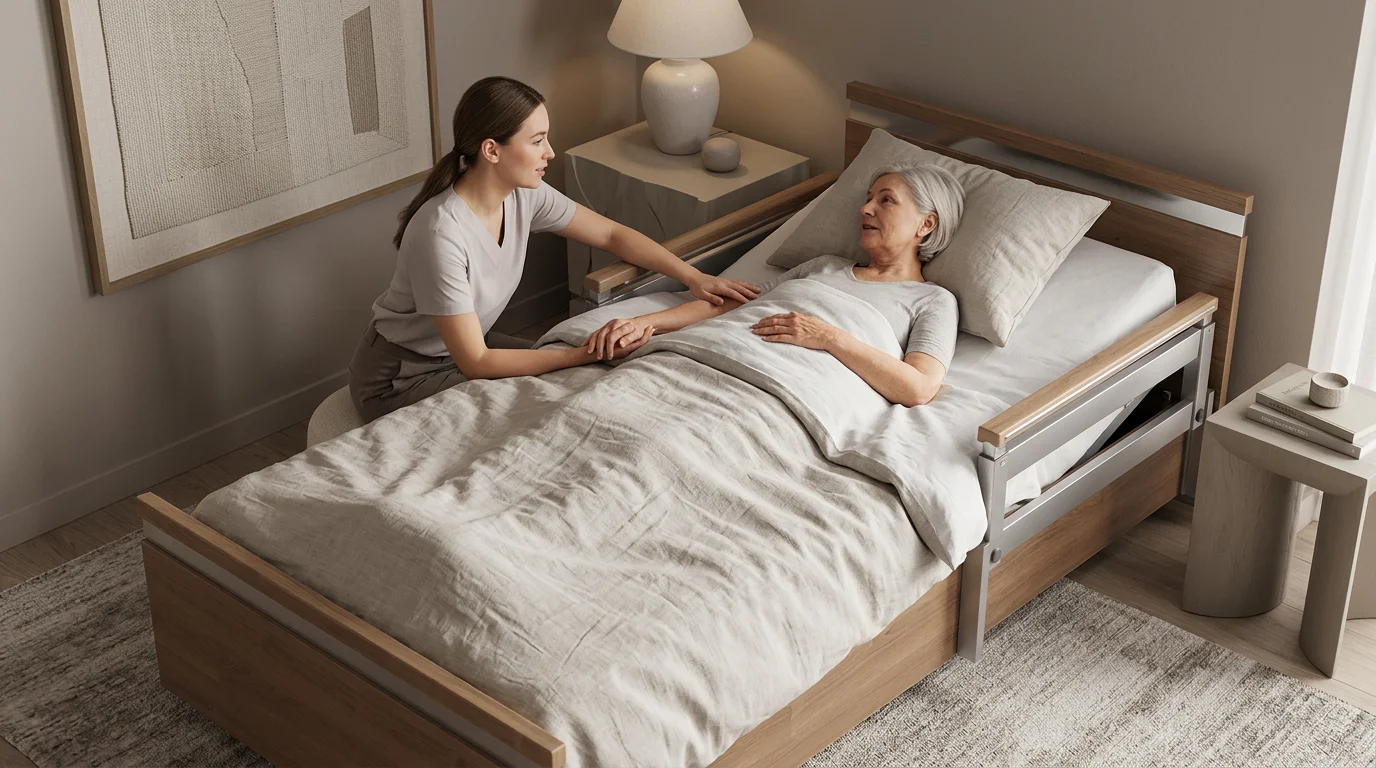
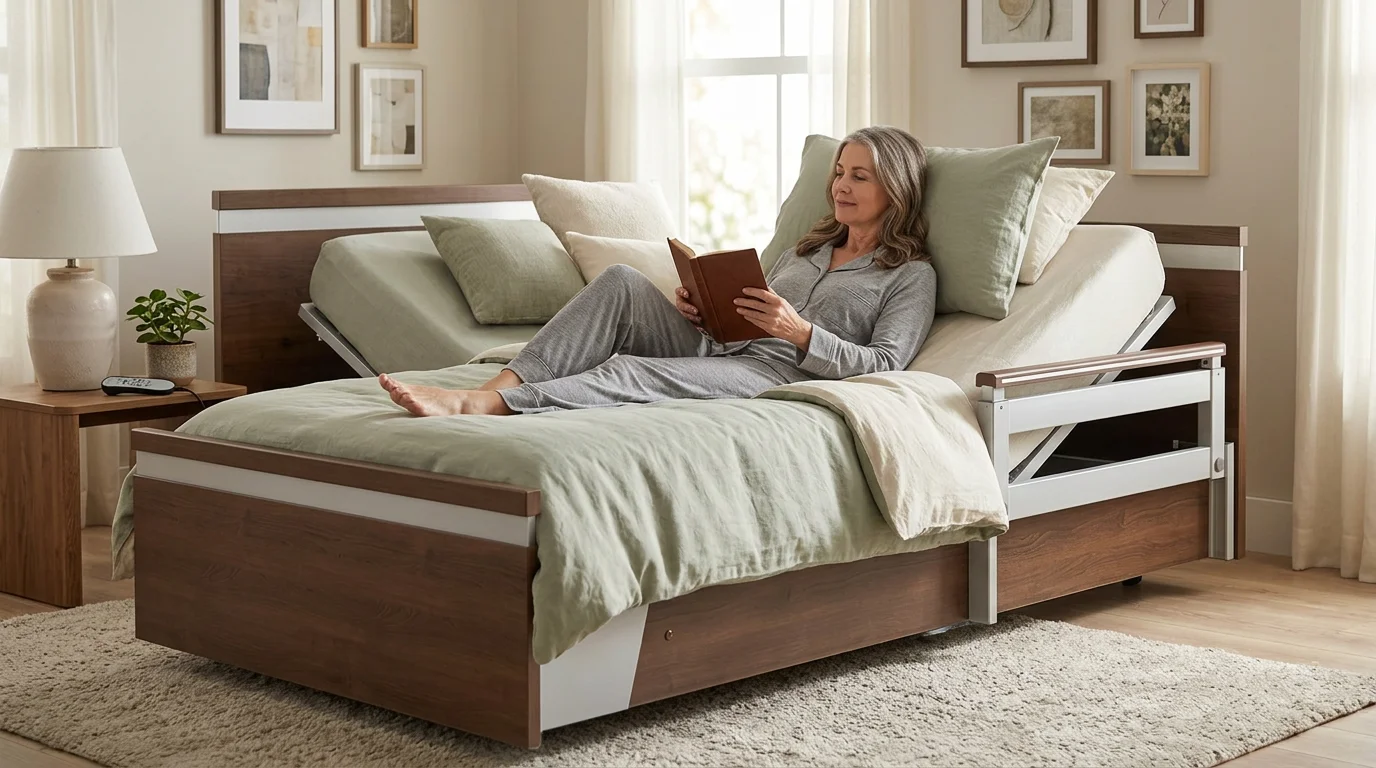
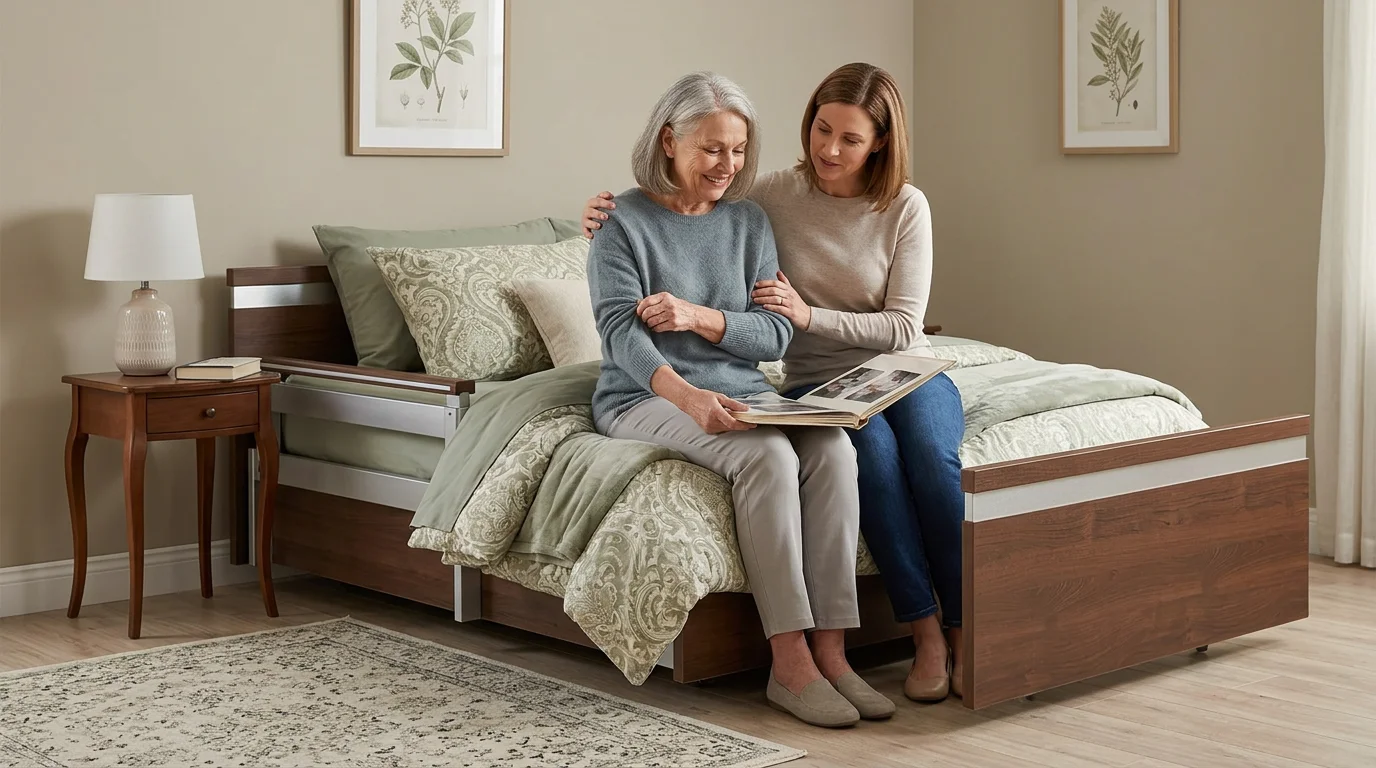
The good news is that there’s a category of care equipment designed for exactly this situation: a hospital bed that doesn’t look like one. A furniture-grade adjustable bed that does everything a clinical model can do, height adjustment, head elevation, rail support, while looking at home in a bedroom that’s supposed to feel warm and welcoming, not medical. This guide explains what to look for, how to frame the conversation with your senior visitor, and what else the guest room needs beyond the bed itself.
Why the Standard Guest Bed Is a Safety Risk
The average platform guest bed sits at 25–30 inches from the floor to the top of the mattress. For a 70-year-old with arthritic knees, that’s a dangerous height to sit onto from a standing position, and an even more dangerous one to push up from in the dark. Falls are the leading cause of both fatal and nonfatal injuries for adults 65 and older.1 Over 14 million older adults, one in four, report falling each year, and approximately 37% of those falls cause injuries serious enough to restrict daily activity or require medical treatment.1 The risk increases sharply with age: the fall death rate for adults 85 and older is more than four times the rate for those aged 65–74.2 Guest rooms are particularly high-risk environments for older adults. The room is unfamiliar, which means your visitor is navigating in the dark to a bathroom they haven’t memorized. The bed height hasn’t been adjusted to their mobility. There are no grab rails. And, because they’re a guest, not a patient, they’re unlikely to ask for help before they need it. Caregivers in elder care communities consistently identify the nighttime bathroom trip as the highest-risk moment during a senior’s visit. The chain of events is predictable: the visitor wakes at 2 a.m., attempts to swing their legs over the side of a too-tall bed, misjudges the distance to the floor, and falls. For an adult 75 or older, that fall can mean a fractured hip, a hospitalization, a surgery, and a long recovery. The solution isn’t to cancel the visit. It’s to replace the standard guest bed with one that adjusts to the right height, provides the right support, and doesn’t announce itself as medical equipment.What “Discreet” Really Means in a Home Hospital Bed
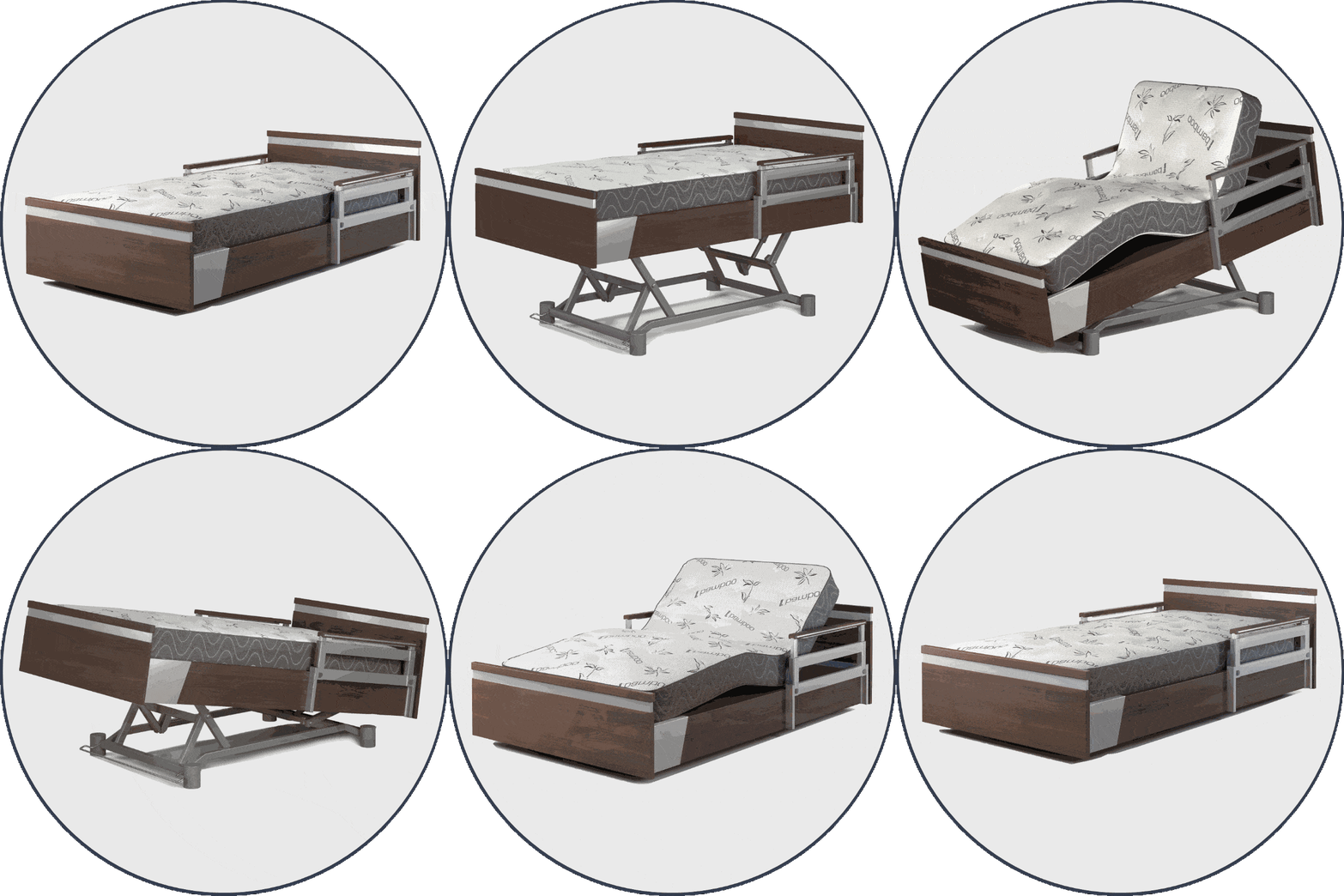
When caregivers say they want a “discreet” hospital bed for the guest room, they usually mean one specific thing: they want a bed that doesn’t look like it belongs in a hospital. Not one that’s hidden, there’s no hiding a bed, but one that doesn’t trigger the immediate recognition of clinical equipment. Standard durable medical equipment (DME) beds have an unmistakable appearance: steel frame, white powder-coated side rails, a manual crank or basic pendant control, and a profile that reads “ward” rather than “bedroom.” This appearance is intentional for clinical settings. But in a home guest room, that aesthetic carries a message your senior visitor will receive clearly: this room was set up because you’re a patient now. A furniture-grade home hospital bed closes that gap. The defining features are:- Upholstered side panels that replace exposed metal with fabric, in the case of the Aura Platinum home hospital bed, fully upholstered side panels in Slate Gray Crypton fabric, which is durable, fluid-resistant, and looks like premium furniture
- A residential headboard in Graphite Gray or Silverstone finish, rectangular with clean tufting, or arched with a nailhead detail, that reads as a bedroom piece, not a medical device
- Low-profile silhouette when in the lowered position, which avoids the elevated “gurney” look of taller clinical frames
- Quiet motor operation, the Aura line operates at 54 dB(A), quieter than a typical conversation, which means adjustments don’t disturb others in the house
The Features That Make the Most Difference
Not every adjustable bed solves the guest-room problem equally. These are the specific features that matter for hosting senior visitors.Adjustable Height (The Most Important Feature)
The target bed height for safe senior transfers is 20–23 inches from floor to mattress top, low enough that a seated person’s feet rest flat on the floor and their knees bend at approximately 90 degrees. Most standard guest beds sit 5–10 inches above this range. The FallSafe Ultra-Low Height on the Aura Premium and Aura Platinum adjusts the sleeping platform to as low as 10 inches (17 inches to the top of the mattress), with a full range up to 39 inches. This means the bed can be set before your visitor arrives so they can get in and out safely, and raised again during the day for easier caregiving if needed. Hi-lo adjustment is the single feature caregivers most frequently credit with preventing falls in their own homes. It’s the functional breakthrough the guest-room problem requires.Head and Knee Positioning
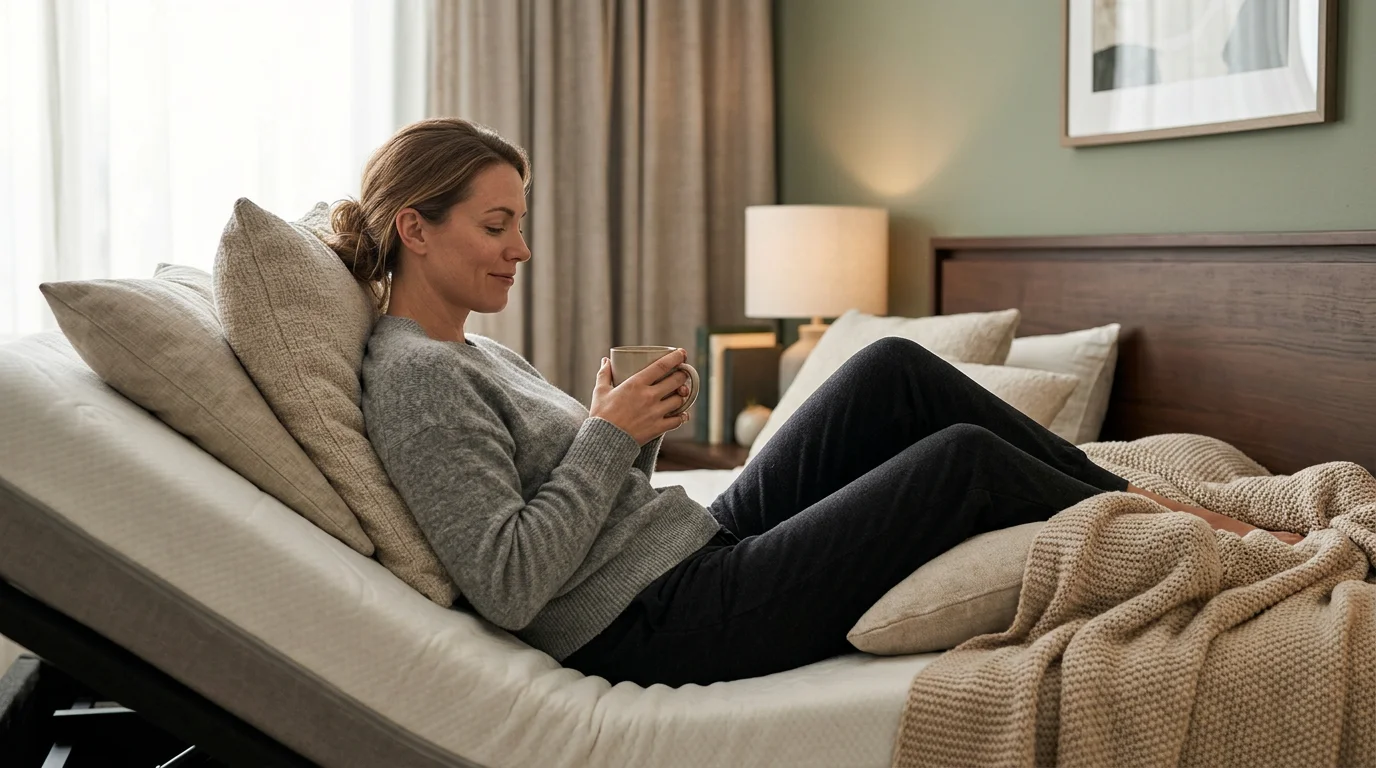
An adjustable head section lets a senior read, eat, or watch television in bed without stacking pillows, which is both more comfortable and safer. Knee elevation reduces pressure on the lower back and lower extremities during longer periods in bed. The Aura Premium home hospital bed includes a full positioning suite: individual backrest (up to 71°) and knee adjustment, plus Zero Gravity, Comfort Chair, and Cardiac Chair pre-sets. These positioning options aren’t just comfort features, they accommodate visitors with COPD, GERD, or post-surgical conditions who may need specific elevation during sleep.Assist Rails
The Aura line includes multi-height assist rails as standard. These are not the same as full-length crib-style rails, they’re shorter grab points positioned where a person getting in or out of bed actually reaches. The FDA recommends using rails designed to minimize gap-entrapment risk, matching mattress dimensions carefully, and placing floor mats on the fall-risk side.5 The Aura’s rail system is engineered to meet these guidelines.Dual-Use Comfort
A good guest-room hospital bed should work for all your guests, not just the ones who need it medically. The Aura’s adjustable head and knee sections, comfortable sleeping surface, and residential design make it a better bed for regular guests too, not a compromise for everyone else so that one visitor can use it safely.Rent vs. Buy: Which Makes More Sense for Occasional Visits?
This is the question most caregivers ask when they start thinking about the guest room. If your parents visit twice a year, is it worth buying a hospital-grade adjustable bed? Or should you rent something when they come? The honest answer depends on how often visits happen, how long they last, and what your visitor’s needs actually are. But a few facts are worth knowing. Medicare generally won’t cover a guest-room adjustable bed. Medicare’s National Coverage Determination for hospital beds requires documented medical necessity, the bed must meet care needs that cannot be met by an ordinary bed, and a physician must certify the need.6 A guest-room setup for a visiting parent who lives elsewhere and has their own sleeping arrangements almost never qualifies. The purchase will be out-of-pocket either way. Rental beds are almost always clinical in appearance. Short-term rental inventory from DME suppliers is standard institutional equipment, functional, but not discreet. Setting up a rental means installing that steel-frame, white-rail visual in the middle of your guest room, and then dismantling it when your visitor leaves. It also requires scheduling delivery and pickup around the visit window. Ownership integrates permanently. A furniture-grade adjustable bed lives in your guest room year-round, works for any guest, and requires no scheduling around visits. The rent or buy a hospital bed guide covers the full financial comparison, the tipping point is usually around three months of cumulative use, after which ownership delivers better value. For families who host senior visitors regularly, holidays, school breaks, summer stays, the math generally favors buying. The bed serves everyone in the room, not just the one visitor who needs its safety features. Approximately 63 million Americans provide care for an adult family member or someone with a disability.7 For many of them, improving the guest room isn’t a one-off project, it’s part of an ongoing investment in making their home work for a family that includes aging members.How to Present the Bed Without Making It About Decline
Many caregivers can identify the right equipment for the guest room and still hesitate, not because of cost, but because of the conversation they’d have to have. Raising the subject of a new bed can feel like saying: I’ve noticed you’re struggling. I’m worried you’re getting old. Senior visitors in caregiver communities consistently describe the framing of adaptive equipment as the difference between accepting it and refusing it. The way you introduce a furniture-grade adjustable bed matters as much as the bed itself. Strategies that caregivers report working: Lead with personal benefit. “I got this for when I have back pain, the adjustable head really helps. You should try it while you’re here.” Reframing the bed as something the host also uses removes the implication that it was installed for the visitor’s limitations. Emphasize the luxury angle. The best hotel mattresses and adjustable bases are now marketed as premium comfort products. The Aura Platinum, with its upholstered panels and residential headboard finishes, genuinely looks like a high-end bedroom piece. “I upgraded the guest room” is a true and dignified framing. Don’t ask permission; announce it warmly. Many caregivers find that raising the topic as a question (“I was thinking of getting a different bed for when you visit, would that be okay?”) invites a reflexive refusal. Presenting it as a fait accompli, “I redid the guest room, you’re going to love the new bed”, sidesteps the objection before it forms. Involve them in the choice. If your parent is the type who responds better to ownership than to decision-by-others, send them the headboard options. “I’m trying to decide between the Graphite Gray and the Silverstone, which do you think looks better?” makes them a collaborator rather than a care recipient.The Rest of the Guest Room: A Short Safety Checklist
Solving the bed height is the most important intervention, but it rarely solves the whole problem. Caregivers who set up a proper adjustable bed frequently discover adjacent safety gaps once their parent is actually using the room. Before a senior visitor arrives, walk through this room with their specific mobility needs in mind:- Bed height confirmed: Set the bed to 20–23 inches (mattress top to floor). Most seniors can get in and out safely if their feet are flat and their knees are at 90 degrees.
- Assist rail in place: The built-in rail should be deployed and checked for stability. If your visitor uses a walker, confirm there’s clearance beside the bed.
- Clear floor path to the bathroom: Remove area rugs that could catch a walker or shuffle step. A small rug beside the bed is a fall hazard unless it has a non-slip mat underneath.
- Motion-activated nightlight: Position one between the bed and the bathroom. The Underbed Auto-Nightlight accessory mounts under the bed frame and activates on motion, it illuminates the floor directly around the transfer zone.
- Bedside table at the right height: A surface at 24–28 inches lets a seated person reach water, glasses, and a phone without leaning or stretching.
- Bathroom grab bar: If your guest bathroom doesn’t have one, a temporary suction-cup grab bar beside the toilet and one inside the shower are inexpensive and significant.
- Phone or call device within reach: If your visitor is mobile but takes time to get up, a charged phone on the bedside table reduces the risk of struggling to reach a device in an emergency.
Which SonderCare Bed Works Best in a Guest Room?
Two options suit the guest-room use case well, depending on how much you want the bed to blend into the room’s aesthetic.Aura Platinum, The Most Discreet Option
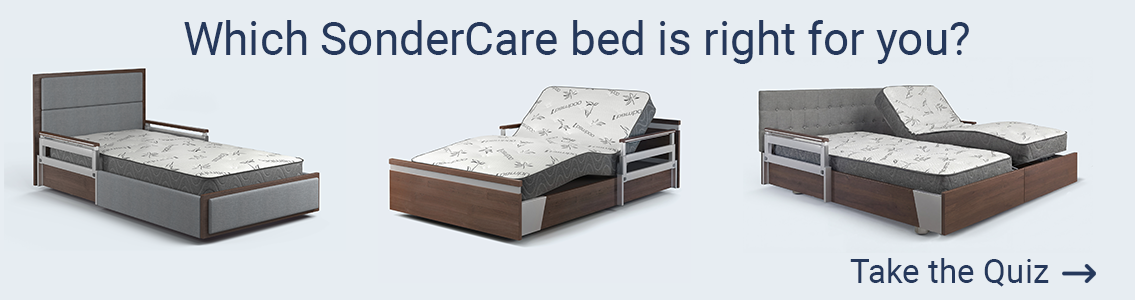
The Aura Platinum home hospital bed ($8,499) is SonderCare’s most furniture-forward model. Its fully upholstered side panels in Slate Gray Crypton fabric cover the mechanical frame entirely, so the bed’s profile matches premium bedroom furniture. The fixed upholstered headboard is available in Graphite Gray (rectangular, clean tufting) or Silverstone (arched, nailhead detail). Neither reads as clinical from across the room. The Aura Platinum includes the complete Aura positioning suite: FallSafe Ultra-Low Height (10″ platform), head and knee adjustment, Zero Gravity, Comfort Chair, hi-lo adjustment across the full 10″–39″ range, and multi-height assist rails. It is certified to International Hospital Standard and manufactured under an ISO 13485-certified quality management system, which means it’s built to the same safety specifications as the clinical beds it doesn’t look like. The 5-year comprehensive parts warranty covers everything from headboard to footboard. For a guest room that doubles as a spare bedroom, the Aura Platinum is the version you don’t have to take down or explain.Aura Premium, Full Safety Suite, Residential Finish
The Aura Premium home hospital bed ($6,999) shares the Aura’s full positioning and safety feature set with a slightly different aesthetic, an upholstered headboard and residential finish, but without the fully upholstered side panels of the Platinum. It’s an excellent choice for guest rooms where the primary priority is safety and adjustability, and the budget is the deciding factor. Both models offer white-glove delivery, which includes full setup, installation, a walkthrough of all features, and debris removal. For a guest room you’re setting up ahead of a visit, white-glove expedited delivery (4–9 business days) or white-glove rush (1–3 business days) ensures the room is ready before your visitors arrive.A Guest Room That Stays a Guest Room
The goal isn’t to medicalize your spare bedroom. It’s to make it genuinely safe for the person sleeping in it, without stripping away any of the warmth and welcome that makes a visit feel like a visit rather than a care stay. A furniture-grade, height-adjustable home hospital bed does that. It looks like a premium bedroom investment. It works better than a standard bed for any guest. And when your parent needs it, needs the lower height, the head support, the rail to push off from, it’s already there. The conversation you don’t have to have is the one that starts: “I fell getting out of your guest bed last night.” A discreet hospital bed for the guest room means that conversation never happens. To explore which option fits your guest room, speak with a SonderCare expert, they can help match the right model, headboard finish, and delivery timeline to your visit window.References
- U.S. Centers for Disease Control and Prevention. “Older Adult Falls Data.” Updated February 26, 2026. https://www.cdc.gov/falls/data-research/index.html
- Garnett MF. “Unintentional Fall Deaths in Adults Age 65 and Older: United States, 2003–2023.” NCHS Data Brief No. 532. June 2025. https://www.cdc.gov/nchs/products/databriefs/db532.htm
- Pew Research Center. “The Demographics of Multigenerational Households.” March 24, 2022. https://www.pewresearch.org/social-trends/2022/03/24/the-demographics-of-multigenerational-households/
- NYU School of Professional Studies, Jonathan M. Tisch Center of Hospitality. “2025 US Family Travel Survey.” October 20, 2025. https://www.sps.nyu.edu/about/news-and-ideas/articles/press-releases/2025/2025-family-travel-survey-highlights-rise-of-kidfluence.html
- U.S. Food and Drug Administration. “A Guide to Bed Safety, Bed Rails in Hospitals, Nursing Homes, and Home Health Care: The Facts.” Updated December 11, 2017. https://www.fda.gov/medical-devices/hospital-beds/guide-bed-safety-bed-rails-hospitals-nursing-homes-and-home-health-care-facts
- U.S. Centers for Medicare & Medicaid Services. National Coverage Determination 280.7, Hospital Beds. https://www.cms.gov/medicare-coverage-database/view/ncd.aspx?ncdId=227
- AARP and National Alliance for Caregiving. “Caregiving in the U.S. 2025.” Press release, July 24, 2025. https://www.aarp.org/press/releases/2025-07-24-new-report-reveals-crisis-point-for-americas-63-million-family-caregivers.html
- World Health Organization. “Ageing and Health.” Fact sheet, October 1, 2025. https://www.who.int/news-room/fact-sheets/detail/ageing-and-health