









It’s 2:14 in the morning. Your alarm goes off for the third time tonight, and your lower back seizes as you swing your legs out of bed. Down the hall, your mother needs to be turned again. You’ve read that repositioning should happen every two hours, and the guilt of missing even one turn keeps you from sleeping through the alarm. Meanwhile, your body is breaking down almost as fast as the skin you’re trying to protect.
If this sounds familiar, you’re far from alone. Research published in Innovation in Aging found that caregivers providing intensive daily care are significantly more likely to report insufficient sleep compared to non-caregivers, and repositioning a loved one in bed ranks among the most physically demanding tasks in home care.1 But here’s what most guides won’t tell you: the rigid two-hour turning rule that keeps you exhausted may not be the only safe option.
So how often should you turn a bedridden patient? The honest answer depends on several factors — their skin condition, body weight, mattress quality, and overall health. This guide walks you through the evidence behind repositioning schedules, gives you a practical day-and-night protocol you can actually sustain, and shows you how the right equipment can reduce the physical toll on both of you.
Whether you’re a daughter managing your father’s care after a stroke, a spouse turning your partner through the night, or a professional home caregiver looking for better techniques, this is the repositioning guide built for real life — not a textbook.
Why Repositioning a Bedridden Patient Matters So Much
When a person lies in one position for too long, their body weight compresses the tissue between bone and mattress. Blood flow to that tissue slows, oxygen supply drops, and cells begin to die. This is how pressure injuries — commonly called bed sores or pressure ulcers — develop, sometimes in as little as two hours on a standard mattress.2
The stakes are significant. Research shows that up to 17% of home care patients develop pressure injuries, and the risk climbs sharply with immobility.3 The economic burden is staggering: a 2019 national simulation estimated the mean incremental cost per hospital-acquired pressure injury at $10,708, contributing to a national annual budget impact of up to $26.8 billion in the United States.4 Once a pressure injury reaches Stage III or IV, it can penetrate to muscle and bone, requiring months of wound care and sometimes surgical intervention.
The Human Cost Beyond Skin
Pressure injuries don’t just damage skin. They cause pain that can become chronic. They increase infection risk in an already vulnerable person. They often lead to hospitalization — the very thing most families are trying to avoid by providing care at home.
For caregivers, the burden is equally real. A study published in Human Factors found that repositioning tasks generate significant biomechanical stress on caregivers, with spinal compression forces increasing substantially when proper equipment and friction-reducing aids are not used.5 Among informal family caregivers, research in Journal of Applied Gerontology documented that 76% report low back discomfort, and nearly one in three sustains a physical injury from caregiving activities.6 One study found that informal caregivers of patients with pressure ulcers spent an average of 10.20 hours per day on caregiving, with 37% reporting a high burden.7
The Cochrane Collaboration’s systematic review on repositioning for pressure ulcer prevention confirmed that regular repositioning is a cornerstone of prevention, though it noted the overall certainty of evidence regarding optimal frequency remains low.8 The question isn’t whether to reposition — it’s how often, and how to do it without destroying your own health in the process.
The “Every 2 Hours” Rule: Where It Came From and What the Evidence Actually Says
If you’ve searched for how often should you turn a bedridden patient, every result probably told you the same thing: every two hours. This recommendation appears in nursing textbooks, clinical guidelines, and caregiver pamphlets worldwide. But where did it come from, and does modern evidence support it?
The Origin of the Two-Hour Standard
The two-hour repositioning interval traces back to clinical observations in the mid-20th century, when researchers noticed that tissue damage could begin within two hours of sustained pressure on a standard hospital mattress. It became codified in nursing practice guidelines and eventually embedded in regulations governing nursing homes and long-term care facilities.
The 2019 International Pressure Injury Prevention Guidelines from NPIAP, EPUAP, and PPPIA recommend regular repositioning but explicitly state that the schedule should be individualized based on “the individual’s tissue tolerance, activity level, skin condition, overall medical condition, the type of support surface being used, and patient comfort” — moving away from a rigid one-size-fits-all approach.2
The TURN Study Changed the Conversation
The landmark TURN (Turning for Ulcer ReductioN) study, published in the Journal of the American Geriatrics Society, enrolled 967 nursing home residents across 27 facilities in the United States and Canada. Participants at moderate to high risk for pressure ulcers (Braden Scale scores of 10-14) were randomly assigned to repositioning schedules of every 2, 3, or 4 hours — all on high-density foam mattresses.9
The results surprised many clinicians: there was no statistically significant difference in pressure ulcer incidence between the three groups (2.5% for 2-hour, 0.6% for 3-hour, and 3.1% for 4-hour; p=0.68). The researchers concluded that turning at 3- and 4-hour intervals was “no worse than the current practice of turning every 2 hours” when patients used quality mattresses.
The TEAM-UP Trial Reinforced the Findings
The more recent TEAM-UP (Turn Everyone And Move for Ulcer Prevention) trial, published in both the Journal of the American Medical Directors Association and Advances in Skin & Wound Care, used wearable sensors to objectively track compliance across 992 nursing home residents in nine U.S. facilities. All participants had Braden Scale scores of 10 or higher and used 7-inch high-density foam mattresses.10
The results were striking: pressure injury incidence during the 4-week intervention dropped to 0.0% across all three arms (2-hour, 3-hour, and 4-hour repositioning), compared to 5.24% at baseline.
Perhaps most relevant for exhausted family caregivers: compliance with the 4-hour schedule reached 95%, compared to just 80% for the 2-hour protocol (P < .001). Overdue hours were more than twice as high for the 2-hour arm compared to the 4-hour arm.10 In other words, longer intervals were not only equally safe — they were significantly easier to maintain consistently.
What Systematic Reviews Concluded
A comprehensive systematic review by Asiri (2023) examined 10 studies comparing repositioning frequencies across clinical settings. The conclusion: “The optimal frequency of turning and repositioning to prevent pressure injuries remains unclear, and patients’ health conditions should be considered when choosing the proper frequency.”11
A meta-analysis by Avsar and Moore (2020) pooling 9 studies with 5,884 participants found a pressure injury incidence of 8% for repositioning every 2-3 hours compared to 13% for 4-6 hour intervals (OR 0.75, 95% CI 0.61-0.90), suggesting a 25% relative reduction in odds with more frequent repositioning — but the overall certainty of this evidence was rated as low.12
The takeaway? The two-hour rule is a reasonable starting point, but it’s not the rigid mandate that many caregivers believe it to be. The mattress surface, individual risk factors, and consistent execution matter at least as much as the clock.
Building a Repositioning Schedule That Works at Home
Understanding the evidence is one thing. Translating it into a turning schedule for a bedridden family member — one that you can actually sustain for weeks or months — is another challenge entirely.
Here’s a practical framework based on current clinical evidence, adapted for the home caregiving setting.
Step 1: Assess Your Loved One’s Risk Level
Clinical teams use the Braden Scale to assess pressure injury risk. This validated tool evaluates six factors — sensory perception, moisture, activity level, mobility, nutrition, and friction/shear — producing scores from 6 to 23, with lower scores indicating higher risk.2 You can do a simplified version at home by evaluating these four key factors:
- Mobility: Can they shift their weight at all, or are they completely unable to move independently?
- Sensation: Can they feel discomfort when pressure builds, or is sensation diminished (from stroke, neuropathy, or medication)?
- Moisture: Is their skin frequently damp from perspiration, incontinence, or wound drainage?
- Nutrition: Are they eating and drinking adequately, or has appetite significantly declined?
Higher risk (limited mobility + reduced sensation + moisture issues + poor nutrition) means more frequent repositioning. Lower risk (some self-movement ability + intact sensation + dry skin + adequate nutrition) allows more flexibility. The TEAM-UP trial specifically demonstrated that patients with Braden scores of 10 or higher could safely use 3-4 hour intervals on quality mattresses — but patients scoring below 10 (severe risk) were excluded from that trial and should maintain the 2-hour standard.10
Step 2: Match the Schedule to the Mattress
The TURN study demonstrated that mattress quality directly affects safe repositioning intervals. Here’s the general framework:
| Mattress Type | Daytime Interval | Nighttime Interval | Notes |
|---|---|---|---|
| Standard hospital/home mattress | Every 2 hours | Every 2-3 hours | No pressure redistribution |
| High-density foam mattress | Every 2-3 hours | Every 3-4 hours | The TURN study baseline |
| Viscoelastic (memory foam) mattress | Every 3-4 hours | Every 4 hours | Enhanced pressure redistribution |
| Alternating pressure air mattress | Every 3-4 hours | Every 4-6 hours | Active pressure cycling |
An ICU trial by Manzano et al. (2014) found no statistically significant difference in pressure injury incidence between 2-hourly (10.3%) and 4-hourly (13.4%) repositioning for critically ill patients on alternating pressure air mattresses, reinforcing that advanced surfaces support longer intervals even in high-acuity populations.13
The SonderCare Alternating Pressure Air Mattress ($2,999) uses 18 air bladders with a pump system specifically designed for wound care and pressure redistribution. When paired with a quality home hospital bed, it can meaningfully extend safe intervals between manual turns — especially at night, when both caregiver and patient need uninterrupted sleep.
Step 3: Create Your Day and Night Protocol
Here’s a sample 24-hour repositioning schedule for a moderate-risk patient on a high-density foam mattress:
Daytime Schedule (7 AM – 10 PM)
| Time | Position | Notes |
|---|---|---|
| 7:00 AM | Supine (back), head elevated 30 degrees | Morning care, breakfast |
| 9:30 AM | 30-degree left lateral tilt | Pillow between knees, behind back |
| 12:00 PM | Supine, head elevated for lunch | Combine with meal, skin check |
| 2:30 PM | 30-degree right lateral tilt | Pillow support, brief skin inspection |
| 5:00 PM | Supine or Cardiac Chair position | Dinner, family time |
| 7:30 PM | 30-degree left lateral tilt | Evening routine, prepare for night |
| 10:00 PM | Supine, slight head elevation | Final skin check before night |
Nighttime Schedule (10 PM – 7 AM)
| Time | Position | Notes |
|---|---|---|
| 10:00 PM | Supine, head elevated 15 degrees | Settle for sleep |
| 2:00 AM | 30-degree right lateral tilt | Gentle, minimal disruption |
| 6:00 AM | 30-degree left lateral tilt or supine | Transition toward morning routine |
This gives you a 4-hour nighttime interval — supported by the TURN study evidence — while maintaining closer monitoring during the day when you’re awake and available.
Adjust this schedule based on your loved one’s skin response. Check for redness at bony prominences (heels, sacrum, hips, shoulders) during every reposition. If redness that doesn’t fade within 30 minutes appears, shorten the interval.
How to Turn a Bedridden Patient Safely: Techniques That Protect Both of You
Knowing how often to reposition is only half the equation. Doing it safely — without injuring yourself or causing pain to your loved one — requires proper technique.
The Critical First Step Most Guides Skip
Before you touch your family member, adjust the bed to your hip height. This single change eliminates the hunched-over posture that causes most caregiver back injuries.
If you’re using a standard bed frame that sits 20-24 inches off the floor, you’re bending at the waist for every turn. The SonderCare Aura Premium home hospital bed features hi-lo adjustment that raises the sleeping surface from 10 inches (FallSafe Ultra-Low position) up to 39 inches — allowing you to set the bed at your exact hip height before repositioning. After turning, lower the bed back down for fall safety. This one feature addresses the number one cause of caregiver back injury during repositioning tasks.5
The 30-Degree Lateral Tilt Technique
The 30-degree lateral tilt is the gold standard position recommended by international pressure injury prevention guidelines.14 It shifts weight off the sacrum (tailbone) without placing excessive pressure on the hip bone. Here’s how:
- Raise the bed to your working height
- Lower the head section to flat (or near-flat)
- Stand on the side your loved one will face after the turn
- Bend their far knee slightly for stability
- Place one hand on their far shoulder, the other on their far hip
- Gently roll them toward you using a smooth, controlled motion
- Tuck a pillow lengthwise behind their back to maintain the 30-degree angle
- Place a pillow between their knees to protect the inner knee bones
- Check that their ears, shoulders, and heels aren’t pressed against hard surfaces
- Lower the bed to the FallSafe low position
Using a Draw Sheet for Easier Turns
A draw sheet (a folded flat sheet placed across the middle of the bed) reduces friction during repositioning. Grab the sheet rather than the person’s body, and use a rocking motion to roll them. Research published in Human Factors confirms that friction-reducing aids and repositioning equipment significantly lower spinal compression forces on the caregiver compared to manual-only techniques.5
Solo Caregiver Techniques
Many guides say repositioning requires two people. For the millions of solo family caregivers, that advice is unhelpful. Here are techniques that work alone:
For smaller patients (under 150 lbs):
– Use the draw sheet method described above
– Let gravity assist — roll them toward you, never push away
– Raise the head of the bed 15-20 degrees before turning, which shifts their center of gravity and makes the roll easier
For larger patients (150+ lbs):
– A draw sheet is essential, not optional
– Consider a slide sheet (low-friction fabric) placed under the draw sheet
– Raise the head of the bed to 30 degrees, then lower one side rail to give yourself positioning room
– The SonderCare Aura Premium’s powered head articulation lets you shift your loved one’s weight distribution mechanically before the manual turn — reducing the force you need to apply by letting the bed do part of the work
For all patients:
– Never twist your own spine — move your feet to face the direction of the turn
– Keep your arms close to your body
– Use your legs, not your back
– The Overhead Trapeze Helper Bar ($369) gives patients who retain some upper body strength the ability to assist with their own repositioning
How Adjustable Hospital Beds Reduce the Repositioning Burden
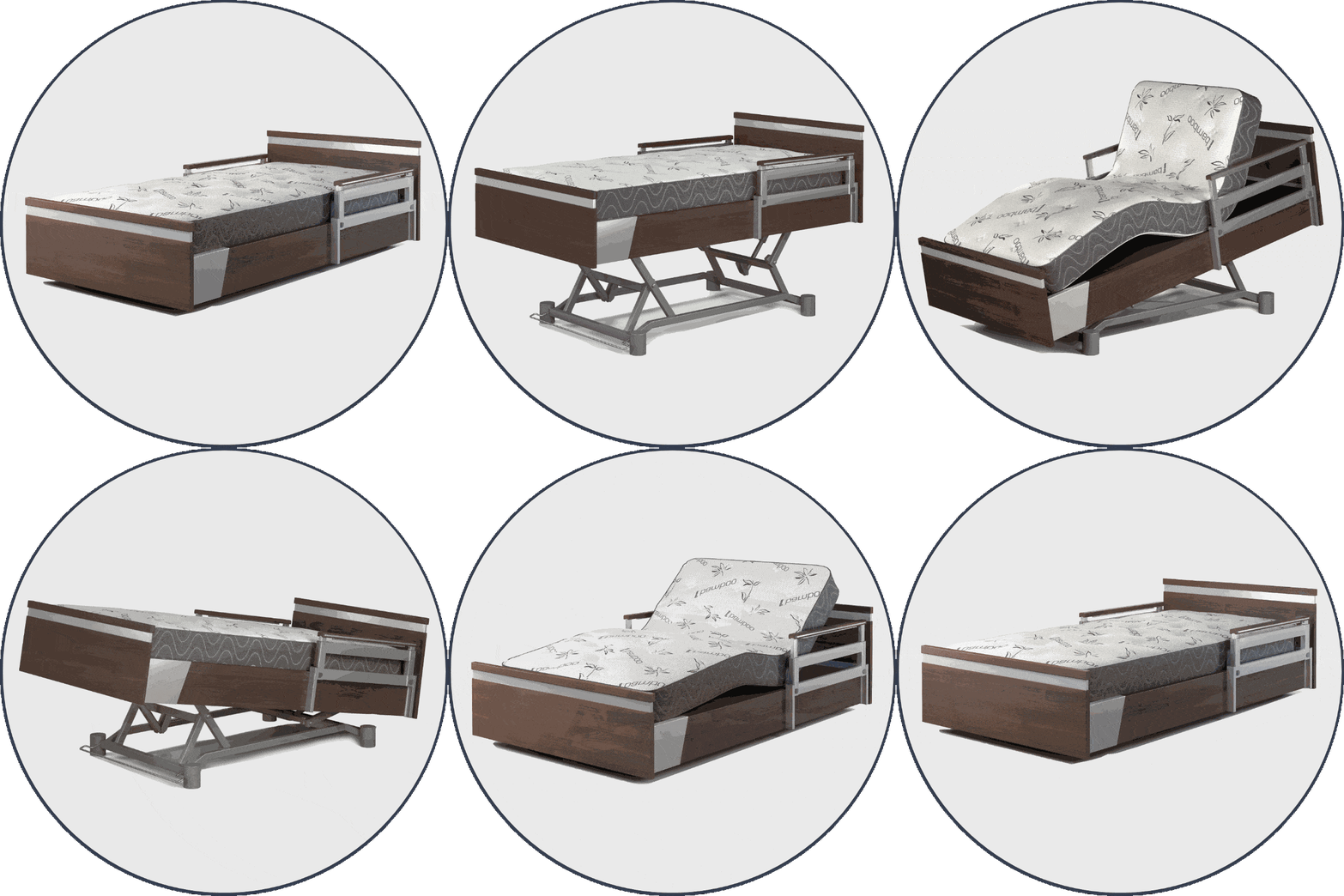
Most repositioning guides focus exclusively on manual techniques — how to grip, how to roll, where to place pillows. What they miss entirely is how the bed itself can become your most valuable repositioning tool.
Powered Micro-Repositioning Between Manual Turns
A full lateral turn every few hours is the foundation of pressure injury prevention. But between those full turns, you can use powered bed positioning to redistribute pressure without any manual effort.
The SonderCare Aura Premium ($6,999) and Aura Platinum ($8,499) include a full positioning suite with capabilities that directly support pressure management:
-
Zero Gravity Position: Distributes body weight across the maximum possible surface area, reducing peak pressure at any single point. Use this between manual turns as a micro-repositioning technique — it changes the pressure map without requiring a full side-to-side roll.
-
Cardiac Chair Position: Elevates the head and bends the knees, shifting pressure from the sacrum to the thighs and buttocks. This creates a meaningful change in weight distribution that counts as a position change.
-
Trendelenburg Tilt: Tilts the entire bed so feet are higher than head, shifting weight from the lower body to the upper body. Reverse Trendelenburg does the opposite. Both create pressure redistribution across different contact points.
-
Head and Knee Articulation: Even modest changes in head or knee elevation alter the body’s pressure profile. Raising the head 15-20 degrees, then lowering it back flat an hour later, constitutes a pressure redistribution event.
What This Means for Nighttime Turning
Here’s where powered positioning transforms the caregiver experience. Instead of a strict every-2-hours manual turn through the night, you can combine manual turns with powered repositioning:
| Time | Intervention | Effort Level |
|---|---|---|
| 10:00 PM | Manual 30-degree lateral turn (left) | Full manual |
| 12:00 AM | Adjust head elevation 15 degrees via remote | Press a button |
| 2:00 AM | Manual 30-degree lateral turn (right) | Full manual |
| 4:00 AM | Zero Gravity position via remote | Press a button |
| 6:00 AM | Manual reposition to supine | Full manual |
This hybrid approach means you physically turn your loved one twice overnight instead of four times — while still creating pressure redistribution events every two hours. The difference between getting up twice and getting up four times is the difference between functional sleep and dangerous exhaustion.
The Mattress Factor
Your bed frame handles positioning. Your mattress handles pressure redistribution between positions. Together, they form a system.
SonderCare offers pressure redistribution mattresses designed specifically for extended bed rest, from the Comfort Mattress ($899) with visco memory foam and cooling gel to the Alternating Pressure Air Mattress ($2,999) with 18 active air bladders that continuously cycle pressure across the body surface. The alternating pressure system is particularly valuable for high-risk patients, as it provides automated pressure relief that supplements your manual repositioning schedule.
When Skin Tells You to Change the Schedule: Reading the Warning Signs
No repositioning schedule works if you’re not monitoring its effectiveness. Your loved one’s skin is the ultimate feedback mechanism.
The Blanching Test
During every reposition, check the skin over bony prominences — sacrum, heels, hips, shoulder blades, and the back of the head. Press the reddened area gently with your finger for three seconds, then release.
- If the skin blanches (turns white) and color returns: This is normal reactive hyperemia. The current schedule is working.
- If the skin stays red (non-blanchable erythema): This is a Stage I pressure injury. Shorten your repositioning interval immediately and keep all pressure off that area.
Bony Prominences to Monitor
Pay special attention to these high-risk areas during each turn:
- Sacrum/tailbone — the most common pressure injury site in supine patients
- Heels — often overlooked; elevate with pillows so heels float free
- Greater trochanters (hip bones) — vulnerable in lateral positions; the 30-degree tilt protects these
- Shoulder blades and elbows — check during lateral positioning
- Back of head and ears — especially in very thin or immobile patients
When to Contact a Healthcare Professional
Reach out to your loved one’s physician or wound care nurse if you notice:
- Non-blanchable redness lasting more than 30 minutes after repositioning
- Any break in the skin, blistering, or open wound
- Dark purple or maroon discoloration (may indicate deep tissue injury)
- Warmth, swelling, or foul odor at a pressure point
- Your loved one reporting increasing pain at pressure sites
For a comprehensive approach to skin protection between turns, see our guide on how to prevent bed sores in elderly at home, which covers nutrition, moisture management, and skin care alongside repositioning.
The Nighttime Turning Dilemma: What Every Exhausted Caregiver Needs to Hear
Let’s address the question that keeps caregivers up at night — literally. Forum threads on caregiving sites overflow with versions of the same desperate question: Can I skip nighttime turns if I use a good mattress? Is it safe to let them sleep 6 hours without turning? Am I a terrible caregiver for being too exhausted to get up at 2 AM?
The Honest Answer
You are not a terrible caregiver. Sleep deprivation is a medical risk for you, and a caregiver who collapses from exhaustion can’t provide any care at all.
The CDC reports that 37% of all caregivers experience insufficient sleep, and among those providing intensive daily care, that number climbs considerably higher.1 Getting fewer than five hours of sleep impairs cognitive function to levels comparable to legal alcohol intoxication — putting both you and your loved one at risk during every transfer, medication administration, and judgment call you make the next day.
What the Evidence Supports
The TURN study and TEAM-UP trial both demonstrated that 4-hour repositioning intervals produced no increase in pressure injuries when quality mattresses were used.910 The UK’s National Institute for Health and Care Excellence (NICE) Clinical Guideline CG179 recommends repositioning “at least every 6 hours” for adults at risk and “at least every 4 hours” for those assessed as high risk — intervals that are notably longer than the traditional 2-hour standard many caregivers feel bound by.15
A Sustainable Nighttime Approach
Based on the evidence, here’s a nighttime framework most caregivers can sustain:
- Before bed: Perform a thorough skin check and full manual reposition
- Use a quality mattress: High-density foam at minimum; alternating pressure for high-risk patients
- Set one nighttime alarm: At the 4-hour mark for a manual turn (if your loved one is moderate-to-high risk)
- Use powered bed positioning: If you have an adjustable bed like the SonderCare Aura Premium, use the remote to make a head elevation change at the halfway point without getting out of bed yourself
- Morning skin check: Inspect all pressure points first thing and adjust the schedule based on what you find
If you’re using an alternating pressure mattress and your loved one is at moderate risk (can feel discomfort, has intact skin, no existing wounds), a single nighttime reposition may be sufficient. Always verify with a morning skin inspection.
The Emotional Weight of Repositioning: What Nobody Talks About
Margaret, 67, cares for her husband David after his stroke left him unable to move his right side. She describes the nightly turning routine as “the loneliest part of caregiving.” David sometimes moans when moved, and Margaret has started dreading the alarm. “I know I’m helping him,” she says. “But some nights it feels like I’m hurting him.”
Robert, 52, drives an hour each way to turn his mother three times during the day while his sister handles evenings. “The guilt eats at me,” he says. “I can’t be there at night. I just pray the mattress is enough.”
These stories reflect what clinical guidelines never capture: repositioning a bedridden loved one is physically hard, emotionally draining, and socially isolating.
What Helps
- Accept imperfection. No caregiver executes a perfect schedule 100% of the time. Consistency matters more than perfection.
- Invest in equipment that works. Every dollar spent on a quality mattress or adjustable bed that makes repositioning easier is a dollar invested in your ability to sustain caregiving long-term.
- Ask for help. Contact your local Area Agency on Aging. Ask the physician about home health aide referrals. Explore respite care options.
- Document your schedule. A simple log taped to the wall near the bed (time, position, skin condition) reduces the mental burden of trying to remember.
Frequently Asked Questions About Turning a Bedridden Patient
How often should you turn a bedridden patient at night?
For patients on a standard mattress, every 3-4 hours is supported by the TURN study evidence. With a high-quality pressure redistribution mattress, intervals of 4-6 hours may be safe for moderate-risk patients. The NICE clinical guidelines recommend at least every 4 hours for high-risk patients and every 6 hours for those at standard risk.15 Always verify with morning skin checks and adjust based on what you find. Using powered bed positioning between manual turns can extend safe intervals further.
Can an alternating pressure mattress replace manual turning?
An alternating pressure mattress significantly reduces — but does not eliminate — the need for manual repositioning. The Manzano et al. ICU trial showed comparable pressure injury rates between 2-hour and 4-hour turning on alternating pressure surfaces, suggesting these mattresses support longer intervals.13 However, they don’t address positioning-related complications like joint stiffness, respiratory function, and comfort. Think of them as a complement to turning, not a replacement.
What position is best between turns?
The 30-degree lateral tilt is recommended by the NPIAP/EPUAP/PPPIA guidelines as the preferred side-lying position because it offloads the sacrum without placing excessive pressure on the hip bone.14 Avoid the full 90-degree side-lying position, which concentrates pressure on the greater trochanter. For patients with higher BMI, a 40-degree tilt may be needed for adequate sacral offloading.
How do I turn someone who is heavier than me?
Use a draw sheet or friction-reducing slide sheet — technique matters more than strength. Raise the bed to hip height to eliminate bending. Use the bed’s head articulation to shift your loved one’s weight before rolling. Consider the SonderCare Overhead Trapeze Helper Bar ($369) if your loved one has some upper body strength. And never push a patient away from you — always roll them toward you.
What’s the difference between repositioning and turning?
Turning involves a full change from one position to another (supine to lateral, for example). Repositioning is the broader term that includes any pressure-relieving movement — including small weight shifts, heel elevation changes, and powered bed adjustments. Both count toward pressure injury prevention, and combining them creates the most sustainable schedule.
Putting It All Together: Your Repositioning Action Plan
Preventing pressure injuries in a bedridden loved one requires three things working together: a consistent schedule, proper technique, and equipment that supports both the patient and the caregiver.
Start here:
- Assess risk level using the simplified home evaluation above
- Evaluate your mattress — if it’s a standard home mattress, prioritize an upgrade to at minimum a high-density foam pressure redistribution mattress
- Create a written schedule posted where you’ll see it, with day and night intervals matched to risk and mattress quality
- Learn the 30-degree lateral tilt — practice during the day when you’re not rushed
- Check skin at every turn — the blanching test takes five seconds and tells you everything
- Consider your bed setup — a home hospital bed with hi-lo adjustment and powered positioning transforms repositioning from a dreaded chore into a manageable routine
The pressure sore prevention and treatment guide in our Learning Center covers the full spectrum of skin protection strategies alongside repositioning.
You became a caregiver out of love. The right knowledge, the right routine, and the right equipment can help you sustain that care — without sacrificing your own health in the process.
Explore the full SonderCare Aura bed lineup and find the right fit for your caregiving needs.
References
-
Tallavajhula S, Onyeaka HK, Perrin PB. Sleep Deficiency by Caregiving Status and Intensity of Caregiving: Findings From Nationally Representative Data. Innovation in Aging. 2024;8(8):igae064. https://pmc.ncbi.nlm.nih.gov/articles/PMC11298120/
-
European Pressure Ulcer Advisory Panel, National Pressure Injury Advisory Panel, Pan Pacific Pressure Injury Alliance. Prevention and Treatment of Pressure Ulcers/Injuries: Clinical Practice Guideline. EPUAP/NPIAP/PPPIA; 2019. https://npiap.com/page/InternationalGuidelines
-
Ferrell BA, Josephson K, Norvid P, Alcorn H. Pressure ulcers among patients admitted to home care. J Am Geriatr Soc. 2000;48(9):1042-1047. https://pubmed.ncbi.nlm.nih.gov/10983902/
-
Padula WV, Delarmente BA. The national cost of hospital-acquired pressure injuries in the United States. Int Wound J. 2019;16(3):634-640. https://pure.johnshopkins.edu/en/publications/the-national-cost-of-hospital-acquired-pressure-injuries-in-the-u/
-
Wiggermann N, Zhou J, McGann N. Effect of Repositioning Aids and Patient Weight on Biomechanical Stresses When Repositioning Patients in Bed. Hum Factors. 2021;63(6):958-973. https://journals.sagepub.com/doi/10.1177/0018720819895850
-
Darragh AR, Sommerich CM, Lavender SA, et al. Musculoskeletal discomfort, physical demand, and caregiving activities in informal caregivers. J Appl Gerontol. 2015;34(6):712-731. https://pmc.ncbi.nlm.nih.gov/articles/PMC3964150/
-
Gorecki C, Brown JM, Nelson EA, et al. Impact of pressure ulcers on quality of life and caregiver burden. Wounds International. 2012. https://woundsinternational.com/journal-articles/the-other-costs-of-pressure-ulcers/
-
Gillespie BM, Walker RM, Latimer SL, et al. Repositioning for pressure ulcer prevention in adults. Cochrane Database Syst Rev. 2020;6(6):CD009958. https://pmc.ncbi.nlm.nih.gov/articles/PMC7265629/
-
Bergstrom N, Horn SD, Rapp MP, Stern A, Barrett R, Watkiss M. Turning for Ulcer ReductioN: a multisite randomized clinical trial in nursing homes. J Am Geriatr Soc. 2013;61(10):1705-1713. https://pubmed.ncbi.nlm.nih.gov/24050454/
-
Yap TL, Horn SD, Sharkey PD, Kennerly SM, Bergstrom N. Effect of Varying Repositioning Frequency on Pressure Injury Prevention in Nursing Home Residents: TEAM-UP Trial Results. J Am Med Dir Assoc. 2022;23(5):849-856.e1. https://pmc.ncbi.nlm.nih.gov/articles/PMC9119401/
-
Asiri S. Turning and Repositioning Frequency to Prevent Hospital-Acquired Pressure Injuries Among Adult Patients: Systematic Review. INQUIRY. 2023;60:1-10. https://pmc.ncbi.nlm.nih.gov/articles/PMC10699153/
-
Avsar P, Moore Z, Patton D, et al. Repositioning for preventing pressure ulcers: a systematic review and meta-analysis. J Wound Care. 2020;29(9):496-508. https://pubmed.ncbi.nlm.nih.gov/32924821/
-
Manzano F, Colmenero M, Perez-Perez AM, et al. Comparison of two repositioning schedules for the prevention of pressure ulcers in patients on mechanical ventilation with alternating pressure air mattresses. J Clin Nurs. 2014;23(17-18):2596-2603. https://pubmed.ncbi.nlm.nih.gov/25189288/
-
Young T. The 30 degree tilt position vs the 90 degree lateral and supine positions in reducing the incidence of non-blanching erythema in a hospital inpatient population: a randomised controlled trial. J Tissue Viability. 2004;14(3):88-96. https://pubmed.ncbi.nlm.nih.gov/15709355/
-
National Institute for Health and Care Excellence (NICE). Pressure ulcers: prevention and management. Clinical Guideline CG179. 2014. https://www.nice.org.uk/guidance/cg179