








You notice it during the morning routine. A faint redness on your mother’s hip that wasn’t there yesterday. You press it gently with your fingertip and the color stays. It doesn’t blanch white like healthy skin should.
That moment of recognition changes everything. Skin care for bedridden elderly family members is one of the most critical and least understood responsibilities home caregivers face. Pressure injuries affect approximately 2.5 million Americans each year, contributing to as many as 60,000 deaths annually, and the national cost of treating them exceeds $26.8 billion.1 A single Stage 3 or 4 wound can cost $20,900 to $151,700 to treat.1
Here is the part most caregivers don’t hear: skin care isn’t just about lotions and creams. The support surface your loved one rests on, the bed’s repositioning capabilities, and the moisture management system underneath them matter far more than any topical product. This guide gives you what no other resource does — a structured daily skin care protocol for bedridden patients, the equipment framework that makes it sustainable, and the product knowledge to protect your family member’s skin integrity around the clock.
Why Skin Integrity Breaks Down in Bedridden Elderly Adults
Understanding why skin fails helps you prevent it. Three forces work against a bedridden person’s skin every hour of every day.
Pressure is the primary threat. When body weight compresses soft tissue between a bony prominence (sacrum, heels, hips, shoulder blades) and the mattress surface, blood flow to that tissue slows or stops entirely. Capillary closing pressure sits around 32 mmHg — roughly the weight of a stack of quarters. Sustained pressure above that threshold starves tissue of oxygen. Damage can begin in as little as two hours.2
Moisture is the accelerant. Skin exposed to urine or fecal matter develops incontinence-associated dermatitis (IAD), a condition with a prevalence rate reaching 21.3% in acute care settings based on a multisite US analysis.3 The damage starts fast. Research shows skin breakdown from moisture exposure can begin within 10 to 15 minutes of contact with stool or urine.3 Overhydrated skin becomes macerated, weakened, and far more vulnerable to friction injuries.
Shear and friction are the silent partners. When a person slides down in bed or is pulled across sheets during repositioning, the skin stretches in one direction while deeper tissues move in another. This tearing force damages blood vessels beneath the surface. Shear injuries often go unnoticed until they present as deep tissue damage days later.
For older adults, the deck is stacked further. Aging skin produces less collagen, holds less moisture naturally, and has a thinner epidermis. Medications like corticosteroids and blood thinners make skin more fragile. Poor nutrition reduces the body’s ability to repair microinjuries before they escalate.
The critical insight for home caregivers: managing all three forces simultaneously — pressure, moisture, and friction — is the only way to maintain skin integrity in a bedridden elderly person. A skin care routine that addresses creams and cleansers but ignores the mattress surface is like putting a bandage on a wound while the knife is still in.
The Daily Skin Care Routine for Bedridden Patients: Morning Protocol
No competitor article provides a structured daily protocol with timing. This is the gap that leaves caregivers improvising. Here is a complete morning skin care routine for a bedridden elderly patient, designed for a single caregiver at home.
Estimated time: 30 to 45 minutes for the full morning protocol.
Step 1: Full-Body Skin Assessment (5-7 minutes)
Before you begin any cleaning or moisturizing, inspect every high-risk area. Use natural daylight or a bright lamp. Check these locations systematically:
- Sacrum and coccyx (tailbone area) — the highest-risk site
- Heels — second most common location for pressure injuries
- Hips (both greater trochanters)
- Shoulder blades and back of the head
- Elbows and the backs of ears
- Between toes and skin folds (groin, under breasts, behind knees)
What you’re looking for: redness that does not blanch when pressed, temperature changes (warm or cool spots compared to surrounding skin), firmness or bogginess in the tissue, purple or darkened areas, and any broken skin, blisters, or open wounds. On darker skin tones, the 2019 EPUAP/NPIAP/PPPIA international clinical practice guideline emphasizes that redness may not be visible.2 Instead, assess for temperature differences, texture changes, and pain at pressure points. Compare both sides of the body — asymmetry is a warning sign.
You can structure your assessment using the Braden Scale, a validated risk assessment tool recommended by international guidelines. A Braden score of 12 or less identifies an individual at high risk of pressure injury and signals the need for intensified prevention strategies.2 Ask a home health nurse to help you complete the initial assessment, then use it as a benchmark for ongoing monitoring.
Keep a log. A simple notebook by the bed tracking daily findings catches trends your eyes might miss over time.
Step 2: Gentle Cleansing (10-15 minutes)
The goal is removing irritants without stripping the skin’s natural barrier. Soap and water perform poorly for bedridden skin care patients. Systematic reviews have found that pH-balanced, no-rinse cleansers are superior to traditional soap and water for preventing IAD, with facility-level studies showing reduced IAD rates and significant savings in caregiver time when structured cleansing protocols are adopted.4
What to use:
– A no-rinse perineal cleanser or pH-balanced skin cleanser (pH 4.0-6.8 to match skin’s natural acid mantle)
– Pre-moistened cleansing cloths designed for incontinence care (some can be microwaved for warmth)
– Soft washcloths — never use terry cloth on fragile skin
Technique:
1. Work from cleanest areas to most soiled. Start with the face and work down.
2. Pat dry gently. Never rub. Friction on damp skin causes microscopic tears in fragile elderly epidermis.
3. Pay special attention to skin folds — groin creases, under the abdomen, beneath breasts. Trapped moisture in folds breeds fungal infections.
4. Clean the perineal area last, using front-to-back motions.
5. If incontinence occurred overnight, change bedding and clean the affected skin immediately before proceeding with the rest of the routine.
Step 3: Moisturize Strategically (5-7 minutes)
Aging skin loses its ability to retain moisture naturally. But bedridden skin care for elderly patients requires a more targeted approach than simply applying lotion everywhere.
Where to moisturize: arms, legs, back, shoulders, and any area that appears dry, flaky, or cracked. Focus on extremities where circulation is poorest.
Where NOT to moisturize: directly over bony prominences where pressure injuries might develop (moisturized skin has a higher friction coefficient, which can worsen shear forces), between toes (moisture promotes fungal growth), or in deep skin folds already prone to maceration.
What to use:
– Ceramide-based moisturizing creams restore the skin’s natural lipid barrier. Look for products containing ceramides, hyaluronic acid, or dimethicone.
– Apply a thin, even layer. Thick globs of cream don’t absorb properly and create their own moisture problem.
– Avoid fragranced products — artificial fragrances can irritate fragile skin and trigger contact dermatitis.
Step 4: Apply Barrier Protection (3-5 minutes)
Barrier creams and moisture protection serve a completely different function than moisturizers. A moisturizer adds hydration to dry skin. A barrier cream creates a waterproof shield that prevents urine and stool from contacting the skin directly.
When to apply barrier protection:
– After every perineal cleaning
– Over the sacral area, inner thighs, and buttocks — anywhere exposed to incontinence
– On any area that shows early signs of moisture damage (pinkness, slight maceration)
Product types (use the right one for the situation):
– Dimethicone-based barrier creams: for daily prevention — light, breathable, easy to apply and remove. Clinical studies have shown that structured skincare regimens including dimethicone can significantly reduce skin redness and improve hydration in bedridden older adults.5
– Polymeric liquid barrier films: for longer-lasting prevention — transparent, breathable, waterproof films that can be reapplied every 48 to 72 hours, making them a lower-burden option for daily care.5
– Zinc oxide barrier pastes: for treatment when skin is already denuded or raw — thick, occlusive physical barriers that protect damaged skin while it heals.5
– Antifungal barrier creams (containing miconazole): when you see signs of fungal infection in skin folds — satellite lesions, bright red rash with defined borders
A common caregiver confusion is the difference between barrier cream and moisturizer. Using a barrier cream as a moisturizer leaves skin dry underneath the protective layer. Using a moisturizer as a barrier leaves skin unprotected from incontinence. They serve different purposes and most bedridden elderly patients need both — moisturizer on dry areas, barrier cream on incontinence-exposed areas.
Step 5: Reposition and Check the Support Surface (5-10 minutes)
This is the step that separates a complete bedridden skin care routine from an incomplete one. After cleaning, moisturizing, and protecting the skin, you need to address the mechanical forces that cause the most damage.
Repositioning technique:
– Use a draw sheet (a folded flat sheet placed under the torso) to slide rather than drag. Pulling a person across the sheets creates exactly the shear forces that tear fragile skin.
– Target a 30-degree lateral tilt rather than a full side-lying position. This distributes pressure more evenly and prevents concentrating weight on the hip bone.
– Never position directly on the greater trochanter (the bony point of the hip). This is one of the highest-risk pressure injury locations.
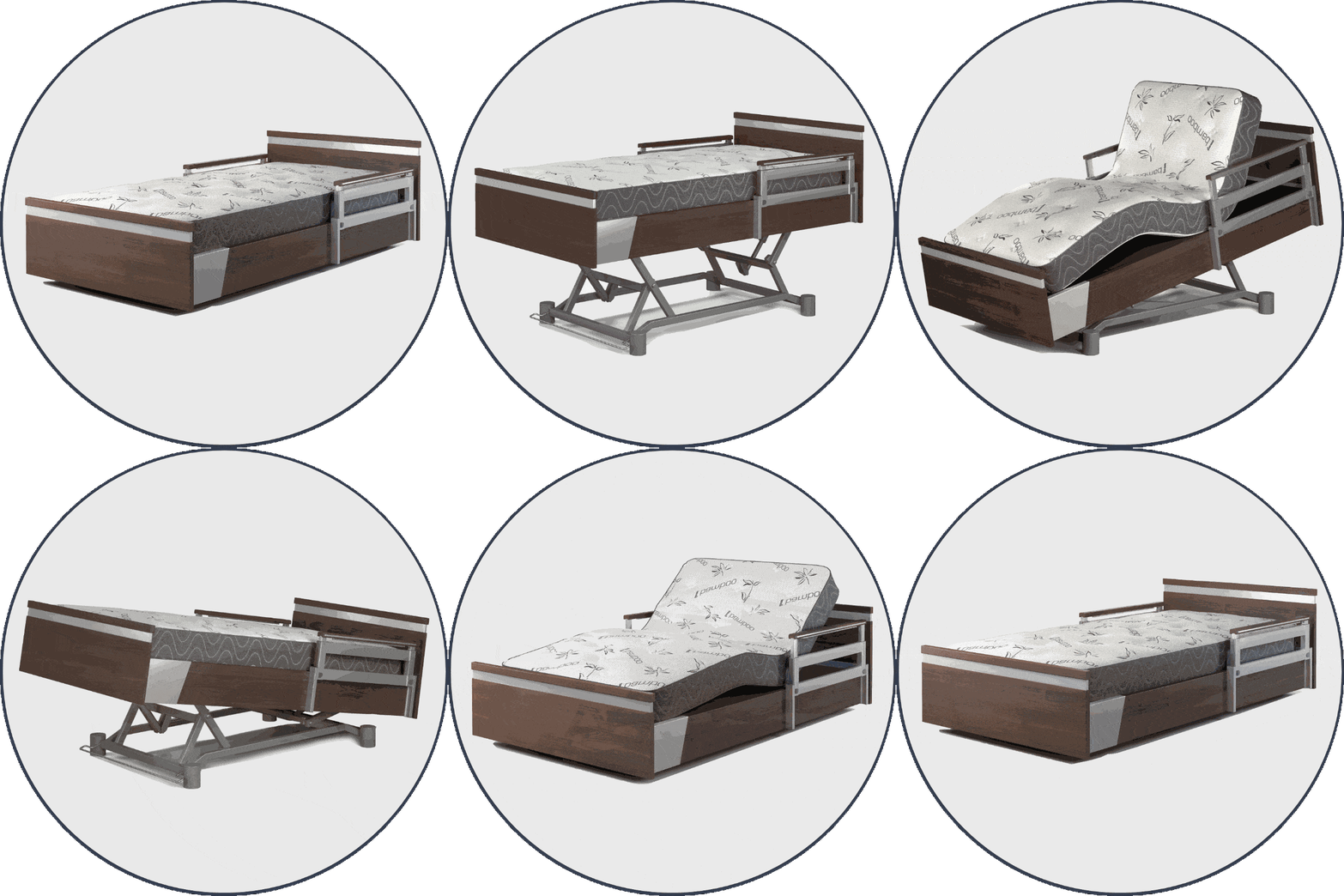
How an adjustable bed changes this step: With a standard bed, repositioning a 150-pound adult requires significant physical effort. The caregiver must bend at an ergonomically dangerous angle, grip the draw sheet, and manually shift the person’s weight. The SonderCare Aura Premium home hospital bed transforms this step entirely. Its electric height adjustment raises the sleeping surface to the caregiver’s waist level, eliminating dangerous bending. The head and knee positioning controls reduce sliding — the most common source of shear injuries. And the hi-lo function that drops to just 10 inches at its lowest position (17 inches to the top of the mattress) provides fall protection between care sessions.
The Evening Skin Care Protocol for Elderly Skin Integrity
The evening routine mirrors the morning protocol with three important modifications that address the overnight period — the highest-risk window for skin breakdown.
Repeat the Core Routine
Perform the same five-step sequence: assess, cleanse, moisturize, protect, and reposition. The evening assessment is particularly important because it reveals the cumulative effects of the day’s positioning.
Apply Extra Barrier Protection for Overnight
Nighttime incontinence is the most damaging because it often goes undetected for hours. Before settling your family member for the night:
- Apply a generous layer of zinc oxide-based barrier cream to the entire perineal area, inner thighs, and sacrum
- Use a high-absorbency incontinence product that wicks moisture away from the skin surface
- Consider a breathable fluid-proof mattress cover underneath the bottom sheet. SonderCare’s Fluid-Proof Mattress Cover ($169 for standard, $199 for extra wide) protects the mattress while maintaining airflow — addressing the microclimate problem that non-breathable plastic covers create
Set Up Your Overnight Repositioning Plan
The 2019 EPUAP/NPIAP/PPPIA guideline provides a conditional recommendation that either two-hourly or three-hourly repositioning intervals could be implemented for most at-risk individuals on an appropriate support surface, while suggesting not to routinely extend intervals to four hours or more.6 The TEAM-UP trial, a multicenter study in nursing home residents, found no statistically significant difference in pressure injury incidence between two-hour and three- to four-hour repositioning schedules when patients were on pressure redistribution surfaces — though the evidence certainty remains very low.7 For overnight care:
- If your loved one is on a high-quality pressure redistribution mattress, a 3 to 4 hour repositioning interval may be acceptable overnight. Monitor the skin closely in the first week to determine what their skin tolerates.
- Use a gentle alarm rather than an intrusive one. Sleep disruption itself creates health risks for both the person in bed and the caregiver.
- Pre-position pillows to maintain the 30-degree tilt angle between turns. Placing a pillow lengthwise behind the back holds the position without requiring constant adjustment.
- If you are the sole overnight caregiver, sleep quality matters. A proper pressure redistribution mattress can extend safe repositioning intervals, giving both of you longer stretches of uninterrupted sleep.
The Incident Response: What to Do After Incontinence, Spills, or Excessive Sweating
Skin care for a bedridden patient does not follow a clock. When moisture events happen between scheduled routines, act immediately. Every minute of contact between irritants and fragile skin accelerates breakdown.
Incontinence Incident Protocol
- Respond within 10 minutes. Research demonstrates that skin damage from incontinence moisture can begin within 10 to 15 minutes of exposure.3
- Remove soiled clothing and linens. Roll the person gently to one side using proper body mechanics.
- Cleanse the affected area with a no-rinse perineal cleanser. Do not use soap. Do not scrub.
- Pat completely dry. Leaving any residual moisture defeats the purpose.
- Reapply barrier cream to the entire exposed area.
- Replace all soiled bedding. Placing clean sheets over a soiled draw sheet is not acceptable — the moisture wicks through.
- Log the incident. Tracking frequency helps identify patterns (e.g., most episodes occur between 2 and 4 AM) that let you plan preventively.
Excessive Sweating Protocol
Skin microclimate research shows that elevated skin temperature dramatically increases pressure injury risk — each 1 degree Celsius increase in skin temperature contributes approximately 14 times as much risk as a 1 mmHg increase in interface pressure.8 Heat and moisture trapped between the body and the mattress surface create a greenhouse effect that weakens tissue tolerance.
When sweating is a problem:
- Check room temperature. Keep the ambient temperature between 68 and 72 degrees Fahrenheit.
- Use breathable, moisture-wicking bed linens. Cotton or bamboo fabrics outperform synthetic materials for bedridden skin care. SonderCare’s Organic Cotton Sheet Set (300-thread count certified organic cotton) provides skin-friendly breathability.
- Avoid layering multiple mattress pads or covers. Each additional layer reduces airflow and traps heat.
- If the current mattress cover is non-breathable plastic, upgrade to a breathable fluid-proof cover. The difference in skin temperature and humidity at the mattress interface is significant.
Your Most Important Skin Care Tool Isn’t a Cream — It’s the Support Surface
This is the section no competitor article provides, and it is arguably the most important information in this entire guide.
The mattress your family member rests on is the single most modifiable risk factor for pressure injury development. Every clinical guideline on pressure injury prevention — from the NPIAP to the Cochrane Collaboration — places support surface selection at the foundation of the prevention hierarchy.29
Yet almost every skin care guide for bedridden patients treats the mattress as an afterthought, mentioning it in a single sentence before spending 1,000 words on barrier creams. The research tells a different story.
How Pressure Redistribution Works
A standard innerspring mattress creates concentrated pressure points at the sacrum, heels, and shoulder blades. These are exactly the locations where pressure injuries develop most frequently. A proper support surface redistributes that concentrated force across a much larger body surface area, keeping the pressure at any single point below the tissue-damage threshold.
Reactive (constant low-pressure) surfaces — including high-density foam and gel mattresses — work through immersion (the body sinks in) and envelopment (the surface conforms to body contours). The more surface area in contact with the mattress, the lower the pressure at any single point.
Active (alternating pressure) surfaces work differently. Air cells inflate and deflate in cycles, periodically eliminating pressure from different body regions entirely. This mimics the natural shifting that mobile people do unconsciously throughout the night.
What the Evidence Says
A 2021 Cochrane network meta-analysis of 40 studies involving 12,517 participants found that alternating pressure air mattresses, reactive air overlays, and gel surfaces all reduced pressure injury incidence compared to standard foam mattresses.9 The landmark PRESSURE 2 trial — the largest of its kind — found no consistent, large advantage of alternating pressure air mattresses over modern high-specification reactive foam mattresses for high-risk patients, suggesting that advanced foam mattresses can be a sufficient and effective first-line option for many individuals.9
The cost argument is straightforward. SonderCare’s pressure redistribution mattresses range from $899 (Comfort Mattress) to $2,999 (Alternating Pressure Air Mattress). A single Stage 3 pressure wound costs $20,900 to $151,700 to treat.1 Prevention equipment pays for itself many times over if it prevents even one serious wound.
Choosing the Right Mattress for Your Situation
Low to moderate risk (limited mobility, no current skin issues, continent or mildly incontinent): A reactive foam mattress with pressure redistribution properties is appropriate. International guidelines recommend high-specification foam mattresses over standard non-medical-grade mattresses for all at-risk individuals.2 SonderCare’s Comfort Mattress ($899) or Dream Bamboo Quilt-Top ($1,299) provides this level of protection with cooling gel technology and an included fluid-proof cover.
Moderate to high risk (fully immobile, incontinent, thin or malnourished, previous pressure injuries): An alternating pressure air mattress is clinically appropriate. SonderCare’s Alternating Pressure Air Mattress ($2,999) uses 18 air bladders with a pump system designed specifically for treatment-level pressure redistribution. This is not a comfort mattress — it is a clinical-grade wound prevention and treatment tool.
Critical caution: Do not stack surfaces. Placing a foam topper over an alternating pressure mattress defeats the alternating pressure mechanism. Choose one quality surface and use it as designed.
Protect the Heels Separately
The heels are extremely vulnerable due to the bony prominence of the calcaneus and minimal soft tissue padding. A systematic review of randomized controlled trials found that heel offloading devices — boots or pillows that completely suspend the heel off the bed — reduce the risk of Category 1 or greater heel pressure injuries by approximately 80% (RR 0.20).10 Even a simple pillow placed lengthwise under the calves to float the heels off the mattress provides meaningful protection. This is one of the most effective single interventions in the entire prevention toolkit.
The Bed Itself Matters Too
Linda, a home caregiver in Michigan, described the moment she realized skin care for her bedridden husband wasn’t just about what she put on his skin. “I was trying to turn him every two hours on our regular queen bed,” she said. “My back was destroyed. I started skipping the overnight turns because I physically couldn’t do it anymore. Within a month, he had a Stage 2 on his sacrum.” After switching to a home hospital bed with electric positioning and a proper pressure redistribution mattress, the wound healed and no new injuries developed over the following year.
The connection between the bed frame and skin integrity is indirect but powerful. An adjustable bed with electric height controls, head and knee positioning, and side rails for leverage makes the repositioning schedule physically sustainable for a home caregiver. Without that mechanical advantage, even the most dedicated caregiver eventually burns out — and missed repositioning turns are when pressure injuries develop.
For families managing ongoing care, SonderCare’s adjustable home hospital beds provide the positioning capabilities that clinical settings use for skin protection, including Trendelenburg positioning for circulation support and Cardiac Chair positioning that reduces sacral pressure during mealtimes.
Nutrition: Feeding Your Loved One’s Skin from the Inside
Topical skin care for bedridden elderly patients addresses the outside of the skin. Nutrition addresses the inside. Both matter, and neither can fully compensate for the other.
The 2019 EPUAP/NPIAP/PPPIA guidelines and the 2022 ESPEN practical guideline for geriatrics recommend specific nutritional targets for people at risk of pressure injuries: 1.25 to 1.5 grams of protein per kilogram of body weight per day and 30 to 35 calories per kilogram of body weight per day.11 For a 150-pound person, that translates to roughly 85 to 102 grams of protein daily — significantly more than most elderly adults consume without deliberate effort.
The Nutrients That Matter Most for Skin Integrity
Protein is the building block of tissue repair. When protein intake drops below the threshold, the body cannot maintain its skin renewal cycle. Every skin cell replaced, every microinjury repaired, every collagen fiber synthesized requires amino acids from dietary protein.11
Vitamin C serves as an essential cofactor for collagen synthesis. Without adequate vitamin C, the body cannot produce the structural protein that gives skin its tensile strength.11 Good sources include citrus fruits, strawberries, bell peppers, and broccoli.
Zinc supports collagen and protein synthesis, membrane stability, and immune function — all critical for maintaining skin integrity under sustained mechanical stress.11 However, high-dose zinc supplementation (above 40 mg/day) can actually impair wound healing by disrupting copper status. Standard supplementation through a daily multivitamin or zinc-rich foods (meat, shellfish, legumes, seeds) is safer than high-dose pills.
Hydration is easily overlooked. Dehydrated skin is more brittle, cracks more easily, and loses elasticity. Many bedridden elderly adults drink less because getting to the bathroom is difficult or impossible. Aim for six to eight cups of fluid daily unless a physician has specified fluid restrictions.
Practical Nutrition Tips for Caregivers
- Add protein powder to smoothies, soups, or oatmeal when appetite is poor
- Offer small, frequent meals rather than three large ones — bedridden individuals often have reduced appetites
- Keep a hydration log alongside your skin inspection log
- If a pressure injury has already developed, ask the physician about a high-protein oral nutritional supplement enriched with arginine, zinc, and antioxidants. A multicenter randomized trial found that an enriched formula produced a 60.9% reduction in pressure ulcer area over eight weeks, compared to 45.2% with a standard high-protein supplement.12
- Use the MNA-SF (Mini Nutritional Assessment — Short Form) to screen for malnutrition risk: a score of 11 or less out of 14 should trigger a dietitian referral.11
Managing Incontinence: The Biggest Threat to Elderly Skin Integrity
If pressure is the primary mechanical threat to bedridden skin, incontinence is the primary chemical threat. The combination of the two is devastating. Research identifies fecal incontinence, immobility, and prolonged moisture exposure as the top risk factors for incontinence-associated dermatitis in elderly patients.3
Managing incontinence isn’t just about cleanup. It requires a system.
The Three-Layer Incontinence Defense
Layer 1: Containment. Use high-absorbency incontinence products that wick moisture away from the skin surface. Superabsorbent products dramatically reduce the duration of skin-moisture contact compared to standard pads. Change products promptly after each episode.
Layer 2: Barrier protection. Apply dimethicone or zinc oxide barrier cream after every incontinence cleaning. The barrier must be reapplied each time — it does not last through multiple cleaning episodes. Think of it like sunscreen that needs reapplication after swimming. For prevention on intact skin, polymeric barrier films offer longer-lasting protection (48 to 72 hours) and allow visual inspection of the skin underneath without removal.5
Layer 3: Surface protection. A breathable fluid-proof mattress cover protects the mattress without creating the sealed, heat-trapping environment that worsens skin breakdown. This is the layer most home caregivers miss entirely. Standard plastic mattress covers block moisture from reaching the mattress, but they also block airflow from reaching the skin. Research on skin microclimate demonstrates that this trapped heat and humidity weakens tissue tolerance and increases pressure injury risk.8
When OTC Products Aren’t Enough
If you’re seeing persistent redness, broken skin, or signs of fungal infection despite a consistent skin care protocol, it’s time to escalate. Contact the physician or a wound care specialist. The line between incontinence-associated dermatitis and a Stage 1 pressure injury can be difficult to distinguish at home, and the treatment pathways diverge significantly.
Signs that require professional evaluation:
- Redness that persists longer than 30 minutes after pressure is relieved
- Open skin, blisters, or weeping areas
- Dark purple or maroon discoloration (may indicate deep tissue injury)
- Skin that feels significantly warmer or cooler than surrounding areas
- Any wound that is not improving with your current care protocol within 5 to 7 days
For detailed guidance on distinguishing early-stage pressure injuries and taking preventive action, see our companion article on how to prevent bed sores in elderly family members at home.
Preventing Skin Breakdown in Elderly Bedridden Patients: The Equipment Upgrade Decision
Caregivers frequently ask: when is it time to upgrade from the regular bed and mattress to specialized equipment? Here is a straightforward framework.
Upgrade Triggers
Upgrade to a pressure redistribution mattress when:
– Your family member is spending 15+ hours per day in bed
– They cannot reposition themselves independently
– You see persistent redness at pressure points even with a two-hour turning schedule
– They have any degree of incontinence
– They have diabetes, circulatory problems, or poor nutritional status
Upgrade to an alternating pressure mattress when:
– Your family member has had a previous pressure injury (recurrence risk is extremely high)
– They are fully immobile and incontinent
– A reactive foam mattress alone is not preventing skin changes
– A wound care professional recommends active pressure redistribution
Upgrade to a home hospital bed when:
– You are the sole caregiver and the physical strain of repositioning is becoming unsustainable
– You are skipping or delaying repositioning turns because of the effort required
– Your family member needs head elevation for breathing, eating, or GERD management
– Fall risk is a concern (SonderCare beds lower to 10 inches from the floor in FallSafe mode)
– You need caregiver-height adjustment to protect your own back during daily care
The Investment Perspective
Laura, a physical therapist who treats home care patients, shares a perspective her families find helpful: “I tell families to think about it as an insurance policy. A quality mattress costs $900 to $3,000. A hospital bed costs $4,000 to $7,000. A Stage 3 pressure wound costs $20,900 to $151,700 in treatment, plus weeks or months of wound care visits, antibiotics, possible hospitalization, and suffering for the person in the bed. The math is clear.”
The 2021 Cochrane evidence confirms this economic logic: active air-filled support surfaces are probably more cost-effective than standard foam when accounting for pressure injury treatment costs.9
Caregiver Self-Care: Protecting Your Own Body and Mind
A skin care routine for a bedridden elderly patient is only as good as the caregiver’s ability to sustain it. Caregiver burnout is the number one reason prevention protocols fail at home.
Protect your back. If you are manually turning a person in a standard bed, you are at high risk for lumbar strain. Use a draw sheet for every repositioning. If the bed height forces you to bend, that is the strongest argument for an adjustable-height bed — not for your family member’s comfort, but for your body’s survival through years of caregiving.
Build the routine into your day, not on top of it. Attach the morning skin care protocol to an existing habit (after your coffee, before breakfast). The evening protocol follows dinner cleanup. Incident responses are the only unplanned care events.
Accept imperfection. If you miss an overnight repositioning turn, do not spiral into guilt. Adjust the mattress support, add barrier cream, and resume the schedule. Consistent 80% adherence on a quality support surface produces better outcomes than perfect adherence on a poor surface that burns you out by month two.
Ask for help. If a home health aide visits, show them your skin care log and the daily protocol. Consistency across caregivers matters. The morning routine should happen the same way whether you or the aide is performing it.
Your Skin Care for Bedridden Elderly Checklist: Daily Quick Reference
Print this and keep it by the bed.
Morning Protocol (30-45 minutes):
1. Full-body skin assessment — check all bony prominences, skin folds, and incontinence-exposed areas
2. Gentle cleansing with pH-balanced, no-rinse cleanser (no soap)
3. Pat dry completely — never rub
4. Moisturize dry skin areas (avoid bony prominences and skin folds)
5. Apply barrier cream to incontinence-exposed areas
6. Reposition to a new 30-degree lateral tilt
7. Float heels off the mattress with a pillow under the calves
8. Check mattress and bedding for moisture or bunching
9. Log findings in skin care notebook
Evening Protocol (25-35 minutes):
1. Repeat morning assessment, cleansing, moisturizing, and barrier application
2. Apply extra zinc oxide barrier cream for overnight protection
3. Ensure high-absorbency incontinence product is fresh
4. Set overnight repositioning schedule (every 3-4 hours with proper mattress)
5. Position pillows to maintain lateral tilt between turns
6. Log findings
Incident Response (10-15 minutes):
1. Respond within 10 minutes of any moisture event
2. Remove soiled materials, cleanse, dry, reapply barrier
3. Replace all wet bedding
4. Log time and type of incident
Weekly:
– Evaluate skin log for trends (new redness, recurring moisture events)
– Check mattress cover integrity
– Reassess nutrition and hydration intake
– Check in with your own body — back pain, sleep quality, stress level
When to Call for Professional Help
Managing skin care for a bedridden elderly person at home requires knowing when you’ve reached the boundary of home-based care. Contact a healthcare professional immediately if you observe:
- Non-blanchable redness lasting more than 30 minutes after repositioning — this is a Stage 1 pressure injury
- Any open wound, blister, or skin breakdown — this requires staging and a treatment plan
- Purple or maroon discoloration — this may indicate deep tissue pressure injury, which is a medical urgency
- Rapid skin deterioration despite following a consistent prevention protocol
- Signs of wound infection — increasing pain, warmth, swelling, foul odor, or drainage
Early intervention transforms outcomes. A Stage 1 pressure injury caught and managed with repositioning and proper support surfaces often resolves completely within days. A Stage 3 wound that was once a Stage 1 can take months to heal and may require surgical intervention.
For a deeper understanding of pressure injury staging and the complete prevention framework, see our comprehensive guide to preventing and treating pressure sores.
Caring for a bedridden family member’s skin is demanding work, and the fact that you are reading a guide like this means you are already doing more than most. The right daily protocol, the right products, and the right equipment create a system that protects your loved one’s skin and protects your ability to keep providing care.
If you have questions about how a proper support surface or adjustable bed could improve your skin care routine, SonderCare’s bed experts have helped thousands of families find the right fit. The consultation is free, and there is no pressure to purchase.
References
-
Padula WV, Delarmente BA. The national cost of hospital-acquired pressure injuries in the United States. International Wound Journal. 2019;16(3):634-640. https://pmc.ncbi.nlm.nih.gov/articles/PMC7948545/
-
European Pressure Ulcer Advisory Panel, National Pressure Injury Advisory Panel, Pan Pacific Pressure Injury Alliance. Prevention and Treatment of Pressure Ulcers/Injuries: Clinical Practice Guideline. 3rd ed. 2019. EPUAP/NPIAP/PPPIA. https://npiap.com/page/InternationalGuidelines
-
Banharak S, et al. Prevention and care for incontinence-associated dermatitis among older adults: a systematic scoping review. Journal of Multidisciplinary Healthcare. 2021;14:2983-3000. PMC8556723. Also: Wounds International. Best Practice Principles for the Prevention and Management of Moisture-Associated Skin Damage (MASD). https://woundsinternational.com/wp-content/uploads/2023/02/77ece7a46c5c084762956b97f9096e53.pdf
-
Beeckman D, et al. Interventions for preventing and treating incontinence-associated dermatitis in adults. Cochrane Database of Systematic Reviews. 2016;11(11):CD011627. Also: Wounds International IAD Best Practice Guidelines. https://mnhospitals.org/wp-content/uploads/Portals/Documents/patientsafety/Pressure%20Ulcers/IAD_Best_Practice_Guidelines_Document.pdf
-
Kon Y, et al. Effects of a skin care protocol including a dimethicone barrier cream on incontinence-associated dermatitis in bedridden older adults. 2017. Also: 3M Cavilon No Sting Barrier Film clinical evidence summary. https://multimedia.3m.com/mws/media/1346392O/3m-cavilon-nsbf-clinical-evidience-nordic-no.pdf
-
Gillespie BM, et al. Repositioning for pressure injury prevention in adults. Cochrane Database of Systematic Reviews. 2020. https://pmc.ncbi.nlm.nih.gov/articles/PMC7265629/
-
Yap TL, et al. Effect of varying repositioning frequency on pressure injury prevention in nursing home residents: TEAM-UP trial results. Journal of the American Geriatrics Society. 2022. https://pmc.ncbi.nlm.nih.gov/articles/PMC9119401/
-
Kottner J, et al. Microclimate: a critical review in the context of pressure ulcer prevention. Clinical Biomechanics. 2018;59:62-70. Also: Yusuf S, et al. Effects of ambient conditions on the risk of pressure injuries in bedridden patients — multi-physics modelling of microclimate. International Wound Journal. 2021;18(2):133-145.
-
Shi C, et al. Beds, overlays and mattresses for preventing and treating pressure ulcers: an overview of Cochrane Reviews and network meta-analysis. Cochrane Database of Systematic Reviews. 2021;8(8):CD013761. https://pmc.ncbi.nlm.nih.gov/articles/PMC8407250/
-
McGinnis E, et al. Comparative effectiveness of heel-specific medical devices for the prevention of heel pressure ulcers: a systematic review. Journal of Tissue Viability. 2022. https://www.sciencedirect.com/science/article/pii/S0965206X22001085
-
EPUAP/NPIAP/PPPIA Nutrition Chapter, 2019. Also: Volkert D, et al. ESPEN practical guideline: clinical nutrition and hydration in geriatrics. Clinical Nutrition. 2022;41(4):958-989. https://www.clinicalnutritionjournal.com/article/S0261-5614(22)00034-6/fulltext
-
Cereda E, et al. A nutritional formula enriched with arginine, zinc, and antioxidants for the healing of pressure ulcers: a randomized trial. Annals of Internal Medicine. 2015;162(3):167-174. https://pubmed.ncbi.nlm.nih.gov/25643304/