







The numbers can feel overwhelming. National medians, hourly rates, daily per diems, state-by-state variation, insurance loopholes, it all blurs together when you’re already emotionally stretched thin. We get that.
So here’s what this guide does: it lays out the real costs families pay for home care and nursing home care in 2026, based on the most current data available. No vague ranges. No glossing over the hard parts. You’ll see exactly where the financial crossover points are, what Medicare and Medicaid actually cover, and the hidden costs that most families don’t see coming until it’s too late.
The Real Cost of Home Care in 2026
Home care costs depend almost entirely on one variable: how many hours per week your loved one needs help. That single number determines whether home care is a clear financial win or a budget-breaker that exceeds nursing home prices.
According to the 2025 CareScout Cost of Care Survey (formerly Genworth), the national median rate for a non-medical home caregiver is $35 per hour.1 For a standard 44-hour work week, roughly eight hours a day, five days a week, that works out to approximately $80,080 per year, or about $6,673 per month.
These caregivers handle personal care tasks like bathing, dressing, meal preparation, light housekeeping, and companionship. They are not nurses. They don’t administer medication or perform medical procedures.
If your parent needs a home health aide, someone with more training who can assist with medical tasks under a physician’s plan, the rates are slightly lower at the national level, with a 2024 median of $34 per hour or roughly $77,792 annually for a 44-hour week.2 That said, rates have climbed steeply. From 2019 to 2024, wages for home health and personal care aides grew by over 38%, driven by intense competition for workers in the home care sector.5
The part-time advantage is where home care really shines financially. If your mom needs help four hours a day, five days a week, you’re looking at roughly $36,400 per year, a fraction of any nursing home cost. The math gets harder as hours increase, but for moderate care needs, the home care vs nursing home cost comparison clearly favors staying home.
What Nursing Homes Cost Per Month and Per Year
Nursing homes operate on a fixed daily rate that covers everything: 24-hour nursing supervision, meals, personal care, social activities, and facility maintenance. That comprehensiveness comes at a price.
The 2025 CareScout data shows the national median nursing home cost at $315 per day for a semi-private room, which translates to about $9,583 per month and $114,975 per year.1 A private room runs $355 per day, roughly $10,798 per month or $129,575 annually.
Those figures represent the sticker price for private-pay families. If your parent has long-term care insurance, the average claim payout is around $180,000 over the life of the policy, enough to cover roughly 18 months in a semi-private room, or a significant portion of home care expenses.9
Year-over-year increases have been moderate but steady. Nursing home costs rose about 2% from 2024 to 2025 for semi-private rooms, following a larger 7% jump between 2023 and 2024.12 These costs don’t include extras like prescription medications, specialized therapies, or premium room amenities, expenses that can add hundreds per month.
When families ask whether home care is cheaper than a nursing home, the answer depends entirely on the hours of care required. At the national median rate, roughly 44 hours per week of home care costs about 70% of what a semi-private nursing home room costs. That gap narrows quickly as care hours increase.
Home Care vs Nursing Home Cost Breakdown by State
National medians are useful starting points, but the home care vs nursing home cost picture shifts dramatically depending on where you live. A family in Texas faces a completely different financial equation than a family in New York.
Here’s what families pay in five of the most populated states, based on 2025 CareScout data1:
| State | Home Care (Annual) | Nursing Home Semi-Private (Annual) | Nursing Home Private (Annual) |
|---|---|---|---|
| California | $91,520 | $146,000 | $182,135 |
| Texas | $68,640 | $67,525 | $91,250 |
| New York | $80,080 | $186,333 | $200,750 |
| Florida | $73,216 | $124,100 | $146,000 |
| Ohio | $77,792 | $110,230 | $124,666 |
A few things stand out. In Texas, the annual cost of 44 hours per week of home care ($68,640) actually exceeds the cost of a semi-private nursing home room ($67,525). That’s unusual nationally, but it illustrates why you need to check your specific state and city before making assumptions.
New York presents the opposite extreme. Nursing home costs there are among the highest in the country, over $186,000 for a semi-private room, making home care a dramatically more affordable option for families who don’t need round-the-clock supervision.
In California and Florida, home care runs 37-41% cheaper than a semi-private nursing home, which holds closer to the national pattern. But remember: these home care figures assume a 44-hour week. If your parent needs live-in care or overnight support, your state’s cost advantage may shrink or disappear entirely.
When Home Care Costs More Than a Nursing Home
There’s a crossover point that every family weighing home care vs nursing home cost needs to understand. It’s the moment when home care stops being the cheaper option and becomes significantly more expensive.
At $35 per hour, 24-hour non-medical home care would theoretically cost over $300,000 per year, more than double the price of even a private nursing home room.1 Very few families can sustain that. And while most don’t need true 24/7 paid care, progressive conditions like dementia steadily push hours upward.
Dementia changes the financial equation dramatically. Data from the Health and Retirement Study shows that 51% of families paying for home care for someone with dementia spend at least $1,000 per month out of pocket, a burden that compounds over years as the condition progresses.8 Wandering risk, nighttime confusion, and the inability to be left alone all increase the need for supervisory hours.
The practical crossover point for most families falls somewhere between 12 and 16 hours of daily care. Below that threshold, home care typically costs less than a nursing home. Above it, you’re approaching or exceeding nursing home rates while shouldering the additional burden of managing caregivers, scheduling, and household logistics yourself.
That said, cost isn’t the only variable. A 2023 systematic review of 14 economic evaluations found that homecare was cost-saving in seven studies and formally cost-effective in two others, while delivering outcomes comparable to institutional care.4 Home care can be the better financial and clinical choice, when the care hours match the need.
How Medicare, Medicaid, and Insurance Cover Elder Care Costs
Understanding what insurance actually pays is critical, because the gap between what families expect and what’s covered is often enormous.
Medicare
Medicare does not cover long-term custodial care, at home or in a nursing facility. What it does cover is post-acute care after a qualifying hospital stay. And here the home care vs nursing home cost difference is striking from the government’s perspective too.
A landmark 2019 study published in JAMA Internal Medicine analyzed over 17 million Medicare hospitalizations and found that discharge to home health care was associated with $4,514 lower total Medicare payments over 60 days compared to a skilled nursing facility (SNF) stay.3 The study used an instrumental variables approach to control for the fact that sicker patients tend to go to SNFs. Importantly, there was no significant difference in 30-day mortality between the two groups, though home health patients did have a slightly higher hospital readmission rate (5.6 percentage points higher).
Medicaid
Medicaid is the largest single payer for long-term care in the United States, and its spending has shifted decisively toward home-based care. In FY 2020, national Medicaid long-term services and supports (LTSS) spending totaled $199.4 billion, with home and community-based services (HCBS) accounting for $124.6 billion, 62.5% of total LTSS spending.6 That’s a clear policy signal: the government is investing in keeping people at home.
This trend has been accelerated by the American Rescue Plan Act, which provided enhanced federal funding for states to expand HCBS programs. KFF surveys confirm that a majority of states increased home care provider rates in FY 2024 and planned to do so again in FY 2025.10
Long-Term Care Insurance
If your parent has a long-term care insurance (LTCI) policy, the average claim is approximately $180,000.9 A notable trend has emerged: during and after the COVID-19 pandemic, insurers reported a significant shift in claims toward home health care settings. A 2021 Society of Actuaries study found that ten responding companies saw a shift in claim location toward home health care for both existing and new claims.9 This mirrors the broader national preference for aging at home.
The Hidden Costs Families Forget to Budget
The published rates for home care and nursing homes are only part of the story. When families compare home care vs nursing home cost, they often overlook the expenses that don’t appear on any invoice.
The Economic Value of Informal Caregiving
AARP estimates the annual economic value of informal (unpaid) caregiving in the United States at approximately $600 billion, using replacement cost methodology.7 That’s the value of all the hours that family members, likely you, spend providing care instead of working, resting, or tending to your own health.
If you’re a working adult child cutting back hours, turning down promotions, or leaving the workforce to care for a parent at home, those lost earnings and retirement contributions are real costs. They don’t show up in any comparison chart, but they compound over decades.
Out-of-Pocket Burden
For families paying for a nursing home, the median monthly out-of-pocket cost is $1,465, and for many families this represents 82.5% of the care recipient’s income.8 Home care out-of-pocket costs are harder to quantify because they vary so widely with hours, but they often include expenses beyond caregiver wages: home modifications, medical supplies, transportation to appointments, and care equipment.
Home Care Equipment: A One-Time Investment vs Ongoing Costs
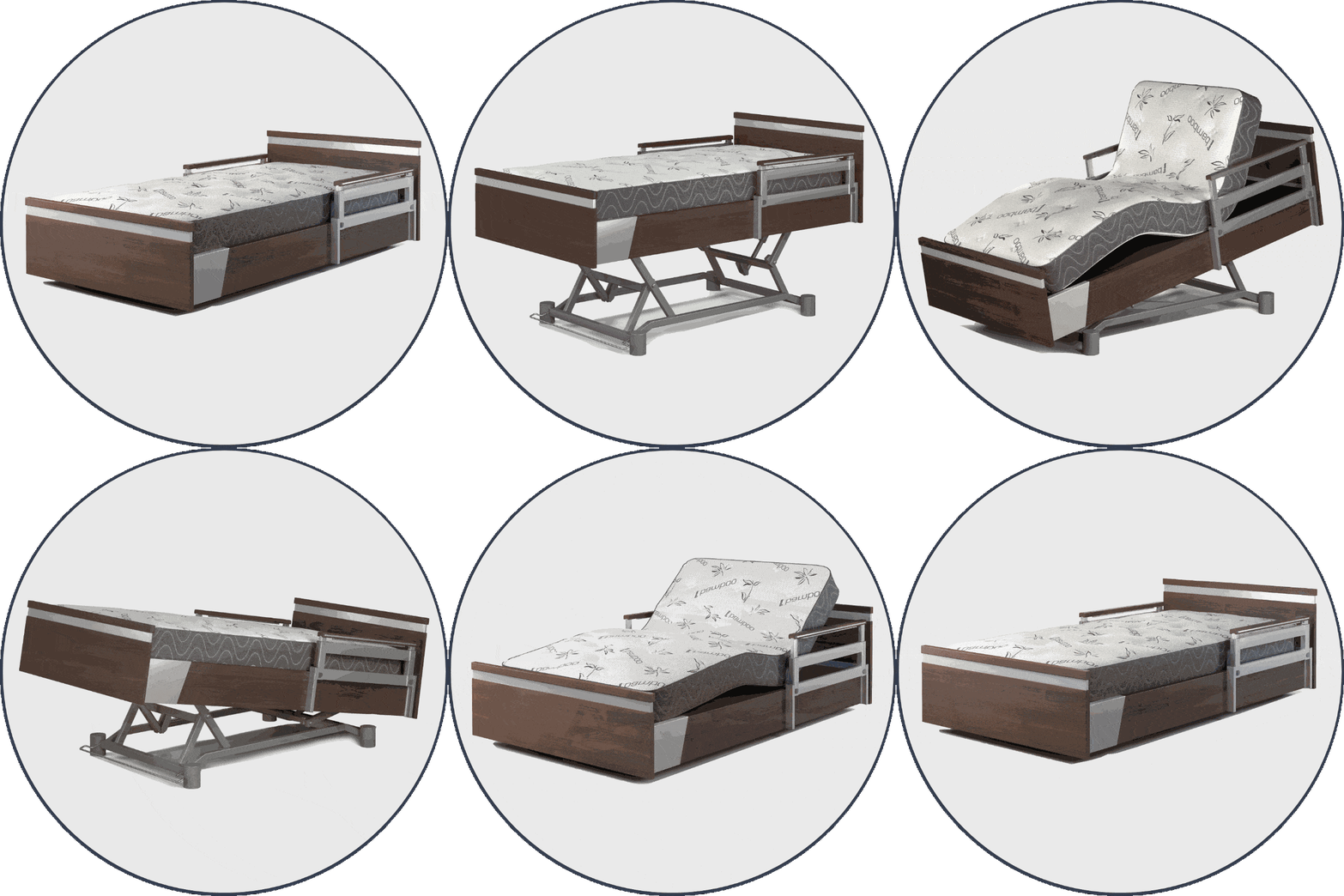
One cost category that’s actually lower for home care is equipment. A quality home hospital bed is a one-time purchase that serves your family for years. The Impulse Essential bed starts at $3,999 and provides head, knee, and hi-lo adjustability, a residential comfort bed suitable for many aging in place home modifications. For families who need full hospital-grade capabilities, the Aura Premium home hospital bed at $6,999 includes FallSafe ultra-low height (10″ platform), Trendelenburg positioning, Zero Gravity, and Cardiac Chair functions, all certified to International Hospital Standard.
Compare those one-time costs to a nursing home’s monthly fees. A single month in a semi-private nursing home room ($9,583) exceeds the cost of the Aura Premium bed. Over a year, a family choosing home care with the right equipment can redirect tens of thousands of dollars toward direct caregiving hours instead of facility overhead.
Making the Right Home Care vs Nursing Home Cost Decision for Your Family
The best financial decision isn’t always the cheapest option on paper. It’s the one that matches your parent’s care needs, respects their dignity, and is sustainable for your family over time.
Here’s a practical framework:
- Under 8 hours of daily care: Home care is almost always cheaper and allows your parent to stay in familiar surroundings. Pair part-time care with proper equipment like the Aura Premium bed to maximize safety during unsupervised hours, the FallSafe ultra-low height reduces fall risk when no one else is in the room.
- 8-12 hours of daily care: Home care costs approach but generally remain below nursing home rates. This is the window where many families supplement paid care with their own involvement. Consider whether the caregiving load is sustainable for you.
- 12+ hours of daily care: Costs begin to match or exceed nursing home rates. Evaluate whether the clinical intensity of care (wound management, complex medication schedules, behavioral supervision) requires the nursing staff density that a facility provides.
- 24/7 supervision required: A nursing home is typically the more financially viable option, though some families split the difference with a combination of paid daytime care and overnight facility stays or family coverage.
The national trend is clear and accelerating: more families, more insurers, and more government programs are choosing home-based care. Medicaid’s 62.5% HCBS spending share6, the insurance industry’s shift toward home health claims9, and the growing body of evidence showing comparable outcomes at lower cost34 all point in the same direction.
If you’re leaning toward keeping your parent at home, the right equipment makes a measurable difference. A hospital-grade bed with proper positioning capabilities isn’t just about comfort, it reduces fall risk, supports caregiver ergonomics during transfers, and can delay or prevent the need for higher levels of care. Learn more about setting up a hospital-grade bedroom at home or explore how to choose a home hospital bed for a detailed buyer’s guide.
The Bottom Line on Home Care vs Nursing Home Cost
For most families, home care costs less than a nursing home when care needs are moderate, roughly 44 hours per week or less. At 2025 national medians, that’s about $80,080 per year for home care compared to $114,975 for a semi-private nursing home room. The savings can be substantial, and the quality-of-life benefits of staying home are difficult to put a dollar value on.
But the home care vs nursing home cost equation is deeply personal. Your state, your parent’s condition trajectory, the availability of family support, and the hidden costs of informal caregiving all factor in. Don’t make this decision based on national averages alone.
What you can control is how you set up the home care environment. The right care for an elderly parent after hospital discharge starts with proper equipment, a realistic budget, and a plan that accounts for how needs will change over time. If you’d like help thinking through what equipment makes sense for your situation, speak with a SonderCare expert, no pressure, just guidance from people who’ve helped thousands of families navigate exactly this decision.
References
- CareScout (formerly Genworth). Cost of Care Survey, 2025. National and state-level median costs for home care and nursing home care. https://www.carescout.com/cost-of-care
- CareScout (formerly Genworth). Cost of Care Survey, 2024. Year-over-year cost trend data for home health aides and nursing facilities. https://www.carescout.com/cost-of-care
- Werner, R. M., Coe, N. B., Qi, M., & Konetzka, R. T. (2019). Patient Outcomes After Hospital Discharge to Home With Home Health Care vs to a Skilled Nursing Facility. JAMA Internal Medicine, 179(5), 617-623. DOI: 10.1001/jamainternmed.2018.7998
- The Cost-Effectiveness of Homecare Services for Adults and Older Adults: A Systematic Review. International Journal of Environmental Research and Public Health, 2023. PMC9960182
- Bureau of Labor Statistics. Occupational Employment and Wage Statistics: Home Health and Personal Care Aides, 2019-2024. Cumulative wage growth of 38.11%.
- Mathematica/CMS. Medicaid Expenditures for Long-Term Services and Supports, FY 2020. HCBS accounted for 62.5% ($124.6B) of total LTSS spending ($199.4B).
- AARP Public Policy Institute. Valuing the Invaluable: 2023 Update. Estimated annual economic value of informal caregiving at $600 billion (2021 data, replacement cost methodology).
- Health and Retirement Study (HRS). Out-of-pocket spending and dementia impact data. Median monthly OOP nursing home cost of $1,465; 82.5% of income.
- Society of Actuaries. Long-Term Care Insurance COVID-19 Impact Study, 2021. Average LTCI claim of $180,000; shift in claim situs toward home health care settings reported by 10 companies.
- Kaiser Family Foundation (KFF). State Medicaid Program Survey, FY 2024-2025. Majority of states increased HCBS provider rates in FY 2024, with planned increases in FY 2025.