





Linda changed her father’s sheets every morning for six weeks before she noticed the problem wasn’t the sheets. It was the mattress. Her 82-year-old dad had come home from a hip replacement with a basic foam hospital mattress — the thin, vinyl-covered kind that smells like a doctor’s office and traps heat like a plastic bag. By week three, he was refusing to stay in bed. By week six, she found two angry red marks on his sacrum that wouldn’t fade when pressed.
She had been so focused on medications, physical therapy appointments, and repositioning schedules that the mattress for her bedridden father never crossed her mind. It should have been the first thing she addressed.
If you’re caring for someone who spends most or all of their day in bed, the best mattress for bedridden patients isn’t a luxury purchase. It’s a clinical decision that directly affects skin health, pain levels, sleep quality, and your loved one’s willingness to stay in the bed that keeps them safe. The annual cost of hospital-acquired pressure injuries in the United States alone exceeds $26.8 billion, and a single wound can cost anywhere from $500 to over $70,000 to treat depending on severity.1 Even more sobering, a national trends analysis found that 17.22% of deaths with documented pressure injuries between 1999 and 2021 occurred in a home setting — not a hospital.2 The right mattress is your first line of defense.
This guide walks you through exactly how to choose a mattress based on your family member’s specific care needs — not based on which product has the most Amazon reviews.
Explore SonderCare’s full mattress collection designed specifically for home hospital beds
Why a Standard Mattress Fails Someone Who Stays in Bed All Day
A mattress designed for eight hours of sleep and a mattress for someone who stays in bed all day are fundamentally different products solving different problems.
Consumer mattresses — even expensive ones — are engineered for overnight use. They assume the sleeper shifts position naturally 20 to 40 times per night, distributing pressure across the body without conscious effort. They assume the user gets up, walks around, and gives the mattress time to recover its shape during the day.
None of that applies when someone is bedridden.
A person confined to bed faces three compounding risks that a standard mattress cannot address:
Sustained pressure concentration. When body weight presses soft tissue against a mattress surface for hours without relief, blood flow to that tissue slows or stops. A 2020 prospective cohort study in PLOS ONE found that patients on standard non-pressure-redistributing foam mattresses developed significantly more pressure injuries than those on viscoelastic memory foam surfaces designed for pressure redistribution.3 The difference wasn’t marginal — it was clinically meaningful.
Microclimate breakdown. The temperature and humidity trapped between skin and mattress surface — called the microclimate — plays a larger role than most caregivers realize. Research published in the International Wound Journal found that elevated sacral skin temperatures directly correlate with increased tissue damage scores across skin, fat, and muscle layers.4 Vinyl-covered hospital mattresses are among the worst offenders, creating a warm, moist environment that weakens the skin’s protective barrier.
Shear forces during repositioning. Every time you adjust your loved one’s position (which should happen every two hours), their skin drags against the mattress surface. Cheap covers with high friction coefficients make this worse, causing microscopic tears that compound over days and weeks.
A mattress for a bedridden person needs to address all three factors simultaneously: redistribute pressure, manage microclimate, and minimize shear. Most products on the market address only the first.
The Prevention-to-Treatment Spectrum: Which Mattress Type Fits Your Situation
Here’s a framework that no other mattress guide provides, and it’s the most important decision you’ll make.
Hospital bed mattresses exist on a spectrum from comfort-focused prevention on one end to active wound treatment on the other. Where your loved one falls on that spectrum determines which type of mattress they need.
Comfort-Focused Prevention (No Current Skin Issues)
If your family member has intact skin but is at risk due to limited mobility, age, or extended bed rest, the goal is preventing pressure injuries from ever developing. This is where high-quality foam and hybrid mattresses excel.
The 2019 EPUAP/NPIAP/PPPIA International Clinical Practice Guideline recommends a high-specification reactive foam mattress as the first-line support surface for individuals at risk of pressure injuries — a strong recommendation even though the underlying certainty of evidence is rated low, because the consequences of not providing an appropriate surface are so significant.5 “High-specification” means viscoelastic memory foam that conforms to the body and redistributes pressure across a larger surface area — not the two-inch foam slab that came with the hospital bed.
For prevention, you want a mattress that:
- Distributes body weight across the maximum possible surface area
- Manages heat and moisture at the skin interface
- Flexes properly with hospital bed articulation (head and knee elevation)
- Maintains structural integrity under 24/7 load for years, not months
The SonderCare Comfort Mattress ($899) is built for exactly this scenario. It uses Visco memory foam with cooling gel infusion and a breathable, fluid-proof cover — addressing pressure redistribution and microclimate in a single surface. For families on a budget who still want genuine pressure prevention, it fills the gap between disposable medical supply mattresses and the premium tier.
The Dream Bamboo Quilt-Top ($1,299) adds a bamboo fabric quilt-top layer, which is naturally antimicrobial and temperature-regulating. It’s also reversible, with a softer side and a firmer side. That reversibility matters more than you might think: as a person’s condition changes — weight loss, increased sensitivity, changing mobility — the caregiver can flip the mattress rather than replace it. Bamboo fibers wick moisture more efficiently than synthetic covers, keeping the skin drier during extended bed rest — a factor that directly relates to the microclimate management that clinical research identifies as critical for skin protection.4
Maximum Support Prevention (High Risk, No Active Wounds)
For someone who is heavier, has been bedridden long-term, or has multiple risk factors like diabetes and poor circulation, a foam-only mattress may not provide enough support. This is where hybrid construction becomes relevant.
The SonderCare Signature Hybrid ($1,799) combines individually wrapped pocket coils with high-density foam layers and a copper-infused quilt-top cover. The pocket coils respond independently to body movement, distributing weight more effectively than foam alone — particularly important for patients over 200 lbs where foam can “bottom out” under sustained load.
The copper infusion isn’t marketing fluff. A systematic review and meta-analysis published in Applied and Environmental Microbiology found that copper-impregnated hospital surfaces reduced bacterial burden by more than 90% and healthcare-associated infections by up to 78%.6 In a home care setting where a bedridden person is at elevated risk of skin infections, an antimicrobial mattress cover provides a meaningful additional layer of protection.
At 9 inches deep with ultra-firm foam sides, the Signature Hybrid also provides firm edge support for safer transfers — a detail that matters every single time a caregiver helps their loved one in or out of bed.
Active Wound Treatment (Existing Pressure Injuries)
If your loved one already has a Stage 2 or higher pressure injury, or if they are at very high risk with extremely limited mobility, the clinical evidence supports stepping up to an alternating pressure system.
Alternating pressure mattresses use air bladders that cyclically inflate and deflate, periodically relieving pressure from different body regions. The Cochrane systematic review by Shi et al. found that alternating pressure mattresses reduced pressure injury incidence with a relative risk of 0.63 compared to high-specification foam — a 37% reduction in risk.7 The landmark PRESSURE 2 randomized controlled trial, the largest study of its kind, reported a hazard ratio of 0.76 for alternating pressure mattresses versus high-specification foam during the full follow-up period, with even stronger results (HR 0.66) during the active treatment phase.8 That same trial found that alternating pressure mattresses have a 99% probability of being cost-effective at a willingness-to-pay threshold of 20,000 GBP per quality-adjusted life year gained — making them not just clinically superior but economically justified for high-risk patients.8
The SonderCare Alternating Pressure Air Mattress ($2,999 standard / $3,999 extra wide) uses 18 air bladders — significantly more than the 10 to 12 bladders typical in budget systems priced under $200. More bladders means finer pressure control and smoother transitions between inflation cycles.
One honest note: alternating pressure mattresses are not comfort mattresses. They are medical devices. The PRESSURE 2 trial itself documented that some patients requested removal from alternating pressure mattresses due to discomfort or because the movement hindered their mobility.8 Caregiver forums consistently report that pump noise is a significant quality-of-life concern, especially for family members with dementia or cognitive impairment who may find the shifting sensation distressing. If your loved one does not have active wounds, a high-quality foam or hybrid mattress with diligent repositioning is often the better choice for both skin health and quality of life.
Best Mattress for Bedridden Patients: SonderCare Comparison
Here is how each SonderCare mattress maps to specific patient needs:
| Feature | Comfort Mattress | Dream Bamboo Quilt-Top | Signature Hybrid | Alternating Pressure Air |
|---|---|---|---|---|
| Price | $899 | $1,299 | $1,799 | $2,999 |
| Best For | Prevention, budget-conscious | Temperature-sensitive, moderate risk | Long-term bedridden, heavier patients | Active wound treatment |
| Construction | Visco memory foam | Bamboo quilt-top foam | Pocket coils + foam | 18 air bladders + pump |
| Cooling Technology | Cooling gel | Bamboo + cooling gel | Copper-infused cover | Air circulation |
| Reversible | No | Yes (soft/firm) | Yes (medium/extra firm) | No |
| Fluid-Proof Cover | Yes | Yes | Yes | Yes |
| Antimicrobial | Standard | Bamboo (natural) | Copper-infused | Standard |
| Edge Support | Standard | Standard | Ultra-firm foam sides | N/A |
| Noise | Silent | Silent | Silent | Pump audible |
| Comfort Level | High | Very high | High | Medical-grade (lower) |
| Sizes Available | 39″ Twin XL | 39″ / 48″ Wide | 39″ / 48″ Wide | 39″ / 48″ Wide |
Three things stand out in this comparison that you won’t find anywhere else in the market:
Every model includes a fluid-proof cover. Budget hospital mattresses typically use vinyl covers — cheap to produce, but hot, noisy, and uncomfortable against skin. SonderCare uses breathable stretch fabric that is fluid-proof without trapping heat. This directly addresses the microclimate problem that research links to pressure injury development.4
Three of four models are silent. Pump noise from alternating pressure systems is one of the top complaints in caregiver forums. If your loved one doesn’t need active wound treatment, the foam and hybrid options deliver genuine pressure relief without any mechanical noise disrupting sleep.
Two models offer reversible firmness. Conditions change. A person who needs a softer surface today may need firmer support after weight loss or a change in medication. Reversibility extends the useful life of the mattress and adapts to evolving care needs without an additional purchase.
What Makes a Hospital Bed Mattress Different From a Regular Mattress
This is the question caregivers ask most often, and the answer reveals why the best mattress for bedridden patients can’t simply be a consumer mattress placed on a hospital bed frame.
Articulation Compatibility
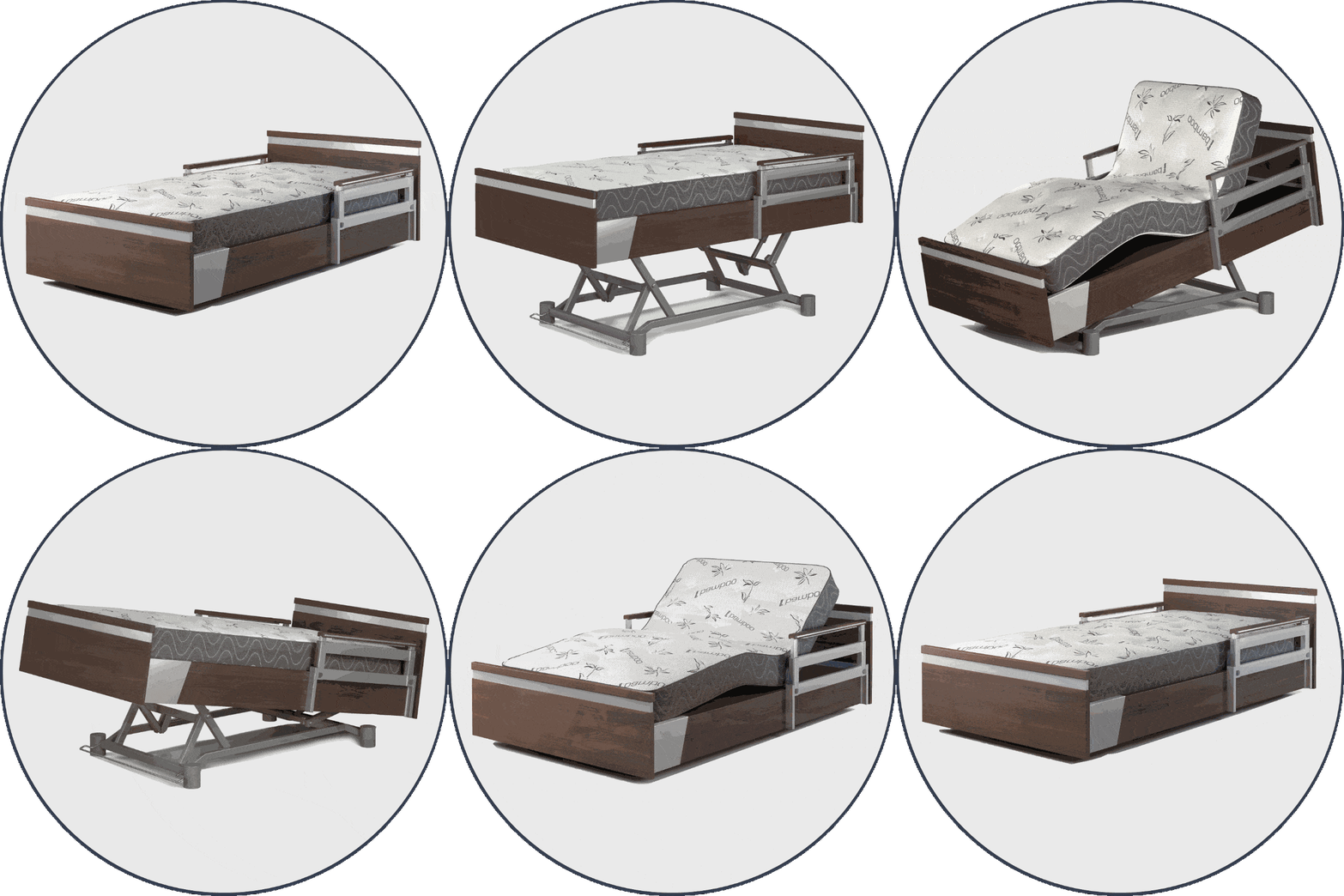
Hospital beds elevate the head section, raise the knee section, and adjust to positions like Cardiac Chair and Zero Gravity. The mattress must flex at these hinge points without bunching, sliding, or creating pressure ridges.
Standard consumer mattresses — especially thick ones over 10 inches — resist bending at the articulation points. Innerspring mattresses are even worse: the coils fight the bed’s movement, creating uncomfortable ridges at the hinge points that concentrate pressure on exactly the areas most vulnerable to breakdown.
SonderCare mattresses are designed to work with SonderCare hospital bed frames and their full positioning suite: Trendelenburg, Zero Gravity, Cardiac Chair, and Comfort Chair positions. The foam density, thickness, and construction are calibrated to flex at the right points without creating gaps or pressure ridges. This is the kind of detail that only matters when a mattress and bed frame are engineered as a system — and it’s a detail no consumer mattress manufacturer has any reason to address.
24/7 Durability
Consumer mattresses are stress-tested for nightly use — roughly 2,900 hours per year. A mattress for someone who stays in bed all day bears load for up to 8,760 hours per year, three times the designed duty cycle of a consumer product. Foam density, coil gauge, and cover durability must be specified for continuous use, not intermittent use.
The scope of this problem extends even to professional healthcare settings. A peer-reviewed audit of 727 hospital mattresses found that approximately 72% had visible damage, and 47% required either repair or immediate replacement.9 A separate industry audit of over 33,000 support surfaces in nursing homes found that more than half needed immediate replacement due to holes, tears, thinning, or compression.10 If institutional-grade mattresses under professional maintenance protocols degrade this quickly, budget home mattresses under 24/7 load fare even worse.
Sizing
Hospital bed mattresses use Twin XL dimensions (typically 36″ or 39″ x 80″), not standard consumer bed sizes. SonderCare offers both 39″ standard and 48″ extra wide options across most models, fitting their corresponding bed frames precisely.
Addressing the Real Concerns Caregivers Have
After reviewing hundreds of forum threads and caregiver community discussions, these are the questions that keep coming up — and the honest answers.
“My loved one overheats constantly. Will a hospital bed mattress make it worse?”
It depends entirely on the mattress. Budget hospital mattresses with vinyl covers are notorious for trapping heat. This is a real clinical concern, not just a comfort complaint — elevated skin temperature increases pressure injury risk.4
All SonderCare mattresses address this with cooling gel infusion and breathable fluid-proof covers. The Dream Bamboo Quilt-Top goes further with bamboo fibers that naturally regulate temperature, and the Signature Hybrid uses a copper-infused cover that conducts heat away from the body. If overheating is a primary concern, either of these two options will perform meaningfully better than any vinyl-covered alternative.
“Will Medicare cover a good mattress?”
Medicare Part B covers pressure-reducing mattresses as durable medical equipment when prescribed by a physician for documented medical necessity. The coverage system uses a tiered group structure. Group 1 covers basic non-powered foam and static air overlays for at-risk patients. Group 2, governed by Local Coverage Determination LCD L33642, covers powered systems like alternating pressure and low-air-loss mattresses — but only when the patient meets strict clinical criteria, including documented complete immobility and either multiple Stage II ulcers that haven’t improved after a one-month trial of a Group 1 surface and comprehensive wound care, or a Stage III or Stage IV pressure injury on the trunk or pelvis.11
Here’s the honest truth: Medicare coverage typically extends to basic foam and alternating pressure mattresses in the $150 to $500 range. Premium comfort mattresses like SonderCare’s Comfort, Dream, or Signature Hybrid fall outside typical Medicare reimbursement because Medicare classifies advanced comfort features as non-essential.
Families who choose a premium pressure relief mattress for elderly loved ones are making a private-pay decision — and they’re choosing comfort, durability, and dignity over the minimum clinical standard. Many families find this worthwhile when they compare the cost of a quality mattress ($899 to $1,799) against the cost of treating a single pressure injury, which can range from $500 to over $70,000 per wound.1
“Can I just put a good topper on the mattress that came with the bed?”
This is one of the most common mistakes caregivers make. Layering a foam topper on top of an existing mattress actually interferes with pressure redistribution by adding height that can compromise bed rail effectiveness, creating an unstable surface that shifts during repositioning, and reducing the effectiveness of alternating pressure systems if one is used underneath.
The 2019 International Pressure Injury Guideline specifically addresses this: a single, properly specified support surface outperforms stacked layers of lesser products.5 If the mattress that came with the bed isn’t adequate, replace it with a proper one rather than trying to patch it.
“The pump noise from alternating pressure mattresses is driving us crazy.”
This is the single most common complaint in caregiver forums about alternating pressure systems, and it’s a real barrier to sustained use. The PRESSURE 2 trial — the largest randomized controlled trial comparing alternating pressure mattresses with high-specification foam — documented that patient discomfort and disruption were meaningful enough that some participants requested to be removed from the alternating pressure arm of the study.8
If your loved one is at the prevention stage (no active wounds), the solution is straightforward: don’t use an alternating pressure mattress. A high-quality foam or hybrid mattress like the Comfort Mattress, Dream Bamboo Quilt-Top, or Signature Hybrid provides genuine pressure redistribution in complete silence. Reserve alternating pressure for situations where it’s clinically necessary — active wound treatment or very high-risk patients who cannot be repositioned frequently enough.
The Gap Nobody Talks About: Premium Comfort for Home Hospital Beds
Search for “best mattress for bedridden patients” and you’ll find two categories of products:
Budget medical supply mattresses ($50 to $400). Basic foam pads, thin alternating pressure overlays, and vinyl-covered hospital mattresses from medical supply companies. Functional but uncomfortable for extended use. Designed for institutional cost efficiency, not home comfort. And as the audit data shows, even in professional facilities more than half of support surfaces are damaged enough to need immediate replacement10 — imagine how quickly a budget product degrades under 24/7 home use.
Consumer luxury mattresses ($1,000 to $3,000+). Memory foam, hybrid, and adjustable mattresses from brands you see advertised during football games. Comfortable, but not designed for hospital bed frames, not specified for 24/7 use, and lacking medical-grade features like fluid-proof covers and proper articulation compatibility.
Between these two categories sits an unserved gap: premium comfort mattresses engineered specifically for home hospital beds. Mattresses that provide the pressure redistribution of a medical surface, the comfort of a quality consumer mattress, and the durability to withstand years of continuous use — all in a form factor designed to work with hospital bed positioning features.
That’s the tier SonderCare occupies with the Comfort Mattress, Dream Bamboo Quilt-Top, and Signature Hybrid. And it’s a tier that, as of today, no other manufacturer fills.
For families who have already invested in a quality home hospital bed, settling for a $175 mattress undermines the entire purpose of that investment. The mattress is the surface your loved one’s body contacts 24 hours a day. It deserves the same level of thoughtfulness as the bed frame beneath it.
Building a Complete Sleep Surface: Mattress + Bed Frame Synergy
A mattress doesn’t work in isolation. The positioning capabilities of the bed frame underneath directly affect how well any mattress performs.
Consider a common scenario: your family member needs to eat meals in bed. Without proper head elevation, they risk aspiration. The bed’s Cardiac Chair position elevates the head and bends the knees, creating a stable seated posture. But if the mattress doesn’t flex smoothly at those hinge points, it creates pressure ridges at the bend — exactly where the body concentrates weight.
SonderCare’s positioning suite includes Zero Gravity (a NASA-inspired neutral body position that minimizes spinal pressure), Trendelenburg (tilting the entire bed for circulation), and Comfort Chair (a relaxed seated position for reading or television). Each position changes where and how pressure distributes across the mattress surface. A mattress designed for these positions responds predictably. A consumer mattress or cheap overlay guesses.
For caregivers, the bed’s Hi-Lo adjustment (raising and lowering the entire frame from 10 to 39 inches) affects transfer safety. The Signature Hybrid’s ultra-firm foam edge support means the mattress doesn’t compress when a person sits on the edge during transfers — a small detail that significantly reduces fall risk during one of the most dangerous moments in daily care.
If you’re evaluating hospital beds alongside mattresses, our guide to preventing bed sores in elderly family members at home covers the complete repositioning protocol that works alongside a proper support surface.
Daily Care Beyond the Mattress
The best mattress for bedridden patients is necessary but not sufficient. Even a premium support surface requires the caregiver to maintain a complete skin protection routine.
Repositioning schedule. Every two hours during the day, using a 30-degree lateral tilt rather than full side-lying to redistribute pressure without concentrating it on the hip. On a high-quality support surface, nighttime intervals may safely extend to three to four hours — but monitor the skin and adjust based on what you observe.5
Skin inspection. Check pressure points (sacrum, heels, hips, shoulder blades) at every repositioning. Look for non-blanchable redness — a spot that stays red when you press it and release. On darker skin tones, look for areas that appear darker, feel warmer, or feel firmer than surrounding tissue.
Mattress inspection. Check your mattress cover at least weekly for rips, tears, or holes. If the cover is damaged, discontinue use — manufacturer guidance is explicit that a compromised cover renders the mattress unsafe and ineffective, and if fluids have penetrated to the internal foam, the mattress must be discarded entirely as internal components cannot be cleaned.12
Moisture management. Incontinence is the number one accelerant of skin breakdown. A fluid-proof mattress cover protects the mattress itself, but the person’s skin needs protection too. Change soiled linens immediately, use a barrier cream on vulnerable areas, and consider a breathable fluid-proof mattress cover ($169 for 39″ / $199 for 48″) as an additional protective layer that won’t trap heat.
Nutrition. Adequate protein intake and hydration directly affect skin resilience. A registered dietitian can help optimize nutrition for wound prevention — this is one of the most overlooked factors in home care.
How to Decide: A 3-Question Framework
If you’re overwhelmed by the options, answer these three questions:
1. Does your loved one have any current skin breakdown or pressure injuries?
- Yes: You need an alternating pressure system. The SonderCare Alternating Pressure Air Mattress ($2,999) with 18 air bladders provides clinical-grade treatment. Consult with their physician or wound care nurse to confirm.
- No: Continue to question 2.
2. How many hours per day does your loved one spend in bed?
- 8 to 16 hours: The Comfort Mattress ($899) provides solid prevention-grade pressure redistribution at the most accessible price point.
- 16 to 24 hours: The Dream Bamboo Quilt-Top ($1,299) adds superior temperature management and reversible firmness for extended use. Ideal for someone who is temperature-sensitive or whose needs are evolving.
- 24 hours or near-total bed confinement: The Signature Hybrid ($1,799) provides maximum support with pocket coil technology, copper antimicrobial protection, and firm edge support for safe transfers. Built for the demands of full-time use.
3. What matters most beyond pressure relief?
- Budget: Comfort Mattress ($899)
- Temperature regulation: Dream Bamboo Quilt-Top ($1,299)
- Maximum support and durability: Signature Hybrid ($1,799)
- Active wound treatment: Alternating Pressure Air ($2,999)
Find the right mattress for your loved one’s needs — explore the full SonderCare collection
Frequently Asked Questions
Can you use a regular mattress on a hospital bed?
You can, but you probably shouldn’t. Standard mattresses don’t flex properly at hospital bed articulation points, creating pressure ridges at the head and knee hinge areas. They also lack fluid-proof covers, aren’t rated for 24/7 use, and may be too thick for bed rails to function safely. A mattress designed for hospital bed use eliminates all of these concerns.
How often should you replace a hospital bed mattress?
With quality construction, a hospital bed mattress should last three to five years under continuous use. Signs it needs replacement: visible permanent body impressions deeper than one inch, loss of pressure redistribution (the person can feel the bed frame through the mattress), cover damage that compromises fluid protection, or persistent odor that doesn’t resolve with cleaning. Given that peer-reviewed audits found 72% of hospital mattresses in professional facilities had visible damage9, home caregivers should inspect their mattress weekly and not assume it will last indefinitely.
What’s the difference between pressure relief and pressure redistribution?
These terms are often used interchangeably, but there’s a clinical distinction. Pressure redistribution spreads body weight across a larger area (what foam and hybrid mattresses do). Pressure relief periodically removes pressure entirely from specific areas (what alternating pressure mattresses do). For prevention, redistribution is typically sufficient. For active wound treatment, relief may be necessary.
Is a thicker mattress better for a bedridden person?
Not necessarily. A thicker mattress can interfere with bed rail height, making them less effective for fall prevention. It can also make hospital bed positioning less responsive. The optimal thickness balances pressure redistribution with bed compatibility — typically 6 to 9 inches for hospital bed use. The SonderCare Signature Hybrid at 9 inches represents the upper end of the compatible range.
Making the Right Decision for Your Family
David’s mother had been in a rented hospital bed for seven months with a basic foam mattress when he found this guide. She wasn’t in pain, exactly, but she complained constantly about heat, about the mattress feeling “dead” beneath her, about the way the vinyl cover stuck to the fitted sheet. He’d assumed that discomfort was just part of being bedridden. It wasn’t.
He replaced the mattress with a Dream Bamboo Quilt-Top and noticed the difference within the first week. She slept longer. She complained less about heat. And the reversible firmness meant that when she lost weight after a medication change two months later, he flipped the mattress to the softer side without buying a new one.
The mattress your loved one spends their days and nights on is not a minor detail. It’s the single surface that touches their body more than anything else in their world. Choosing the best mattress for a bedridden person means matching the mattress to their specific clinical needs, comfort preferences, and the reality of 24/7 use in a home setting — not a hospital ward.
SonderCare builds mattresses for exactly this situation: premium comfort with medical-grade pressure redistribution, designed to work with hospital bed frames, and built to last under continuous use. Because the person in that bed deserves better than the minimum clinical standard.
Speak with a SonderCare mattress specialist to find the right fit for your loved one’s needs
References
-
Padula WV, Delarmente BA. The national cost of hospital-acquired pressure injuries in the United States. International Wound Journal. 2019;16(3):634-640. https://pmc.ncbi.nlm.nih.gov/articles/PMC7948545/
-
Bin Naeem F, et al. National trends in deaths with documented pressure injuries in the United States from 1999 to 2021. Discover Health Systems. 2026. https://link.springer.com/article/10.1007/s44250-026-00351-w
-
Serraes B, et al. Relationship between a pressure redistributing foam mattress and pressure injuries: An observational prospective cohort study. PLOS ONE. 2020;15(12):e0241276. https://journals.plos.org/plosone/article?id=10.1371/journal.pone.0241276
-
Zeevi T, et al. Effects of ambient conditions on the risk of pressure injuries in bedridden patients — multi-physics modelling of microclimate. International Wound Journal. 2021;18(3):309-322. https://pmc.ncbi.nlm.nih.gov/articles/PMC7949503/
-
European Pressure Ulcer Advisory Panel, National Pressure Injury Advisory Panel, Pan Pacific Pressure Injury Alliance. Prevention and Treatment of Pressure Ulcers/Injuries: Clinical Practice Guideline. 4th ed. 2019; updated 2025. https://www.internationalguideline.com/the-international-guideline
-
Coppin JD, et al. Self-disinfecting copper beds sustain terminal cleaning and disinfection effects throughout patient care. Applied and Environmental Microbiology. 2019;86(1):e01886-19. https://pmc.ncbi.nlm.nih.gov/articles/PMC6912075/
-
Shi C, et al. Alternating pressure (active) air surfaces for preventing pressure ulcers. Cochrane Database of Systematic Reviews. 2021. https://pmc.ncbi.nlm.nih.gov/articles/PMC8108044/
-
Nixon J, et al. Comparing alternating pressure mattresses and high-specification foam mattresses to prevent pressure ulcers in high-risk patients: the PRESSURE 2 RCT. Health Technology Assessment. 2019;23(52). https://pubmed.ncbi.nlm.nih.gov/31559948/
-
Surface Medical. Uncovering the rates of damaged patient bed and stretcher mattresses. Canadian Journal of Infection Control. 2018. https://cleanpatch.ca/wp-content/uploads/2020/08/Surface-Medical-Publication-in-Canadian-Journal-of-Infection-Control-Fall-2018.pdf
-
Medline Industries. Support surface audit of over 33,000 mattresses in nursing home facilities. 2019. https://trinityguardion.com/hospital-bed-reprocessing-failures/
-
Centers for Medicare & Medicaid Services. LCD – Pressure Reducing Support Surfaces – Group 2 (L33642). https://www.cms.gov/medicare-coverage-database/view/lcd.aspx?lcdid=33642
-
Stryker. Impression Non-Powered Mattress Operations/Maintenance Manual. https://techweb.stryker.com/Support_Surfaces/2980/2980-009-001E.pdf