









Most families don’t go looking for the term “activities of daily living.” They arrive at it through a moment: a parent who can’t quite get out of the bathtub anymore, who’s been wearing the same clothes for three days, or who has a fall on the way to the bathroom at night. You search the worry, my mother can’t bathe herself, and you discover there’s a framework clinicians have used for sixty years to make sense of exactly that worry.
That framework is Activities of Daily Living (ADLs). Understanding it turns a vague, frightening sense that “Mom is slipping” into something you can measure, document, and act on. This guide explains what ADLs are, how they differ from the equally important IADLs, how to assess them honestly at home, and, most importantly, what specific changes in the home can keep your parent safe and independent for longer.
What Are Activities of Daily Living (ADLs)?
Activities of daily living are the fundamental self-care tasks a person must perform to live independently. The concept was formalized by Dr. Sidney Katz and colleagues in 1963, and the Katz Index of Independence in Activities of Daily Living remains the most widely used clinical measure today.1
The Katz Index defines six basic ADLs, listed here in the order people typically lose them:
- Bathing, washing the body in a tub, shower, or sponge bath
- Dressing, selecting clothing and getting dressed and undressed
- Toileting, getting to and from the toilet and managing hygiene
- Transferring, moving in and out of a bed or chair
- Continence, controlling the bladder and bowels
- Feeding, getting food from a plate to the mouth (not cooking it)
These are the tasks of survival and dignity. When a person can do all six on their own, they’re considered independent; when they need help with one, it’s a signal worth watching; when they need help with several, it usually means a meaningful step up in care. ADL status isn’t just medical shorthand, in most states, needing help with two or more ADLs is the threshold that determines eligibility for Medicaid-funded long-term care.2
ADLs vs. IADLs: The Difference That Matters Most
The single most common question caregivers ask is the difference between ADLs and IADLs, and the answer is genuinely useful.
If ADLs are the floor of independence (the basic body-care tasks), Instrumental Activities of Daily Living (IADLs) are the ceiling, the more complex skills required to run a household and a life. The Lawton-Brody scale, published in 1969, defines eight IADLs: using the telephone, shopping, preparing meals, housekeeping, doing laundry, arranging transportation, managing medications, and handling finances.3
Here’s why the distinction matters so much: IADLs almost always fail first, often years before basic ADLs. A parent who is still bathing and dressing independently but has started missing bill payments, double-dosing or skipping medications, or letting the refrigerator go empty is showing the earliest detectable signs of decline. Research consistently finds that IADL impairment precedes ADL loss and is one of the first measurable markers separating normal aging from early cognitive impairment and dementia.4
The practical takeaway: don’t wait for a bathing crisis. When the instrumental tasks start slipping, that is the moment to schedule a medical evaluation and begin planning, not to dismiss it as “just getting older.”
The Six Basic ADLs, One by One
Each ADL fails differently, and each points to a different set of solutions at home.
Bathing, the sentinel event. Across large longitudinal studies, bathing is the most commonly impaired ADL: in one 14-year study of previously healthy older adults, bathing limitation reached 11.1% prevalence, higher than any other task.5 Bathing is usually the first ADL to require hands-on, intimate assistance, and it carries real danger, wet surfaces, transfers in and out of a tub, and the risk of falls. When bathing becomes difficult, it’s the clearest signal that your parent’s care needs are accelerating, and the cue to add grab bars, a shower chair, and non-slip surfaces immediately.
Dressing. Difficulty here often shows up as wearing the same outfit repeatedly, clothes that are inside-out or unfastened, or visible frustration. Adaptive clothing (elastic waists, Velcro closures, front-fastening tops) and laying out garments in the order they go on can preserve independence for months.
Toileting. One of the most emotionally charged ADLs for both parent and adult child. Nighttime bathroom trips are a leading fall scenario; a raised toilet seat, a bedside commode, and a clear, well-lit path from bed to bathroom dramatically reduce risk.
Transferring. Moving safely in and out of bed or a chair is the hinge that determines whether the other ADLs are even possible. This is also where caregivers most often hurt themselves. The height of the bed matters enormously: a bed that adjusts to the right height makes a transfer safe instead of dangerous, for both people.
Continence. Incontinence drives some of the highest caregiver burden of any ADL and is a frequent trigger for moving to facility care.6 Protective bedding, a manageable laundry system, and easy bathroom access help families sustain home care longer.
Feeding. Typically the last ADL lost. Note the distinction: feeding means physically eating, not cooking (which is an IADL). When feeding assistance is needed, supervision is usually required for much of the day.
Notably, the two most physically intimate, highest-frequency tasks, feeding and toileting, are the ones most strongly associated with caregiver strain, which is exactly why the right equipment and a sustainable routine matter so much.6
How to Assess Your Parent’s ADLs at Home
You don’t need a clinician to start. Using the logic of the Katz scale, go through each of the six ADLs and rate your parent honestly on a simple four-level scale:
- Independent, does it safely with no help
- Supervision, needs reminders or standby presence
- Partial assist, needs hands-on help with part of the task
- Full assist, cannot do the task at all
Do the same for the eight IADLs. The pattern matters more than any single score: scattered IADL problems with intact ADLs suggest early decline and a window for intervention; multiple ADL problems suggest an immediate need for hands-on support and a safety review.
Two pieces of advice from experienced caregivers: be discreet and unhurried, denial and wounded dignity are common, and a confrontational “assessment” backfires. And write it down with dates. Documented, dated ADL limitations are what physicians, home-care agencies, and Medicaid assessors rely on, and starting the record early protects your options later. A structured fall risk assessment pairs naturally with an ADL review.
What ADL Decline Looks Like Over Time
ADL decline is rarely sudden, it follows a trajectory you can anticipate and plan around.
Nationally, about 16.5% of middle-aged and older U.S. adults have an ADL limitation, but the risk climbs steeply with age. CDC data show that 10.6% of adults 75 and older, and 21.7% of those 85 and older, need help from another person with basic ADLs.7 The inflection point is the 80s: the odds of significant ADL limitation are roughly 2.9 times higher for adults aged 80–89 than for those 65–79, and a dementia diagnosis raises those odds further still.5 If your parent is approaching their late 70s, that’s the time to put adaptive equipment, support systems, and a financial plan in place, before the transition, not during a crisis.
Crucially, decline is not destiny. Trajectory research finds that roughly 45% of older adults show some recovery in functional status over time.8 Strength and balance exercise, occupational therapy, and treating overlooked problems can genuinely reverse decline, not just slow it. One of the most overlooked, low-cost levers is sensory: untreated vision and hearing loss can multiply the risk of ADL disability three- to five-fold, so a current glasses prescription and a hearing check are among the highest-impact things you can arrange.9 Maintaining mobility and strength is central to preserving every ADL.
When ADL Limitations Mean It’s Time for More Support
ADL status is the most reliable tool families have for the hardest question: can my parent still live safely where they are?
A useful rule of thumb: home remains feasible when help can reliably cover bathing, transfers, medications, meals, and fall risk. Day programs and supportive housing help when IADLs are the main gap. Skilled nursing or rehab enters the picture with complex medical needs, frequent falls, or significant cognitive and behavioral risks.
The financial reality shapes the decision. The 2024 Genworth/CareScout Cost of Care Survey put the national median for non-medical home care at about $35 per hour, meaning roughly $80,000 a year for 44 hours a week of help, with state medians ranging from about $25 to $44.10 Because most states require help with two or more ADLs to qualify for Medicaid long-term care, careful, early documentation of ADL limitations directly affects when public support becomes available.2 The same transition is often easier when families have already prepared the home, our guide to caring for an elderly parent after hospital discharge walks through that handoff.
Protecting Yourself: The Caregiver’s Hidden Cost
ADL support is delivered overwhelmingly by family. Informal caregivers provide an estimated 80–90% of all dependency support, and nearly 70% of family caregivers are women.6 That system runs on people who are quietly paying a price.
The evidence is unambiguous: providing 20 or more hours a week of ADL assistance is consistently linked to increased depression, psychological distress, neglected self-care, and worse physical health for the caregiver.11 Caring for a parent with dementia is harder still, because constant supervision and behavioral challenges compound the physical load. Protecting your own health isn’t selfish, it’s what makes sustained care possible. Build in respite, accept help, and use equipment that reduces the physical toll of transfers and repositioning. The single most protective investment many families make is the one that saves the caregiver’s back.
Setting Up the Home to Support Failing ADLs
Here is the connection almost every generic ADL article misses: each failing ADL points to a specific change in the home. Caregivers tend to buy a grab bar after the first bathroom scare, a shower chair after the second, reacting one crisis at a time. Mapping ADLs to the environment lets you get ahead of it.
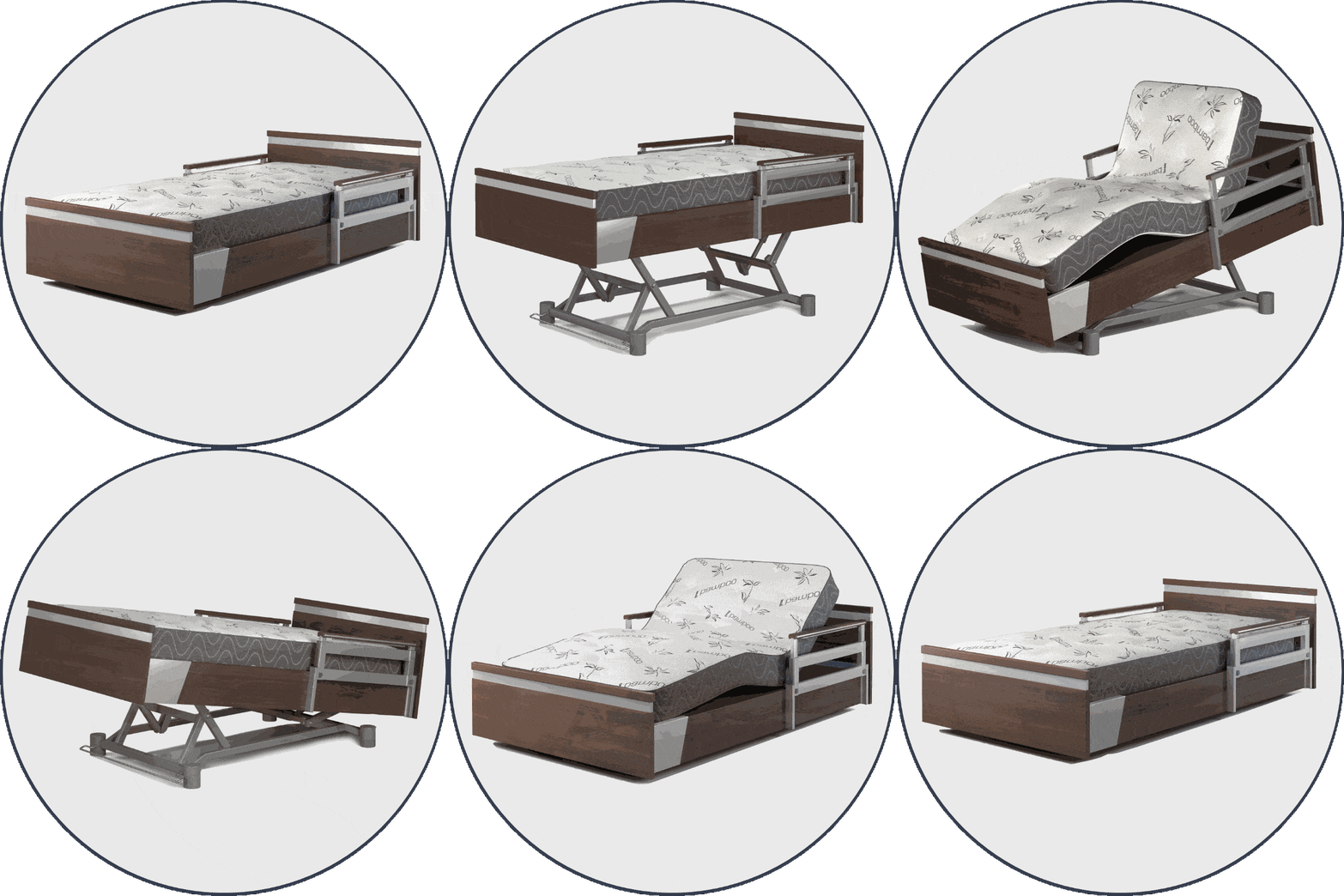
The bedroom is the hub, because transferring, dressing, toileting, and bathing all begin and end at the bed. Bed height is the quiet determinant of safe transfers: too high and your parent can’t get a stable footing; too low and the caregiver bends and strains. A height-adjustable home hospital bed like the SonderCare Aura Premium lowers for a safe, feet-flat stand and raises so a caregiver can assist without injuring their back, directly addressing transferring, the ADL that makes the others possible, while its ultra-low setting reduces fall risk during those nighttime toileting trips.
For continence and pressure concerns that come with longer time in bed, a proper pressure-redistribution mattress protects skin integrity, and the right bed rails and accessories, assist rails, an overbed table, accessible lighting, support dressing, feeding, and safe repositioning. None of this replaces hands-on care, but it makes that care safer and more sustainable for everyone. For the full picture, see our hospital-grade bedroom setup guide.
The Bottom Line
Activities of daily living give you a vocabulary for what you may already sense: the gradual shift from your parent managing on their own to needing your help. Watch the IADLs for the earliest warning, treat bathing difficulty as the signal to act, assess honestly and write it down, and remember that decline can often be slowed or partly reversed. And as needs change, let the home change with them, the right bed and equipment can be the difference between a safe transfer and a fall, and between a caregiver who burns out and one who can keep going.
If you’d like help matching a home setup to your parent’s specific ADL needs, you can speak with a SonderCare expert for personalized guidance.
References
- Katz S, et al. Studies of Illness in the Aged: The Index of ADL. JAMA, 1963; Hartford Institute for Geriatric Nursing, Katz Index of Independence in ADL. https://hign.org/sites/default/files/2020-06/Try_This_General_Assessment_2.pdf
- Medicaid Planning Assistance. What Is “Nursing Home Level of Care” (NFLOC)? https://www.medicaidplanningassistance.org/nursing-home-level-of-care/
- Lawton MP, Brody EM. Assessment of Older People: Self-Maintaining and Instrumental Activities of Daily Living. The Gerontologist, 1969. https://www.sciencedirect.com/science/article/pii/S1836955322000704
- Teng E, et al. / Fu et al. Cognitive impairment and dependency in activities of daily living. Frontiers in Aging Neuroscience, 2025. https://pmc.ncbi.nlm.nih.gov/articles/PMC12719466/
- Oh, Moon & Hong. Longitudinal trends and predictors of limitations in activities of daily living. Frontiers in Public Health, 2024. https://pmc.ncbi.nlm.nih.gov/articles/PMC11673221/
- Choi, Lee & Yu. Exploring Factors Influencing Caregiver Burden: A Systematic Review. Healthcare (Basel), 2024. https://pmc.ncbi.nlm.nih.gov/articles/PMC11121359/
- CDC. QuickStats: Percentage of Adults with Activity Limitations (NHIS). MMWR. https://www.cdc.gov/mmwr/volumes/65/wr/mm6501a6.htm
- Khalili et al. Exploring trajectories of functional decline and recovery among older adults. Scientific Reports, 2024. https://www.nature.com/articles/s41598-024-56606-0
- Yau et al. The prevalence of functional disability and its impact on older adults. Epidemiology and Health, 2022. https://pmc.ncbi.nlm.nih.gov/articles/PMC9754909/
- Genworth & CareScout. 2024 Cost of Care Survey. https://investor.genworth.com/news-events/press-releases/detail/982/genworth-and-carescout-release-cost-of-care-survey-results
- Schulz R, Sherwood PR. Physical and Mental Health Effects of Family Caregiving. American Journal of Nursing, 2008. https://pmc.ncbi.nlm.nih.gov/articles/PMC2791523/