









Here is a finding that stops most caregivers cold: by age 80, more than 60% of women have significant mobility disability, compared to fewer than 40% of men the same age.1 Yet men die from mobility-related events at a 34% higher rate than women.9 Women are more disabled; men die sooner.
This pattern, called the morbidity-mortality paradox, is one of the most consistent findings in geriatric medicine. It is not a minor statistical footnote. It has direct, practical implications for how you plan your parent’s care depending on whether you are supporting a mother or a father.
This guide explains why the paradox exists, what biological and behavioral forces drive it, and what it means for your caregiving decisions at home. Whether your mother recently fell or your father is resisting help after a health scare, understanding these differences helps you prepare for what is actually likely to happen, not just what you fear.
The Paradox: Women Have More Disability, Men Die Sooner
Most people assume that because men die younger, they must be in poorer health throughout their lives. The data tells a different story.
Researchers have tracked the mobility disability gap, defined as the inability to walk a quarter mile or climb a flight of stairs, across large longitudinal studies. The results are consistent and striking. Among women, 22% were mobility-disabled at age 70. By age 90, that figure rose to 81%. Among men in the same cohort, disability was 15% at age 70 and 57% at age 90.1 Women start with more disability, accumulate it faster, and end up with far higher rates at every age.
| Age Group | Women with Mobility Disability | Men with Mobility Disability |
|---|---|---|
| 70–74 years | 25.9% | 16.7% |
| 80–84 years | 50.5% | 35.3% |
| 90 years | 81% | 57% |
Data from Leveille et al. (2000), EPESE cohort.1
The CDC’s population-level disability surveillance confirms the same pattern. Mobility disability is the most prevalent disability type among older adults at 26.9%, and prevalence is consistently higher among women.2
The paradox becomes clear when you add mortality data. Men die at higher rates from their disabling conditions. They do not spend as many years living with disability the way women do. Researchers have found that women live longer but have more years spent with disability.13 A 30-year analysis of disability-free life expectancy showed that between 1982 and 2012, women gained more total life years but those additional years were disproportionately years with disability, creating a growing female disadvantage.14
In plain terms: if you are caring for your mother, you should plan for a long caregiving arc that centers on mobility assistance, fracture prevention, and daily functioning support. If you are caring for your father, you should plan for potential acute crises that may come on rapidly; and may be more life-threatening.
Why Women Have More Mobility Disability
The biological reasons behind the female disability disadvantage come down to three interconnected factors: bone loss from menopause, arthritis, and earlier muscle loss.
Menopause, Bone Loss, and Osteoporosis
The most important single driver of women’s higher mobility disability risk is what happens to bones after menopause. When estrogen levels fall sharply, bone-removing cells become more active while bone-forming cells are suppressed. The result is accelerating bone loss that begins in the early 50s and compounds over decades.
In practical terms: osteoporosis affects approximately one in five women over age 50, but only one in 20 men.4 CDC data from the NHANES study found an age-adjusted osteoporosis prevalence of 19.6% in women aged 50 and older, compared to just 4.4% in men the same age. Among those 65 and older, 27.1% of women had osteoporosis versus 5.7% of men.3 Low bone mass, a precursor to osteoporosis, affected 51.5% of women aged 50 and older.3
The fracture consequences are significant. Hip fracture incidence in women rises from 50 per 100,000 at age 50 to 237 per 100,000 at age 65.5 White women are two to three times more likely to sustain hip fractures than men of the same age.5 For caregivers, a hip fracture is often the moment when a parent who was independently mobile before the event becomes dependent on others for transfers, dressing, and daily movement.
Practically speaking: if your mother has not had a bone density scan (DEXA scan) recently, requesting one is one of the most important steps you can take. Early identification of low bone mass allows for treatment that meaningfully slows the process.
Arthritis: Women Carry 60% of the Global Burden
Arthritis is the leading cause of mobility limitation in older adults, and it affects women disproportionately, especially after menopause. The CDC’s 2022 National Health Interview Survey found that 49.6% of women aged 65 and older had doctor-diagnosed arthritis, compared to 40.7% of men.6 Globally, women account for approximately 60% of osteoarthritis cases, with the sex difference most pronounced for the knee and hand joints.7
Women with osteoarthritis also experience a greater burden of functional limitations than men with the same diagnosis.7 The daily experience, a slow and painful rise from bed, a deliberate grip on the stair rail, a kitchen trip planned to protect an aching knee, is not a single event. It is the daily accumulation of difficulty that defines long-term mobility disability.
Sarcopenia Starts Earlier in Women
Sarcopenia, the age-related loss of muscle mass and strength, begins earlier in women than men. Females face a 20% higher risk of developing sarcopenia, driven in part by the same estrogen decline that accelerates bone loss.8 Muscle and bone loss after menopause compound each other: weaker muscles make fracture consequences worse, and weaker bones make falls more devastating.
Your mother’s ability to catch herself if she starts to fall depends on muscle strength that may be declining faster than in a man her age. Progressive resistance exercise is the most evidence-supported intervention, earlier is better. See our guide to strength training to reduce disability in older adults.
Why Men Have Higher Mobility-Related Mortality
Men’s mobility problems tend to arrive later, hit harder, and more often prove fatal. Understanding why is essential for recognizing a crisis in your father before it becomes irreversible.
Men’s Falls Are More Often Fatal
Women fall more frequently than men. In 2020–2021, 28.9% of women aged 65 and older reported falling in the past year, compared to 26.1% of men.9 Women accounted for 60.4% of nonfatal falls treated in emergency departments.9
But men’s falls kill at higher rates. The fatal fall rate in 2021 was 91.4 per 100,000 for men versus 68.3 per 100,000 for women, a 34% difference.9 More recent 2023 data confirms the same direction: the unintentional fall death rate for adults 65 and older was higher for men (74.2 per 100,000) than women.12
Part of the reason is where and how men fall. Men are more likely to fall outdoors, during higher-intensity activity, getting out of a vehicle, working in the yard, climbing stairs, and more likely to sustain head injuries when they do. Women more often fall indoors during routine activity, tripping on a rug or catching a foot on a step.
When a hip fracture does occur, men face sharply higher mortality. Men are approximately twice as likely as women to die within the first two years after hip fracture surgery (OR 2.28).10 A 2026 meta-analysis confirmed that male sex is a consistent non-modifiable risk factor for one-year mortality after hip fracture.16 A Danish registry study found substantially higher mortality among male hip fracture patients even when controlling for age, fracture type, and other health conditions.11
The caregiving implication: when your father falls, treat it as a potential medical emergency. Even a fall that “seems fine” may carry more serious underlying risk than the same fall in your mother.
Cardiovascular Events, Stroke, and Parkinson’s Disease
Men’s mobility crises are more frequently triggered by life-threatening conditions rather than the musculoskeletal issues that disable women. Heart disease, stroke, and severe COPD are more prevalent in men and are more often fatal than disabling. When they do produce disability, they tend to do so suddenly, a heart attack on a Tuesday, a stroke on a Wednesday, rather than through the gradual erosion that characterizes arthritis and osteoporosis.
Parkinson’s disease is also more common in men, occurring at approximately 1.5 times the rate seen in women. Parkinson’s produces a distinctive mobility challenge: rigidity, shuffling gait, postural instability, and freezing episodes that are quite different from the fall patterns driven by bone fragility. Understanding what causes gait and posture problems in seniors can help you recognize Parkinson’s-related changes early and adapt the home environment accordingly.
Testosterone Decline and Help-Avoidance
Men’s testosterone levels decline 40–50% with age. Men in the lowest quartile of testosterone have a 40% higher risk of falls compared to those in the highest quartile.8 Low free testosterone is also significantly associated with frailty (OR 2.97).8
But behavioral factors amplify the biological ones. Men are more likely to delay seeking medical care, they present to primary care less often but arrive at the hospital sicker when they do. They are more likely to resist walkers, canes, and wheelchairs, framing them as admissions of defeat rather than tools that preserve independence. The result is a compressed disability timeline: problems accumulate unaddressed, then arrive acutely.
If your father resists help, you are not alone in that experience. One caregiving principle supported by the evidence: involving male patients in their own care decisions, explaining the reason behind a recommendation rather than simply providing assistance, produces better rehabilitation engagement.
The Falls Picture: Different Risks, Different Strategies
| Fall Outcome | Women | Men | Source |
|---|---|---|---|
| Annual fall rate (65+) | 28.9% | 26.1% | CDC MMWR 2023 |
| Share of nonfatal fall ED visits | 60.4% | 39.6% | CDC MMWR 2023 |
| Fatal fall rate (2021) | 68.3/100K | 91.4/100K | CDC MMWR 2023 |
| Hip fracture 1–2yr mortality | Reference | OR 2.28 | Wehren et al. 2003 |
The CDC estimates that more than one in four older adults falls each year, and falling once doubles the chance of falling again.15 Each year, approximately 3 million emergency department visits result from falls, with nearly 319,000 hospitalizations for hip fractures.15
For your mother, the strategy centers on reducing both fall frequency and injury severity: bone-strengthening, balance training, grab bars, and a bed that allows safe in-and-out at appropriate height. For your father, the priority is preventing the fall itself; his falls are more often fatal. That means addressing outdoor environments, medication reviews for dizziness, and vision checks.
For the full landscape of common mobility issues in old age affecting your parent, the hub resource in this series covers all the major conditions.
If You’re Caring for Your Mother: What to Expect and Plan For
Women’s mobility disability tends to be the central, long-duration challenge of caregiving. Here is what the evidence says you should prepare for.
Plan for a long arc. Over 60% of women will have meaningful mobility disability by age 80. Unlike men’s more acute events, women’s disability builds gradually through arthritis progression, muscle loss, and fracture risk accumulating over years. Long-term home preparation is warranted.
Treat osteoporosis seriously before a fracture. Confirm your mother has had a recent DEXA scan. If osteoporosis is diagnosed, bone-strengthening medications and calcium and vitamin D supplementation can meaningfully slow progression. Act before a fall happens, not after.
A hip fracture is a turning point. When it occurs, and the lifetime risk for women is high, recovery is variable. Many women regain walker-assisted mobility; a significant number do not return to prior function. Immediately after a hip fracture, the bedroom setup becomes critical: bed height, transfer safety, and fall prevention throughout the home. Our hip fracture recovery bedroom setup guide covers the essential modifications in detail.
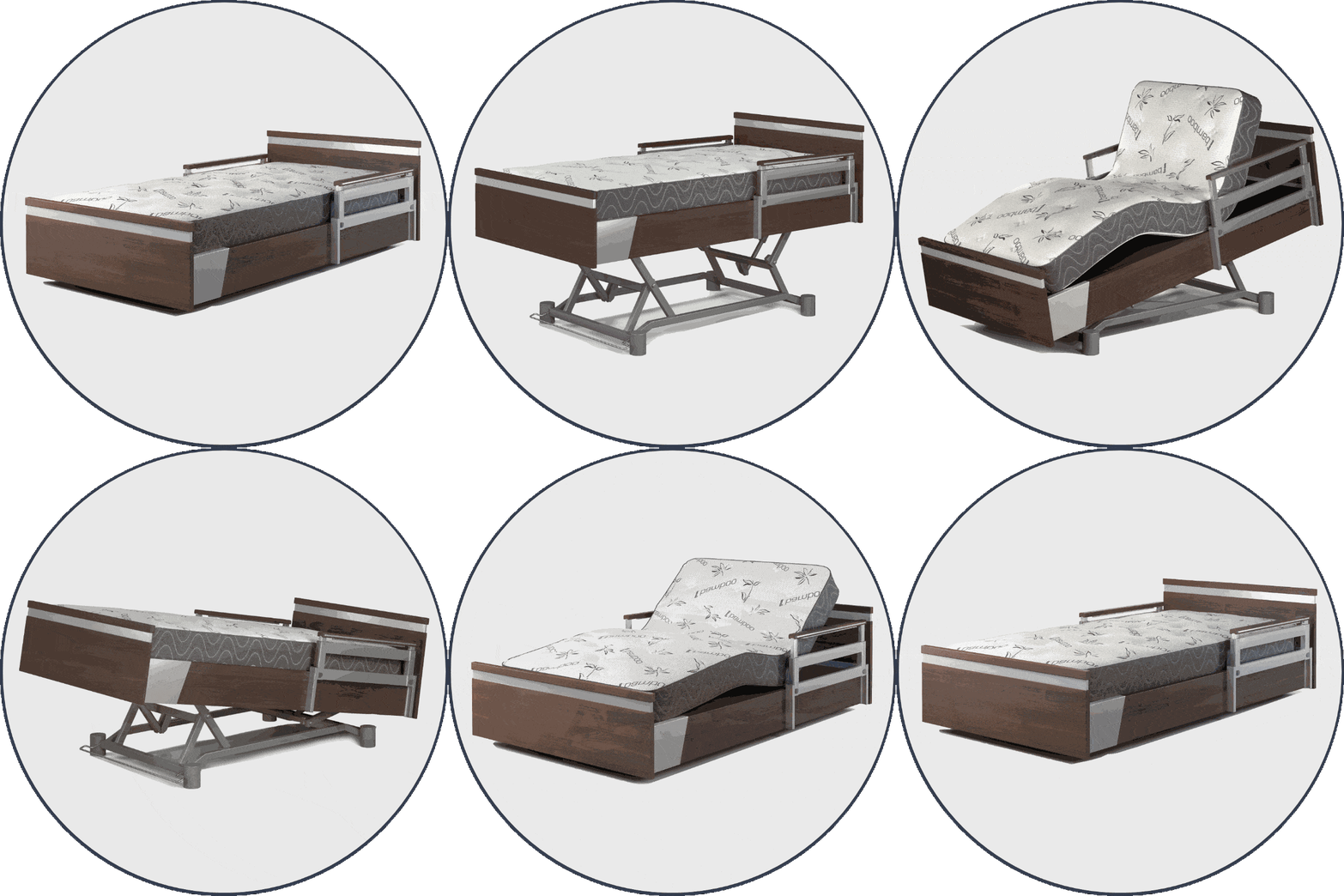
Adjust the bedroom before the crisis. The combination of osteoporosis, arthritis, and muscle weakness means many older women spend increasing time in and around the bed. A height-adjustable care bed becomes a functional necessity earlier than most families anticipate. The Aura Premium home hospital bed adjusts from a 10″ ultra-low platform to a 39″ high position, eliminating the daily strain of getting in and out of a fixed-height bed for someone managing knee or hip arthritis alongside declining muscle strength. Its 21″ pre-programmed transfer height supports safe transfers for caregivers and home health aides.
If You’re Caring for Your Father: What to Expect and Plan For
Men’s mobility decline often arrives differently, more suddenly, more acutely, and more closely connected to life-threatening underlying events.
Treat sudden mobility loss as a medical emergency. A rapid change in your father’s ability to walk or move is more likely to be connected to a cardiovascular event, neurological change, or serious underlying condition than the same change in your mother. Don’t wait for a scheduled appointment.
Resistance to help is behavioral, not just stubbornness. Men who resist walkers, canes, and rehabilitation exercises are often protecting their sense of identity. Direct engagement works better than passive provision, explain why a device helps, involve him in decisions, frame exercise as strength-building rather than compensation for limitation.
Prepare for outdoor fall risk. For your father, outdoor environments, getting in and out of vehicles, navigating uneven walkways, working in the yard, are statistically higher-risk than the bathroom settings that dominate fall-prevention advice. Address these first.
Know the Parkinson’s warning signs. Shuffling steps, reduced arm swing, muscle stiffness, difficulty starting to walk (freezing), and a slight forward lean are early Parkinson’s indicators. These require different management than osteoporosis-related falls. Talk to your father’s doctor if you observe these changes.
Post-event bed setup matters immediately. After a cardiac event, stroke, or neurological diagnosis, your father’s positioning and transfer needs may change overnight. The Aura Premium home hospital bed provides the full positioning suite needed for post-event recovery at home: Cardiac Chair position for respiratory support, Zero Gravity for circulation and pressure relief, and Trendelenburg positioning available under medical supervision. White-glove rush delivery in 1–3 business days means the room can be ready before he comes home.
The disability window may be shorter. Men are more likely to die within months of a major disabling event. End-of-life planning conversations may become relevant sooner than family caregivers of women typically expect.
Practical Steps for Both Parents
Regardless of your parent’s sex, three evidence-based priorities apply.
Fall prevention is the single most modifiable risk factor for both. The mechanisms and circumstances differ, but the priority is the same. Our fall prevention guide for seniors covers complete home safety modifications.
Progressive resistance exercise and daily walking are the most evidence-backed interventions for preserving mobility regardless of sex. Muscle strength loss is slower in people who continue to move. For practical options, see the evidence on strength training to reduce disability in older adults.
Height-adjustable care beds serve both parents, though triggered by different conditions. Women benefit from easier daily get-in/get-out with arthritis and weakening muscles. Men benefit after acute events that change positioning and transfer needs overnight. The Aura Premium home hospital bed addresses both: its FallSafe Ultra-Low Height (10″ platform, 17″ to the top of the mattress) reduces fall risk during transfers, and its full hi-lo range (10″–39″) supports safe caregiver ergonomics for whoever is doing the assisting.
Frequently Asked Questions
Why do women have more mobility problems than men as they age?
Women face a convergence of biological factors that accelerate mobility loss: estrogen decline at menopause speeds up both bone loss and muscle loss simultaneously, producing earlier and more severe osteoporosis and sarcopenia than men experience at comparable ages. Arthritis also affects women more severely, with women accounting for 60% of osteoarthritis cases globally. These conditions are non-fatal but cumulative, leading to more years lived with disability.
Do women fall more often than men in old age?
Yes. In 2020–2021, 28.9% of women aged 65 and older reported falling in the past year, compared to 26.1% of men, and women accounted for 60.4% of nonfatal falls treated in emergency departments.9 Women most often fall indoors during routine activity, tripping on rugs, catching a foot on a step. However, men’s falls are proportionally more deadly.
Why do men die younger but seem healthier during their lives?
This is the morbidity-mortality paradox. Men are more vulnerable to fatal conditions, heart disease, stroke, and high-risk accidents, while women are more vulnerable to non-fatal disabling conditions like osteoporosis, arthritis, and sarcopenia. Men die before accumulating many years of disability. Women survive longer with disability. Neither group is “healthier”, they face different types of health risk at different points.
What is sarcopenia and why does it affect women differently?
Sarcopenia is the age-related loss of muscle mass and strength. It affects everyone with age, but women face a 20% higher risk of developing it than men.8 The reason is partly hormonal: the same estrogen decline that accelerates bone loss at menopause also contributes to earlier muscle deterioration. Sarcopenia compounds with osteoporosis, weaker bones and weaker muscles together create a faster disability trajectory. Progressive resistance exercise is the most evidence-supported intervention for slowing sarcopenia in both sexes.
Are men’s falls more dangerous than women’s falls?
Per fall, yes. Men are twice as likely as women to die within the first two years after a hip fracture.10 Men’s fatal fall rate is 34% higher than women’s at comparable ages.9 Men tend to fall in riskier circumstances, outdoors, during high-intensity activity, and to sustain more serious head injuries. This does not mean caregivers of women should be less vigilant about fall prevention; it means that when a father falls, the consequences may be more immediately life-threatening than the same event would be for a mother.
At what age do mobility differences between men and women start to appear?
The gap begins to open in the early 70s and widens with each decade. At age 70–74, 25.9% of women have mobility disability compared to 16.7% of men.1 By age 80–84, it is 50.5% vs. 35.3%.1 Underlying biological changes, bone loss post-menopause, earlier sarcopenia onset, begin in the 50s and 60s, but the functional consequences become most visible in the late 70s and beyond.
Conclusion
Men and women do not simply experience different rates of mobility problems as they age, they face fundamentally different types, trajectories, and consequences. Women accumulate disability gradually over years through osteoporosis, arthritis, and sarcopenia. Men face lower disability rates but higher mortality when crises arrive, often suddenly, often linked to cardiovascular or neurological events.
The caregiving playbook for your mother differs from the one for your father. Both benefit from fall prevention, exercise, and a home environment designed for safe mobility, but the specific adaptations and timeline differ significantly.
If you are ready to evaluate bedroom equipment, a SonderCare bed expert can help you identify what is needed for your specific situation. Contact SonderCare for a no-pressure consultation, or explore the Aura Premium home hospital bed, designed for a home, not a hospital.
References
-
Leveille SG, Penninx BW, Melzer D, Jones D, Guralnik JM. “Sex differences in the prevalence of mobility disability in old age: the dynamics of incidence, recovery, and mortality.” J Gerontology B Psychol Sci Soc Sci. 2000;55(1): S41–50. PMID: 10728129.
-
Okoro CA, Hollis ND, Cyrus AC, Griffin-Blake S. “Prevalence of Disabilities and Health Care Access by Disability Status and Type Among Adults, United States, 2016.” MMWR. 2018;67(32):882–887.
-
Sarafrazi N, Wambogo EA, Shepherd JA. “Osteoporosis or Low Bone Mass in Older Adults: United States, 2017–2018.” NCHS Data Brief No. 405. CDC, March 2021.
-
National Institute on Aging. “Osteoporosis.” NIH/NIA. Available at: https://www.nia.nih.gov/health/osteoporosis/osteoporosis
-
AHRQ. “Osteoporosis in Postmenopausal Women: Diagnosis and Monitoring.” Evidence Report/Technology Assessment No. 28. NCBI Bookshelf NBK11863.
-
Elgaddal N, Kramarow EA, Weeks JD, Reuben C. “Arthritis in Adults Age 18 and Older: United States, 2022.” NCHS Data Brief No. 497. CDC, February 2024.
-
Segal NA, et al. “Sex differences in osteoarthritis prevalence, pain perception, and treatment outcomes.” Osteoarthritis and Cartilage. 2024. OARSI review.
-
Hosoi T, Yakabe M, Hashimoto S, Akishita M, Ogawa S. “The roles of sex hormones in the pathophysiology of age-related sarcopenia and frailty.” Reproductive Medicine and Biology. 2024;23(1): e12569. PMC10927916.
-
Kakara R, Bergen G, Burns E, Stevens M. “Nonfatal and Fatal Falls Among Adults Aged 65 Years or Older, United States, 2020–2021.” MMWR. 2023;72(35):938–943.
-
Wehren LE, Hawkes WG, Orwig DL, Hebel JR, Magaziner J. “Gender differences in mortality after hip fracture.” J Gerontol A Biol Sci Med Sci. 2003;58(11): M927–30. PMID: 14672359.
-
Kannegaard PN, van der Mark S, Eiken P, Abrahamsen B. “Excess mortality in men compared with women following a hip fracture.” Age and Ageing. 2010;39(2):203–209. DOI: 10.1093/ageing/afp219.
-
Garnett MF. “Unintentional Fall Deaths in Adults Age 65 and Older.” NCHS Data Brief No. 532. CDC, 2025.
-
Nusselder WJ, et al. “Women’s excess unhealthy life years: disentangling the unhealthy life years gap.” J Women Aging. 2019. PMC6761840.
-
Crimmins EM, et al. “Disability-Free Life Expectancy Over 30 Years: A Growing Female Disadvantage.” J Gerontology. 2016. PMC4860065.
-
CDC. “Facts About Falls.” Older Adult Fall Prevention. Updated January 2026. Available at: https://www.cdc.gov/falls/data-research/facts-stats/index.html
-
Adeyemi O, et al. “Determinants of One-Year Mortality After Hip Fracture.” medRxiv. 2026. DOI: 10.64898/2026.02.10.26346053.