







“I think I’m past doing anything.”
That is a direct quote from a 90-year-old woman who had been asked whether she would consider a strength exercise program. She isn’t alone. Research consistently finds that many older adults, particularly those in their 80s and 90s who have the most to gain, hold the deepest skepticism. Weakness itself becomes the reason not to try. Fatigue. Fear of injury. The quiet assumption that the body has simply run its course.
But here is what ten frail nursing home residents, with an average age of 90, proved in 1990: in just eight weeks of supervised high-intensity resistance training, they gained an average of 174% in muscle strength, their thigh muscle area grew by 9%, and their walking speed improved by nearly 48%.1 These were not healthy young retirees. They were nonagenarians in institutional care.
The science on this question has only grown stronger since. This article answers the title honestly, with evidence, not cheerleading, and then gives you the practical starting point that the research points toward. If you or an older parent are navigating the common mobility challenges that come with aging, this is worth reading carefully.
What the Research Actually Shows
The short answer is yes, with important nuance about how well it works and for whom.
The most rigorous long-term trial on this question is the LIFE Study (Lifestyle Interventions and Independence for Elders), a large randomized controlled trial funded by the National Institutes of Health. Over an average follow-up of 2.6 years, sedentary older adults aged 70–89 who participated in a structured physical activity program that included resistance training were 18% less likely to experience a major mobility disability compared to those in a health education control group (Hazard Ratio 0.82). For persistent mobility disability, the kind that doesn’t bounce back, the reduction was 28% (Hazard Ratio 0.72).3 That is not a marginal effect. That is the difference between walking independently and needing a wheelchair.
The mechanism is measurable. A 2022 meta-analysis pooling data from 785 participants found that resistance training produces very large gains in lower-extremity muscle strength (standardized mean difference: 2.01), meaningful improvements in walking speed, and a 16-meter improvement in the six-minute walk test, a clinically significant increase in endurance.5 These numbers translate directly to the ability to climb stairs, get off the floor, and walk safely around a home.
What about people who are already experiencing limitations, not healthy seniors, but adults who are already struggling? A 2019 systematic review and meta-analysis focused specifically on older adults with pre-existing functional limitations or disability found a moderate but statistically significant positive effect of resistance training on self-reported disability (standardized mean difference: 0.59).4 In plain terms: adults who were already losing function made real, measurable improvements.
The National Strength and Conditioning Association’s position statement adds a striking population-level comparison: older adults who exercise regularly have a 37.1% cumulative incidence of disability with activities of daily living, compared to 52.5% for non-exercisers.6 That is a 15-percentage-point gap in whether people can dress themselves, bathe independently, and move through their own homes.
The evidence is not ambiguous. Strength training reduces physical disability in older adults. The question shifts to: what about the very old and the very frail?
“It’s Never Too Late”: The Nonagenarian Evidence
The Fiatarone study mentioned in the opening is not an outlier. It was published in the Journal of the American Medical Association in 1990 and has been cited widely because its results are almost impossible to disbelieve once you read the details.1 Ten residents of a Hebrew Rehabilitation Center in Boston, frail, institutionalized, with an average age of 90, completed eight weeks of high-intensity leg press and knee extension training under close supervision. The average strength gain was 174%. Their thigh muscle area grew measurably. Three participants who previously needed walkers were walking without them by the end of the study.
That was a small study. The research didn’t stop there.
In 2013, researchers in Spain ran a 12-week strength and balance training program with adults aged 91 to 96.2 This is not a misprint. These were people in their 90s living in long-term care. The results: significantly faster walking speed, greater ability to rise from a chair, improved balance, and a meaningful reduction in falls. The lead researcher concluded that the findings pointed to “the importance of implementing exercise programmes in patients of this type.” Even at the very outer edge of human lifespan, skeletal muscle responds to challenge.
The clinical literature has documented similar patterns in published case reports. A 2025 case report in PMC described a woman in her 70s with severe spinal disease who completed 12 weeks of physical prehabilitation. Her Fried Frailty Index dropped from 5 out of 5, maximum frailty, to 1 out of 5. Her six-minute walk distance increased from 30 meters (8% of predicted) to 358 meters (97% of predicted).10 She resumed shopping and housekeeping independently. Her neurosurgeon agreed to cancel the planned second surgery.
Real-world cases track the same pattern. Jean Stewart, documented by GymNation, began lifting weights at age 81 because ordinary tasks like gardening were becoming difficult. By 83 she was deadlifting 70 kilograms. She is now 96, still training twice weekly, and has survived illness, a car accident, hip surgery, and a fall. Her trainer’s guiding principle: “Prioritize consistency over killer sessions.”
The common thread across these stories, nonagenarians in nursing homes, frail women with spine disease, an octogenarian who took up deadlifts, is that the biological capacity for muscle growth never fully disappears. As one strength coach put it: “Muscles don’t know age, they only know effort or lack thereof.”
If you’re supporting an older parent through this journey, the companion guide on helping an older parent walk again covers the rehabilitative side of this in detail.
Is It Safe for Frail or Very Old Adults?
This is the most important question for skeptical readers, and it deserves a direct answer.
The SPRINTT trial, a major randomized controlled trial published in The BMJ in 2022, enrolled frail, sarcopenic older adults aged 70 and over and randomized them to a supervised multicomponent exercise program or a health education control.7 In the overall trial population, serious adverse events occurred at comparable rates in both groups: 39.2% in the exercise group versus 36.0% in the control group, a non-significant difference. Hospitalizations and deaths were also comparable. This tells us that supervised resistance training, done properly, does not increase the risk of serious harm even in a clinically frail older population.
The National Strength and Conditioning Association’s 2019 position statement is equally clear: “No relevant studies have reported incidents of cardiovascular adverse events or any serious injuries for the subjects, which suggest that resistance training is safe even for the frail, functionally impaired, and very elderly nursing home residing populations.”6
There is one honest nuance to acknowledge. In the lower-functioning subgroup of the SPRINTT trial (those with the worst baseline physical function), there were more monitored falls in the exercise group than the control group. This is not surprising, more activity creates more opportunities for a fall to be recorded. The same subgroup experienced significant reductions in mobility disability, meaning the tradeoff is favorable under proper supervision.7 A 2019 Cochrane review found that multicomponent programs combining strength and balance training reduce fall rates by 34%.8 Balance training alongside strength work is where fall prevention comes from, not from avoiding exercise.
The consistent safety variable in all of this evidence is supervision. Frail adults starting a resistance program should do so with a physical therapist or certified trainer experienced with older populations. A doctor visit first is standard, and for good reason. Certain conditions (unstable cardiac disease, uncontrolled hypertension above 180/110 mm Hg) are absolute contraindications that need to be ruled out. For most older adults, including those who are quite frail, clearance is straightforward. See our full fall prevention guide for seniors at home for how home safety modifications complement an exercise program.
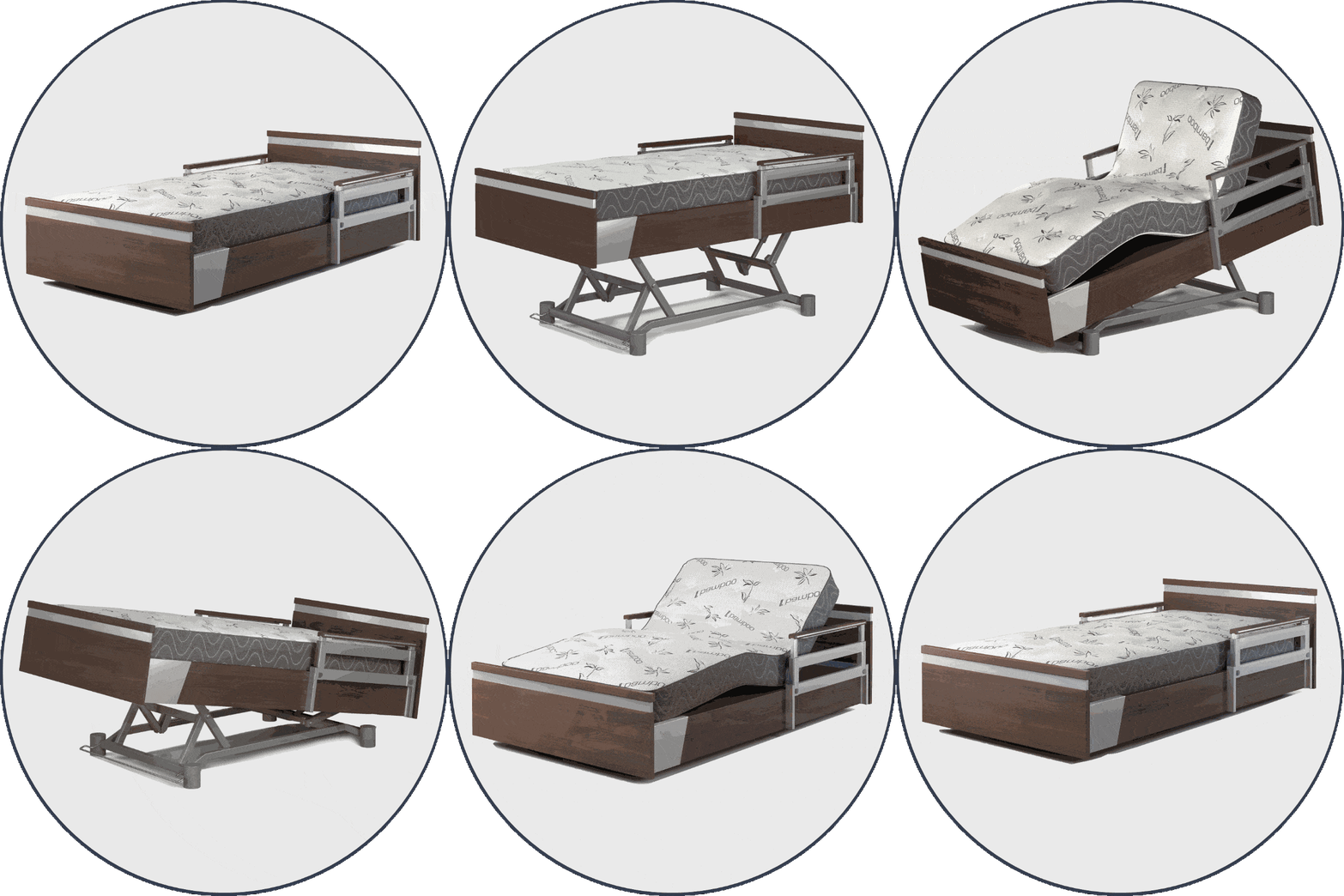
At home, the physical environment matters alongside the exercise program. The Aura Premium home hospital bed lowers to a 10-inch platform height, its FallSafe Ultra-Low setting, which brings it close to the ideal height for sit-to-stand training without dangerous drop distances, and makes safe transfers more controlled during the early weeks of reconditioning.
How Frail Beginners Start Safely
The most common mistake older adults and their families make is imagining that “strength training” means a gym. It doesn’t. For frail or deconditioned beginners, the most effective starting points require only a chair, a wall, and optionally a resistance band. The progression below is based on the consensus framework that emerges from physical therapy guidelines, the NSCA position statement, and community-validated practices across caregiver forums and senior fitness channels.
Step 1: Get Medical Clearance and a PT Referral
Start with a doctor’s visit. Ask specifically whether a physical therapy referral is appropriate. Medicare Part B covers physical therapy services, including in-home PT sessions when ordered by a physician, which removes the transportation barrier that prevents many mobility-limited older adults from accessing professional guidance. A PT will assess current strength, balance, and fall risk, then build a program calibrated to the individual.
Step 2: Chair-Based and Bodyweight Exercises
These are the starting exercises that physical therapists, senior fitness instructors, and clinical researchers consistently recommend for frail beginners:
- Sit-to-stand (chair squats): Rise slowly from a standard chair without using your hands. This directly trains the quadriceps, glutes, and hips, the muscles most responsible for independent mobility. Start with 5 repetitions. Progress to 10.
- Seated leg lifts: Sit tall, extend one leg slowly until it is straight, hold for two seconds, lower. Repeat 5 times per leg, progressing to 10. “Like pushing the gas pedal,” as one physical therapist described it.
- Wall push-ups: Stand arm’s length from a wall, place palms flat against it at shoulder height, and do a controlled push. Easier than floor push-ups; still trains the chest, shoulders, and triceps.
- Calf raises: Stand with hands lightly on a chair back. Rise onto the balls of both feet, hold for two seconds, lower slowly. Builds ankle stability and lower-leg strength.
- Resistance band seated leg press: Loop a resistance band around the foot. Extend the leg against the band’s resistance. Low-impact, joint-friendly, highly adjustable by changing band tension.
Step 3: Frequency, Volume, and Progression
Two to three sessions per week is the evidence-based sweet spot, enough stimulus for adaptation, enough rest for recovery.12 For absolute beginners or frail individuals, start with one set of each exercise at a comfortable effort, progressing to two or three sets over the first four to eight weeks. Sessions of 20–30 minutes are sufficient. The NSCA recommends a repetition range of 10–15 for beginners, progressing toward heavier resistance as strength improves.6
Protein intake is a genuinely important and underappreciated factor. Older adults experience “anabolic resistance”, a blunted muscle-building response to training, that is substantially improved with adequate dietary protein. The evidence supports 1.2–2.0 grams of protein per kilogram of body weight per day, significantly higher than the minimum intake many older adults consume. Adequate protein does not build muscle alone, but training without it produces meaningfully smaller gains.
What About Arthritis or Osteoporosis?
Both conditions benefit from strength training, this surprises many people. For arthritis, the Arthritis Foundation’s guidance is direct: “The real problem isn’t working out, it’s avoiding activity, which increases stiffness and injury risk.” During active flares, isometric exercises (wall sits, static holds) are safer than dynamic movements. Resistance bands reduce grip stress. Compression gloves can help. Strength work between flares builds the joint-supporting muscle that reduces pain over time.
For osteoporosis, bone density responds positively to mechanical loading, weight-bearing and resistance exercise stimulate bone-forming cells. Lifting does not make osteoporosis worse; the research consistently shows the opposite.
If you are exercising with limited mobility due to joint disease, chronic pain, or post-surgical recovery, that guide covers exercise adaptations in detail.
The Aura Premium bed’s adjustable height and the optional Overhead Trapeze Helper Bar accessory ($369) can also support bed-based warm-up movements, gentle leg lifts, ankle rolls, and hand-grip exercises, before a person stands, which is particularly useful during the early weeks of reconditioning when fatigue and stiffness are greatest.
What Actually Gets People to Start, and Stay
Understanding what motivates this population matters as much as understanding the exercise prescription, because the best program in the world produces zero results if the person never begins.
A 2023 qualitative study published in BMC Geriatrics (the LiLL-OPM study) gathered verbatim responses from frail adults aged 78–92 about strength exercise.11 The most powerful finding was not the barriers; it was what the barriers looked like alongside openness. The same participants who said “I’m too old to be exercising” and “I haven’t got the strength” also said “If the doctor was saying it, then I would do that” and “If I benefit from it, I’ll do it.”
Medical authority is the single most effective lever. When a physician recommends strength exercise specifically, not just “stay active,” but a referral to physical therapy or a structured program, adherence follows. For adult children trying to support a reluctant parent, framing the conversation around the doctor’s recommendation is more effective than personal persuasion.
Functional goals outperform health goals. “Get off the floor if you fall” motivates more powerfully than “reduce sarcopenia.” “Go back to gardening” lands harder than “improve quad torque.” When talking with an older adult about why to start, anchor every benefit to a specific activity they have lost or are afraid of losing.
Group settings, senior fitness classes, SilverSneakers programs, YouTube channels like Senior Fitness With Meredith, dramatically improve long-term adherence. Exercising alongside peers of the same generation dismantles the “too old” belief more effectively than any statistic. Hearing someone say “I’m in better shape at 72 than I was at 50” lands differently when the speaker is in the same room.
Early wins matter. Pain relief from strengthening work can begin within the first week. Functional strength gains typically emerge at six to eight weeks. Cognitive improvements follow around 12 weeks. Setting realistic expectations upfront, “you won’t feel stronger after day three, but you will at week eight”, prevents early dropout.
Frequently Asked Questions
Is strength training really safe for someone in their 80s or 90s?
Yes, when supervised appropriately. The SPRINTT trial enrolled frail, sarcopenic adults aged 70 and older and found serious adverse event rates comparable between the exercise and non-exercise groups.7 The NSCA’s position statement, reviewing the full body of evidence, concluded that no relevant studies have found cardiovascular adverse events or serious injuries in frail or very elderly populations in supervised programs.6 The safety variable is supervision, not age.
Can it actually reverse frailty, or does it just slow down decline?
The evidence includes documented reversals, not just slowing. The frailty score case report published in 2025, 5/5 to 1/5 in 12 weeks, illustrates reversal.10 The nonagenarian studies (Fiatarone, Izquierdo) showed measurable gains in people at extreme ages.1,2 The more accurate framing is: significant improvement is achievable, with the degree of improvement depending on baseline health, consistency, and whether protein intake is adequate.
How do you start if you can barely get out of a chair?
The sit-to-stand exercise is actually the starting point, not a prerequisite. Begin seated with the chair at a firm height. Use your hands on the armrests for assistance. Over days and weeks, reduce hand assistance. Five repetitions to start. Research in long-term care settings has shown that residents progressed from walkers to canes in ten weeks through this kind of structured, progressive program.
How quickly will we see results?
Expect a rough timeline: pain relief and improved sense of wellbeing can begin within the first one to two weeks. Measurable strength gains typically emerge at six to eight weeks. Significant functional improvements, faster gait, easier chair rises, better balance, are well-documented by 12 weeks in nearly all major trials.
Do I need a gym?
No. The most evidence-backed starting exercises for frail adults are entirely home-based: chair stands, seated leg lifts, wall push-ups, resistance bands, and calf raises. Machine-based training shows somewhat larger effects on gait speed in meta-analyses, but for beginners the priority is consistency and safety, both of which are better supported by a home program you will actually do.
Will lifting weights make osteoporosis worse?
No, the evidence points in the opposite direction. Bone responds to mechanical loading by increasing density. Resistance training and weight-bearing exercise are among the most effective non-pharmacological interventions for slowing bone loss. One member testimonial from a senior fitness program summarized it well: “Been at it for a year now and my bone density test was amazing; my doctors were thrilled.”
My father refuses to exercise. How do I motivate him?
The LiLL-OPM study found that doctor endorsement is the most powerful motivator for this cohort.11 If his physician recommends a specific program by name, physical therapy, SilverSneakers, a home exercise protocol, the likelihood he will engage increases substantially. Lead with functional goals he cares about (getting to the grandchildren’s soccer games, staying in his own home), and let the physician deliver the recommendation.
It Is Not Too Late
The evidence on this question is unusually consistent for a field that often produces equivocal results. Progressive resistance training, whether called strength exercise, lifting, or chair work, reduces physical disability in older adults. It does so by building the muscle that makes standing, walking, climbing stairs, and recovering from stumbles possible. It works in community-dwelling seniors in their 70s. It works in institutionalized nonagenarians. It appears to work even at the outer edge of human age and function, provided the program starts where the person is and progresses carefully under qualified supervision.
“You rest, you rust” is how one longtime senior fitness member put it. The biology backs her up.
For more on the underlying mobility concerns that drive these questions, the Sondercare learning center’s guide to common mobility issues in aging provides the broader context. If you have questions about home care products that support safe exercise environments and recovery at home, our team is available at sondercare.com/contact/.
References
- Fiatarone MA, Marks EC, Ryan ND, et al. High-intensity strength training in nonagenarians. Effects on skeletal muscle. JAMA. 1990;263(22):3029-3034. doi:10.1001/jama.1990.03440220053029
- Izquierdo M, et al. Multicomponent exercises including balance and strength training among 91–96-year-old adults. Study on benefits and fall reduction. Age (American Aging Association). 2014;36(5). ScienceDaily report, 2013-09-27
- Pahor M, Guralnik JM, Ambrosius WT, et al. Effect of structured physical activity on prevention of major mobility disability in older adults: the LIFE Study randomized clinical trial. JAMA. 2014;311(23):2387-2396. doi:10.1001/jama.2014.5616. URL: https://pmc.ncbi.nlm.nih.gov/articles/PMC4266388/
- Den Ouden MEM, Schuurmans MJ, Mueller-Schotte S, et al. Effects of resistance training on self-reported disability in older adults with functional limitations or disability, a systematic review and meta-analysis. Eur Rev Aging Phys Act. 2019;16:16. doi:10.1186/s11556-019-0230-5. URL: https://link.springer.com/article/10.1186/s11556-019-0230-5
- McDonough DJ, et al. Role of Resistance Training in Mitigating Risk for Mobility Disability in Community-Dwelling Older Adults: A Systematic Review and Meta-analysis. Arch Phys Med Rehabil. 2022;103(9):1836-1848. doi:10.1016/j.apmr.2022.04.011. URL: https://www.archives-pmr.org/article/S0003-9993(22)00360-4/abstract
- Fragala MS, Cadore EL, Dorgo S, et al. Resistance Training for Older Adults: Position Statement from the National Strength and Conditioning Association. J Strength Cond Res. 2019;33(8):2019-2052. doi:10.1519/JSC.0000000000003230. URL: https://journals.lww.com/nsca-jscr/fulltext/2019/08000/resistance_training_for_older_adults__position.1.aspx
- Bernabei R, Landi F, Calvani R, et al. Multicomponent intervention to prevent mobility disability in frail older adults: randomised controlled trial (SPRINTT project). BMJ. 2022;377: e068788. doi:10.1136/bmj-2021-068788. URL: https://www.bmj.com/content/377/bmj-2021-068788
- Sherrington C, Fairhall NJ, Wallbank GK, et al. Exercise for preventing falls in older people living in the community. Cochrane Database Syst Rev. 2019;1: CD012424. doi:10.1002/14651858. CD012424. pub2. URL: https://www.cochranelibrary.com/cdsr/doi/10.1002/14651858.CD012424.pub2/full
- Talar K, Jarzabek-Pasieka I, Majewska-Pulsakowska M, et al. Benefits of Resistance Training in Early and Late Stages of Frailty and Sarcopenia: A Systematic Review and Meta-Analysis of Randomized Controlled Studies. J Clin Med. 2021;10(8):1630. PMCID: PMC8070531. URL: https://pmc.ncbi.nlm.nih.gov/articles/PMC8070531/
- Physical prehabilitation reverses frailty before spine surgery (case report). PMC. 2025. PMCID: PMC12090665. URL: https://pmc.ncbi.nlm.nih.gov/articles/PMC12090665/
- Attitudes and barriers to resistance exercise in older adults with frailty (LiLL-OPM qualitative study). BMC Geriatrics. 2023. PMCID: PMC10675908. URL: https://pmc.ncbi.nlm.nih.gov/articles/PMC10675908/
- World Health Organization. WHO guidelines on physical activity and sedentary behaviour. Geneva: WHO. 2020. PMCID: PMC7719906. URL: https://pmc.ncbi.nlm.nih.gov/articles/PMC7719906/