







Yes, and more than most families expect. The hardest truth to absorb after a dementia diagnosis is that there is no cure, but it is a mistake to hear that as “nothing can be done.” A great deal can be done to slow decline, manage symptoms, preserve abilities, and improve daily quality of life. Good memory care, whether in a dedicated unit or organized by a family at home, combines two kinds of treatment: medications and non-drug therapies. Understanding what each can realistically deliver is how you build a care plan grounded in evidence rather than hope or fear. For the physical setting that supports all of it, see our guide to memory care environment design.
Setting Honest Expectations
Begin with the right yardstick. No treatment reverses dementia, and the medications that slow it do so modestly. The goal of every intervention below is to buy time, function, comfort, and dignity, not a return to how things were. Framed that way, even a “modest” benefit can be meaningful: a few extra months of recognizing grandchildren, a calmer evening, a preserved ability to dress independently. The most effective memory care layers several modest-but-real interventions rather than betting everything on one.
It also helps to know the scale of what you are part of. An estimated 57 million people live with dementia worldwide, and roughly half of the global cost is borne by informal, family caregiving. The therapies that follow exist precisely because researchers recognize that families need every available tool.
The Newest Drugs: Anti-Amyloid Immunotherapies
The headlines of recent years belong to anti-amyloid infusions that target the underlying disease. Lecanemab showed a 27% slowing of cognitive decline over 18 months in its large phase 3 trial, and the FDA approved donanemab in July 2024, with roughly 35% slowing reported in its own trial.1 For the first time, drugs can modestly slow the disease process itself rather than only its symptoms.
The caveats are essential, and a good memory care team will walk you through them. These drugs are only for early-stage Alzheimer’s with confirmed amyloid, require a PET scan or spinal fluid test to qualify, and carry a real risk of brain swelling or bleeding known as ARIA, seen in roughly one in five lecanemab patients, which means regular MRI monitoring.1 The benefit is genuine but measured: lecanemab delayed worsening by about five months over 18 months. For the right early-stage patient these are an option worth discussing; for moderate or advanced dementia they are not appropriate.
Genetics also shape the decision. People who carry two copies of the ApoE4 gene face a substantially higher rate of brain-swelling complications, so genetic testing increasingly informs whether the drugs are advisable. Donanemab adds one practical advantage: treatment can sometimes be stopped once amyloid plaques are cleared, rather than continuing indefinitely, which may lower the cumulative risk and burden. None of this changes the core message, that these are options for a narrow, early-stage group and require a specialist’s close involvement, but it shows how individualized the decision has become.
The Established Medications
For most people in memory care, the mainstays remain two older, well-understood drug classes. Cholinesterase inhibitors (donepezil, rivastigmine, galantamine) and the NMDA-receptor drug memantine do not stop the disease, but a 2024 network meta-analysis confirmed that the approved drugs improve cognitive function, and that combining donepezil and memantine offers added benefit for severe cognitive impairment.2
These medications manage symptoms and can ease daily function for a time. Their effects are gradual and individual, so families should track changes and keep expectations realistic. The point is steady symptom management, not transformation, and the decision to start, combine, or eventually stop them is one to revisit with the prescribing clinician as the disease progresses.
Cognitive Stimulation Therapy: The Non-Drug Gold Standard
Here is the finding that surprises families most: one of the best-evidenced treatments in all of dementia care is not a drug. Cognitive stimulation therapy (CST), a structured program of engaging group activities and discussion, has strong support. A Cochrane systematic review of 37 randomized trials with more than 2,700 participants found that CST improved cognition with an effect size comparable to medication, and improved communication and social interaction with high-quality evidence.3
CST works by keeping the mind actively engaged, discussing current events, word games, themed activities, in a supportive group setting. It should be a first-line recommendation for any family, and quality memory care programs build it into the weekly schedule. Because it is low-risk and does not interact with medications, it complements rather than competes with drug treatment. Families can also learn simplified versions to use at home.
Exercise and Movement
Physical activity earns its own place in the treatment plan. A meta-analysis of 22 randomized trials found that exercise produced measurable cognitive benefit, improving standard dementia assessment scores meaningfully.4 The gains go beyond cognition: regular movement supports balance and strength, which directly reduces the elevated fall risk that dementia brings, and it improves mood and sleep.
The exercise does not need to be strenuous. Walking, gentle chair exercises, dancing to familiar music, and simple stretching all count. Movement woven into a daily routine, a morning walk, an afternoon stretch, doubles as structure, which itself calms agitation. Our guide to preventing falls in elderly with dementia explains how to keep that activity safe.
Reminiscence, Music, and Sensory Therapies
Some of the most moving results come from therapies that work through memory and emotion rather than logic. A 2026 meta-analysis of 24 trials found that reminiscence therapy, structured recall of a person’s past using photos, music, and familiar objects, produced notable cognitive improvement and a substantial reduction in depression.5 Music therapy is especially powerful: a personalized playlist of meaningful songs can reach a person even in late-stage dementia, reducing agitation and reconnecting them with their identity when words have largely gone.
These approaches are accessible, inexpensive, and deeply humane. They give a non-verbal person a way to express and feel, and they give families a way to connect that does not depend on the failing parts of the brain. Sensory activities, textured objects, hand massage, aromatherapy, similarly calm anxiety. A good memory care program offers these daily, and families can replicate the core of them at home with little more than old photographs and a favorite record.
Managing Behavioral Symptoms the Safe Way
The symptoms that distress families most, agitation, aggression, sundowning, are also where treatment choices carry the highest stakes. The crucial point is that antipsychotic drugs carry an FDA black-box warning for increased mortality in people with dementia, yet they are still over-used.6 Best-practice memory care reaches for non-pharmacological approaches first: identifying triggers (pain, hunger, overstimulation, a full bladder), adjusting the environment, and using routine, music, and calm redirection before any sedating medication.
This is not merely safer; it is often more effective, because behavioral symptoms usually have an unmet-need cause that a pill cannot address. If medication for behavior is ever proposed, families are right to ask what non-drug strategies were tried first and what the specific risks are. A calm, well-designed room does much of this work, which is why environment and treatment are inseparable in dementia care.
What a Memory Care Program Actually Provides
If your question is what therapies a dedicated memory care setting delivers, the answer is a coordinated package rather than any single service. A good program builds the evidence-based therapies above into a structured daily schedule: cognitive stimulation sessions, group and individual activities, music and reminiscence, and regular gentle exercise, all staffed by people trained in dementia-specific communication and de-escalation. That structure is itself therapeutic, because predictable routine reduces the anxiety and agitation that unstructured days provoke.
Quality programs also bring in allied health professionals. Occupational therapy helps preserve daily-living skills such as dressing and eating through cognitive rehabilitation, an underused therapy that families often wish they had started sooner. Physical therapy maintains mobility and reduces fall risk, and speech therapy can help with communication and safe swallowing as the disease advances. Medication is managed and monitored on site, including the MRI surveillance that anti-amyloid drugs require. The defining feature is coordination: a memory care team aligns these therapies into one plan and adjusts it as the person changes, which is precisely the coordination families work hardest to recreate at home.
What You Can Support at Home
Much of what helps translates directly to the home. A heart-healthy eating pattern is one example: research on the MIND diet, rich in leafy greens, berries, and whole grains, found that the highest adherence was associated with a markedly lower risk of Alzheimer’s.7 Routine, movement, music, social engagement, and good sleep are all therapies a family can deliver without a facility.
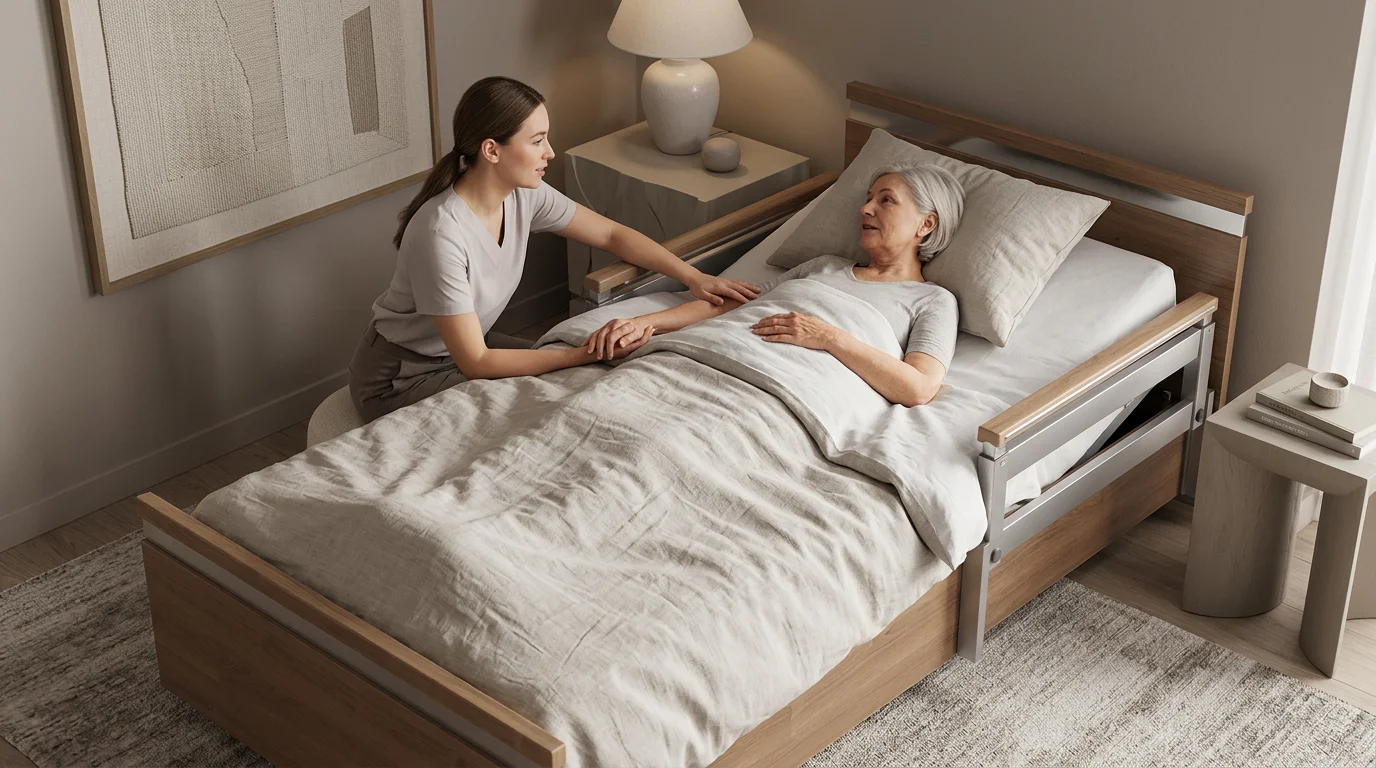
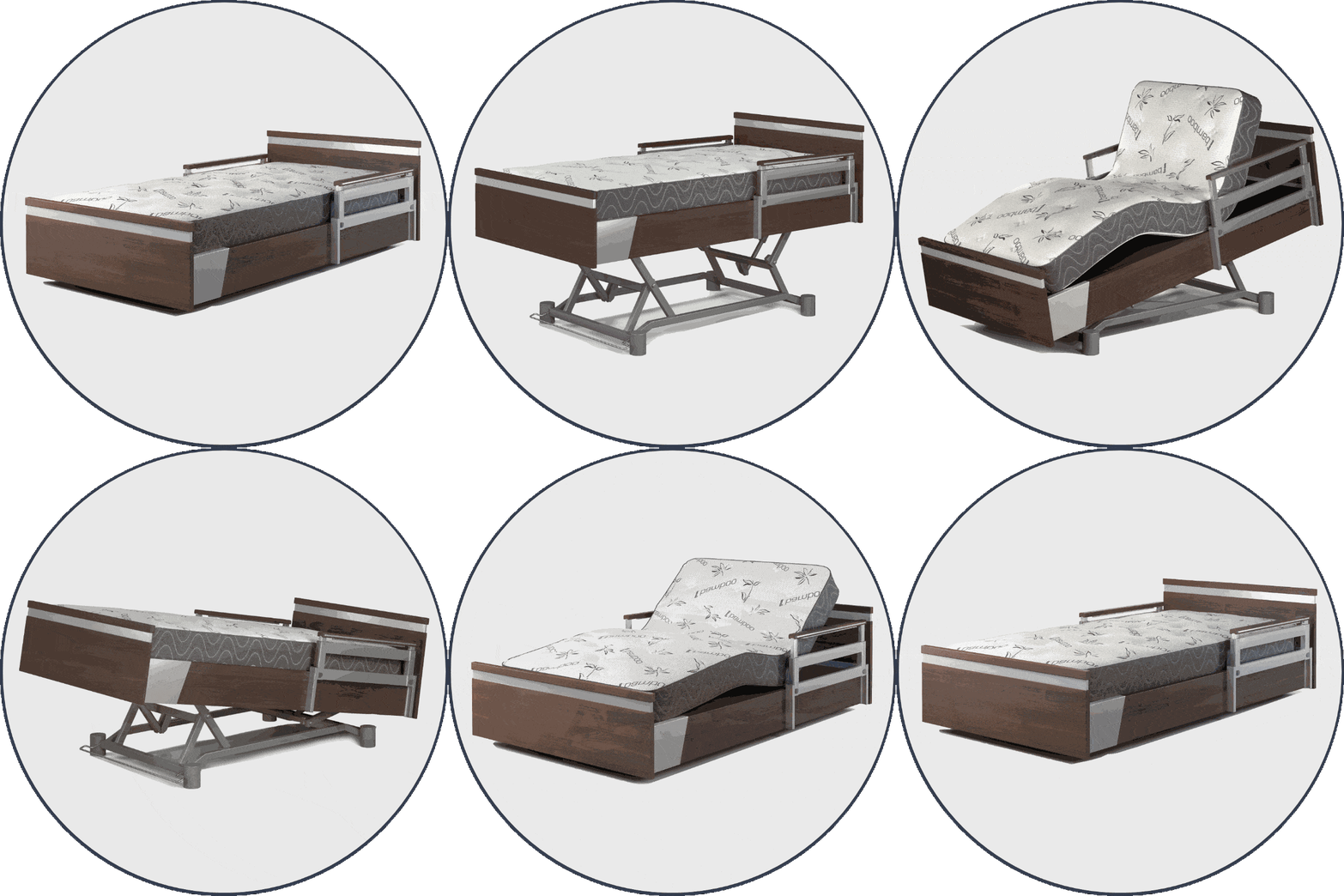
Rest deserves special mention, because sleep disruption drives so much agitation, and because so much unsteady movement happens at night. A safe, comfortable bed is part of the therapeutic picture. A SonderCare Aura Premium supports better rest and easy, safe repositioning, with an ultra-low height setting and assist rails that reduce the night-time fall risk dementia brings, all in a furniture-like form that keeps the bedroom feeling familiar rather than clinical. Paired with a pressure-redistributing mattress and a few practical accessories, the bedroom becomes a place that actively supports the rest the brain needs.
Caregiver Support Is Part of the Treatment
One therapy is easy to overlook because it is aimed at you. Education, respite, and emotional support for the family caregiver are not extras; they are part of any serious care plan, because a supported caregiver delivers safer, more consistent care. Memory care programs that include the family, teaching de-escalation, offering counseling, building in respite, produce better outcomes for the person with dementia, not just the caregiver. Treat your own well-being as a clinical priority, because in practice it is one.
The Bottom Line
So yes, memory care offers real treatments and therapies, just not a cure. The strongest plans combine cautious, well-monitored medication where appropriate with the non-drug therapies that the evidence increasingly favors: cognitive stimulation, exercise, reminiscence and music, a safe environment, good nutrition, and structured routine, while avoiding the risks of unnecessary sedation. Most of it can be supported at home as well as in a facility. Build the plan in layers, revisit it as the disease changes, and pair it with a well-designed care environment so that every therapy has the best chance to work. Above all, hold on to the realistic hope the evidence supports: while no treatment turns back the clock, the right combination can meaningfully slow the journey and protect the moments that matter most along the way.
References
- van Dyck CH, Swanson CJ, Aisen P, et al. Lecanemab in Early Alzheimer’s Disease. New England Journal of Medicine. 2023;388(1):9-21. DOI: 10.1056/NEJMoa2212948
- Deng X, et al. Effect of long-term pharmacological treatments on Alzheimer disease: a systematic review and network meta-analysis. Medicine. 2024. DOI: 10.1097/MD.0000000000038548
- Woods B, Rai HK, Elliott E, Aguirre E, Orrell M, Spector A. Cognitive stimulation to improve cognitive functioning in people with dementia. Cochrane Database of Systematic Reviews. 2023;1: CD005562. DOI: 10.1002/14651858. CD005562. pub3
- Jia RX, et al. Effects of physical activity and exercise on the cognitive function of patients with Alzheimer disease: a meta-analysis. BMC Geriatrics. 2019;19:181. DOI: 10.1186/s12877-019-1175-2
- Park K, et al. The effects of reminiscence therapy on cognitive function and depression in older adults with dementia: a meta-analysis. 2026. DOI: 10.1016/j. gerinurse.2025.01.012
- US Food and Drug Administration. Information on Conventional and Atypical Antipsychotics: Boxed Warning for Use in Dementia-Related Psychosis. https://www.fda.gov/drugs/postmarket-drug-safety-information-patients-and-providers
- Morris MC, Tangney CC, Wang Y, et al. MIND diet associated with reduced incidence of Alzheimer’s disease. Alzheimer’s & Dementia. 2015;11(9):1007-1014. DOI: 10.1016/j.jalz.2014.11.009