







It was 3:14 AM when Linda heard the thud from down the hall. She found her husband Robert standing in the bathroom doorway, disoriented, one hand gripping the doorframe while his left knee bled from hitting the nightstand. It was the third time that month. Like thousands of spousal caregivers, Linda realized that the bedroom they had shared for 32 years was no longer safe for the person she loved most.
Bedroom modifications for dementia patients are not about turning a home into a clinical space. They are about making targeted, evidence-based changes that reduce falls, ease nighttime confusion, and preserve the dignity of both the person living with dementia and the caregiver who shares that space. Research shows that people with dementia fall approximately twice as often as their cognitively intact peers, and the bedroom is where many of the most dangerous nighttime incidents occur.1
This guide walks you through the most effective bedroom modifications, grounded in clinical research and real caregiver experience. Whether you are adapting a shared bedroom or setting up a dedicated care room, these changes can make an immediate difference in safety and sleep quality for your entire household.
If you need guidance on choosing the right bed for dementia care, speak with a SonderCare bed expert who can help match your situation to the right solution.
Why Dementia Requires Specific Bedroom Modifications
Dementia is not simply memory loss. It progressively affects spatial awareness, depth perception, the ability to interpret visual information, and the sleep-wake cycle. These combined changes make the bedroom, a space most people navigate on autopilot, into a place of genuine risk.
The numbers tell a sobering story. Approximately one in four adults over age 65 falls each year. For those living with dementia, that risk roughly doubles.1 About 25% of people with dementia experience significant sleep disturbances, including frequent nighttime awakenings and disorientation.2 Each additional nighttime awakening increases the odds of a fall by approximately 65%.3
Sundowning, the pattern of increased confusion, agitation, and restlessness that often begins in late afternoon and extends through the night, drives the majority of bedroom modifications caregivers make. The bedroom environment plays a direct role in triggering or calming these episodes. Shadows from low-angle light, unfamiliar sounds, temperature changes, and too much visual stimulation can all set off an episode.
Standard aging-in-place modifications, such as removing throw rugs or adding grab bars, are a good start. But dementia demands a deeper approach that accounts for perceptual changes, cognitive disorientation, and the unique dangers of nighttime wandering. The modifications in this guide address each of these challenges with practical solutions backed by research.
For a broader framework on fall prevention for seniors at home, our complete safety guide covers the full scope of home fall risk reduction.
Lighting Modifications for Safer Nights and Better Sleep
If you make only one category of changes to a dementia-friendly bedroom, make it lighting. Every source, from clinical researchers to occupational therapists to caregiver forums, identifies lighting as the single highest-impact bedroom modification.
The specifics matter more than most people realize. The goal is not simply “more light.” It is the right light, at the right time, in the right color temperature.
Nighttime Path Lighting
Install motion-activated nightlights along the path from the bed to the bathroom. These should use warm-toned bulbs (amber or red spectrum), which provide enough visibility to prevent falls without disrupting the circadian rhythm or fully waking the person. Bright white or blue-toned lights do the opposite: they signal “daytime” to the brain, making it harder to return to sleep and potentially increasing confusion.
The SonderCare Underbed Auto-Nightlight ($219) is designed specifically for this purpose. It provides motion-activated floor illumination that gently lights the path for safer nighttime transfers without the harsh glare of overhead fixtures.
The Bright Days, Dark Nights Strategy
A 2022 meta-analysis of 18 randomized controlled trials found that structured light therapy for people with dementia produced small-to-moderate improvements in reducing nighttime awakenings and improving overall sleep quality.4 The principle is straightforward: maximize bright, natural or artificial light during the day to support the circadian clock, then shift to dim, warm lighting in the evening hours.
Practical implementation is simple. Open curtains wide during the day. Consider a daylight-spectrum lamp in the bedroom for morning hours. In the evening, switch to warm-toned bulbs and reduce overhead lighting. Smart bulbs that can be programmed to shift color temperature automatically throughout the day are an effective, low-effort solution.
Margaret, a caregiver in her early 70s, described the change as transformative. After replacing the bedroom’s single overhead fixture with a combination of programmable smart bulbs and two motion-activated path lights, her husband’s nighttime awakenings dropped from four or five per night to one or two. “I started sleeping again,” she said. “That one change gave me my energy back.”
Bed Safety and the Right Height for Dementia Care
The bed itself is often the most important piece of equipment in a dementia bedroom, and the most misunderstood. Caregivers face a progression of decisions as the disease advances, and getting the bed configuration right at each stage can prevent serious injuries.
The Bed Safety Continuum
Most caregivers move through a predictable progression:
- Regular bed with a grab rail for early-stage support
- Bed with full rails (often the first instinct, but carries risks)
- Low-profile bed without rails plus a padded floor mat
- Height-adjustable hospital bed with ultra-low positioning
Each stage corresponds to the person’s changing abilities. The key is making transitions before a serious incident forces them.
Why Bed Height Matters
The ideal bed height places the person’s feet flat on the floor when they sit on the edge of the mattress, approximately at knee height. This position makes it easier and safer to stand up independently. Too high, and they risk a dangerous fall. Too low, and the effort of standing may cause them to lose balance.
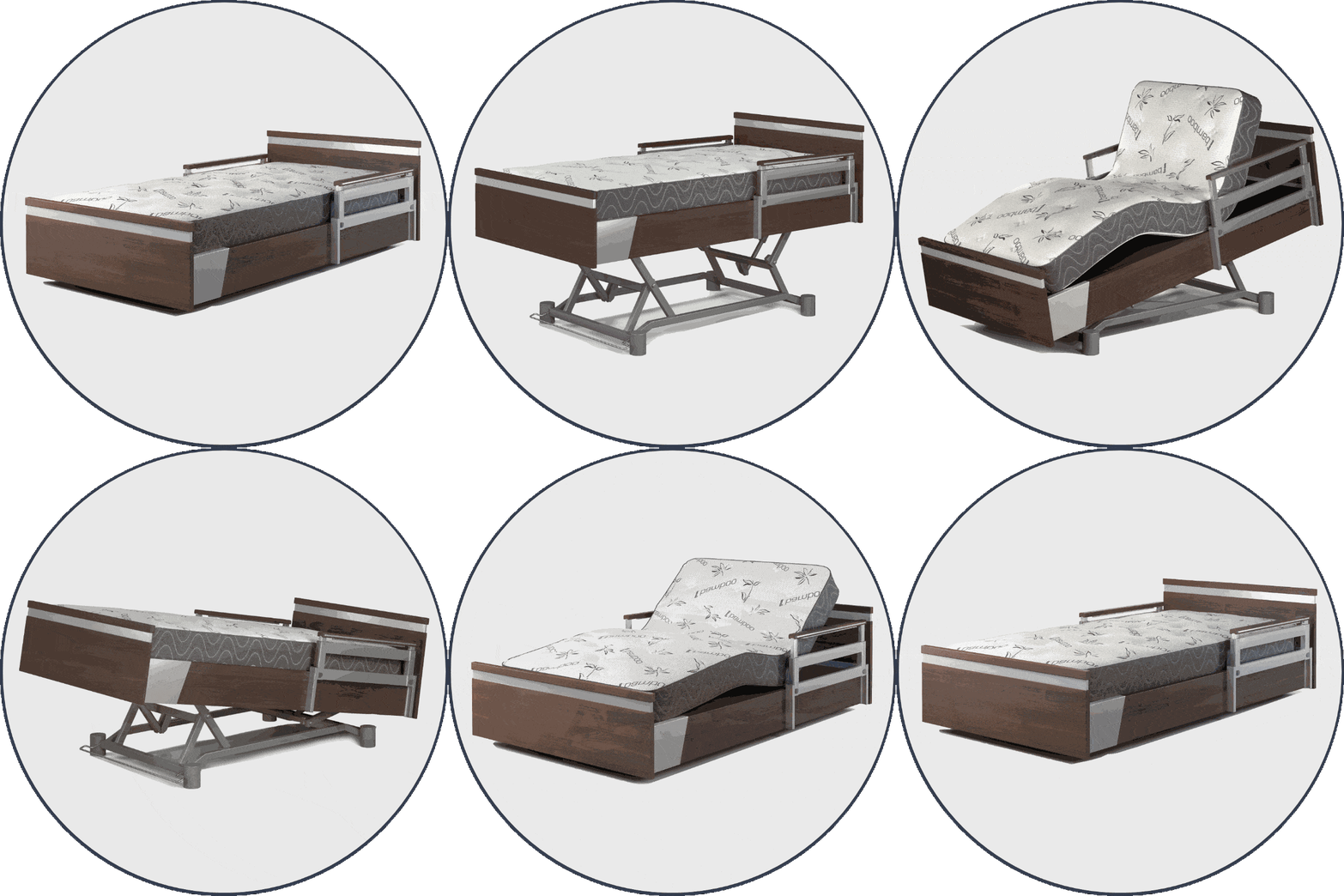
The SonderCare Aura Premium Hospital Bed addresses this directly with its FallSafe Ultra-Low height feature, which lowers the platform to just 10 inches (17 inches to the top of the mattress). During the day or for transfers, the bed raises to a comfortable height. At night, it lowers to its ultra-low position, so even if the person does get out of bed unexpectedly, the distance to the floor is minimal. The full hi-lo range of 10 to 39 inches means the same bed works for safe transfers at one height and maximum fall protection at another.
The Bed Rail Warning
This is critical information that many caregivers do not know. The U. S. Consumer Product Safety Commission (CPSC) has issued recalls for adult portable bed rails due to serious entrapment hazards and risk of death by asphyxiation. A 2026 recall for one manufacturer alone covered approximately 12,355 units.5 The FDA strongly advises against using portable bed rails for individuals with altered mental status, including dementia, unless prescribed as a medical device under strict clinical supervision.
Furthermore, a systematic review found a 19% increase in falls among elderly patients who used bed or chair pressure sensor alarms.6 Traditional alarms that sound loudly in the room can startle the person, cause panic, and paradoxically increase the very falls they are meant to prevent.
The safer alternative is a combination of a low-profile bed position and passive alerts that notify the caregiver on a phone or pager rather than alarming the person in the room.
If you are considering a bed change for someone living with dementia who is at risk of falls, getting professional guidance on height and safety features can prevent serious injuries. Contact a SonderCare bed expert to discuss what configuration fits your situation.
Decluttering and Layout for Orientation
For a person with dementia, spatial memory is fragile. Every piece of furniture that has not been in the same place for years becomes a potential source of confusion, and every unnecessary object on the floor becomes a tripping hazard.
The Golden Rule: Never Rearrange
Once you establish a safe bedroom layout, keep it exactly the same. Rearranging furniture, even with good intentions, can cause severe disorientation. The person relies on muscle memory and spatial habit to navigate the room, especially in low light. Moving the nightstand six inches to the left can result in a fall.
Create Wide, Clear Pathways
Remove all non-essential furniture. The path from bed to bathroom and from bed to door should be wide, straight, and completely free of obstacles. Electrical cords should be taped to baseboards or routed behind furniture. Remove throw rugs entirely, or if they must stay, secure them with non-slip backing and heavy-duty carpet tape. Be aware that transitions between flooring types (carpet to tile, wood to linoleum) can be perceived as a step or a drop, causing the person to stumble or freeze.
Use Color Contrast as Wayfinding
Color contrast is one of the most underused modifications in home settings, despite strong evidence from institutional design. A brightly colored bathroom door stands out against neutral walls, helping the person identify where they need to go. Contrasting bedding against the floor color helps distinguish the bed’s edge. Colored light switch plates against white walls make switches easier to find.
David and Susan, married 41 years, painted their bathroom door a deep blue against their cream-colored hallway walls. “It sounds so simple,” David said, “but she stopped going to the wrong door at night almost immediately.”
Preserve Familiar, Meaningful Items
While decluttering is essential, do not strip the room of all personality. Familiar personal items, a favorite blanket, family photographs from their youth, a clock they have used for decades, provide comfort and orientation cues. The goal is simplification, not sterilization.
The Mirror Problem and Sensory Simplification
One of the most emotionally difficult bedroom modifications involves mirrors. People with moderate-to-advanced dementia frequently fail to recognize their own reflection. They see a stranger in their bedroom, which can trigger anxiety, fear, or even aggression.
Mirror Solutions
The approach depends on the person’s stage and reactions:
- Remove mirrors entirely from the bedroom if they cause distress
- Cover mirrors with fabric or a removable curtain so they are available during grooming but hidden otherwise
- Replace with artwork that provides a visual focal point without the confusion of a reflection
There is no single right answer. Some people are unbothered; others are terrified. Observe your loved one’s reaction and adjust.
Simplify Patterns and Textures
Busy patterns are not just a style preference in dementia care. They are a safety concern. Checkered or heavily patterned rugs can be perceived as obstacles or holes in the floor. Striped bedspreads may appear to have edges or steps. Stick to solid colors in medium tones for bedding, rugs, and upholstery.
Avoid leaving the television on at night as background noise. The flickering light and rapidly changing sounds can increase sundowning agitation and disorientation, the opposite of the calm environment the bedroom needs to provide.
Nighttime Wandering Solutions That Actually Work
Nighttime wandering is one of the most exhausting and frightening aspects of dementia caregiving. The bedroom environment can either contribute to the problem or help contain it.
Passive Monitoring Over Loud Alarms
As noted earlier, loud bed alarms can increase rather than decrease falls. The more effective approach is passive monitoring: a sensor that detects when the person gets out of bed and sends a quiet alert to your phone or a pager on your nightstand. This gives you time to respond without startling the person.
Magnetic contact sensors on the bedroom door that chime softly when opened provide another layer of awareness. Some caregivers use audio monitors (baby monitor style) to listen for movement without intrusive room checks.
Pathway Design for Safer Wandering
If the person does get up, make the path as safe as possible. Automatic dim warm lights that activate when feet touch the floor guide the way to the bathroom. A bedside commode eliminates bathroom trips entirely for those with high urgency or mobility challenges, and it is one of the most consistently recommended modifications by occupational therapists.
Routine and Environmental Cues
Non-physical modifications matter just as much:
- Reduce fluids two hours before bedtime to minimize bathroom urgency
- Establish a consistent bedtime routine with calming music or familiar sounds
- Schedule a bathroom trip immediately before sleep
- Ensure adequate daytime physical activity to reduce nighttime restlessness
- Camouflage exit doors by painting them the same color as surrounding walls, or place a “STOP” sign at eye level on doors the person should not open
Keep It Simple
A recurring theme from experienced caregivers is that the best nighttime safety solutions are the ones you can operate at 3 AM while half asleep yourself. Complex smart home systems with multiple apps and troubleshooting requirements often get abandoned within weeks. A baby monitor, a pressure mat, a motion-activated nightlight: these low-tech solutions are reliable, affordable, and effective.
For a complete guide to setting up a hospital-grade bedroom at home, including equipment checklists and room layout guidance, our comprehensive resource covers every step.
When a Home Hospital Bed Makes the Difference
There comes a point for many dementia caregivers when standard bedroom modifications are no longer sufficient. Falls are increasing. Nighttime transfers are becoming physically dangerous for both partners. The person’s mobility has declined to the point where bed height and positioning are daily safety concerns.
This is when a home hospital bed becomes a practical necessity rather than a luxury.
The Evidence for Professional Home Modifications
Research consistently demonstrates that occupational therapy-led home modification programs deliver measurable results. One systematic review found that these interventions reduce the number of hours caregivers spend assisting the person with dementia, with some analyses showing a reduction in informal caregiver hours of up to 42%.7 For a spousal caregiver who is aging themselves, that reduction in physical burden can be the difference between sustainable caregiving and burnout.
The financial case is equally compelling. The CAPABLE program, which combines occupational therapy, nursing, and home modifications, estimated $22,000 in Medicare savings over two years per client, largely by preventing fall-related hospitalizations and delaying institutional placement.8
A Hospital Bed That Feels Like Home
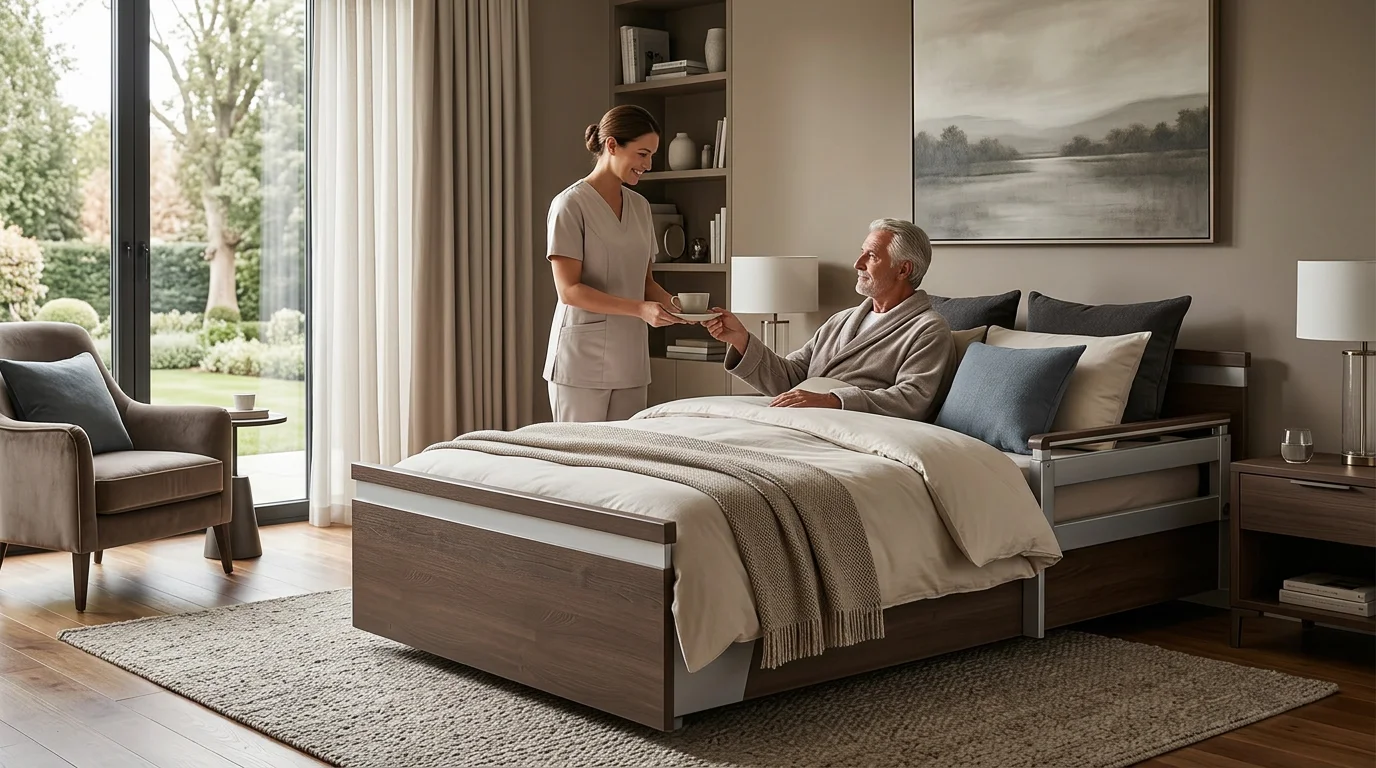
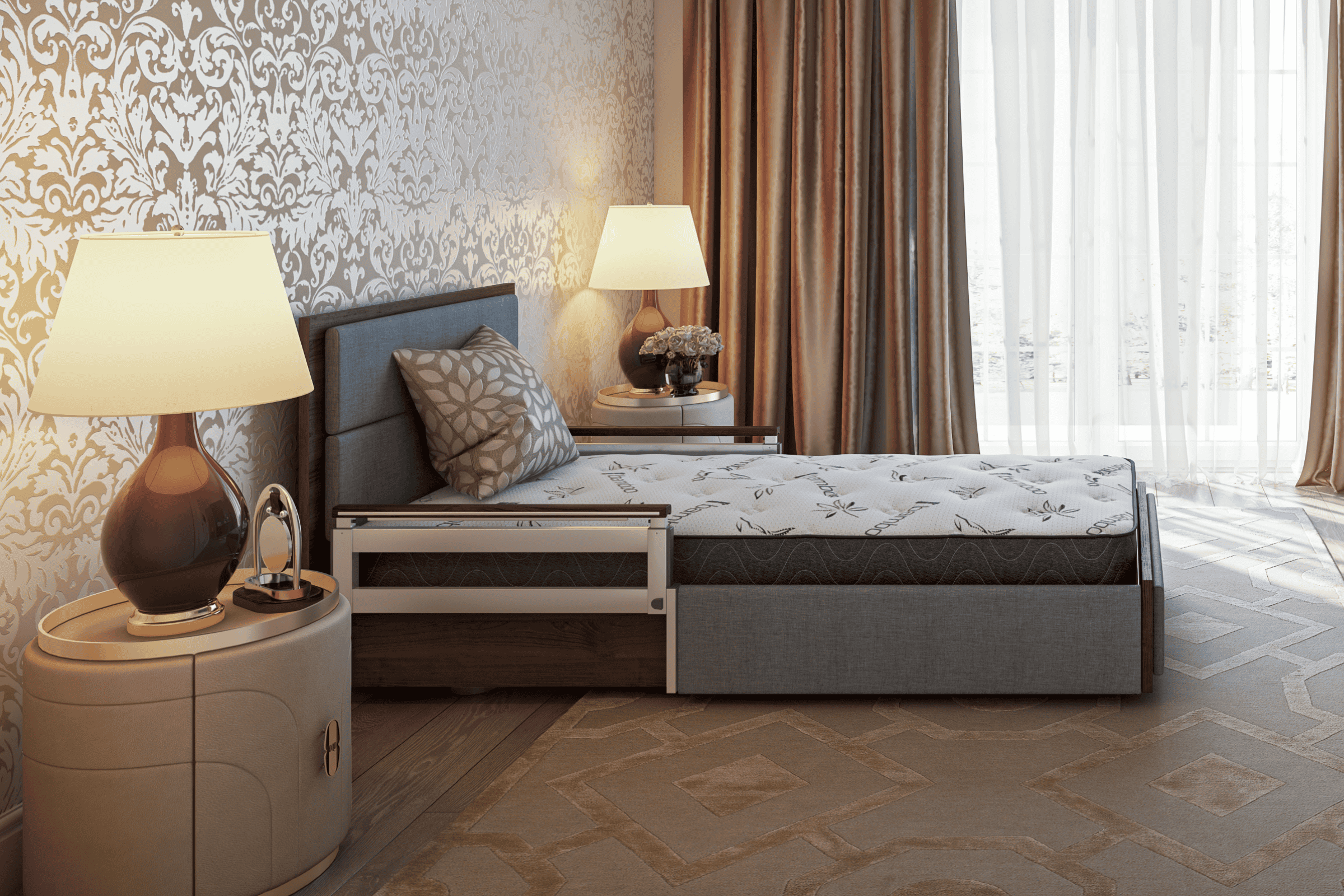
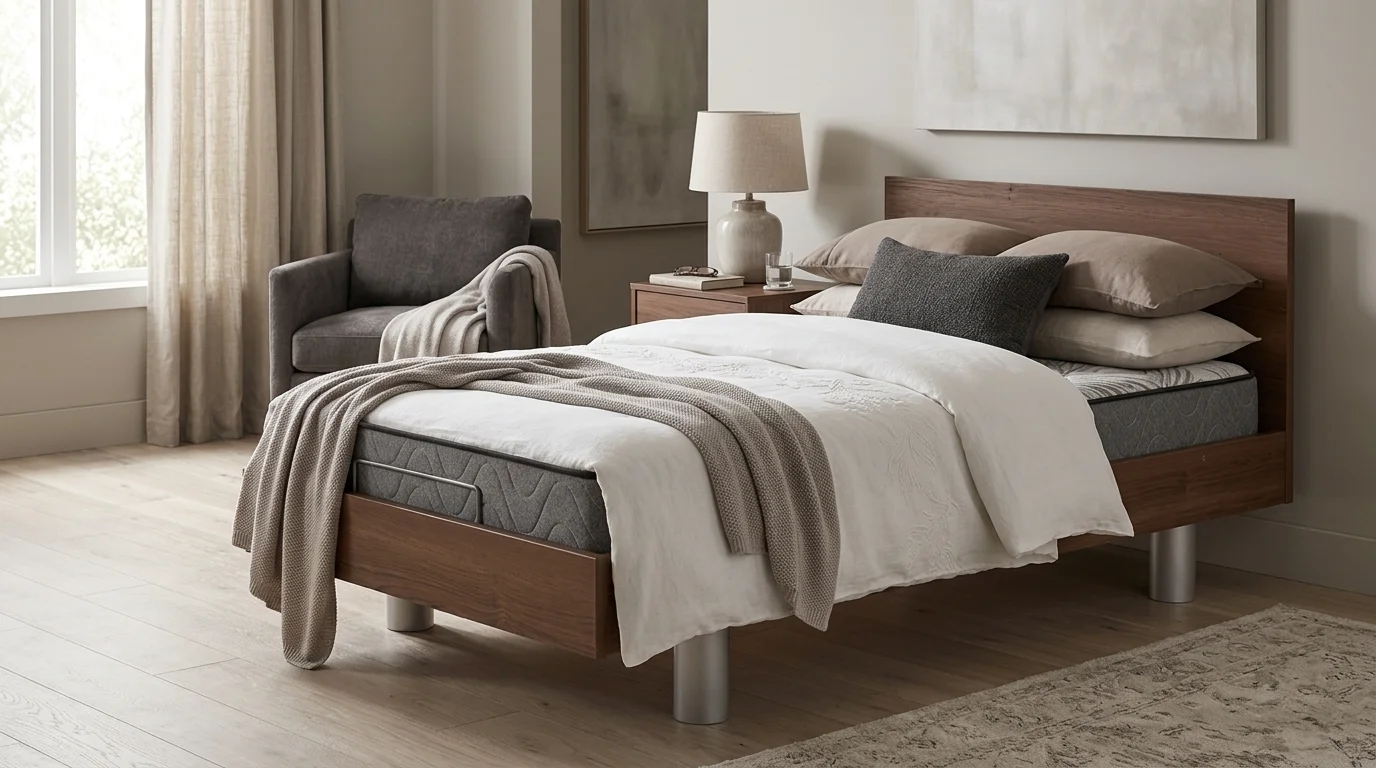
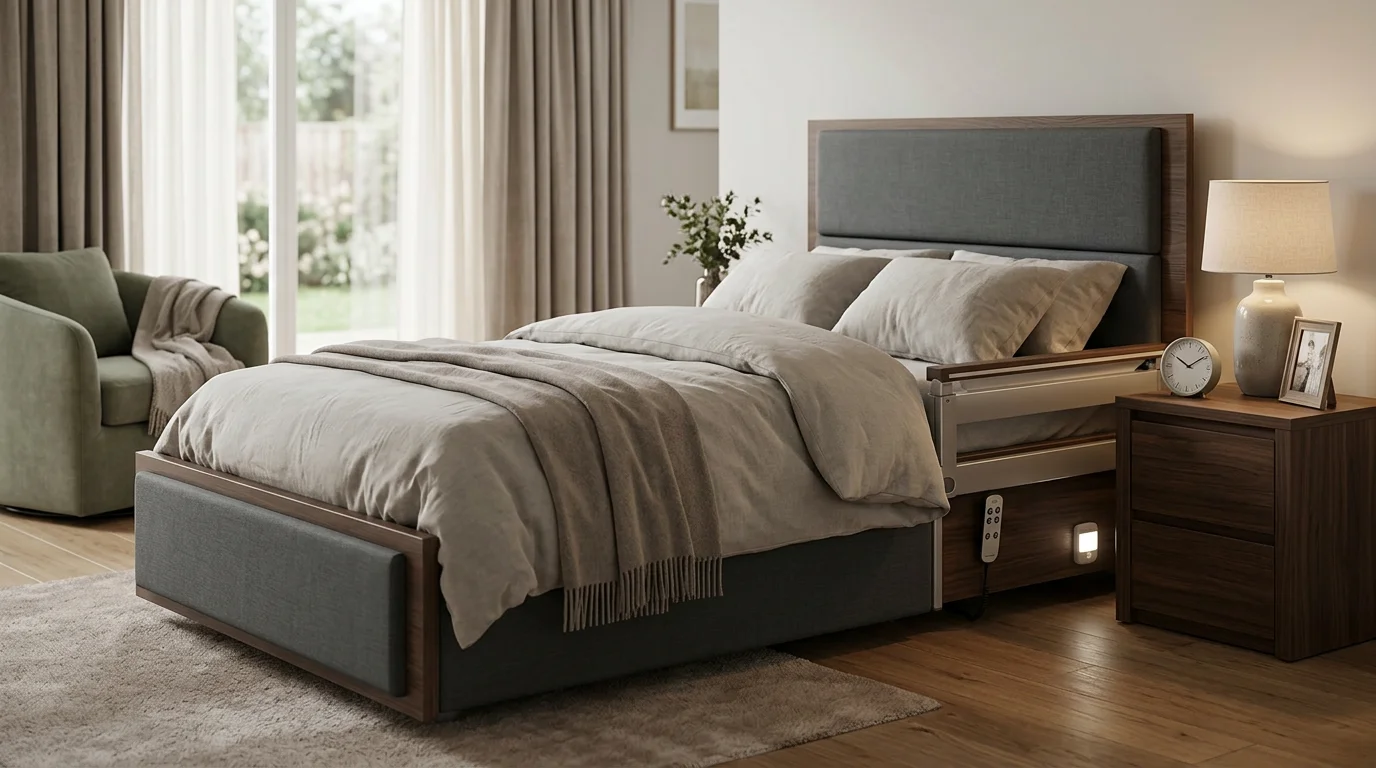
The biggest objection most caregivers have to a hospital bed is the way it looks. A clinical-looking bed in a shared bedroom changes the entire emotional character of the space. It can make the person with dementia feel like a patient rather than a partner.
The SonderCare Aura Platinum Hospital Bed was designed specifically to address this tension. Its fully upholstered side panels in Slate Gray Crypton fabric and furniture-grade headboard integrate with residential bedroom decor rather than clashing against it. The bed provides the same FallSafe Ultra-Low height (10 inches), the same full positioning suite (Trendelenburg, Zero Gravity, Cardiac Chair, Comfort Chair), and the same 500 lb weight capacity as the Aura Premium, wrapped in a design that preserves the bedroom’s character.
For caregivers who have been told their only options are a clinical rental bed or an unsafe standard bed, this fills a critical gap.
If you are evaluating whether a height-adjustable bed might help, explore the options for the best bed for someone who falls out of bed to compare safety features side by side.
A Room-by-Room Dementia Bedroom Modification Checklist
Use this checklist to assess your current bedroom setup. Not every item will apply to every situation, but this covers the most evidence-supported modifications.
Lighting
- [ ] Motion-activated warm nightlights on bed-to-bathroom path
- [ ] No blue or bright white bulbs in evening fixtures
- [ ] Bright natural or artificial light maximized during daytime
- [ ] Smart bulbs programmed for circadian-friendly color shifts
- [ ] No shadow-casting fixtures that create confusing shapes
Bed and Transfers
- [ ] Bed height allows feet flat on floor when sitting on edge
- [ ] No portable bed rails (entrapment risk)
- [ ] Grab bar or bed pole installed for transfer support
- [ ] Low-profile bed position available for nighttime fall prevention
- [ ] Padded floor mat beside bed if fall risk is high
Layout and Declutter
- [ ] Non-essential furniture removed
- [ ] Wide, clear pathway from bed to bathroom
- [ ] All electrical cords secured to baseboards
- [ ] No throw rugs (or fully secured with non-slip backing)
- [ ] Furniture arrangement consistent, never rearranged
Mirrors and Patterns
- [ ] Mirrors removed, covered, or replaced if causing distress
- [ ] Solid-color bedding (no busy patterns)
- [ ] No patterned rugs that could be perceived as obstacles
- [ ] TV off at night (no flickering light)
Nighttime Wandering
- [ ] Passive bed exit sensor (phone/pager alert, not loud alarm)
- [ ] Door chime or magnetic contact sensor on bedroom door
- [ ] Bedside commode available if needed
- [ ] Exit doors camouflaged or marked with “STOP” sign
- [ ] Consistent bedtime routine established
Environmental Comfort
- [ ] Familiar personal items displayed (photos, favorite blanket)
- [ ] Room temperature consistent and comfortable
- [ ] Calming music or white noise available
- [ ] Blackout curtains to prevent early-morning light disruption
- [ ] Large, clear clock with date and day visible from bed
Protecting Both Partners: The Bigger Picture
Modifying a bedroom you have shared for decades is not just a practical task. It is an emotional one. Removing a mirror, adding a nightlight, considering a different bed: each change can feel like an acknowledgment that things are not what they were. That grief is real, and it deserves recognition.
But here is what the evidence shows clearly: targeted bedroom modifications protect both the person living with dementia and the caregiver. Professionally guided home modification programs reduce falls by up to 38% in some trials.9 They reduce caregiver burden. They keep people at home longer and out of institutions. They save money.
The guiding principle is worth repeating: simplify, do not hospitalize. Every modification should make the room safer while keeping it feeling like theirs, like yours, like home.
If you are unsure where to begin, an occupational therapist can conduct a home safety assessment tailored to your specific situation. And if the bed itself is part of the equation, the experts at SonderCare can help you find a solution that delivers hospital-grade safety in a design that belongs in a bedroom, not a facility.
For additional guidance on making your home safer as needs change, our guide to aging in place home modifications covers the full spectrum of home adaptation strategies.
Ready to explore your options? Contact SonderCare to speak with a bed expert who understands dementia care needs.
References
-
Alzheimer’s Association Facts & Figures; CDC STEADI Program. Adults with dementia fall approximately twice as often as cognitively intact peers; more than one in four people aged 65+ fall each year. CDC STEADI
-
Alzheimer’s Association, 2025 Alzheimer’s Disease Facts and Figures. Approximately one-quarter of people with dementia experience significant sleep problems.
-
Sleep Health research, as cited in Alzheimer’s Association 2025 Facts and Figures. Each additional nighttime awakening increases the odds of a fall by approximately 65%.
-
Tan JS, Cheng LJ, Chan EY, et al. “Light therapy for sleep disturbances in older adults with dementia: A systematic review, meta-analysis and meta-regression.” Sleep Med. 2022;90:153-166. PubMed
-
U. S. Consumer Product Safety Commission (CPSC) recall notices and FDA advisories on adult portable bed rail safety. One 2026 recall (Vive Health) covered approximately 12,355 units. CPSC. gov
-
Michels et al., 2025; Sahota et al., 2014. Systematic review and meta-analysis found a 19% increase in falls (Relative Risk 1.19) among hospitalized elderly patients who used bed or chair pressure sensors.
-
Systematic review and meta-analysis of 15 occupational therapy trials (n=2,063); Abraham, A. (2021). OT interventions reduced caregiver assistance hours (SMD -0.33); home modifications can reduce informal caregiver hours by up to 42%.
-
Abraham, A. (2021). “The Case for Home Modifications: A Report on the Field of Home Modifications.” The CAPABLE program estimated $22,000 in Medicare savings over two years per client through avoided hospitalizations and institutional care.
-
Systematic review and meta-analysis of home environmental interventions (PMC10363339); Stark et al. (2021). Home hazard modification programs found a 7% overall fall risk reduction, with the Stark trial reporting a 38% reduction in the rate of falling with professionally installed modifications and training.