








Why the Right Home Care Equipment Matters More Than You Think
The financial argument alone is staggering. Non-fatal falls among older adults cost an estimated $80 billion in healthcare spending in 2020, and $23.2 billion of that came directly from private insurance and out-of-pocket expenses.3 A single hip fracture can mean surgery, weeks of rehabilitation, and months of recovery. A $30 grab bar installed next to the toilet can prevent that.
But the impact goes beyond avoiding emergencies. A 2025 systematic review analyzing 20 separate studies found that strategic home modifications don’t just reduce falls, they decrease informal caregiver hours by as much as 42%.4 That means the right equipment to care for elderly at home doesn’t just protect your parent. It protects you from the back injuries, sleep deprivation, and burnout that derail so many family caregivers.
Research confirms that approximately 79.2% of injurious falls leading to emergency visits happen at home, with the highest-risk locations being the bedroom (25.0%), stairs (22.9%), and bathroom (22.7%).2 Those three zones are exactly where your equipment investment should focus first.
Bathroom Safety Equipment for Elderly Care at Home
Ask any experienced caregiver what equipment they bought first, and the answer is almost always the same: bathroom safety gear. Falls in the bathroom are the most common and most feared incident among family caregivers, and for good reason. Wet surfaces, awkward transfers in and out of the tub, and the physical demands of sitting and standing from a low toilet create a perfect storm of risk.
Here’s what you need, roughly in order of priority:
- Grab bars, Wall-mounted, anchored into studs. Install next to the toilet and inside the shower or tub. Avoid suction-cup models; they fail under real weight. Professional installation ensures they can support at least 250 lbs of force. The National Institute on Aging recommends placement at 33 to 36 inches from the floor.5
- Raised toilet seat with armrests, Standard toilets sit too low for most older adults with hip or knee issues. A raised seat adding 3 to 4 inches, especially one with built-in armrests, makes the sit-to-stand motion dramatically easier and safer.
- Shower chair or transfer bench, A stable, non-slip chair inside the shower or a bench that straddles the tub wall allows seated bathing. This single purchase eliminates one of the most dangerous daily activities for seniors.
- Handheld showerhead, Caregivers consistently call this a “game-changer.” A long-hosed handheld head makes seated bathing practical and gives you better control when assisting.
- Non-slip mats and adhesive strips, Place adhesive strips inside the tub and a rubber-backed mat outside it. These cost under $20 and address the most immediate slip risk.
If your parent has significant mobility challenges, a comprehensive fall prevention guide for seniors can help you assess additional modifications beyond the bathroom.
Bedroom Equipment: The Foundation of Home Elderly Care
The bedroom is where your parent spends the most time, and it’s the room where equipment choices have the biggest long-term impact on both care quality and caregiver strain. The central question most families face: does your parent need a hospital bed, or can you modify the existing bed?
When a Home Hospital Bed Becomes Essential
If your parent needs head or foot elevation for breathing issues, regular repositioning for pressure injury prevention, or height adjustment for safe transfers, a home hospital bed moves from “nice to have” to essential. The adjustable height alone prevents caregiver back injuries, something that matters enormously when you’re helping someone in and out of bed multiple times a day.
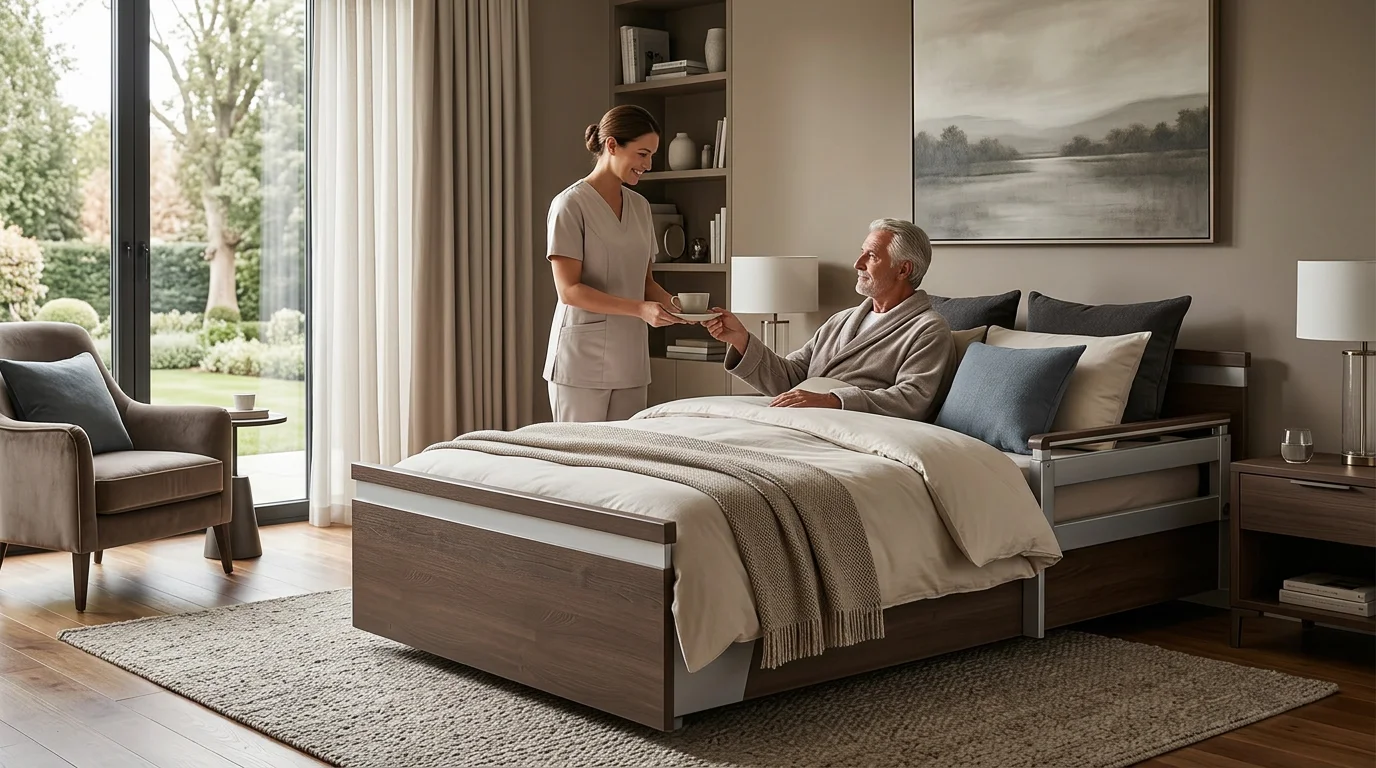
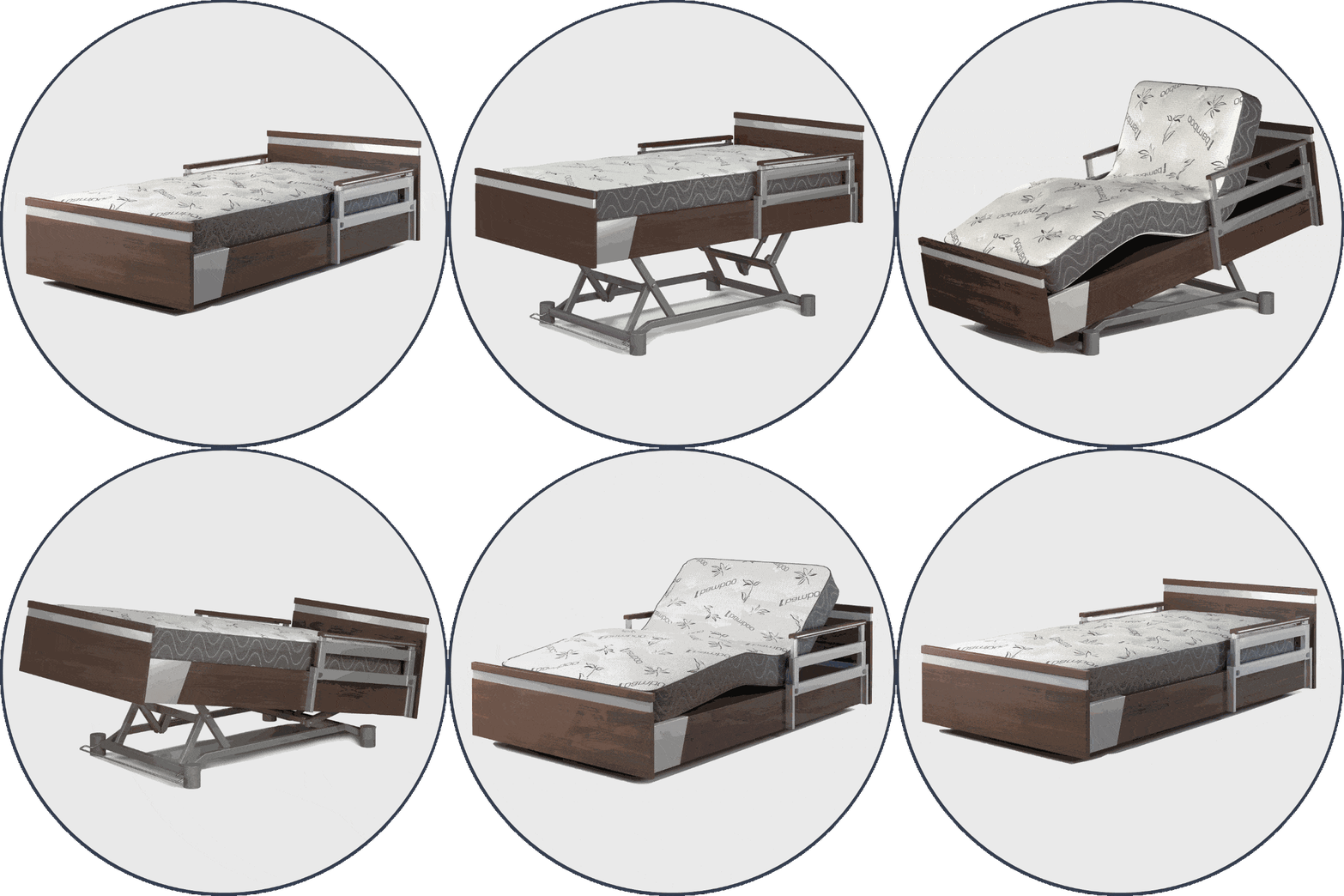
The Aura Premium Home Hospital Bed from SonderCare is designed specifically for this situation. Its FallSafe ultra-low platform height drops to just 10 inches, close enough to the floor that even a roll out of bed is unlikely to cause injury. The hi-lo adjustment range (10 to 39 inches) means you can raise the bed to a comfortable working height for transfers and repositioning, then lower it for your parent’s safety when you’re not in the room. At 500 lbs weight capacity and certified to International Hospital Standard, it delivers the clinical functionality of a facility bed with furniture-grade aesthetics that won’t turn your parent’s bedroom into something that looks institutional.
The Aura Premium also includes a pre-programmed 21-inch transfer position, the height recommended by physical therapists for safe bed-to-wheelchair transfers. That one feature can spare your back and your parent’s dignity during every single transfer.
Mattress and Bedding Essentials
The mattress matters as much as the bed frame, particularly for skin integrity. Older adults who spend extended time in bed are at serious risk for pressure injuries, and a standard mattress doesn’t provide adequate redistribution of pressure across bony prominences like the sacrum and heels.
The SonderCare Dream Bamboo Quilt-Top Mattress ($1,299) offers a practical middle ground for most home care situations. It’s reversible with a softer and firmer side, uses cooling gel for temperature regulation, and includes a fluid-proof cover, a feature you’ll appreciate more than you expect. For parents who need more intensive pressure care, an alternating pressure air mattress provides active redistribution through inflating and deflating air cells.
Beyond the mattress, stock up on waterproof mattress protectors (buy at least two so one can be in the wash), bed wedge pillows for GERD and breathing support, and an overbed table for meals and medication management. For a complete bedroom transformation approach, our guide to setting up a hospital-grade bedroom at home covers every detail from furniture placement to lighting.
Mobility and Transfer Equipment That Protects You Both
Here’s something that catches nearly every new caregiver off guard: the equipment that protects your parent also protects you. Transfer and mobility devices aren’t just about helping your parent get around, they’re about preventing the caregiver injuries that send one in three family caregivers to their own doctor within the first year.
Caregivers on forums consistently report the same regret: they didn’t know transfer aids existed until after they’d already hurt their backs. Don’t make that mistake.
Walking and Balance Aids
- Canes, walkers, and rollators, These must be properly fitted. An improperly sized walker or cane actually increases fall risk. Have your parent assessed by a physical therapist or occupational therapist who can recommend the right device and adjust it to the correct height.
- Stairway handrails, Install sturdy handrails on both sides of every staircase. This is one of the simplest, most effective safety modifications you can make.
Transfer Equipment for Elderly Care at Home
- Gait belt, A wide belt that wraps around your parent’s waist during transfers, giving you a secure grip point. It’s inexpensive, and every physical therapist recommends it as the most basic transfer safety tool.
- Transfer board (slide board), A smooth board placed between the bed and wheelchair to allow sliding transfers rather than lifting. Essential when your parent has some upper body strength but can’t stand to pivot.
- Slide sheets, Reduce friction when repositioning someone in bed. They make turning and adjusting position far less physically demanding for you.
- Patient lift, A Hoyer lift or sit-to-stand lift becomes necessary when your parent can no longer bear weight during transfers. Sit-to-stand lifts are less intimidating and work well when your parent still has some leg strength.
The World Health Organization and the American Occupational Therapy Association both strongly recommend a professional home safety assessment before purchasing major equipment.5 An occupational therapist can evaluate your parent’s specific abilities, recommend the right devices, and, critically, train you on safe transfer techniques. This assessment is often covered by insurance and is the single most valuable step you can take.
Medical Monitoring and Medication Management Equipment
New caregivers often focus so heavily on physical safety that they overlook monitoring equipment. But medical events like a sudden blood pressure spike or a missed medication dose can be just as dangerous as a fall.
Essential monitoring equipment to care for elderly at home includes:
- Digital blood pressure cuff, Home monitoring catches changes your parent’s doctor needs to know about between visits. Automatic wrist or upper arm models are easy to use.
- Pulse oximeter, A small finger clip that measures blood oxygen saturation. Essential for parents with COPD, heart failure, or respiratory conditions.
- Digital thermometer, For monitoring fevers and infections, especially after any procedure or during illness.
- Pill organizer or medication management system, Missed doses and accidental double-dosing are among the most common medication errors in home care. A weekly organizer is the minimum; automated dispensers with alarms are worth the investment for complex medication regimens.
- Personal Emergency Response System (PERS), A wearable pendant or watch with a call button your parent can press in an emergency. Models with automatic fall detection are preferable, since your parent may be unable to press the button after a fall. However, these systems have real limitations, lab accuracy doesn’t always translate to real-world performance, and the device only works if your parent actually wears it consistently.5
Some lower-tech solutions are worth mentioning too. Video baby monitors repurposed for elder monitoring let you check in from another room. A whiteboard in the kitchen or bedroom provides a visible daily record of medications given, vitals taken, and care notes for anyone else helping with care.
Incontinence Care and Skin Protection Equipment
This category doesn’t get talked about enough, and that’s partly because it carries an emotional weight that physical safety equipment doesn’t. Managing incontinence is consistently described by experienced caregivers as one of the most challenging aspects of home elder care, practically and emotionally.
Having the right supplies organized and accessible makes a meaningful difference:
- Waterproof mattress protectors, Non-negotiable. Buy at least two so you always have a clean one ready. Look for breathable options that don’t crinkle or trap heat.
- Disposable bed pads (chux), Layer these on top of the mattress protector for quick changes that don’t require stripping the entire bed.
- Barrier cream, Applied to skin at risk of breakdown from moisture exposure. Zinc oxide-based creams create a protective layer.
- No-rinse body wash and dry shampoo, For days when a full bath or shower isn’t possible. These products maintain hygiene and dignity without the physical ordeal of a transfer to the bathroom.
- Disposable gloves, Buy in bulk. You’ll go through them faster than you expect.
Skin integrity is closely linked to incontinence management. Prolonged moisture exposure accelerates skin breakdown and increases the risk of pressure injuries. If your parent spends significant time in bed, a dedicated approach to preventing pressure injuries at home is essential reading.
How to Prioritize Your Equipment Purchases for Elderly Care at Home
You don’t need to buy everything at once. In fact, trying to do so is overwhelming and unnecessary. The most effective approach, recommended by the National Institute on Aging and CDC, follows a phased timeline based on urgency and impact.5
Phase 1: Immediate Actions (First Week)
These cost almost nothing and address the most common hazards:
- Remove throw rugs, clutter, and trip hazards from all walkways
- Secure or cover electrical cords running across floors
- Add night lights in the bedroom, hallway, and bathroom
- Replace dim bulbs with brighter ones in every room
- Place non-slip mats in the bathtub and on bathroom floors
Phase 2: Core Equipment (First Month)
- Schedule a professional home safety assessment with an occupational therapist
- Install grab bars near the toilet and in the shower
- Get a raised toilet seat and shower chair
- Purchase a properly fitted walker, cane, or rollator
- Set up a medication management system
- Buy waterproof mattress protectors and incontinence supplies
Phase 3: Structural Modifications (1 to 6 Months)
- Hire a contractor for permanent grab bar installation and stair handrails
- Set up a personal emergency response system
- Evaluate whether a stairlift is needed
- Consider a home hospital bed if transfers, repositioning, or fall risk demand it
Phase 4: Major Investments (Long-Term Planning)
- Hospital bed with pressure redistribution mattress
- Curbless or roll-in shower conversion
- Doorway widening for wheelchair access
- Patient lift system for non-weight-bearing transfers
For a deeper look at the structural side, ramps, door widths, flooring changes, see our guide to aging-in-place home modifications for a comprehensive walkthrough.
What Medicare and Insurance Cover for Home Care Equipment
This is one of the most confusing aspects of equipment for elderly care at home, and the confusion costs families money they don’t need to spend, or causes them to miss coverage they’re entitled to.
What Medicare Part B typically covers (when prescribed by a physician as Durable Medical Equipment):
- Hospital beds (when medically necessary)
- Wheelchairs and power mobility devices
- Walkers and canes
- Patient lifts
- Some pressure-relieving mattress overlays
What you’ll likely pay out of pocket:
- Grab bars and bathroom safety modifications
- Raised toilet seats and shower chairs
- Incontinence supplies (briefs, pads, barrier cream)
- Personal emergency response systems
- Most monitoring equipment (blood pressure cuffs, pulse oximeters)
- Overbed tables and comfort accessories
If your parent is a veteran, the Department of Veterans Affairs offers grants like HISA (Home Improvements and Structural Alterations) and SAH (Specially Adapted Housing) that can fund significant home modifications. State Medicaid Home and Community-Based Services (HCBS) waiver programs also frequently cover environmental modifications. Your local Area Agency on Aging can connect you with programs specific to your region.
For families considering a premium home hospital bed as a private pay investment, it’s worth comparing the long-term cost against months of rental fees for a basic DME bed. A quality bed like the SonderCare Aura Premium, paired with a mattress and white-glove delivery, represents a one-time investment that often costs less over time than ongoing rental, and delivers dramatically better comfort, safety features, and aesthetics. SonderCare’s Aura Premium includes a 5-year comprehensive warranty covering all parts from headboard to footboard.
Getting Started: Your Next Steps
Caring for an aging parent at home is one of the hardest things you’ll do. You didn’t train for this. You’re learning on the job while managing your own life, your own family, and your own health. The equipment won’t make caregiving easy, nothing does. But the right equipment to care for elderly at home makes the physical demands safer for both of you and gives you something invaluable: fewer emergencies, fewer middle-of-the-night crises, and a little more peace of mind.
Start with the bathroom. Schedule that OT assessment. Clear the trip hazards tonight. You don’t need a perfect setup, you need a safer one, and you can build it in phases.
If you’re considering a home hospital bed and aren’t sure what features matter for your parent’s specific situation, SonderCare’s bed experts have helped thousands of families navigate that decision. A conversation costs nothing, and you’ll walk away knowing exactly what you need, and what you don’t.
References
- Kakara R, et al. Nonfatal and Fatal Falls Among Adults Aged ≥65 Years, United States, 2020–2021. MMWR Morb Mortal Wkly Rep. 2023;72:938–943. DOI: 10.15585/mmwr. mm7235a1
- Bhattacharya A, et al. Where do older adult falls occur? An analysis of the location of injurious falls from NEISS-AIP, 2015. PMC. 2021. https://pmc.ncbi.nlm.nih.gov/articles/PMC8669898/
- Haddad YK, Miller GF, Kakara R, et al. Healthcare spending for non-fatal falls among older adults, USA. Injury Prevention. 2024. https://pmc.ncbi.nlm.nih.gov/articles/PMC11445707/
- Keall MD, et al. Home modifications to reduce injuries from falls in the Home Injury Prevention Intervention (HIPI) study: a cluster-randomised controlled trial. The Lancet. 2015;385(9964):231-238. DOI: 10.1016/S0140-6736(14)61006-0
- World Health Organization. Falls fact sheet. 2021. https://www.who.int/news-room/fact-sheets/detail/falls; National Institute on Aging. Fall-proofing your home. https://www.nia.nih.gov/health/fall-prevention