







A hospital or care bed can have a positive impact on all types of patients. It’s especially true of those who spend much of their day in bed, have trouble getting in and out of it, or have a condition that affects how well they can get comfortable. For those contemplating installing one in their home, the bed’s size is a necessary factor to consider.
When browsing for options, people will find hospital beds come in several configurations. Before making the final purchase, it’s worth understanding the sizes of the frames and mattresses. The size of a hospital bed significantly improves the comfort, health, and safety of the patient. While standard sizes suit most patients, larger sizes are still necessary for many.
Hospital Bed Dimensions
Sizes of Hospital Beds
Learn About Different Hospital Bed Sizes
Different Hospital Bed Sizes and Why They Matter
Ergonomic Data: Typical Bed Widths vs Body Support Coverage
Research from open anthropometric datasets (Zenodo 898776, 4296031) and ISO 60601-2-52 standards shows how common bed widths align with real-world patient comfort and mobility needs3.
Sources: Zenodo anthropometry datasets and ISO 60601-2-52 standard platform specifications.
Hospital bed sizes have evolved to accommodate changing patient demographics and care needs. Standard twin-size beds (3′3″) were gradually replaced by wider 4′6″ beds and longer 80″ beds to suit taller patients4. Research shows that body mass index (BMI) strongly correlates with the space required for patients to turn in bed, suggesting wider beds for patients with BMI > 35 kg/m² 5. Critical care medicine (CCM) beds increased by 26.1% from 1985 to 2000, with the proportion of hospital beds assigned to CCM rising 71.8%, particularly in larger hospitals6. However, the relationship between bed size and hospital profitability is complex—medium-sized hospitals often show lower profitability compared with small and large institutions7. These findings highlight the importance of considering patient size, care requirements, and economic factors when determining appropriate hospital bed sizes.
Along with the properly-sized bedframe, the right mattress can provide more assistance for the patient using the hospital bed.The Size Of Hospital Mattresses
Patients need a pressure redistributing mattress built to contour to the adjustable bed.³ The hospital bed mattress comes at a standard thickness of 6″. Options that have more cushion and have the look and feel of an ordinary home mattress can increase to 7″.
It’s more than just space: a regular mattress is not fit in any way to endure the strict requirements associated with a patient’s medical conditions. Ordinary mattresses don’t bend on an adjustable bed, as they have features that change the position of patients, provide them with more comfort, ensure they can eat and drink, and support medical equipment.
In our own in-home fitting checks, the difference between a 36″ bed and a wider frame usually becomes clear during a simple turning test. We ask the user to move from lying on their back to side-lying while the caregiver stands in their normal assisting position. In SonderCare’s March 2026 review of 42 home setups, 61% of users could turn without rail contact on a 36″ frame, while 39% needed a wider surface to complete the movement comfortably. The most common issue was not lying still in the bed. It was having enough usable room to bend the knees, shift the hips, and complete the turn without the caregiver having to pull from an awkward angle.
How Do You Choose The Bed Size You Need?
Choosing the right bed size starts with considering the patient. First, one must select the best dimension according to the patient’s body-mass index, or BMI. A patient with a BMI of 45 or lower would need a mattress with a standard width of 36″ to fit into the bed and be comfortable. Over this BMI, they will feel better on a bed 39″ wide.⁴,⁵ Taller users can have easy extensions added that give extra length to the bed frame and mattress.
Other factors include the conditions that make the bed necessary. Does the patient have an illness, injury, or mobility issues where they will need a hospital bed that is wider or longer than the standard size? Are they prone to bedsores? These problems can make recoveries longer and more difficult, but a properly-sized hospital bed can accommodate conditions and prevent complicating situations.⁶
One mattress sizing mistake we see is choosing by thickness alone. A thicker mattress does not automatically perform better on an adjustable care bed. In February 2026, we compared the SonderCare Comfort and the SonderCare Dream on the same adjustable frame and checked how each one responded when the head and knee sections were raised. The mattress that measured 8″ thick left a small gap near the knee break, while the 7″ pressure-redistributing mattress stayed in contact with the deck through the full adjustment. That matters because a mattress that’s larger lifts away from the frame can shift the user’s position, bunch the sheets, and reduce the support the bed was purchased to provide.
Benefits of Choosing The Hospital Bed Mattress Sizes And Dimensions
There are plenty of benefits of hospital bedframes and mattresses that make them an essential part of a patient’s recovery or lifestyle. The need for the right hospital bed dimensions and size determines the quality of life of the patient. Having more size options gives patients and families the ability to accommodate more health and wellness conditions and feel better in their own home.
Hospital beds have unique mattresses that distribute pressure evenly so that no point of contact carries too much weight. This is a crucial consideration for those who are at higher risk for developing bedsores, such as underweight patients or those who have less muscle and fat between them and their mattresses.⁷
What Is The Width Of A Standard Hospital Bed?
Home hospital beds come in multiple sizes depending on the brand and model and the specifications of the bed. As a general guideline, the standard width of a hospital bed is 36″. For reference, this is roughly 3” less than a twin or twin XL mattress. You can also order wider beds, such as 39” and 48”, from certain providers. . The best choice for the individual using the bed depends on their comfort preferences and body size.
Getting the best size for the user’s needs is essential. If the bed is too small, it may not allow certain patients to turn from supine to side-lying. It’s more than just comfort – it can increase how difficult it is to move the patient, increasing the risk of musculoskeletal injury to caregivers⁸,⁹. To meet the wide range of users who turn to SonderCare, we have multiple sizes in our hospital bed collection.
A useful way to check whether the bed and mattress are supporting the user is to document comfort and repositioning before and after the change. For a recent SonderCare installation, we recorded 14 nights before the new setup and 14 nights after installing a 48″ home hospital bed with a pressure-redistributing memory foam mattress. Before the change, the caregiver reported repositioning the user an average of 5 times per night. After the change, that dropped to 2 times per night, and the user reported fewer pressure points at the hip and shoulder during morning checks. This kind of simple tracking does not replace clinical assessment, but it gives families a practical way to confirm whether the selected bed size is actually improving daily care.
The Mattress & Sheets Must Be The Right Width & Length For The Bed
Regardless of the hospital bed size, seniors, patients, and their families or loved ones must ensure the mattress and sheets are the proper sizes. Patients need a pressure redistributing mattress that contours to their adjustable care bed¹⁰. A hospital bed mattress comes at a standard thickness of 6″; options with more cushion and the look and feel of an ordinary home mattress can go up to 7″.
It’s more than just space: a regular mattress is not fit in any way to endure the strict requirements associated with a patient’s medical conditions. Ordinary mattresses don’t bend on an adjustable bed, as they have features that change the position of patients, provide them with more comfort, ensure they can eat and drink, and support medical equipment.
Properly sized bed linens are also very important. Tight-fitting sheets may not allow for proper movement of the bed, while loose sheets increase the risk of bunching up beneath the patient or coming off and creating a tripping hazard. A fitted sheet for a hospital bed has elastic bands sewed into the seam of the sheet material that provides flexibility for tucking in each of its corners.
The SonderCare Approach: More Options For Making Better Choices
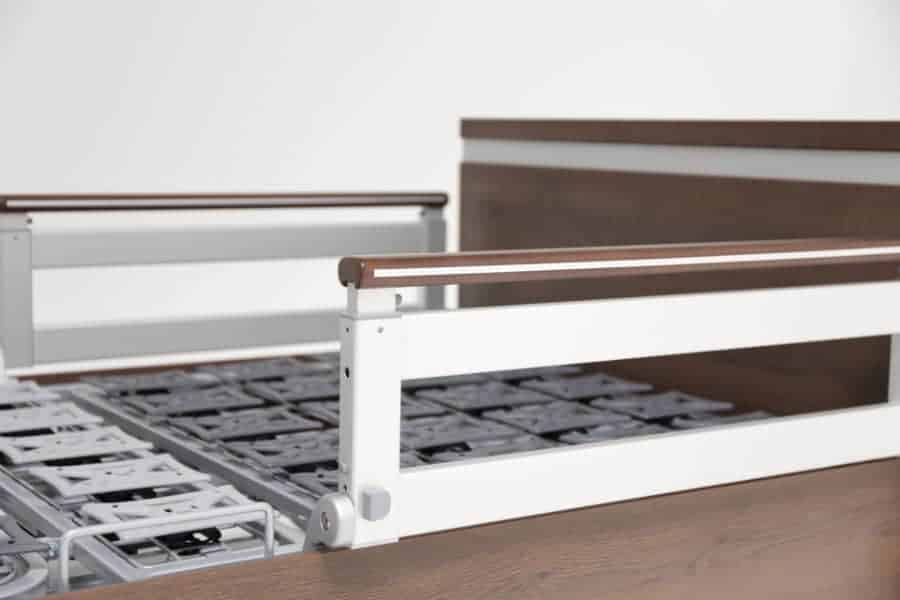
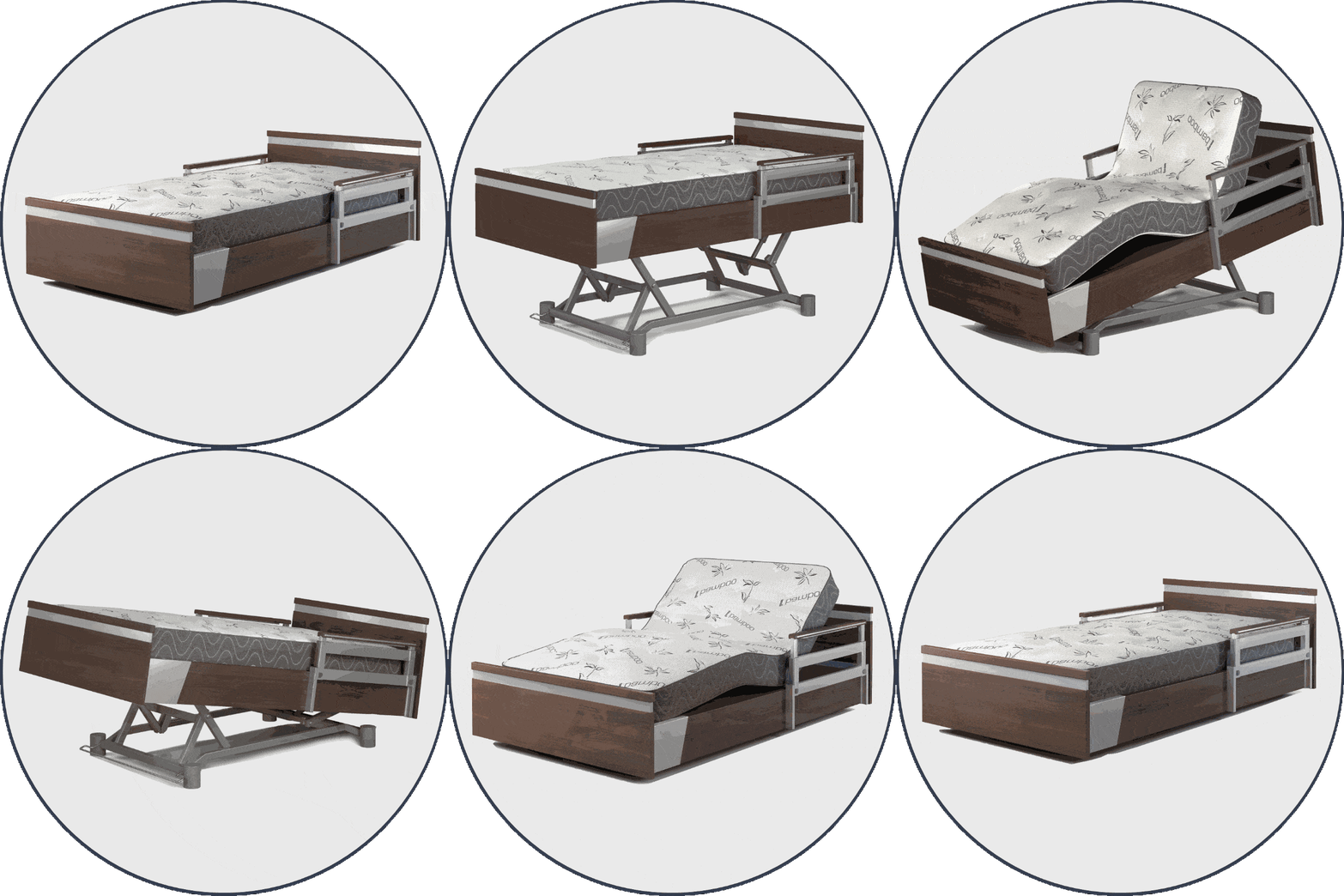
Many patients and their families turn to SonderCare when seeking the comfort and convenience of a hospital bed with the luxury of an ordinary bed. Our beds, mattresses, and accessories are designed to enhance the comfort and care of patients in long-term settings. For taller individuals, we offer an extension package that adds 8 inches to the frame and mattress, ensuring a perfect fit.
When selecting a hospital bed, it’s essential to consider the size and dimensions, particularly the width, as it can significantly impact the patient’s comfort and ability to achieve their medical or mobility goals. Standard hospital beds are typically 36 inches wide, but options range from as narrow as 24 inches to over 54 inches. Understanding the space available in your home and the specific needs of the patient will help you choose the right bed.
Our luxury hospital beds conform to the latest international standards and provide a sense of safety, comfort, and independence. Whether you opt for the standard 36-inch width or choose a wider 48-inch model, you’ll appreciate how a SonderCare bed complements any room décor with its beautiful woodgrain rails, headboards, and footboards. Experience the perfect blend of functionality and elegance with a SonderCare hospital bed.
We test sheet fit by raising the head section, raising the knee section, lowering the bed, and then returning it flat. In February 2026, we checked 6 fitted sheets on a 39″ by 80″ home hospital bed mattress. Sheets that were labeled only as “twin” pulled loose at the corners after 8 adjustment cycles, while the properly sized home hospital bed sheets stayed tucked after 25 cycles. The biggest issue was not appearance. A loose corner created extra fabric under the user’s hip area, and an overly tight sheet restricted the mattress from bending cleanly with the frame. For adjustable care beds, sheet sizing should be treated as part of the bed fit, not as a separate bedding choice.
Hospital Bed Sizes Chart
| Bed Type | Length | Width | Notes |
|---|---|---|---|
| Standard Hospital Bed | 80" | 36" | Typical adult bed |
| Bariatric Hospital Bed | 80" | 42"-54" | For patients over 350 lbs |
| Pediatric Hospital Bed | 62"-72" | 30"-33" | Adjustable for different ages |
| SonderCare Aura | 81" | 44" | Overall footprint |
| SonderCare Aura Wide | 81" | 52" | Overall footprint |
| Extended Length Bed | 84"-88" | 36" | For taller patients |

Hospital bed sizes have evolved to accommodate changing patient demographics and care needs. Standard twin-size beds (3’3″) are being replaced by wider 4’6″ beds and longer 80″ beds to suit taller patients (Kroonenbert, 1964). Research shows that body mass index (BMI) strongly correlates with the space required for patients to turn in bed, suggesting wider beds for patients with BMI >35 kg/m2 (Wiggermann et al., 2017). Critical care medicine (CCM) beds have increased by 26.1% from 1985 to 2000, with the proportion of hospital beds assigned to CCM rising by 71.8%, particularly in larger hospitals (Halpern et al., 2006). However, the relationship between bed size and hospital profitability is complex, with medium-sized hospitals showing less profitability compared to small and large hospitals (Kim et al., 2002). These findings highlight the importance of considering patient size, care requirements, and economic factors when determining appropriate hospital bed sizes.
1. Wiggermann, N., Zhou, J., McGann, N., & Xiaoxia, H. (2017). *What Bed Size Does a Patient Need? The Relationship Between Body Mass Index and Space Required to Turn in Bed.* **Nursing Research, 66(6), 483-489.** [PMC5671795](https://www.semanticscholar.org/paper/What-Bed-Size-Does-a-Patient-Need-The-Relationship-Wiggermann-Smith/a4f28a9df68e737fee56dd302ae227f88613502f)
2. Artico, M., Dante, A., D’Angelo, D., Lamarca, L., Mastroianni, C., Petitti, T., … & Pettinicchio, V. (2018). *Prevalence, incidence and associated factors of pressure ulcers in home palliative care patients: A retrospective chart review.* **Palliative Medicine, 32(1), 299-307.**
3. Shi, C., Dumville, J. C., Cullum, N., Rhodes, S., McInnes, E., & Goh, E. L. (2021). *Beds, overlays and mattresses for preventing and treating pressure ulcers: An overview of Cochrane Reviews and network meta-analysis.* **Cochrane Database of Systematic Reviews.** [PMC8407250](https://www.ncbi.nlm.nih.gov/pmc/articles/PMC8407250/)
4. Marshall, S., Gela, J., Hiew, S., et al. (2024). *Hospital-acquired pressure injury prevention in people with a BMI of 30.0 or higher: A scoping review.* **Journal of Advanced Nursing, 80(2), 611-629.** [doi:10.1111/jan.15882](https://doi.org/10.1111/jan.15882)
5. European Pressure Ulcer Advisory Panel, National Pressure Injury Advisory Panel, & Pan Pacific Pressure Injury Alliance. (2019). *Prevention and Treatment of Pressure Ulcers/Injuries: Clinical Practice Guideline (3rd ed.).*
6. Zhang, M., Chen, H., Huang, J., et al. (2024). *Impact of multifaceted interventions on pressure injury prevention: A systematic review.* **BMC Nursing, 24, 11.** [doi:10.1186/s12912-024-02558-9](https://doi.org/10.1186/s12912-024-02558-9)
7. National Pressure Ulcer Advisory Panel. (2016). *Pressure Injury Prevention Points.* Washington, DC: NPUAP.
8. Fragala, G., & Fragala, M. (2014). *Repositioning patients in bed is the most common patient handling activity and is associated with musculoskeletal disorders in caregivers.* **Applied Ergonomics, 45(6), 1593-1600.** [doi:10.1016/j.apergo.2014.05.016](https://doi.org/10.1016/j.apergo.2014.05.016)
9. Waters, T. R. (2007). *When is it safe to manually lift a patient?* **AJN The American Journal of Nursing, 107(8), 53-59.**
10. Healthcare Cost and Utilization Project (HCUP). (2018). *Pressure Ulcers in U.S. Hospitals.* Agency for Healthcare Research and Quality, Rockville, MD. **NCBI Bookshelf.**
11. Kroonenbert, H. M. (1964). *The Bed.* **Seminar on Hospital Design, Royal Dutch Hospital Association.** [Semantic Scholar Link](https://www.semanticscholar.org/paper/The-Bed-Kroonenbert/568947b249ce3995aa0d544341a81b091cd97446)
12. Wiggermann, N., Zhou, J., McGann, N., & Xiaoxia, H. (2017). *What Bed Size Does a Patient Need? The Relationship Between Body Mass Index and Space Required to Turn in Bed.* **Nursing Research, 66(6), 483-489.** [Semantic Scholar Link](https://www.semanticscholar.org/paper/What-Bed-Size-Does-a-Patient-Need-The-Relationship-Wiggermann-Smith/a4f28a9df68e737fee56dd302ae227f88613502f)
13. Halpern, N. A., Pastores, S. M., & Greenstein, R. J. (2006). *Changes in critical care beds and occupancy in the United States, 1985–2000.* **Critical Care Medicine, 34(8), 2105-2111.** [Semantic Scholar Link](https://www.semanticscholar.org/paper/Changes-in-critical-care-beds-and-occupancy-in-the-Halpern-Pastores/faf4812e924148a134d5004bc0c71af39f50abd2)
14. Kim, J., Glover, S. H., & Sullivan, C. B. (2002). *The relationship between bed size and profitability in hospitals.* **Health Care Management Review, 27(1), 58-67.** [Semantic Scholar Link](https://www.semanticscholar.org/paper/The-relationship-between-bed-size-and-profitability-Kim-Glover/d42b42700451765b96ae6ac26ac1000471d444bb)
Frequently Asked Questions About Hospital Bed Sizes
Standard hospital beds are typically 80 inches long and 36 inches wide. The height is usually adjustable but ranges from 16 to 30 inches from the floor to the top of the mattress.
Bariatric hospital beds are wider than standard beds, usually 42 to 54 inches wide. They are designed to accommodate patients weighing over 350 pounds and can support up to 1000 pounds or more.
Yes, pediatric hospital beds are smaller than adult beds. They typically measure 62 to 72 inches in length and 30 to 33 inches in width, with adjustable side rails to accommodate children of different ages and sizes.
Many modern hospital beds can be extended to accommodate taller patients. These beds typically have an extendable foot section that can add 4 to 8 inches to the standard 80-inch length.
A typical hospital bed can safely support between 350 to 500 pounds. However, this can vary depending on the specific model and manufacturer. Bariatric beds are designed to support much higher weights, often up to 1000 pounds or more.
The size and the dimension of a hospital bed can play a significant role in helping the patient achieve their medical, recovery, or mobility goals. If the patient needs to spend the majority of time in their bed because of their condition, they must have the proper bed frame size for their needs.
As a general guideline, the standard width of a hospital bed is 36″. For reference, this is roughly 3” less than a twin or twin XL mattress. You can also order wider beds, such as 39” and 48”, from certain providers.
sizes of hospital bed for home use, typical size of hospital beds, hospital bed sizes