






Home Hospital Beds for Vascular Dementia: A Clinical & Consumer Funding Guide
We understand how overwhelming it can feel to keep a loved one with vascular dementia safe and comfortable at home. The worry about falls, the concern over their comfort, and the physical strain of caregiving are heavy burdens to carry. This guide is here to empower you with specific, actionable knowledge, transforming anxiety into a plan of action. A home hospital bed is more than furniture; it’s a tool to preserve dignity, extend precious time at home, and provide tangible peace of mind. When chosen wisely, it becomes a cornerstone of safe, sustainable care. Research suggests that well-supported care at home can be 19% to 40% lower in cost than hospital stays, largely by helping to prevent crises before they happen.
Arm yourself with the data, codes, and checklists that follow. They are your roadmap to creating a safer, more comfortable sanctuary for your loved one and a more sustainable caregiving journey for you.
Creating a Safe Haven: Preventing Falls and Injuries with a Hospital Bed
Your loved one’s bedroom should be a place of rest, not risk. For someone with vascular dementia, a standard bed can pose serious dangers. A therapeutic bed is designed to transform that space into a secure environment through thoughtful, engineered solutions.
The Smart Fall Prevention Strategy: Low-Low Beds and Understanding Rails
The most critical feature for vascular dementia fall prevention is a “low-low” height function, allowing the bed to lower to a gentle 7 to 10 inches from the floor. This simple adjustment is profoundly effective—a fall from this height may reduce injury severity by up to 90% compared to a fall from a standard bed.
This brings us to the complex topic of side rails. While they may reduce the number of falls by 10-15%, they can increase the risk of injury by about 20%, as a confused loved one may try to climb over them. The U.S. Food and Drug Administration (FDA) has documented tragic fatalities from rail entrapment.
FDA 7-Zone Entrapment Risk Table
| Zone | Location of Entrapment | Mitigation Strategy |
|---|---|---|
| 1 | Within the rail | Use rails with mesh or solid surfaces that prevent head/neck entrapment. |
| 2 | Under the rail, between the rail supports | Ensure gaps are less than 3.5 inches. |
| 3 | Between the rail and the mattress | CRITICAL. Ensure the mattress fits the frame perfectly. Use mattress-retention brackets. |
| 4 | Under the rail, at the ends of the rail | Check for openings; use filler blocks if provided. |
| 5 | Between split bed rails | Avoid or ensure the gap is too small for head/neck entrapment. |
| 6 | Between the end of the rail and the side edge of the head or footboard | Choose beds designed to minimize this gap. |
| 7 | Between the head or footboard and the mattress | Ensure mattress is proper length and pushed firmly against the headboard. |
Protecting Skin Integrity: Choosing a Pressure Relief Mattress with Care
For a loved one spending more time in bed, protecting their skin is an act of daily care. A severe pressure ulcer is not only painful but can cost $20,000 to $40,000+ to treat. The right pressure relief mattress for bedridden individuals is your first and best line of defense. Patients with vascular dementia are exceptionally vulnerable due to immobility and impaired blood supply.
Mattress Technology Comparison Table
| Mattress Type | Mechanism | Clinical Effectiveness | Suitability for Home Care |
|---|---|---|---|
| High-Specification Reactive Foam | Constant low-pressure support via viscoelastic or polyurethane foam. Reduces pressure by conforming to the body. | High. Proven effective for pressure ulcer prevention (Level A evidence). Cost-effective first-line choice. | Excellent. Low maintenance, no power required, quiet, and durable. |
| Alternating Pressure Air (Active Surface) | A pump cyclically inflates/deflates air cells to periodically change pressure points. | Moderate. Effective for prevention and treatment, but not conclusively superior to high-spec foam for prevention alone (Level B evidence). | Moderate. Requires power, can be noisy, pump requires monitoring. Justified for completely immobile individuals or those with existing ulcers. |
| Low Air Loss | Allows air to escape through the surface to manage moisture and temperature. | Moderate-High. Effective for managing microclimate (moisture, heat), which is a risk factor for skin breakdown. | Low. Higher cost, complex setup and maintenance. Typically reserved for complex wound management. |
Beyond Safety: Cultivating Comfort, Sleep & Managing Agitation
Discomfort is a common, often unspoken, source of agitation and poor sleep. An adjustable bed provides a gentle, drug-free way to help ease this distress. Features like “Cardiac Chair” positioning (raising the head and knees slightly) can improve breathing, ease digestion, and make meals or visits more social and enjoyable.
There’s also hopeful research: sleeping on one’s side may help the brain’s natural cleaning system work more efficiently. For a brain affected by vascular dementia, this supported, comfortable positioning is more than just restful—it’s a positive step for overall well-being.
Critical for Caregivers: Ergonomics & Protecting Mental Health
Your health is essential to this journey. Caregiving is physically demanding, with a one-year prevalence of back injuries as high as 52%. A bed with easy height adjustment isn’t a luxury; it’s essential ergonomics. Raising the bed to your waist level helps prevent the constant bending that leads to pain and injury.
The emotional relief is just as important. Knowing the bed is at its safest 7-inch low height when you’re not in the room can provide a real sense of security. This “peace-of-mind” feature may help lower your constant anxiety, help you sleep better, and directly protect you from burnout. Reduced caregiver burden can also lead to relief from behavioral symptoms in the patient.
Your Procurement Playbook for a Home Hospital Bed
Proving Medical Necessity & Navigating Medicare Hospital Bed Coverage
Medicare Part B can cover a home hospital bed when it’s “medically necessary.” The key is a Written Order Prior to Delivery (WOPD) from a doctor, based on a face-to-face visit. The documentation must clearly explain why a regular bed won’t suffice.
Key Medicare Codes & What They Mean for You:
- E0255: Fixed height hospital bed. Rarely sufficient for dementia care needs.
- E0260: Semi-electric bed (head and height adjust). Requires documentation of need for repositioning or height adjustment for safety.
- E0261: Fully electric bed (head, knee, and height adjust). This is often the best fit for vascular dementia and the primary target for coverage but the lowest approved rate by Medicare.
Navigating Private Pay: Unlocking Aesthetics, Speed, and Advanced Features
While Medicare coverage is a vital resource, it often comes with strict limitations regarding bed width, design, and functionality. Many families choose private pay options to bypass bureaucratic delays or to secure a bed that feels like furniture rather than medical equipment. For a loved one with vascular dementia, preserving the familiarity of their bedroom can be as clinically important as the safety features themselves.
Choosing to purchase out-of-pocket opens the door to features that Medicare deems “convenience” items but which you may find essential for quality of life—such as wider sleeping surfaces, superior mattress technology, and non-clinical aesthetics.
The “Gap” Analysis: Medicare vs. Private Pay Models
Understanding the difference between what insurance covers and what is available privately helps you decide if the investment is worth it for your family.
| Feature | Standard Medicare Bed (DME) | Private Pay / Luxury Care Bed | Dementia Care Impact |
|---|---|---|---|
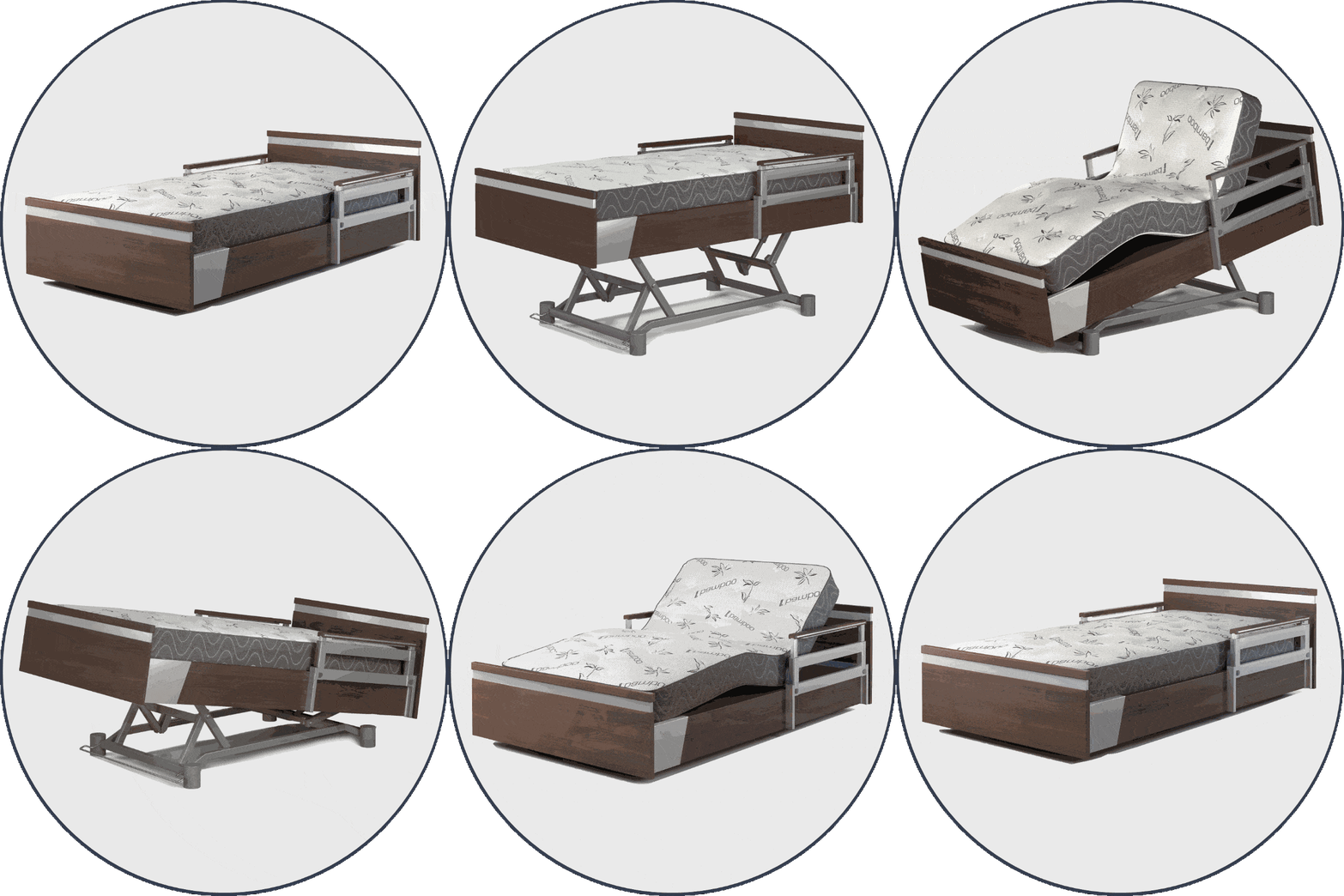
| Aesthetics | Industrial metal, basic laminate wood grain. Looks “institutional.” | Fully upholstered or genuine wood frames. Hides mechanisms. | Reduces anxiety. A clinical look can trigger confusion or resistance in dementia patients. |
| Size Options | Twin (36″) or Twin XL (36″ x 80″). | Full (54″), Queen (60″), and Dual-King options available. | Promotes intimacy. Allows a spouse to co-sleep or lie down to comfort the patient. |
| Advanced Positioning | Head and Knee articulation. | Trendelenburg (tilt), Chair Position, and lateral rotation. | Eases caregiving. Helps with swelling (edema) and makes transfers significantly easier. |
| Speed of Access | Requires doctor visits, documentation approval, and insurance authorization (Weeks). | Immediate purchase and shipping (Days). | Crisis aversion. Essential if a hospital discharge is pending and home setup is required immediately. |
Financial Strategy: Making the Investment Manageable
If you determine that a private pay bed is the best route for your loved one’s safety and your home’s environment, there are several financial tools available to mitigate the cost.
1. The Tax Deduction Pathway
Even if you are not using insurance, you should still obtain a prescription (Letter of Medical Necessity) from the doctor. Under IRS Publication 502, the cost of a hospital bed is generally a deductible medical expense if you itemize deductions and your total medical expenses exceed 7.5% of your adjusted gross income.
2. Financing and CareCredit
Many premium bed manufacturers and specialized DME retailers offer 0% financing for 12 to 24 months. Utilizing services like CareCredit or Affirm can break a $3,000 investment into manageable monthly payments of roughly $125–$250, often making it comparable to the cost of other monthly utilities.
3. Long-Term Care (LTC) Insurance Reimbursement
If your loved one has a Long-Term Care insurance policy, check the “Durable Medical Equipment” clause. Many LTC policies are more flexible than Medicare and may reimburse the purchase of a “lifestyle” or luxury hospital bed if it facilitates remaining at home.
Understanding the Value: A Cost-Benefit Analysis & Break-Even
Viewing this bed as an investment in safety reveals its true value. It may pay for itself by helping to prevent a single major health crisis.
Break-Even Cost Comparison Table
| Item | Cost Range | Key Detail |
|---|---|---|
| Home Hospital Bed (Fully Electric) | $1,500 – $18,000 | One-time cost for years of safety and comfort. |
| Hip Fracture Treatment & Recovery | ~$30,000+ | Includes surgery, hospital stay, and rehab. |
| Stage 3/4 Pressure Ulcer Treatment | $20,000 – $40,000+ | Includes advanced wound care and possible surgery. |
Your Step-by-Step Procurement Workflow
Procurement Checklist with Responsible Parties
| Step | Action | Responsible Party | Success Metric |
|---|---|---|---|
| 1. Clinical Assessment | Doctor documents specific needs: fall risk, pressure risk, positioning needs. | Prescribing Physician/Nurse Practitioner | A detailed note justifying codes E0260/E0261. |
| 2. Order & Documentation | Doctor writes the prescription (WOPD). Supplier checks insurance. | Physician & DME Supplier | A complete WOPD is on file before delivery. |
| 3. Feature Selection | Use the Selection Matrix below to choose the right bed and mattress. | You (Caregiver) & DME Specialist | Your final choice matches your loved one’s needs. |
| 4. Delivery & Setup | Bed is delivered, assembled, and placed in the home. | DME Supplier/Technician | Bed is ready, safe, and optimally placed. |
| 5. Training | Hands-on training for ALL caregivers on operation and safety. | DME Technician / Care Manager | You feel confident using all bed functions. |
| 6. Follow-up & Monitoring | Track falls, check skin daily, note your own comfort. | You / Home Health Nurse | You have data to ensure the setup is working. |
The Essential Selection Matrix & Implementation Checklist
This matrix helps you translate your loved one’s symptoms into the specific hospital bed for dementia patients at home features that will help most.
Patient Profile Selection Matrix
| Patient Profile | Primary Risk | Recommended Bed Features | Mattress Recommendation |
|---|---|---|---|
| Ambulatory but Confused | Falls, wandering. | Fully Electric (E0261). Mandatory low-low (7-10″) height. Consider half-rails for support only. | High-specification foam. |
| Immobile / Minimal Movement | Pressure Ulcers, Contractures. | Fully Electric (E0261). Must have knee adjustment for positioning, heel relief. | Alternating pressure air or high-spec foam. |
| Respiratory Comorbidity (CHF, COPD) | Breathing Difficulty, Aspiration. | Fully Electric (E0261). Must have head (HOB) and knee (KOB) adjustment for “Chair” position. | High-spec foam. Ensure head section articulates adequately (>60°). |
| Severe Agitation / Restlessness | Falls, Self-Injury, Caregiver Injury. | Fully Electric (E0261). Low-low height is critical. Avoid full rails. Enclosed bed may be last resort (very specific criteria). | High-spec foam for comfort. |
| Primary Need: Caregiver Ergonomics | Caregiver Injury, Burnout. | Semi-Electric (E0260) or Fully Electric (E0261). Must have easy, reliable height adjustment. | Foam or hybrid; ensure it doesn’t impede height range. |
Your Final Safety and Success Checklist
- ☐ Perform the 7-Zone Safety Check: After setup, use the FDA table above to check for dangerous gaps.
- ☐ Understand Rail Consent: If rails are used to prevent getting out of bed, this requires a formal doctor’s order and your informed consent.
- ☐ Create a Repositioning Routine: With a foam mattress, gently reposition your loved one every 2 hours.
- ☐ Make Low Height a Habit: When you leave the room, lower the bed to its safest height.
- ☐ Track What Matters: Keep a simple log of any stumbles, check skin daily, and note your own stress or back pain levels.
Creating a safe, comfortable, and dignified space for your loved one is one of the most profound acts of care. This data is your tool to make it a reality.
References & Sources
- How Can Hospital Beds Help With Dementia? – SonderCare
https://www.sondercare.com/learn/hospital-beds/how-hospital-beds-help-dementia/ - Hospital at Home care for older patients with cognitive impairment
https://pmc.ncbi.nlm.nih.gov/articles/PMC5875621/ - How Can Hospital Beds Help With Dementia? – SonderCare
https://www.sondercare.com/learn/hospital-beds/how-hospital-beds-help-dementia/ - Pressure ulcers (bed sores) – Alzheimer’s Society
https://www.alzheimers.org.uk/sites/default/files/migrate/downloads/factsheet_pressure_ulcers_bedsores.pdf - Comprehensive geriatric hospital-at-home increases the…
https://pmc.ncbi.nlm.nih.gov/articles/PMC12151491/ - How Can Hospital Beds Help With Dementia? – SonderCare
https://www.sondercare.com/learn/hospital-beds/how-hospital-beds-help-dementia/ - Untold Dangers Of Hospital Bedrails
https://munley.com/untold-dangers-of-hospital-bedrails/ - A Guide for Modifying Bed Systems and Using Accessories… – FDA
https://www.fda.gov/medical-devices/hospital-beds/guide-modifying-bed-systems-and-using-accessories-reduce-risk-entrapment - Do Doctors Recommend Adjustable Beds For Homecare… – SonderCare
https://www.sondercare.com/learn/home-healthcare/doctors-recommend-adjustable-beds-home-healthcare-patients/ - Beds, overlays and mattresses for preventing and treating… – Cochrane
https://www.cochranelibrary.com/cdsr/doi/10.1002/14651858.CD013761.pub2/full - Comparative Effectiveness of Active and Reactive Mattresses…
https://pmc.ncbi.nlm.nih.gov/articles/PMC11945283/ - Effectiveness of pressure-relieving mattresses on pressure ulcers
https://wounds-uk.com/journal-articles/effectiveness-of-pressure-relieving-mattresses-on-pressure-ulcers/ - Alternating pressure (active) air surfaces for preventing… – Cochrane
https://www.cochranelibrary.com/cdsr/doi/10.1002/14651858.CD013620.pub2/full - The influence path of caregivers’ positive aspects…
https://www.sciencedirect.com/science/article/abs/pii/S0197457222000234 - The Future of Hospital Care with Smart Bed Technology
https://www.news-medical.net/health/The-Future-of-Hospital-Care-Embracing-Smart-Bed-Technology.aspx - Reliable Contactless Monitoring of Heart Rate, Breathing Rate… – NIH
https://pmc.ncbi.nlm.nih.gov/articles/PMC11387924/ - Implementing AI-Driven Bed Sensors – PubMed Central – NIH
https://pmc.ncbi.nlm.nih.gov/articles/PMC11548467/ - A Review of Patient Bed Sensors for Monitoring of Vital Signs
https://pmc.ncbi.nlm.nih.gov/articles/PMC11314724/ - Cybersecurity – FDA
https://www.fda.gov/medical-devices/digital-health-center-excellence/cybersecurity - Virtual wards and hospital at home – UK Parliament
https://researchbriefings.files.parliament.uk/documents/POST-PN-0744/POST-PN-0744.pdf - Cost drivers and feasibility of a hospital-at-home…
https://pmc.ncbi.nlm.nih.gov/articles/PMC11966944/ - The Cost-Effectiveness of Homecare Services for Adults and Older…
https://pmc.ncbi.nlm.nih.gov/articles/PMC9960182/ - Is comprehensive geriatric assessment hospital at home a…
https://academic.oup.com/ageing/article/51/1/afab220/6490273