








What Makes Each Type of Home Hospital Bed Different?
All three types of home hospital beds perform the same core functions: raising and lowering the head section, adjusting the knee/foot section, and changing the overall bed height. The difference is in how you control those adjustments, and that distinction has real consequences for your body, your time, and your spouse’s independence.
Full Electric Hospital Beds
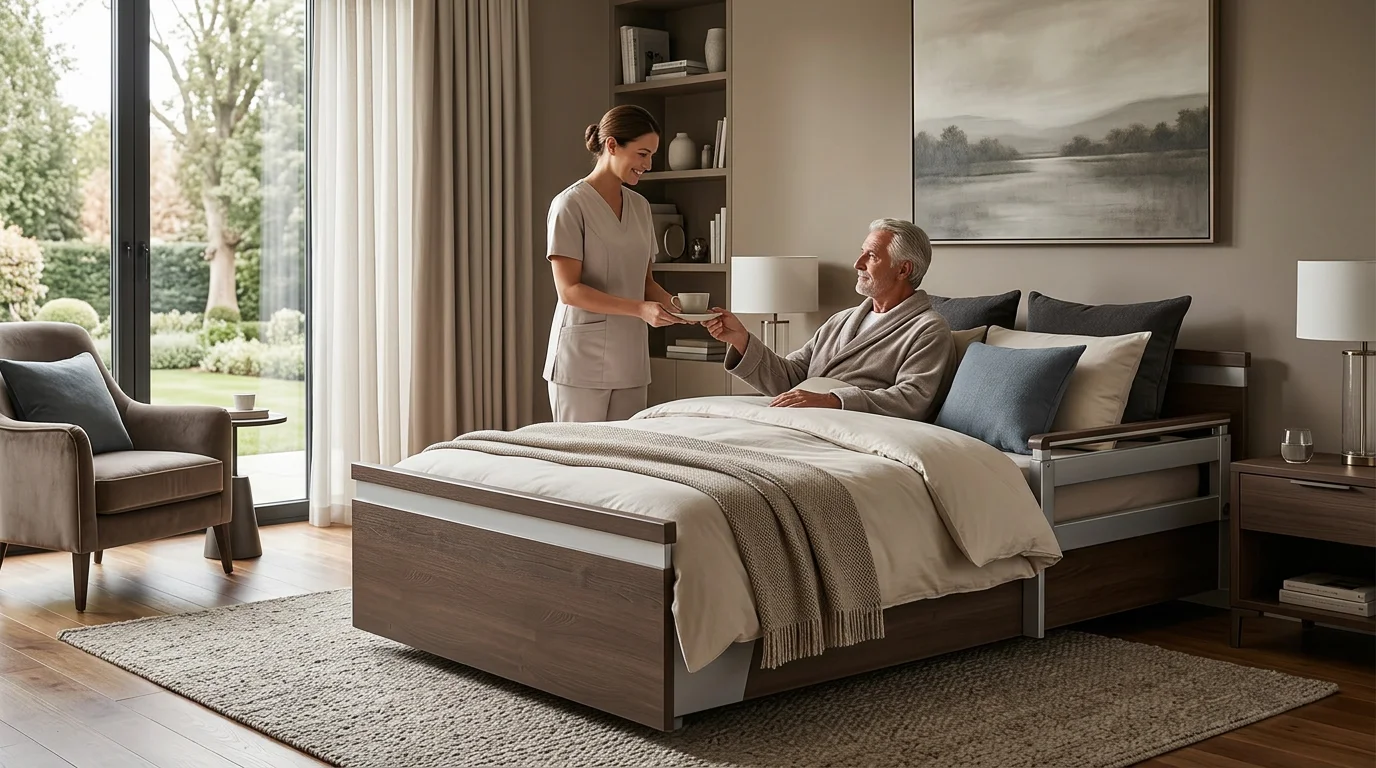
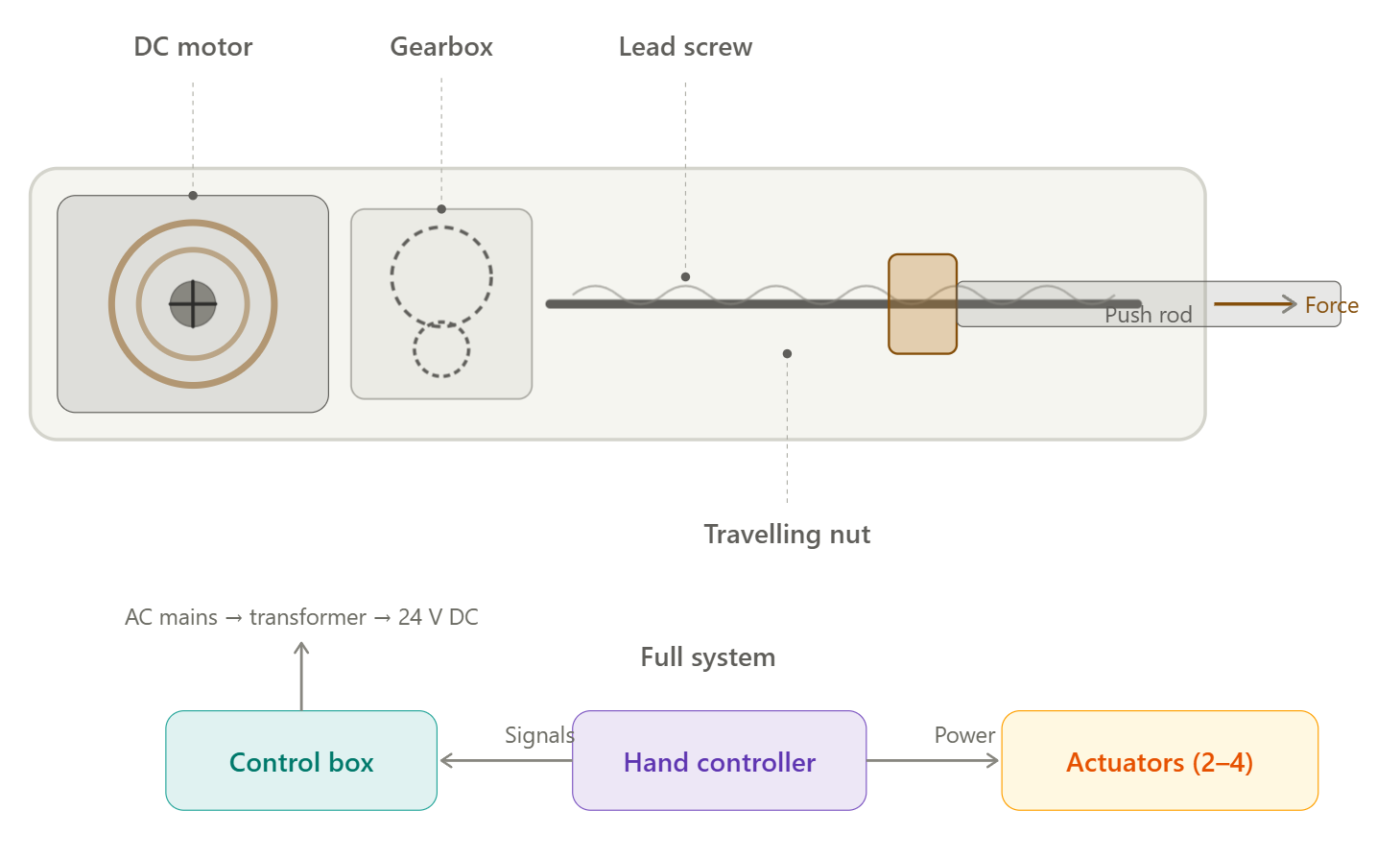
A full electric hospital bed uses electric motors for every adjustment. Head elevation, knee positioning, and the critical height function are all controlled through a handheld remote or side-rail buttons. Modern full electric beds use DC motors (also called actuators), which are significantly smaller, quieter, and more powerful than the AC motors found in basic or older models. AC-powered beds tend to produce more noise and vibration during adjustments, while DC motor systems deliver smoother, more precise movement — an important distinction for nighttime use. Premium models from manufacturers like SonderCare use hospital-grade motor systems that operate quietly enough to adjust at night without disturbing your spouse.
Full electric beds offer the widest height range, typically adjusting from as low as 10 inches (platform height) up to 39 inches from the floor. This range matters enormously for both safety and caregiving. The low position reduces fall risk, while the high position brings the mattress to your waist level for transfers, bathing, and linen changes, protecting your back from the repetitive bending that causes injury over time.
Semi-Electric Hospital Beds
A semi-electric hospital bed powers the head and foot sections with electric motors, but requires a manual hand crank for height adjustment. You can often tell the difference at a glance: a full electric bed connects only to a power outlet, while a semi-electric bed will have a visible hand crank, usually located at the foot of the frame. This sounds like a minor compromise on paper. In practice, caregivers report that the height crank requires 30 to 50 complete turns to move through the full range9. When you need to raise the bed for a morning transfer, lower it for safety after your spouse is settled, raise it again for a lunchtime linen change, and lower it once more, that adds up to hundreds of crank turns per day.
Semi-electric beds are the most commonly prescribed type for home use because Medicare is more likely to cover the powered head and foot sections while classifying the manual height crank as meeting the basic requirement. This insurance-driven reality means many families end up with a semi-electric bed not because it’s the best fit, but because it’s what the system covers.
Manual Hospital Beds
Manual hospital beds use hand cranks for every adjustment, head, foot, and height. They are the least expensive option, but also the most physically demanding. Every position change requires the caregiver to locate the crank handle, walk to the correct end of the bed, and turn repeatedly. For a spousal caregiver who may be managing their own age-related physical limitations, the cumulative strain of manual cranking throughout the day can lead to shoulder pain, back injury, and exhaustion that makes continued home care unsustainable.
How Each Bed Type Affects Your Daily Caregiving
The difference between these bed types shows up most clearly in daily routines, not in a product brochure. Consider a typical caregiving day for a spousal caregiver.
Morning transfer: Your spouse needs to move from bed to wheelchair. With a full electric bed, you press one button to raise the bed to transfer height. The entire adjustment takes seconds. With a semi-electric bed, you walk to the foot of the bed, locate the crank handle stored underneath, and begin turning. Thirty to 50 turns later, the bed is at the right height. With a manual bed, you crank the height and adjust the head section by hand before the transfer can happen.
Night-time repositioning: Your spouse needs a position change at 2 AM. With a full electric bed, they may be able to use the handheld remote themselves, preserving both their independence and your sleep. With a semi-electric or manual bed, they call for you. You get up, find the crank, and begin turning in the dark.
Biomechanical research shows that bed height is directly tied to caregiver safety. Studies have found a strong negative correlation between bed height and low back compressive forces, with a correlation coefficient of -0.704 for the L5-S1 vertebral segment2. In practical terms, this means that every time you bend over a bed that’s too low, because the crank is too difficult or time-consuming to adjust, you’re increasing the compressive load on your lower spine. The powered height function in a full electric bed removes this barrier entirely.
Research into turn-assist features found a 23.5% reduction in peak hand force and an 11.2% reduction in peak L5/S1 compressive load during lateral repositioning tasks1. While these features extend beyond bed type alone, they illustrate a consistent principle: reducing the physical effort of care tasks directly protects caregiver health. Beds that make every adjustment easier, like a full electric model, compound this benefit across dozens of daily interactions.
Full Electric vs Semi-Electric vs Manual Hospital Bed: Complete Comparison
The table below compares all three bed types across the factors that matter most for home caregiving. Use it as a reference when evaluating your options.
| Feature | Full Electric | Semi-Electric | Manual |
|---|---|---|---|
| Head/Foot Adjustment | Electric remote | Electric remote | Manual crank |
| Height Adjustment | Electric remote (seconds) | Manual crank (30-50 turns) | Manual crank (30-50 turns) |
| Typical Price Range | $1,200-$7,000+ | $800-$2,500 | $500-$1,500 |
| Medicare Coverage | Generally NOT covered (height motor = “convenience”) | Usually covered with prescription | Covered with prescription |
| Caregiver Physical Strain | Minimal | Moderate (height cranking) | High (all cranking) |
| Patient Can Self-Adjust | Yes, all functions via remote | Partial, head/foot only | No, dependent on caregiver |
| Night-Time Adjustments | Quiet, button-press | Requires getting up + cranking | Requires getting up + cranking |
| Trendelenburg/Tilt | Available on premium models | Rarely available | Not available |
| Best For | Long-term care, limited mobility, sole caregivers | Short-term use, budget-conscious with insurance | Very short-term, physically strong caregivers |
The Aura Premium Home Hospital Bed from SonderCare represents what a purpose-built full electric bed can offer for home care. With a height range from 10 inches (FallSafe ultra-low position) to 39 inches, a 500 lb weight capacity, and positioning capabilities including Trendelenburg, Zero Gravity, and Cardiac Chair, it delivers hospital-grade functionality in a furniture-grade design with quiet motor operation that won’t disrupt your shared bedroom.
Hospital beds have not always been connected to electricity — earlier generations relied entirely on muscle power for every adjustment. The shift to electric operation transformed what a hospital bed could do for patients and caregivers alike. Today, electric beds combine comfort and functionality to make life easier for users and caregivers carrying out any duties. The electrical bed plugs into an outlet, and the user controls it with a remote attached to the side of the bed. The drive system must operate with a VDE-approved power source – 220V, 50/60Hz mains socket.
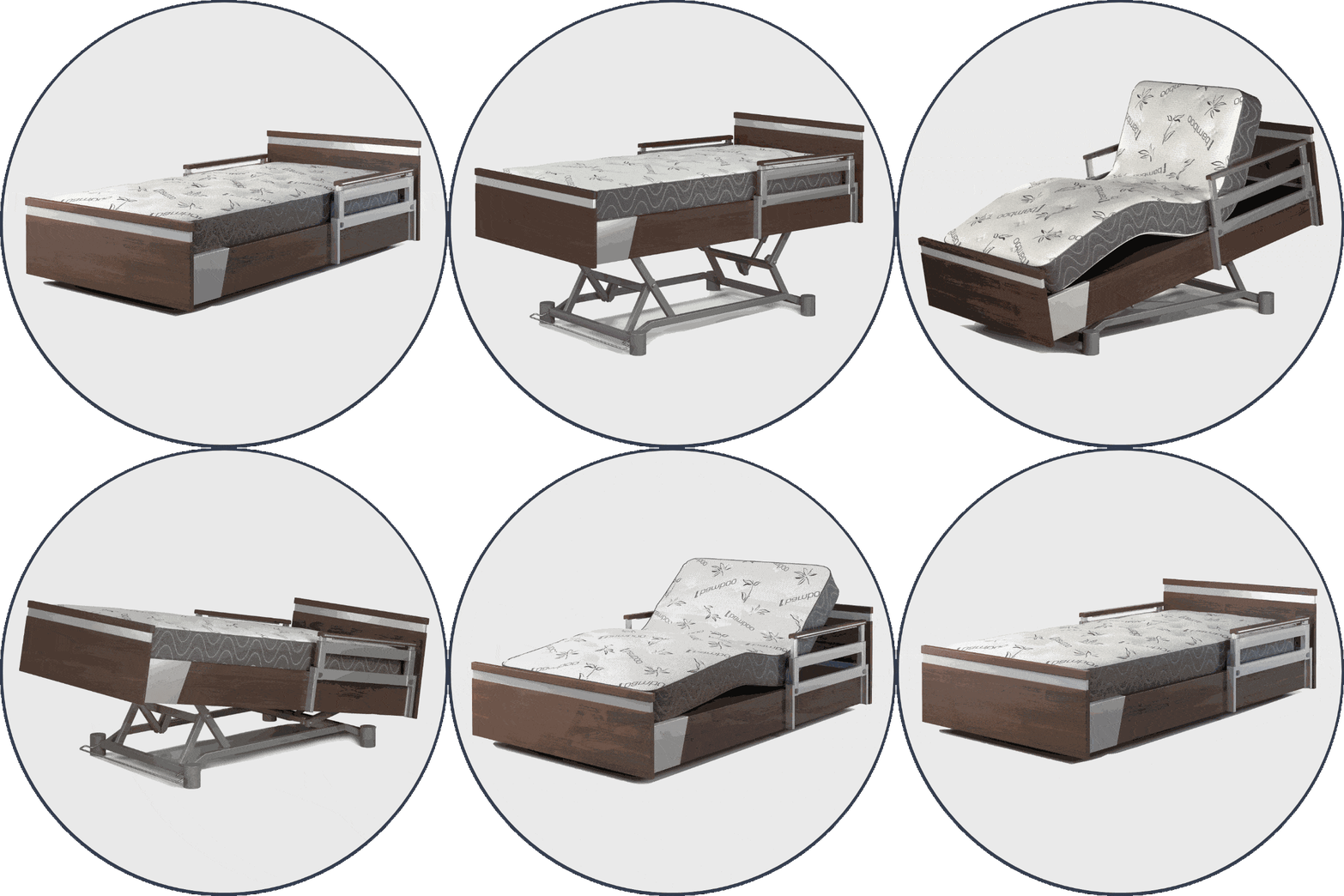
The power drives the user’s ability to put the bed in different positions, eliminating the physical labor one would need to operate a semi-electric or manual hospital bed. Adjustable positioning allows the user to increase the backrest elevation to up to 90 degrees. The lower part of the bed can also be adjusted, which can help increase comfort and circulation in the lower limbs.
The power makes hospital beds easy to adjust. The user can reshape the position themselves using a hand controller without relying on a health care worker or family member to do it for them. On top of the control one has over the bed’s feet and head, they can also change the height of an electric bed. If they need to get out of bed, they can lower the mattress to make the process safer; it can then rise to let caregivers reach the patient. The added freedom of movement can improve the user’s feelings of independence.
For caregivers, there are safety features to keep patients secure. The hand controller, for instance, has a locking function on the back of the device, which the caregiver can operate with a key switch.
What Medicare and Insurance Actually Cover
Understanding Medicare coverage for hospital beds saves families from expensive surprises. Here is the honest breakdown.
Medicare Part B classifies hospital beds as durable medical equipment (DME) and will cover them with a physician’s prescription documenting medical necessity. However, Medicare draws a line at the height adjustment motor. Powered head and foot sections are considered medically necessary for conditions requiring specific positioning. Powered height adjustment is classified as a “convenience item”, meaning Medicare will not cover a full electric bed8.
This policy shapes the entire market. Semi-electric beds became the standard home care option largely because they satisfy Medicare’s coverage criteria: electric positioning where Medicare sees medical necessity, manual cranking where Medicare sees convenience. The result is that many families receive a semi-electric bed through insurance without fully understanding what they’re giving up.
Experienced caregivers in ALS and long-term care forums report that navigating insurance for a semi-electric bed often costs more in time and frustration than purchasing a full electric bed outright. One forum moderator noted that buying direct is “often cheaper, all told” than dealing with prior authorization, rental agreements, and the limitations of insurance-grade equipment. Cash-purchase prices for quality full electric beds range from $1,200 for basic models to $7,000+ for premium residential designs, with the price difference between semi-electric and full electric typically falling between $300 and $500 for comparable base models.
For families who need a bed for three months or less and have insurance coverage, a semi-electric rental can make financial sense. For long-term caregiving, which is the reality for most spousal caregivers, purchasing a full electric bed outright is often the better financial and physical investment.
Why the Height Adjustment Changes Everything for Caregivers
If there is one feature that separates a manageable caregiving experience from an unsustainable one, it is powered height adjustment. This is not a convenience, it is the single most impactful ergonomic feature for anyone providing daily hands-on care.
The research is clear. Safe Patient Handling and Mobility (SPHM) programs that include powered equipment reduce overall caregiver injury rates by 56%3. These same programs led to an 86% decrease in lost workdays4 and an 84% reduction in workers’ compensation costs5. While these figures come from institutional settings, the biomechanical principles apply equally to a spouse providing care at home, the forces on your spine don’t change because you’re in a bedroom instead of a hospital.
Raising the bed to waist height for transfers, bathing, and linen changes keeps your back in a neutral position. Lowering it afterward reduces fall risk for your spouse. This up-and-down cycle may happen six to ten times per day in a typical caregiving routine. With a full electric bed, each adjustment takes seconds. With a semi-electric bed, each height change requires walking to the crank, bending down, and performing 30 to 50 rotations, a task that becomes increasingly painful for caregivers with arthritis, shoulder injuries, or the normal physical limitations that come with aging.
The combination of Trendelenburg positioning and powered height adjustment delivers even greater benefits. Research found that using Trendelenburg tilt together with maximum mattress inflation produced the lowest peak spinal loads and hand forces during boosting tasks, outperforming either feature used alone10. This is why premium full electric beds that include tilt functions offer meaningful advantages over basic models that only provide head, foot, and height adjustment.
The SonderCare Aura Premium includes Trendelenburg, Reverse Trendelenburg, and a pre-programmed 21-inch transfer height position, so you can bring the bed to the optimal transfer height with a single button press rather than guessing. The FallSafe ultra-low position lowers the platform to just 10 inches (17 inches to mattress top), which is significantly lower than standard hospital beds and reduces injury severity if a fall does occur.
For spousal caregivers on a tighter budget, the SonderCare Impulse Residential Bed ($3,999) provides full electric head, knee, and height adjustment with a 400 lb capacity, offering the critical powered height function at a more accessible price point, though without the Trendelenburg and Zero Gravity positioning of the Aura line.
Which Hospital Bed Type Should You Choose?
The right choice depends on three factors: how long the bed will be needed, the caregiver’s physical condition, and budget. Here is a framework to guide the decision.
Choose a full electric bed if:
- Care will last three months or longer
- The caregiver has back, shoulder, or joint concerns
- The person in the bed has limited mobility and cannot assist with transfers
- Height adjustments will happen more than two to three times daily
- The person in the bed wants to self-adjust positioning independently
- Night-time adjustments are likely
A semi-electric bed may be acceptable if:
- Insurance covers it and use is genuinely short-term (under three months)
- Height changes are infrequent (once or twice daily at most)
- The caregiver is physically strong and without joint or back issues
- Budget is the primary constraint and the price difference is significant
A manual bed is appropriate only if:
- Use will last days to a few weeks at most
- The caregiver is physically capable and adjustments are rare
- It is truly a temporary bridge while a better option is arranged
For spousal caregivers specifically, the full electric bed is almost always the right choice. You are likely providing care for months or years, not weeks. You are aging alongside your spouse, and your own physical health is the foundation that makes home care possible. The $300 to $500 difference between a semi-electric and a comparable full electric bed is one of the smallest investments with the largest daily impact on your quality of life.
If maintaining a shared bedroom matters to you and your spouse, the SonderCare Aura Companion Bed ($12,999) offers a split-king configuration where each side operates independently for comfort functions while both sides adjust height together. With an upholstered headboard and residential design, it preserves the look and feel of a normal bedroom, addressing one of the most common concerns spousal caregivers raise about bringing care equipment into their home.
What Real Caregivers Say About Each Bed Type
Community forums and caregiver support groups offer perspective that product specifications cannot. Here is what experienced caregivers consistently report.
“Get the full electric, you will thank yourself later.” Across caregiving communities, the consensus is overwhelming. Caregivers who chose semi-electric beds to save $300 to $500 frequently describe regretting the decision within weeks. The recurring message: if the bed will be used daily for months and the caregiver has any physical concerns, full electric is the better investment.
The hidden physical toll of the semi-electric height crank. Caregivers report that the manual height crank, not the head or foot adjustment, is what causes cumulative strain. One frequently cited frustration from a UK caregiving forum: the crank requires approximately 50 revolutions to reach maximum height for tasks like bathing, changing, and dressing. Performed multiple times daily over weeks and months, this becomes a significant source of shoulder and back pain.
Power outage concerns are common but overblown. A frequent question from first-time buyers is what happens during a power failure. Experienced users confirm that quality electric beds include a manual crank backup stored under the bed frame. One AgingCare community member noted their family member’s electric bed “comes with a hand crank bar kept under the bed that can be used if the power goes out.” SonderCare also offers a Portable Battery Back-Up ($149) for complete peace of mind.
Patient independence is a dignity issue. Caregivers emphasize that full electric beds allow the person in the bed to adjust their own position using the handheld remote, without calling for help every time they want to sit up, elevate their legs, or find a more comfortable angle. With semi-electric or manual beds, the person cannot reach the cranks from a lying position, which means they depend entirely on someone else for every change. For a spouse who values their autonomy, this distinction matters deeply.
The included mattress needs upgrading. Forum veterans universally warn that the mattress bundled with most hospital beds, regardless of type, is poor quality. Budget separately for a pressure redistribution mattress or overlay. If your spouse will spend significant time in bed, a quality mattress is as important as the bed frame itself. You can learn more in our guide to pressure sore prevention and treatment.
Setting Up Your Home for a Hospital Bed
Regardless of which bed type you choose, proper bedroom setup makes a significant difference in daily comfort and safety. You will need adequate space around all sides of the bed for caregiver access, a dedicated electrical outlet (for electric and semi-electric models), and a plan for the existing bedroom furniture. Our hospital-grade bedroom setup guide walks through the complete process of transforming a bedroom into a safe, comfortable care space without losing its residential character.
When comparing bed types for your home, also consider the different types of hospital beds available for home use beyond just the motor configuration, including width options, weight capacity, and specialized positioning features that may be relevant to your spouse’s specific care needs.
Making the Right Decision for Your Family
Choosing between a full electric, semi-electric, and manual hospital bed comes down to a simple question: how much physical effort are you willing to absorb every day for the foreseeable future? Full electric beds eliminate the most demanding physical task in daily caregiving, repeated height adjustment, while giving your spouse the independence to control their own comfort. Semi-electric beds save money upfront but transfer that cost to your shoulders, back, and energy. Manual beds cost the least but demand the most.
For spousal caregivers providing long-term care at home, the evidence and the experience of thousands of families point consistently in one direction: a full electric hospital bed is not a luxury. It is an investment in your ability to continue providing care safely, comfortably, and sustainably, without sacrificing your own health or the warmth and dignity of your shared home.
Have questions about which bed is right for your situation? SonderCare’s bed experts have helped thousands of families navigate this decision. Speak with a SonderCare expert for personalized guidance, no pressure, just honest answers.
Frequently Asked Questions
What does semi-electric mean?
A semi-electric hospital bed uses electric motors for head and foot adjustments, but requires a manual hand crank for height adjustment. The user can raise or lower the head and knee sections with a remote control, but must physically crank the bed up or down to change the overall bed height — similar to a fully manual bed for that one function.
What is a total electric (full electric) hospital bed?
A full electric hospital bed uses electric motors for every adjustment — head, foot, and height — all controlled by a handheld remote or side-rail buttons. The user can reposition the entire bed without any manual cranking, making it the most convenient and ergonomic option for both patients and caregivers.
How can you tell if a hospital bed is semi-electric or full electric?
The easiest way is to look for a hand crank. Semi-electric beds have a crank handle, usually at the foot of the bed, used for height adjustment. Full electric beds have no crank — every function is operated through the electronic control system.
References
- Biomechanical analysis of turn-assist features in hospital beds: peak hand force reduced from 446 N to 341 N (23.5% reduction) and peak L5/S1 compressive load reduced from 1,913 N to 1,698 N (11.2% reduction) during lateral repositioning tasks.
- Correlation study of bed height and caregiver spinal loading: strong negative correlation (r = -0.704) between bed height and L5-S1 compressive forces, indicating higher bed positions significantly reduce low back strain during patient care tasks.
- Teeple et al. (2018/2019) meta-analysis of Safe Patient Handling and Mobility (SPHM) programs: 56% reduction in overall caregiver injury rates (Injury Rate Ratio of 0.44).
- NIOSH/OSHA program evidence: Safe Patient Handling and Mobility programs with assistive technology led to an 86% decrease in lost workdays for caregivers.
- NIOSH/OSHA program evidence: Safe Patient Handling and Mobility programs resulted in an 84% reduction in workers’ compensation costs.
- FDA / Hospital Bed Safety Workgroup (HBSW): 413 deaths, 120 injuries, and 158 near-miss events from bed entrapment reported between January 1985 and January 2006.
- Biomechanical study of air-assisted repositioning devices: 50.7% reduction in peak L5/S1 spinal compression compared to standard draw sheet for 50 kg patient boosting tasks.
- Medicare policy on hospital bed coverage: electric height adjustment classified as “convenience item” and not covered under Part B DME benefit; semi-electric beds with manual height crank are the standard covered option with physician documentation of medical necessity.
- Caregiver community reports across ALS Forums, MND Association Forum, and AgingCare: semi-electric bed height cranks require approximately 30-50 complete revolutions for full height range adjustment.
- Biomechanical study of integrated bed features: combination of Trendelenburg positioning with maximum mattress inflation produced the lowest peak L5/S1 compressive load and lowest peak hand force during boosting tasks compared to individual features or standard methods.