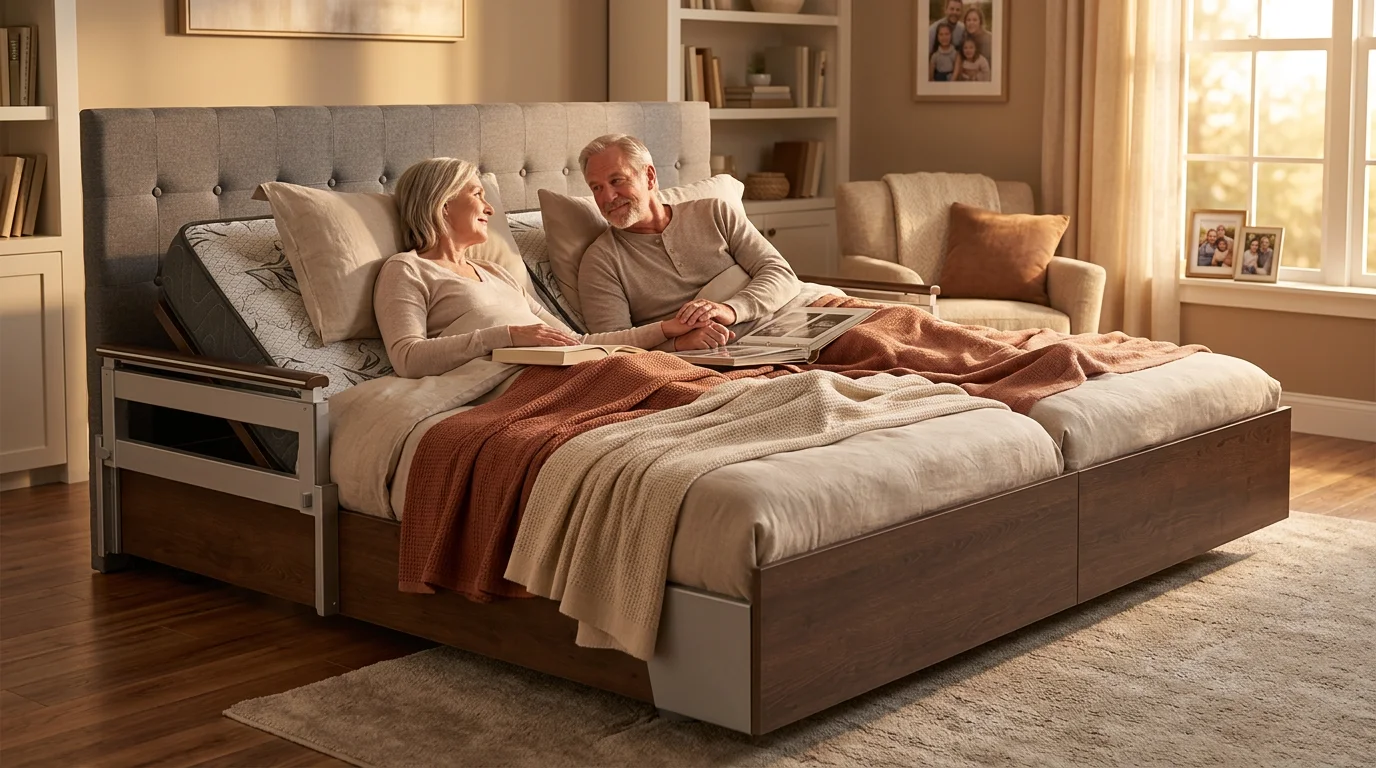
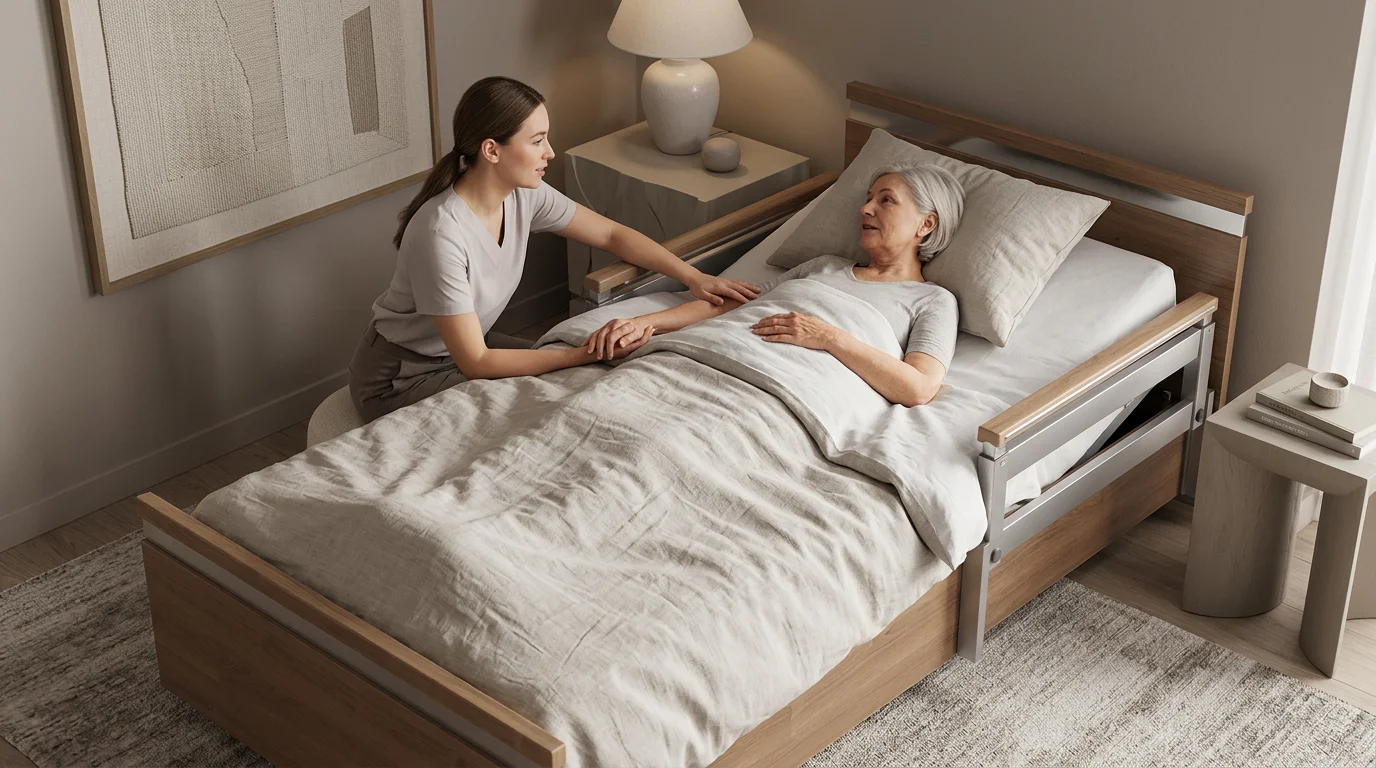
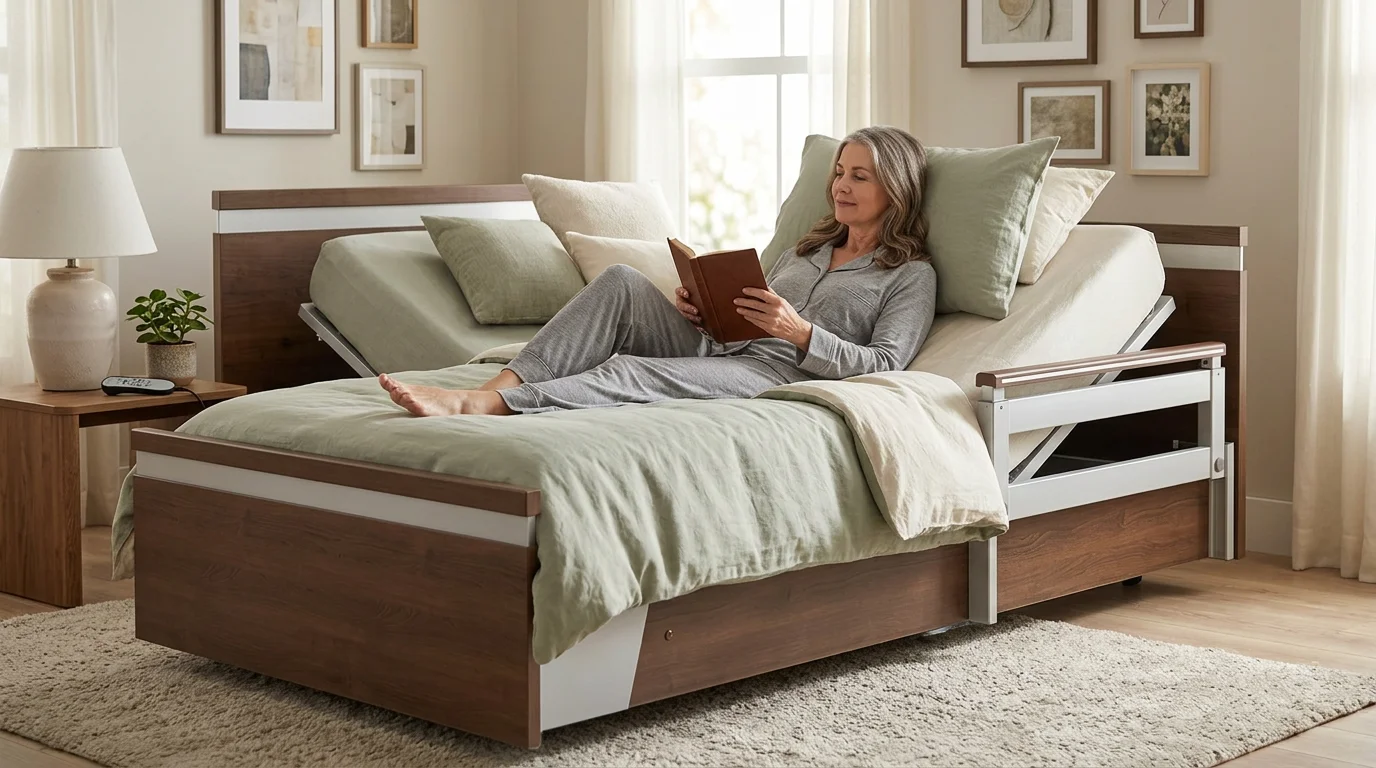
When your partner needs a hospital bed at home, the first worry often has nothing to do with the bed itself. It is about what happens to your bedroom, your nightly routine, and the closeness that has defined your relationship for decades. For many couples, dual hospital beds for couples offer a way to keep sleeping side by side while meeting real medical needs. Research confirms this instinct matters: a 2021 study of over 1,200 married older adults found that couples who slept in separate bedrooms were more than twice as likely to experience emotional loneliness.
1 You don’t have to choose between proper care and your shared bedroom.
This guide walks through how companion beds and split-king hospital bed setups work, what features matter most, and how to create a bedroom that supports both partners, the one who needs mobility assistance and the one providing care.
Why Staying in the Same Bedroom Matters More Than You Think
The decision to bring a hospital bed into your home can feel like surrendering your relationship to illness. But the research says something important: staying physically close to your partner isn’t just emotionally comforting — it’s measurably good for your health.
A multilevel analysis of 860 older couples found that sleeping in separate rooms was significantly associated with lower psychological well-being, and that the negative effects of poor sleep were amplified when couples slept apart.
2 This means that separating bedrooms doesn’t simply remove one problem, it can make existing sleep challenges feel worse emotionally.
The benefits of physical closeness go deeper. A landmark meta-analysis involving over 308,000 participants found that individuals with stronger social relationships had a 50% increased likelihood of survival, an effect comparable to quitting smoking.
3 A 2024 meta-analysis published in Nature Human Behaviour confirmed that physical touch, including the everyday contact between partners, reduces cortisol levels and blood pressure.
4
For spousal caregivers specifically, the mental health stakes are high. Research shows that 50% to 70% of caregivers for persons with dementia experience sleep disorders, and caregivers lose an average of 2.4 to 3.5 hours of sleep per week compared to non-caregivers.
5 A daily diary study found that worse sleep among caregivers was directly associated with higher same-day anxiety and depressive symptoms.
6 When sleeping arrangements change on top of an already demanding caregiving role, the emotional toll compounds.
The takeaway is straightforward: preserving your shared bedroom isn’t a luxury. It protects the relationship foundation that supports both of you through a difficult time.
What Is a Companion Bed? Understanding Dual Hospital Bed Setups
A companion bed is a setup designed to let couples sleep side by side when one partner requires a hospital bed. The concept is simple, two sleeping surfaces placed together to form a king-size bed, but the execution varies significantly depending on the approach.
The companion bed concept is well-established in hospice and home care. Authoritative palliative care design guidelines specifically recommend that “the companion bed needs to be designed so it is flush with the hospital bed, so the patient’s partner can lie alongside them.”
7 This isn’t a workaround; it’s a recognized best practice.
Three Common Approaches
Purpose-built split-king hospital beds are the most integrated solution. These beds use two independent platforms within a single frame, each with its own controls, while sharing a unified headboard. The
SonderCare Aura Companion Bed is designed specifically for this purpose. It offers three configurations: split-king mode where each side adjusts independently for comfort while both sides move together for height, a full king mode, and a fully separated mode for nursing access. At 78 inches wide with a 700-pound combined weight capacity, it provides a genuine king-size sleeping surface with hospital-grade certification and an upholstered headboard in two designer finishes.
Hospital bed plus standard bed is the most common approach families use. You place a regular mattress alongside the hospital bed and match the heights using the bed’s height-adjustment feature. The key challenge is aligning the mattress surfaces so there is no uncomfortable gap or height difference. Foam bed bridges and king-size mattress toppers can help create a more seamless surface.
Two twin hospital beds pushed together gives both partners independent medical-grade positioning. This approach works well when both partners have mobility or comfort needs, though it requires more room and a higher investment.
If you are evaluating which type of bed fits your situation, the
expert buyer’s guide to choosing a home hospital bed provides a detailed comparison of features across different bed categories.
Key Features to Look for in Dual Hospital Beds for Couples
Not every hospital bed works well in a shared bedroom. Here’s what to prioritize:
| Feature |
Why It Matters for Couples |
What to Look For |
| Independent controls |
One partner adjusts without disturbing the other |
Separate remotes per side |
| Quiet motors |
Nighttime adjustments don’t wake your partner |
Under 40 dB operation |
| Height adjustment |
Protects the caregiver’s back during transfers |
10″ to 39″ range |
| Residential design |
Keeps your bedroom feeling like home |
Upholstered headboard, fabric panels |
| Weight capacity |
Supports daytime companionship safely |
700 lbs+ for split-king |
Let’s look at each of these in more detail.
Independent Positioning Controls
The most important feature in any dual hospital bed is independent adjustment for each side. This allows one partner to elevate their head for reading, watching television, or managing reflux while the other lies flat to sleep. Without independent controls, every adjustment becomes a negotiation, and a potential sleep disruption.
Split-king beds accomplish this with separate remotes or controls for each platform. The Aura Companion Bed, for example, gives each partner individual control over their backrest and knee positions while synchronizing height adjustment so both sides of the bed move up or down together.
Quiet Motor Operation
Motor noise is one of the most overlooked factors in choosing a hospital bed for a shared bedroom. The World Health Organization recommends indoor nighttime noise levels below 30 decibels for good sleep quality, with noise events above 40 decibels significantly increasing the probability of awakening.
8
Many standard hospital bed actuators operate in the 45 to 55 decibel range, well above the threshold where sleep disruption becomes likely. Premium beds prioritize ultra-quiet motors specifically because the healthy partner’s sleep quality matters too. When one partner needs to adjust their position at 2 a. m., the motor should not wake the person sleeping beside them.
Height Adjustment for Caregiver Safety
If you are providing care for your partner, the bed’s height adjustment isn’t just a convenience — it’s protection for your own body. A meta-analysis of Safe Patient Handling programs found that implementing height-adjustable beds as a core component reduced caregiver injury rates by approximately 56%.
9 Biomechanical studies show a strong correlation between bed height and spinal compression forces: as bed height increases to the caregiver’s elbow level, dangerous forces on the lower back decrease significantly.
10
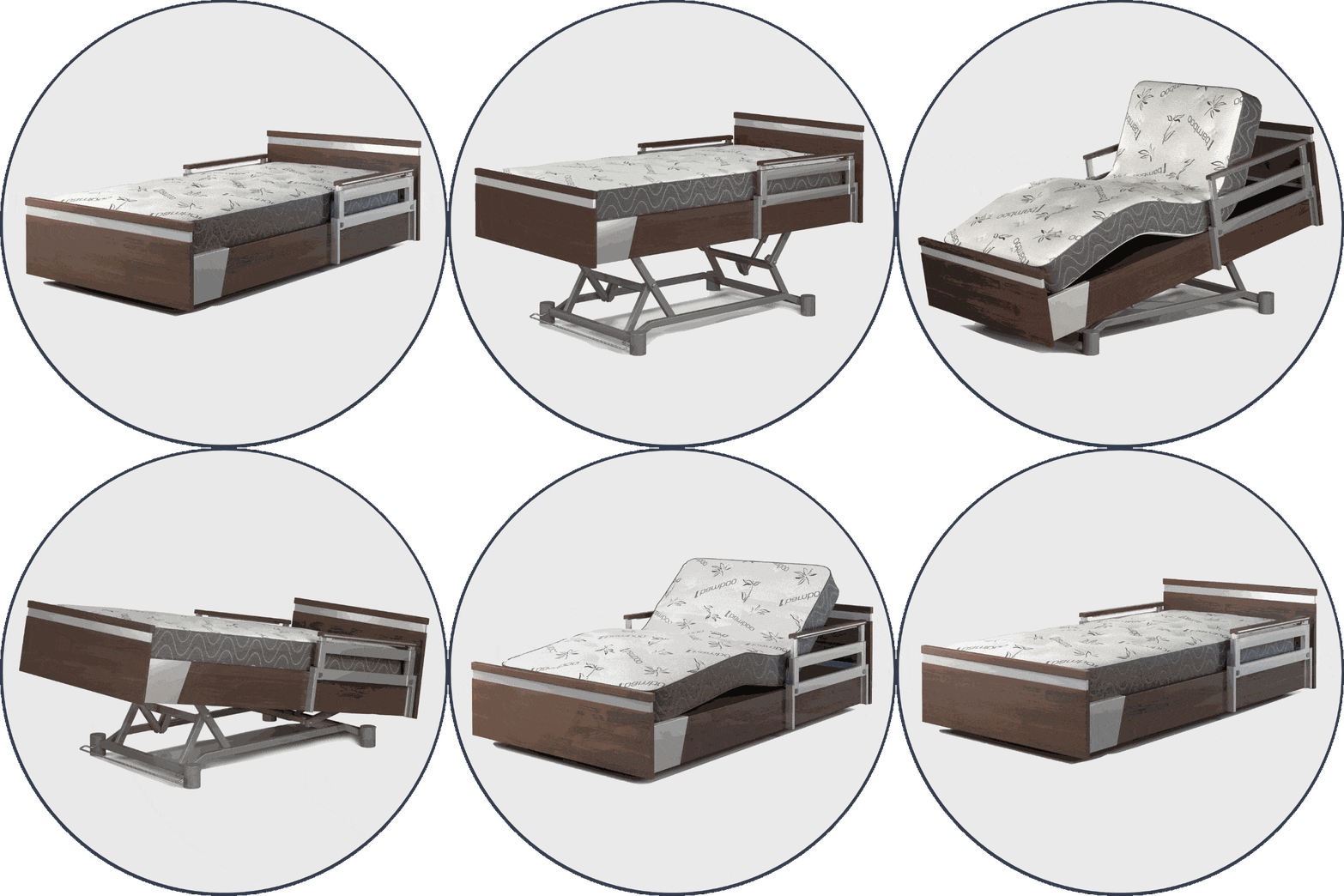
The National Institute for Occupational Safety and Health (NIOSH) recommends adjusting the bed to elbow height for tasks like repositioning and transfers. The Aura Companion adjusts from a 10-inch ultra-low platform height (for fall prevention) up to 39 inches, with a pre-programmed 21-inch transfer position, giving spousal caregivers the ergonomic range they need without manual effort.
Residential Design That Preserves Your Bedroom
The look and feel of the bed matters deeply. Clinical-looking equipment changes the emotional character of a bedroom, and that shift affects how both partners experience their shared space. Furniture-grade finishes, upholstered headboards, and side panels in materials like Crypton fabric transform a medical bed into something that belongs in your home.
For couples who want additional space without a full split-king setup, the
SonderCare Aura Extra Wide at 48 inches provides a generous sleeping surface that accommodates comfortable daytime companionship, sitting together to watch a movie, share a meal, or simply hold hands.
Understanding the full range of available
types of hospital beds for home use helps you match the right features to your specific needs as a couple.
How to Set Up a Dual Hospital Bed Bedroom
The physical setup of your bedroom makes a real difference in whether the space still feels like yours. Here’s a quick checklist:
- Measure first. The Aura Companion measures 85 inches wide with rails and 84 inches long. Allow at least 36 inches of clearance on the caregiver’s side for safe transfers. Rooms of 12 by 14 feet or larger work well.
- Match mattress heights. If you’re pairing a hospital bed with a standard bed, use height adjustment to align the surfaces. Even a two-inch difference creates an uncomfortable ridge. Foam bed bridges and king-size toppers help create a seamless feel.
- Bridge the gap. Place a foam gap filler between the two mattresses, then lay a king-size mattress topper across both surfaces for a more unified sleeping experience.
- Keep it personal. Use your own bedding — not hospital linens. Matching duvet covers, shared throw pillows, and coordinated nightstands on both sides reinforce that this is still your bedroom. Small details like an overbed reading light or a rail organizer for books and remotes help both partners feel settled.
- Plan for nighttime access. An underbed nightlight illuminates the floor for safe bathroom trips without waking your partner.
For a comprehensive approach to transforming your bedroom into a care-ready space that still feels like home, the
hospital-grade bedroom setup guide covers everything from electrical requirements to layout planning.
Addressing Common Concerns About Hospital Beds for Couples
“Will it look like a hospital?”
This is the most common concern, and the most valid. Traditional hospital beds with exposed metal frames, industrial finishes, and visible motors do change the feeling of a bedroom. Modern home hospital beds are designed to address this directly. Upholstered headboards, side panels in designer fabrics, and finishes that coordinate with bedroom furniture ensure the bed looks like it belongs in your home. The Aura Companion offers two headboard options, Graphite Gray with clean square tufting or Silverstone with an arched nailhead finish, that are chosen by couples for their residential appearance.
“Can we still be close?”
Yes. Purpose-built split-king beds minimize the gap between sleeping surfaces. King-size fitted sheets, gap fillers, and shared toppers further reduce any physical separation. During the day, the bed’s positioning features let you both sit up comfortably side by side, reading together, sharing a morning coffee, or simply being present with each other. Intimacy isn’t just about nighttime — it’s about all the small moments of closeness throughout the day.
“Is it safe for both of us?”
Safety requires attention. The FDA identifies seven potential zones in and around a hospital bed where entrapment can occur, particularly in gaps between the mattress, frame, and side rails.
11 Always use the manufacturer-recommended mattress, and if you are using a companion setup with two different beds, regularly check for gaps that could pose a risk. Confirm the bed’s weight capacity supports your partner’s weight plus any equipment, the Aura Companion’s 700-pound combined capacity provides a generous margin for most couples.
Review
essential hospital bed accessories for caregivers to ensure your setup includes proper rails, nightlights, and organizational tools that keep both partners safe and comfortable.
Your Shared Bedroom Can Stay Yours
A hospital bed doesn’t have to mean the end of sleeping side by side. Dual hospital beds for couples, whether a purpose-built split-king like the Aura Companion, an extra-wide bed like the Aura Extra Wide 48″, or a thoughtfully paired companion setup, give both partners what they need. The one who requires mobility support gets hospital-grade positioning, fall prevention, and safety features. The one providing care gets ergonomic height adjustment, quiet operation, and the peace of mind that comes from sleeping close enough to reach over and hold a hand.
The evidence is clear: staying together in your shared bedroom protects your emotional well-being, reduces caregiver depression risk, and may even improve health outcomes for both of you. That is worth getting right.
Explore the Aura Companion split-king hospital bed or
speak with a SonderCare bed expert to find the right setup for your bedroom and your relationship.
References
- Chiao C, Lin WH, Chen YH, Yi CC. Loneliness in older parents: marital transitions, family and social connections, and separate bedrooms for sleep. BMC Geriatrics. 2021. doi:10.1186/s12877-021-02550-x
- Lin WH, Chiao C. Separate sleeping and psychological well-being in older couples: a multilevel analysis. The Journals of Gerontology: Series B. 2023.
- Holt-Lunstad J, Smith TB, Layton JB. Social relationships and mortality risk: a meta-analytic review. PLoS Medicine. 2010. doi:10.1371/journal.pmed.1000316
- Packheiser J, et al. A systematic review and multivariate meta-analysis of the physical and mental health benefits of touch interventions. Nature Human Behaviour. 2024. doi:10.1038/s41562-024-01841-8
- Gao C, Chapagain NY, Scullin MK. Sleep duration and sleep quality in caregivers of patients with dementia: a systematic review and meta-analysis. JAMA Network Open. 2019.
- Liu Y, Fauth EB, Fleming DJM, Lorenz R. Daily sleep and depressive symptoms in dementia caregivers: cortisol as a mediator. The Journals of Gerontology: Series B. 2022.
- Design & Dignity Guidelines for Hospice Environments. Companion bed design recommendations for palliative care settings.
- World Health Organization. Environmental Noise Guidelines for the European Region. WHO; 2018.
- Schoenfisch AL, Lipscomb HJ, Cade B. Safe Patient Handling and Mobility program outcomes: a meta-analysis. Journal of Occupational and Environmental Medicine. 2020. doi:10.1097/JOM.0000000000001800
- Larson EA, et al. The effects of bed height on low-back biomechanical loading during patient boosting. Applied Ergonomics. 2023. doi:10.1016/j. apergo.2022.103869
- U. S. Food and Drug Administration. Hospital Bed System Dimensional and Assessment Guidance to Reduce Entrapment. FDA; 2006.