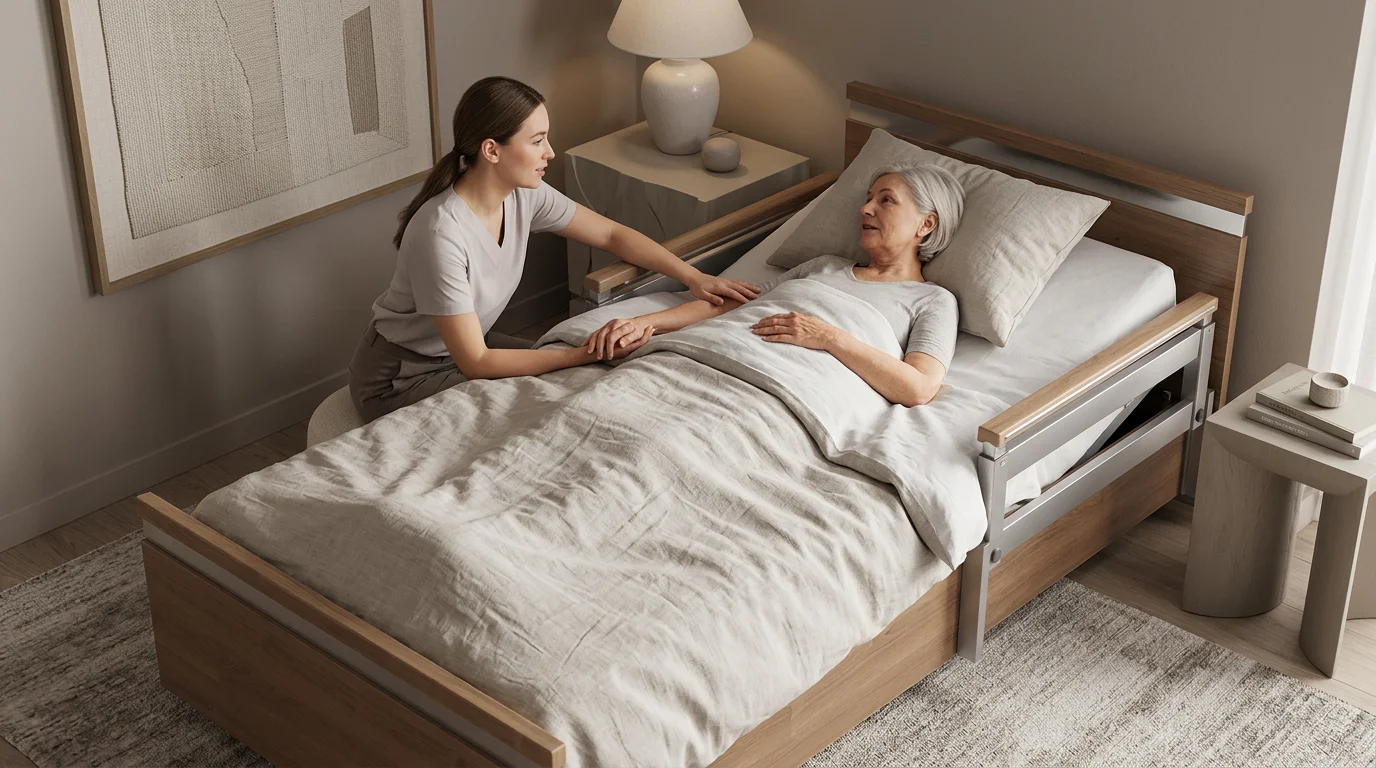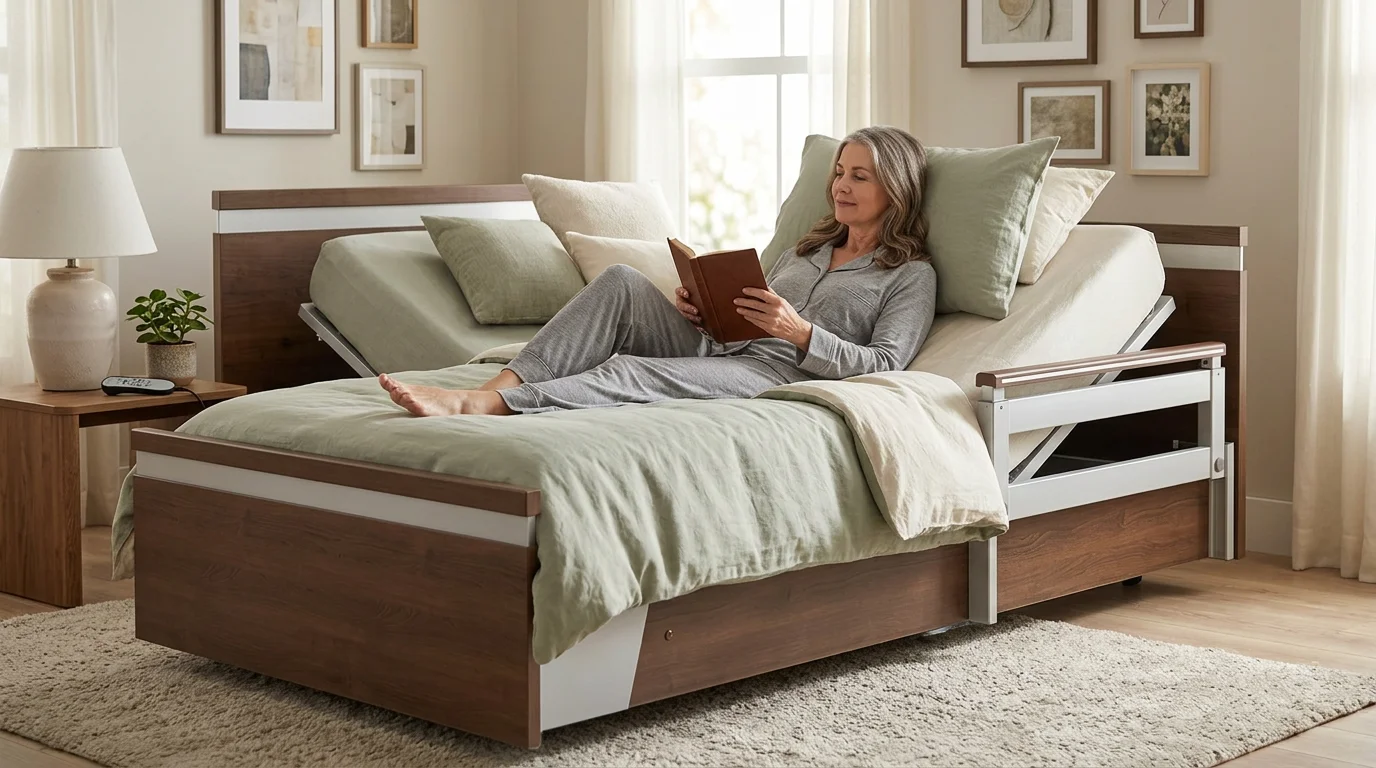



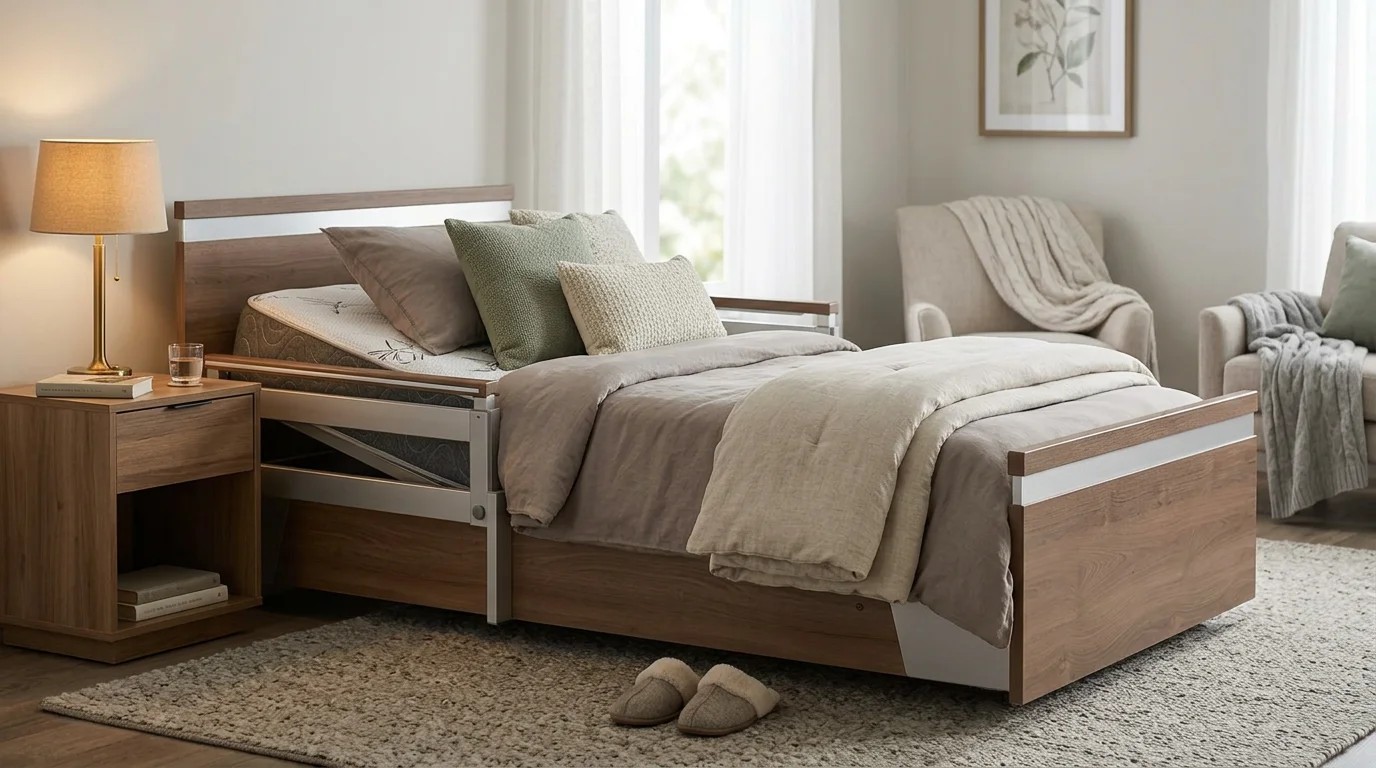



Coming home after hip replacement, knee surgery, or spinal fusion raises a question that most people never considered before the procedure: what bed should you recover in? The answer depends on your mobility level, fall risk, caregiver situation, and the specific surgery you had. Getting this decision wrong can mean painful transfers, increased fall risk, and slower healing. Getting it right can mean safer movement, better sleep, and a smoother path back to independence1.
This guide breaks down the clinical evidence behind hospital beds versus adjustable beds for surgery recovery. You will learn which features actually matter for post-surgical healing, how bed height affects safe transfers, and how to match the right bed to your specific recovery needs. Whether you are recovering from a total hip replacement, total knee arthroplasty, or spine surgery, the best bed for recovery after surgery is the one that fits your clinical situation, not just your comfort preferences.
The short version: hospital beds for home recovery earn their place when positioning and height adjustment genuinely speed healing — here’s how to tell.
Why Your Bed Matters More Than You Think During Surgery Recovery
The bed you recover in directly affects two critical factors: how safely you can get in and out of bed, and how well your body heals while you are in it. Research in biomechanics and patient safety confirms that the height of your sleeping surface, the positioning options available to you, and the pressure characteristics of your mattress all influence post-surgical outcomes2.
For hip and knee replacement patients specifically, the American Academy of Orthopaedic Surgeons (AAOS) and the American Association of Hip and Knee Surgeons (AAHKS) emphasize early mobilization as the standard of care3. Most patients are expected to be walking within hours to a day after surgery to reduce the risk of deep vein thrombosis (DVT) and pulmonary embolism. That means your recovery bed needs to help you get up safely and frequently, not just keep you comfortable while lying down.
Orthopedic surgeon Dr. Nicholas Callahan describes adjustable beds as “a functional tool that can significantly impact recovery, pain management, and overall quality of life” rather than a luxury item. But there is a significant clinical difference between a consumer adjustable bed and a medical-grade hospital bed for surgery recovery, and understanding that difference is essential before making a purchase or rental decision4.
Hospital Bed vs Adjustable Bed for Surgery Recovery: The Key Differences
The distinction between a medical-grade hospital bed and a consumer adjustable bed comes down to safety certification, height adjustability, and clinical functionality. Both types offer motorized head and foot articulation. But a hospital bed for surgery recovery provides critical features that consumer adjustable beds lack entirely5.
The Hi-Lo Feature: The Most Important Difference
The single most important safety feature for post-surgical transfers is motorized height adjustment, known as the Hi-Lo function. A full-electric hospital bed can raise or lower the entire sleeping surface from as low as 10 inches off the floor to 39 inches high. Consumer adjustable beds have a fixed deck height that cannot be changed6.
This matters because safe sit-to-stand transfers require the mattress top to align with your popliteal height (the measurement from the floor to the crease behind your knee). At this height, your feet rest flat on the floor with hips slightly higher than your knees, minimizing the muscular force needed to stand7. Biomechanical data shows this optimal range falls between approximately 13 and 20 inches from floor to mattress top for the majority of adults.
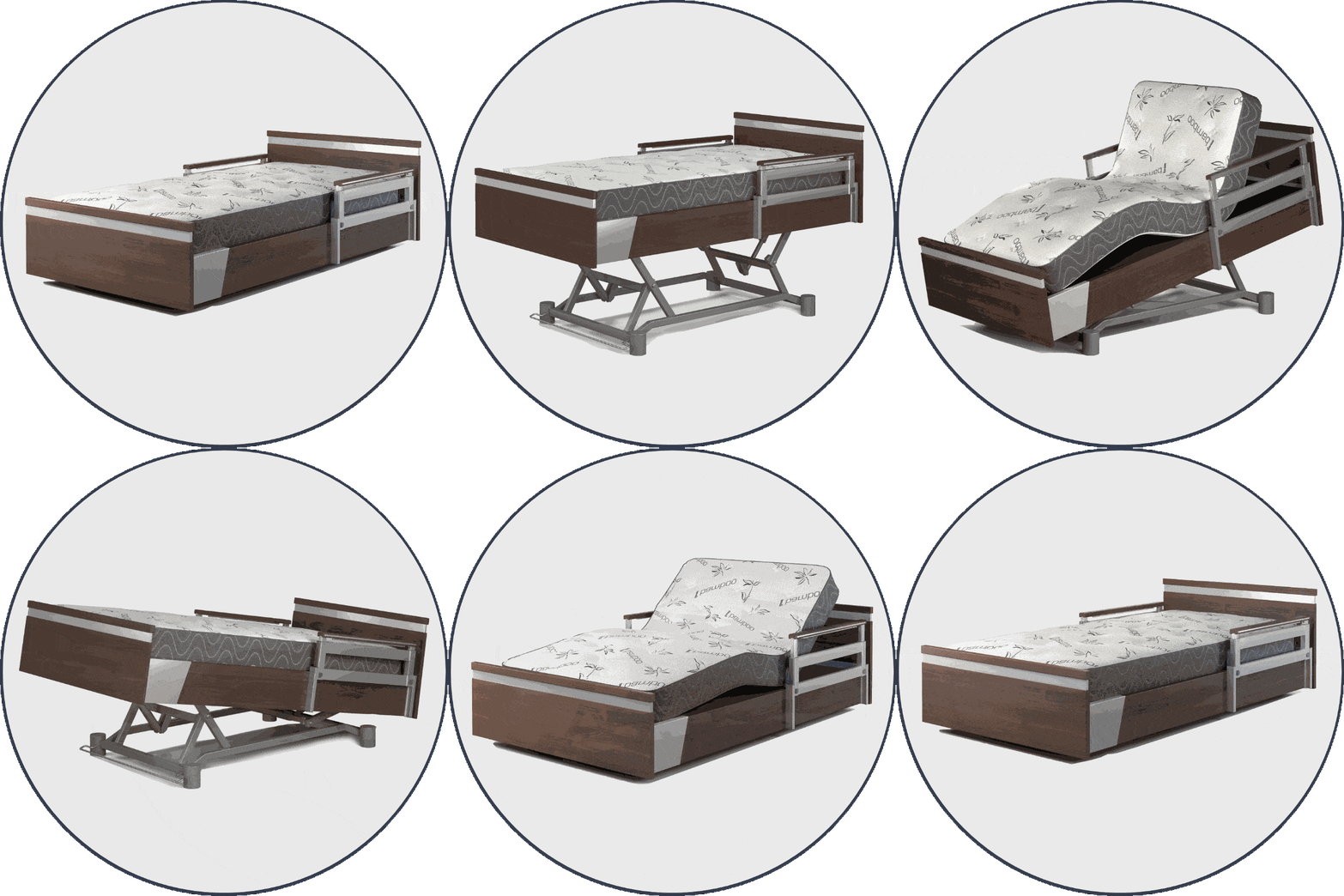
If your bed is too low, it dramatically increases the effort to stand, raising fall risk. If too high, your feet cannot rest flat on the floor, creating an unstable base8. With a fixed-height consumer adjustable bed, you have no way to customize this critical measurement. With a hospital bed like the SonderCare Aura Premium, the bed adjusts from a 10-inch platform height (17 inches to mattress top) all the way up to 39 inches, with a pre-programmed 21-inch transfer position designed specifically for safe bed-to-wheelchair and sit-to-stand movements.
Full Comparison: Hospital Bed vs Consumer Adjustable Bed
| Feature | Hospital Bed (Full-Electric) | Consumer Adjustable Bed |
|---|---|---|
| Head/foot articulation | Yes | Yes |
| Height adjustment (Hi-Lo) | Yes (10″ to 39″) | No (fixed height) |
| Safety certification | IEC 60601-2-52, FDA-registered | No medical certification |
| Integrated side rails | Yes, entrapment-compliant | No (aftermarket only) |
| Trendelenburg/Reverse Trendelenburg | Yes | No |
| Zero Gravity position | Yes | Yes |
| Therapeutic mattress compatibility | Full compatibility | Limited |
| Caregiver ergonomic adjustment | Yes | No |
| Transfer position preset | Yes (21″ preset) | No |
| Ultra-low fall prevention | Yes (10″ platform) | No |
| Massage function | No | Common |
| Home aesthetics | Varies (clinical to furniture-grade) | Home-friendly |
For patients recovering from joint replacement or spinal surgery who need caregiver assistance, have elevated fall risk, or require specific clinical positioning, a hospital bed for surgery recovery provides safety features that consumer adjustable beds simply do not offer9. For highly mobile, low-risk patients whose primary need is comfort during a short recovery, a consumer adjustable bed may be sufficient. Your surgery recovery at home plan should include an honest assessment of which category you fall into.
Surgery-Specific Positioning: What Your Body Needs After Each Procedure
The best bed for recovery after surgery is one that supports the specific positioning requirements of your procedure. Different surgeries demand different things from your sleeping surface.
Hip Replacement Recovery
Traditional hip precautions after a posterior surgical approach include avoiding hip flexion beyond 90 degrees, not crossing the legs, and avoiding internal rotation of the hip. The common recommendation is to sleep on your back with a pillow between your knees to maintain neutral hip alignment10.
However, recent randomized controlled trials and systematic reviews show a growing trend toward relaxing or eliminating routine hip precautions for many patients undergoing primary total hip arthroplasty. Evidence suggests that for stable, uncomplicated cases, removing strict precautions does not increase early dislocation rates and may actually lead to faster functional recovery and higher patient satisfaction11. The decision to apply precautions is increasingly individualized based on surgical approach, intraoperative stability, and patient-specific risk factors.
For a bed for hip replacement recovery, the critical features are adjustable height for safe transfers (so you can stand without excessive hip flexion), leg elevation capability for swelling control, and enough firmness to support repositioning without sinking. Real patients on the BoneSmart joint replacement forum consistently report that bed height relative to the patient is one of the most important factors. As one forum member noted after hip surgery: “You don’t want it so low that it makes it difficult to get up from”12.
Knee Replacement Recovery
After total knee arthroplasty, the priority is controlling swelling while maintaining the ability to straighten the knee. Orthopedic surgeons recommend keeping the leg elevated with straight positioning, never bent, for optimal recovery13. An adjustable bed after surgery provides independent foot articulation that elevates the leg above heart level at the push of a button, which is significantly more effective than stacking pillows that shift during sleep.
Elevation is the single most mentioned feature among recovery patients in online communities. Independent control of both the head and foot sections is what Dr. Callahan describes as “non-negotiable for therapeutic benefits, particularly elevation above heart level to reduce swelling”14.
Spine Surgery Recovery
After spinal fusion or disc surgery, sleeping on the back with support under the knees is generally recommended. Adjustable beds allow a 30-45 degree incline with knee support that promotes circulation and reduces swelling15. The key requirement is smooth, quiet motor operation that transitions between positions gradually, without jarring movements that could stress the surgical site.
For all surgery types, the correct bed height after hip or knee surgery is the foundation of safe recovery at home. This single factor affects every transfer you make, multiple times per day, for weeks or months.
Full-Electric vs Semi-Electric Hospital Beds: Which One for Recovery?
If you have determined that a hospital bed is the right choice for your recovery, the next decision is between full-electric and semi-electric models. This choice has meaningful consequences for both patient independence and caregiver strain16.
A full-electric hospital bed provides motorized control for all major adjustments: height, backrest, and leg sections. For patients with adequate functional ability, this means independently adjusting bed height to facilitate safer unassisted transfers. For caregivers, the remote-controlled Hi-Lo function eliminates the need for manual cranking and allows positioning the bed at waist level for tasks like wound care, dressing changes, and repositioning17.
A semi-electric bed offers motorized head and foot adjustment but requires a manual hand crank (typically 30-40 turns) to change the bed height. This presents a significant ergonomic burden, particularly for older caregivers, spousal caregivers, or anyone with their own physical limitations. The repetitive trunk-flexing motion of cranking can cause back strain, and it eliminates the patient’s ability to independently adjust height for transfers18.
The cost difference is real. Semi-electric beds are less expensive to purchase or rent, and Medicare Part B more routinely covers semi-electric models. Full-electric beds, particularly the motorized Hi-Lo feature, are often classified as a “convenience” item by CMS and require additional medical justification for coverage19. For surgery recovery, however, the practical benefits of full-electric operation are substantial. The SonderCare Impulse Essential at $3,999 provides full-electric head, knee, and Hi-Lo adjustment in a residential design, making it an accessible entry point for post-surgical recovery that does not sacrifice the critical height-adjustment feature.
Fall Prevention: How the Right Recovery Bed Reduces Your Risk
Falls are the leading safety concern during post-surgical recovery at home. The right recovery bed for home use addresses fall risk through multiple integrated features, not just one20.
Height Adjustability and FallSafe Ultra-Low
The Hi-Lo function serves double duty for fall prevention. During transfers, it sets the optimal height for safe standing. At night, it can lower the bed close to the floor to reduce injury severity if you roll out21. The SonderCare Aura beds feature FallSafe Ultra-Low Height that lowers the platform to just 10 inches (17 inches to mattress top), minimizing the distance and impact force of any potential fall from bed.
However, ultra-low height is not a universal solution. Biomechanical analysis shows that very low bed heights increase the muscular effort required for sit-to-stand transfers, which can paradoxically increase fall risk for patients attempting to get up independently22. The key is adjustability: low at night for roll-out protection, optimal transfer height during the day for safe standing.
Side Rails, Alarms, and Environmental Features
Integrated side rails that comply with IEC 60601-2-52 entrapment standards provide a handhold for repositioning and a barrier against rolling out of bed. The standard specifies that gaps between side rails and the mattress must be less than 12 cm, and neck gaps less than 6 cm, to prevent entrapment injuries23. Consumer adjustable beds do not come with integrated rails, and aftermarket rails fitted to these beds may create entrapment hazards because they are not tested as a system with the specific mattress and bed frame.
Additional fall prevention features include lockable casters that prevent the bed from shifting during transfers, and motion-activated floor lighting. The SonderCare Underbed Auto-Nightlight ($219) provides motion-activated illumination around the bed to reduce trip hazards during nighttime bathroom visits, which is when most home falls occur.
Pressure Injury Prevention: Mattress Selection for Surgery Recovery
Extended bed rest during surgery recovery increases the risk of pressure injuries, particularly for patients with limited mobility. The correct mattress depends on your risk level, which clinical teams assess using the Braden Scale24.
Low risk (Braden score above 14): A standard supportive mattress with good pressure redistribution is adequate. The SonderCare Comfort Mattress ($899) provides Visco memory foam with cooling gel and a fluid-proof cover for short-term recovery patients who are mobile and repositioning regularly.
Moderate risk (Braden score 12-14): A high-specification foam mattress (HSFM) with better immersion and envelopment characteristics is recommended. The PRESSURE 2 clinical trial demonstrated that HSFMs are nearly as effective as active systems for prevention in many high-risk patients25. The SonderCare Signature Hybrid Mattress ($1,799) combines individually wrapped pocket coils with multiple layers of high-density orthopedic foam and ultra-firm sides for transfer support.
High risk (Braden score 11 or below) or existing pressure injuries: A powered therapeutic surface is medically necessary. Alternating-pressure mattresses (APMs) or low-air-loss systems actively redistribute pressure. Cochrane systematic reviews support the use of alternating pressure surfaces over standard foam for reducing pressure ulcer incidence in high-risk patients26. These therapeutic mattresses require a compatible bed frame, which is another area where medical-grade hospital beds outperform consumer adjustable beds.
Caregiver Ergonomics: Why Bed Height Protects the Person Helping You
If a family member, spouse, or home health aide will be helping with your care during recovery, the bed you choose directly affects their health and safety too. Musculoskeletal injuries are the leading occupational hazard for caregivers, and working at a bed that is too low is one of the primary causes27.
OSHA guidelines and ergonomics research recommend that caregivers work at waist or elbow level to minimize spinal loading. A full-electric hospital bed allows the caregiver to raise the bed to this ergonomic height for tasks like repositioning, wound care, changing linens, and assisting with dressing. Studies show that using adjustable-height beds leads to lower lumbar compression and reduced shoulder forces for caregivers28.
For transfers, the Hi-Lo function allows matching the bed height to a wheelchair, commode, or standing position. This enables level lateral transfers that minimize lifting and shear forces. On forums like AgingCare, caregivers consistently highlight height adjustment as the most important feature. As one caregiver noted: “An adjustable bed does not move up and down like a hospital bed does,” identifying the absence of Hi-Lo as the primary limitation of consumer beds for care situations29.
The SonderCare Aura Platinum ($7,899) adds fully upholstered Crypton fabric side panels to the full medical-grade functionality, providing hospital-level caregiver ergonomics in a bed that preserves the home environment. For families where a spouse is providing care, this combination of clinical capability and residential design means the bedroom remains a personal space, not a clinical one.
The “Zero Gravity” Position: Comfort Feature, Not a Clinical Protocol
Many adjustable beds and some hospital beds offer a “zero gravity” preset inspired by NASA’s neutral body posture, creating approximately a 120-degree angle between the torso and thighs with legs elevated near heart level30. While marketed for pain relief and spinal decompression, no high-quality randomized controlled trials have validated this positioning for post-arthroplasty recovery31. Treat zero gravity as a comfort feature, not a clinical protocol. It can enhance relaxation, but must not violate surgeon-prescribed precautions such as hip flexion limits after a posterior-approach hip replacement.
The Trendelenburg position (head lower than feet) carries significant risks including increased intracranial pressure, impaired breathing, and aspiration risk. It is not recommended for routine home recovery32. Reverse Trendelenburg (head higher than feet) can benefit patients with respiratory conditions or reflux but is a medical-grade feature available only on hospital beds, not consumer adjustable beds.
Cost and Acquisition: Rent vs Buy for Surgery Recovery
The financial decision between renting and purchasing depends on your expected recovery timeline. For standard hip or knee replacement recovery (typically 4 to 12 weeks), renting through a DME supplier often makes financial sense, with costs running $200 to $500 per month plus a setup fee33.
For recovery extending beyond 8-10 weeks, purchasing becomes more cost-effective. Patient communities consistently report that rental hospital beds are basic, uncomfortable, and aesthetically poor. As one BoneSmart forum member noted: “Few insurers will pay to rent one except for a final illness”34. The community sentiment breaks roughly into three camps: 40% favor adjustable beds as a long-term investment, 35% recommend a lift recliner as a short-term bridge, and 25% report recovering fine with their regular bed and extra pillows.
The hospital bed buying guide can help you evaluate the full range of options. Here is a general cost framework:
| Option | Cost Range | Best For |
|---|---|---|
| Consumer adjustable bed (entry) | $400-$900 | Low-risk, independent, short recovery |
| Consumer adjustable bed (premium) | $1,800-$3,500 | Low-risk, comfort-focused, long-term use |
| Hospital bed rental | $200-$500/month | Short recovery (under 3 months), budget-focused |
| Semi-electric hospital bed (purchase) | $900-$2,000 | Moderate needs, able-bodied caregiver available |
| Full-electric hospital bed (purchase) | $1,500-$6,000+ | Significant mobility limitations, caregiver safety |
| SonderCare Impulse Essential | $3,999 | Full-electric recovery bed with residential design |
| SonderCare Aura Premium | $6,999 | Complete medical-grade features, furniture-grade design |
Medicare Part B can cover hospital beds as Durable Medical Equipment (DME) when medical necessity is documented by a physician. Semi-electric beds are more routinely approved, while full-electric beds require stronger justification35. Therapeutic mattresses have separate coverage criteria, often requiring documented advanced-stage pressure injuries.
Decision Framework: Matching the Right Bed to Your Recovery Needs
Use this evidence-based framework to determine which type of recovery bed for home use matches your situation36:
A medical-grade hospital bed is recommended when ANY of these apply:
- You need help from a caregiver for transfers (getting in and out of bed)
- You have a history of falls, balance issues, or cognitive impairment
- You are at moderate-to-high risk for pressure injuries (Braden score 14 or below)
- Your caregiver is an older adult, has physical limitations, or is providing care alone
- You have comorbidities requiring specific positioning (COPD, severe reflux, OSA)
- Your recovery is expected to last longer than 12 weeks
A consumer adjustable bed may be sufficient when ALL of these are true:
- You can get in and out of bed independently with good balance
- You have no fall history and stable gait
- You are not at risk for pressure injuries
- Your primary need is comfort, not clinical positioning
- You do not require caregiver assistance with transfers
Home Environment Checklist
Before any hospital bed arrives, verify these environmental requirements37:
- Doorways and hallways: Measure width to confirm the bed frame can reach the bedroom
- Room space: At least 32-36 inches of clearance on one side for transfers and caregiver access
- Power supply: A grounded three-prong electrical outlet near the head of the bed
- Flooring: Hard, low-friction surfaces are ideal; thick carpets can impede bed movement and create trip hazards
- Battery backup: Consider the SonderCare Portable Battery Back-Up ($149) for power outage protection if using a powered mattress
What Recovering Patients Actually Say
Across patient forums including BoneSmart, Houzz, and AgingCare, several consistent patterns emerge from people who have been through surgery recovery at home38:
Elevation control is the most valued feature. Elevating legs above heart level at the push of a button, rather than stacking pillows that shift during sleep, is cited more than any other feature by recovering patients.
Bed height makes or breaks safe transfers. Patients consistently report that getting the height right is critical. Too low and standing is painful and dangerous. Too high and sliding off becomes a risk.
Firmness matters more than expected. Softer mattresses make repositioning difficult after surgery. Medium-firm to firm surfaces provide the resistance needed to push yourself into a sitting and standing position.
Many patients use a recliner first. Lift recliners that help you stand are a popular short-term bridge for the first 1-3 weeks. Several patients report transitioning to their bed once mobility improves.
Aesthetics affect psychology. Multiple patients express reluctance about rental hospital beds turning their bedroom into a clinical space. As one Houzz forum member put it, she preferred a daybed over a hospital bed because of aesthetic concerns. This is where furniture-grade home hospital beds fill a genuine gap: providing clinical functionality without the institutional look.
Choosing the Best Bed for Your Surgery Recovery
The best bed for recovery after surgery is not a single product recommendation. It is the bed that matches your mobility level, fall risk, caregiver situation, and recovery timeline. For patients with significant mobility limitations, elevated fall risk, or caregiver needs, a full-electric medical-grade hospital bed provides safety features that consumer adjustable beds cannot replicate. The Hi-Lo height adjustment, entrapment-compliant side rails, and therapeutic mattress compatibility are not convenience features. They are safety features backed by biomechanical evidence and international medical device standards39.
For patients who are already mobile, independent, and at low risk, a quality consumer adjustable bed with head and foot articulation can provide meaningful comfort during recovery. The honest answer is that most joint replacement patients fall somewhere in between, and the safest path is to match your bed choice to an honest assessment of your needs rather than assuming you will be fine with what you have.
SonderCare home hospital beds bridge the gap between medical-grade safety and residential design. The Aura Premium ($6,999) delivers full hospital-certified positioning, FallSafe Ultra-Low height, Trendelenburg, Zero Gravity, and a pre-programmed 21-inch transfer position in a furniture-grade design with a 5-year comprehensive warranty. The Impulse Essential ($3,999) provides full-electric Hi-Lo adjustment, head, and knee positioning as an accessible entry point for surgery recovery. Both are designed to help you recover safely at home without turning your bedroom into a hospital room.
Speak with a SonderCare bed expert to discuss which setup matches your surgery, recovery timeline, and home environment. White-glove delivery with full installation is available in as little as 1-3 business days for patients with upcoming procedures.
References
- IEC 60601-2-52 standard for medical bed safety and essential performance requirements. International Electrotechnical Commission.
- Biomechanical analysis of sit-to-stand transfers from adjustable-height surfaces. Anthropometric data covering 5th-95th percentile adult populations demonstrates optimal transfer height range of 33-50 cm.
- American Academy of Orthopaedic Surgeons (AAOS) and American Association of Hip and Knee Surgeons (AAHKS) clinical practice guidelines on early mobilization after total joint arthroplasty.
- Callahan, N. “Should You Invest in an Adjustable Bed? An Orthopedic Surgeon’s Perspective.” CLE Orthopedics, November 2025.
- IEC 60601-2-52 medical device safety standard compared with consumer furniture classifications. FDA Hospital Bed System Dimensional and Assessment Guidance.
- Medical bed Hi-Lo height adjustment range specifications per IEC 60601-2-52 compliance requirements.
- Biomechanics of sit-to-stand transfers: popliteal height alignment reduces joint torque and muscular force requirements for quadriceps and hip extensors.
- Risk analysis of incorrect bed height during post-surgical transfers. Falls risk increases with both excessively low and excessively high sleeping surfaces.
- Comparative analysis of medical-grade hospital beds vs consumer adjustable beds. Safety certifications, height adjustability, and therapeutic mattress compatibility assessment.
- Post-operative hip precautions after posterior surgical approach: flexion limits, adduction restrictions, and rotation guidelines per AAOS recommendations.
- Systematic reviews and randomized controlled trials on relaxation of routine hip precautions after primary total hip arthroplasty. Evidence supports individualized rather than universal restrictions.
- Patient recovery experiences reported on BoneSmart Joint Replacement Forum (bonesmart.org) and Houzz recovery bed discussions.
- Orthopedic positioning guidelines for total knee arthroplasty recovery: leg elevation with straight positioning for swelling control.
- Callahan, N. “True independent control of both the head and foot is non-negotiable for therapeutic benefits.” CLE Orthopedics, 2025.
- Spine surgery recovery positioning guidelines. Neuromicrospine.com and Spine-Health.com clinical recommendations for post-operative sleep positioning.
- Full-electric vs semi-electric hospital bed comparison: motorized vs manual height adjustment impact on patient independence and caregiver ergonomics.
- Ergonomics literature on adjustable-height hospital beds: reduced lumbar compression and shoulder forces for caregivers working at waist/elbow level.
- Semi-electric bed limitations: manual cranking ergonomic burden (30-40 turns), repetitive trunk-flexion injury risk for caregivers.
- Medicare Part B coverage criteria for Durable Medical Equipment. CMS classification of full-electric Hi-Lo as convenience feature requiring medical justification.
- Multifactorial fall prevention in home care settings. Evidence supports integrated bed-based systems within comprehensive fall prevention programs.
- Ultra-low bed height for fall injury mitigation. Reduced kinetic energy and impact force from roll-out falls at heights of 10-15 cm.
- Biomechanical analysis of ultra-low bed egress: increased hip and knee joint moments at very low heights can increase transfer-related fall risk for patients with lower-extremity weakness.
- IEC 60601-2-52 entrapment prevention dimensional criteria: side rail gaps less than 12 cm, neck gaps less than 6 cm. FDA seven-zone entrapment guidance.
- Braden Scale for Predicting Pressure Sore Risk: validated clinical tool for stratifying patients into low, moderate, and high-risk categories.
- PRESSURE 2 clinical trial: high-specification foam mattresses demonstrated comparable effectiveness to active systems for pressure injury prevention in many high-risk patients.
- Cochrane systematic reviews on alternating pressure surfaces vs standard foam for pressure ulcer incidence reduction in high-risk populations.
- OSHA guidelines on caregiver ergonomics: working height recommendations to minimize musculoskeletal injury risk during patient care tasks.
- Biomechanics studies demonstrating reduced low-back compression and upper extremity forces when caregivers use adjustable-height beds set to waist level.
- Caregiver perspectives on hospital bed vs adjustable bed functionality. AgingCare forum discussions on height adjustment as primary differentiator.
- NASA neutral body posture research and consumer “zero gravity” bed position specifications: approximately 120-degree torso-thigh angle with knee elevation.
- Evidence gap analysis: absence of randomized controlled trials validating zero gravity positioning for post-arthroplasty pain management outcomes.
- Trendelenburg position physiological risks: increased intracranial pressure, intraocular pressure, impaired pulmonary mechanics, and aspiration risk. Not recommended for routine home recovery.
- Hospital bed rental cost data and DME supplier pricing for full-electric bed systems, 2026.
- Patient community sentiment on hospital bed rental for surgery recovery. BoneSmart, Houzz, and AgingCare forum analysis.
- Medicare Administrative Contractor coverage policies for semi-electric vs full-electric hospital beds as Durable Medical Equipment.
- Evidence-based bed selection decision framework incorporating mobility assessment, fall risk stratification, pressure injury risk (Braden Scale), caregiver capacity, and comorbidity evaluation.
- Home environmental assessment checklist for hospital bed installation: doorway width, room clearance, electrical requirements, and flooring considerations.
- Qualitative analysis of patient-reported recovery bed preferences across BoneSmart, Houzz, and AgingCare forums, 2024-2026.
- Summary of evidence: IEC 60601-2-52 safety standards, AAOS/AAHKS mobilization guidelines, biomechanical transfer analysis, and Braden Scale pressure injury risk stratification supporting medical-grade hospital bed selection for complex post-surgical recovery.