






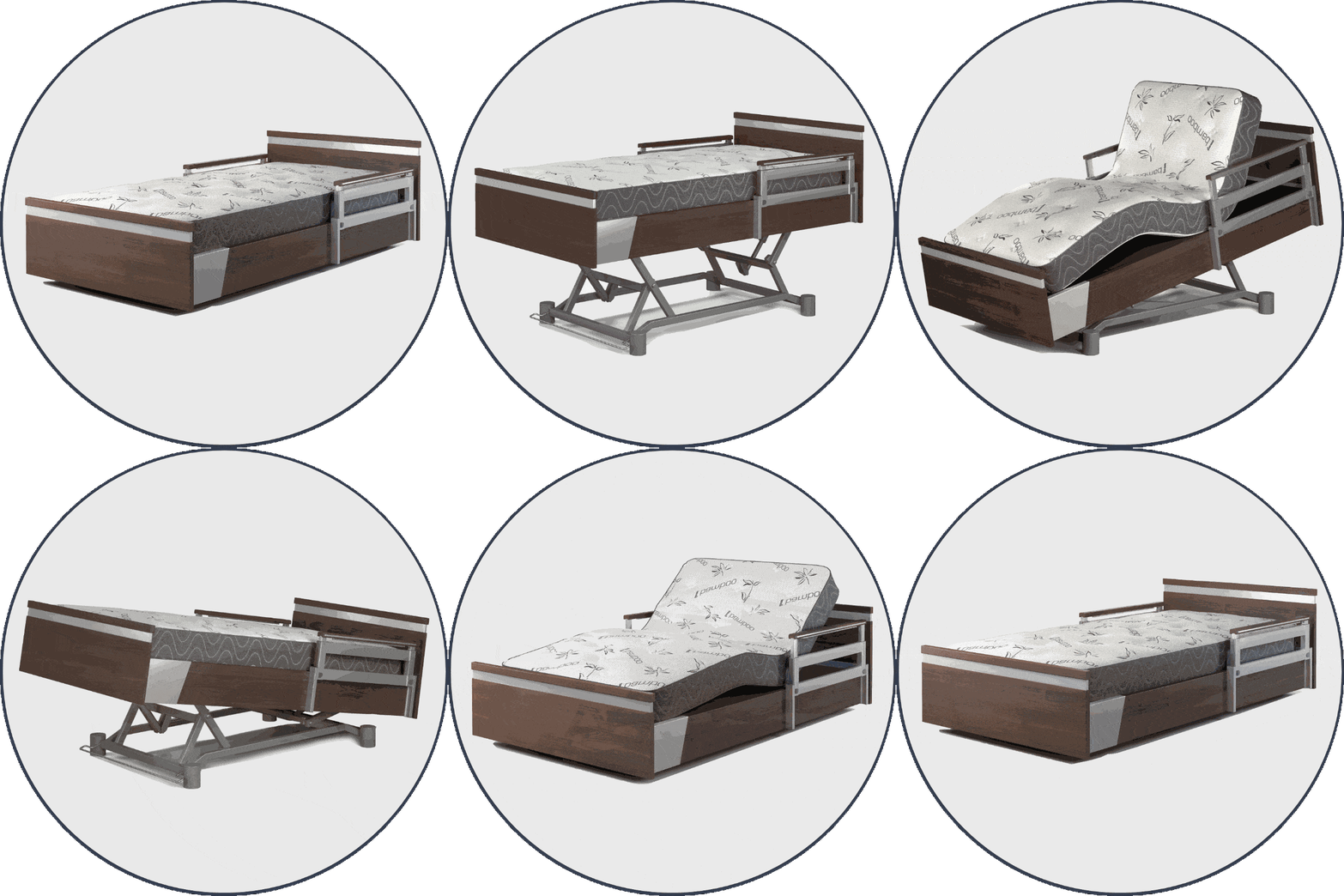
Margaret spent three weeks researching adjustable beds online after her mother’s stroke. She found a beautiful queen-size model with head and foot adjustment, memory foam, and a price she could manage. Then the discharge planner said two words that changed everything: “medical device.”
The bed Margaret had been planning to buy was a consumer product. Not an FDA-regulated medical device, not eligible for any insurance reimbursement, and not what her mother’s doctor had in mind when he wrote “hospital bed” on the discharge paperwork. Margaret eventually bought the right bed, but the confusion cost her three weeks, a cancelled order, and a lot of unnecessary stress.
If you are navigating home care equipment right now, that confusion is familiar. Doctors say “hospital bed.” Insurance companies say “DME.” The FDA says “medical device.” Retail stores sell “adjustable beds” that look nearly identical to all of the above. Understanding what actually qualifies as a medical device, and how that definition affects coverage, safety, and your family’s care, can save you from the same misstep Margaret made.
Have a specific piece of equipment in mind and not sure where it falls? SonderCare’s advisors can help you work through it at no cost.
This guide explains the FDA’s legal definition, how devices are classified by risk, the practical difference between a medical device and a DME item, and why that distinction matters when choosing home care equipment, including a home hospital bed.
What the FDA Says Qualifies as a Medical Device
The authoritative definition comes from Section 201(h) of the Federal Food, Drug, and Cosmetic Act (FD&C Act). Under U.S. law, a medical device is:1
“an instrument, apparatus, implement, machine, contrivance, implant, in vitro reagent, or other similar or related article… intended for use in the diagnosis of disease or other conditions, or in the cure, mitigation, treatment, or prevention of disease, in man or other animals, or intended to affect the structure or any function of the body of man or other animals, and which does not achieve its primary intended purposes through chemical action within or on the body.”
That final clause separates a medical device from a drug. Drugs work through chemical, metabolic, or immunological action inside the body. Devices work mechanically, electrically, or physically. A home hospital bed that adjusts height and position affects body function, circulation, pressure distribution, breathing mechanics, and safe transfer height, without any chemical mechanism. That makes it a device.
Three elements together determine whether a product qualifies under this definition:
- Physical or intangible form, instruments, machines, implants, software, and in vitro reagents all qualify. The EU and WHO frameworks explicitly include software as a medical device, reflecting the growth of health apps and AI-enabled tools.4
- Manufacturer’s intended medical purpose, the intended use at the point of manufacture is the legal test, not how any individual happens to use the product. A back-support pillow sold as a lifestyle product is not a medical device. The same pillow marketed specifically to manage postoperative spinal positioning after a documented surgical procedure may be.
- Non-pharmacological action, the product must not achieve its primary purpose through chemical, immunological, or metabolic means.
The scale of the global medical device universe is larger than most people realize. The World Health Organization estimates approximately 2 million different kinds of medical devices on the world market, organized into more than 7,000 generic device groups.2 The FDA specifically classifies approximately 1,700 generic device types within the United States, organized across 16 medical specialty panels.3
Manufacturer intent is the legal linchpin. A regular mattress used to help someone sleep more comfortably after surgery is not a medical device. An alternating pressure mattress designed and manufactured specifically to reduce pressure injury risk in individuals requiring extended bed rest is. The design intent, the labeling, and the regulatory submission determine the category, not the customer’s use case.
How Medical Devices Are Classified by Risk
Qualifying as a medical device is only the first step. The FDA then classifies each device type by the level of risk it poses and the regulatory oversight required to ensure safety. The three-tier system works as follows:3
Class I: General Controls
The lowest-risk tier. Class I devices are subject to general controls, manufacturing standards, labeling requirements, and facility registration, but typically require no premarket review. Approximately 74% of all Class I device types are exempt from the 510(k) premarket notification process.3
Examples: elastic bandages, tongue depressors, non-powered examination gloves, manual crutches.
Class II: General Controls and Special Controls
The middle tier, covering most home care equipment families encounter. Class II devices must meet general controls plus special controls, performance standards, post-market surveillance requirements, and specific labeling. Most Class II devices clear the market through a 510(k) premarket notification, demonstrating substantial equivalence to a legally marketed predicate device.
Home hospital beds are Class II medical devices under 21 CFR 880.5100. This is the device classification that matters most for families choosing care equipment for use at home.
Class III: Premarket Approval
The highest-risk tier, typically involving devices that sustain or support life, are implanted in the body, or present significant potential for harm. Class III devices require full premarket approval with clinical evidence. Examples include cardiac pacemakers, implantable defibrillators, and deep brain stimulators.
It is worth knowing that device classifications can change over time. Research published in BMJ Surgery, Interventions, & Health Technologies documented how the FDA’s 515 Program Initiative has reclassified 26 preamendment device types, with risk classifications updated as postmarket evidence accumulates.6 A device’s regulatory standing reflects the current evidence base, not a permanent fixed judgment.
Four Categories That Actually Matter for Home Care
Understanding the FDA definition is useful, but most caregivers have a more practical question: “Does this count as what the doctor ordered, and will insurance cover it?” The answer depends on which of four categories a product falls into.
| Category | FDA-Regulated? | Medicare Coverage Possible? | Examples |
|---|---|---|---|
| Medical device + DME | Yes | Yes (with conditions) | Hospital beds, wheelchairs, CPAP machines, walkers |
| Medical device, not covered DME | Yes | No | Most stair lifts, many high-end positioning aids |
| DME-adjacent, regulatory status varies | Varies | Sometimes | Some rental frames and basic support equipment |
| Consumer product | No | No | Adjustable comfort beds from mainstream mattress brands |
Consider David, who drove two hours to a mattress showroom after his father’s cardiologist recommended “a bed that adjusts.” He found a well-reviewed model with electric head and foot adjustment, bought it on the spot, and submitted a claim. The denial arrived three weeks later: the product was a consumer adjustable bed, not an FDA-registered medical device and not categorized as durable medical equipment. It looked nearly identical to a hospital bed in photos. It was not the same thing at all.
That Category 4 situation, the consumer adjustable bed, is the most common and most costly mistake families make in this space. Consumer adjustable beds from mainstream mattress retailers adjust for comfort. They are not manufactured with a medical purpose, they carry no FDA establishment registration as medical device manufacturers, and they do not qualify as Medicare durable medical equipment.
A home hospital bed, by contrast, is a Category 1 product: an FDA-regulated Class II medical device that also qualifies as Medicare DME, provided the coverage eligibility conditions are met.
When you are ready to evaluate what type of home hospital bed fits a specific care situation, our expert hospital bed buyer’s guide walks through every type of bed and what each is designed to do.
Why Home Hospital Beds Are Class II Medical Devices
Home hospital beds qualify as medical devices because they are designed and manufactured specifically to affect body function for clinical purposes. The positioning capabilities, height adjustability, and load-bearing specifications are not comfort features; they are engineered clinical functions that the FDA requires to be verified and documented.
The SonderCare Aura Premium home hospital bed is an example of a Class II medical device designed and certified for home use. Its clinical positioning suite, FallSafe Ultra-Low Height (10″ platform, 17″ to mattress top), Trendelenburg tilt to 17 degrees, anti-Trendelenburg to 14 degrees, Zero Gravity, and Cardiac Chair positioning, is tested to IEC 60601-2-52, the international standard for medical beds. The Aura line is certified to International Hospital Standard, and SonderCare is registered with the FDA as a medical device establishment (FDA Establishment Registration #3014926188). The manufacturer holds ISO 13485, ISO 9001, and ISO 14001 certifications.
That is not marketing language. Those are the regulatory credentials that place the Aura Premium in a different product category from a consumer adjustable bed, and those credentials are what make the difference between equipment that qualifies under Medicare’s durable medical equipment benefit and equipment that does not.
The FallSafe feature makes this distinction concrete. Bringing the sleeping surface to just 10 inches from the floor is a clinical specification, based on evidence about fall injury reduction, not a preference setting. A regulated medical device must verify this measurement during testing. A consumer bed has no equivalent requirement because it was not designed or tested for clinical fall prevention.
The safe working load on the Aura Premium is similarly documented: a maximum user weight of 190 kg (418 lbs), verified to IEC 60601-2-52 load requirements, with separate rated limits for the assist rail (75 kg vertical) and IV pole accessories. None of those specifications exist on a consumer adjustable bed because no clinical standard required them.
This is why a physician who writes “hospital bed” on a discharge summary means something specific. The term refers to a product category with verified clinical specifications, not the aesthetic category of “a bed that adjusts.”
The Coverage Gap: Medical Device vs. Durable Medical Equipment
Here is where many families encounter the surprise that Teresa did.
Teresa called Medicare before her husband’s discharge from a rehabilitation facility. The representative confirmed that hospital beds are covered under Part B durable medical equipment. Teresa found a well-regarded home hospital bed, placed the order, and submitted the claim. The denial arrived seven weeks later: the supplier was not enrolled in Medicare as a DME supplier.
Being an FDA-regulated Class II medical device does not automatically mean Medicare will cover it. Medicare’s DME benefit has its own separate eligibility structure, and regulatory classification is only the starting point of that test.
To qualify for Medicare Part B DME coverage, a product must generally meet four conditions:
- Durable, able to withstand repeated use
- Primarily medical use, not useful to a person who is not ill or injured
- Used in the home, hospital or skilled nursing facility stays are covered separately
- Expected useful life of at least three years
A home hospital bed meets all four. But coverage is not automatic. Medicare also requires:
- Medical necessity certification, a physician must document that the bed is medically necessary, typically through a written order and/or Letter of Medical Necessity (LMN)
- Qualifying diagnosis, the clinical indication must map to Medicare’s accepted criteria for hospital bed coverage
- Medicare-enrolled DME supplier, the equipment must be purchased or rented through a supplier enrolled in Medicare as a DME provider
The third condition catches families off-guard most often. A certified Class II medical device purchased from a retailer that is not a Medicare-enrolled DME supplier will not be covered, even if the device itself fully qualifies. The enrollment requirement is separate from the device certification question, and most premium home hospital bed retailers are not enrolled DME suppliers.
The Letter of Medical Necessity
The Letter of Medical Necessity is a physician-signed document certifying that specific equipment is medically required for the individual. Caregivers typically learn it exists only after a denial. What most do not know: a caregiver can draft the letter themselves and ask the physician to review and sign it, rather than waiting for the physician to initiate the paperwork independently.
A strong LMN includes the patient’s diagnosis and relevant ICD-10 codes, documented functional limitations, the specific equipment being requested and why it is clinically necessary, and the expected duration of need. Denials based on missing or incomplete documentation can often be reversed on appeal. The appeal window is typically 180 days from the denial date, and internal appeals succeed at meaningful rates when documentation is complete.
For families working through the rent-versus-buy decision alongside the coverage question, our guide to renting vs. buying a hospital bed covers both angles honestly, including when a rental makes financial sense and when ownership delivers more long-term value.
What This Means When Choosing Care Equipment at Home
The regulatory framework comes down to a practical checklist:
Step 1: Confirm the product is an FDA-regulated medical device. Verify that the manufacturer is an FDA-registered medical device establishment and that the product is listed with the FDA as a Class I or Class II device. Home hospital beds should fall under Class II, 21 CFR 880.5100. Consumer adjustable beds will not have this registration.
Step 2: Review the specific certifications. For hospital beds, look for IEC 60601-2-52 compliance (the international standard for medical beds) and ISO 13485 manufacturing quality. These are the standards that drive the clinical specifications that matter, load ratings, positioning range, fall prevention height, and electrical safety classifications.
Step 3: Map the coverage pathway before purchasing. If Medicare is part of the plan, confirm that the supplier is a Medicare-enrolled DME provider and determine what documentation the physician needs to provide before the equipment ships. If private pay is the route, budget accordingly and evaluate the product on clinical merit rather than coverage eligibility.
Step 4: Match the device to the actual care need. Not every person who needs a home hospital bed requires the full clinical positioning suite that makes a device a Class II product. But someone with fall risk, respiratory support needs, or documented pressure injury risk does. The medical device classification is not a luxury upgrade, it is the basis for the clinical specifications the care situation may genuinely require.
For families setting up home care equipment across multiple categories, beds, positioning aids, skin protection surfaces, and monitoring tools, the home hospice equipment checklist provides a useful reference for thinking through both regulated and non-regulated items in a home care context.
The Right Equipment for the Right Purpose
Understanding what qualifies as a medical device is the foundation for every equipment decision in home care. The FDA classification system exists for one reason: to ensure that products claiming to manage fall risk, support breathing, or enable safe clinical positioning have actually been designed and tested to do those things.
A physician who says “your loved one needs a hospital bed” is recommending a Class II FDA-regulated medical device. That is a different product from a consumer adjustable bed, even when the two look similar in a showroom or online listing. Knowing that difference protects your family from wasted spending, coverage surprises, and equipment that fails to perform when the need is real.
When you are ready to evaluate specific home hospital beds, certifications, positioning capabilities, weight ratings, and delivery options, our expert hospital bed buyer’s guide answers the questions families ask most before making this decision. If you prefer to speak with someone directly, SonderCare’s advisors are available to walk through your specific situation at no cost. Contact us here to schedule a free consultation.
The right equipment, verified for the right purpose, is what qualifies as a medical device, and that standard is worth understanding before you buy.
References
-
U.S. Food and Drug Administration. “Classification of Products as Drugs and Devices and Additional Product Classification Issues.” FDA Guidance Document. https://www.fda.gov/regulatory-information/search-fda-guidance-documents/classification-products-drugs-and-devices-and-additional-product-classification-issues
-
World Health Organization. “Medical Devices.” WHO Health Topics. https://www.who.int/health-topics/medical-devices
-
U.S. Food and Drug Administration. “Classify Your Medical Device.” Content current as of January 15, 2026. https://www.fda.gov/medical-devices/overview-device-regulation/classify-your-medical-device
-
European Parliament and Council. Regulation (EU) 2017/745 on Medical Devices (MDR), Article 2(1). April 5, 2017. https://eur-lex.europa.eu/eli/reg/2017/745/oj/eng
-
International Medical Device Regulators Forum (IMDRF). “Software as a Medical Device (SaMD): Key Definitions.” IMDRF/SaMD WG/N10FINAL:2013. December 9, 2013. https://www.imdrf.org/sites/default/files/docs/imdrf/final/technical/imdrf-tech-131209-samd-key-definitions-140901.pdf
-
Mooghali M, Rathi VK, Kadakia KT, Ross JS, Dhruva SS. “Medical device risk (re)classification: lessons from the FDA’s 515 Program Initiative.” BMJ Surgery, Interventions, & Health Technologies. 2023. PMC10687393. doi:10.1136/bmjsit-2023-000186. https://pmc.ncbi.nlm.nih.gov/articles/PMC10687393/