







The discharge coordinator handed Maria a typed list as her father was wheeled out of the hospital after his stroke. Blood pressure monitor. Pulse oximeter. Hospital-style adjustable bed. A note about an oxygen concentrator “if symptoms progress.” She had 48 hours to get everything set up at home. She nodded like she understood. She didn’t know the first thing about any of it.
If that moment sounds familiar, you’re in good company. Most family caregivers encounter medical devices for the first time during a hospital discharge or a sudden health event, and the learning curve is steep. The terminology is unfamiliar, the insurance rules are confusing, and the products range from a $20 pulse oximeter to a $7,000 home hospital bed.
Understanding the four categories of medical devices gives you a practical framework for everything that follows: how to evaluate what your loved one needs, how insurance treats different items, and how to tell the difference between consumer products and genuine medical-grade equipment. By the end of this guide, you’ll be able to look at any device on a discharge list and know which category it belongs to, and what questions to ask next.
Why Medical Device Categories Matter for Home Caregivers
The phrase “what are the 4 categories of medical devices” gets searched by two very different groups: regulatory professionals studying classification systems, and family caregivers trying to decode a discharge equipment list. This guide is written for the second group.
You don’t need to pass a regulatory exam. But you do need to understand a few things clearly:
- Why some devices require a doctor’s prescription and others don’t
- Why Medicare and private insurance treat different items differently
- Why a consumer adjustable bed and a medical-grade home hospital bed are not the same product, even if they look similar
The four categories below organize medical devices by what they do rather than by risk level alone. This functional framework is more useful for caregivers than a regulatory chart. That said, regulatory classification matters for insurance and product safety, so we’ll cover both.
The 4 Functional Categories of Medical Devices
There are two parallel ways to classify medical devices. Regulatory bodies like the FDA (United States) and the EU Medical Device Regulation (MDR) use risk-based classes. But for practical purposes, most clinical educators and caregiving guides organize home medical equipment into four functional categories: diagnostic, therapeutic, monitoring, and life support.
Here’s what each category means, and what it looks like in a real home caregiving situation.
1. Diagnostic Devices
Diagnostic devices measure and detect. They identify a condition, a vital sign, or a disease state, but they don’t directly treat anything. Their job is to give you and your medical team information.
Common diagnostic devices a caregiver might bring home:
- Blood pressure monitors
- Pulse oximeters (measure blood oxygen saturation)
- Glucometers (blood glucose meters)
- Digital thermometers
- Home urine test strips
Most home diagnostic devices fall into lower risk classes under the FDA’s classification system, typically Class I or Class II, meaning they face lighter regulatory requirements than implanted or life-sustaining equipment.6 This reflects the failure mode: an inaccurate pulse ox reading is concerning, but it doesn’t immediately harm the way a failed ventilator would.
One practical distinction caregivers often learn the hard way: there is a real gap between consumer-grade and medical-grade diagnostic devices. A drugstore pulse oximeter gives you a directional reading. A clinical-grade device calibrated against established standards is more accurate, particularly for patients with darker skin tones or poor circulation, where consumer devices can diverge significantly. When a physician specifies a clinical-grade device, that specification is intentional.
2. Therapeutic Devices
Therapeutic devices treat, manage, or alleviate a condition. They do something active, repositioning the body, delivering medication, applying pressure, supporting a function the body can no longer perform on its own.
This is the largest and most consequential category for home caregivers. Therapeutic devices include:
- Home hospital beds (adjustable positioning beds with hi-lo frames and safety rails)
- CPAP and BiPAP machines for sleep apnea and respiratory support
- Insulin pumps
- Compression therapy devices for circulation and edema
- Alternating pressure mattresses for pressure redistribution and wound care prevention
- Physical therapy devices (TENS units, ultrasound therapy)
For families caring for someone who needs extended bed rest or significant positioning support, this is where the largest investments, and the most consequential decisions, occur.
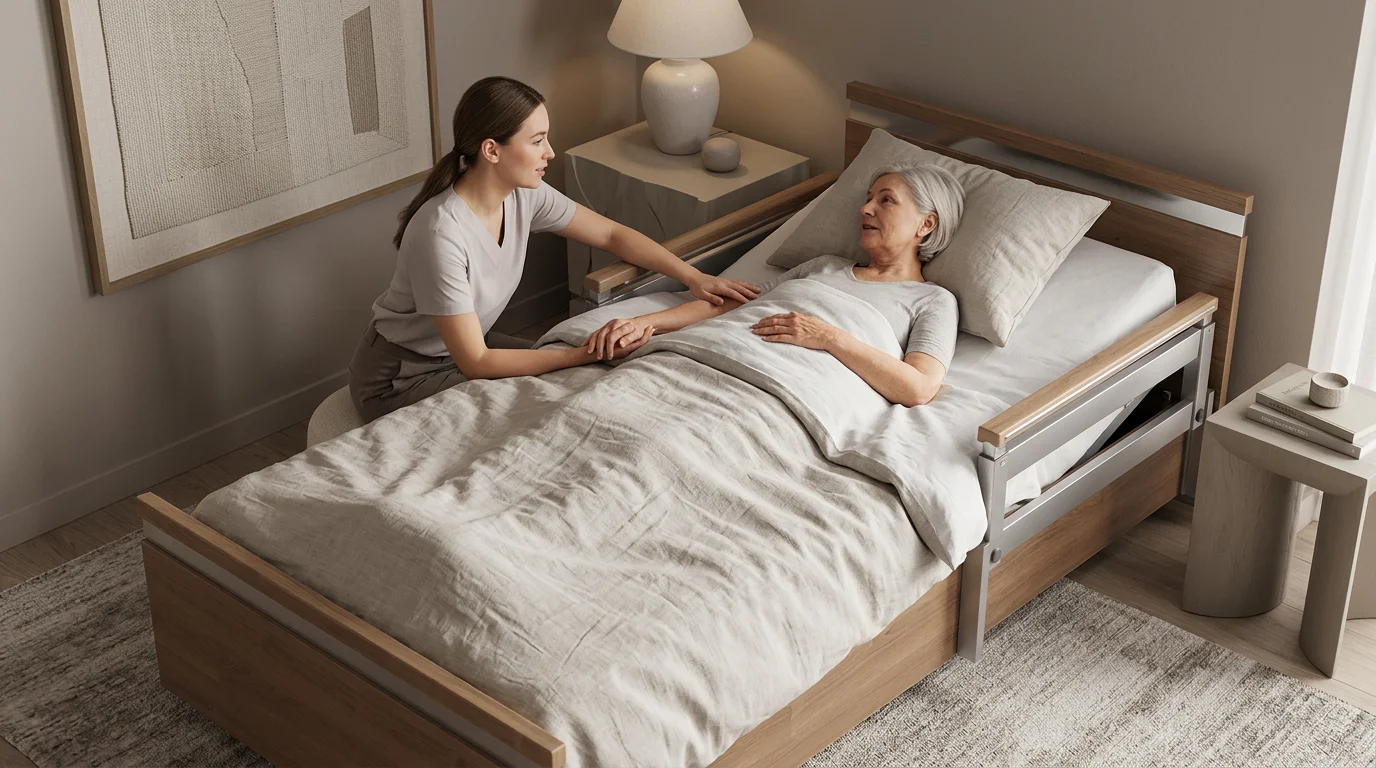
SonderCare’s Aura Premium home hospital bed sits squarely in the therapeutic device category. The FDA classifies home hospital beds as Class II medical devices under 21 CFR 880.5100, which requires more rigorous design, manufacturing controls, and safety documentation than a consumer adjustable base.6 The Aura Premium is certified to the International Hospital Standard and manufactured under an ISO 13485-certified quality management system, a level of validation that matters when a loved one’s safety depends on the bed performing reliably, day after day.
The FallSafe Ultra-Low Height feature illustrates the difference precisely. The Aura Premium’s platform lowers to just 10 inches off the floor (17 inches to the top of the mattress). A consumer adjustable base cannot do this, it’s not a design feature that exists in that product category. For someone at fall risk, that single therapeutic design choice can mean the difference between a serious injury and a manageable incident.
SonderCare also offers the Alternating Pressure Air mattress ($2,999) as a therapeutic device in its own right, 18 air bladders that cycle continuously to redistribute pressure for users at high risk of pressure injuries. It’s a purpose-built clinical device, not a comfort mattress.
If you’re trying to figure out which therapeutic devices your loved one needs at home, the home hospice equipment checklist is a practical starting point; and a SonderCare expert can walk through your specific situation at no obligation.
3. Monitoring Devices
Monitoring devices track a condition or parameter over time, often continuously, and alert when something falls outside a safe range. Unlike diagnostic devices (which take a periodic measurement), monitoring devices watch actively.
Common monitoring devices for home caregivers:
- Continuous glucose monitors (CGMs), track blood sugar in real time
- Medical alert systems (wearable alert buttons)
- Automatic fall detection sensors
- Cardiac monitors (wearable heart rhythm trackers)
- Remote patient monitoring systems, transmit vitals to a clinical team
The practical difference between a diagnostic and a monitoring device becomes clear when you look at the failure scenarios. Patricia’s experience illustrates this well.
Patricia had cared for her husband Carl, who was living with Parkinson’s disease, for three years. They had a standard medical alert button on his nightstand. One night, Carl fell at 2 a.m. and couldn’t reach the button. He was on the floor for four hours before Patricia woke. When an occupational therapist visited the following week, she recommended a wearable fall detection sensor, a monitoring device that automatically detects falls through motion analysis and triggers an alert without requiring the person to press anything. The difference between a manual alert (essentially a diagnostic tool you operate yourself) and an automatic monitoring device changed Carl’s safety at home fundamentally.
From a regulatory standpoint, continuous monitoring devices that connect to clinical networks often fall into higher risk classes. In the EU MDR framework, some active monitoring devices are classified as Class IIb, reflecting the fact that errors in ongoing monitoring can have delayed but serious consequences.1
4. Life Support Devices
Life support devices sustain critical bodily functions. When these devices fail, the consequences are immediate. They carry the most rigorous manufacturing standards and the highest levels of clinical oversight.
Life support devices that may enter the home in advanced care situations:
- Oxygen concentrators and portable oxygen systems
- Mechanical ventilators (home ventilators for severe respiratory disease)
- Home dialysis systems (peritoneal dialysis units approved for home use)
- Enteral feeding pumps (tube feeding systems)
- Implantable devices like pacemakers and ICDs (implanted by a surgeon; managed by a cardiologist)
Globally, devices that directly sustain life are classified at the highest risk tier. In the EU MDR framework, they fall into Class III.1,2 The WHO’s Global Model Regulatory Framework, adopted by many countries across Asia, Africa, and Latin America, places comparable devices in Class D, the highest of four risk groups.4,5
For caregivers, life support devices come with mandatory training. A home health nurse or respiratory therapist will typically provide hands-on instruction before a ventilator or oxygen concentrator is used independently at home. Emergency planning is also essential for these devices: backup power arrangements, after-hours supplier contacts, and notification to local emergency services that life support equipment is present in the home.
How Regulatory Classification Maps to These 4 Categories
While the functional framework above is the most practical for caregivers, regulatory classification governs what reaches the market and how. Two systems matter most depending on where you are.
The FDA’s Three Classes (United States)
The FDA classifies all medical devices into three classes based on risk:6,7
| FDA Class | Risk Level | What’s Required | Share of All Devices |
|---|---|---|---|
| Class I | Lowest | General controls only | ~47% |
| Class II | Moderate | General + special controls (510(k) clearance) | ~43% |
| Class III | Highest | Premarket approval (PMA) | ~10% |
A key fact that surprises many people: approximately 95% of Class I devices are exempt from FDA premarket review, meaning they reach the market without prior FDA clearance, relying on manufacturer adherence to quality standards.7 This doesn’t mean they’re unsafe; it means the risk profile is low enough that post-market surveillance and manufacturing controls are considered sufficient.
Home hospital beds are regulated as Class II medical devices under 21 CFR 880.5100. That means they require premarket notification (510(k) clearance) demonstrating they are substantially equivalent to a legally marketed predicate device. The FDA’s classification system has three tiers, not four, which is an important distinction when you encounter conflicting information online.
The EU MDR’s Four Classes (Europe and Global Suppliers)
The European Union’s Medical Device Regulation (EU MDR 2017/745) uses four classes, governed by 22 classification rules in Annex VIII:1,2,3
| EU Class | Risk Level | Device Examples |
|---|---|---|
| Class I | Lowest | Reusable surgical instruments, non-sterile examination gloves, wheelchairs |
| Class IIa | Medium-low | Blood pressure monitors, hearing aids, surgical gloves, syringes |
| Class IIb | Medium-high | Condoms, implantable devices for transient use, anesthesia equipment, lung ventilators |
| Class III | Highest | Drug-eluting stents, implantable cardioverter defibrillators, prosthetic heart valves |
The WHO’s Global Model Regulatory Framework uses a parallel four-tier structure (Classes A through D), widely adopted outside the US and EU.4,5 India, Japan, and South Korea each maintain their own four-class systems as well, broadly aligned with the EU MDR framework.9
The practical takeaway: When a supplier or article references “four categories of medical devices,” they are almost always referring to the EU MDR or a similar framework. When a US caregiver navigates Medicare coverage or FDA registration, they are working within the FDA’s three-class system. Both systems are risk-based; they simply divide the spectrum differently.
Insurance and Coverage: Why the Category Changes Everything
Here’s what catches most caregivers off guard: Medicare and private insurance do not treat all medical devices the same way. Coverage depends heavily on functional category, regulatory class, and, critically, how the physician documents medical necessity.
Class II therapeutic devices like home hospital beds typically qualify for Medicare Part B coverage as Durable Medical Equipment (DME) when a physician certifies medical necessity. The documentation has to be specific: the physician’s notes must establish that the patient’s condition requires the particular features of the device being requested, not just that a bed would be helpful.
This matters in practice. A basic hospital bed covered by Medicare is a standard institutional unit. If the physician certifies that the patient requires full-electric positioning for repositioning, that opens coverage for a more capable device. Documentation errors and prior authorization failures are among the most common reasons DME claims are denied, a problem that is almost entirely avoidable with the right paperwork in place.
Life support devices like ventilators and oxygen concentrators require separate DME supplier authorization, and many carry ongoing documentation review requirements. Monitoring devices like CGMs have their own coverage criteria, which have expanded significantly in recent years.
For families considering a medical-grade home hospital bed outside of Medicare coverage (private pay), the clinical documentation still matters: it establishes the basis for the purchase, which can affect supplemental insurance, HSA/FSA eligibility, and future care coordination.
The full breakdown of what equipment you need to care for elderly at home covers coverage considerations in more detail for different device categories.
Consumer vs. Medical-Grade: The Gap That Matters at Home
James bought an adjustable bed for his wife Ellen when she came home from a stroke rehabilitation facility. It seemed logical, she needed head elevation, it had a wireless remote, and it cost a fraction of what the occupational therapist had mentioned during discharge planning. Six weeks later, the OT came for a home visit and immediately identified three issues: no side rails for transfer assistance, a platform height that couldn’t go low enough to reduce fall risk, and a foam sleeping surface without any pressure redistribution properties. They had to start over.
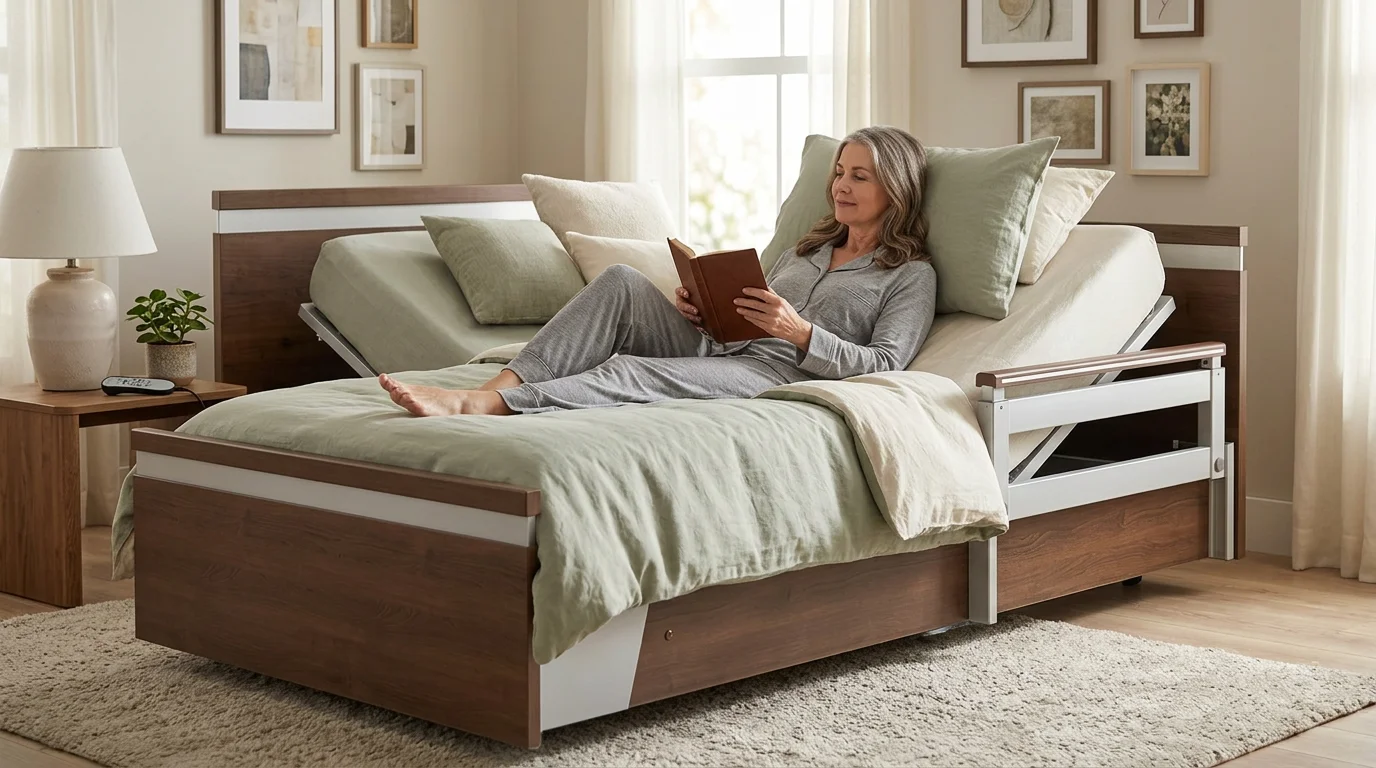
This is one of the most common and costly mistakes in home caregiving setup. A consumer adjustable base and a medical-grade home hospital bed share a category name but not a product category. The functional type, “adjustable bed for sleeping comfort” versus “therapeutic positioning device for clinical care”, determines the design requirements, safety testing, and actual features built into the product.
The differences show up in specifics:
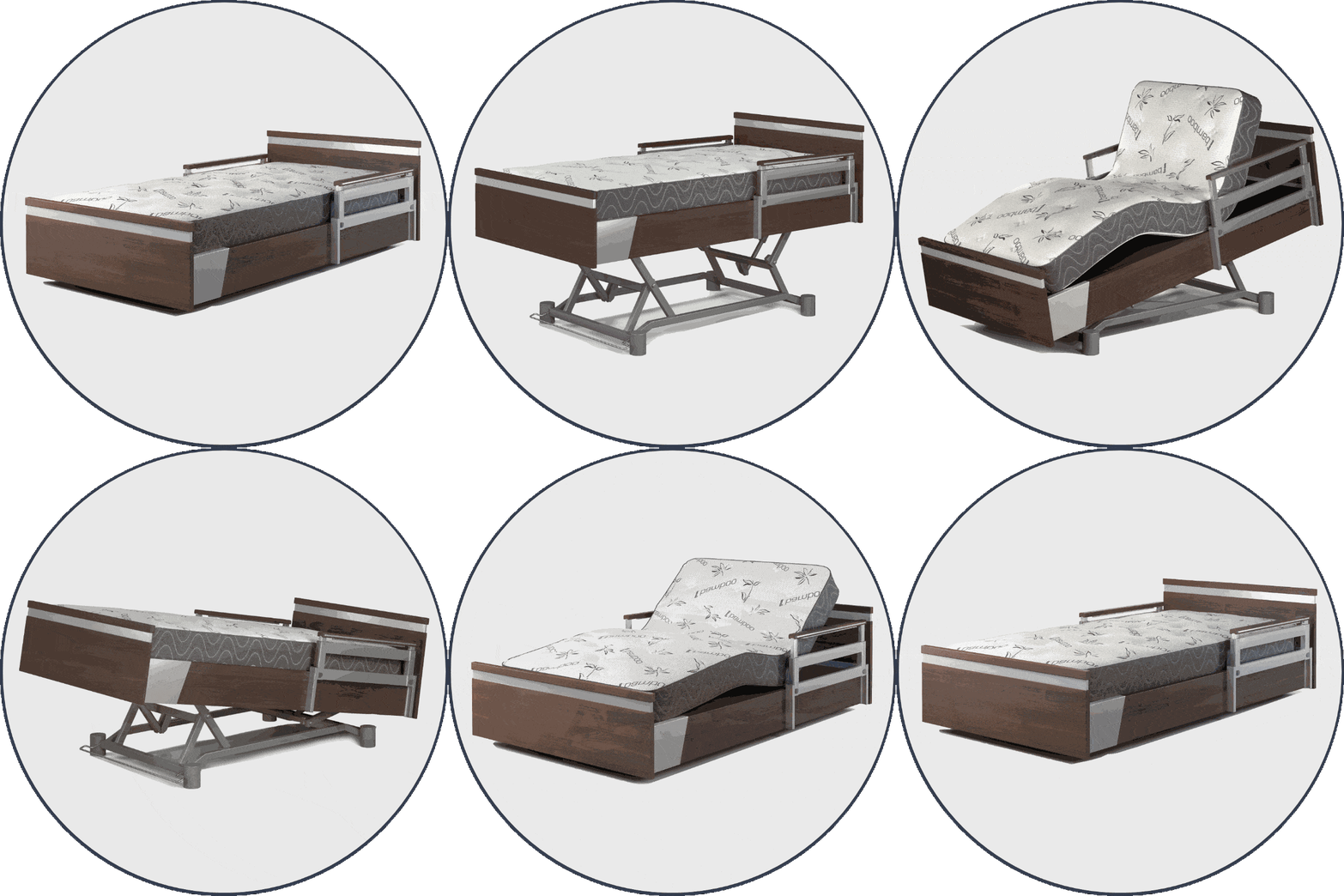
- Platform height range: A consumer base is typically fixed at 18-24 inches. A medical-grade home hospital bed adjusts from as low as 10 inches (fall prevention) to 39 inches (caregiver ergonomics during transfers).
- Side rails: Consumer beds don’t include clinical assist rails. Medical beds include rails tested to defined load limits under IEC 60601-2-52.
- Therapeutic positioning: Medical beds include Zero Gravity, Cardiac Chair, Trendelenburg, and Reverse Trendelenburg positions. A consumer base cannot replicate these.
- Regulatory validation: A Class II home hospital bed must demonstrate safety and effectiveness before reaching the market. A consumer adjustable base has no equivalent clinical validation pathway.
SonderCare’s Aura Platinum home hospital bed answers the question that trips up so many families: “Can the equipment look like it belongs in our home?” The Aura Platinum adds fully upholstered Slate Gray Crypton side panels and a premium residential headboard to the same hospital-certified frame as the Aura Premium, achieving a furniture-grade aesthetic while meeting International Hospital Standard certification. It’s what happens when you refuse to treat “safe” and “beautiful” as mutually exclusive.
For a comprehensive guide to evaluating these differences across brands and product tiers, the SonderCare expert buyer’s guide to choosing a home hospital bed is the right next step.8
Practical Guidance: Matching Device Category to Care Need
When a physician recommends home medical equipment, knowing which functional category it falls into helps you ask better questions. Here’s a quick-reference framework:
If the device is diagnostic (blood pressure monitor, glucometer, pulse oximeter):
– Clarify whether a consumer-grade device is adequate or whether clinical-grade accuracy is needed
– Check whether Medicare Part B or supplemental insurance covers the specific model
– Ask what a “normal” reading looks like and when a result should prompt a call to the care team
If the device is therapeutic (home hospital bed, CPAP machine, compression device, alternating pressure mattress):
– Get the physician’s medical necessity documentation in writing before purchasing anything
– Understand clearly what Medicare or insurance will supply versus what additional features you may want to invest in privately
– Evaluate long-term value against short-term rental costs, for conditions lasting longer than three months, ownership typically becomes the financially sound choice
If the device is monitoring (medical alert system, fall detection sensor, continuous glucose monitor):
– Clarify who receives the alerts and what the escalation protocol is
– Understand battery life, connectivity requirements, and what happens during a power outage
– Ask whether the device integrates with the care team’s remote patient monitoring system
If the device is life support (oxygen concentrator, home ventilator, feeding pump):
– Ensure a home health or respiratory therapist provides hands-on training before the clinical team leaves
– Build an emergency plan covering backup power, after-hours supplier contact, and local emergency service notification
– Understand maintenance schedules, life support devices have duty cycles, filter replacements, and annual inspection requirements
Choosing Care Equipment That Grows With the Need
One scenario many caregivers underestimate: conditions progress. A parent who needs a therapeutic bed for post-surgical recovery may eventually need repositioning support for COPD, then pressure redistribution support as mobility decreases. Choosing a therapeutic device, particularly a home hospital bed, that is designed to meet evolving care needs prevents the costly and disruptive process of replacing equipment when things change.
The Aura Premium home hospital bed is built with this in mind. It includes the full range of therapeutic positioning functions: FallSafe Ultra-Low Height, Zero Gravity, Cardiac Chair, Trendelenburg and Reverse Trendelenburg (for use under medical supervision), and hi-lo adjustment across the full 10-to-39-inch range. It’s certified to the International Hospital Standard, backed by a 5-year comprehensive parts warranty, and delivered with white-glove installation and a complete feature walkthrough. When a device is a long-term investment in someone’s safety and dignity, these specifications are what matter.
For a complete room-level guide covering everything from space requirements to equipment selection to caregiver ergonomics, our hospital-grade bedroom setup guide walks through every consideration.
The four functional categories of medical devices, diagnostic, therapeutic, monitoring, and life support, give you a practical lens for understanding what enters your home and why it matters.
- Diagnostic devices measure and detect. They are generally lower risk but not interchangeable with clinical-grade versions.
- Therapeutic devices treat or manage conditions. Home hospital beds are Class II therapeutic devices under the FDA, a meaningful designation that separates them from consumer adjustable bases.
- Monitoring devices track conditions over time and alert on changes. The distinction between manual alert devices and automatic monitoring devices has real safety consequences.
- Life support devices sustain critical functions and require the most rigorous clinical oversight, backup planning, and caregiver training.
Knowing the category of any device on your equipment list tells you how it’s regulated, how insurance typically treats it, and what to expect in terms of documentation, training, and ongoing oversight.
Most families navigate this without a map. The right equipment doesn’t just support the person in the bed, it supports the caregiver managing everything around them. If you’re working through equipment decisions and aren’t sure where to start, SonderCare’s team is available for a free, no-pressure consultation. We’ve helped thousands of families work through exactly these questions.
Speak with a SonderCare expert today.
References
-
Medical Device Coordination Group. MDCG 2021-24 Rev.1: Guidance on Classification of Medical Devices. European Commission, April 2026. https://health.ec.europa.eu/system/files/2021-10/mdcg_2021-24_en_0.pdf
-
European Union. Regulation (EU) 2017/745 on Medical Devices (EU MDR), Annex VIII: Classification Rules. https://www.medical-device-regulation.eu/2019/08/08/annex-viii/
-
European Commission. Medical Device Classification. EU UDI Helpdesk, official resource. https://webgate.ec.europa.eu/udi-helpdesk/en/other-relevant-information/medical-device-classification.html
-
World Health Organization. WHO Global Model Regulatory Framework for Medical Devices Including In Vitro Diagnostic Medical Devices. WHO Medical Device Technical Series, 2017. https://www.who.int/publications/i/item/9789241512350
-
World Health Organization. WHO/BS/2022.2425: Global Model Regulatory Framework for Medical Devices Including IVDs (updated draft). July 2022. https://cdn.who.int/media/docs/default-source/biologicals/bs-2022.2425_global-model-regulatory-framework-for-medical-devices-including-ivds_11-july-2022-dl_14-july.pdf
-
U.S. Food and Drug Administration. Classify Your Medical Device. Last updated January 15, 2026. https://www.fda.gov/medical-devices/overview-device-regulation/classify-your-medical-device
-
Market.us. Medical Device Industry/Brands Statistics and Facts. Updated February 16, 2026. https://market.us/statistics/medical-device-industry/
-
Mooghali M, Rathi VK, Kadakia KT, Ross JS, Dhruva SS. “Medical device risk (re)classification: lessons from the FDA’s 515 Program Initiative.” BMJ Surgery, Interventions, & Health Technologies, 2023. DOI: 10.1136/bmjsit-2023-000186. https://pmc.ncbi.nlm.nih.gov/articles/PMC10687393/
-
Chettri B. “A comparative study of medical device regulation between countries based on their economies.” Expert Review of Medical Devices, Vol. 21, Issue 6, 2024. DOI: 10.1080/17434440.2024.2360979. https://www.tandfonline.com/doi/full/10.1080/17434440.2024.2360979