This evidence-based guide covers daily positioning techniques for people living with ALS and motor neuron disease at home, including head-of-bed elevation for respiratory support, individualized repositioning schedules for skin protection, side-lying strategies for airway management, and equipment recommendations that scale with disease progression while preserving independence and dignity.
As ALS progresses, you spend more hours in bed each day. Objective wearable sensor data confirms what you already know, daily activity levels decline measurably over time, and a Norwegian cohort study found that 42% of people living with ALS were spending the majority of their time in bed or a chair by the time they reached advanced care stages.1 But how you position yourself during those hours is not a passive detail. It directly shapes your breathing, your skin integrity, your comfort, and your sense of control. The right ALS positioning techniques at home can mean the difference between reactive crisis management and a proactive strategy that preserves your independence for as long as possible.
This guide covers evidence-based positioning approaches, from head-of-bed elevation for respiratory support to individualized repositioning schedules for skin protection, along with the equipment that makes each technique practical in a home setting. Every recommendation here is grounded in clinical research, but your multidisciplinary care team should help you tailor these strategies to your specific needs.
Quick Reference: Key ALS Positioning Techniques
Position
Purpose
When to Use
Head elevated 30-45 degrees
Respiratory support, aspiration prevention
Sleep, after meals, during NIV
30-degree lateral tilt
Pressure redistribution
Repositioning intervals
Side-lying with support
Secretion management, airway protection
Bulbar involvement, as assessed
Zero Gravity
Pressure relief, relaxation
Extended rest periods
Cardiac Chair
Upright positioning for breathing and eating
Meals, extended upright support for breathing comfort
Ultra-low (10″ platform / 17″ to top of mattress)
Nighttime fall safety
Sleeping hours
21″ transfer height
Safe wheelchair transfers
Transfers in and out of bed
Chin-tuck (20° flexion)
Airway protection during meals
Feeding, as assessed by SLP
Side-lying with arm support
Spasticity inhibition, shoulder pain relief
Extensor spasticity, shoulder subluxation
Slight hip/knee flexion
Extensor spasticity reduction
Lower limb spasticity episodes
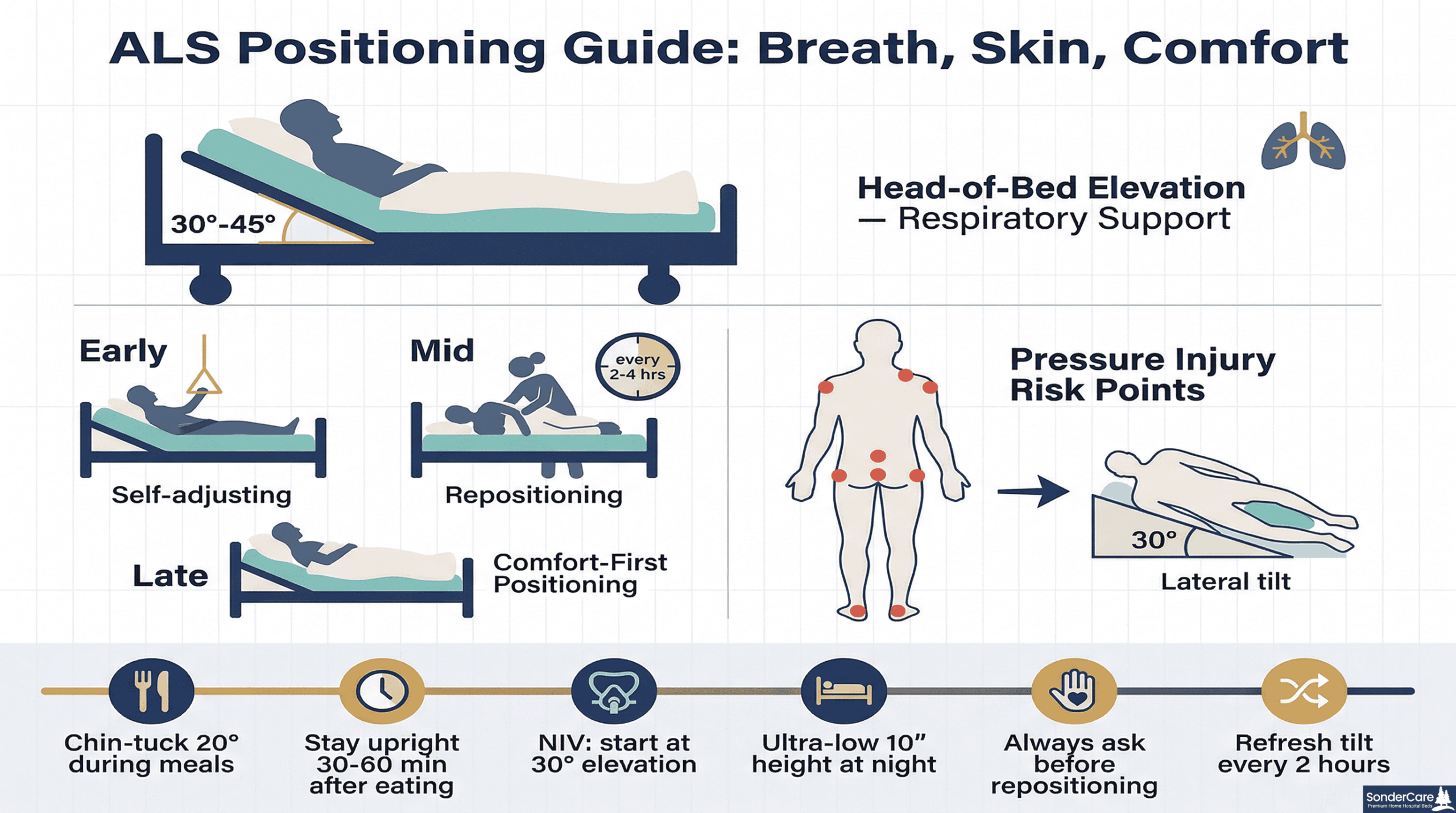
ALS Positioning Guide: key techniques for respiratory support, skin protection, and comfort at each disease stage.
Why Positioning Matters More in ALS Than Almost Any Other Condition
ALS creates a convergence of risks that makes positioning uniquely critical. Progressive motor neuron loss weakens the muscles you rely on for breathing, coughing, swallowing, and shifting your own body weight. Each of these losses compounds the others: weakened respiratory muscles make breathing harder in certain positions, reduced mobility increases pressure on vulnerable skin, and impaired coughing allows secretions to pool in your airways.
The numbers underscore how serious this is. A nationwide cohort study tracking 514 people with ALS over an 11-year period found that ALS is an independent risk factor for pressure injuries, with an adjusted hazard ratio of 8.82, meaning the risk is nearly nine times higher than the general population.2 That risk was even more pronounced in women with ALS (adjusted hazard ratio of 26.6) and in younger adults aged 20 to 54.2 These are not abstract statistics. They reflect the reality that without a deliberate positioning strategy, skin breakdown becomes a significant threat to your comfort and health.
At the same time, respiratory complications remain the leading cause of hospitalization and mortality in ALS.3 How you position your upper body directly affects diaphragm function, aspiration risk, and your ability to use non-invasive ventilation effectively. Positioning is not supplementary care; it is foundational. And with the right approach and equipment, it is something you can actively manage. For a broader look at setting up your home environment, the hospital-grade bedroom setup guide covers the full picture.
Head-of-Bed Elevation: Supporting Your Breathing
Elevating the head of your bed to 30 to 45 degrees is one of the most impactful positioning techniques available to you. The physiological rationale is straightforward: as respiratory muscles weaken in ALS, the diaphragm has to work harder against gravity when you lie flat. Raising the head of the bed unloads the diaphragm, reduces the work of breathing, and alleviates orthopnea, that shortness of breath you may experience when lying down.3
The evidence supporting this position extends beyond theory. A crossover study by Torres et al. demonstrated that aspiration markers were dramatically lower in semi-recumbent positioning, endobronchial radioactive counts were 954 rcpm in the elevated position compared to 4,154 rcpm in supine positioning, a statistically significant difference.4 Meta-analyses on ventilator-associated pneumonia consistently show reduced aspiration risk with 30 to 45 degree elevation.4 While these studies were conducted in ICU settings, the underlying mechanics apply directly to ALS: gravity helps keep gastric contents and oral secretions out of your airways, which is particularly important if you have bulbar involvement or use enteral feeding.
A comparative study in people requiring extended bed rest also found that the semi-Fowler’s position produced statistically significant improvements in Forced Vital Capacity, FEV1, and oxygen saturation compared to side-lying positions.5 For practical daily use, this means keeping your head elevated during sleep, after meals, and especially during non-invasive ventilation sessions. The exact angle that works best for you may vary, some people find 30 degrees sufficient, while others need closer to 45 degrees to breathe comfortably.
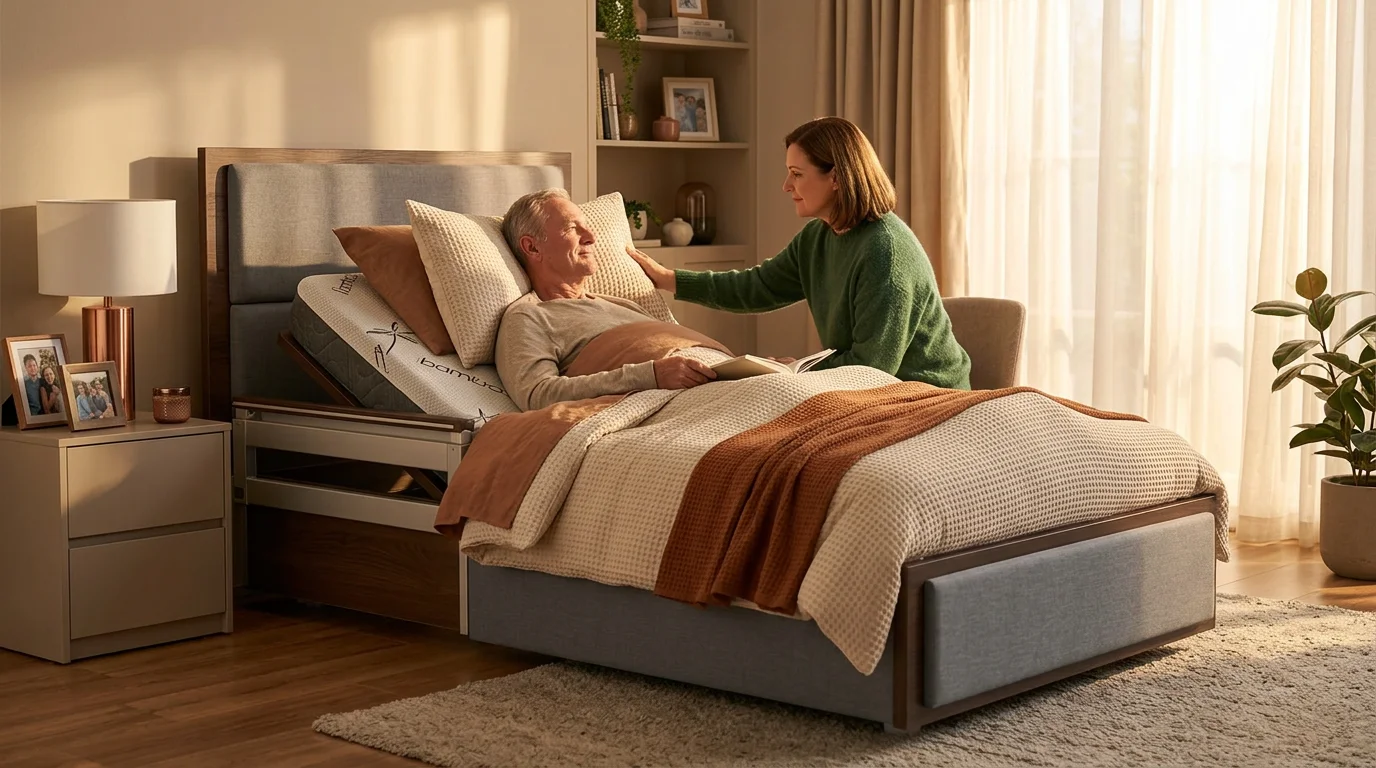
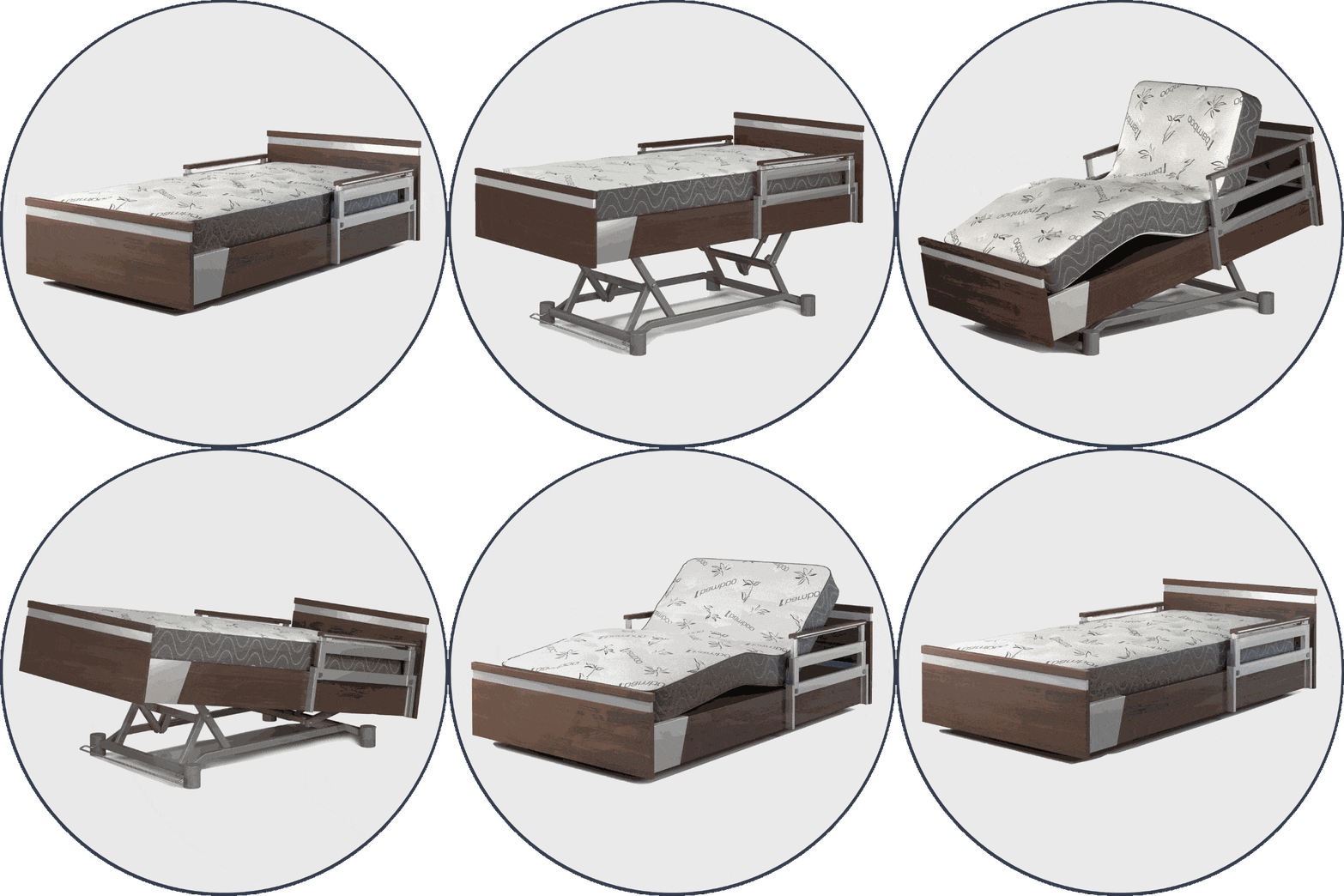
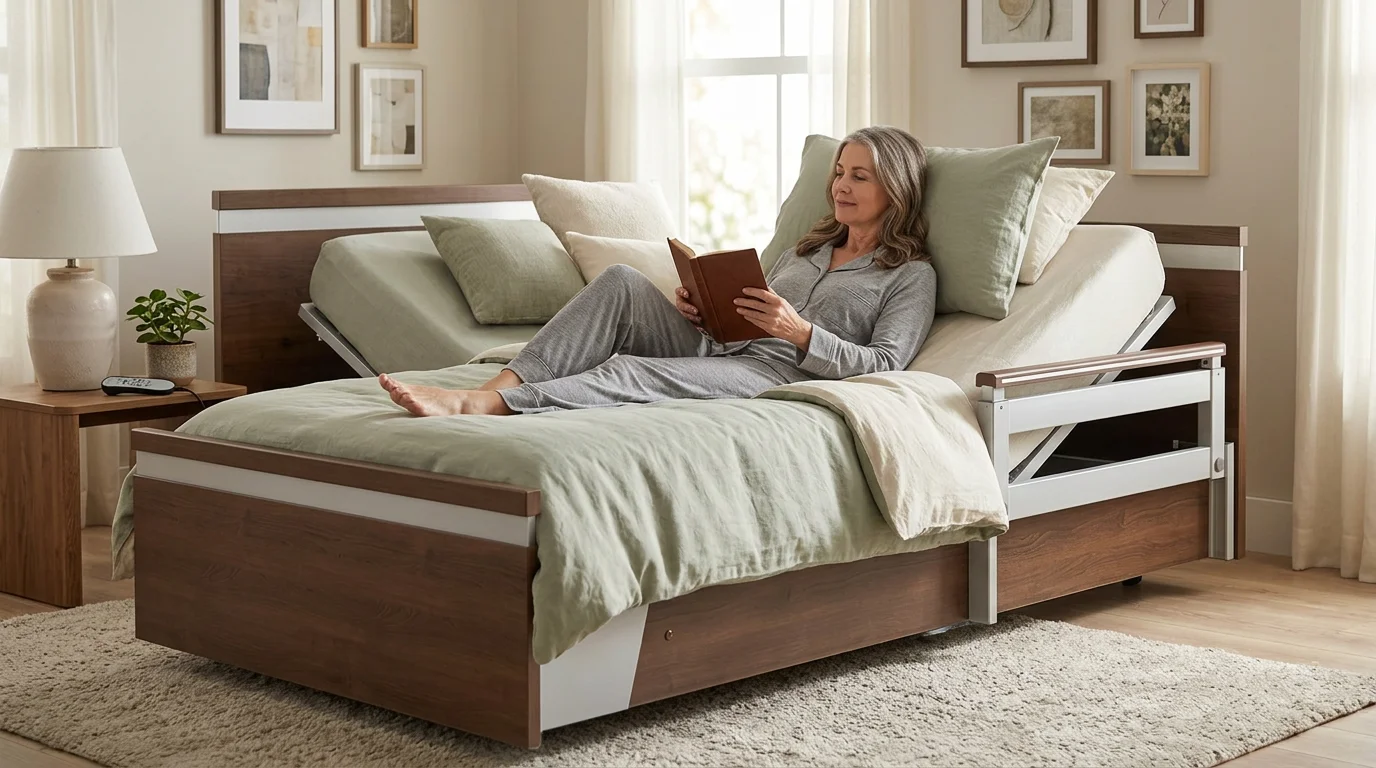
The SonderCare Aura Premium makes this practical with programmable head elevation, a Cardiac Chair position that simulates sitting upright in bed, and a Zero Gravity position for pressure relief during extended rest periods. These are not luxury features when you live with ALS, they are daily functional tools. If you are also managing COPD or other respiratory conditions alongside ALS, the COPD positioning and breathing comfort guide offers complementary strategies.
One important note: Trendelenburg positioning (head-down tilt) is generally not recommended for secretion management in ALS. The AARC Clinical Practice Guideline lists several contraindications relevant to motor neuron disease, including uncontrolled airway at risk for aspiration and hemodynamic instability.6 Modern respiratory care for ALS favors mechanical insufflation-exsufflation (cough assist devices) over postural drainage for clearing secretions, a safer and more effective approach.6
Repositioning Schedules That Protect Your Skin
If you have been told to reposition every two hours without exception, the evidence suggests a more nuanced approach. The 2019 EPUAP/NPIAP/PPPIA International Clinical Practice Guideline has moved away from a rigid two-hour rule, recommending instead that repositioning frequency be individualized based on your tissue tolerance, mobility level, and the support surface you use.7
A 2020 Cochrane systematic review reinforced this shift. Pooled analysis of three trials with 1,074 participants comparing two-hourly with four-hourly repositioning found no clear evidence that the more frequent schedule was superior (Risk Ratio 1.06, 95% CI 0.80 to 1.41).7 The TEAM-UP trial similarly found that longer intervals on high-specification support surfaces did not increase pressure injury incidence in care settings.7 This does not mean repositioning is unimportant; it means the schedule should fit your situation, not a one-size-fits-all clock.
What does matter is technique. The 30-degree lateral tilt is specifically recommended for pressure redistribution. This involves turning to a slight angle supported by pillows, rather than a full 90-degree side-lying position, which concentrates pressure on the hip.8 Work with your occupational therapist or physical therapist to determine the right interval and positions for your body, your mattress, and your current mobility level.
Your support surface plays a critical role in how often you need to reposition. The PRESSURE 2 trial, a large randomized controlled trial with over 2,000 participants, found no statistically significant difference between alternating pressure mattresses and high-specification foam mattresses for preventing pressure injuries.9 Both types outperform standard hospital mattresses. SonderCare offers multiple pressure redistribution options, including the Comfort Mattress with visco memory foam and cooling gel, the Dream Bamboo Quilt-Top with reversible firm and soft sides, and the Alternating Pressure Air Mattress with 18 individually controlled air bladders for active redistribution. Your choice depends on comfort preference, how much you can reposition independently, and clinical recommendations from your care team. For a deeper look at preventing and treating pressure injuries, see the pressure sore prevention and treatment guide.
Side-Lying Positions and Airway Management
Side-lying positions serve a specific role in ALS care, particularly for managing secretions and reducing aspiration risk. Physiologically, lying on your side prevents the tongue from falling back and obstructing the pharynx, which can be an issue when bulbar muscles are weakened. For people with dysphagia, side-lying can direct food, liquid, or secretions away from the airway entrance.5
However, side-lying is not universally the best respiratory position. The comparative data from Patel and Shah found that semi-Fowler’s position (head elevated 30 to 45 degrees) was more effective at improving spirometry measures than side-lying.5 This means the choice between positions depends on what you are optimizing for: if aspiration risk from bulbar dysfunction is your primary concern, side-lying may be appropriate. If overall lung volume and breathing comfort are the priority, head elevation likely serves you better.
The optimal approach is often determined through a formal swallow assessment, either a Videofluoroscopic Swallow Study or Fiberoptic Endoscopic Evaluation of Swallowing, which can identify whether positioning on a specific side reduces aspiration for your particular anatomy. Proper pillow support to maintain neutral head and neck alignment is essential in any side-lying position to prevent airway kinking and discomfort.
Dropped Head Syndrome: When Cervical Positioning Becomes Critical
Dropped head syndrome (DHS) is a complication of ALS caused by severe weakness of the cervical extensor muscles, resulting in a chin-on-chest deformity that affects swallowing, breathing, and social interaction. Gourie-Devi et al. identified DHS as either an early or late manifestation of ALS, appearing as a presenting symptom in some people and developing during disease progression in others.14 The deformity is typically reducible when lying supine but becomes pronounced when sitting or standing.
The chin-on-chest posture directly compromises swallowing by altering pharyngeal anatomy and reducing airway patency. This creates a paradox: the therapeutic chin-tuck used to protect the airway during swallowing is not the same as pathological, uncontrolled forward head drop. Pathological head drop involves passive collapse rather than the active, controlled flexion of a deliberate chin tuck.14Positioning strategies for DHS:
In bed: The supine position naturally corrects the deformity as the head falls back to neutral alignment with gravity. A cervical contour pillow that supports the natural lordotic curve of the neck is recommended, filling the space between the occiput and mattress without pushing the head into excessive flexion or extension.
During meals: External head support is essential. A high-backed chair with headrest, or the adjustable home hospital bed headboard combined with a cervical pillow, can partially address this during bed-based meals.
Progressive approach: Start with cervical pillow support during sleep, add a wheelchair headrest for daytime, introduce a soft collar for transitional activities if tolerated, and move to specialized seating with powered head support in later stages.15
Pain Management Through Positioning
Pain in ALS is far more common than many families realize. A systematic review and meta-analysis by Hurwitz et al. established the pooled prevalence of pain in ALS at 60%, based on 21 eligible studies.16 Pain types include muscle cramps affecting roughly two-thirds of people with ALS, spasticity-related pain present in 36% of those with spasticity, and secondary musculoskeletal pain from weakened muscles failing to support joints, particularly in the shoulders and hips.17
The ALS pain management literature consistently identifies positioning among the first-line non-pharmacological interventions for secondary pain.17 Specific recommendations by pain type:
Shoulder pain: Support the weakened shoulder with pillows to prevent subluxation. Avoid hanging the arm over the bed edge. In side-lying, position the affected shoulder forward (protracted) with the arm supported on pillows.
Back pain: Use the home hospital bed’s articulation to reduce lumbar strain. The knee-break feature tilts the pelvis and reduces lordotic stress. Alternating between positions reduces static loading.
Cramp-associated pain: Gentle sustained stretch positioning can prevent cramps. Maintaining ankles in dorsiflexion overnight may reduce calf cramps. Positioning that avoids joint extremes reduces cramp-triggering positions.
A qualitative study found that people living with ALS identify posture adjustment as a key self-management strategy for pain, and that pain frequently prompts repositioning requests.17 Your positioning schedule should account for pain patterns, not just pressure redistribution.
Spasticity and Contracture Prevention
Managing Spasticity Through Position
Spasticity affects 36% of people with ALS, with approximately 42.5% of those experiencing associated pain.18 Remarkably, a Cochrane review found only one randomized controlled trial in the entire world literature examining spasticity treatment specifically in ALS, highlighting how sparse the evidence base is.18
Positioning principles for spasticity management, extrapolated from stroke and spinal cord injury literature, include:
Side-lying is often preferred as it inhibits extensor spasticity patterns. Position the affected limbs in mild flexion with pillow support between the knees.
Avoid supine with legs extended, which can trigger extensor thrust patterns in people with dominant extensor spasticity.
For lower limb extensor spasticity: Slight hip and knee flexion, achieved with bed articulation or pillow support, reduces extensor tone. The home hospital bed’s knee-break feature is particularly useful here.
For upper limb flexor spasticity: Position the arm in gentle extension with the elbow supported on a pillow, palm up, to counteract the flexor pattern.
Sustained positioning for 20 to 30 minutes provides inhibitory input to overactive stretch reflexes. Slow, predictable movements during repositioning prevent triggering the stretch reflex.
Positioning can reduce the medication dose needed for spasticity management, and medications can make therapeutic positioning more achievable by reducing baseline tone.18
Preventing Contractures
While ALS produces milder contractures than myopathic conditions, with only 26% of people developing ankle contractures and 20% having contractures of any joint measuring 20 degrees or more, even mild restrictions compound the functional impact of profound weakness.19 Contractures increase pain, complicate caregiver tasks, and reduce the effectiveness of positioning strategies.
The most vulnerable joints are ankles (plantar flexion, especially after wheelchair dependence begins), shoulders (adduction and internal rotation from prolonged positioning), hips (flexion from sitting), and hands and wrists in later stages.19 Night positioning is particularly important: resting ankle-foot orthoses maintaining 90 degrees, pillow support with the arm slightly abducted to prevent shoulder contracture, and resting hand splints promoting wrist extension.
Feeding and Mealtime Positioning
The Chin-Tuck Technique
The chin-tuck maneuver is one of the most widely used compensatory swallowing strategies for ALS. Research shows that approximately 20 degrees of neck flexion is optimal, narrowing the airway entrance, widening the vallecular space, and increasing epiglottic retroversion to protect the airway.20 Excessive flexion can paradoxically worsen swallowing, so the degree of chin tuck matters.
For people with ALS, the chin-tuck should be evaluated during a Videofluoroscopic Swallow Study or Fiberoptic Endoscopic Evaluation of Swallowing, as those with bulbar-onset ALS have variable responses depending on the degree of tongue and pharyngeal weakness. Head rotation toward the weaker pharyngeal side during swallowing can direct the bolus down the stronger side of the pharynx, another strategy your speech-language pathologist may recommend.
Post-Meal and Enteral Feeding Positioning
Remain upright for 30 to 60 minutes after meals to prevent gastroesophageal reflux and reduce aspiration risk. For those using an adjustable home hospital bed, this means maintaining head-of-bed elevation at 30 degrees or higher, ideally 45 degrees, for at least 30 minutes after the last food or liquid is consumed. For those receiving enteral feeding through a PEG tube, the head of bed must remain elevated at 30 degrees minimum throughout bolus feeding sessions and during overnight continuous feeds. The SonderCare Aura Premium’s programmable positions make it practical to maintain these angles consistently without manual adjustment.
NIV Mask and Positioning Interactions
Body position significantly affects non-invasive ventilation effectiveness. Supine forced vital capacity may be 15 to 25 percent lower than upright FVC in people with ALS who have diaphragmatic involvement, meaning the position in which NIV is used directly affects required pressure settings.21 People with bulbar ALS face additional challenges from orofacial weakness, jaw opening during sleep, and excess secretions, all of which interact with positioning.
Practical considerations for overnight NIV:
Nasal masks are most affected by mouth opening, which worsens in the supine position. Side-lying can reduce jaw drop, and chin straps may help.
Full-face masks maintain better seal during sleep but can be displaced during side-lying when pillow pressure pushes on the mask edge.
Pillow selection matters: Standard pillows can displace NIV masks. CPAP-specific pillows with side cutouts accommodate mask hardware during side sleeping.
Start with 30 degrees head-of-bed elevation as the standard position for nocturnal NIV, as it optimizes diaphragmatic mechanics while providing a stable surface for mask seal.21
If side-lying is preferred, fit the mask after positioning rather than before. Monitor for positional leak patterns using ventilator download data, and ensure the mask does not rest directly on the pillow surface.
Equipment That Scales With Your Needs
The ALS Association, the ALS Network, and the Muscular Dystrophy Association all recommend transitioning to a home hospital bed as ALS progresses and mobility needs increase.10 The ALS Network’s guidance is direct: “If pillows and bed wedges are not providing enough support, you might benefit from a hospital bed, adjustable bed, or medical bed.”10 The MDA adds that an electrically powered bed is preferred over a hand-crank model, as it saves both your energy and your caregiver’s.10
For someone living with ALS, the key features to evaluate in a home hospital bed are programmable positioning, adjustable height range, and long-term durability. The SonderCare Aura Premium addresses each of these with features built for daily, long-term use:
Full positioning suite: head and knee elevation, Trendelenburg, Reverse Trendelenburg, Zero Gravity, Cardiac Chair, and Comfort Chair
FallSafe ultra-low: 10″ platform height (17″ to top of mattress) for nighttime safety
Height range: adjusts from 10 inches to 39 inches for caregiver-assisted tasks
21-inch transfer position: pre-programmed for safe wheelchair transitions
500 lbs total safe working load, certified to International Hospital Standard (maximum user weight 418 lbs)
5-year comprehensive warranty covering all parts
On the insurance front, Medicare generally does not cover SonderCare beds — they’re premium, furniture-grade home hospital beds that exceed what standard DME coverage typically includes. Medicare may cover a basic semi-electric medical-supply bed when a physician documents medical necessity, which is a separate product category.11 If coverage matters to your situation, ask your ALS clinic about DME-eligible options; if you are evaluating a SonderCare bed, our team can walk you through financing, HSA/FSA eligibility, and what documentation private long-term care insurers may accept. For guidance on what other equipment you may need for home care, that resource covers the broader picture. If you need guidance on setting up a bedroom when mobility is limited, that guide walks through the full room layout.
Reducing Caregiver Strain Without Losing Your Independence
Equipment that reduces caregiver physical strain also benefits you directly, fewer interruptions, more autonomy, and smoother transfers. Ergonomic studies show that powered bed features reduce the biomechanical load on caregivers substantially: 38 to 94 percent reduction in peak push and pull forces during bed transport, and 10 to 50 percent reduction in forces during in-bed repositioning tasks.12 These are meaningful reductions that translate into safer, less disruptive care.
But here is the part that matters most to you: a bed with remote-controlled positioning means you can adjust your own head elevation, shift your knee position, or change your bed height without waiting for someone to help. Research on ALS-specific quality of life found that the ability to turn in bed independently was moderately correlated with overall quality of life scores. People unable to turn without assistance had significantly worse quality of life compared to those who could, mean ALSAQ-40 scores of 359 versus 208.13 Every bit of positioning control you retain has a measurable impact on how you experience daily life.
Accessories like the SonderCare Overhead Trapeze Helper Bar provide additional self-repositioning capability, giving you a handle to shift your weight or assist with turning. The Underbed Auto-Nightlight offers motion-activated floor illumination for safer nighttime transfers. These are practical tools that extend your independence, not just caregiver conveniences.
Positioning Through Each Stage of ALS
ALS positioning needs change as the disease progresses. Two validated staging systems, King’s Clinical Staging and the Milano-Torino Staging system, help clinicians track progression across functional domains.22 Understanding where you are in that progression helps you anticipate equipment and positioning needs before they become urgent.
Early Stage (King’s 1-2): The focus is independence preservation and habit formation. Learn to use bed rails, trapeze bars, or bed ladders to reposition yourself. Introduce head-of-bed elevation early if you notice any respiratory symptoms like morning headaches or non-refreshing sleep. This is also the time to select an adjustable home hospital bed proactively, framing it as a comfort upgrade rather than waiting until it becomes an emergency need.
Mid Stage (King’s 3-4A): Assisted positioning becomes necessary. Implement scheduled repositioning every 2 to 4 hours with caregiver assistance. Introduce a pressure-redistribution mattress, optimize feeding positions with your speech-language pathologist, and begin a contracture prevention program. Wheelchair seating should include tilt-in-space capability. Studies show better outcomes when specialized equipment is introduced before it becomes urgently needed.
Late Stage (King’s 4B-5): The focus shifts to comfort, dignity, and symptom management. Palliative positioning prioritizes respiratory comfort and pain relief. A full 24-hour positioning plan managed by caregivers replaces the earlier self-directed approach. Frequent small adjustments work better than major position changes. Slightly elevated semi-reclined positioning at 15 to 30 degrees is often preferred for respiratory comfort, with side-lying for airway management when needed.
Key transition indicators: Watch for inability to turn in bed independently (scheduled repositioning needed), morning headaches (head-of-bed elevation for respiratory support), weight loss or prolonged meals (feeding position optimization), new pressure marks (more frequent repositioning and upgraded support surface), and increasing pain (reassess the entire positioning program).
Practical Repositioning Techniques for Caregivers
The 30-Degree Lateral Tilt Step by Step
The 30-degree tilt is the standard for pressure redistribution. An observational study by Pickham et al. found that the average tilt angle decays from 26.7 degrees at baseline to just 16.6 degrees at two hours with standard pillows, which means checking and refreshing the position is essential.23
Ensure your loved one is lying comfortably in the center of the bed in the supine position with adequate head and neck pillow support
Place pillows along the lower back
Position an additional pillow beneath the others, with the corner carefully under the buttock to tilt the body and lift the sacrum clear of the mattress
Place a pillow between the knees to prevent bone-on-bone pressure
Ensure heels are free of the mattress surface using heel elevation pillows
Verify the target is 30 degrees from horizontal. Angles above 30 degrees increase shear forces and may load the greater trochanter
ALS-Specific Handling Considerations
Flaccid limbs: Support the full weight of the limb during repositioning. Do not grip weakened muscles directly; support at joints instead.
Spastic limbs: Move slowly and predictably. Avoid sudden stretches that trigger spasticity. Use gentle, sustained movements and wait for tone to settle before completing the position change.
Bulbar involvement: Keep suction equipment accessible during transfers, as position changes can mobilize secretions.
Fragile skin: People living with ALS may have thin skin from muscle wasting. Use slide sheets to reduce shear and never drag.
Dignity, Autonomy, and the Psychology of Positioning
Loss of the ability to reposition oneself is among the most psychologically significant milestones in ALS progression. A longitudinal study found that participation and autonomy decline significantly in the first 10 months after diagnosis, with physical autonomy affected earliest.24 Ethical research on ALS caregiving identifies preserving autonomy as one of the central dilemmas families face.25
Even when your loved one cannot physically reposition themselves, they can and should direct their own positioning care. For those who can speak, ask before repositioning and offer choices: “Would you prefer your left side or to be tilted to the right?” For those using AAC devices, ensure the communication device is accessible before beginning any position change, and program positioning-specific vocabulary like “need to move,” “uncomfortable,” or “left side please.” For non-verbal users without AAC, establish simple yes or no signals and allow time to respond.
Positioning involves touching, moving, and exposing the body of a person who may have full cognitive awareness. Always announce what you are about to do before touching. Explain the reason for the position change. Maintain dignity by covering exposed areas promptly. And respect your loved one’s right to refuse a position change, even when clinically indicated. Treating positioning as a collaborative act rather than something done to someone preserves the sense of agency that matters deeply to quality of life.24
Building Your Positioning Plan
A comprehensive positioning plan is not something you develop once and follow forever. ALS is progressive, and your needs will change. Build your plan with your multidisciplinary team, your neurologist, occupational therapist, physical therapist, respiratory therapist, and speech-language pathologist each bring perspective on different aspects of positioning.
Your plan should address these key elements:
Repositioning schedule based on your current mobility, skin assessment, and support surface, not a generic two-hour default
Optimal positions for each activity: sleeping, eating, using NIV, watching television, and transferring
Emergency positions documented clearly so anyone who assists you knows them
Equipment that grows with your needs, so you are not replacing gear every few months as your condition changes
Regular reassessment is essential. What works at one stage of ALS may not work six months later. Schedule periodic reviews with your OT and PT to update your positioning strategy, check skin integrity, and evaluate whether your equipment is still meeting your needs.
Important: The positioning techniques in this guide are based on current clinical evidence, but they are not a substitute for personalized medical advice. Your ALS care team should evaluate your specific respiratory function, skin condition, mobility level, and overall health to create a positioning plan tailored to you. Always consult your healthcare providers before making significant changes to your positioning routine.
Staying in Control
Positioning is not something that happens to you. It is a strategy you direct, with evidence behind it, equipment that supports it, and a care team that helps you refine it over time. Head-of-bed elevation protects your breathing. Individualized repositioning schedules protect your skin. The right bed and mattress make every technique practical and put the controls in your hands.
The SonderCare Aura Premium was designed with exactly this kind of daily, long-term use in mind, certified to International Hospital Standard, full positioning capability, and a 5-year warranty that reflects durability built for years of service. If you are evaluating your positioning equipment options, explore the Aura Premium or call SonderCare’s bed experts to discuss your specific situation.
References
Halvorsen T, et al. “Disease trajectories and end of life care in a Norwegian ALS cohort.” BMC Palliative Care. PMC: https://pmc.ncbi.nlm.nih.gov/articles/PMC12973671/; Gupta AS, et al. “At-home wearables and machine learning sensitively capture disease progression in amyotrophic lateral sclerosis.” Nature Medicine. 2023. PMC: https://pmc.ncbi.nlm.nih.gov/articles/PMC10442344/
Chen JH, et al. “Risk of developing pressure sore in amyotrophic lateral sclerosis patients, a nationwide cohort study.” J Eur Acad Dermatol Venereol. 2018;32(9):1589-1596. PubMed: https://pubmed.ncbi.nlm.nih.gov/29512203/
Respiratory therapies for Amyotrophic Lateral Sclerosis: A state of the art review. PMC. 2023. https://pmc.ncbi.nlm.nih.gov/articles/PMC10214054/
Torres A, et al. Aspiration and semi-recumbent positioning study; Alexiou VG, et al. Meta-analysis on ventilator-associated pneumonia prevention. Referenced in AHRQ Head of Bed Elevation Literature Review: https://www.ahrq.gov/professionals/quality-patient-safety/hais/tools/mvp/modules/technical/head-bed-elevation-litreview.html
Patel MR, Shah HM. Comparative study of respiratory mechanics in semi-Fowler’s vs side-lying positions in bedridden patients. 2021.
AARC Clinical Practice Guideline on Postural Drainage Therapy. Trendelenburg contraindications; Tzeng AC, Bach JR. “Prevention of pulmonary morbidity for patients with neuromuscular disease.” Chest. 2000;118(5):1390-1396.
European Pressure Ulcer Advisory Panel (EPUAP), National Pressure Injury Advisory Panel (NPIAP), Pan Pacific Pressure Injury Alliance (PPPIA). Prevention and Treatment of Pressure Ulcers/Injuries: Clinical Practice Guideline. 2019; Gillespie BM, et al. “Repositioning for pressure injury prevention in adults.” Cochrane Database Syst Rev. 2020. PMC: https://pmc.ncbi.nlm.nih.gov/articles/PMC7265629/
International Pressure Injury Guideline, Repositioning. https://www.internationalguideline.com/repositioning
Nixon J, et al. “Comparing alternating pressure mattresses and high-specification foam mattresses to prevent pressure ulcers in high-risk patients (PRESSURE 2).” Health Technol Assess. 2019;23(52):1-164; Shi C, et al. Cochrane Database Syst Rev. 2021.
ALS Network. “ALS and Sleep.” https://alsnetwork.org/navigating-als/living-with-als/resource-guides-for-daily-living/als-home-and-daily-living-guide/als-and-sleep/; ALS Association. “Basic Home Care for ALS Patients.” 2020. https://www.als.org/sites/default/files/2020-04/Basic-Home-Care-for-ALS-Patients-brochure.pdf; MDA. “Everyday Life with ALS: A Practical Guide.” https://www.mda.org/sites/default/files/publications/Everyday_Life_with_ALS_P-532.pdf
CMS Local Coverage Determination (LCD) for Hospital Beds and Accessories (L33820). https://www.cms.gov/medicare-coverage-database/view/lcd.aspx?LCDId=33820
Wiggermann N, et al. “Biomechanical evaluation of a powered hospital bed mover.” Applied Ergonomics. 2017; Zhou J, et al. “Can powered bed functions reduce physical demands on caregivers during patient handling.” 2021.
Alencar MA, et al. Quality of life study in 45 ALS patients, ALSFRS-R and ALSAQ-40 correlation. 2022; Schischlevskij P, et al. “Predictors of Caregiver Burden in a Large German Multicenter Cohort of Amyotrophic Lateral Sclerosis Caregivers.” Brain Sciences. 2021.
Gourie-Devi M, Nalini A, Sandhya S. “Early or late appearance of ‘dropped head syndrome’ in amyotrophic lateral sclerosis.” J Neurol Neurosurg Psychiatry. 2003;74(5):683-686. doi:10.1136/jnnp.74.5.683
Martin AR, Reddy R, Fehlings MG. “Dropped head syndrome: diagnosis and management.” Evid Based Spine Care J. 2011;2(2):41-47. PMCID: PMC3621852. doi:10.1055/s-0030-1267104
Hurwitz N, et al. “Prevalence of pain in amyotrophic lateral sclerosis: a systematic review and meta-analysis.” Amyotroph Lateral Scler Frontotemporal Degener. 2021;22(5-6):449-458. doi:10.1080/21678421.2021.1892765
Park J, et al. “Pain in amyotrophic lateral sclerosis: a narrative review.” J Yeungnam Med Sci. 2022;39(3):181-189. PMCID: PMC9273136. doi:10.12701/jyms.2022.00332; Li Q, et al. “The experience of pain symptoms in patients with ALS: a qualitative study.” Sci Rep. 2025;15:10183.
Verschueren A, et al. “Prevalence of spasticity and spasticity-related pain among patients with ALS.” Rev Neurol (Paris). 2021;177(6):694-698; Ashworth NL, et al. “Treatment for spasticity in amyotrophic lateral sclerosis/motor neuron disease.” Cochrane Database Syst Rev. 2012;(2):CD004156.
Skalsky AJ, McDonald CM. “Prevention and management of limb contractures in neuromuscular diseases.” Phys Med Rehabil Clin N Am. 2012;23(3):675-687. PMCID: PMC3482407; Johnson ER, et al. “Contractures in neuromuscular disease.” Arch Phys Med Rehabil. 1992;73:807-810.
Saconato M, et al. “Effectiveness of chin-tuck maneuver to facilitate swallowing in neurologic dysphagia.” Int Arch Otorhinolaryngol. 2016;20(1):13-17. PMCID: PMC4687995; Ra JY, et al. “Chin tuck for prevention of aspiration: effectiveness and appropriate posture.” Dysphagia. 2014;29(5):603-609; Ambiado-Lillo M. “Impact of head and neck posture on swallowing kinematics.” Dysphagia. 2025.
Georges M, et al. “How to increase noninvasive ventilation effectiveness in bulbar ALS patients.” Breathe (Sheff). 2023;19(1):220264. PMCID: PMC10292784; Berlowitz DJ, et al. “Non-invasive ventilation in amyotrophic lateral sclerosis.” Amyotroph Lateral Scler Frontotemporal Degener. 2019;20(sup1):5-13.
Fang T, et al. “Comparison of the King’s and MiToS staging systems for ALS.” Amyotroph Lateral Scler Frontotemporal Degener. 2017;18(3-4):227-232. PMCID: PMC5425622; Balendra R, et al. “A standard operating procedure for King’s ALS clinical staging.” 2019.
Pickham D, et al. “An observational study of the maintenance of the 30° side-lying lateral tilt position.” Wound Repair Regen. 2021;29(2):244-252. PMCID: PMC7949259.
Koster EH, et al. “Participation and autonomy in the first 10 months after diagnosis of ALS: a longitudinal study.” Amyotroph Lateral Scler Frontotemporal Degener. 2021;22(7-8):533-541; Lulé D, et al. “Ethical principles in patient-centered medical care to support quality of life in ALS.” Front Neurol. 2019;10:259.
Hasson F, et al. “‘Every day was the same, equally difficult’ — A qualitative exploration of bereaved caregivers’ ethical dilemmas in caring for a family member with ALS.” Neuroethics. 2025;18:24; Versalovic E. “Who Will I Be?: Relational Identity, Living with ALS.” Cambridge Q Healthcare Ethics. 2020;30(1):153-164.
All of our articles are written by a professional medical writer and edited for accuracy by a hospital bed expert. SonderCare is a Hospital Bed company with locations across the U.S. and Canada. We distribute, install and service our certified home hospital beds across North America. Our staff is made up of several hospital bed experts that have worked in the medical equipment industry for more than 20 years. Read more about our company here.
From Our Experience..."In my two decades of experience, choosing a hospital bed for home use comes down to several key factors: patient needs, adjustability, safety features, and ease of use. Consider the patient's medical condition and what features will provide the most comfort and support, such as head and foot adjustments or built-in massage functions. Safety features like side rails are crucial, especially for those at risk of falls. User-friendly controls allow for easy adjustments, promoting independence for the patient. It's not just about buying a bed; it's about investing in comfort and quality of life."
Start Exploring Hospital Beds With SonderCare
Are you recently discharged from hospital, experiencing mobility issues, or in need of palliative or senior care? Enjoy a smoother recovery and get the luxury you deserve by choosing our home hospital products. Contact us today to discuss home hospital beds, mattresses, stand assist chairs and other accessories to make your home hospice perfect for a truly comfortable experience.
Explore Other HOME HEALTHCARE Articles
Read the latest SonderCare HOME HEALTHCARE Articles
Are you looking for the most recent articles on buying home health and luxury healthcare equipment? Browse our latest resources below and let us know if you have any questions. We’re here to support you as you embark on your road to home medical care.
Send us a message and one of our bed experts will be in contact with you as soon as possible! To book your appointment to see the SonderCare™ Bed in person please call us at 833-656-6305.
Send us a message and one of our bed experts will be in contact with you as soon as possible! To book your appointment to see the SonderCare™ Bed in person please call us at 833-656-6305.