







The bed arrived. The delivery team set it up and left. And then someone you love walked in, looked around, and said: “It looks like a hospital room.”
That sentence lands differently than most. Because you already knew. The chrome frame, the visible casters, the plastic headboard, the rails clamped to both sides, no amount of goodwill makes that look like a bedroom. It looks like a ward. And for the person who has lived in that room for years, or for the spouse who shared it, the way a room looks carries real emotional weight.
Learning how to hide a hospital bed in your home decor isn’t about vanity. It’s about preserving the feeling of home during a period when almost everything else has changed. AARP data shows that 75% of adults aged 50 and over want to age in place,1 and approximately 3.3 million Americans are receiving home health care at any given time.2 For many of those households, a hospital bed is now a fixture of daily life, and the room it sits in still needs to feel like somewhere a person lives, not where a patient is treated.
This guide covers everything from high-impact bedding choices to canopy frames, headboard covers, room dividers, and the one long-term option that solves the problem before it starts. Whether you’re renting a bed through Medicare or you own it outright, the strategies here are practical and immediately actionable. We also touch on designing a home bedroom that doesn’t look clinical more broadly, this article focuses specifically on the bed itself.
Hiding a hospital bed in your home decor is, at its core, an act of care, for the person in the bed and for everyone else who lives in the space. The clinical look is not inevitable. It can be addressed at nearly every point: the bedding, the headboard, the rails, the lighting, the room arrangement, and ultimately the bed itself. The highest-impact, lowest-cost starting point is always bedding, correctly sized sheets, an oversized comforter that covers the frame, and layered pillows that restore the familiar silhouette of a bedroom bed. From there, a headboard slipcover and some warm lighting move the room further. A canopy or room divider handles the harder scenarios. If you’re choosing a bed for the first time, or replacing an existing one, starting with a residential-design hospital bed eliminates most of this work entirely. To talk through the right approach for your home and situation, speak with a SonderCare expert. There’s no pressure, just practical guidance from people who help families navigate these decisions every day.
Why the Look of the Room Matters More Than You Think
This is sometimes dismissed as an aesthetic concern, something to think about after the real caregiving needs are handled. But caregivers and the people they care for tell a different story. When a bedroom starts to look clinical, it changes how everyone in the room feels. For the person in the bed, it sends a quiet but persistent signal: you are a patient now, not a person living at home. For dementia caregivers in particular, an unfamiliar-looking environment increases disorientation. For spousal caregivers, the visual shift can mark the moment a shared bedroom stops feeling like a shared bedroom. Research backs this up. A 2025 systematic review of 20 home modification studies found that environmental modifications, including changes to bedroom layout and furnishings, consistently improved quality of life and functional independence in older adults.4 The modifications that mattered weren’t only structural. How a space feels shapes how people behave and recover within it. One in four American adults currently serves as a caregiver.5 Many of those caregivers are navigating this exact tension: the room needs to be medically functional, and it also needs to remain a home. These goals are not in conflict, but achieving both requires intentional choices about how the bed looks in the room. For a broader approach to setting up a bedroom for home care without losing the residential feel, our caregiver setup guide walks through room layout and equipment placement. This article narrows that focus to the bed itself.The First Thing to Know: Rented vs. Owned Beds
Before any other advice in this article, this distinction matters: most hospital beds at home are rented, not owned. Medicare Part B covers durable medical equipment (DME), including hospital beds, for eligible patients. Most Medicare-rented beds come from a DME supplier, and rental agreements typically prohibit permanent modifications, no drilling into the frame, no spray-painting, no structural alterations. If you’re working with a rental bed, every tip in this article that involves drilling, permanent adhesive, or repainting the frame is off the table. Throughout this guide, where it matters, we’ll note:- [RENTER-SAFE], Reversible; requires no permanent modification to the bed or wall
- [OWNER-ONLY], Requires permanent alteration of the frame or structure
Start With Bedding: The Biggest Visual Transformation
If you do nothing else from this list, change the bedding. It is the highest-leverage, lowest-cost, and most immediately visible change you can make, and it’s renter-safe. The sizing problem almost no one warns you about. Hospital bed mattresses are typically 36″ wide by 80″ long, a Twin XL in length, but narrower than a standard twin (which is 38″ wide). Standard fitted sheets won’t sit properly; they bunch and slide. You need either hospital-specific bed sheets or Twin XL sheets that account for the narrower width. SonderCare offers hospital bed bedding in the correct sizes, including bamboo quilt-top sheet sets and fluid-proof mattress covers designed to fit properly and stay put. Use an oversized comforter. The visual cue that instantly says “hospital bed” is the frame visible beneath the mattress, the exposed metal rails and casters. A full-size or even queen-size comforter draped over a 36″ mattress will hang far enough on both sides to cover the lower half of the frame. In community discussions, this one change is repeatedly described as the most noticeable transformation. It doesn’t disguise the bed mechanically, it just stops the eye from finding the frame. Layer in throw pillows. A hospital bed with a standard hospital pillow looks clinical. Three or four decorative throw pillows in coordinating colors, arranged the way any bedroom bed would be styled, immediately shift the visual language from “ward” to “home.” The shape of the bed stops reading as medical equipment and starts reading as a piece of furniture. The bed skirt challenge. Standard bed skirts don’t work well with hospital beds because the rails interfere with placement and the height of the platform changes with the hi-lo function. Two approaches work: a bed skirt with split corners, which allows the skirt to hang freely without catching on the mechanism, or a separate length of fabric hemmed to reach the floor at the bed’s lowest position and draped loosely along the sides. Both are fully renter-safe. [RENTER-SAFE]Cover or Replace the Headboard and Footboard
The plastic or metal headboard that comes with a standard hospital bed is the single item most caregivers want to address first, and it’s the question asked most often in DIY and caregiver communities. Fabric slipcovers are the most accessible solution. [RENTER-SAFE] A slipcover stretches over the existing headboard or footboard panel, held in place by tension and tuck-ins, with no adhesive or fasteners on the bed frame itself. The technique mirrors how you’d cover a dining chair cushion. With the right fabric, linen, velvet, cotton canvas, the panel stops looking like DME equipment and starts reading as upholstered furniture. Everly and Monet, a design blog, documented a hospital bed makeover using precisely this approach: fitted slipcovers over both the head and footboard, which the designer described as transforming the bed from clinical to cohesive. The principle requires no tools and can be reversed in minutes. DIY upholstery overlay. [RENTER-SAFE] A slightly more involved option is to cut foam padding and fabric to the dimensions of the head or footboard, sandwich them together, and attach the assembly to the existing panel with zip ties fed through holes or Velcro strips. Hot glue holds the fabric edges to the foam backing. Total cost is typically under $30. YouTube creator series on hospital bed makeovers document this approach in detail, including the finished result after building a custom wooden headboard mounted independently of the bed frame itself. Wall-mounted headboard (independent of the bed). [OWNER-ONLY for wall anchors] A headboard affixed to the wall behind the bed, rather than to the bed frame, requires no modification to the rented bed itself. The wall anchor is the modification here. For homeowners, this is one of the cleanest solutions: a full upholstered headboard hung at the right height creates the impression of an ordinary bedroom bed, regardless of what the clinical frame looks like below it.Managing the Side Rails
Side rails are non-negotiable for safety. Falls among adults 65 and older cause over 38,000 deaths annually in the United States3, and bed rails exist precisely to reduce the risk during repositioning and transfer. The goal is not to remove them; it’s to make them less visually dominant. Fabric or fleece rail wrapping. [RENTER-SAFE] A length of polar fleece or cotton fabric wrapped around each rail and tied or velcroed in place softens the visual effect significantly. This also has a functional benefit: it reduces the skin-contact hazard of bare metal rails for users who move against them at night. Rail organizer pouches. [RENTER-SAFE] Accessories like a bedside rail organizer, designed to hang from the rail and hold remotes, reading materials, glasses, and a phone, transform the rail from a clinical fixture into something that looks like a purpose-built home storage solution. The SonderCare Convenient Rail Organizer attaches without modifying the rail and immediately gives it a functional-domestic look rather than a medical one. The Protective Rail Pad serves the same dual purpose: padding the rail reduces skin-contact discomfort while the soft surface looks less institutional. Let the comforter do the work. The oversized comforter mentioned in the bedding section, when sized generously, will drape over the top of the rails on both sides and effectively hide the upper half of the rail geometry when the bed is made. The rails remain functional; they’re just softened beneath the bedding.The Canopy: An Underused Visual Transformation
Of all the approaches in this guide, a canopy frame or ceiling-mounted curtain arrangement generates the most dramatic visual transformation relative to the effort involved, and most versions are fully renter-safe. Freestanding canopy frames. [RENTER-SAFE] Four-post canopy frames exist as standalone furniture pieces, sized for twin and full beds, and can be positioned around a hospital bed without any attachment to the frame or the wall. Sheer curtain panels hung from the canopy create a soft, residential atmosphere that transforms the entire visual of the bed. The hospital frame below simply disappears. Ceiling-mounted curtain tracks. [Requires ceiling hardware, may require landlord permission] A ceiling-mounted track system (used in theater stage design and in hospitals for privacy curtains) can be installed above the bed, allowing fabric panels to hang on all four sides and be drawn open or closed. This is more involved but creates a fully enclosed “room within a room” effect that works especially well in living rooms where the bed occupies shared space. Two parallel curtain rods. [RENTER-SAFE if using tension rod versions] The simplest version: two tension curtain rods installed in a doorway or above the bed area, hung with fabric panels on both sides. Combined with a canopy-style fabric drape overhead, this creates the visual of a four-poster without a frame. The canopy approach works because it redirects attention upward. The eye moves to fabric, texture, and softness, not to chrome rails and a visible motor box.When the Hospital Bed Has to Go in the Living Room
For households where the only ground-floor room is a living room or dining room, the hospital bed ends up in a shared social space. This is one of the most emotionally difficult situations caregivers describe, watching a parent or partner’s grief when they see their living room has been reorganized around medical equipment. The strategies here shift from “dress the bed” to “reframe the room.” Room dividers and folding screens. [RENTER-SAFE] A well-placed folding screen, a three- or four-panel shoji screen, a rattan divider, or a fabric-panel room divider, can visually separate the bed area from the main seating area. It doesn’t hide the bed from someone who walks past it, but it restores the sense of distinct zones in the room. Curtain track partitions. [Requires ceiling hardware] A ceiling-mounted curtain track along one edge of the room creates a soft wall that can open during the day (when the person in the bed wants to be part of the room) and close in the evening or when guests arrive. Linen or velvet panels in a warm neutral read as interior design, not a hospital curtain. Bookcase as room divider. [RENTER-SAFE] A tall, open bookshelf positioned perpendicular to the wall creates a visual partition without blocking light or airflow. The bookcase side faces the seating area; the back of the bookcase (or a fabric-covered back) faces the bed zone. This is a common design trick in studio apartments and works equally well in this context. Area rugs to define zones. [RENTER-SAFE] A large area rug beneath the bed area creates a visual “bedroom zone” within the larger room. Combined with a bedside lamp, it tells the eye that this is a distinct, intentional space, not simply a bed placed in a living room.Design the Rest of the Room to Reinforce the Home Feel
The bed is one element. The rest of the room either supports the home atmosphere or undercuts it. Lighting is the fastest mood change. Overhead fluorescent or harsh white lighting makes any room feel clinical. A warm-toned bedside lamp, a floor lamp with a linen shade, or warm-white LED strip lighting under a bed frame or along a shelf restores the ambiance of a home bedroom. The SonderCare Underbed Auto-Nightlight, a motion-activated floor-level light, serves safety at night while adding a subtle warm glow that reads as residential rather than institutional. Familiar objects, artwork, and plants. A framed family photograph, a favorite painting, a small plant on the windowsill, these items tell the person in the bed (and everyone visiting) that this is their space, not a room they’ve been assigned to. Research on healing environments consistently finds that personal objects and natural elements improve patient mood and comfort. Keep medical equipment organized and out of sight. Pill organizers, disposable supplies, medical devices, these reinforce the clinical look when left out in the open. A decorative basket, a lidded tray, or a bedside table with closed drawers keeps the functional items accessible without making them the visual centerpiece of the room.The Long-Term Option: A Bed That Doesn’t Need Disguising
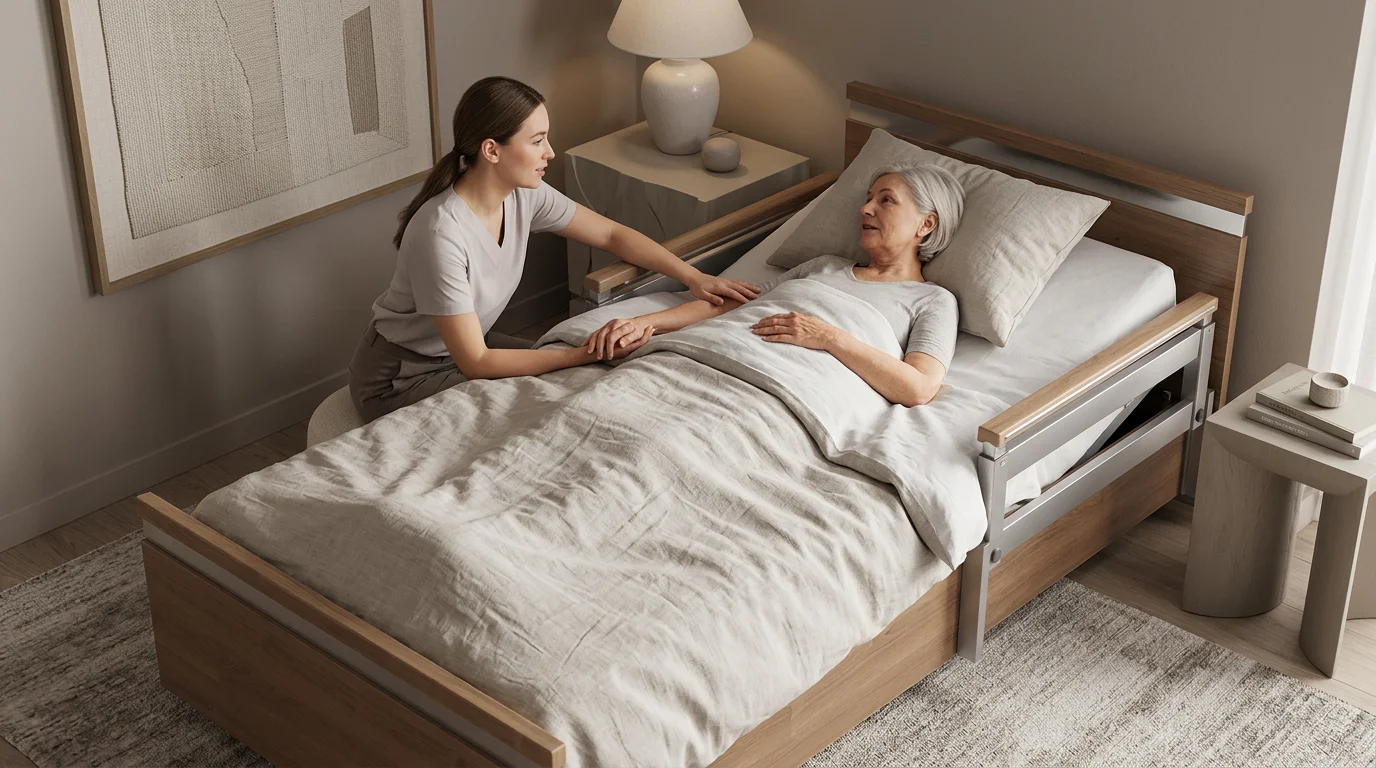
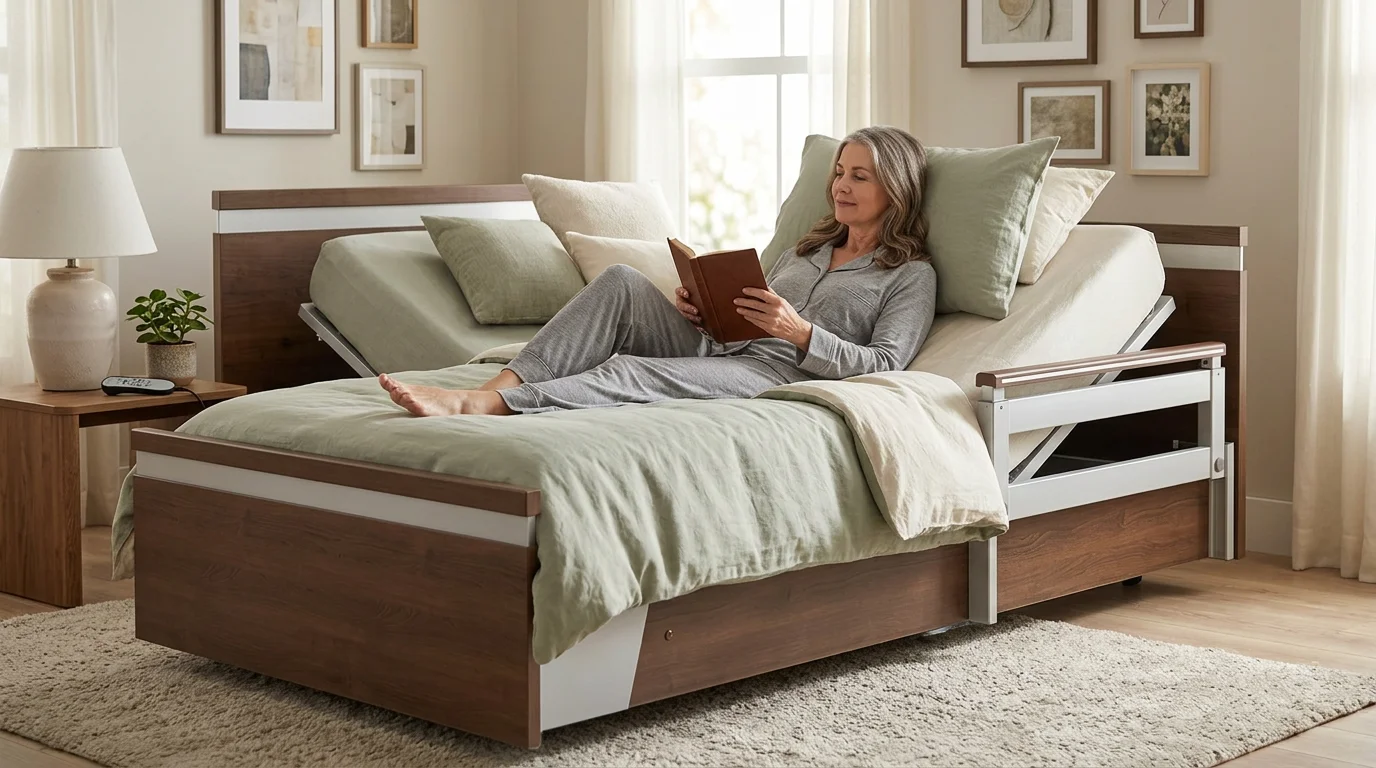
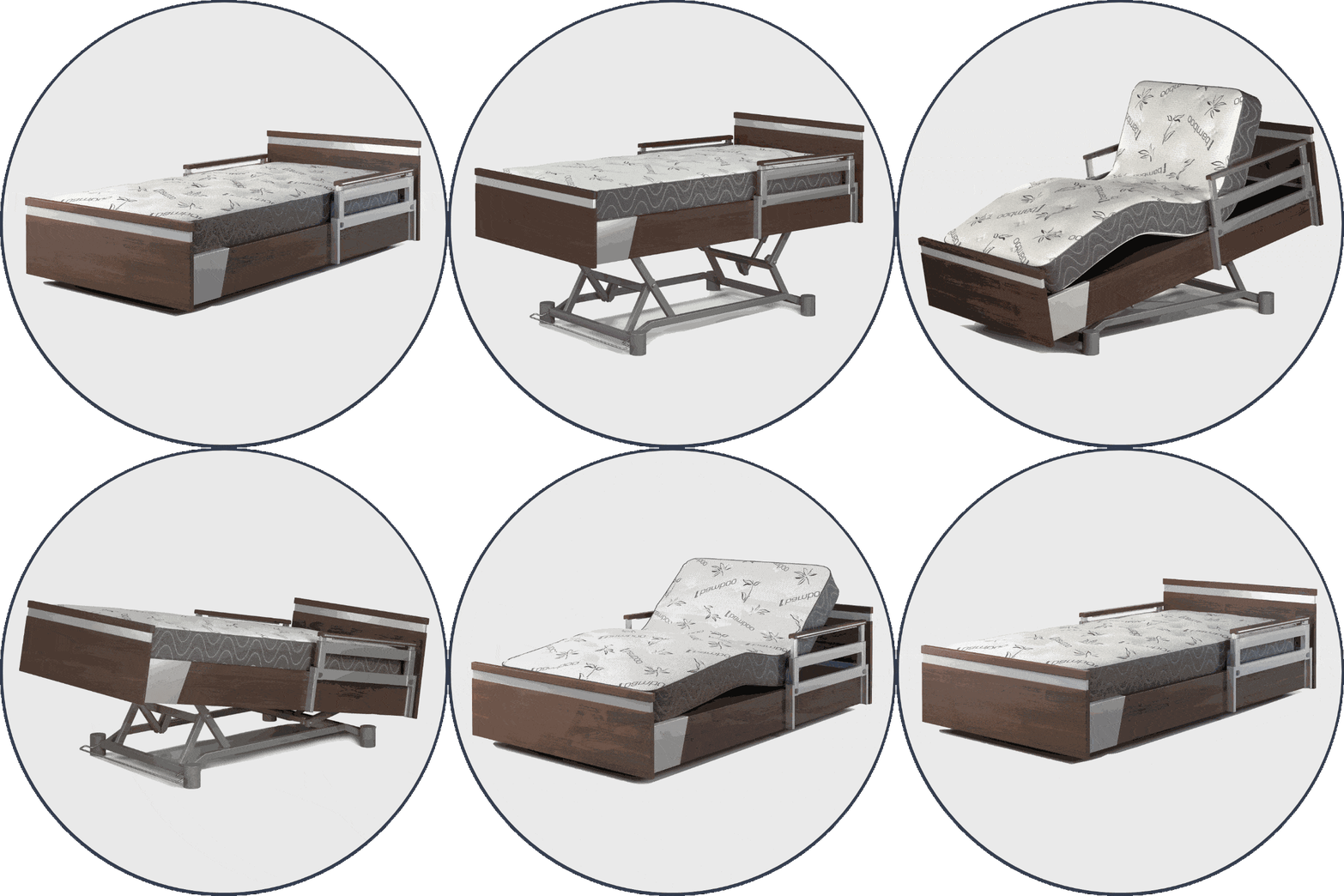
Every tip in this guide works around a fundamental constraint: the bed was designed for clinical function, and residential aesthetics were an afterthought. The work involved in disguising it reflects that design gap. If you are still in the process of choosing a bed, or considering a replacement, that constraint disappears with a residential-grade hospital bed designed from the ground up to look like furniture. The Aura Platinum Hospital Bed from SonderCare is built to International Hospital Standard and carries the full medical positioning suite, Trendelenburg, Zero Gravity, FallSafe Ultra-Low Height at 10″ platform height, but the side panels are fully upholstered in Slate Gray Crypton fabric, and the headboard is a fixed upholstered piece that looks indistinguishable from premium bedroom furniture. There are no visible chrome rails on the frame perimeter. The bed doesn’t require disguising because it was designed to be part of a home, not to look like equipment brought into one. The Aura Premium Hospital Bed offers the same hospital-grade functionality with a fixed upholstered headboard and residential finishes at a lower price point. For families at the point of purchase or bed replacement, this is the most durable answer to the problem this guide addresses. Our guide to hospital beds that don’t look like one covers what to look for in residential-style hospital bed design, and our overview of home hospital beds designed to look like residential furniture compares the options in detail. The ergonomic case for properly equipped beds is also strong. Research on assistive bed features found that Trendelenburg position and profiling functions significantly reduce peak hand force and spinal load during repositioning, protecting caregivers from injury while preserving the clinical safety the bed exists to provide.6 A residential-looking bed doesn’t mean a less functional one.Hiding a hospital bed in your home decor is, at its core, an act of care, for the person in the bed and for everyone else who lives in the space. The clinical look is not inevitable. It can be addressed at nearly every point: the bedding, the headboard, the rails, the lighting, the room arrangement, and ultimately the bed itself. The highest-impact, lowest-cost starting point is always bedding, correctly sized sheets, an oversized comforter that covers the frame, and layered pillows that restore the familiar silhouette of a bedroom bed. From there, a headboard slipcover and some warm lighting move the room further. A canopy or room divider handles the harder scenarios. If you’re choosing a bed for the first time, or replacing an existing one, starting with a residential-design hospital bed eliminates most of this work entirely. To talk through the right approach for your home and situation, speak with a SonderCare expert. There’s no pressure, just practical guidance from people who help families navigate these decisions every day.
References
- Empower (citing AARP). “Home sweet home: A majority of Americans want to age in place.” January 9, 2025. empower.com
- CDC / National Center for Health Statistics. “FastStats: Home Health Care.” cdc.gov/nchs/fastats
- US Centers for Disease Control and Prevention. “About Older Adult Fall Prevention.” cdc.gov/falls
- Cha, S.-M., et al. “A Systematic Review of Home Modifications for Aging in Place in Older Adults.” Healthcare (MDPI), 2025; vol 13, art 752. DOI: 10.3390/healthcare13070752. PMC11988477
- AARP Public Policy Institute. Caregiving in the US 2025. July 24, 2025. aarp.org
- Zhou, J., et al. “The effects of hospital bed features on physical stresses on caregivers when repositioning patients in bed.” Applied Ergonomics, 2021; vol 90, p 103276. DOI: 10.1016/j. apergo.2020.103276. ScienceDirect