





When the equipment arrives, the room changes overnight. Metal rails appear where a headboard used to stand. Harsh overhead lighting replaces the warm lamp on the nightstand. A flat, plastic-coated mattress sits where a well-worn quilt once gathered decades of familiarity. Within days, what was once a personal, lived-in space feels more like a ward.
This is one of the most common and least-discussed losses in home caregiving: the bedroom becomes unrecognizable, and with it, something essential about the person who lives there changes too. Caregivers across every community describe some version of the same shift. “It looks like a hospital ward in there.” “She doesn’t recognize her own room anymore.” “I want him to feel like he’s still living, not just being cared for.”
What caregivers are responding to isn’t just an aesthetic discomfort. It’s something the research supports in remarkable detail: the physical environment is part of the treatment. How a healing bedroom looks, feels, sounds, and is lit has measurable effects on recovery speed, pain levels, sleep quality, emotional wellbeing, and a person’s sense of their own dignity and identity.
This guide covers the evidence behind therapeutic bedroom design and translates it into specific, practical choices, starting with the variables that make the biggest difference. For a full overview of design strategies, including how to work with the equipment already in the room, see our guide to designing a home bedroom that doesn’t look clinical.
Why the Physical Environment Is Part of Recovery, Not Just Backdrop
The idea that surroundings affect healing might sound intuitive but hard to verify. Four decades of evidence says otherwise. In 1984, environmental psychologist Roger Ulrich published a study in the journal Science comparing surgical patients in rooms with a tree view against those facing a brick wall.1 The findings were striking. Tree-view patients had shorter hospitalizations, requested significantly fewer potent analgesics in the days following surgery, and generated far fewer negative nursing notes. A simple window view, no clinical intervention whatsoever, produced measurable differences in recovery outcomes. That finding launched decades of follow-up research. Studies of inpatients at a psychiatric hospital found that those in sunnier rooms spent an average of 2.6 fewer days hospitalized than those in dimmer rooms, a 15% reduction in length of stay.2 A larger study of 187 bipolar inpatients confirmed the direction: those in east-facing rooms with direct morning sunlight were discharged an average of 3.67 days earlier than those in west-facing rooms.3 A 2024 systematic review of inpatient studies found that patients with access to window-adjacent beds experienced approximately 50% fewer falls, shorter ICU stays, and less agitation and hallucination in critical care settings.4 These findings weren’t about comfort as a bonus. They were about the brain’s capacity to use environmental inputs, light, view, sound, visual stimulation, as active components of the healing process. Research specifically examining recovery in home and daily-living environments found that the defining features of a genuinely therapeutic space are physical comfort, preservation of personal identity, and protection of quality of life.5 All three are undermined when a bedroom is stripped of its personal character and filled with clinical equipment. Creating a healing bedroom at home means actively restoring these dimensions, not simply tolerating their absence.Lighting: The Highest-Impact Variable in a Healing Bedroom
Of all the design elements in a recovery bedroom, lighting has the deepest body of evidence and the most immediate practical impact. It is also what clinical-style home setups most reliably get wrong. The problem is twofold. First, standard overhead lighting is tuned for function, not biology. Bright, cool-spectrum light, the kind found in hospital rooms and installed for practical caregiving, activates the same neural pathways as daylight. Exposure to blue-spectrum light in the evening hours suppresses melatonin production and reduces slow-wave (deep) sleep, producing shallower rest that contributes less to tissue repair, immune function, and cognitive recovery.6 Research into the effects of light on circadian rhythms, sleep, and mood shows that even smartphone-level light at night meaningfully disrupts the body’s sleep signaling. A bright ceiling fixture over a care bed, switched on for nighttime repositioning and checks, can fragment the very sleep cycles that drive recovery. Second, fixed overhead lighting removes control, a factor that matters both practically and psychologically. A person who can adjust the lighting in their room retains some agency over their environment. That agency, modest as it seems, directly supports the sense of self that clinical environments erode. The practical approach is layered and intentional. A warm-spectrum (2700K–3000K), dimmable lamp handles evening hours, replacing bright overhead light after sunset. Blackout capacity, whether via lined drapes or a roller blind, allows daytime napping without full-spectrum light intrusion and nighttime darkness without ambient street or hall light pollution. Morning light from a window positioned toward the east provides the daylight cue that anchors circadian timing and, research consistently suggests, measurably supports recovery timelines.3 The CDC’s guidance on sleep environments, applied directly to a home healing bedroom, recommends keeping the space “quiet, relaxing, and at a cool temperature,” with light deliberately managed according to time of day.7 In practice: warm dimmable bulbs that transition to amber in the evening, window treatments providing both blackout capacity and easy daylight access in the morning, and a low-level motion-activated underbed nightlight for safe transfers without flooding the room with overhead brightness at 3 a.m.Sound and Quiet: Protecting the Sleep That Heals
Sleep is where recovery happens. Deep slow-wave sleep drives tissue repair, immune response, hormone regulation, and memory consolidation. Anything that fragments sleep also fragments recovery, and the acoustic environment of a care bedroom is one of its most overlooked variables. The World Health Organization’s night noise guidelines recommend indoor bedroom sound levels below 30 decibels for restorative sleep, with intermittent peaks kept under 45 dB(A).9 To calibrate those numbers: a whispered conversation registers around 30 dB. A quiet home, with a distant refrigerator hum and ambient traffic, typically runs 35–45 dB. Any medical equipment, a pump, an oxygen concentrator, an alert system, adds to that baseline. Research comparing sleep quality in acoustically isolated rooms versus ordinary environments found that better acoustic conditions increased deep sleep duration by 16 to 34 minutes per night in healthy adult sleepers.10 In a person already compromised by illness, injury, or age, that margin matters considerably. A 2025 study examining urban residents across different noise-exposure levels found clear dose-response effects: sleep quality declined steadily as ambient nighttime noise increased, with those exposed to levels above 65 dB(A) showing the most pronounced outcomes, increased irritability, diminished cognitive function, and escalating neurological symptoms.11 Practical acoustic improvements for a home healing bedroom don’t require renovation. Heavy lined drapes over windows serve double duty, reducing both light and sound intrusion. A soft rug over bare flooring absorbs footfall and equipment movement sounds. A low-noise fan or white-noise machine can mask intermittent acoustic spikes without adding a disruptive baseline of its own. And when choosing care equipment, including the bed itself, quieter mechanical operation is not a cosmetic benefit. It directly protects the depth and continuity of recovery sleep.Color, Art, and Visual Texture, The Evidence Behind the Aesthetics
The research on color and visual environment in recovery settings is more specific than many caregivers expect. It is not primarily about personal taste. It is about the nervous system’s response to visual stimuli. A randomized controlled trial of 80 patients recovering from total hip or knee arthroplasty found that those assigned to rooms with colored walls and art prints showed significantly better quality-of-life scores six days after surgery than patients in undecorated control rooms. The physical component summary score was 37.1 in the decorated group versus 34.1 in the control group (p=0.029); the mental component summary was 51.6 versus 47.2 (p=0.015).12 The intervention was neither expensive nor elaborate, colored walls and a handful of prints. The effect on measurable recovery outcomes was real. Separate research examining the role of physical environment in mental health recovery identified four dimensions through which space influences wellbeing: sensory design qualities, engagement with surroundings, social-relational experience, and affective or emotional experience.13 All four are disrupted by the typical clinical bedroom setup. Harsh institutional surfaces replace sensory warmth. Unfamiliar equipment dominates the visual field. Visitors (as caregivers consistently observe) come less often and stay less long when a room feels like a medical setting. Emotional experience shifts from comfort to a background state of vigilance. For a healing bedroom, the evidence points toward soft, natural palettes, muted blues, greens, and earth tones associated with nature and calm, rather than stark clinical whites or high-contrast institutional neutrals. Biophilic design research, examining how natural elements in the visual environment affect people living with chronic conditions, finds consistent evidence that nature-referencing spaces, through plants, artwork depicting outdoor scenes, textiles with organic textures, or views of greenery, activate restorative nervous system states and reduce stress response markers.14 The specific style matters less than the principle: a visual environment that signals calm rather than alert.The Bed Is the Room’s First Impression
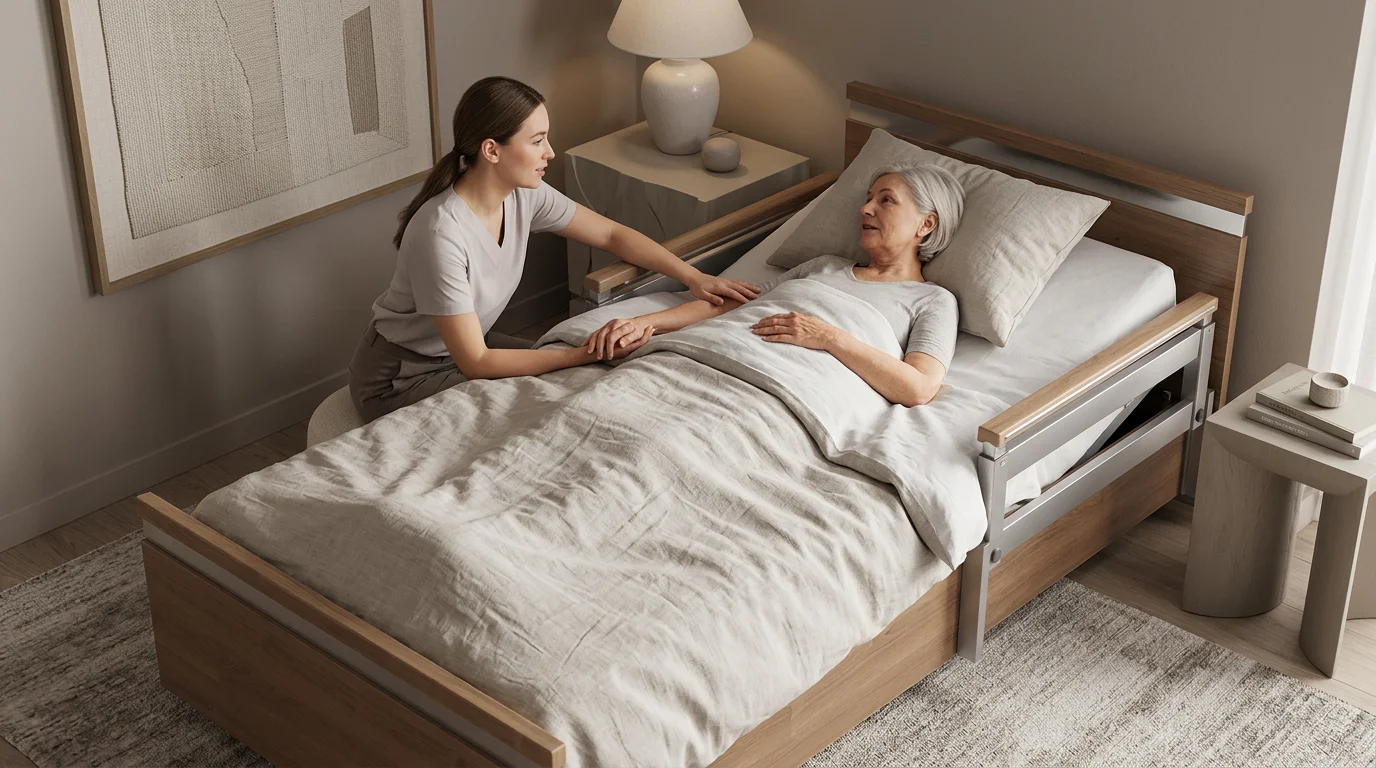
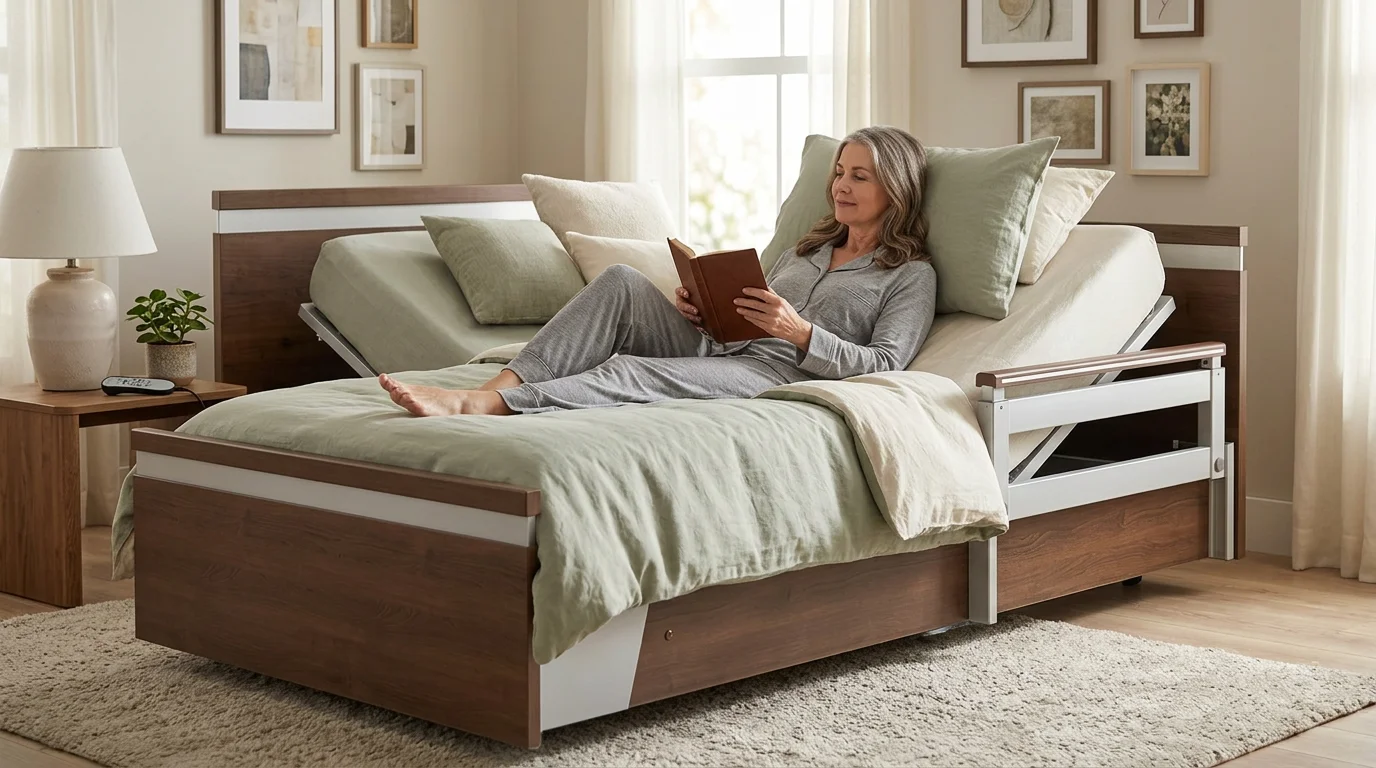
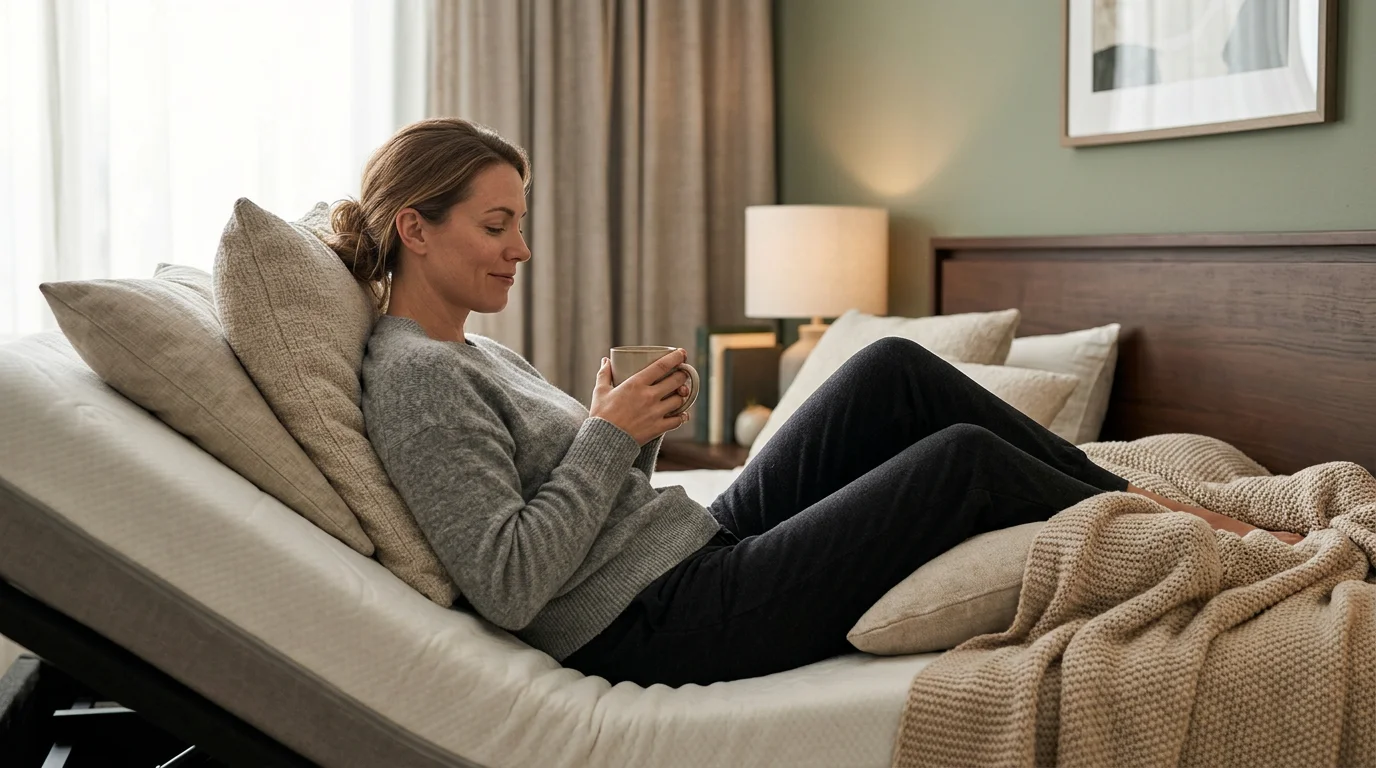
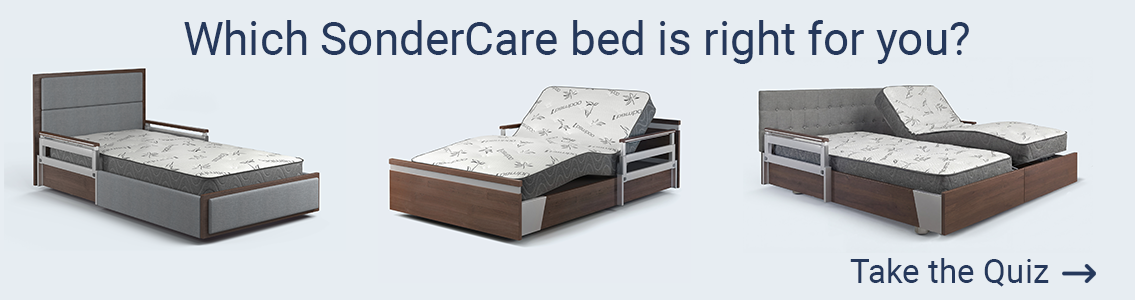
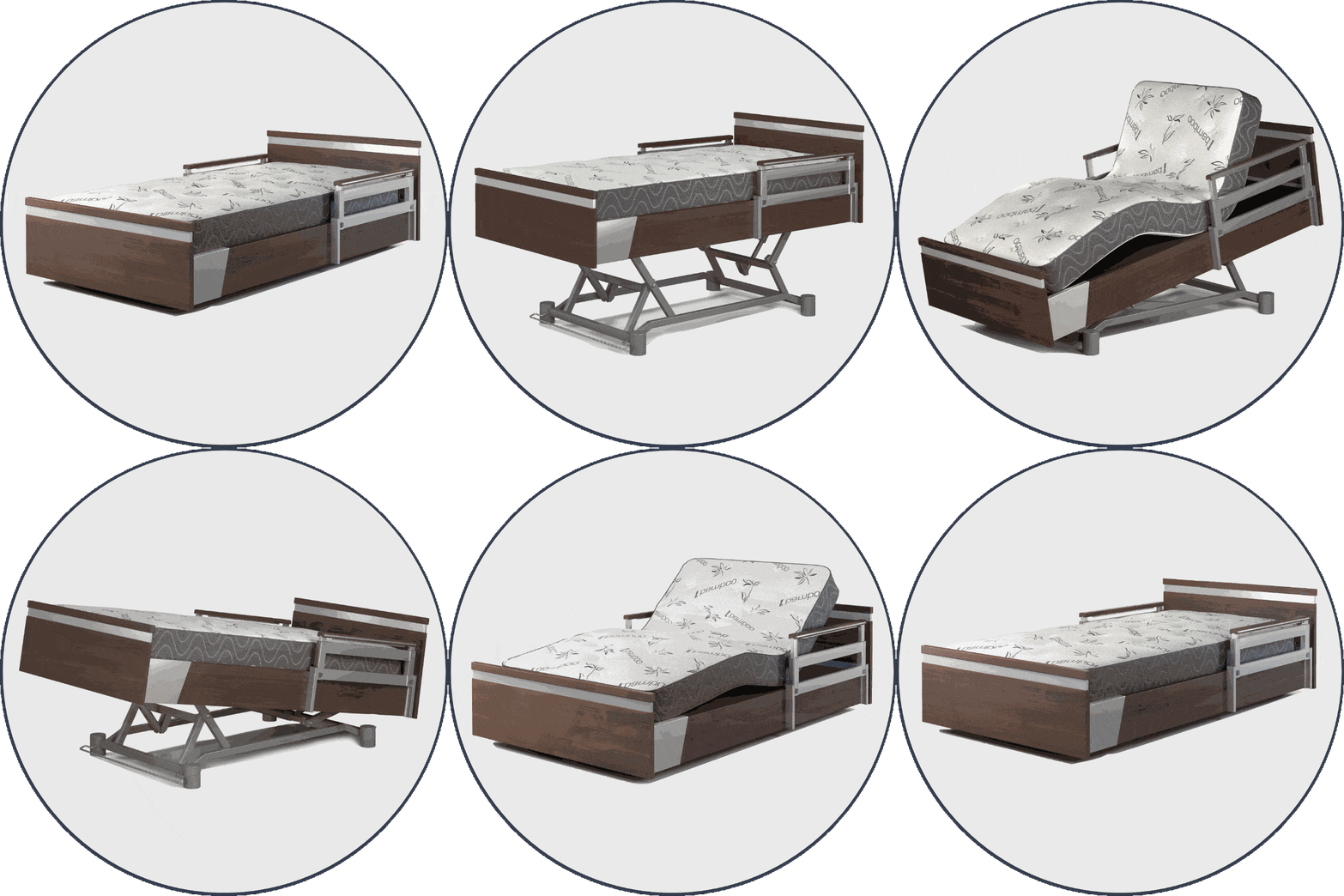
There’s a reason caregivers across every community describe the arrival of a standard hospital bed as the moment the room fundamentally changed. The bed is the largest, most visually dominant object in a bedroom. Its aesthetic register sets the entire tone for the space. Standard durable medical equipment (DME) hospital beds are engineered for clinical settings. Chrome frames, exposed mechanical components, flat articulating surfaces, and plastic-coated mattresses communicate one thing: this is a place where people are treated, not where they live. That signal shapes how the person in the bed experiences their own situation, and how every family member and visitor experiences the room. Caregivers in forums describe loved ones who resisted appropriate care equipment for months, not because the function was wrong but because the form sent the wrong message: you are a patient now. One of the most consistent findings in caregiver communities is that this resistance dissolves when the equipment looks residential rather than clinical. The same positioning capabilities, the same safety features, delivered in a design that belongs in a bedroom rather than a ward. SonderCare’s Aura Platinum home hospital bed carries the full clinical capability of hospital-certified equipment, full electric positioning, FallSafe ultra-low height (10″ platform, 17″ to the top of the mattress for fall prevention), Trendelenburg, Zero Gravity, and Cardiac Chair positioning, 500 lb capacity, in a design built around fully upholstered Slate Gray Crypton side panels and a residential headboard. The exposed mechanical surfaces and institutional chrome that define the clinical look are replaced by furniture-grade materials. The result is a bed that reads as bedroom furniture while delivering hospital-level function. The Aura Premium offers the same clinical positioning suite with a furniture-grade headboard design at a lower price point. Both models adjust during repositioning with significantly less mechanical noise than standard DME equipment, a practical benefit for nighttime care and for the room’s overall atmosphere. The bed is the anchor. When the anchor reads as home rather than hospital, everything else in the room shifts accordingly. For more on why investing in premium equipment pays dividends across the full recovery experience, see why premium home hospital beds are worth the investment.Practical Strategies for a Non-Clinical Healing Bedroom
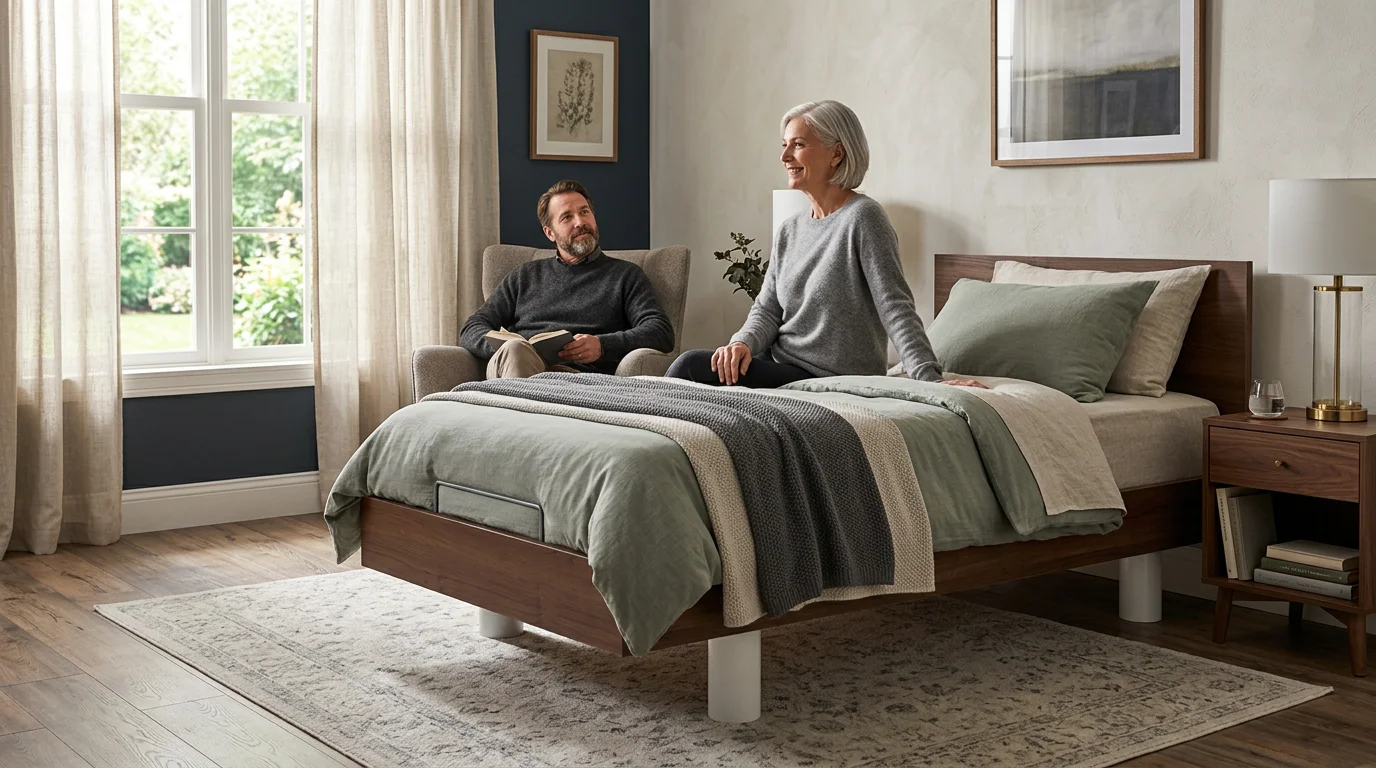
Evidence-based design doesn’t require a renovation or a significant budget. It requires attention to the specific variables that research consistently identifies as high-impact. Here’s where to focus: Lighting first. Replace bright cool-white bulbs with warm-spectrum (2700K–3000K) dimmable alternatives. Add a timer or smart plug to transition automatically to lower light in the evening. Install a motion-activated underbed nightlight, SonderCare’s Underbed Auto-Nightlight mounts to the bed frame and activates automatically, to eliminate the need for overhead lighting during nighttime transfers and checks. Control the temperature. The NIOSH recommendation for optimal sleep is a bedroom temperature of 65 to 68°F (18–20°C).8 This is typically cooler than people intuitively set. For a healing bedroom, consistent thermal comfort also means breathable, layered bedding. Natural fiber sheets and a duvet that can be easily adjusted replace heavy synthetics. SonderCare’s bedding line, including an organic cotton sheet set and bamboo quilt-top options designed specifically for hospital-style adjustable beds, brings warmth back to a care bed without compromising the fluid-proof protection that nighttime care requires. Manage sound actively. Hang heavier drapes over windows. Add a soft rug over bare flooring. Consider a low-noise white-noise machine if intermittent ambient sounds disrupt sleep. Assess all medical equipment for noise output at night and choose the quietest available options. Bring familiar objects into view. The lamp from the corner, the family quilt, the photographs from the dresser, these objects do more than decorate. They orient a person in their own life history and counteract the disorientation that clinical environments produce. Keep familiar items visible from the bed, not relegated to corners around equipment. Conceal medical supplies strategically. Decorative baskets with lids hold disposable supplies out of sight. An armoire or side cabinet stores clinical items without exposing packaging or labels. Rolling the over-bed table into the closet between meals recovers the visual character of the room. This is already standard practice in caregiver communities, validating and extending it is more useful than treating it as novel. Add a biophilic element. Even a single potted plant on the windowsill or a piece of nature-themed art on the wall introduces the restorative environmental cue that research consistently links to reduced stress and improved mood.14 The effect doesn’t require a dramatic intervention. Choose what you display deliberately. Medical packaging, clinical supplies, and equipment-focused visual signals should be out of sight when not actively in use. What remains visible, personal objects, textiles, art, light, should communicate warmth, familiarity, and continuity. For a complete framework combining these design principles with practical caregiving requirements, our hospital-grade bedroom setup guide walks through every element of the home care bedroom from safety to comfort.Dementia and Environmental Cues: A Special Consideration
For families caring for a loved one living with dementia, the evidence on environmental design is especially specific and especially important. The brain affected by Alzheimer’s, Lewy body dementia, or vascular dementia relies heavily on environmental familiarity to maintain orientation and calm. When the bedroom no longer matches the person’s stored interior map of “home”, because metal rails have replaced familiar furniture, because unfamiliar equipment occupies visual space, because personal objects have been moved to accommodate clinical gear, the result is measurably increased agitation, confusion, and behavioral distress. This is not abstract. Dementia caregivers describe it in precise terms: the clinical transformation of the bedroom correlates directly with worsening sundowning, fragmented sleep, and episodes of agitation that improve when familiar elements are restored. Occupational therapists working in dementia care environments consistently recommend soft blues and greens for wall colors (associated with calm and nature), high contrast between floors and wall surfaces for spatial orientation, the elimination of visual clutter from clinical supplies, and the deliberate preservation of at least one piece of original bedroom furniture in the room. These are behavioral interventions, not decorative suggestions. For detailed guidance on adapting the bedroom environment for a loved one living with dementia, including safety modifications that preserve warmth and dignity, see our guide to bedroom modifications for dementia patients.The Room Sends a Message
A healing bedroom is not neutral. It communicates something to the person who wakes up in it every morning. It communicates something to the family members who visit, to the frequency and warmth of those visits, to the care recipient’s sense of whether this is still a home or whether home has become something else. The evidence is clear: environment is not backdrop. Light affects circadian rhythms and measurably influences recovery timelines. Sound quality protects the deep sleep that heals. Color and visual richness affect pain perception and quality of life. The bed’s design sets the room’s emotional register before anything else in it is noticed. These are not comfort amenities. They are recovery variables. The choices available to families today are better than they have ever been. A hospital-certified bed no longer has to look like clinical equipment. Medical supplies can be concealed without compromising access. Familiar warmth can coexist with the hospital-grade safety features that keep someone safe at home. If you’d like guidance on choosing a bed that delivers full clinical capability without the clinical aesthetic, and on designing a bedroom that genuinely supports the person living in it, speak with a SonderCare expert. We help families find the configuration that serves both the person in the bed and the home they deserve to live in.References
- Ulrich RS. “View Through a Window May Influence Recovery from Surgery.” Science. 1984;224(4647):420-421. DOI: 10.1126/science.6143402. https://pubmed.ncbi.nlm.nih.gov/6143402/
- Beauchemin KM, Hays P. “Sunny hospital rooms expedite recovery from severe and refractory depressions.” J Affect Disord. 1996;40(1-2):49-51. https://pubmed.ncbi.nlm.nih.gov/8882914/
- Benedetti F, Colombo C, Barbini B, Campori E, Smeraldi E. “Morning sunlight reduces length of hospitalization in bipolar depression.” J Affect Disord. 2001;62(3):221-223. https://pubmed.ncbi.nlm.nih.gov/11223110/
- Guidolin K et al. “The Influence of Exposure to Nature on Inpatient Hospital Stays.” 2024 systematic review. PMC11080386. https://pmc.ncbi.nlm.nih.gov/articles/PMC11080386/
- Mizuochi Y et al. “Recovery environments in places of daily living.” Environ Health Prev Med. 2024. PMC11536951. https://pmc.ncbi.nlm.nih.gov/articles/PMC11536951/
- Blume C, Garbazza C, Spitschan M. “Effects of light on human circadian rhythms, sleep and mood.” Sci Rep. 2019. PMC6751071. https://pmc.ncbi.nlm.nih.gov/articles/PMC6751071/
- U.S. Centers for Disease Control and Prevention. “About Sleep.” Last reviewed May 15, 2024. https://www.cdc.gov/sleep/about/index.html
- U.S. CDC National Institute for Occupational Safety and Health (NIOSH). “Tips to Improve Your Sleep When Times Are Tough.” June 29, 2020. https://www.cdc.gov/niosh/bulletin/2020/sleep.html
- World Health Organization. Night Noise Guidelines for Europe. 2009. https://www.polisnetwork.eu/wp-content/uploads/2019/06/who-night-noise-guidelines.pdf
- Fietze I et al. “The Effect of Room Acoustics on the Sleep Quality of Healthy Sleepers.” Noise Health. 2016. PMC5187651. https://pmc.ncbi.nlm.nih.gov/articles/PMC5187651/
- Faizal L, Krishnappa S, Chakraborty S, Koppolu P. “Impact of urban noise pollution on sleep disorders and neurological symptoms.” Bioinformation. 2025;21(2):2140. PMC12880161. https://pmc.ncbi.nlm.nih.gov/articles/PMC12880161/
- Eminovic S et al. “Positive effect of colors and art in patient rooms on recovery after total hip or knee arthroplasty.” Wien Klin Wochenschr. 2021. PMC8921019. https://pmc.ncbi.nlm.nih.gov/articles/PMC8921019/
- Sui TY et al. “The impact of physical environments on outpatient mental health recovery: A design-oriented qualitative study of patient perspectives.” 2023. PMC10115290. https://pmc.ncbi.nlm.nih.gov/articles/PMC10115290/
- Huntsman DD et al. “Healthy Dwelling: Design of Biophilic Interior Environments Fostering Self-Care Practices for People Living with Migraines, Chronic Pain, and Depression.” Int J Environ Res Public Health. 2022. PMC8871637. https://pmc.ncbi.nlm.nih.gov/articles/PMC8871637/