


77% of Americans over 40 say they’d rather receive care at home than move to a nursing facility. Among those who’ve actually done it, that number climbs to 85%.
That’s not wishful thinking. It’s a pattern that shows up consistently across long-term care research — and it’s worth understanding why.
Why Satisfaction Rates Are So High
Families don’t choose home care because it’s simpler. Often it isn’t.
They choose it because the *outcomes* feel different. At home, care wraps around the person being cared for — not around a facility’s staffing schedule. Meals, sleep routines, visitors, the dog — these stay intact. And that preservation of ordinary life turns out to matter enormously for emotional wellbeing.
Seniors receiving care at home show measurably lower rates of depression and anxiety than those in facility settings. That difference spills over. Watching a parent thrive in their own space feels nothing like watching them adjust to institutional living.
The Control Factor
Families coordinating home care consistently name the same thing: they know exactly what’s happening.
With a nursing home, visits happen when you can get there. Questions go through staff who may or may not relay them accurately. But at home, adult children can drop in, adjust the routine, and advocate in real time. That access reduces anxiety — not just for the person receiving care, but for everyone involved.
What Makes Home Care Actually Work
Good intentions don’t replace good setup. The families who report the highest satisfaction are almost always the ones who got the physical environment right from the start.
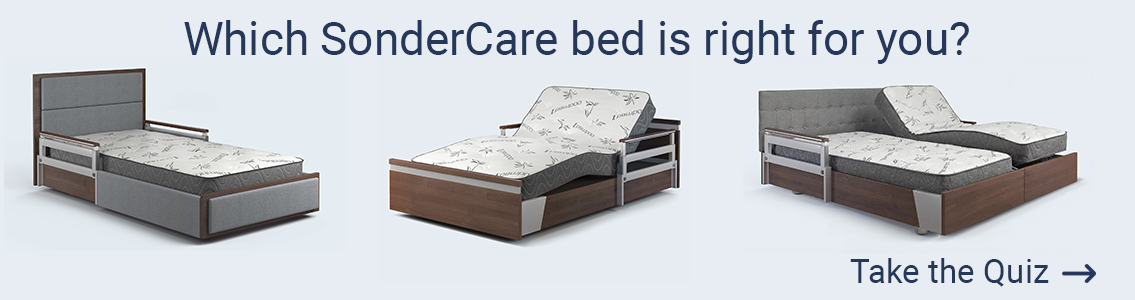
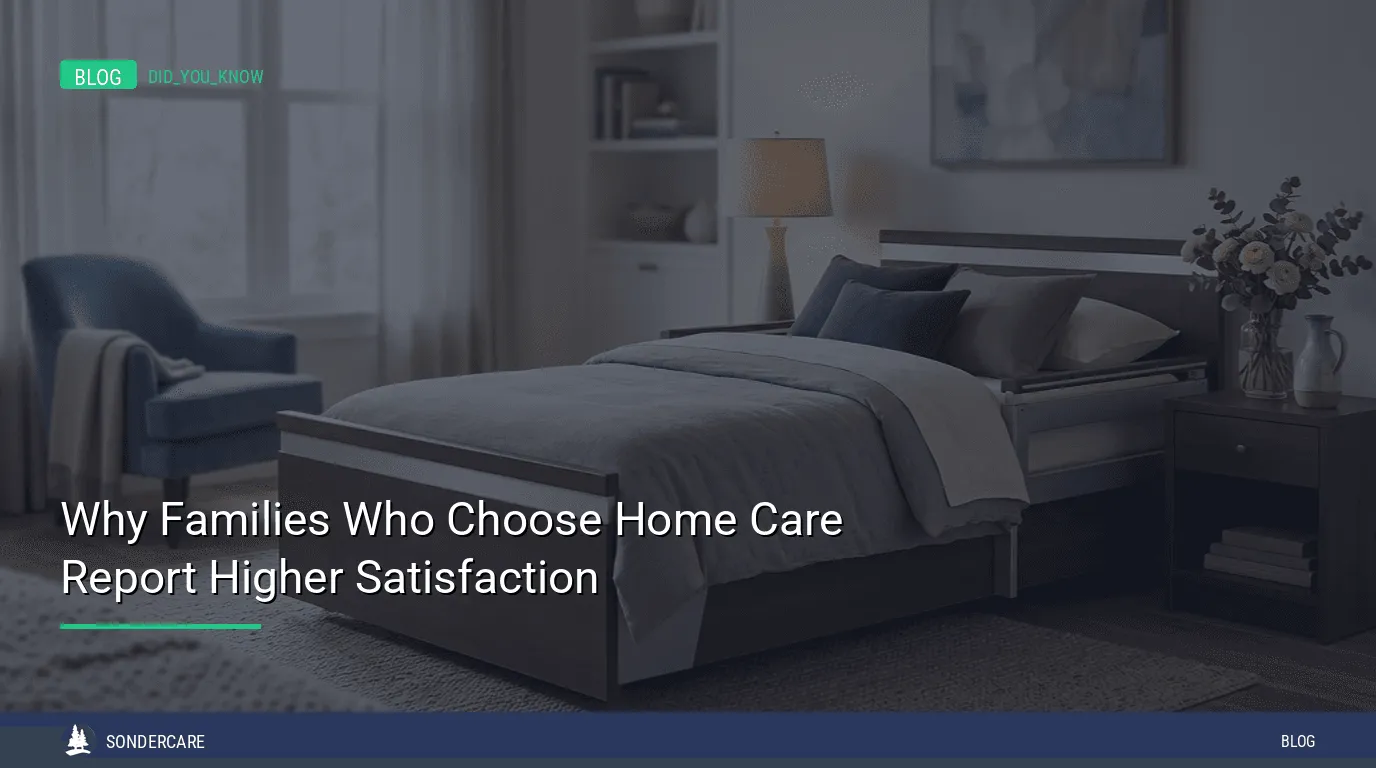
The bed matters more than most families expect. A properly adjustable hospital-style bed gives both the person being cared for and the caregiver far more control over daily life. SonderCare’s Aura Premium Bed drops to a 10″ platform height for fall risk reduction, raises to 39″ to give caregivers a proper working position, and offers positioning modes — Zero Gravity, Cardiac Chair, Trendelenburg — that a standard bed simply can’t do. Pair that with something like the Underbed Auto-Nightlight, which activates automatically when someone moves at night, and you’ve addressed two of the most common overnight safety problems at once.
That’s not luxury spending. That’s the infrastructure the whole arrangement runs on.
For the full picture of what to have in place before care begins, we cover this in depth in our guide to equipment for caring for an elderly parent at home.
When Home Care Is End-of-Life Care
For families navigating hospice, the stakes of this decision are even higher.
Being home — surrounded by familiar things, family nearby, no institutional schedule — provides a quality of presence that a facility can’t replicate. It doesn’t make a hard situation easy. But families consistently report it was the right choice.
Our home hospice care guide walks through what to expect, what to prepare, and what families wish they’d understood earlier.
The Cost Question
Home care isn’t always cheaper than a nursing home. But it’s often much closer than families assume — and many find that what they save on facility fees can go directly into the equipment and support that makes home care sustainable long-term.
The real numbers are in our home care vs. nursing home cost comparison.
What Experienced Families Say
Ask someone six months into home care what they’d do differently. You’ll usually hear two things.
Start the equipment conversation earlier. And don’t underestimate how much the bedroom setup affects everything else: mobility, sleep quality, caregiver strain, and the parent’s sense of dignity. Those aren’t details. They’re the foundation.
Browse SonderCare’s hospital beds to see what a proper home care setup actually looks like.
Last Updated – March 24, 2026