


Somewhere along the way, “bed rails” got tangled up with “tying someone down.” For families, that creates real hesitation — nobody wants to feel like they’re confining a parent.
The distinction is worth getting right, because it changes how you use them.
What a Restraint Actually Is
A restraint limits someone’s freedom to move against their will. Full-length rails on all four sides of a bed, used to keep a confused person from getting up, can legally count as one — and they carry real risks, including entrapment.
What an Assist Rail Does
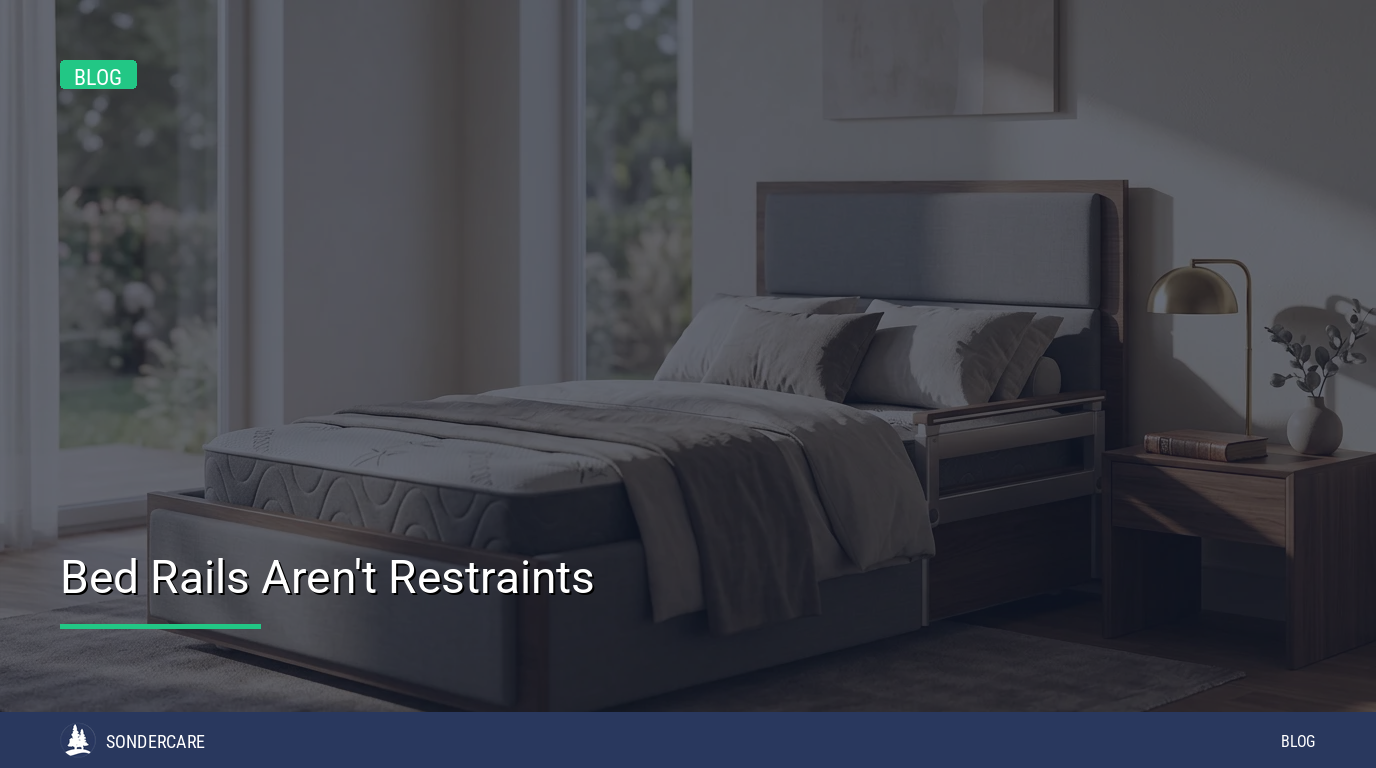
A half-rail or assist rail isn’t there to trap. It’s there to grab. A handhold for rolling over, sitting up, or steadying a transfer. The person chooses to use it.
That’s the whole difference: a restraint takes control away. An assist rail hands it back.
Using Them Right
Match the rail to the need. Someone who just needs leverage to reposition wants a short assist rail, not a full enclosure. Check the fit — gaps between rail and mattress are where entrapment happens.
Our explainer on why hospital beds have side rails covers the safety side in more depth.
SonderCare assist rails are designed as mobility aids — handholds, not cages — and pair with the Aura Premium. If nighttime wandering is the real concern, that’s a fall-risk conversation, and the bed’s ultra-low setting does more than any rail ever will.
Before you write off rails as restraints, look at the type. The right one gives independence, not less of it.