



Most caregivers choose a hospital bed based on two things: price and weight capacity. They’re overlooking what actually changes their day.
Over 53 million Americans provide unpaid care to a family member at home. Most are figuring out equipment on the fly. Hospital beds are one of the most misunderstood pieces of home care equipment — not because they’re complicated, but because nobody explains what they actually do.
The Height Setting Most People Get Wrong
Hospital beds adjust. Most caregivers set the height once and never touch it again.
That’s the wrong approach.
Height should change with the task. For transfers — bed to wheelchair, chair to toilet — the bed should be at the caregiver’s hip height, not the patient’s comfort level. That single adjustment takes most of the strain out of repositioning. For sleep, the bed should go low. Very low. The Aura Premium Bed drops to a 10-inch platform height — 17 inches to the mattress surface — so if your loved one shifts in the night, that’s a short slide, not an emergency room trip. Falls send over 3 million older adults to the ER each year. Ultra-low positioning isn’t a bonus feature. It’s a fall-prevention system built into the frame.
If you’re comparing models and want to understand what the specs actually mean in practice, our full guide to types of hospital beds for home use breaks it down clearly.
The Bed Doesn’t Have to Look Like a Hospital Room
The image most people carry: white metal frame, crank handle, thin plastic mattress. That’s the hospital bed they remember from a parent’s room or a TV show.
Modern home hospital beds don’t look like that.
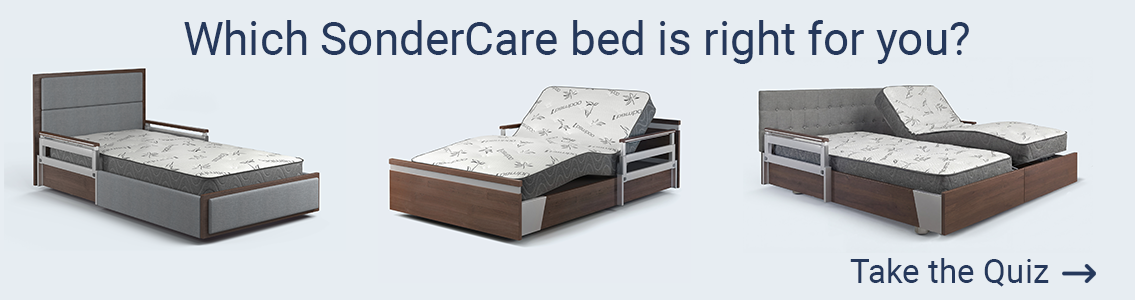
The Aura Platinum Bed has fully upholstered side panels in Crypton fabric, designer headboard options, and a profile that reads as bedroom furniture — not medical equipment. It doesn’t announce itself when someone walks through the door. For families working hard to preserve some sense of normalcy during a difficult stretch, that’s not a cosmetic consideration. It’s a practical one. A bed that looks like it belongs in the room tends to get used correctly — rails stay on, it stays positioned where it should be, and the patient is more willing to spend time in it.
We cover how senior living communities have made this shift — and what they learned along the way — in this guide. The same logic applies directly to home.
The Positioning Modes Most Caregivers Never Use
Head elevation is the mode everyone knows. But it’s the others that tend to change daily care the most. They’re built into the remote, a button press away, and most caregivers discover them three months in — when they’re already burned out.
- Zero Gravity elevates head and feet simultaneously, reducing spinal pressure and improving circulation. Most patients ask for it once they’ve tried it.
- Comfort Chair positions the bed like a recliner — useful for meals, reading, or any time your loved one needs to be upright and engaged without the effort of getting out of bed.
- Trendelenburg tilts the entire platform so feet are above the head. It’s used in specific clinical situations — post-surgery recovery, circulation issues — and it’s available on the Aura line when a physician recommends it.
None of these require any setup. The remote has one-touch presets. But knowing they exist from the start changes how you use the bed entirely — and how much relief you get from it.
See what experienced operators look for when upgrading to furniture-grade hospital beds — the criteria translate directly to home care decisions.
Browse the full SonderCare bed collection to find the model that fits your care setup.