



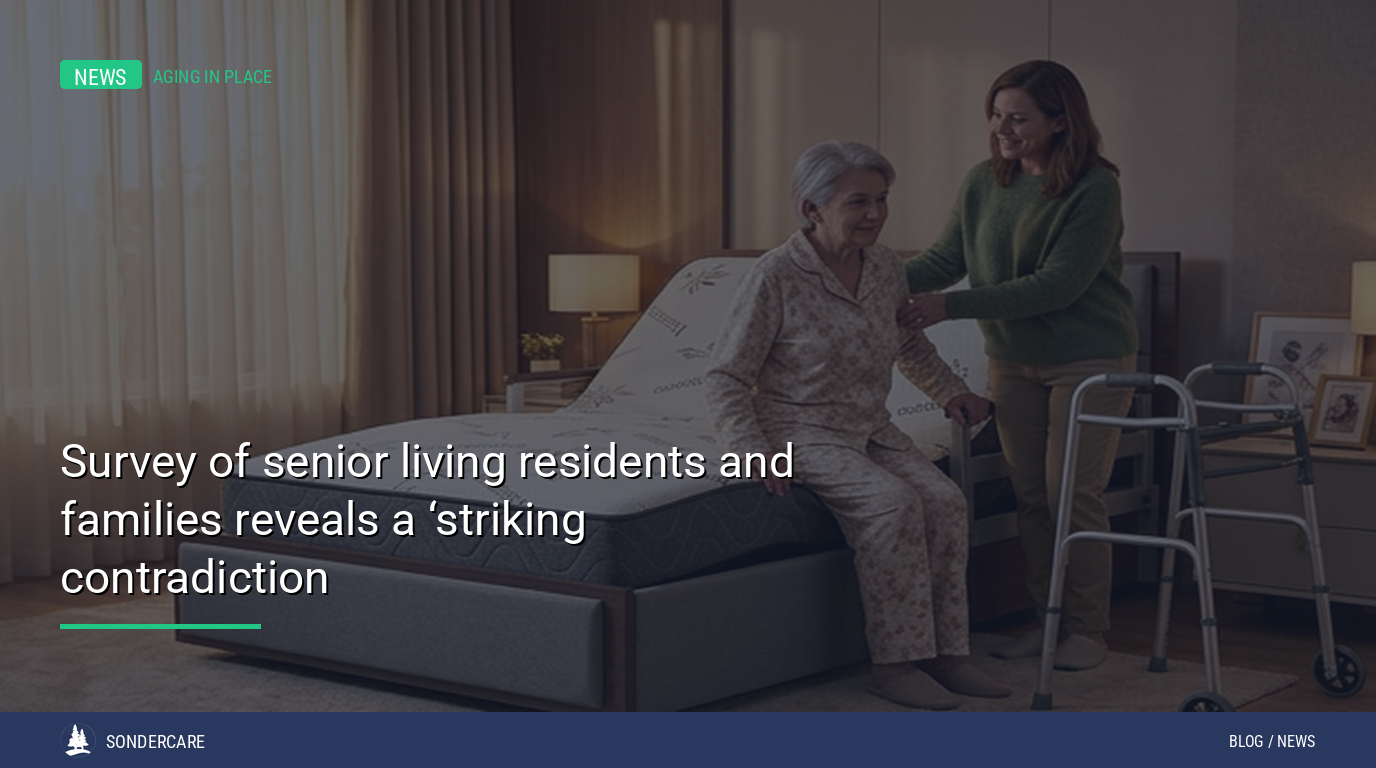
A new multi-stakeholder study has uncovered what researchers are calling a “striking contradiction” at the heart of how older adults and their families make long-term care decisions: the majority prefer aging in place over moving into a senior living community — even among families who have already made that transition.
The study, conducted by RaisedCare in partnership with the USC Leonard Davis School of Gerontology, surveyed 589 families who had either started or completed the process of researching long-term care options. The findings, reported by McKnight’s Senior Living, reveal that families are “living in tension” between what they want and what they can realistically afford.
Sixty-two percent of respondents said they preferred in-home care as an option — but only 50 percent believed they could afford it. That 12-point gap between desire and perceived financial reality is driving many families toward senior living communities even as their underlying preference remains staying home.
Cost Is the Dominant Driver
Money — more than safety, proximity to family, or clinical needs — is shaping long-term care outcomes. Sixty percent of survey respondents said cost significantly influenced or delayed their final care decision.
That financial pressure is intensifying. Home care costs rose 7.9 percent between May 2025 and May 2026 and are up 39 percent since 2021, according to AARP data. Out-of-pocket long-term care expenses can reach six figures annually, a threshold that puts sustained in-home care out of reach for many middle-income families.
The RaisedCare study was led by Michael Theodore, founder of RaisedCare, in collaboration with the USC Leonard Davis School of Gerontology, one of the country’s leading academic centers for aging research. While the report’s primary framing was addressed to senior living operators, its broader implications reach well beyond the industry.
A Nationwide Preference Gap
The RaisedCare findings align closely with national survey data on aging preferences. A February 2026 Pew Research Center study of 8,750 adults — including 2,582 adults age 65 and older — found that 60 percent of older adults living at home without caregivers would prefer to remain home with in-home care if they could no longer manage independently. Only 18 percent said they would choose an assisted living facility.
Pew researchers Kim Parker and Luona Lin also found that the financial underpinning for that preference is weak: just 21 percent of adults 65 and older carry long-term care insurance, leaving a significant majority without dedicated coverage for the care they say they want.
AARP’s national survey data reinforces the pattern. Seventy-five percent of adults age 50 and older say they would prefer to remain in their homes as they age, and 73 percent hope to stay in their current communities. Despite the consistency of that preference across studies, the path from preference to reality remains financially uncertain for most families.
What Families Actually Want From Senior Living
For families who do pursue a senior living community, the RaisedCare study found a significant mismatch between how communities market themselves and what families say influences their decisions.
When evaluating a senior living community, families said they prioritized, in order: the quality of employees, client reviews, and service descriptions. What ranked lowest? Language about “compassionate” care — the type of messaging that became standard on senior living websites roughly a decade ago and has remained common ever since.
The study also found that families confronting this decision rarely feel guided. A separate 2026 U.S. News & World Report survey of nearly 7 in 10 adults who had already made a senior care decision found that 67 percent described determining the appropriate level of care as moderately or very difficult. The top triggers that finally moved families to act: difficulty with daily tasks (60 percent), cognitive decline (44 percent), and a recent fall or medical event (38 percent).
That pattern — families delaying until a crisis forces action — has long-term implications for both care quality and cost, as crisis-driven decisions often leave families with fewer options and less time to evaluate them.
An Industry Reckoning
For senior living operators, the RaisedCare findings present a strategic opportunity as well as a challenge. The study’s authors suggest that operators who acknowledge and address the in-home care preference — rather than competing against it — may be better positioned to capture families earlier in their decision process and extend length of stay by offering services that bridge the gap between home and community.
The broader implication is that the senior living industry has, in many respects, been marketing to the decision families end up making rather than the decision they wished they could make. Closing that gap — through clearer messaging, earlier engagement, and realistic cost guidance — may be as important as any clinical or amenity differentiator.
As of 2026, 93 percent of U.S. adults age 65 and older still live in their own home or apartment, according to Pew Research. That figure represents both the scale of the aging-in-place reality and the scope of the planning gap that most families have yet to bridge.
Why This Matters for Home Care
When the preference for aging in place collides with financial constraints, families are often forced to make rushed, reactive decisions — frequently after a fall, a hospitalization, or a mobility decline that has been building for years. Having the right home care equipment in place before a crisis, including hospital-grade adjustable beds that support safe repositioning and reduce caregiver strain, gives families more options and more time. SonderCare offers a range of premium home hospital beds designed for exactly this transition: clinical function with residential aesthetics, so home continues to feel like home.