


The research, led by Kaley Hayes, PharmD, PhD, an assistant professor at Brown University’s School of Public Health, analyzed Medicare claims and electronic health records from more than 509,000 adults aged 66 and older admitted to more than 5,500 skilled nursing facilities nationwide between 2017 and 2022. Researchers used a method called target trial emulation, designed to replicate the conditions of a randomized controlled trial using real-world data.
Among vaccinated participants, 18.8% developed dementia during the follow-up period, compared with 24.6% of those who were not vaccinated — a 5.8 percentage-point difference. “This translates to about one in 17 dementia cases potentially being prevented through vaccination,” Hayes said.
Despite the size of the study population, only 8,843 participants — approximately 1.73% — received the recombinant zoster vaccine (RZV), marketed under the brand name Shingrix, within one year of skilled nursing facility discharge. Of those vaccinated, 87% received the vaccine after leaving the facility.
“We were honestly taken aback by the results,” Hayes said. “However, they actually are consistent with other studies.”
Hayes noted the study focused specifically on a high-risk, understudied population: “This study looks at the newest vaccine only in an older, vulnerable adult population who were not up to date with shingles vaccination and are at a very clear clinical point in care: entering a skilled nursing facility.”
Researchers identified two potential biological pathways through which shingles vaccination may lower dementia risk. The first involves reduced stroke risk: shingles infections, caused by reactivation of the varicella-zoster virus, are associated with elevated stroke risk, which is itself a significant driver of dementia onset. A second, less-supported hypothesis involves possible reductions in amyloid plaques and neurofibrillary tangles, biological markers associated with Alzheimer’s disease.
The study acknowledged funding from GlaxoSmithKline, the manufacturer of Shingrix. Researchers stated the company had no influence over study design, data analysis, or publication decisions.
The Brown University findings align with a separate large-scale analysis published in Alzheimer’s & Dementia, the journal of the Alzheimer’s Association, which examined approximately 1.5 million Medicare beneficiaries and found the two-dose Shingrix series was associated with a 33% lower overall risk of dementia — including a 28% reduced risk of Alzheimer’s disease and a 33% lower risk of vascular dementia.
Both research teams cautioned that observational data cannot definitively establish causation. “No real-world data capture of an outcome like dementia, which is so complicated, is perfect,” Hayes said. Vaccinated participants were slightly younger and healthier overall, though statistical adjustments were applied to account for those differences.
Hayes called for a randomized clinical trial to confirm the association. “It really is time for a trial to get this squared away,” she said.
The low vaccination rate observed — fewer than two in 100 eligible participants — highlights a persistent gap in preventive care delivery at care transitions. Federal guidelines recommend the two-dose RZV series for all adults 50 and older. Adults transitioning through skilled nursing facilities often fall outside the routine immunization schedules managed by their primary care physicians, according to the researchers.
Why This Matters for Home Care
For older adults aging at home and the family members who support them, this research adds to accumulating evidence that preventive steps taken earlier in life may meaningfully reduce long-term dementia risk. Caregivers coordinating a loved one’s medical care after a skilled nursing facility stay may wish to ask the treating physician whether the shingles vaccine series is current.
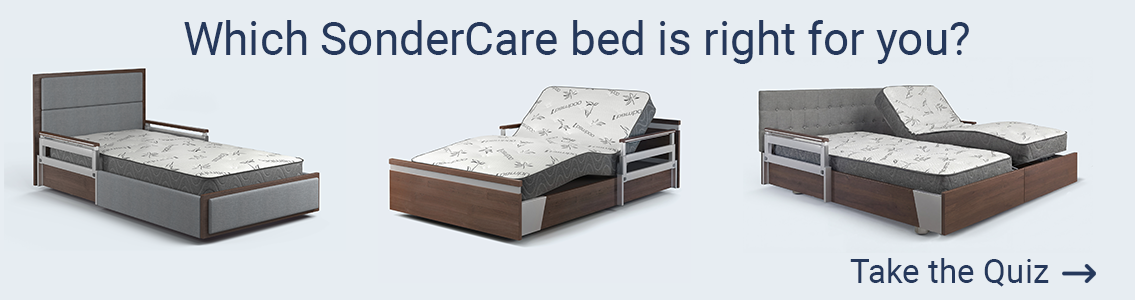
For families already supporting someone living with dementia at home, a safe sleep environment becomes a daily priority. Dementia significantly elevates fall risk, particularly during nighttime disorientation. SonderCare’s Aura Premium and Aura Platinum home hospital beds feature FallSafe Ultra-Low Height positioning — a 10-inch platform height that lowers the sleeping surface close to the floor — along with full hi-lo adjustability and multi-height assist rails designed to reduce fall-related injury risk at home.
If your family is caring for someone living with dementia or returning home after a nursing facility stay, explore SonderCare’s home hospital beds at sondercare.com/beds or speak with a care specialist to find the right bed configuration for your situation.—
Sources: Skilled Nursing News; Brown University Office of University Communications; Center for Infectious Disease Research and Policy (CIDRAP), University of Minnesota; Annals of Internal Medicine (2026); Alzheimer’s & Dementia, Wiley Online Library.