



Over 600 Americans die annually from excessive heat — and adults 65 and older are at highest risk because they lose the ability to regulate body temperature.
For spouse caregivers, summer requires a different level of preparation. Heat amplifies fatigue, raises fall risk, and disrupts sleep. A little planning in May or June makes July manageable.
1. Set a hydration schedule — don’t wait for thirst
Thirst is a late signal. By the time your partner mentions it, mild dehydration may already be setting in. A glass of water every two hours during waking hours — built into the rhythm of meals and medications — removes the need to track or remind.
2. Cool the bedroom before 10am
Peak heat runs 10am to 4pm. Close south- and west-facing blinds before that window opens, not during it. A room that’s 72°F at 9am holds that temperature far longer than one you’re trying to cool from 80°F at noon.
3. Adjust bed height to account for heat fatigue
Heat drains muscle strength. A partner who transfers from bed with moderate effort may struggle noticeably during a heat wave — and that’s when falls happen. The right height puts feet flat on the floor, knees at roughly 90 degrees. Our guide on how high a caregiver should raise a client’s bed height covers this precisely.
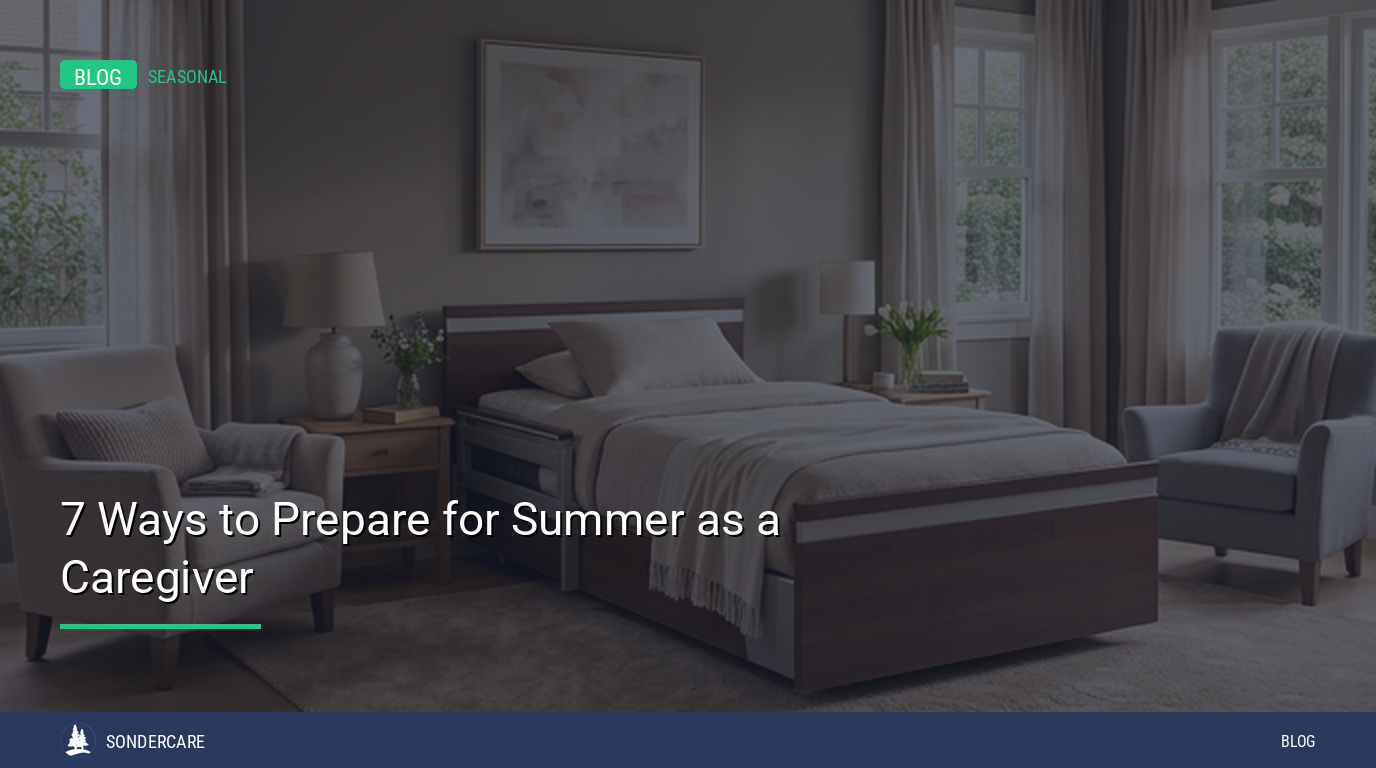
The Aura Companion Bed ($12,999) adjusts from 10 to 39 inches at the touch of a button — so you can raise it slightly during peak fatigue hours and lower it at night without any manual effort.
4. Swap to lightweight bedding now
Heavy comforters trap heat against the body, disrupting sleep and raising core temperature overnight. This matters more for adults with limited mobility who can’t easily reposition. A single breathable cotton or bamboo layer is enough. Remove extra blankets from the bed entirely — on the floor, they become a trip hazard.
5. Know the heat exhaustion signs that look different here
In someone with limited mobility, heat exhaustion can look like a bad day: unusual confusion, dry hot skin, slowed speech, fatigue worse than their baseline. Don’t dismiss two or more of these appearing together during a heat wave. Move them to a cooler room, offer fluids if swallowing is safe, and call 911 if confusion is significant or worsening.
6. Plan outdoor time for before 8am
Brief outings — a porch sit, a slow walk to the car — should happen early. After 8am, the combination of direct sunlight, humidity, and rising temperature creates real risk. Early mornings are often pleasant. Afternoon outings during a heat wave are not worth it.
7. Ask the pharmacist about heat-tolerance risks
Several common medications impair heat response. Diuretics reduce fluid volume. Beta-blockers limit cardiovascular adaptation. Anticholinergics reduce sweating — the body’s primary cooling mechanism. A five-minute call to the pharmacist before the season peaks is worth it. Ask directly: “Do any of my partner’s medications affect heat tolerance or increase heat exhaustion risk?”
One more thing: nighttime falls increase in summer
Broken sleep from heat means more nighttime bathroom trips — and more disorientation. The SonderCare Underbed Auto-Nightlight ($219) activates the moment your partner sits up, illuminating the floor path before their feet touch the ground. Check available hospital bed accessories for caregivers that address exactly this gap.
Start with the bedding swap and hydration schedule this week — both cost nothing and cut risk immediately.